Author: Gene Marks

  • Penn and Community College of Philadelphia launch an academy for West Philadelphia businesses

    Penn and Community College of Philadelphia launch an academy for West Philadelphia businesses

    A new, free educational program for West Philly small businesses is launching this fall, giving them access to faculty from the University of Pennsylvania, through a partnership with the Community College of Philadelphia.

    The deadline to apply is fast approaching, with instruction starting next month.

    Students of the Penn-CCP Entrepreneurship Academy will learn from Penn faculty, other entrepreneurs, and business advisers in three-hour weekly classes, as well as coaching sessions and office hours.

    The initiative aims to increase the opportunity for businesses that are connected to the West Philadelphia area. Participants should be registered in the neighborhood, have operations there, or its owner can live there.

    But the rules seem flexible: Because the program’s priority and focus is to help Philadelphia-based businesses, including nonprofits, interested owners are encouraged to apply even if they do not live in Philadelphia. Even businesses with no revenues can apply, but priority will be given to those generating revenue.

    West Philadelphia has “no shortage” of entrepreneurial talent, said Franne McNeal, executive director of the academy, but what it lacks most is resources.

    “Business owners here have less access to strategy, legal fluency, capital networks, and the kind of advice that turns a small business into a bigger one,” McNeal said. “The biggest gap I see is the owner with four employees who cannot figure out how to get to 14.”

    The academy’s curriculum is divided into four stages: build the foundation, strengthen the structure, prepare for growth, and put the plan into action.

    Students will learn about creating a business strategy, the right structure for their company, branding, and protecting intellectual property. Instruction will also cover financial literacy, workforce management, marketing and sales, and how to present to a potential investor.

    “We’re going to cover the foundational elements of growing a business,” faculty director Praveen Kosuri said. “Everything from business planning and strategy to structuring and branding.

    Besides learning how to build a business, participants are expected to gain confidence in identifying business risks, asking the right questions, and knowing when to seek specialized advice. The program is also intended to foster meaningful relationships between founders, faculty, practitioners, and members of Philadelphia’s entrepreneurial community.

    Each business owner will submit a business plan and pitch, along with a 90-day action plan, for faculty feedback.

    “They’ll have a funder-ready plan, the financial fluency to defend it, and practitioners in the room helping who know the Philadelphia capital landscape,” she said.

    While the academy is tuition-free, McNeal and Kosuri noted that participants will have to put in significant time.

    The 10 weekly sessions in West Philadelphia will take place from 6-9 p.m. beginning in late October through January.

    “Participants need to show up each week to learn, to work on their businesses, and to support the others in the class,” said Kosuri. “We hope it sets them on a path that continues to lead them to their goals.”

    Although start-up businesses can apply, the program seems more geared toward already established companies, whose owners want to take their companies to the next level.

    Unlike other programs I’ve seen, the academy is establishing a specific measurable goal that will hold both its leaders and students accountable: getting the businesses involved to achieve between $1 million to $10 million in revenues within three years.

    McNeal says the program is a pilot and its success will be measured by participants’ success.

    “Attendance and satisfaction scores are easy to report but revenue and employment are slower and harder, and they are the only numbers that mean anything, so those are the ones we are building the tracking for,” she said.

    “We will be judged on whether we come back,” she said.

    Applicants can apply online.

    The priority deadline is Oct. 1, but applications submitted later will be reviewed on a rolling basis if space remains.


  • When an employee requests a religious accommodation, here’s what employers should do

    When an employee requests a religious accommodation, here’s what employers should do

    Federal law requires many private employers to accommodate employees’ sincerely held religious beliefs, unless doing so would impose a substantial burden on the business. How to do this properly is among the many questions small-business owners face each day.

    Recent federal guidance provides a useful framework.

    In 2025 the Department of Labor offered internal guidelines for federal employees which “encouraged” agencies to adopt a “generous approach” to approving religious accommodations and to balance prioritizing employee needs “while maintaining operational efficiency.”

    Although the rules are primarily for federal workers, they still impact many businesses, particularly ones with federal contracts or that otherwise do business with the government. The Justice Department followed this summer with broader guidance directing federal agencies on how to apply religious-liberty protections when enforcing laws and administering grants and contracts.

    In my opinion as an employer, these rules are worth incorporating as policies for any business.

    Two local lawyers I spoke with agreed. But they both stressed that their clients’ policies on religious accommodation in the workplace should be as flexible as possible, presume sincerity, and be well documented.

    Be flexible

    Employers should engage in genuine, documented efforts to find workable solutions before concluding that an accommodation is impossible, said Lisa Gingeleskie, of Lindabury, McCormick, Estabrook & Cooper in New Providence. Solutions might include offering flexible scheduling, voluntary shift swaps, floating holidays, vacation time, and unpaid leave.

    “Employers must consider all available accommodation options, not merely assess whether one particular option is feasible,” Gingeleskie said. “But the accommodation obligation does not require them to provide the employee’s preferred accommodation if a reasonable alternative exists.”

    Employers should look at each employee and situation individually, said Katharine Fogarty, a partner at Kaufman Dolowich in Philadelphia.

    “It’s important to go back and look at your policies to ensure that they comply, and that you don’t just have a blanket policy that won’t allow for any sort of accommodations,” Fogarty said. When a specific accommodation can’t be made, she said, “that doesn’t mean that we just say no and shut down the process.”

    Assume sincerity

    As business owners, we’re not religious experts. It’s important to presume that your employee is being sincere in their request and that their religious belief is genuine.

    “The fact that a belief may be unfamiliar, uncommon, or not formally recognized even by a religious organization does not mean it’s not protected,” Fogarty said.

    To that end, it’s usually not a good idea to demand proof or to challenge an employee’s sincerity without a genuine, objective basis for doubt.

    “Demanding official clergy letters or other formal religious documentation may be problematic, as courts have found that an employee’s own written explanation may be sufficient,” Gingeleskie said.

    That doesn’t mean that you, as an employer, shouldn’t have a healthy degree of skepticism.

    Warning signs as to the legitimacy of a request could include behavior that contradicts their stated beliefs — for instance, their faith prevents them from working on Sundays, but they work Sundays when premium pay is available. Another sign could be the request for a particularly desirable benefit that may have a secular motivation, such as permanent remote work over and above what someone’s religion may require.

    Even informal requests need to be taken seriously, Gingeleskie said, and an employee “does not need to use any particular words or invoke a statute by name.” She also warns against automatically denying requests because of staffing needs, costs, and coworker objections. And it’s important not to get too personal.

    “The appropriate response is to only ask the employee to explain the religious nature of the practice and how it conflicts with the work requirement,” she said.

    Fogarty adds that employers should avoid requiring disclosure of religious beliefs or accommodation needs during the hiring process.

    “When they’re hired, it’s not [information] they’re required to provide,” she said. “The employee can also raise it at any time during their employment.”

    Document requests, discussions, and decisions

    Employers should carefully log the entire religious-accommodation process and not merely the final decision, Gingeleskie and Fogarty agree.

    Gingeleskie recommends documenting the employee’s request and the religious-work conflict, any discussions and communications with the employee, each accommodation considered, why particular options were workable or unworkable, the facts and costs supporting any undue-hardship conclusion, and the accommodation offered or reason for denial.

    “Inadequate documentation of the employer’s accommodation efforts, communications with the employee, and undue hardship analysis can be fatal to an employer’s defense if a lawsuit is brought down the road,” she said.

    If an employer fails to engage on a good-faith basis in the process to reasonably accommodate an employee’s religious belief, they could expose themselves to significant liability, both lawyers warned.

    For example, Blue Cross Blue Shield of Michigan had to pay more than $12 million to an employee in 2024 for not allowing her to exempt herself from vaccinations due to her Catholic beliefs. A nonprofit organization faced a $1.8 million verdict in federal court this year after terminating a Muslim employee for refusing to remove her niqab while teaching.

    “You can’t just outright say no because you think that it’s going to create an issue or it’s going to create more work for you,” Fogarty said.

  • How Philly-area businesses use employee bonuses to reward performance

    How Philly-area businesses use employee bonuses to reward performance

    As we enter the last quarter of this calendar year, many businesses are budgeting for pay raises in 2027. Most of my clients — and many other small businesses — also offer bonuses, which can provide extra financial incentives to employees.

    According to HR consulting firm Korn Ferry, the average pay raise is expected to be about 3.3% next year. Professional services firm Marsh says raises should be about 3.5%.

    Given the current rate of inflation, this may barely seem enough to cover the cost of living. But base pay isn’t everything, and bonuses can be a great motivator.

    Here is how several area businesses use this tool.

    Employees ‘write their own ticket’

    At the Pest Rangers, a pest control company based in Hanover Township, CEO Jeff King utilizes several bonus and incentive plans, all with the aim of rewarding workers for reliability, customer service, and sales.

    “Our technicians receive baseline bonuses for punctuality, weekly truck inspections, and avoiding customer complaints,” he said. “Employees who sell recurring pest-control plans share a monthly bonus pool based on their portion of total sales.”

    The company also offers sales commissions and production bonuses with no cap on earnings, he said.

    The company’s “raving customers” program rewards employees who receive exceptional customer feedback, King added. The company paid more than $18,000 in these bonuses in 2025, including more than $6,000 to its top technician.

    “This method we’ve formulated allows the employee to write their own ticket. If you want to go above and beyond, you’re being recognized for that behavior,” he said. “We put money directly into the employees’ pockets, rather than spending on traditional marketing.”

    Lowering costs while paying good managers what they’re worth

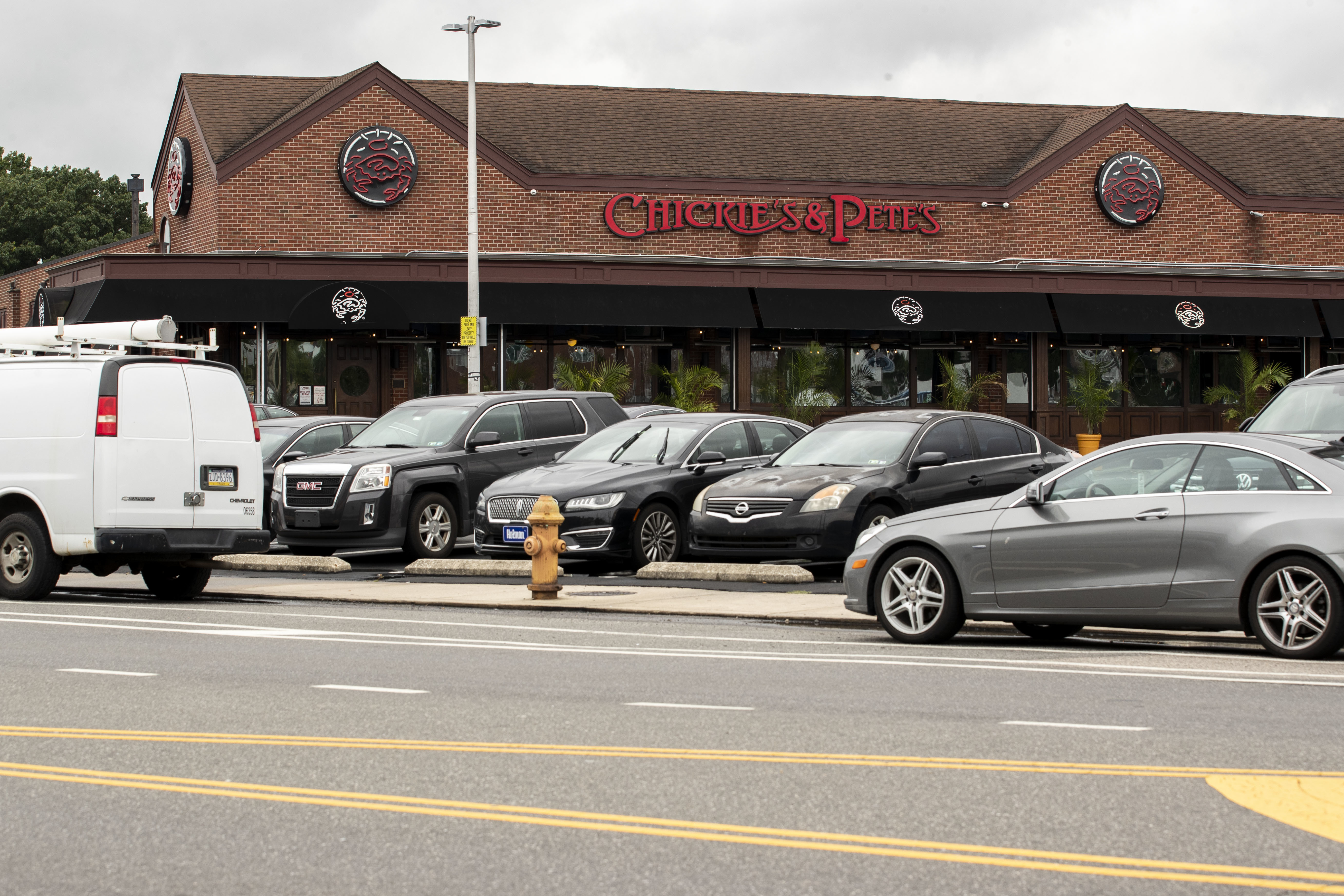
    Chickie’s & Pete’s, the popular Philadelphia-based restaurant chain, offers several bonus programs, but focuses its rewards primarily on managers and supervisors.

    “We award managers for things like developing hourly employees into supervisors and managers, training incoming managers at designated training locations, and keeping labor and food costs within quarterly budget targets without hurting customer service,” said vice president of operations Peter “Pete” Ciarrocchi III.

    “Our plans were designed to help retain the staff that we have and also providing consistent quality services to our families,” he added.

    Bonus plans have helped to reduce the company’s labor costs, Ciarrocchi said, but managers make 20% more on average since the restaurants started giving bonuses.

    Chickie’s & Pete’s restaurant in South Philadelphia.MONICA HERNDON / Staff Photographer

    Bonuses rewarding consistency

    Werner Bus Lines in Phoenixville uses targeted bonus programs that are tied directly to the results or behaviors the company wants from each department.

    For example, sales employees get paid based on bookings and mechanics get a bonus for punctuality.

    “I tried to think about the systems I could design where my employees and the company are happy,” Werner’s president Heath Ochroch said. ”I asked what was the actual behavior that I wanted to see more of in each of these departments and that would be the common thread.”

    Jamie Turner, founder and president of Acclaim Autism, focuses bonus programs on the people providing services.

    Acclaim Autism’s “frontline workers,” who help provide behavior analysis and therapy, among other services, can earn up to $300 in bonuses per month, Turner said.

    “Their bonuses are primarily based on consistently completing scheduled patient-facing hours, maintaining continuity and routine for patients, and meeting quality and compliance standards,” he said.

    Turner said it’s critical for their employees to be incentivized to provide consistency in their patient-facing hours, “which our patients need on a regular routine basis.”

    Using discretion to reward less quantifiable contributions

    Many firms I know like to pay once-a-year bonuses based on management’s discretion.

    Employees at PayUSA, a King of Prussia-based payroll processing firm, receive an annual year-end bonus based primarily on their individual performance. President and CEO Christian Hoyt said most established employees receive a bonus equal to at least one week’s salary, with a larger multiple for stronger performers. The largest bonuses are up to 2.5 times the employee’s weekly pay.

    “The basic idea is to recognize a full year of hard work with an additional week or more of compensation,” he said. “If an employee worked really hard for 50 weeks, let’s pay them for 53.”

    At Newtown-based JS Benefits Group, an employee benefits consulting firm, all 26 employees are eligible for discretionary bonuses, which can be as much as 5% of their salary, or about 2.5 weeks’ pay. Founder and CEO Jennifer Schaefer said there is no fixed formula.

    “We generally consider three principal factors: the company’s overall performance, the employee’s individual contribution, and the employee’s years of service,” she said.

    Schaefer deliberately keeps the bonuses discretionary because conventional productivity measures do not capture every valuable contribution. She considers how employees serve clients, support colleagues, solve problems, and strengthen the company’s culture.

    “A formula can measure revenue, but it can’t always measure the employee who quietly solves problems, earns a client’s trust, or makes the entire team better,” she said.

  • No tax on tips is here. What employers need to know for 2026 | Expert Opinion

    No tax on tips is here. What employers need to know for 2026 | Expert Opinion

    “No tax on tips” sounds simple. For employers, it isn’t.

    Starting in 2025, employees who received tipped income can now take a deduction for this amount on their individual tax returns, which reduces their taxable income and taxes owed.

    The benefits are obvious, but some of the rules are less so. Here’s what to know.

    Cap on tips deduction

    The deduction is capped at $25,000 per return, even for married couples filing jointly. It phases out for joint filers with $300,000 or more annual income and $150,000 for other taxpayers.

    No deduction for mandatory service fees

    Tips claimed must be voluntary. If you’re charging your customers a mandatory “service charge” and then disbursing the amount collected to your employees, that amount is not eligible as tipped income for purposes of the tax deduction.

    Put simply, a mandatory service charge and a voluntary tip are not interchangeable, said Shanita Jones, a certified public accountant in Philadelphia.

    “Calling a charge a gratuity on the receipt doesn’t automatically make it a tip for tax purposes,” she said. “Owners should verify that their point-of-sale system, bookkeeping records, and payroll system distinguish voluntary tips from mandatory charges.”

    Specific jobs qualify for tip deduction

    Eligible employees must work in one of the more than 70 occupations the IRS has designated as traditionally tipped. These include servers, bartenders, hairstylists, makeup artists, hotel workers, rideshare drivers, and personal trainers. Occupations such as accountants, tax preparers, and most legal professionals aren’t on the IRS list.

    Self-employed workers can also take advantage of the tips deduction, but the deduction can’t exceed the net income of their trade or business.

    States still tax tipped income

    The “no tax on tips” deduction is applied only at the federal level. Neither Pennsylvania nor New Jersey makes this deduction available when calculating state income taxes owed.

    The two states do have a reciprocal agreement so that if a worker who lives in Pennsylvania earns tipped income at their job in New Jersey, they’re still taxed at Pennsylvania rates.

    Other taxes that still apply to tips

    Also, tips are not exempt from all kinds of federal taxes. Employees must still pay the taxes for Social Security and Medicare.

    “Before telling employees their tips are tax-free, make sure you can answer: free from which tax?” Jones said. “The distinction matters because employees may make spending decisions based on what they believe they will keep.”

    Employers must also match the FICA and Medicare payments.

    But restaurants and certain food service businesses may qualify for the federal FICA Tip Credit, said Adrienne Straccione, a partner at accounting and advisory firm Wouch Maloney in Philadelphia.

    This credit is different from the employee tip deduction. It was expanded as part of last year’s tax legislation to include qualifying barbering, hair care, nail care, esthetics, and body and spa treatment businesses. The credit is not a deduction — it is taken against taxes owed and if it exceeds what’s owed it can generally be carried back one year and forward up to 20 years.

    “This expansion can potentially provide a valuable tax benefit on certain employer-related taxes for more employers with tipped workers,” she said.

    Employers must keep accurate tip records

    If you’re an employer, you need to be familiar with the reporting required, Jones said, because no tax on tips does not mean “no reporting of tips.”

    “A tax break for an employee does not erase an employer’s responsibilities,” she said. “Business owners should not stop recording tips or change their payroll practices simply because they hear the phrase “tax-free.”

    For 2025, employers received transition relief because Forms W-2 and 1099 had not yet been redesigned to separately report the information needed for the new deduction. That’s different for 2026. Employers now report cash tips on Form W-2 using Box 12, Code TP, and identify the worker’s qualifying occupation in Box 14b.

    Employers should expect “greater scrutiny of how tips are tracked,” categorized, and reported, Straccione said.

    “Businesses need to understand what code section your employees fall under for the Treasury Tipped Occupation Codes,” she said. “Failure to comply with the new W-2 reporting standards can result in penalties.”

    It’s important that your employees take advantage of the deduction during the course of the year by reducing the amount of federal taxes they’re having withheld from their paychecks. We’ve been recommending to our clients that they help their employees revise their W-4 withholding form to reduce the amount of tax taken from their paycheck. This will leave them with more money left over throughout the year, rather than waiting for a refund from the government.

    Both Jones and Straccione are advising clients to establish written processes for reporting all tips, documenting the distributions, and getting that information into their payroll systems.

    “Cash tips should not disappear from the records simply because they never passed through the business’s card processor,” Jones said. She advises that businesses review their process with their accountant and payroll provider, confirm the applicable year’s reporting requirements, and reconcile records regularly.

    “Tax season should not be the first time you discover that your sales system, payroll records, and books tell three different stories.”

    The no-tax-on-tips deduction is good for both employees and employers. Obviously, the employee gets to save money. But the employer, because their workers are effectively getting paid a little more by the tax savings, may feel less pressure to increase wages this year.

    The deduction won’t last forever. It’s scheduled to expire after the 2028 tax year, unless Congress extends it.

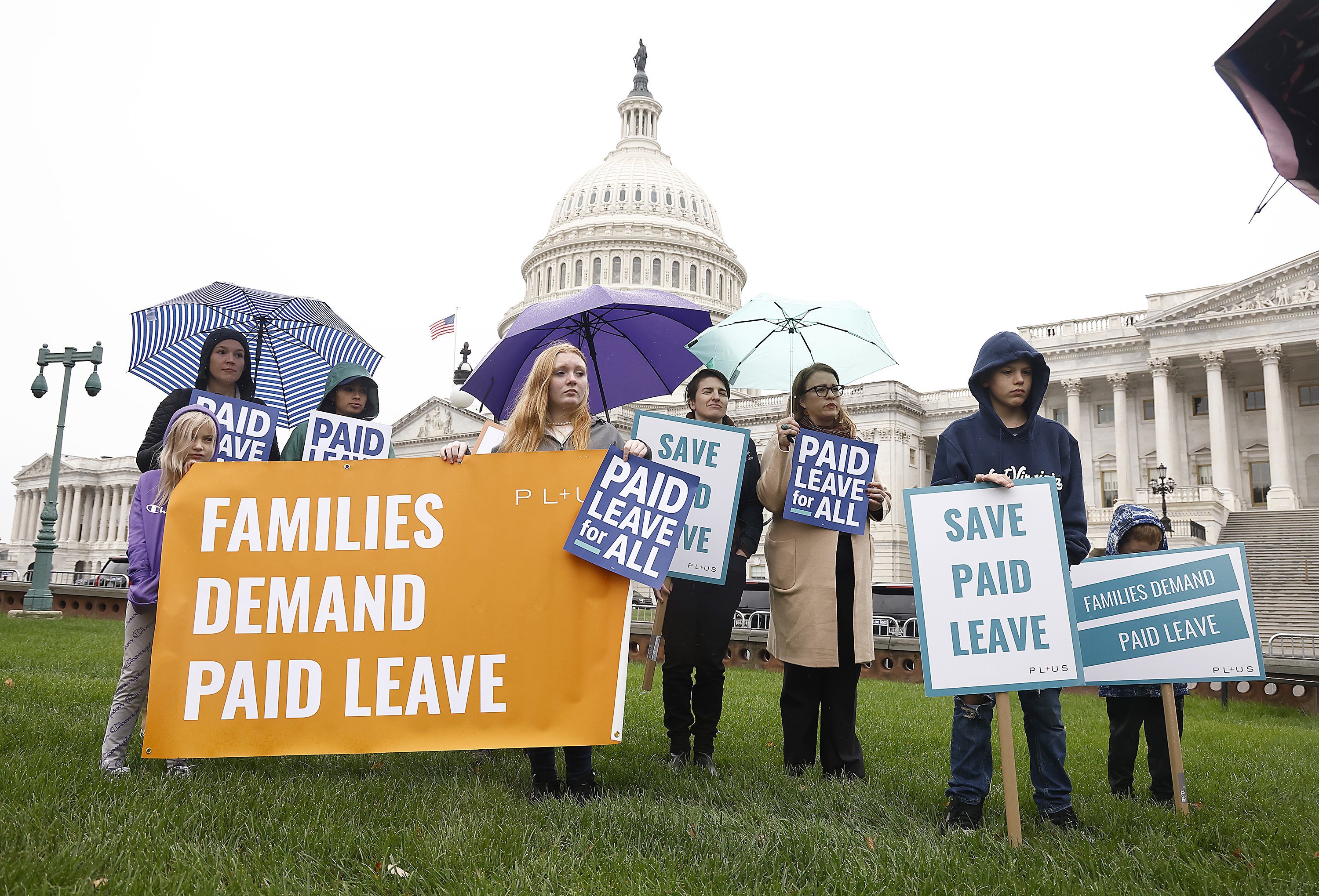
  • Permanent paid family leave is a boon for employees and employers | Expert opinion

    Permanent paid family leave is a boon for employees and employers | Expert opinion

    Emily Wielk, a senior policy analyst for working families at the Bipartisan Policy Center, says that she “hears consistently” that paid family and medical leave is a benefit that workers want and need to continue working.

    “It is also a benefit that many businesses want to offer, but they are trying to determine the best way to manage the financial, compliance and administrative burdens,” she said.

    It doesn’t matter how big or small your business is. Providing this benefit has become increasingly important for recruiting and retaining talent. The good news is that the federal government can help, and thanks to 2025’s One Big Beautiful Bill Act, more support is available.

    Employer tax credit

    Since 2018 there has been a generous tax credit available for employers who want to voluntarily provide some sort of compensation to their employees taking leave. It’s called the Employer Credit for Paid Family and Medical Leave under Internal Revenue Code Section 45S.

    As long as you pay your employee a minimum of 50% of their normal wages while they are on leave, you can take a 12.5% tax credit on what you pay. The credit then increases by 0.25% for each additional percentage point of wages paid.

    “If you offer the leave, you have greater certainty that the employee is coming back, and you can determine how to manage the gap in the interim,” said Wielk. “If you lose the worker, you will spend more time, money, and energy recruiting and trying to replace that employee.”

    For example, if an employee normally earns $15,000 over 12 weeks and you pay the employee $7,500 while on qualifying leave, your business may receive a federal income-tax credit of $937.50. The more of the employee’s normal wages you replace, the larger the potential credit — up to 25% of the qualifying wages paid. So if you paid the full $15,000, your credit would be $3,750.

    To claim the credit, you must have a written policy and provide two weeks of paid leave (not vacation or sick time).

    If you own a pass-through business, like an S corporation or partnership, you can still claim the credit against the taxes you owe. If the credit is larger than the taxes you owe, you can carry it forward for up to 20 years. Highly compensated employees — those making $96,000 or more per year — are excluded.

    “One specific thing the Section 45S credit does is encourage businesses to offer the benefit specifically to lower- and moderate-wage workers — not just necessarily to their C-suite or higher-wage earners,” said Wielk. “It is designed to ensure that workers who typically don’t have access to the benefit are getting access.”

    Updated guidance

    Earlier this month, the Treasury Department and Internal Revenue Service provided interim guidance on the expanded credit (more comprehensive proposed regulations are expected.)

    Among these changes: Employers who purchase insurance providing paid family and medical leave benefits may now calculate the credit using qualifying premiums rather than wages actually paid during leave. It also potentially allows certain employers to use the credit where leave is required by a state or local government (such as New Jersey and soon in Delaware).

    Previously, only wages paid to employees who worked for a company for a year were eligible, but that requirement was relaxed to six months. For 2026, employees who earned more than $96,000 are excluded. Most importantly, the credit has now been made permanent. Previously it came up for renewal every few years.

    Stability promises

    Wielk says that for Section 45S in particular, the fact that it was a pilot program created uncertainty. She believes that even when businesses knew the credit existed, they couldn’t be sure it would still be there four, five, or six years down the road.

    “Many businesses were hesitant to use it for a few years and then have to assume the entire financial burden if the credit expired,” she said. “I think that uncertainty deterred some businesses from utilizing the credit.”

    According to Wielk, the data “is very clear” that when workers have access to paid family leave, it boosts employee morale and increases loyalty to the business.

    “It allows employees to take the time they genuinely need away from work with the knowledge and security that they can come back,” she said. “That has ripple effects on their ability to return and be productive.”

  • ICE workplace enforcement is increasing. Here’s what Philadelphia employers should do | Expert Opinion

    ICE workplace enforcement is increasing. Here’s what Philadelphia employers should do | Expert Opinion

    Border czar Tom Homan is putting employers on notice: Expect significantly more scrutiny of who you’re employing and whether your paperwork is in order.

    Homan, in a recent conversation with the Center for Immigration Studies, talked about his intention to expand employment verification inspections that would “dramatically increase” worksite enforcement.

    “We want to hold employers who circumvent the law responsible,” he said.

    This statement is in addition to a number of changes recently made to the Form I-9, Employment Eligibility Verification, which is required by the U.S. Citizenship and Immigration Services (USCIS) within the Department of Homeland Security and which employers generally must complete and retain for employees to verify their identity and authorization to work in the United States.

    The bottom line is that immigration enforcement activity is, and will be, of increased concern for employers, and if your company is not in compliance, you could not only face fines but potential civil and criminal charges.

    Here is what employers should do.

    Audit your employees’ I-9s

    “For businesses, the biggest mistake is having no plan at all,” said immigration attorney Kristofer C. Kaufmann of Philadelphia-based Kaufmann & Associates.

    Kaufmann encourages his clients to conduct a privileged internal I-9 audit under the guidance of immigration counsel and then create a one-page response protocol that every manager knows.

    “The audit tells you what is actually in the files and what needs fixing before the government ever asks, and the protocol tells your people exactly who to call, what to say, and what not to do if agents appear,” he said. “Most small businesses that get into serious trouble do so because they had neither.”

    When auditing I-9s, businesses should not try to hide problems, said attorney Zachary Gold, from New Jersey law firm Cruz Gold & Associates, which serves clients in the Philadelphia area.

    “Correct mistakes in the open: line through the error, enter the correction, then initial and date it,” Gold said. “Never backdate, which turns a compliance problem into fraud. Good compliance is a folder you can hand an auditor in five minutes.”

    He says to keep I-9 records organized and separate enough that they can be produced quickly. Employers should include former employees as they can also be subject to a review, Gold said.

    “Run the audit the same way for everyone, and do not start demanding new or different documents based on how a worker looks or sounds, because that trades an I-9 problem for a discrimination claim,” Gold said.

    Ricky A. Palladino, an immigration attorney in Philadelphia, recommends going one step further by using E-Verify, an online system that compares an employee’s Form I-9 with records from the Department of Homeland Security and the Social Security Administration.

    This step “gives an immediate answer on whether a person is authorized to work and provides electronic updates on when forms need to be updated,” he said.

    Create an ICE response plan

    So what happens if Immigration and Customs Enforcement shows up at your company’s door? The most important thing is to stay calm, professional, and cooperative but have some guardrails. And the first thing to know is that there’s a difference between an I-9 audit and a raid.

    “An I-9 audit, sometimes called a ‘silent raid,’ begins with a Notice of Inspection,” Kaufmann said. “By regulation, ICE must give the employer at least three business days to produce the Forms I-9 and related documents.”

    A raid, or unannounced worksite enforcement action, Kaufmann said, “usually involves a judicial search warrant. There is no advance notice.”

    Kaufmann advises his clients to designate one or two people in advance to handle any ICE interaction, preferably the company owner or a senior manager. Requesting and verifying each agent’s identification card is also important.

    When ICE agents arrive, employers should ask the purpose of their visit and then document all interactions either in writing or video in case questions later arise about what the agents requested, where they went, or what was produced, said Nadine C. Atkinson-Flowers, a Philadelphia-based attorney with experience in U.S. and Jamaican immigration law.

    “If things get testy, try to de-escalate tensions so that you and your employees are safe,” she said. “Don’t become hostile. Don’t refuse lawful orders like a request to see compliance documents. Don’t allow ICE to go through private spaces.”

    Palladino also warned against giving ICE access to nonpublic areas. “Employers should always ask to see a warrant and review it to determine which part of their premises ICE can examine,” he said.

    Gold also recommends understanding the different types of warrants.

    “A judicial warrant is signed by a judge and lets agents into the areas it lists,” he said. ”An administrative warrant is signed by an ICE officer, and it does not reach your nonpublic areas without your consent.”

    If ICE presses in their search, Gold recommends telling them that you are not consenting and documenting that, too.

    “Then, call your attorney,” he said.

    Palladino is urging his clients to prepare.

    “It’s clear that DHS intends to dramatically increase the number of audits moving forward,” Palladino said. “We’re telling our clients to get ready now. Businesses can be fined for both technical and substantive violations.”

  • How local contractors and construction companies are leaning into AI | Expert opinion

    How local contractors and construction companies are leaning into AI | Expert opinion

    Painters? Windows installers? Flooring specialists?

    These may not be the first people that come to mind when you think of AI. But many local companies in construction and contracting are struggling with a very tight labor supply and higher costs, so every dollar they save through automation can make a big difference.

    This is why AI is producing a measurable business impact for approximately 38% of contractors, according to a 2026 survey of 1,000 companies by field service management software company ServiceTitan. That’s up from just 17% in 2025.

    Takeoffs

    Construction professionals know how important it is to get their estimates right. AI is quickly becoming integral to the process, beginning with the initial “takeoff” phase.

    A takeoff is the process of reviewing construction plans to identify and measure the materials, surfaces, and fixtures needed to prepare an accurate project estimate or bid. AI is helping to improve speed and accuracy during this process.

    AI is used in construction applications like Togai, Stack and On Center to read specification sheets, analyze photos, flag revisions, verify measurements and then set up estimates, produce reports, and recommend construction documents.

    “When we receive a set of drawings, our team will upload the plans into our AI takeoff platform, which automatically identifies walls, ceilings, substrates, finish areas, and other relevant surfaces for painting or wall covering,” said James Geisel, a project manager at Philadelphia-based Hispanic Ventures, which does painting and wall covering. The AI tool “calculates square footage, linear footage, and quantities with a very high accuracy rate.”

    AI does the “time-consuming measurement work,” Geisel said, while his estimators still apply their judgment to labor pricing, logistics, risk, and competitiveness.

    Commercial flooring contractor Seamless Flooring Systems in Somerdale, Camden County, also relies heavily on AI for project takeoffs, said president Chris McDermott.

    “It has really streamlined our production rate and has eliminated a ton of human error,” he said.

    Estimating and bidding

    In construction, after a takeoff comes estimating and bidding.

    Applications like Procore, Autodesk, and Stack can advise an estimator on square footage and linear footage, material quantities, and cost-related inputs to draw up project estimates and determine pricing and bid preparation.

    An application like this is “essential,” said Matt Biedekapp, a sales manager with Pella Windows & Doors in Scranton. It’s used when bidding on both residential and commercial construction projects because it helps with measurements, cost analysis, and timing of installation.

    On the residential side, Biedekapp said his company uses AI tools to help with window measurements and hard-to-reach places, as well as overall quality assurance. For commercial customers with very large plans, they use AI software to identify, filter, and tag windows and doors for better accuracy and efficiency.

    “Along with quickly getting window counts, we can also provide more accurate material lists using built-in formulas or even creating our own formulas,” he said. “Our AI-assisted measurements provide another layer of quality assurance and help us reduce remeasuring or reordering of materials, which can be costly.”

    Geisel said AI also helps his team create standardized cost assemblies and recognize patterns from previous jobs.

    “It recommends labor or material benchmarks based on similar projects,” he said. “It allows us to provide tighter, more accurate bids with less administrative work.”

    Office automation

    Like many of my clients, all three construction companies said they’re using AI in the office to help draft emails and proposals, summarize long email threads, prepare responses to requests for information, produce scope letters, and turn estimating data into professional reports.

    Geisel said his team uses Microsoft Copilot.

    “Copilot also helps turn raw estimating data into clean, professional reports that can be sent to clients,” Geisel said. “Instead of spending an hour formatting a scope breakdown or executive summary, you can generate a polished version in minutes and then refine it to your needs.”

    Reporting and analysis

    After projects are completed, companies can use AI to analyze and report on job performance in comparison to the estimates and evaluate overall profitability.

    “Thanks to AI, we have been able to reduce our ‘recoveries’ significantly, which in our industry boils down to time,” Biedekapp said. “It helps us save the time spent to remeasure, reorder windows, parts, pieces, as well as the time spent tying up our project coordinators and carpenters.”

    That translates to money saved too, he said, “but as a small business, the time is most valuable.”

    As for staffing, McDermott said AI won’t be replacing any employees. But it will allow them to work better. “It will just give them a way to redirect their skills to strengthen on a different task and be more productive.”

  • Employers are grappling with their cannabis policies | Expert opinion

    Employers are grappling with their cannabis policies | Expert opinion

    Cannabis is seemingly everywhere. Is it in the workplace?

    More than 64 million Americans over the age of 12 used marijuana in 2024, a 19% increase since 2021, according to a recent report from the U.S. Department of Health. And while cannabis is restricted to medical use in Pennsylvania, customers can now easily purchase these products over the bridge at more than 300 shops in New Jersey, where state law allows recreational use.

    Currently, cannabis is classified as a Schedule I controlled substance by the federal government. But an active effort to move it to the less restricted Schedule III classification is underway. If that happens, cannabis use will likely become even more common.

    All of this is having an impact on employers’ drug policies. Given its widespread use, and predicted growth in popularity, should cannabis be included in the testing and screening of employees at all?

    Should employment drug screens include cannabis?

    Some experts, like Marissa Mastroianni, an employment attorney at Cole Schotz in Hackensack, think not.

    “In most cases I recommend clients drop cannabis from their testing and screening in light of the employment protections being passed for cannabis users across the country and particularly New Jersey,” she said.

    New Jersey’s Cannabis Regulatory, Enforcement Assistance, and Marketplace Modernization (CREAMM) Act passed in 2021 and provides employment protections for workers as a result of the state’s legalization of adult-use cannabis.

    “I see many employers simply dropping cannabis from their standard drug testing panels unless federal law, industry rules, or a safety-sensitive job requires it,” Mastroianni said. One of the big reasons, she points out, is that cannabis, unlike alcohol, can remain in your bloodstream for many days after it’s been consumed.

    “In both Pennsylvania and New Jersey, the old blanket zero-tolerance approach just doesn’t work anymore,” she said. “The focus has shifted — it is no longer about whether someone uses cannabis at all, but whether they are actually impaired at work.”

    A changing process for drug testing

    Drug testing, depending on the company and its industry, is still very common, and for good reason. But the process is changing.

    “Reasonable-suspicion testing, where a supervisor sees actual signs of impairment, is really the most defensible and practical approach right now,” said Mastroianni. ”Random testing is best saved for safety-sensitive positions or jobs where federal regulations require it, like Department of Transportation-regulated roles.”

    Employers must be careful when requiring testing, said Marjorie Obod, co-chair of the labor and employment practice at Philadelphia law firm Dilworth Paxson.

    “Because Pennsylvania recognizes medical marijuana, it prohibits employers from discriminating against somebody based on its use,” she said. Occupational Health and Safety Administration (OSHA) rules say employers “can’t just go drug test everybody.”

    So, Obod said, “if there’s an incident, you’ve got to have some proof that the drug abuse had something to do with the incident.”

    To minimize potential discrepancies, Obod recommends that a company’s screening and testing policies include “at least two people, not just one person claiming that the person needs to get tested.”

    Reporting incidents

    A good policy must also address how to handle drug-related incidents. I learned this recently when visiting a manufacturing client, where one employee arrived at work under the influence of opiates and had a violent reaction on the factory floor. Luckily, the client had a medical kit on hand that included the drug Narcan.

    The employee was ultimately fine. My client, having seen this before, had a strict protocol. He said keeping medical supplies handy and providing training for all workers on how to identify and address a potential substance-abuse issue has been important.

    “All employees should be on the lookout for suspected drug or alcohol impairments,” Mastroianni said. “When an incident occurs it should be documented in writing with all reports going to a designated point of contact — like an HR professional or safety officer — and grounded in what someone actually observed like slurred speech, or unsteady body movements.”

    Obod said it’s important to have “a clear, written reporting protocol” so employees can flag suspected impairment without worrying about retaliation.

    “If there’s an incident, you’ve got to have some proof that the drug abuse had something to do with the incident,” she said.

    Your cannabis policy is your policy

    Some businesses, particularly those that handle hazardous materials or are engaged in higher-risk work, will create drug policies in keeping with stringent regulatory rules.

    But for the most part, as long as you’re in compliance with both federal law and state laws, which differ in Pennsylvania or New Jersey, you’ll be free to determine the extent of cannabis testing and screening requirements you want to include. Considering the changing complexity of this issue, it’s critical to have an expert, such as an HR professional or employment attorney, perform regular reviews of your company’s drug policies.

    “You have OSHA, you have the Americans With Disabilities Act, you have privacy issues, you have governmental, federal law, state, you have all of these things,” said Obod. “If you’re not talking to a lawyer, you may not recognize that your drug policies are not in compliance.”

  • The Small Business Administration is offering new grants and up to $10 million in financing

    The Small Business Administration is offering new grants and up to $10 million in financing

    Despite a significant reduction in its staffing, the Small Business Administration (SBA) has been sharply focused this year on reorganizing internally, going after COVID fraud, and — of high importance to many small businesses — providing more financial resources, particularly grants, guarantees, and loans.

    For example, the agency is offering new supply chain grants. Launched last week, these grants — a total of 20 for up to $500,000 each — are targeted at helping small businesses address supply chain constraints and increase production.

    Companies and nonprofits can apply if they are eligible in a variety of industries that deliver technical assistance, industry engagement, supplier development, or similar services so that small businesses can reshore more of their purchasing or manufacturing.

    The deadline for proposal submissions is Aug. 7.

    Increased loan availability to $10 million

    The SBA offers various loan and loan guarantee options, with its two most popular being the Section 7(a) and Section 504 programs. These programs can help fund equipment, property, and other capital costs — including the purchase of a business — through guaranteed loans made available by their network of qualified financial institutions.

    Each program allows a maximum of $5 million in financing, but this month the agency announced it will allow qualified borrowers to combine the programs to create a maximum $10 million in potential financing.

    Sherwood Robbins, who runs Seedcopa, a firm specializing in SBA financing that has offices in Exton and Wilmington, says he’s very optimistic about the program.

    “Just about any business or industry can benefit from this new way to combine the SBA 504 and SBA 7(a) loan programs,” he said. “When used correctly and for the right projects, small businesses now get access to larger loan limits across the two SBA loan programs for their growth and expansion.”

    Grocery and manufacturing guarantee loans

    In March, the SBA said that it was making a special effort to provide financing for small businesses that produce, process, distribute, and sell food by increasing the loan guarantee they offer to their member banks issuing loans for up to 90% from the current 75% level.

    That same month, the agency said that it would provide the same additional guarantees for small manufacturers to help them expand facilities, hire workers, and increase production.

    In addition, the SBA recently expanded its International Trade Loan eligibility to include small businesses across the food supply chain, including those in the agriculture, production, and logistics industries.

    “Being able to do 90% financing versus 80% or 75% financing lets businesses hold on to that critical cash so that they can invest in other parts of their business,” said Tom Pretty, head of SBA Lending at TD Bank, which has dozens of locations in the area. “Because of the SBA guarantee, a lender may be able to lend more aggressively against accounts receivable, inventory or other assets and provide a larger line to help a customer grow more quickly.”

    Manufacturing grants

    In May, the agency announced the availability of up to $50 million in grants to as many as 10 eligible applicant organizations. The grants could go toward training, technical assistance, and support “they need to grow, reshore critical supply chains, and help secure America’s position as a global manufacturing powerhouse for generations to come,” said SBA administrator Kelly Loeffler.

    Under this program, eligible U.S. small businesses in industries such as aerospace, industrial machinery and equipment, construction equipment, metal fabrication, and robotics would get access to free business courses, hands-on training, and one-on-one consulting. The deadline for this year’s program was June, but the program will likely be back, so watch for opportunities to apply.

    New working capital loans

    The agency announced last year that it would provide new working capital loans to eligible companies under its existing 7(a) program that could be used for financing receivables and other working capital needs beyond the program’s traditional objective of financing equipment and property.

    The working capital loans come at a higher interest rate than a traditional 7(a) loan but are still much lower than what most credit cards and private lenders charge. In February the agency announced that $150 million in credit was extended under the new program.

    Pretty advises his customers to use these loans when borrowing needs fluctuate or they are taking on large contracts where funding can help with payroll, inventory, and other costs.

    “Unlike a standard 7(a) term loan, the working-capital program revolves, so the business draws funds as needed and pays interest only on the amount being used,” he said. “It’s like having a credit-card limit without remaining fully borrowed all the time.”

    Your business may be eligible for these programs, so it’s important to discuss with people who are familiar with what would best for you. This can include an SBA banker, an expert from SCORE, or a local Small Business Development Center office.

    “When used correctly for the right projects, small businesses can really benefit by getting access to these programs for their growth and expansion,” Robbins said.

  • Philadelphia offers forgivable $50,000 loans to help small businesses expand | Expert Opinion

    Philadelphia offers forgivable $50,000 loans to help small businesses expand | Expert Opinion

    Want $50K for your business, along with coaching and advice to help it grow? The City of Philadelphia has a program to provide just that.

    Since 2021, the city has been offering forgivable loans of up to $50,000 for businesses through its annual Boost Your Business program. Applications for this year’s program opened in June and will close Aug. 31. Up to 20 businesses will be selected.

    To be eligible, your business must be independently owned (this includes some franchises), located in Philadelphia, in operation for at least two years, and have at least $350,000 in annual revenue. Businesses also must be paid up or have an approved payment plan for all local, state, and federal taxes. And they must have all necessary licenses and permits, including an active Philadelphia commercial activity license.

    Applicants must provide a budget and growth plan, as well current financial statements and two years of federal business tax returns. Any debt must be disclosed and anyone with more than a 20% interest in your business must provide authorization. Eligible businesses that are seeking city contracts are encouraged to apply.

    The growth plan is a key document. That’s because businesses selected for the program are facing “unique barriers in accessing critical funding and resources that are needed to help their business grow,” according to the city’s Department of Commerce and its partner in the program, the Philadelphia Industrial Development Corp. (PIDC). The awards are made in the form of a loan, which can be forgiven assuming the business meets its stated growth goals.

    “Applications are scored for feasibility of the growth plan and whether and how this $50K will enable the business to achieve that growth,” said Miaya Darby, a senior manager of small business resources at the city’s Department of Commerce.

    The department looks at businesses’ plans to create jobs or compete for projects, Darby added. Favor is given to those who “can show how their business is integral to the success of other Philadelphia businesses and how their business gives back to the community.”

    Darby emphasized that the program is designed not only to help businesses grow, but also to support entrepreneurial development.

    “Through funding, business support services, and one-on-one coaching, participants gain the tools, knowledge, and resources needed to strengthen their leadership, build sustainable business practices, and position their businesses for long-term success,” she said.

    The application process takes time. Rolanda Robinson, a 2024 winner who owns Carefully Caring Home Care Agency in Mount Airy, said applicants should be careful with their due diligence and think ahead about how they’re going use the funds.

    “Just make sure whatever you want to add to your business is feasible and attainable,” she said. “It’s a loan that is forgiven and turned into a grant, so you don’t want to mess that up.”

    The program aims to help businesses obtain new contracts, increase revenue, and create jobs for Philadelphians.

    Winning applicants get one-on-one and monthly coaching sessions, peer networking, and other shared learning resources. They will also have access to experts in tax, human resources, finance, and operations through workshops and presentations. Previous recipients consistently said the coaching and peer network proved as valuable as the funding itself.

    Marc Coleman, who owns The Tactile Group in Center City, said the coaching, peer learning, and access to outside experts are just as valuable as the loan.

    “It’s not only the money; it’s the support,” said Coleman, whose software development company got the loan in 2024. “The professional development, that’s something that cannot be downplayed.”

    Mentorship and coaching was also most valuable for Ian Smith, who runs an architecture, planning, and interior design services firm in Fishtown and won his award in 2024.

    “The $50,000 is nice, but in the grand scheme of things, that money goes quick,” he said. “One of the best things about the program is that you’re there with a bunch of different types of business owners, experts, and advisers, and when you’re in a room of people that are cheerleaders, it’s invaluable.”

    When you own a business, Smith noted, “it’s a lonely space. You’re dealing with problems and you need to vent.”

    Coleman said the PIDC’s guidance helped his company “refine our plan” and move the business forward “in ways that we wouldn’t have come up with by ourselves.”

    Darby says the program’s real impact on past participants is reflected by receiving loan forgiveness each year.

    “Their achievement speaks to the hard work, growth, and dedication,” she said. “Not only have their businesses grown, but they have also grown as business owners throughout the process.”

    Interested business owners can learn more at the next Boost Your Business information session online and in-person Aug. 10.