A Philadelphia judge on Wednesday ordered a temporary halt on the destruction of court records related to Raymond Horsch’s 2009 conviction for attempting to lure a 9-year-old girl into his car in Kensington.
The ruling comes in response to an emergency motion The Inquirer filed seeking to preserve records of the child endangerment case that Horsch had expunged from his record in 2015.
The news organization argued that preserving the records is a matter of public interest because of the ongoing criminal investigation into the violent pornographer, whom police have now linked to seven missing women.
Horsch was arrested in March 2009 after approaching 9-year-old Ashley Rivera on East Ontario Street and attempting to lure her into his green Jeep Wrangler.
“Come here, in my car, sexy girl,” Horsch said to Rivera, according to an arrest report.
Horsch, who died last year, spent decades prowling Kensington seeking sex workers to film or photograph nude. Until the incident with Rivera, he had not been publicly accused of targeting children.
Rivera ran home, and her parents called the police, according to the arrest report. Officers found Horsch driving in the area hours later in the green Jeep, the report said. They searched his vehicle and recovered a pair of high-powered binoculars, a camera with a telephoto lens, and a condom, according to a news report at the time.
Horsch was charged with two misdemeanor counts of attempting to lure a child into a vehicle and corrupting the morals of a minor. At a bench trial, Rivera gave a tearful statement about the incident as Horsch glared at her from across the courtroom.
He was found guilty and sentenced to 2 ½ to 5 years in prison, and was required to register as a sex offender under Megan’s Law. However, Horsch’s lawyers sought a new trial in the Common Pleas Court and the case collapsed after Rivera was too afraid to testify a second time.
“I was so scared, and he just kept staring at me. I just broke down crying,” Rivera said this week, recounting her testimony at the first trial. “I felt like I was looking at a killer.”
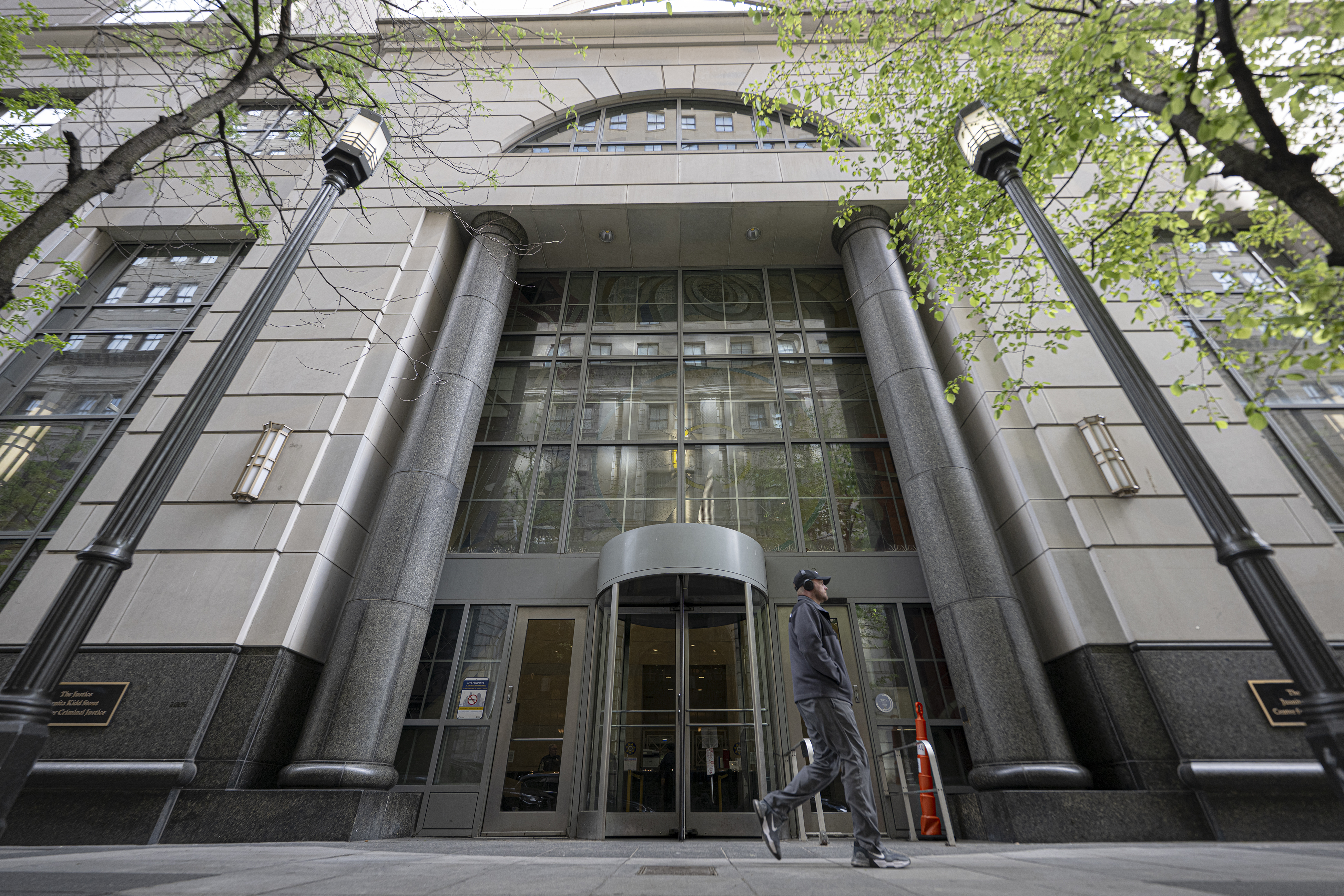
The Inquirer reported on the 2015 expungement and the existence of the court records on Tuesday, after reporter Ellie Rushing learned the documents remained on file at the Criminal Justice Center. When Rushing sought to review them, a clerk denied the request, saying the records should have been destroyed after the expungement.
Rushing, on behalf of The Inquirer, wrote a letter to administrative judges on Monday requesting that the records be preserved.
Horsch is now dead, she wrote, and the records may “hold pieces of information that are irreplaceable and important to the public and the criminal investigation.”
Kaitlin M. Gurney, an attorney for The Inquirer, filed an emergency motion reiterating those points and seeking an order allowing the news organization “access to inspect and copy all filings.” (Gurney’s husband, Patrick Kerkstra, is a managing editor at The Inquirer.)
State expungement laws, Gurney wrote, extend only to criminal histories — such as arrest records — and not to judicial records.
“Allowing court records to be expunged and permanently destroyed — not just sealed — would create significant tension with the press and public’s constitutional and common-law rights,” the motion said.
Newspapers have a constitutional right to inspect court records, except in the “most extraordinary cases,” Gurney wrote.
“These rights to access do not disappear simply because a record has been deemed expunged,” she said, adding that in this case, Horsch’s subsequent actions and suspected involvement in the deaths of multiple women had effectively invalidated the expungement.
“Given the unusual circumstances of this case, and the strong public interest in Horsch’s activities, any expungement order should be vacated,” she wrote.
On Wednesday, Common Pleas Court Judge Rose Marie DeFino-Nastasi, the supervising judge in the criminal division, ordered the Office of Judicial Records to cease “destroying or deleting any records” related to the case until further notice.
A hearing in the case is scheduled for Monday.
David Rudovsky, a prominent civil rights attorney, said that even with a deceased defendant and significant public interest, the case represents uncharted legal territory. A ruling to overturn the expungement could have far-reaching consequences, he said.
“It’s an extraordinary case,” Rudovsky said. “But I don’t know of any precedent in which an expungement can be reopened, even after the death of a defendant.”
Federal authorities learned four decades ago that Raymond “R.C.” Horsch — a man whose Olney home is now linked to five dead or missing women — was a manipulative criminal who was “consumed by anger,” according to a psychological profile obtained by The Inquirer.
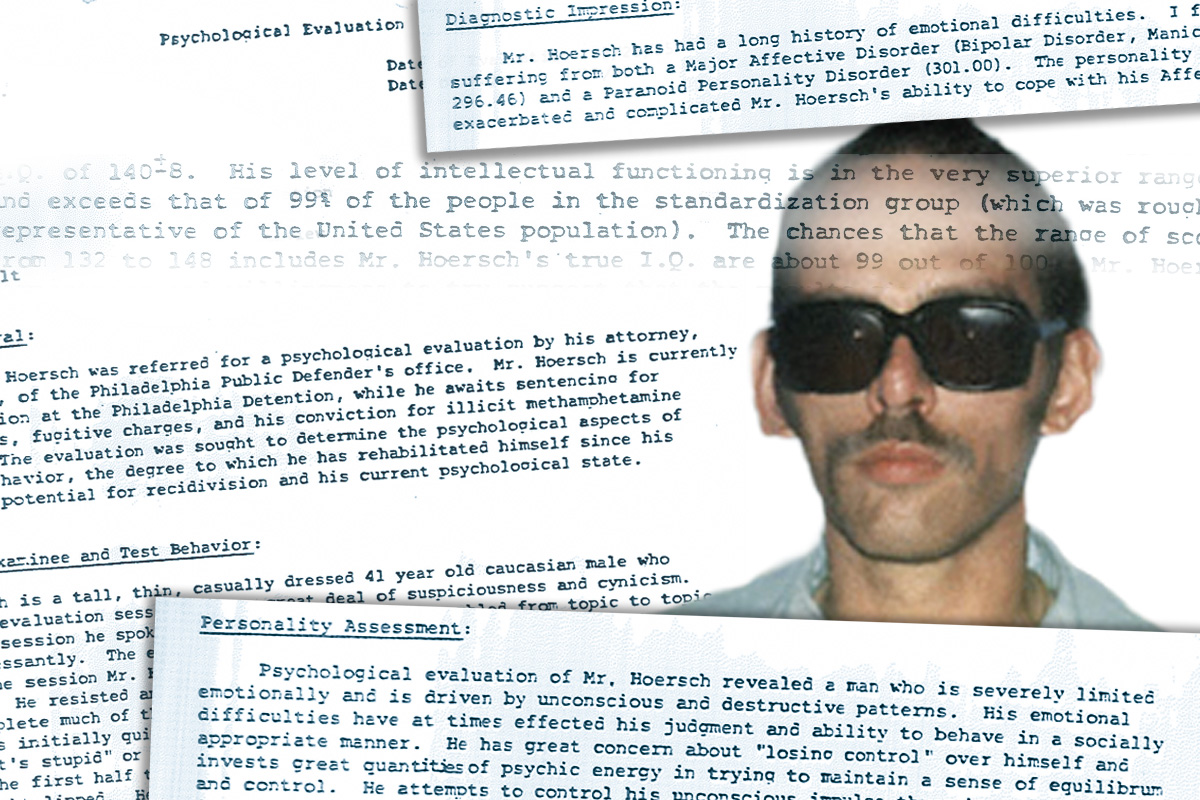
“He is grandiose, mistrustful, suspicious, and excessively controlling,” the psychologist, Don Seraydarian, wrote in 1985 as part of a federal drug manufacturing case.
At the time of the exam, a wiry, 41-year-old Horsch had just been captured after spending several years on the run in New Zealand to escape criminal charges. Prior to absconding, he had spent the previous decade producing a mobster-backed pornographic film, counterfeiting cash, and running a meth lab.
Ahead of his sentencing on the drug charges in Philadelphia, Horsch’s defense team commissioned the four-hour clinical assessment that concluded he likely suffered from bipolar and paranoid personality disorders. The report was filed along with a motion seeking lenient sentencing, with Seraydarian writing that prison time for Horsch would likely “increase his hostility and sense of alienation.”
“He feels this unfocused rage was the source of his criminal behavior,” Seraydarian wrote.
The full report, obtained by The Inquirer through a federal records request and not previously reported, is a window into the mind and early childhood of the criminal pornographer at the center of an expanding investigation into a series of missing women.
The Inquirer reported last week that police believe a video recovered from Horsch’s Olney property shows him strangling a woman to death on camera, according to law enforcement sources. Police also said they recovered photos on Horsch’s hard drives that appeared to show two other women who went missing in the 2010s alive — and then dead — inside his Chew Avenue home.
While Horsch was an established pornographer with a criminal record by 1985, he had never been charged with any violent offenses before he died in May 2025, at the age of 82. Still, the psychological report showing insight into Horsch’s unstable mental state was presented to law enforcement decades before he was linked to any disappearances.
Court records show federal prosecutors reviewed the 1985 case file again during Horsch’s 2009 indictment in a separate drug manufacturing case. Seven years later, his ex-wife, Amy McHale, went missing after being last heard from at his Chew Avenue home. Another woman was reportedly last seen at the property in 2022.
It is unclear whether police reviewed Horsch’s psychological profile as part of their ongoing investigation, or in these prior missing persons cases.
Michael Yoder, a retired FBI special agent who spent nearly a decade as a criminal profiler in the Behavioral Analysis Unit, reviewed the exam notes at The Inquirer’s request. He said that it was unusual for such an exam to be conducted for a drug case, but that he saw overwhelming hallmarks of psychopathy in the description of Horsch, and said the report would have been a red flag for criminal profilers.
“If you were to give me this report and I knew nothing about this person, and knew nothing about the crimes he committed, I would say you have a potential serial killer on your hands,” Yoder said.
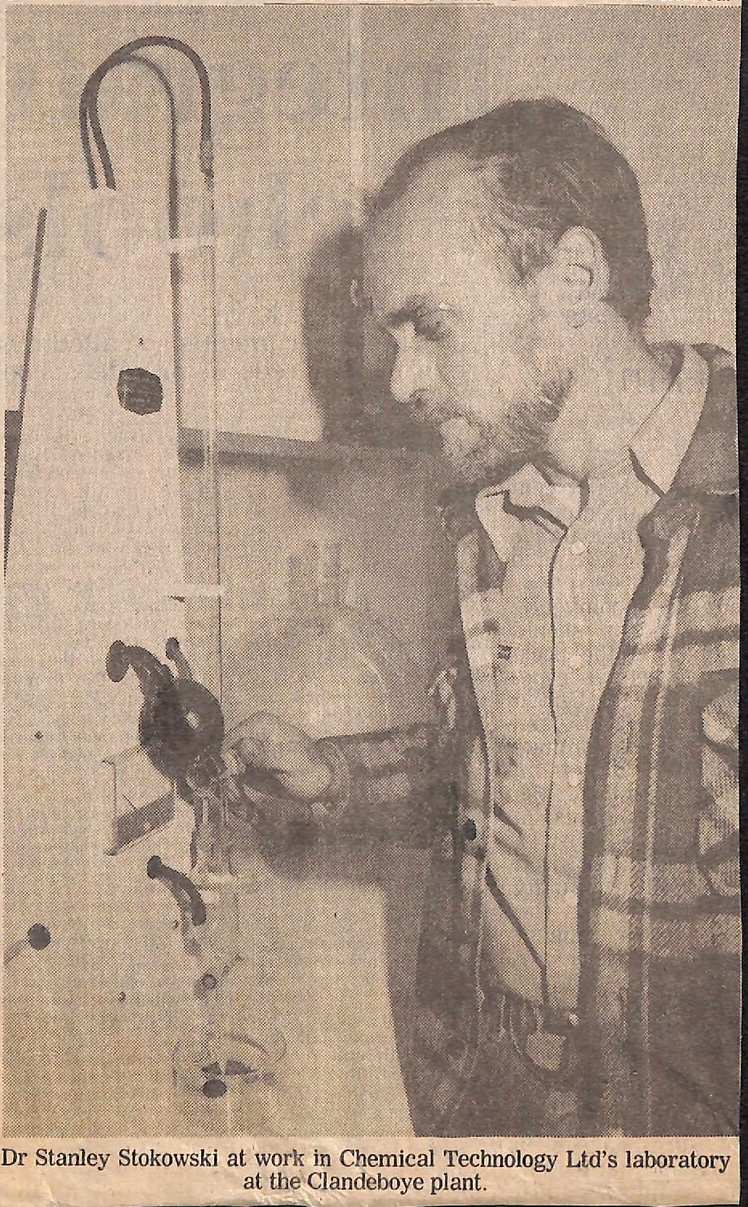
A clipping from a 1982 news article in New Zealand, where Horsch found work at an ethanol plant under the stolen identity of “Stanley Stokowski.”Custom
The report notes that during the interview, Horsch chain-smoked, dodged questions, and downplayed his crimes. He referred to himself in the third person when discussing his illegal activities, as if they were “events from someone else’s life.”
He ultimately opened up to Seraydarian about his insecurities and resentments, describing himself as a social misfit. Money was not Horsch’s motivation for committing crimes, the psychologist determined.
“He has great concern about ‘losing control’ over himself and invests great quantities of psychic energy in trying to maintain a sense of equilibrium and control,” Seraydarian wrote.
Seraydarian, in an interview this week, confirmed he had written the notes but could recall only that Horsch was “very bright.”
The report also offered insights into Horsch’s childhood.
He described a pleasant early life — raised on a farm in Bucks County by a father he called “strict but fair” and a mother who was a “salt of the earth type.” But when he was 12 or 13, he said, he had a “philosophical split with his family” that affected their relationship. He then began to rebel in high school and was later expelled from two colleges.
The report states that Horsch was an “extremely bright man” with a 140 IQ, and that he was a hard worker who could be rehabilitated as a productive member of society. It detailed an “erratic but prolific” life across the U.S. and New Zealand while he worked as a chemist, computer analyst, and photographer.
“I go from job to job because once I learn something, I want to go to something else,” Horsch explained.
And yet, the report noted, Horsch “has not been able to attain any financial success.”
Horsch told the psychologist that he had never abused drugs or alcohol, in part because “I can’t stand being out of control.” He said he had no fears or phobias, but sometimes stayed awake for several days at a time.
Seraydarian said Horsch was “very protective” of his wife and then-4-year-old son, Eugene. They were the “most important things in his life.” Horsch said he would never commit another crime because “now I’m hurting them as well as myself.”
But his crimes continued.
In the years that followed, Horsch was unabashed about his prolific career as a law breaker and a shock-seeking pornographer. He later sought to use the psychological report to cultivate his desired public image as a highly intelligent villain and psychopath, constructing a mythology around himself that blurred the line between his art and his life.
In 2014, a Wikipedia user named “S.E. Stokowski” — which was Horsch’s alias while on the lam in New Zealand — created a page for the pornographer and made more than 150 edits over the years, according to the page’s public revision history. One entry referenced Horsch’s psychological exam as testament to his supposed intellect and sociopathic tendencies.
As Horsch aged, he cast himself as an empathetic serial killer in his films and writings.
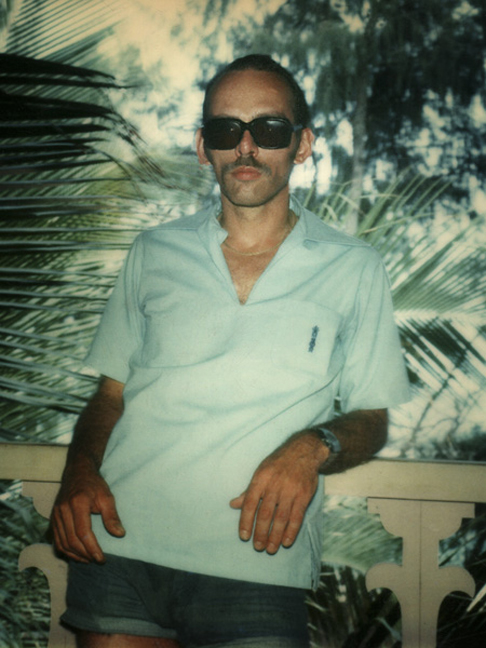
Horsch at an unspecified location in the 1980s.Obtained by The Inquirer
The 1985 psychological profile noted that Horsch’s only real friend or support system at that time was his then-wife, Anna Ferkuniak, who had a “therapeutic and rehabilitative effect” on him. He said his main wishes were to spend time with his family, live in a rural or isolated area so he could “deal with society as little as possible,” and have a better understanding of quantum physics.
Ferkuniak died of a drug overdose in 1989, less than two years after Horsch was released from federal prison.
Horsch later told an interviewer he was full of anger over her death, saying his wife “bailed out and left me with a kid to raise.” Following her death, he moved to the suburbs in Bucks County, co-opened a barbecue restaurant, and raised Eugene as a single father.
There, Horsch pursued a pornographic career that mainly featured sexual violence toward women in addiction. In his photos, films, and self-published novels, he used these women as models for his psychosexual fantasies, often depicting their deaths by drowning, hanging, or strangulation.
Federal and local law enforcement agencies are again assessing Horsch’s life after a June 19 car stop near Independence Hall involving his son, Eugene, turned up a fake ID in the name of a missing woman and led police on an extensive search of the Horsch home in Olney. Eugene Horsch is in federal custody, charged with possessing a gun, which is usually illegal for someone convicted of a felony.
Police continue to sort through the hundreds of thousands of images, videos, and pages of writing on the hard drives recovered from the dilapidated and boarded-up twin where the father and son lived together.
Investigators have so far recovered at least one video that appears to show Raymond Horsch killing a woman inside the property, sources said, as well as “dark and graphic” images of two other missing women — Maribel Fresses and Gabrielle Amarando — alive inside the home, and then dead. Law enforcement sources say the number of missing women connected to the home could grow as the investigation continues.
Police have not publicly confirmed that either Raymond or Eugene Horsch is believed to have killed anyone, and they have not recovered any bodies.
Raymond Horsch long maintained that the often gruesome violence in his films and photographs was staged. As an older man, however, he also professed that he was running out of boundaries to push.
“The problem,” he said in a 2013 interview, ”is I have no fantasies left.”
Inquirer reporters Max Marin and Ryan Briggs will host a Reddit AMA in the r/Philadelphia subreddit on Friday at 1 p.m. You can ask them questions there about the Olney investigation and the life of Raymond Horsch.
Federal prosecutors have convened a grand jury to investigate at least one former Philadelphia Fire Department official who city investigators say facilitated a brazen overtime abuse scheme, according to court records.
Evidence of the probe became public in recent weeks as part of a lawsuit filed against the city by Anthony Hudgins, a former high-ranking fire official who was demoted after two women at the center of the overtime probe accused him of sexual harassment. He maintains that they did so only in retaliation after he exposed their wrongdoing.
Court documents made public this month include a report drafted by the Philadelphia Office of the Inspector General (OIG), which conducted a yearslong investigation into Hudgins’ claims that lower-level employees were abusing overtime. Attorneys for a woman at the center of that probe revealed that she is now the target of a U.S. Department of Justice grand jury, while the woman she is accused of conspiring with suspects she, too, is under federal criminal investigation, according to court records.
Inspector General Alexander DeSantis previously declined to release the findings of the office’s overtime probe into the fire department, saying the investigation was ongoing.
The report, dated September 2025, details claims of rampant overtime abuse by former paramedic Jacqulyn Murphy that amounted to more than $180,000 in “unjust” compensation through 2023 and 2024, well over her $94,549 annual base salary.
Murphy made some of that pay during “impossible shifts,” investigators wrote. In May 2024, for instance, Murphy clocked 22 hours of overtime while she was vacationing in Cancún. And four months later, she was paid to work 12-hour shifts every day while traveling to Las Vegas to get married, including on her wedding day and the day of her return trip home.
Investigators said that she did not act alone. Supervisor Marian Farris, they wrote, rubber-stamped the overtime approvals and manipulated tax withholding statuses for Murphy and herself. The report cited emails from Murphy’s city account showing she made biweekly $500 payments to someone named “Marian F.” for six months in 2024.
“Murphy and Farris worked together to defraud the City of Philadelphia of thousands of dollars in unearned compensation and other benefits,” the OIG report said. It calls for “heavy administrative and criminal consequences.”
Farris and Murphy did not respond to requests for comment.
In a June 4 letter included in the court filing, federal prosecutors based in Philadelphia informed Farris that she is the target of a grand jury investigation concerning bribery and wire fraud. The letter did not elaborate on the nature of the investigation.
Attorneys for Farris filed the target letter in the Hudgins case as part of a request to the court to delay discovery proceedings, citing conflicts with the federal investigation.
Murphy has not yet received a target letter, but she expects she will “given the findings of the OIG that Ms. Farris and Ms. Murphy worked together to commit fraud,” her attorneys wrote in a filing on Friday.
Farris resigned in March 2025. Her attorney did not respond to a request for comment. In an interview earlier this year after Hudgins initially filed his lawsuit and detailed some of the inspector general’s findings, Farris denied receiving cash payments from Murphy in exchange for manipulating time sheets and said any payments were innocent transactions between friends.
The U.S. Attorney’s Office for the Eastern District of Pennsylvania declined to comment.
A spokesperson for the fire department did not comment.
City Solicitor Renee Garcia said in a statement that the city “takes any allegations of fraud, including overtime fraud, very seriously, including allegations of misconduct that predated this administration.” Some of the allegations involving Murphy date back to 2023. Mayor Cherelle L. Parker took office in January 2024.
Garcia declined to comment on “personnel matters,” saying only that “if misconduct is found, we take appropriate action to implement any warranted discipline.”
The publication of the inspector general’s long-guarded report is the latest twist in a saga that has long roiled the fire department. It began with what appeared to be dueling probes, as multiple women contended that Hudgins — who was formerly the fire department’s No. 2 in charge — engaged in sexually inappropriate behavior in the workplace that included unwanted touching and intimidation tactics, The Inquirer reported in 2025.
But Hudgins has maintained those complaints were lodged by Murphy, Farris, and other associates only after he uncovered and reported their overtime inconsistencies.
His timeline was confirmed in the OIG report. Investigators wrote that Hudgins conducted an overtime review that predated a discrimination complaint filed in November 2024 by the union that represents firefighters and paramedics. That complaint listed Murphy as an alleged victim and Hudgins as a respondent.
The OIG report does not offer a conclusion related to the sexual harassment complaints.
Hudgins declined to comment through an attorney on Friday.
The city hired the law firm Campbell Durrant to conduct an investigation into the sexual harassment allegations, but that report has not been made public. Hudgins claims in his lawsuit against the city that the firm cleared him of “verbal misconduct” and found that he had “hugged co-workers.”
Hudgins was reassigned to work remotely, and then was forced to take a leave of absence.
The inspector general recommended that the city implement several reforms to prevent future overtime abuses, including retraining and rehiring the fire department’s payroll and human resources staff. The office also said the fire department should implement new overtime controls.
Garcia did not respond to specific questions about whether those changes had been instituted in the fire department, saying only that “the administration has implemented significant actions across all city agencies to strengthen its overtime procedures and protocols.”
Philadelphia police are investigating a fatal hit-and-run that took place early Thursday morning in the Olney section of the city, minutes after an officer left the 48-year-old victim lying on the ground in a bike lane.
Police are treating the case as two separate matters — a search for the hit-and-run driver led by crash investigators, and an internal disciplinary probe into the officer’s conduct leading up to the crash.
First Deputy Commissioner John Stanford, at a news conference on Friday, criticized the officer for failing to help the man and leaving him in a vulnerable state on the roadway.
“[It’s] very troubling to see that there is an officer that responds to this location and fails to render any type of aid to the individual prior to that individual being struck by the vehicle, being run over by that vehicle, driven over by that vehicle and that’s troubling for us,” he said.
The officer’s name has not been released. He is assigned to the 35th District and has two years on the force, Stanford said. The department placed the officer on administrative leave while the incident is investigated, Stanford said.
Police have also not released the victim’s identity as they are trying to contact relatives.
At about 1:40 a.m., a man with an “unsteady gait” was seen walking down the 5500 block of Rising Sun Avenue, Stanford said.
Video shows the officer pull his police vehicle next to the man and engage with him. During that encounter, the man falls to the ground, lying in the bike lane and partially in the traffic lane, Stanford said.
The officer pulls his patrol car in front of the man, Stanford said, and gets out to speak with him. Then the officer leaves.
Minutes later, a car stops before reaching the man, Stanford said. But a second vehicle drives into the bike lane to go around the first car, running over the man and driving away. The victim was pronounced dead hours later at approximately 6:15 a.m.
Police are searching for a 2023 to 2026 green Kia Sportage X Line series with black-and-chrome rims.
Stanford said passersby pulled the 48-year-old man out of traffic and called police.
The officer who had first engaged with the victim and then left him in the road mere minutes before was the first officer to respond to the scene, Stanford said.
Stanford said the officer did not make a police report, waiting for medics to arrive. Stanford said the officer did not render aid during this time.
Stanford said the officer did not check whether the victim was impaired or having a medical condition, calling the officer’s behavior “very troubling, very disturbing, and to be quite blunt about it, extremely disappointing.”
“It goes against everything we stand for,” he said.
The Philadelphia Police Department and the FBI are to begin excavating part of the Olney house that has been at the center of a monthlong investigation into at least two missing persons, law enforcement officials said Monday.
Sgt. Eric Gripp, a police department spokesperson, confirmed that the Philadelphia Water Department would assist federal and local officials by unearthing a pipe under the property on the 400 block of West Chew Avenue as part of the widening probe.
“The general scope of the dig is to excavate and remove a pipe that will be subsequently examined by FBI and PPD forensics for any evidence that may be present,” said Gripp, who declined to provide a timetable for the work.
The excavation is the latest development in a case that has generated widespread interest since last month, when authorities connected the crumbling twin home to the disappearance of at least two women over the last decade.
Federal prosecutors have charged the owner of the property, Eugene Albert Horsch, 44, with carrying illegal firearms and fake federal law enforcement credentials.
Police apprehended Horsch on June 19 near Independence Mall with drugs, guns, and various other weapons, as well as a phony U.S. Drug Enforcement Administration badge. A woman who was with him at the time was carrying a fake ID in the name of Blair Tonzelli, a woman struggling with drug addiction who was last seen in 2022 at Horsch’s home.
The monthlong search of Horsch’s property has turned up an array of evidence, authorities say: hidden compartments, vats filled with chemicals, a 55-gallon drum with connections to water lines in the basement, and what police sources described as “a significant amount” of blood.
Forensic testing of the evidence found in the home remains ongoing, and police have yet to confirm whether the blood is human. Horsch has not been charged with any violent crimes in the current case.
Investigators also found Tonzelli’s bank card, other fake IDs in her name, and an unsigned, handwritten letter that appeared to describe hurting people and referenced the serial killer Ted Bundy, according to the affidavit of probable cause to search the home that was obtained by The Inquirer.
The probe grew more complicated when investigators learned that Amy McHale, the ex-wife of Horsch’s late father, Raymond Horsch, was also last seen at the Olney property in 2016, according to her family.
And adding to complexity of the circumstances is Raymond Horsch’s unusual career as an erotic filmmaker and writer, whose work fixated on sadomasochist themes, serial killers, and women struggling with drug addiction. He died in August 2025.
Police maintain a presence outside the home of Eugene Albert Horsch on West Chew Avenue in the Olney section of Philadelphia Tuesday, July 21, 2026.Jose F. Moreno / Staff Photographer
It remains unclear if authorities have linked any of the evidence in the house to foul play involving the missing women.
Jerome Brown, a lawyer for the Horsch family, has denied any connection to McHale’s disappearance, saying that she had struggled with addiction and mental health issues. Eugene Horsch was incarcerated at the time of her 2016 disappearance, according to state prison officials.
Eugene Horsch has a lengthy criminal background involving multiple drug convictions, including one linked to the discovery of a marijuana-growing operation after a house fire last year. After the latest search, investigators recovered numerous chemicals also suspected of being used in drug production.
The department did not provide an estimated cost for the dig.
Questions about the investigation have swelled among neighbors in Olney, as the probe continues in its second month. Two police cruisers have been stationed around the property 24-7 to prevent anyone from tampering with the active crime scene.
At a crowded community meeting in the basement of an Olney billiards hall this month, 35th District Police Capt. Walter Burks tried to ease anxieties, refuting erroneous reports on social media that falsely claimed police had discovered multiple dead bodies in the property.
Burks emphasized the house “does not pose a threat to the community” while acknowledging that he could not answer specific questions.
“I know you all see the cars outside,” he said. “You know it’s something serious. It’s an active crime scene we have to protect.”
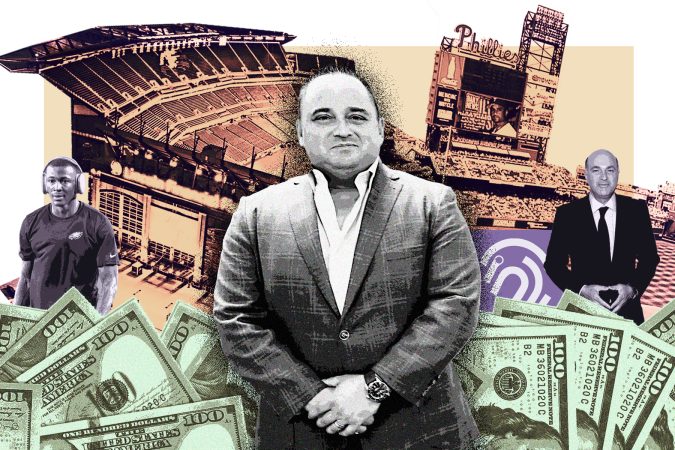
Nothing about T.J. Colaiezzi screamed “tech CEO.” He was a former gym manager from Delaware County who had dropped out of college and could not write code. But with $27 million in venture capital in the bank, his AI-powered start-up took a risky marketing gamble in the South Philly stadium complex that announced his big ambitions.
Over three seasons, with the Phillies slugging their way to a World Series, the Eagles racing to another Super Bowl, and a Sixer winning MVP, hometown crowds looked up at scoreboards with ads for his little-known company, LifeBrand. And as Colaiezzi wooed investors from the VIP suites, he sold an underdog story fit for the Philly fanbase and the broader cultural moment.
LifeBrand, he said, was a safeguard for the cancel culture era, with software that could scour years of social media in seconds and flag compromising posts. Users could purge past mistakes with a click and potential employers could avoid making a hire that might later prove embarrassing. Colaiezzi secured support from sports icons like Phillies legend Jimmy Rollins, as well as current and former Eagles.
“Catch all your cringeworthy social media posts with LifeBrand,” Eagles wide receiver DeVonta Smith said in a LifeBrand commercial that showed a photo of a “#wasted” tailgater posted carelessly online.
Now Colaiezzi, 45, is facing accusations of fraud that no artificial intelligence tool can erase.
Hundreds of pages of court documents and internal company records reviewed by The Inquirer, as well as interviews with a dozen people involved with LifeBrand, tell the story of how a fledgling CEO won over deep-pocketed athletes and business owners, and then — following a series of admitted missteps and alleged misspending — was forced to sell the tech company once valued at $137 million for next to nothing.
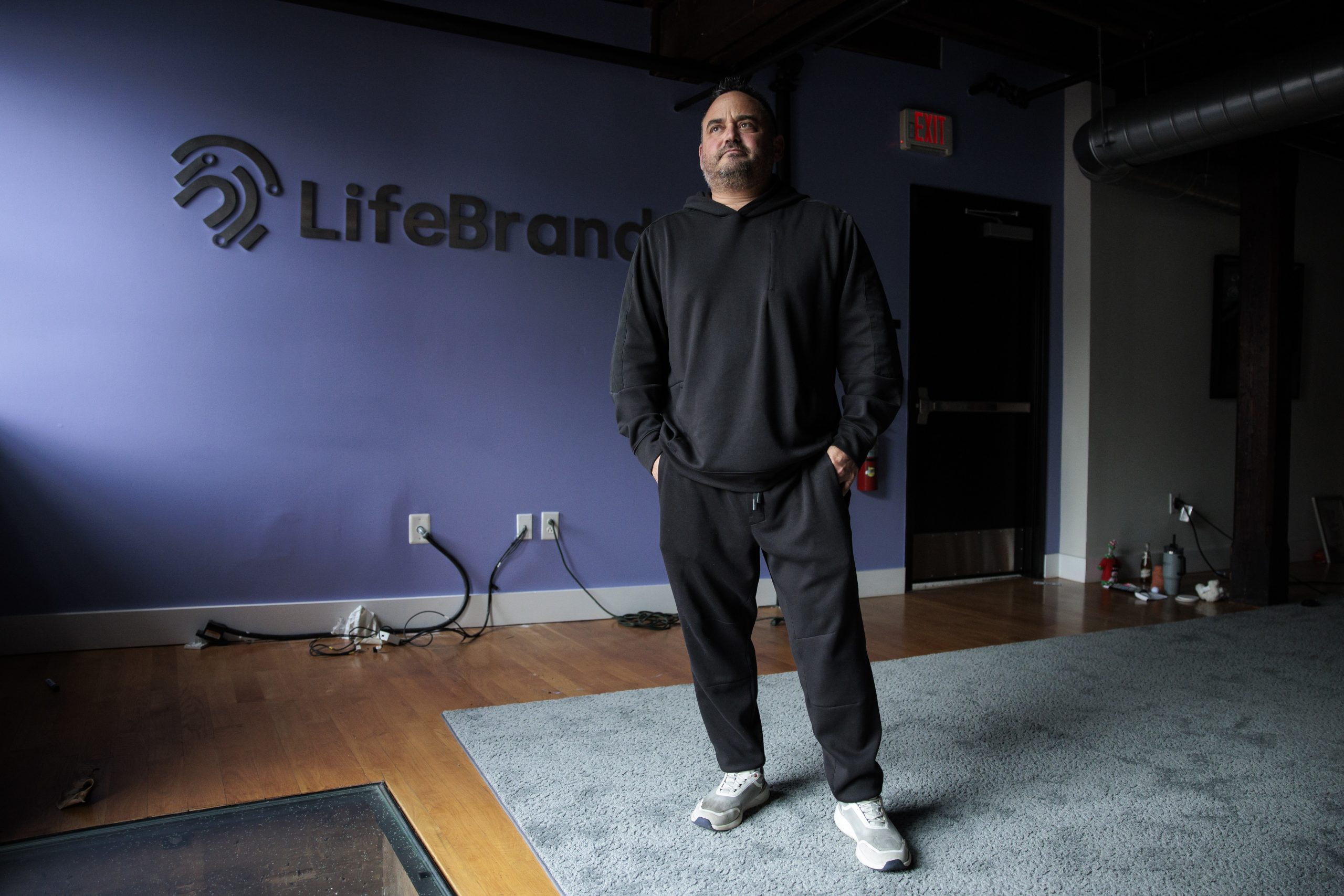
T.J. Colaiezzi posed for a portrait in the LifeBrand offices on Wednesday, May 27, 2026, in West Chester, Pa.Monica Herndon / Staff Photographer
In two lawsuits, including one filed last month in Delaware Chancery Court, investors say Colaiezzi squandered their money on a stadium-sized marketing blitz, hired unqualified friends at inflated salaries, and pocketed $6 million to finance a lavish lifestyle, including a $4.8 million home in Ocean City, N.J., and a powerboat. Both lawsuits allege that a prominent regional bank and an enthusiastic securities broker helped facilitate Colaiezzi’s deception.
Federal regulators are showing interest in the case, with the U.S. Securities and Exchange Commission (SEC) questioning at least one LifeBrand investor in March, according to correspondence reviewed by The Inquirer. An SEC spokesperson declined to comment.
Meanwhile, the Eagles, Phillies, and Sixers claim LifeBrand owes them a combined $6.2 million in unpaid marketing bills, court records show. And some LifeBrand employees are still owed paychecks from before the company’s collapse.
To the financiers who sued him, LifeBrand amounted to a “Ponzi-like” endeavor focused more on attracting capital than generating revenue. To Colaiezzi, it was a genuine effort that came up short.
In multiple interviews with The Inquirer — granted, he said, against the advice of his attorney — Colaiezzi characterized the lawsuits as fallout from former partners who are jockeying for the last scraps of his assets. Those same investors, he said, did not object to his marketing campaign or salary decisions until the company went under.
Colaiezzi acknowledged making mistakes but denied that any of them amounted to fraud.
“I was always the first to admit I was not a tech executive,” he said. “I ran health clubs for a living. And I thought I was surrounding myself with the right people.”
His $6 million stock cash-out was one of those admitted mistakes. But he maintained it was a lawful transaction that took place three years before LifeBrand failed and was never concealed from investors.
The first investor lawsuit, filed in 2024, reached a settlement in March. Attorneys for the plaintiffs — among them former Eagles Brent Celek and Todd Herremans — declined to comment, citing a confidentiality agreement.
Meanwhile, a chorus of other backers who saw their capital vanish but have not taken Colaiezzi to court say that the CEO lured them with hollow promises and misled them about LifeBrand’s prospects long after the company began to collapse.
“I will never go as far as saying this should be on American Greed,” said investor John Cerasani, referring to the CNBC docuseries about white-collar criminals. “He’s not a con man. But it was 100% reckless behavior with other people’s money.”
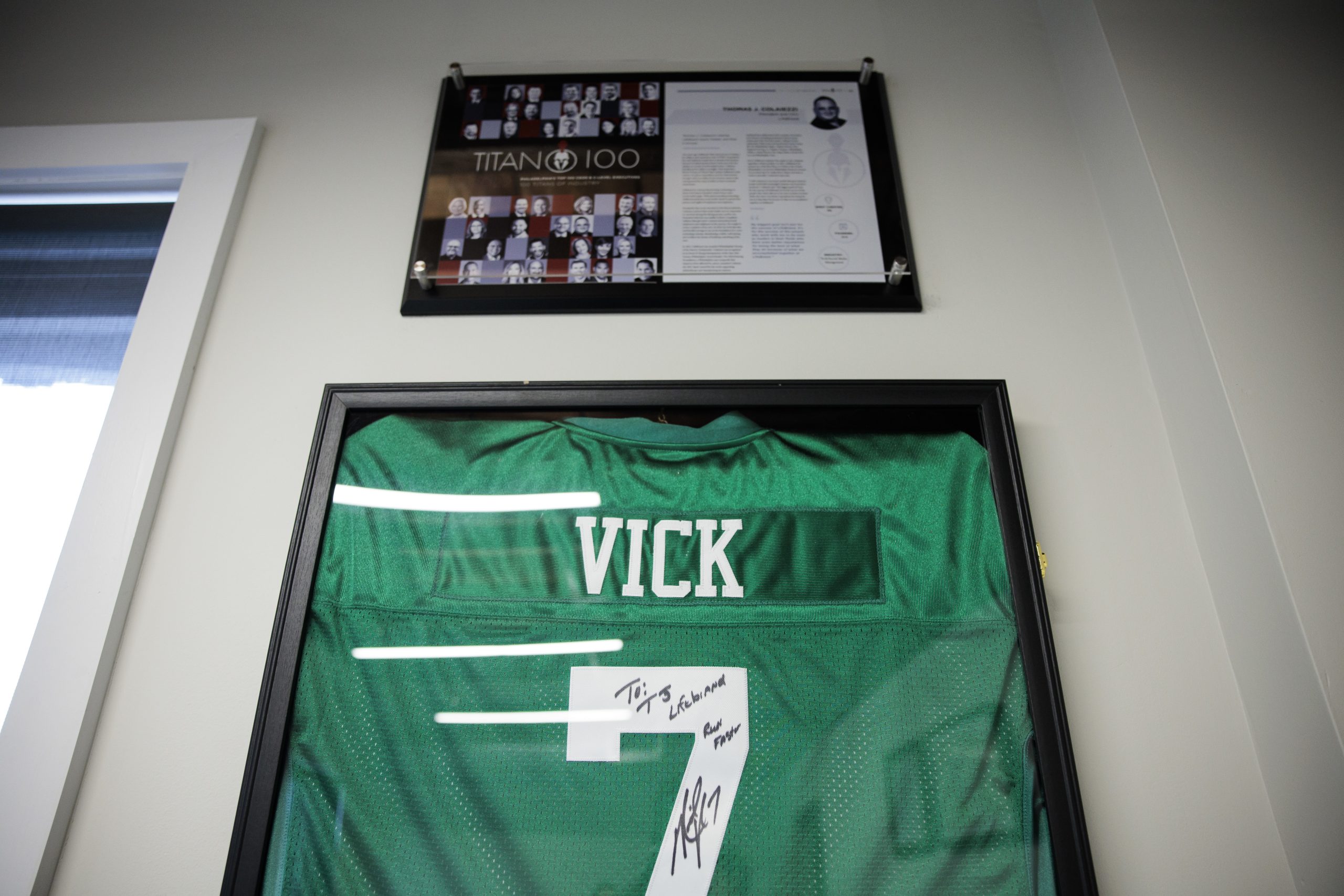
An autographed Michael Vick jersey in the LifeBrand offices on Wednesday, May 27, 2026, in West Chester, Pa.Monica Herndon / Staff Photographer
From gym manager to tech CEO
The son of an IRS official and a homemaker, Colaiezzi went to Springfield High School, where he played lacrosse and built replicas of Victorian furniture. He became a volunteer firefighter, tried to open a deli, and dropped out of Pennsylvania State University before settling in the fitness industry.
He started cleaning gyms and ascended to regional manager, overseeing LA Fitness and Crunch Fitness locations. It was there, fielding complaints about things that personal trainers and other employees had posted online, that he got the idea for LifeBrand.
Colaiezzi saw a market full of people getting fired over old Facebook posts and pro athletes apologizing for the flippant tweets they made as teens. Companies wanted ways to vet prospective employees. The need for protection was urgent — a firewall against the damaging effects of a careless post lingering somewhere in the internet’s bottomless memory. Even the dating scene, riven by partisan politics, could benefit from an online cleanup.
After raising seed money from family and friends, Colaiezzi hired a Prague-based development company to build the software that made LifeBrand a reality.
His big break came in 2020, when he won a virtual pitch competition hosted by Kevin O’Leary from the hit show Shark Tank, who called Colaiezzi a “strong entrepreneur with every question answered.” The start-up won just $10,000 but earned something better than a cash prize: credibility.
Colaiezzi leveraged the pitch competition win into a Series A investor drive, securing over $27 million by the end of 2021, surpassing expectations.
He once told an interviewer that he wouldn’t sleep until he sold the company or until every investor was paid back. One financier, Nick Guiffre, a retired CEO of a manufacturing company, said he saw “the eye of the tiger” in Colaiezzi — a man who could make good on his word.
After losing more than half a million dollars in LifeBrand, Guiffre, who is not pursuing litigation, said he wished he had done more diligence.
“I don’t want to say I could afford to lose money,” he said, “but some people who put money in early on, it was their 401(k)s. It was their future.”
Colaiezzi filled out the top ranks of his company by hiring people he knew. LifeBrand’s earliest board members consisted of Colaiezzi, his brother, a doctor, and an early venture capital investor. His chief operating officer came from the fitness industry.
He maintains that they were qualified. But, like him, no one had real tech experience.
“I think I was too loyal to people who were with me from the beginning,” Colaiezzi said. “I should have operated it more like a competitive sports team, and not like a family.”
LifeBrand President and CEO T.J. Colaiezzi is shown at his corporate office on Monday, Sept. 13, 2021, in West Chester, Pa. Bradley C Bower / For The Inquirer Bradley C Bower / For The Inquirer
The shadow broker
Anthony Falco wanted everyone to know how excited he was about LifeBrand. Maybe too excited, his attorney would later concede in court.
“Dude, this LifeBrand thing is going to [be] f— HUGE,” he texted an investor in 2021. “Signed the Phillies yesterday! Big investors involved. You will thank your little Italian buddy for this someday very soon.”
Falco was a financial adviser and securities broker who worked at Central Pennsylvania-based Mid Penn Bank and Wayne-based Alden Investment Group. But he had a side job consulting for LifeBrand that involved hyping up its prospects to investors, according to the two lawsuits.
Gregarious and well-connected, he was Colaiezzi’s liaison to a world of high net-worth investors and sports influencers. Falco invited him to celebrity golf outings, introduced him to Mid Penn Bank’s CEO, and helped bring on big names like ex-Eagles Celek and Herremans.
“We were banking at TD Bank at one point, and then [Falco] invited me golfing with the CEO of Mid Penn Bank,” Colaiezzi said. “And, you know, why wouldn’t you want to bank with a smaller bank where you got the CEO’s phone number?”
To Colaiezzi, sports were LifeBrand’s ticket to fame.
Between 2021 and 2023, LifeBrand paid millions to the Eagles, Phillies, and Sixers in a deal that included naming rights for a gate at Lincoln Financial Field and access to the Eagles Tunnel Club, a 1,400-square-foot lounge where VIPs could rub shoulders with the home team’s players as they hit the field.
Investors contend both Falco and Colaiezzi deceptively cast these deals as investor partnerships, rather than paid campaigns. According to the lawsuit initiated by the group that included Celek and Herremans, Falco received over a million shares of LifeBrand stock for inducing investors to the company through exaggerated claims, despite telling one that he was not allowed to accept comped shares.
While working out of LifeBrand’s offices, he texted investors that LifeBrand was going to be “a billion dollar company,” hyping up talks with the NFL and Jay-Z’s Roc Nation. In another text, Falco said LifeBrand was projected to make $58 million in revenue in 2022. But he also cautioned the investor that “nothing is real UNTIL we see that it is real!!”
LifeBrand’s revenue at the end of that year: $496,005.
In a motion to dismiss the 2024 lawsuit, Falco’s attorney Sean Bellew wrote that his client was at most guilty of being “overly enthusiastic” about LifeBrand and denied misleading anyone.
Both Mid Penn and Alden, which investors in that case accused of failing to supervise Falco, denied wrongdoing. Mid Penn argued in court that it had no formal relationship with the investors and that Falco’s work for LifeBrand was an outside matter. The bank declined to comment, citing pending litigation.
Alden argued much of Falco’s work at LifeBrand occurred prior to his joining the firm, which never formally advised any of the investors. Alden nonetheless paid $500,000 in March through its insurance policy to settle the 2024 lawsuit, according to Falco’s FINRA broker check page. The firm did not respond to a request for comment.
As for the new lawsuit, Bellew told The Inquirer that Falco never met the plaintiffs who renewed the allegations against him. Falco, he said, was “a victim” of Colaiezzi’s characterizations about the company — same as the other investors.
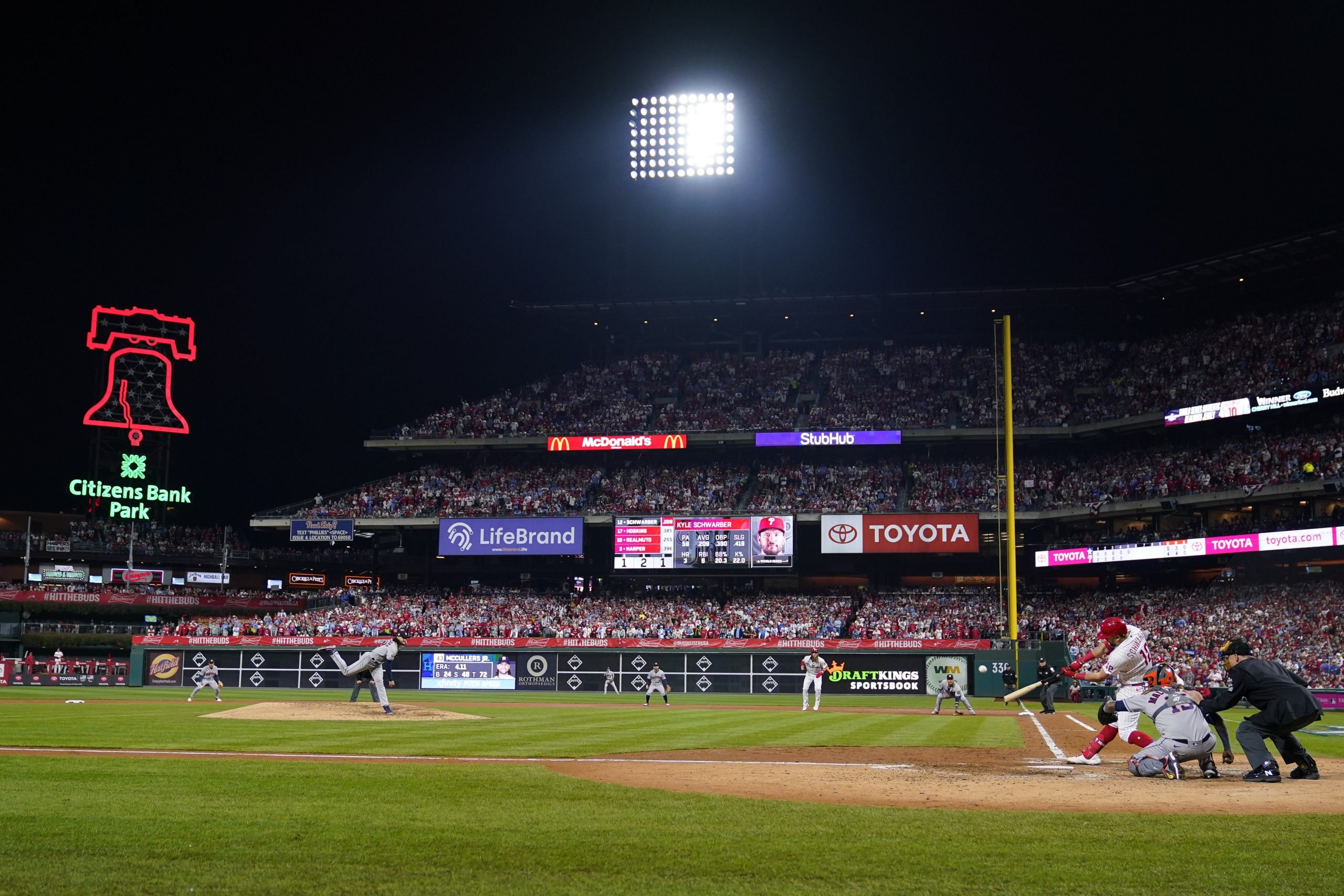
LifeBrand ads could be seen in the outfield of Citizens Bank Park during the Phillies 2022 World Series run. Matt Slocum
The Hail Mary marketing plan
For a self-made CEO from Delco, seeing his company’s name lit up across three stadiums was glorious. It was also a gamble for a young, unprofitable company. Last year, for example, the Tunnel Club naming rights were acquired by Janney Montgomery Scott, a wealth management and investment advisory firm with more than 100 offices and $1 billion in yearly sales.
Colaiezzi said he told investors about a third of the start-up capital would go toward marketing and said the stadium blitz had their support at the time. He produced text messages from investors who later sued him, which showed them asking for access to VIP seats and praising the buzzy brand campaign.
“There’s not a single email, text, or phone call with any adviser or board member saying ‘you shouldn’t be spending money on this,’” Colaiezzi said. “Everyone was in line until we ran out of money.”
Between 2021 and 2023, records show, LifeBrand spent over $16 million on advertising and marketing contracts — more than half its venture-capital haul.
Colaiezzi said the marketing helped introduce customers to LifeBrand, which scanned millions and deleted tens of thousands of social media posts over those years. He said his sales team used the stadiums to pursue multimillion-dollar contracts with major institutions and companies.
Some investors told The Inquirer they always had doubts about the marketing. Cerasani, a venture capitalist and gambling influencer, had been wooed as a potential investor with sideline tickets and access to the Tunnel Club, with its open bar with premium liquors, and a buffet with shrimp cocktail and prime rib.
Every time Cerasani visited, he said, it looked like a private party for LifeBrand executives and Colaiezzi’s close friends, who treated him like “a king.” Rarely did he see prospective clients.
Colaiezzi denied that characterization. But the gap between the marketing spend and the revenue it produced was impossible to ignore. By 2023, the company was losing over $800,000 a month, according to internal financial records reviewed by The Inquirer.
Sales reps would take clients to games and work them for months to close a modest $12,000 sale, Colaiezzi acknowledged. The big institutional contracts were not coming through.
Yet he kept sending optimistic signals to investors.
In an August 2023 email obtained by The Inquirer, Colaiezzi announced that he had just closed a “transformative deal” with a Denver-based education nonprofit — a three-year, $63 million contract that would use LifeBrand’s data to help students at underserved schools.
It is not clear how the client, which has no online presence and no publicly available nonprofit filings, was equipped for a deal of that size. The revenue never materialized, and one investor alleged in court that the deal was fiction.
Colaiezzi said the eight-figure contract was real. He assigned two full-time employees and flew out to meet with leaders, but the nonprofit backed down before the bills were due. If anything, Colaiezzi said, “we got scammed by them.”
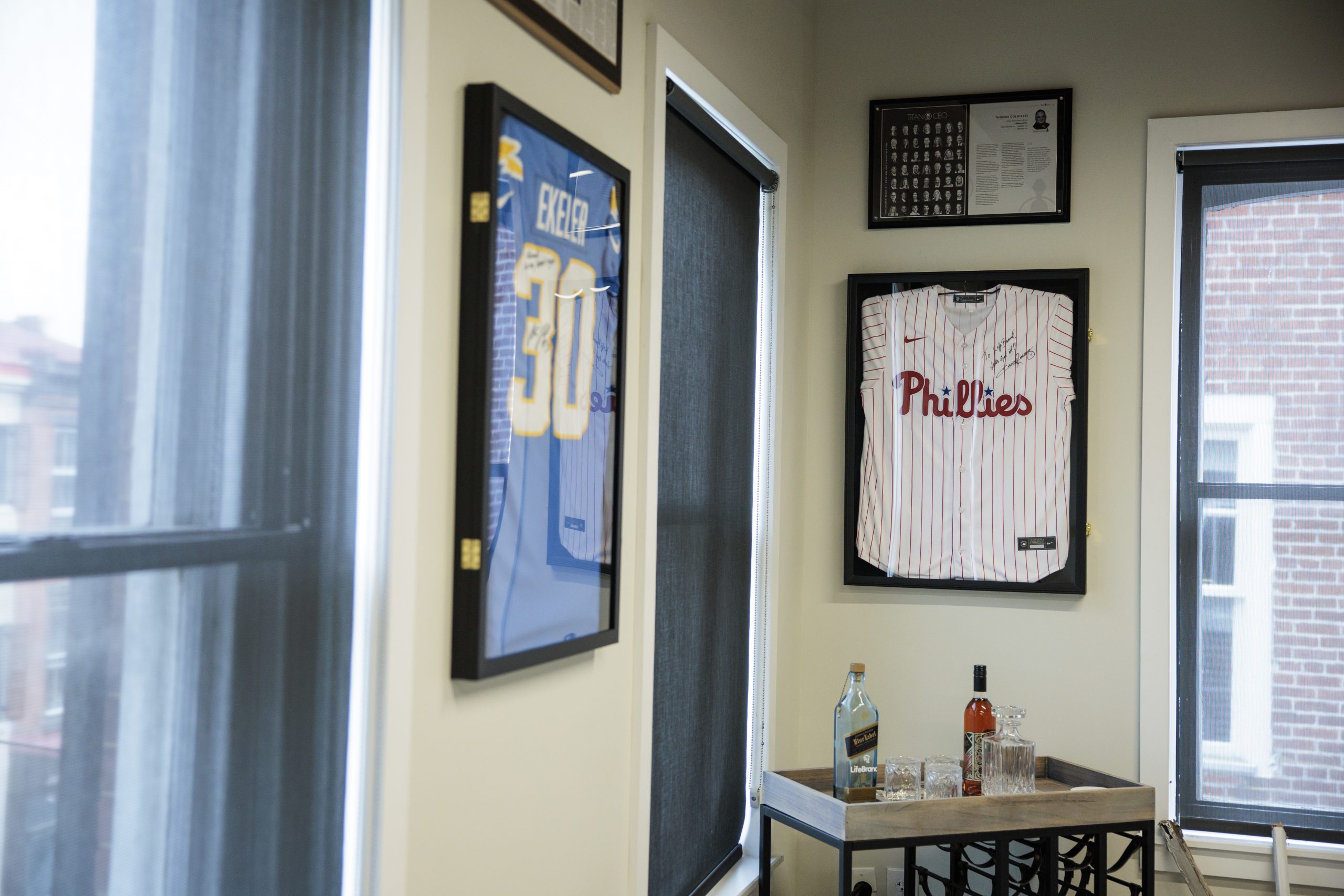
Autographed jerseys on the wall in the LifeBrand offices on Wednesday, May 27, 2026, in West Chester, Pa.Monica Herndon / Staff Photographer
Bedlam in the bank
In May 2024, a group of anxious investors gathered on a video call to discuss the millions they’d sunk into LifeBrand.
The company was on the brink of collapse. The money was gone. And all that the investors had to show for their backing were memories from the Eagles VIP suite.
As they raised concerns on the call, one investor shared that Colaiezzi had paid himself a $6.17 million stock redemption at a time when the company had little revenue, according to four people who attended the meeting. Outrage erupted.
“It was very obvious that things were going off the rails,” said Dan Ellison, a business owner who had invested in the start-up with his wife. “But no one knew that [Colaiezzi] took $6 million.”
According to Colaiezzi, the 2021 stock redemption was done at the urging of shareholders at the time to dilute his control in the company, and was documented on capitalization tables shared with subsequent investors.
He said he put $3 million back into the start-up to keep it afloat as he pursued a Series B fundraising round that would generate an additional $50 million — money that could finally turn LifeBrand profitable. That never happened.
Simon Wong, an engineer who worked at LifeBrand for a year until he was laid off in May 2024, recalled a workplace without the start-up grind culture. Most employees left each day at 4 p.m., and at 2 p.m. on Fridays, he said. Wong said he believed in the product and saw Colaiezzi as a leader who cared and said “the right things” about his mission.
By May, Wong said, software subscriptions stopped getting paid and paychecks were late — then they stopped entirely.
Colaiezzi agreed to fire himself as CEO, along with his other longtime executives. Then the rest of the board quit, leaving only Colaiezzi to run the company. He begged investors for patience while working with an outside firm to stave off bankruptcy. He laid off the entire staff and then tried to bring some of them back for a slimmed-down version of LifeBrand.
“It kind of felt like we were getting strung along,” said Wong, who said he is still owed pay from most of his final month working at the start-up.
LifeBrand — which Colaiezzi valued at $137 million in 2021 — was sold in August 2024 for $75,000 to Sentiment AI, an acquisition company formed by AI consultancy Global Fusion. Colaiezzi was initially kept on as an adviser, but the future of the company would be in the hands of more seasoned tech leaders. He said most investors agreed to convert their shares into the new venture in exchange for a promise not to sue.
Another group of investors took him to court. And the company’s turnaround effort stalled almost immediately, which Colaiezzi blamed on the litigation.
“It hit a point where people wanted to kind of run or protect themselves,” Colaiezzi said.
T.J. Colaiezzi posed for a portrait in the LifeBrand offices on Wednesday, May 27, 2026, in West Chester, Pa.Monica Herndon / Staff Photographer
‘It’s like I lost my baby’
One day last month, inside the restored 19th-century workshop in West Chester where LifeBrand operated for years, Colaiezzi walked solemnly past whiteboards crowded with years-old strategy notes. Framed Eagles, Sixers, and Phillies jerseys still hung on the wall.
He said in an interview that he feels “a weird obligation” to come to the office every day, while it is still his.
The building, which Colaiezzi purchased for $2.7 million with other investors and leased back to LifeBrand, is under foreclosure. Now he sat alone at a folding table among packed boxes in what used to be a conference room.
“It’s like I lost my baby, you know?” he said. “There was so much great potential.”
Moving on involves finalizing the lawsuits and paying off debt. Lenders and investors have placed liens on Colaiezzi’s Jersey Shore home. Asked if he got in over his head, Colaiezzi said, “Yeah, probably.”
But he is making plans to erase the LifeBrand failure and replace it with a success story.
His next venture, he said, is “a family-first social network” powered by AI.
Parents will be able to upload family histories, recipes, and advice for their children. The idea, he explained, is that children living in a harsh world should be able to get answers to sensitive questions from their own families rather than a remote server.
“The AI will basically learn how Grandpop would answer a question,” he said, “not how ChatGPT would.”
The pitch has already secured $50,000 from investors.
Staff writers Joseph DiStefano, Samantha Melamed, and Abraham Gutman contributed to this article.
The Pennsylvania Human Relations Commission announced Wednesday the appointment of Amber J.E. Harris as its interim executive director, in what the agency cast as a stabilizing move amid a string of high-level departures and an ongoing probe into its spending.
Leadership at the state’s civil rights agency was upended this year after Gov. Josh Shapiro’s administration requested the resignation of Chad Lassiter, the commission’s executive director since 2018. Four commissioners who oversee the agency also stepped down in recent months, creating eight vacancies on the 11-member oversight board.
The three remaining commissioners voted on June 30 to install Harris, a relative newcomer to PHRC, as the temporary head of the agency. The agency announced her appointment on Wednesday.
Debate flared in Harrisburg in February over concerns about the PHRC’s use of taxpayer dollars to attend and sponsor an awards banquet hosted by the Philadelphia NAACP, which honored Lassiter.
Emails show Lassiter instructed his staff to bypass state spending rules to secure taxpayer-funded tables for himself and his team at the event.
Lassiter said the payments were both proper and aligned with the agency’s mission. The NAACP ultimately provided the tables at no cost to taxpayers. The governor’s office has not announced findings from the audit.
City Councilmember Curtis Jones Jr. — a longtime member of the commission who was named interim chair during the shake-up — said Harris will be instrumental in “easing tensions and stabilizing the agency following a period of uncertainty,” according to a statement posted on social media.
Jones did not respond to a request for additional comment on Thursday. The commissioners will lead a search process to determine a permanent replacement, PHRC spokesperson Amanda Brothman Jumper said.
Harris will be “focused on ensuring operational continuity, supporting staff, and maintaining the commission’s commitment to enforcing Pennsylvania’s civil rights laws,” Brothman Jumper said.
Harris was hired in April 2025 as regional director of the commission’s Philadelphia office, overseeing civil rights complaints filed in eastern Pennsylvania. Before that, she spent a decade as a human relations specialist at the U.S. Social Security Administration, worked at American Airlines, and cofounded a nonprofit, according to her LinkedIn page.
Harris said in a statement that she will focus on providing stability to PHRC’s staff of investigators and attorneys, who mediate potential civil rights violations in places of employment, housing, education, and accommodations.
“I believe moments of transition can also be moments of opportunity,” Harris said.
PHRC’s executive director is chosen by the commissioners, who are nominated by the governor and require approval from the state Senate.
A spokesperson for Shapiro said the administration has submitted several nominations to fill the vacant commissioner seats.
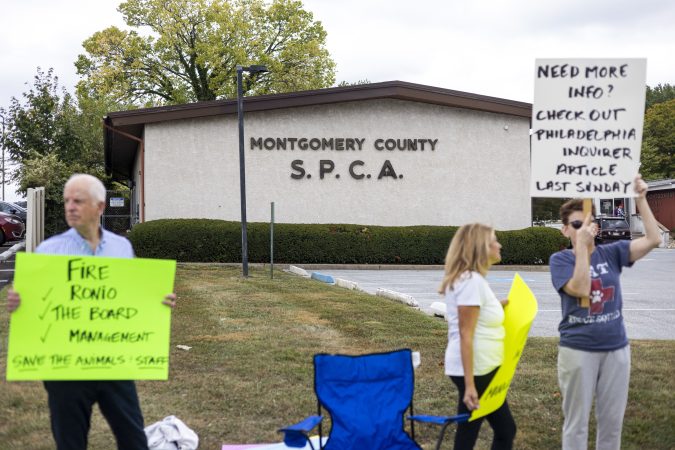
A nearly two-year probe led by the Pennsylvania Attorney General’s Office found the Montgomery County SPCA violated state nonprofit laws, euthanized animals unnecessarily, and failed to use its $67 million in charitable assets to maintain healthy animal shelters, officials announced Wednesday.
The probe began in October 2024, weeks after an Inquirer investigation revealed signs of mismanagement, hazardous conditions, and animal mistreatment at the state’s wealthiest animal shelter.
Attorney General Dave Sunday said his office reached a settlement requiring the nonprofit to replace its board of directors, hire new executive management, bring facilities up to code, and revise old bylaws. The shelter also must pay $21,040 in fines as part of the settlement.
The Montco SPCA said many of the terms of the settlement agreement were either well underway or completed as of Wednesday. The organization touted in a statement its “extraordinary progress” over the last two years, including a $26 million commitment to facility upgrades and an improved save rate for animals.
Following The Inquirer’s reporting on shelter operations, and outcry from animal welfare advocates, some donors pulled the Montco SPCA from their wills, amid concerns that the funds were being misused at the century-old institution.
The Inquirer found squalid kennel conditions, inadequate foster programming, and undertrained staff. The Montco SPCA’s wealth dwarfed that of most animal shelters in the region, yet it spent comparatively little on operations. At the time, it also saved the fewest number of animals among regional shelters, euthanizing nearly one in five that entered the main branch in Conshohocken.
The local SPCA leaders responded with a complete overhaul of operations, beginning with the ouster of its executive director, who had run the shelter for more than 50 years.
The shelter also replaced most members of its longtime board of directors, named a new executive director, improved training for staff, and invested heavily in shelter infrastructure. Plans are underway to build a new shelter.
It is a stark change from just two years ago, when the cash-rich shelter hoarded millions in investment accounts as complaints piled up.
Between 2021 and 2024, the attorney general’s probe found, the board of directors “failed to exercise due diligence and reasonable care” that resulted in multiple violations of Pennsylvania laws governing nonprofits and trade practices, according to the settlement agreement.
The agreement cited “potentially undue and precipitous euthanization of animals,” as well as mistreatment of pets, unsafe conditions, and “undue” stockpiling of charitable funds.
Sunday said that over the four years examined by his office, the Montco SPCA failed donors by spending an insufficient amount to advance the shelter’s mission.
“Pennsylvanians who donate to charities should be able to trust that their money is being used to support an organization’s mission,” Sunday said in a statement. “This settlement holds the Montgomery County SPCA accountable, puts important safeguards in place, and serves as a reminder to other charitable organizations that they will be expected to fulfill their mission and comply with the law.”
Shelter officials said the reforms are ongoing. The Montco SPCA expects to invest $25 million to build a new veterinary clinic and adoption facility in Blue Bell, where the nonprofit purchased a building for $5 million in September, according to a spokesperson. Estimated grand opening: 2027.
Meanwhile, the SPCA’s Conshohocken and Perkiomenville locations remain open for business, while its Abington branch plans to reopen in the fall after a $500,000 renovation.
“The resolution reflects both the substantial progress we have made, and a shared commitment to continue building a stronger, more sustainable organization for the future,” the nonprofit’s statement said.
About a year before police raided a crumbling Olney twin in connection to a missing woman last month, Philadelphia narcotics officers scoured Eugene Horsch’s basement and found telltale signs of a drug dealer.
Firefighters had responded to a small blaze on the second floor of the property on May 18, 2025, alerting police to what they said was a sprawling marijuana grow operation. And when narcotics cops searched the home later that morning, court records show they recovered a modified fully automatic assault rifle with an obliterated serial number, a sawed-off shotgun, a pistol, and ammunition.
The top floor was filled with cannabis plants, tents, and UV lights, with exposed wires running between the floors and into the basement, where vats of chemicals were stored, apparently to “cultivate marijuana,” the records said.
The police report detailing the drug bust at the Olney house made no mention of missing women, despite the fact that concerned relatives and friends had told police years earlier that at least two women who stayed at the house had vanished.
Now, the disappearance of one of those women, Blair Tonzelli, is central to an ongoing search at the property, where police found fake IDs and bank cards in her name, among other disturbing evidence.
That law enforcement did not appear to connect the missing women to the search for drugs at the same address raises questions about whether the officers who searched the property last summer were aware of the two missing persons cases. The Philadelphia Police Department declined to comment, citing the ongoing investigation.
Police began reexamining Tonzelli’s disappearance on June 19 after arresting Horsch, whose companion had a fake ID in her name. Investigators reinterviewed witnesses and viewed footage of a statement given in February 2023 by Tonzelli’s friend, who told officers Tonzelli was last seen at 417 W. Chew Ave. Police have also revisited the 2016 disappearance of Amy McHale — the ex-wife of Horsch’s father, erotic filmmaker Raymond C. Horsch — whose mother said she vanished from the Olney home.
Gloria McHale, Amy’s mother, said she was surprised to learn that police had searched the property for drugs in 2025.
“I wish they would have looked deeper,” she said.
Police have not charged Horsch with any crimes linked to missing women. He has been jailed since his arrest last month on $500,000 bail for gun and drug charges, as federal and local police prepare to excavate the property in search of more evidence.
His attorney, Jerome Brown, declined comment. Brown has previously said police had interviewed Raymond Horsch several times over the years about McHale’s disappearance.
When local and federal law enforcement officers searched Horsch’s home last month in connection to the missing women, police said they again found guns, ammo, and drugs. More troubling, according to police records, is that they also found a “significant amount” of blood, a handwritten letter referencing serial killer Ted Bundy, and fake IDs and bank cards in Tonzelli’s name.
The latest search began after police arrested Horsch in his black BMW with an array of weapons, drugs, and a woman donning a fake ID in Tonzelli’s name. A sworn affidavit to initiate the search includes witness testimony that suggested Horsch was a “sociopath” who knew how to dispose of human remains.
But it was a fire that brought police to Horsch’s property one morning in May 2025.
Eugene had been living in the twin with two other women, including his father’s longtime companion, Krista M. Killen. City firefighters said the small blaze was started by “careless smoking” on the second floor, according to Horsch’s arrest report. While extinguishing the fire, a fire marshal and police patrolman on the scene discovered a “marijuana grow operation” on the home’s third floor and basement.
Officers with the PPD Narcotics Strike Force later searched the home and seized 26 pounds of marijuana, 131 grams of dried mushrooms, $1,200 worth of methamphetamine, $800 cash, and “numerous gold colored and silver” coins in a safe, records show.
Police also recovered a BCI Defense AR-15 style rifle modified to be fully automatic, a 12-gauge Stevens Model 67 pump-action shotgun with a sawed-off barrel, a 9mm Girsan MC28 pistol and more than a hundred rounds of ammunition. The serial numbers had been destroyed on all three firearms, according to records.
Horsch had previous felony convictions for drug manufacturing charges and was not legally allowed to own firearms. He was arrested and held on $750,000 bail for manufacturing drugs, illegal gun possession, and related crimes.
Brown, the family attorney, told a judge that the weapons belonged to Horsch’s father, who had died just three days before the drug raid. Brown said Eugene Horsch was planning to properly dispose of the firearms, according to a spokesperson for District Attorney Larry Krasner.
His health became a factor in determining an appropriate resolution to the case. Sources familiar with the case, who were granted anonymity because they are not authorized to discuss the details publicly, said Horsch appeared frail at the time of his 2025 arrest and could barely walk into court.
Horsch pled guilty to manufacturing drugs, and prosecutors withdrew the additional gun charges. He received three years probation.
Within months of his release from jail, Horsch would be locked up again.
In March, police arrested Horsch and charged him with stabbing a man at Eighth and Market Streets. Prosecutors dropped the charges after a witness failed to appear in court, records show, and he was released from lockup in May.
Three weeks later, U.S. Park Police stopped him in his car near Independence Mall, where they recovered a fake ID in Tonzelli’s name.
The search of the Olney property continued Wednesday.
Blair Tonzelli had been missing from Kensington for more than three years when her name turned up somewhere unexpected: on the fake ID of a woman in the backseat of a car parked near Independence Hall.
The woman showed the ID to U.S. Park Police on June 19 after they found her and Eugene Albert Horsch, 44, seated in his black BMW, with drug paraphernalia, guns, and knives stashed in the car, according to police records. The woman later told officers that Horsch made her the fake ID in Tonzelli’s name and urged her to use it if she ever got into trouble.
That encounter sparked a sprawling investigation into Horsch and an ongoing search of his Olney home for connections to Tonzelli and at least one other missing woman. Amy McHale — ex-wife of Raymond Horsch, Eugene’s father — was last seen at the Horsch property on West Chew Avenue in 2016.
Tonzelli was 35 when a friend reported her missing in early 2023. Police records now link her to Horsch following his arrest during the car stop. Philadelphia homicide detectives began probing Tonzelli’s disappearance last week and interviewed at least two women who said they believed something bad may have happened to her, according to police documents.
One reported that Horsch was “a sociopath,” and that while he had never been violent toward her, he said things that suggested he was to others. According to the police documents, the woman told detectives that Horsch said that he knew of three chemicals needed to melt human remains and that he could make a body “so small it could be flushed down a toilet.”
The woman told police that Tonzelli was a home healthcare aide who had worked in Horsch’s Olney house, according to the records. She believed Tonzelli and Horsch had a disagreement over money at one point, the records say, and that he still had access to a CashApp account under Tonzelli’s name.
Horsch remains in a Philadelphia jail after officers searched his car and found two firearms with obliterated serial numbers, as well as cocaine, fentanyl, and marijuana, a cattle prod, switchblade knives, handcuffs, and a fake U.S. Drug Enforcement badge featuring Horsch’s photo. He is being held on $500,000 bail for illegal gun and drug charges.
Jerome Brown, an attorney for Horsch, declined to comment on Monday.
Horsch has not been charged with any crimes linked to Tonzelli’s disappearance. But the statements in law enforcement records raise concerns about her well-being and have provided local and federal investigators probable cause to search the Olney property for more than a week.
Inside the boarded-up twin, officers recovered several fake IDs in Tonzelli’s name and her bank card, according to police records. Investigators also found drugs, guns, vats of unknown chemicals, a 55-gallon drum, and an unsigned, handwritten letter that graphically described hurting people.
Police said they have not recovered any human remains at the house, but law enforcement sources on Monday said there was a “significant amount” of blood inside. Investigators are awaiting forensic testing to determine whose blood it is or if it’s even human, a process that could take weeks to complete.
Police are preparing to excavate the front and backyards of the home, the sources said.
Local and federal investigators continued to scour Horsch’s home Monday for additional evidence.
In the years before her disappearance, Tonzelli struggled with an opioid addiction and floated through the streets of Kensington, spending time in and out of jail on drug and prostitution charges. David McCarty, 72, said that he lived with her for a time in a house on Wensley Street and that their friends would try to look out for one another.
Even in the throes of her addiction, Tonzelli was fiercely loyal, McCarty recalled. She once threw herself in front of a tow truck to prevent the operator from illegally taking McCarty’s car, yelling “You’re not gonna do this to my friend!”
But Tonzelli, he said, would disappear for stretches, often with a man from Olney who sold marijuana. She told McCarty she was visiting with a man named Raymond, he said.
At the time, Eugene Horsch lived with his father, Raymond “R.C.” Horsch, a convicted drug dealer and a producer of erotic films and novels. His work often focused on serial killers and the sexual exploitation of women with substance-abuse problems. The elder Horsch, who died in the Olney house in 2025, often featured women who frequented Kensington in his films.
Tonzelli typically returned from her trips to see Horsch, McCarty said, but then he didn’t hear from her after August 2022.
Joseph Gunkel said in an interview that he and a friend called police to report Tonzelli missing in February 2023 after months had passed without hearing from her.
The friend told police that Tonzelli was last seen at the Olney home of a “sketchy” man who scared her, according to police records. Tonzelli was meant to meet someone one afternoon and never showed up, and none of her acquaintances — from Philly to Florida — had heard from her since, the friend said.
McCarty grew worried as days became weeks. He knew she needed regular medical attention because of a drug-related wound that ran from her armpit down to her knee. McCarty said he replaced the gauze and applied ointment to the open gash twice a day, and Tonzelli needed daily medication to fight off the infection.
“I can’t tell you how many times I spent visiting her and putting her in the hospital,” McCarty said. ”People make choices. She’s an adult, and it didn’t matter what I’d say or what I’d do to help her.”
Gunkel said he didn’t hear from police again about Tonzelli until last week, when homicide detectives asked him to come in for an interview about her disappearance. He said he was relieved someone was finally looking into her whereabouts, even if it was three years later.
“At least reporting her missing helped out some,” he said.
Tonzelli’s Facebook page says she attended Archbishop Ryan High School. Her mother, who grew up in Fishtown, died when Tonzelli was 18, according to an online obituary.
Tonzelli’s family declined to speak this week. McCarty said that Tonzelli was estranged from her relatives but that she had a son who she talked about often.
After she went missing, McCarty urged a mutual friend to file a police report, because he worried no one else would.
“My soul just believes something was going on,” he said.