It was early on a Friday evening, a week after her ninth birthday. Ashley Rivera, already in her pajamas, walked from her home to the 7-Eleven across the street to grab a snack. She was within eyesight of her stepdad, who sat on the front porch of their Kensington home, smoking Newports, crutches at his side.
Ashley left the convenience store and noticed a man in his 60s in a green Jeep. He had long, greasy, stringy hair and had been slowly circling the block.
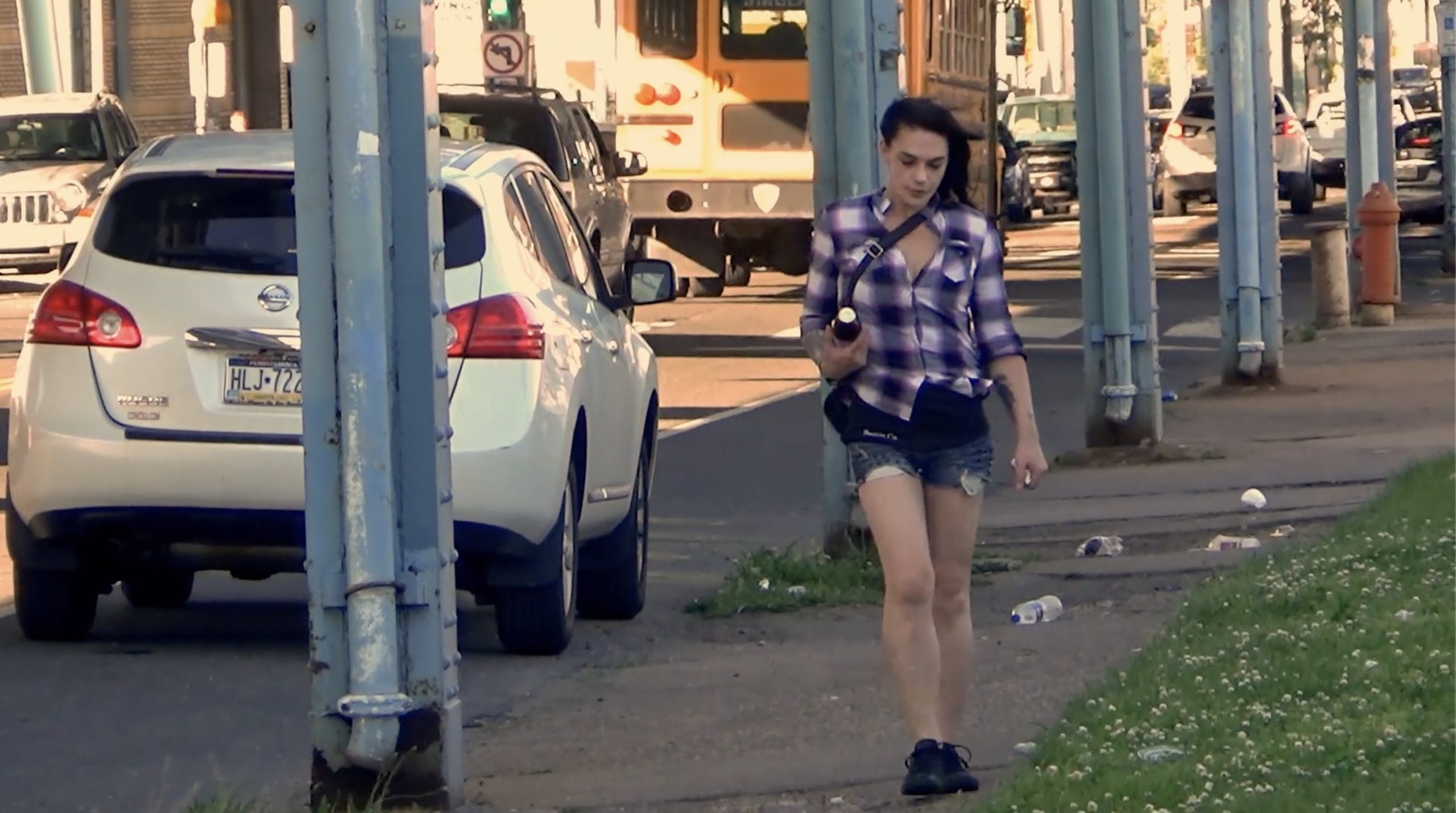
At first, she didn’t pay him much attention. She lived in Kensington, where throngs of people suffering from addiction crowd the sidewalks, and sex workers linger under the El tracks. She figured he was just another guy looking to pay for drugs or a woman.
But he had his eyes on her.
The man pulled up, rolled down his window, and asked her to get into his car. He called her sexy.
Ashley moved away. But the man jumped out and gripped her arm tightly. She screamed for help as he dragged her toward his Jeep.
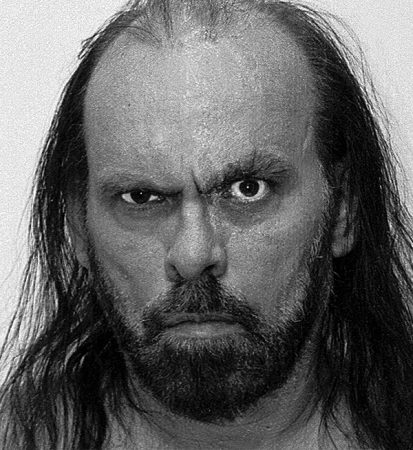
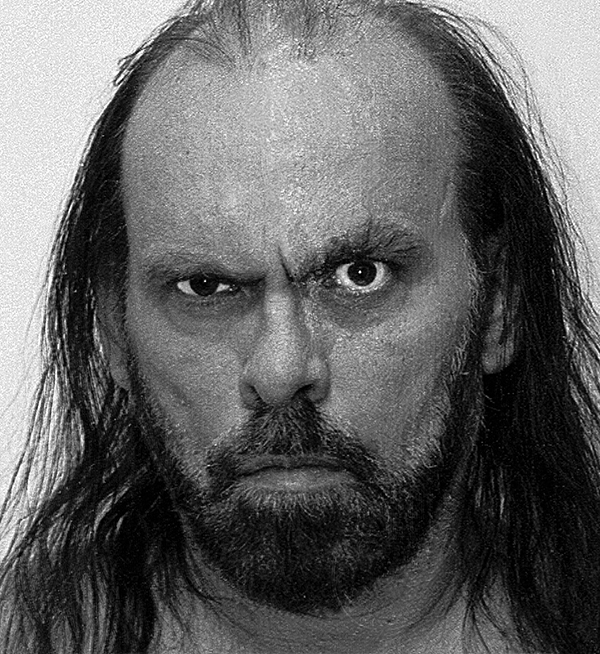
Even now, 17 years later, she remembers his eyes. “He looked very evil,” she said.
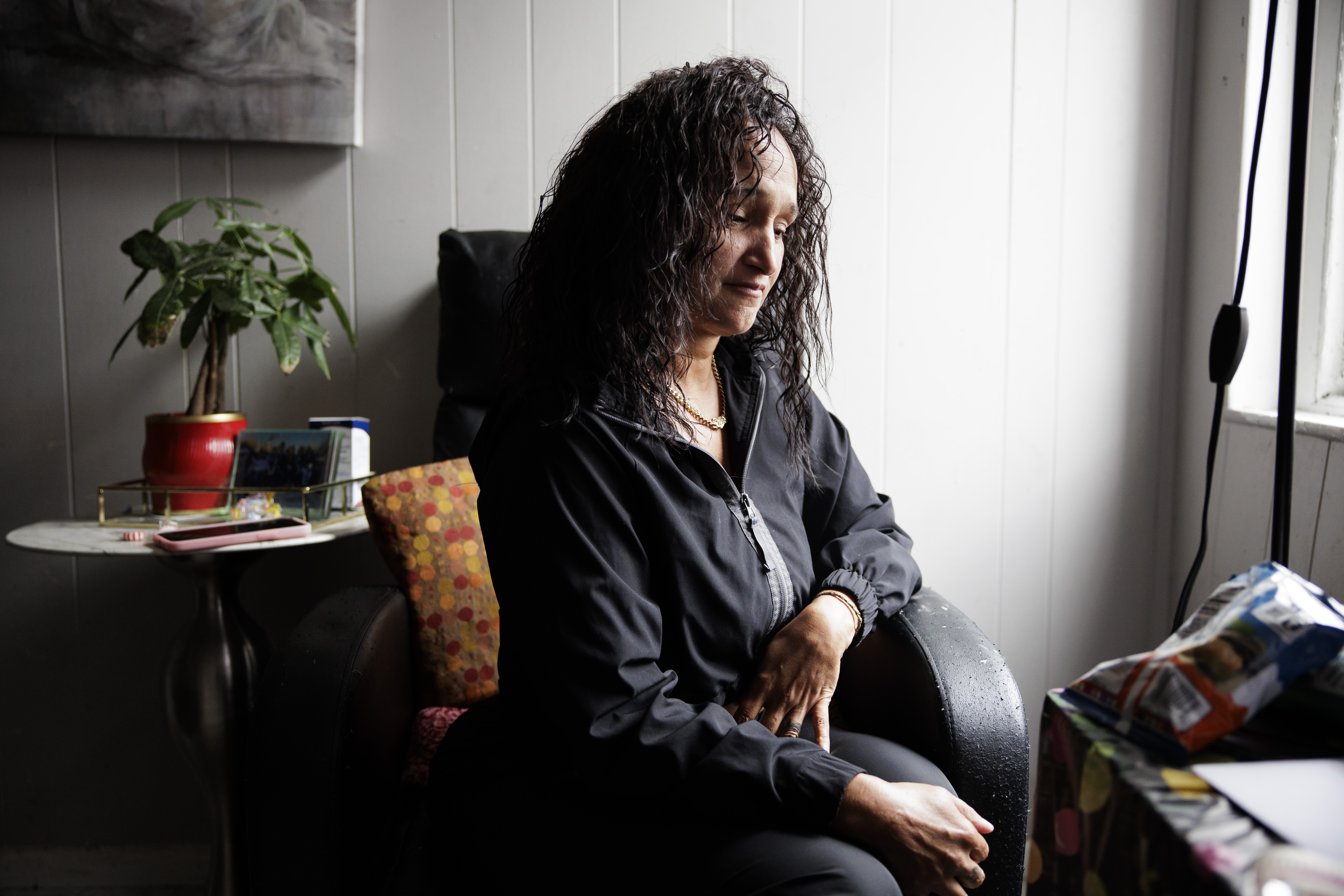
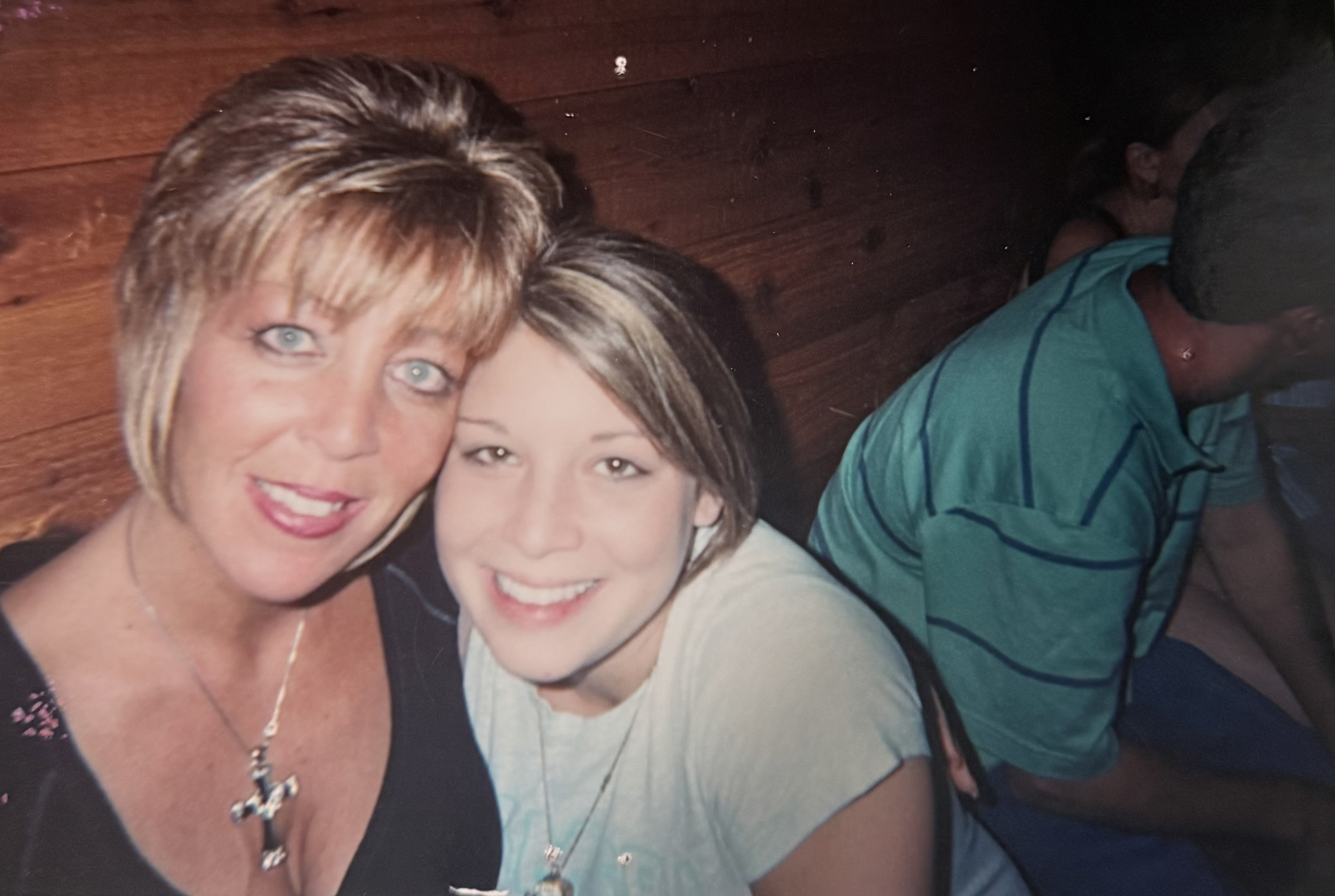
Sasha Rivera posed for a portrait at her home on Tuesday. Her daughter was 9 when accosted by Raymond Horsch in 2009.Monica Herndon / Staff Photographer
Ashley Rivera, who is 26, was stunned to learn this week that the man who tried to abduct her was Raymond “R.C.” Horsch, the shock-seeking pornographer now linked to at least seven missing women.
Horsch’s Olney home, and his bizarre past, have been at the center of a sprawling local and federal investigation since June that has uncovered a trove of disturbing digital evidence suggesting he may have killed women he lured off the streets of Kensington.
He died in 2025 at the age of 82. His son, Eugene, with whom he shared the Olney twin, is in prison on federal charges from a June 19 car stop near Independence Hall, in which authorities recovered the fake ID of a missing woman. Eugene Horsch has not been accused of any violent crimes involving the deaths or disappearances of the women.
Rivera’s account is the first known instance of Raymond Horsch attempting to victimize a child, and shows his violent obsessions may have extended beyond the women in addiction he exploited for decades. It also offers new insight into how Horsch evaded consequences.
“I really do feel like I escaped something big,” Rivera said. “He could have kidnapped me. He could have done the same thing to me that he did to those women. He could have raped me, killed me.
“I was a 9-year-old girl. I was just a kid.”
An unforgettable face
Rivera credits her stepfather with helping her escape Horsch’s grip that evening in March 2009.
When he heard her scream, she said, he hobbled off the front porch and hit the back window of Horsch’s Jeep with one of his crutches. Horsch sped off.
Rivera ran inside, crying to her mother, Sasha, who called 911.
Sasha Rivera, in an interview this week, said she then ran outside and saw Horsch circling their block.
“I chased him with a baseball bat,” swinging it at the Jeep as he drove by, she said. “I thought he was going to kill her. If he had taken her, I may never have found my daughter.”
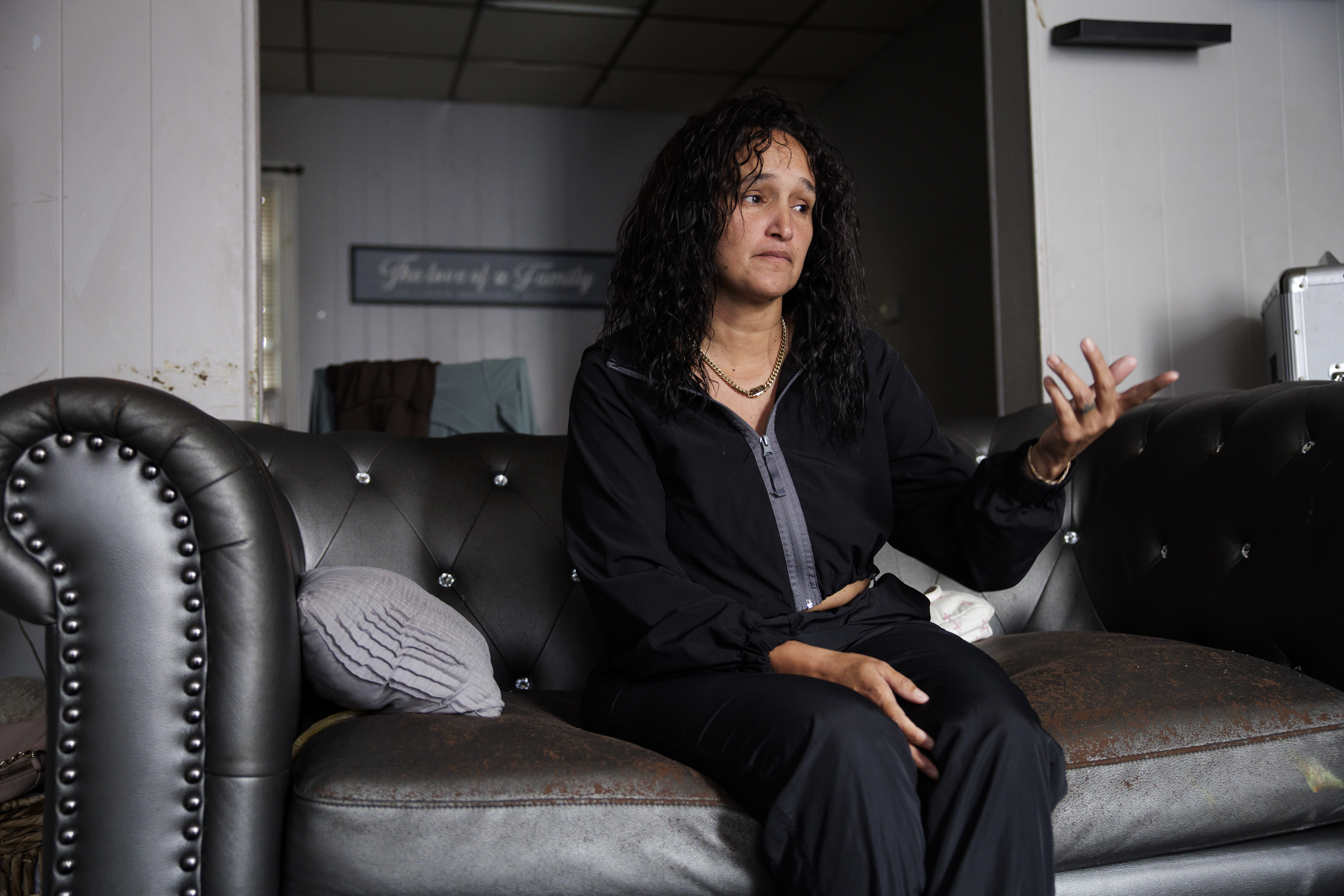
Sasha Rivera talks about the night that Raymond Horsch tried to abduct her daughter, who was 9 years old at the time. Monica Herndon / Staff Photographer
Police arrived to find Horsch near the 3200 block of Kensington Avenue, according to an arrest report. Inside his Jeep, officers found a pair of high-powered binoculars, a digital camera, a telephoto lens, an eye patch, and a condom.
Officers asked Ashley and her mother if this was the man who had tried to lure her into his car.
There was no question it was him.
“I couldn’t forget that face,” Ashley Rivera said.
‘I just broke down crying’
Police arrested Horsch, and he was charged with luring a child into a motor vehicle and corrupting the morals of a minor.
Several months later, in January 2010, Rivera appeared in a courtroom in the decaying former Family Court building on Vine Street to testify against Horsch.
Rivera shook as she walked to the stand to testify. Horsch and his lawyers sat just a few feet away. She said he glared at her, with one eye looking straight ahead and the other bulging out crookedly.
“I was so scared, and he just kept staring at me. I just broke down crying,” she said. “I felt like I was looking at a killer.”
Rivera said her testimony had to be cut short.
“They made me get off the stand because I was crying so much,” she said.
The prosecutor on the case, Jill Fertel, said Rivera had to sit through Horsch’s attorneys accusing her of lying and saying she was not as innocent as she appeared because she grew up in a rough neighborhood.
“They said the morals of a girl from Kensington were harder to corrupt than a girl from Chestnut Hill,” Fertel said, referring to a wealthier neighborhood near the city limits.
The memory she can’t escape
Common Pleas Court Judge Roger Gordon convicted Horsch of both counts and sentenced him to 2½ to 5 years in prison.
The conviction meant Horsch would have been required to register as a sex offender under Megan’s Law, but he requested a “trial de novo,” or a new trial, in Common Pleas Court.
Unlike a typical appeal — in which a higher court reads the transcript of the lower-court proceedings to check for any legal or procedural errors — a trial de novo wipes the slate clean.
Ashley Rivera would have to testify again.
When she learned this, she begged her mother not to make her go back to court. Sasha Rivera, who is 46, said she could not put her daughter through such trauma again.
“I thought he and his family would do something to us,” Sasha Rivera said of Horsch.
A new prosecutor took over the case. But without Ashley Rivera, the Philadelphia District Attorney’s Office dropped the charges against Horsch. The original conviction was vacated and, in 2015, Horsch successfully petitioned for the case to be expunged.
Fertel said Rivera’s experience was “horrible.”
“The system was not designed for children,” she said. “There is a difference between being able to confront your accuser and being able to intimidate a victim.”
The state upgraded the crime of luring a child under the age of 13 to a felony in 2013. Fertel also said courts now more frequently allow children to testify on camera from another room to avoid their abuser.
Records from the case, including a psychological examination of Horsch, are at risk of being destroyed. The Inquirer has filed a motion with the court to preserve them and make them public, and a judge ruled Wednesday that they should not be immediately destroyed.
Ashley Rivera, who said she supports unsealing the records, said the incident with Horsch left her scared to play outside as a child. Even today, she said, she struggles with anxiety.
“When men stare at me, I’m instantly scared,” she said.
It has also affected the way she raises her son, who is the same age she was when Horsch grabbed her. She said she is afraid to let him go anywhere alone.
“We have a park down the block from my house, literally on the corner of my block,” she said. “He asks me, ‘Hey, Mom, can I go to the park by myself?’”
She tells him no. She’ll go with him. “And then he doesn’t want to go because he doesn’t want to go with his mom because all the other kids are by themselves.”
“I tried to get that memory out of my head,” she said. “But I can’t. It stays with me.”
Rivera now works as a receptionist in Northeast Philadelphia. She never realized Horsch walked free after she didn’t appear at his second trial. She said she feels guilt because had she been able to testify again as a child, perhaps the case would not have fallen apart.
“Maybe it’s my fault that he was free,” she said. “I thank God every day my stepdad was there to save me because I could be missing or dead. I feel really lucky.
“But I feel so bad for all the victims and their families. I didn’t have to go through what they went through.”
Jonathan Halloran-Koren said he watched with horror as Philadelphia police brass described the graphic details of his cousin Nicole Fusaro’s killing during a Wednesday news conference.
Deputy Police Commissioner Frank Vanore said investigators recovered videos that show Raymond “R.C.” Horsch giving her drugs and money, then handcuffing her to a bed. Horsch, naked and holding a camera, with another mounted in the corner of the room, then used pliers to put a zip tie around the woman’s neck until she fell unconscious, Vanore said.
None of this, Halloran-Koren said, had been shared when he and his mother had met with homicide detectives about her case just four hours earlier. All they were told, he said, was that Horsch had filmed himself strangling her.
“I didn’t need to know that. The public didn’t need to know that,” Halloran-Koren said of the details shared in the news conference. “I’ve seen some really graphic and horrible things in my life, but to turn around and hear how my cousin died in a press conference, all I could feel was deep sadness, sorrow, and rage.”
On Thursday, Halloran-Koren, a security consultant, sent a letter to Mayor Cherelle L. Parker and members of City Council, calling the action of city police officials “appalling.”
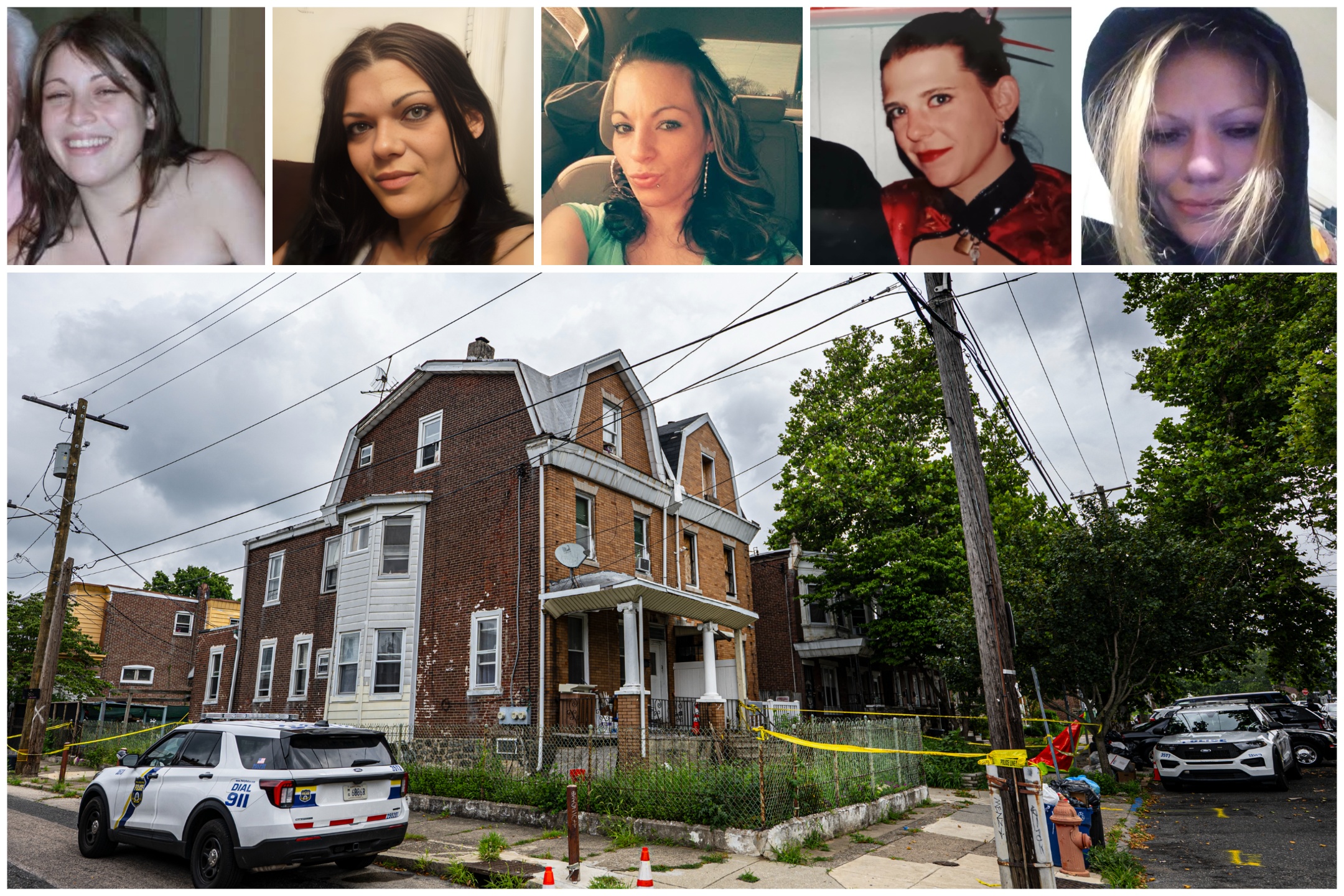
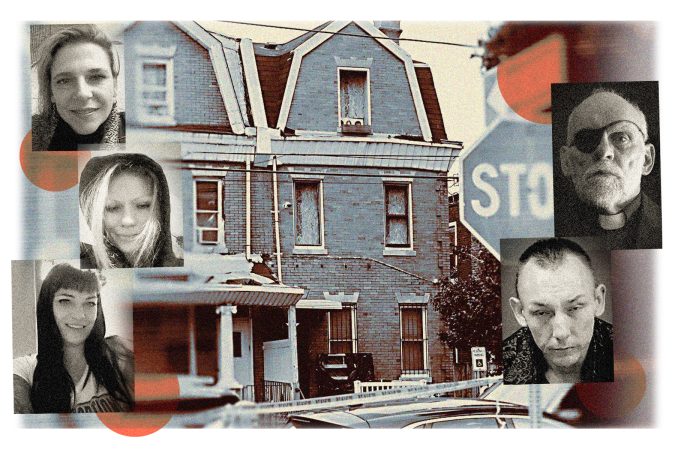
(Top from left) Gabrielle Amarando, Nicole Fusaro, Maribel Fresses, Amy McHale, and Blair Tonzelli. Nicole Fusaro, Gabrielle Amarando, and Maribel Fresses are presumed dead. Blair Tonzelli and Amy McHale are still missing, but were last seen at Horsch’s home.Obtained by The Inquirer
Sgt. Eric Gripp, a spokesperson for the police department, said detectives traveled to northern New Jersey to speak with the family members ahead of the news conference Wednesday, though he declined to discuss the details of a private conversation.
The department did not name Fusaro during the news conference, in deference to other relatives.
“Our deepest sympathy remains with every family whose loved one may be connected to this extraordinarily complex and deeply troubling investigation,” Gripp said, and police will “pursue every lead, work to locate the missing women, and provide verified information to their families as responsibly and compassionately as possible.”
Joe Grace, a spokesperson for the mayor’s office, referred questions to the police department.
Fusaro’s case is part of a sprawling local and federal investigation into the drug, sex, and porn operation Horsch ran out of his home on West Chew Avenue in Olney. Police now say Horsch, who died last year at 82 from lung disease, is linked to seven dead or missing women.
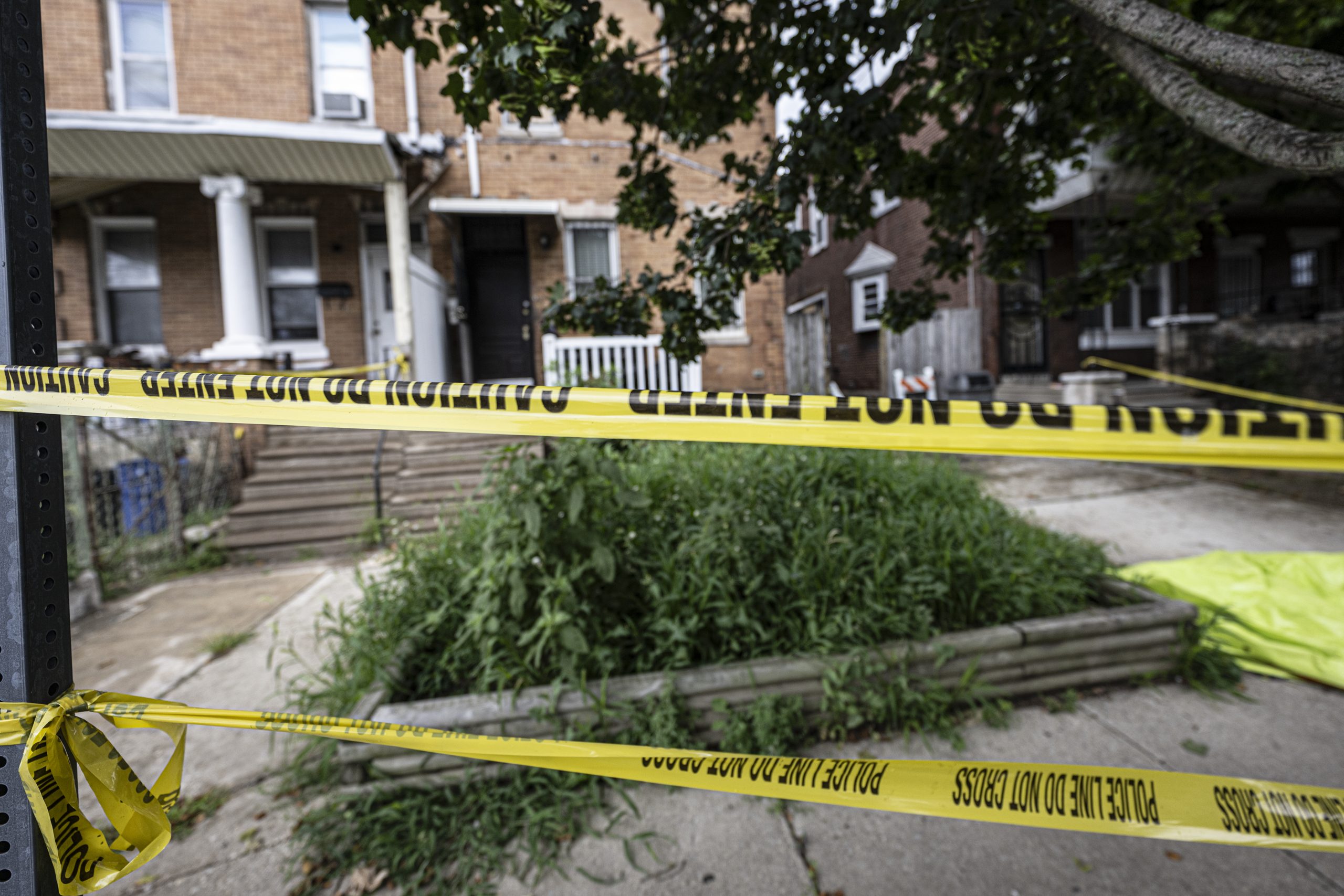
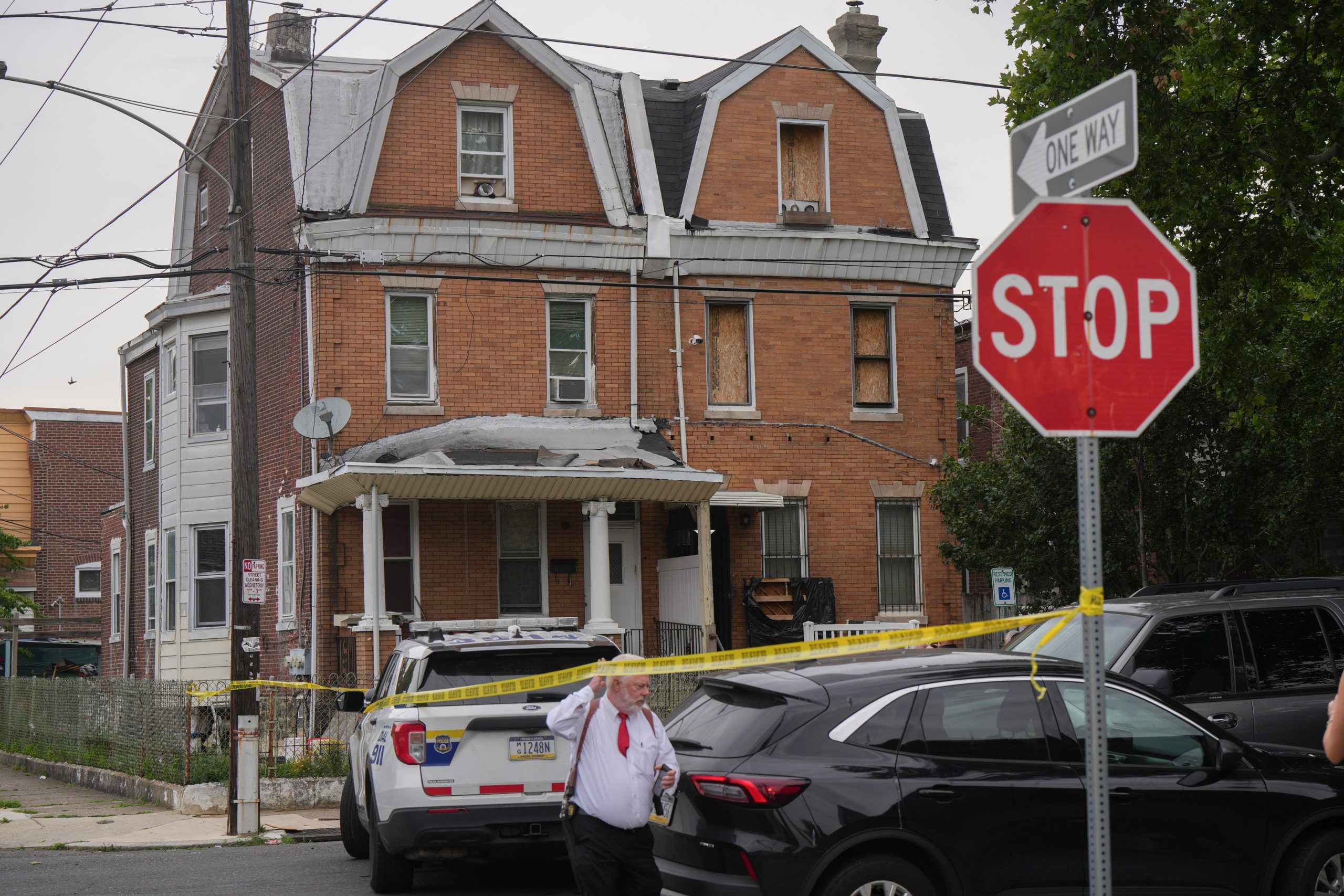
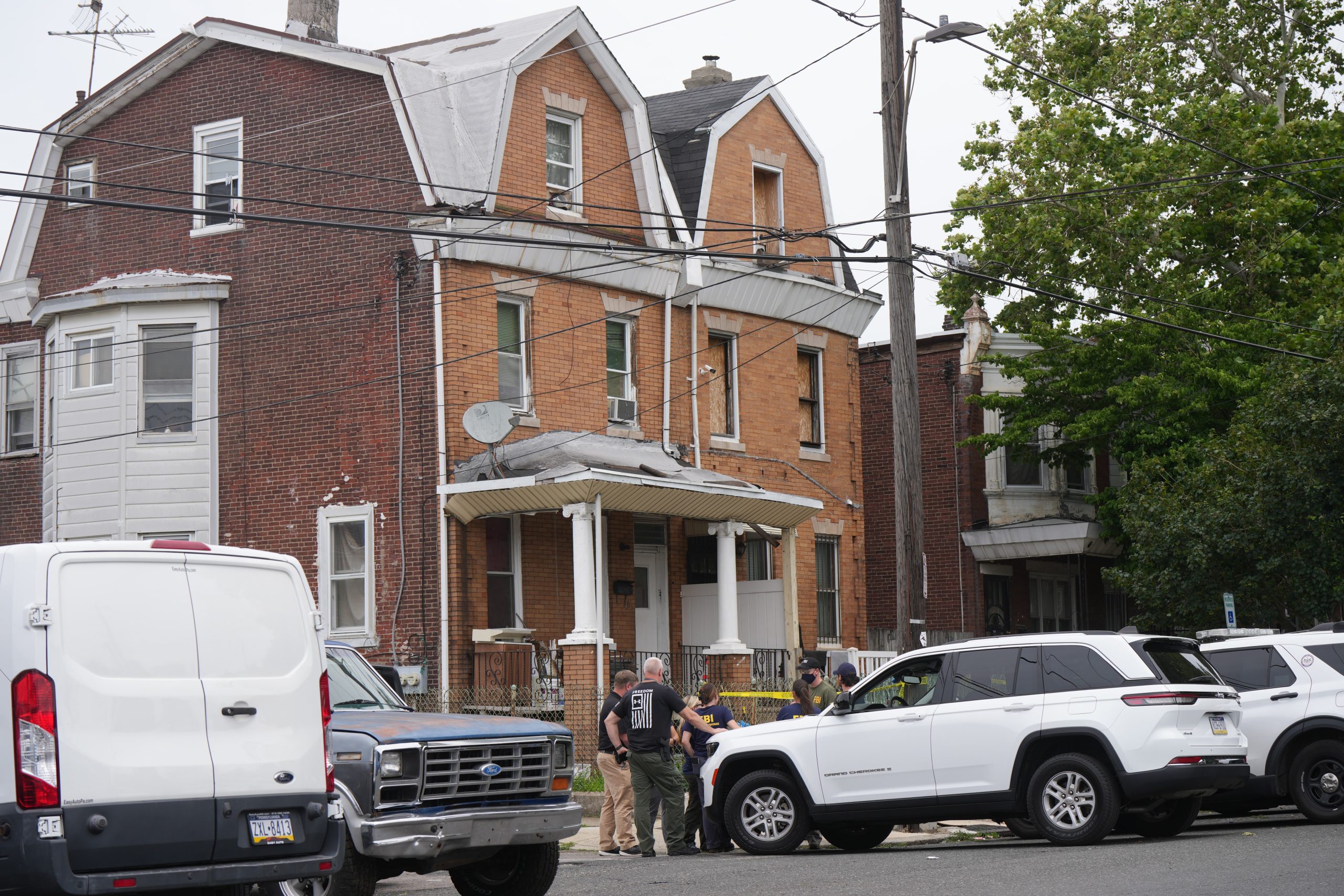
Police tape entrance of the home of Eugene Albert Horsch on West Chew Avenue in the Olney section of Philadelphia as investigators search for possible evidence Tuesday, July 21, 2026.Jose F. Moreno / Staff Photographer
While sifting through more than a million photos and videos recovered on Horsch’s hard drives, police said, investigators have recovered footage that appeared to show five women lifeless, including Fusaro, Maribel Fresses, and Gabrielle Amarando. There are also two unnamed women: a 25-year-old whose identity relatives asked to remain private, and a woman in her mid-20s investigators are still working to identify.
Two other women — Blair Tonzelli, reported missing in 2023, and Amy McHale, Horsch’s ex-wife, who disappeared in 2016 — were also reportedly last seen at the Olney home, which Horsch shared with his son, Eugene. The younger Horsch is in prison on federal charges stemming from his June 19 arrest after a car stop near Independence Hall. In the car, a federal park ranger found a fake ID with Tonzelli’s name, which launched the investigation.
Fusaro, 27, was last seen in Kensington on July 19, 2018. Her mother, Diane, spent years searching the streets for her only child before she died in January 2020. Fusaro’s father, Thomas, died in 2009.
Halloran-Koren had fallen out of touch with his family after years living overseas, but reconnected with them in 2020 and learned his cousin was missing, he said. He started working with friends of his aunt and cousin to try to find her.
In 2024, he said, he filed a report with the National Missing and Unidentified Persons System, and Fusaro’s information was later entered into the national database.
Nicole Fusaro was reported missing in 2018 when she was 27. Police believe she was killed by Raymond “R.C.” Horsch in his Chew Avenue home.Courtesy of Jonathan Hallo
In August, after police identified Fusaro as the woman Horsch appeared to have killed, detectives met with one of Fusaro’s paternal relatives to notify them of the discovery. The relative, who declined to speak with an Inquirer reporter, asked police not to publicly release her name.
Several weeks later, that relative told Halloran-Koren what police had told him: that they believed his cousin was dead. Halloran-Koren, a cousin on Fusaro’s mother’s side, then identified her publicly because he said he wanted her story to be known.
“Nicole deserved to have people fighting for her when she was missing. She deserves people fighting for her now,” he said. “I will make sure that happens.”
Halloran-Koren later contacted city police and requested additional information. Detectives scheduled a meeting with him and his mother on Sept. 16 to formally notify them of her likely death.
He learned more, he said, from watching his television several hours later.
In his letter to Parker and Council members on Thursday, Halloran-Koren said he understood the police department had “an obligation to provide information to the public and answer legitimate questions from the press.”
“But there is an enormous difference between legitimate public disclosure and providing a victim’s family with less information about their loved one’s death than is subsequently provided to the public only hours later,” he said.
He said he hopes to review the department’s handling of the case, and whether police violated any laws or internal policies in their communication with his family.
“Our family deserved better,” he wrote. “Nicole deserved better.”
A New Jersey mom who spent more than $27,000 to create a Cinderella-style castle for her daughter’s prom two years ago will be spending a year in a federal prison.
Treva Harris, 50, of Medford, was sentenced to 12 months and one day for a pandemic-relief fraud scheme amounting to more than half a million dollars, the U.S. Attorney’s Office for the Eastern District of Pennsylvania has announced.
While authorities didn’t suggest the fraud proceeds paid for the lavish prom, Harris pleaded guilty last October to one count of bank fraud.
In 2020, Harris obtained pandemic relief loans backed by the U.S. Small Business Administration including two loans for a childcare business, Child Prodigy Education Center, or CPEC.
The first was an Economic Injury Disaster Loan that disbursed about $514,900 to Harris. She accurately represented that her childcare business had only three employees with a gross income of $165,907 for the last 12 months, and $113,420 in “cost of goods sold” — meaning payroll.
But just two months later, she submitted a separate Paycheck Protection Program, or PPP, loan application for the childcare business, including fabricated IRS documentation, in which she falsely claimed that the business had 27 employees with a monthly payroll of $214,000, or $2,568,000 annually.
As a result, she received a $535,000 loan, much of which she misspent on personal luxury retail purchases, cash withdrawals, and checks written to her boyfriend’s business, according to the U.S. Attorney’s Office.
In addition to the prison sentence, Harris is ordered to serve three years of supervised release and pay $535,000 in restitution, a $7,500 fine, and a $100 special assessment.
Harris did not return a phone message from The Inquirer Sunday.
The case may have flown under the radar except for a prom extravaganza that she rolled out for everyone to see on Instagram that shined a spotlight on her opulent lifestyle.
The Cinderella theme looked like a glitzy backdrop for Hollywood’s rich and famous.
Treva Harris built a castle for her daughter’s prom sendoff in 2024 next to her daycare in West Philly.Courtesy of Treva Harris
Harris had a two-story castle built in a parking lot in the 4900 block of Lancaster Avenue. The set was decorated with chandeliers, 20-foot-long drapes, furniture, and carpeted sidewalks. Harris owns a number of businesses (including Millionaire Minds Childcare Academy, which is adjacent to the lot).
At the time, she told The Inquirer that the castle alone cost $27,500 and took workers about a month to build.
Harris produced a video of the send-off for her daughter, Azar. In it, Harris was a fairy godmother who waved a wand over Azar in tattered clothing. Then, a screen door opened and Azar, in a champagne strapless satin gown, walked down a flower-filled runway. Confetti fluttered down as the audience roared in glee.
Her friends called her “Princess Azar.”
“Every girl deserves to be cherished and treated like royalty,” Harris wrote on social media. “When we shower our daughters with love and teach them their worth, they grow up knowing they deserve to be respected, valued and adored — and they won’t settle for anything less.”
She told The Inquirer that the financial sacrifice was worth it. “When we become adults, life gets super hard,” she said. “I do what I can for [my kids] while they’re younger. When they get older, I don’t have so much control over their happiness. I have a little bit of control now. So I do everything in my power to make sure that my kids are happy.”
At the time, Harris told The Inquirer she could afford it.
Her LinkedIn account lists her as founder and CEO of Back 2 Healthy HomeCare — a licensed Pennsylvania home care agency contracted with PA Health & Wellness Community HealthChoices. Her Facebook profile lists her as a Pennsylvania real estate agent and a “nationwide commercial finance agent.”
Azar’s prom wasn’t the first time Harris basked in the spotlight. Her 2011 wedding cost more than $100,000 and also had a Cinderella theme. And in 2023 for her son’s prom, she wrapped the side of a West Philly house she owns with a 30-foot image of him, embellished with orange balloons and flowers.
In LinkedIn, she sums up her philosophy:
“I didn’t wait for someone to open a door,” she wrote. “I built the door — and then I built the whole house.”
NOTE: This article covers sensitive topics, including drug use and violence against women. Some people spoke with reporters on condition of anonymity to discuss illegal activity or out of fear of reputational harm. Quotes attributed to Raymond Horsch are drawn from a 2013 interview on the Rialto Report, a podcast about the adult film industry; a Q&A in 2014 during his art exhibit at the Papermill in Philadelphia; and undated profiles that were published on his now-defunct erotic website.
Fentanyl and crack cocaine held Krista Killen hostage, and she did whatever she could to stave off withdrawal. Sometimes that required satisfying the whims of dangerous men prowling Kensington Avenue, who looked to take advantage of women like her in the heart of Philadelphia’s notorious open-air drug market.
Raymond “R.C.” Horsch seemed different. He had a three-story brick twin in Olney, a working-class neighborhood about three miles north of Kensington. There, he gave Killen a roof over her head. A sense of stability. And drugs.
In exchange, she agreed to pose nude for Raymond’s erotic photos and videos, some simulating brutality or death. Raymond had made similar arrangements with dozens of other women in his decades-long career as an artistic provocateur.
For Killen, who was estranged from her family, the Olney house was a sanctuary from the buckled sidewalks under Kensington’s rumbling El. Yes, Raymond was exploiting her addiction. But she told friends that he was never violent and that she cared deeply about him. She viewed him as her protector.
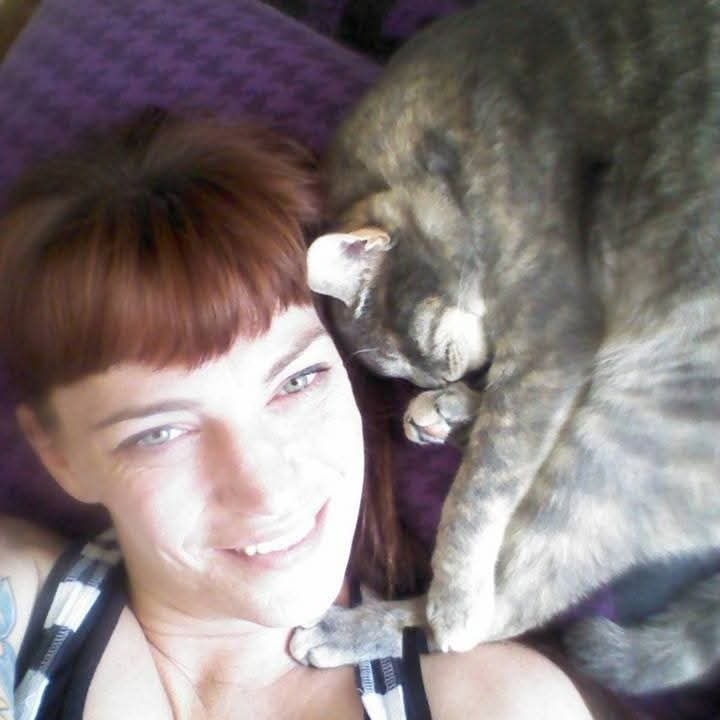
Krista Killen and BabyCat, her beloved tabby, in an image she posted to her Facebook page.Krista Killen's Facebook pages
His son, Eugene, was a different story.
Eugene scared her.
She told friends he was prone to drug-fueled bouts of rage, and he carried around knives and guns.
One night, about two years ago, she was asleep in the dark, dank basement of the Olney home. Beside her slept her beloved tabby, BabyCat.
She awoke to an earsplitting crash as Eugene shattered the lock on her door. He burst into the room, armed with a gun, screaming that he was going to kill her, according to two of Killen’s friends. Raymond, then feeble and 80 years old, had to pull his son away.
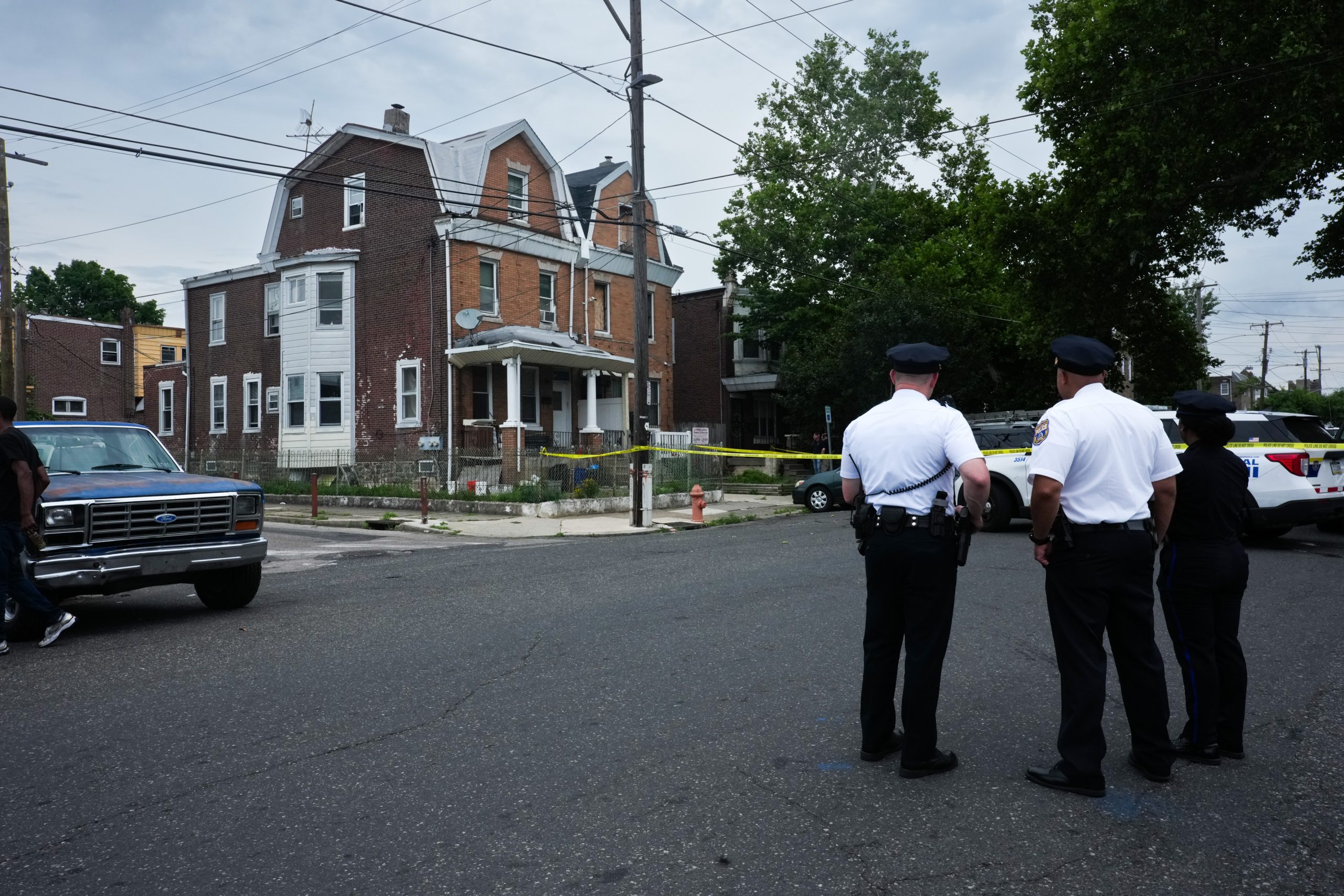
The scene of the ongoing investigation at Eugene Albert Horsch’s home at 417 W Chew Ave, in Philadelphia’s Olney neighborhood, on June 26, 2026. The home has been linked to the disappearance of two women.Jessica Griffin / Staff Photographer
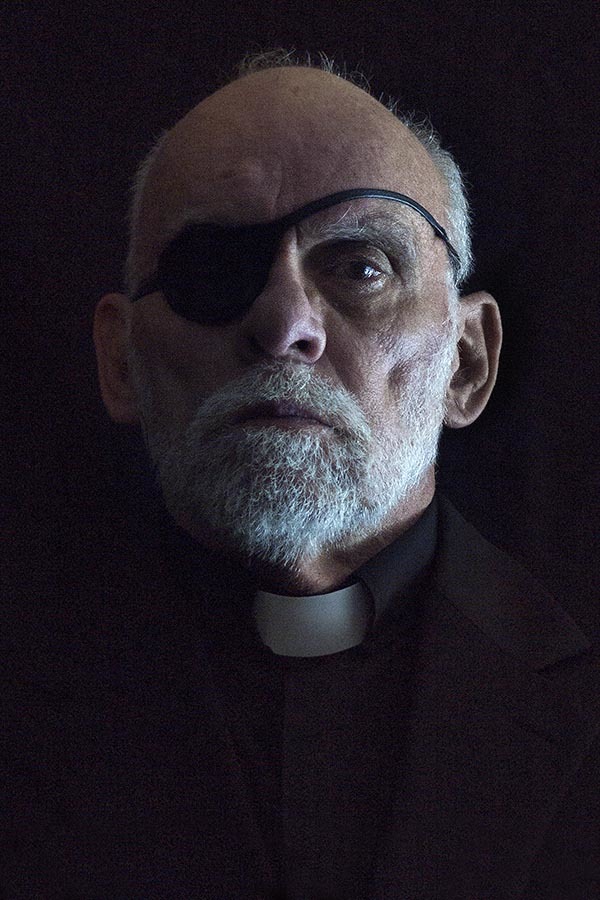
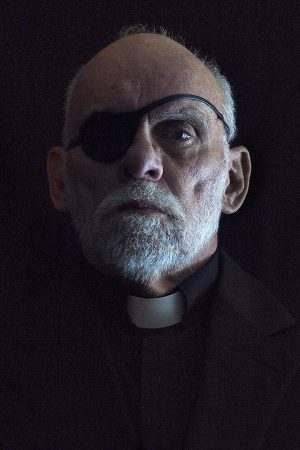
The Horsch home had long been a curious spectacle on West Chew Avenue. A steady stream of women came and went, sometimes in the company of an elderly man wearing an eye patch. The house had caught fire, leaving a hole in the roof and boarded-up windows on the top two floors. Police had raided the place for drugs.
Now, the three-story property has become the center of a sprawling, macabre investigation into the disappearance of at least two women.
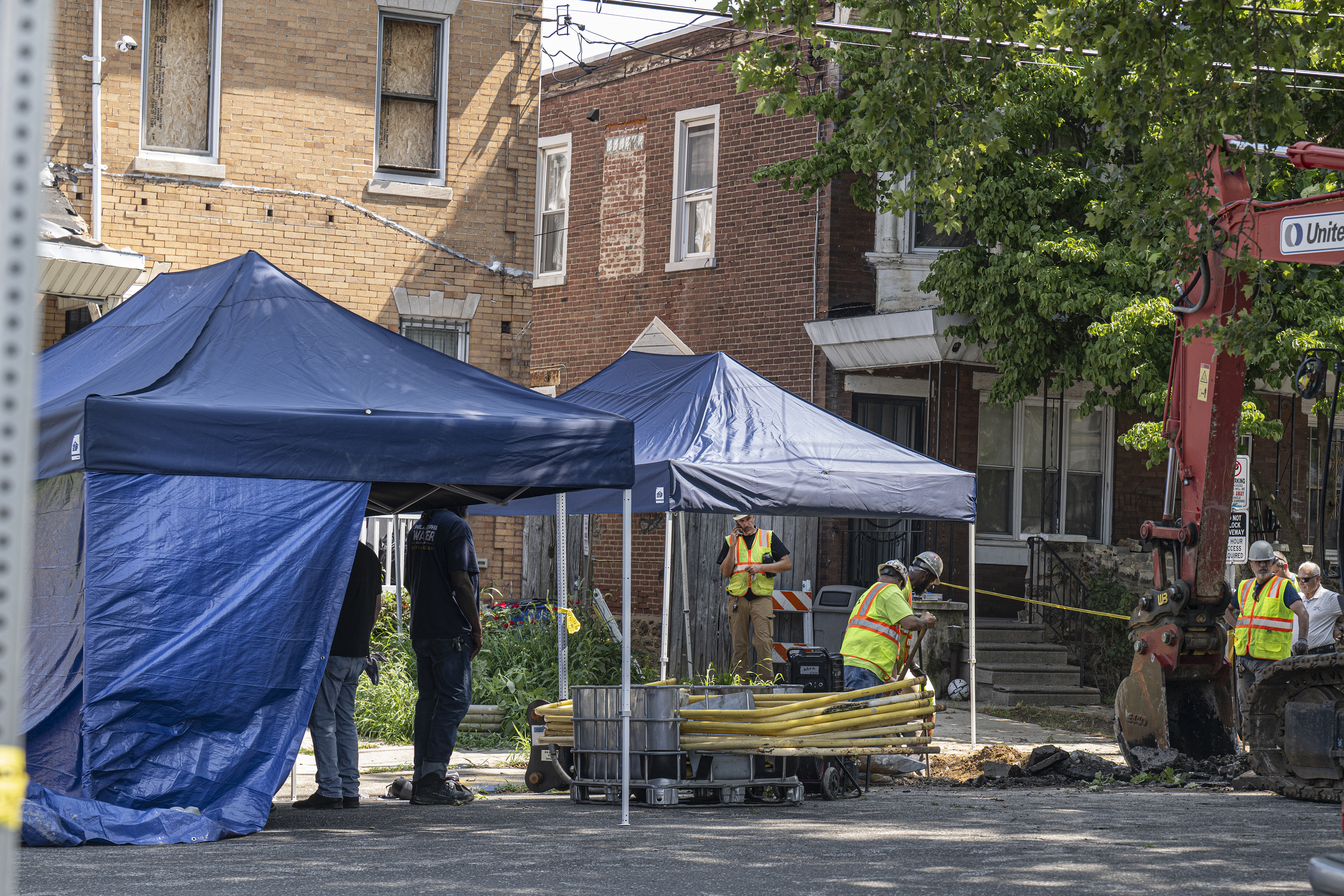
The quiet residential street in Olney has been cordoned off, as hazmat teams and excavation crews scour the house and dig up the property for clues. Federal and local investigators are interviewing people who knew the missing women and delving into their dealings with Raymond and Eugene Horsch.
The investigation began in June, after Eugene was arrested near Independence Hall in a black BMW containing weapons, drugs, and a phony drug enforcement officer badge. With him was a frightened, seemingly drug-addled woman flashing an ID in the name of Blair Tonzelli.
Police discovered that it was a fake. The real Tonzelli had been missing for three years and was reportedly last seen at the Horsch home in Olney. The revelation renewed old questions about Raymond’s ex-wife, Amy McHale, who was reported missing in 2016 and was also last seen at the same address.
Eugene remains in jail on illegal gun and drug charges. He has not been accused of any violent crimes connected to the missing women and had been incarcerated at the time of McHale’s disappearance. Raymond died from a lung condition last year at the age of 82.
Detectives initially said they might have found a “significant amount” of blood inside the Olney house. But forensic tests determined it was not blood, and neither Tonzelli’s nor McHale’s DNA was found on the items tested, according to law enforcement sources who spoke on the condition of anonymity to discuss an ongoing probe.
But other developments have raised concern about the fates of the missing women.
An early search of the house uncovered a handwritten note that describes hurting people and makes references to serial killer Ted Bundy. And one woman told investigators that Eugene claimed to know how to dispose of human bodies with chemicals.
Raymond’s body of work as a shock-seeking pornographer has clouded the significance of those findings.
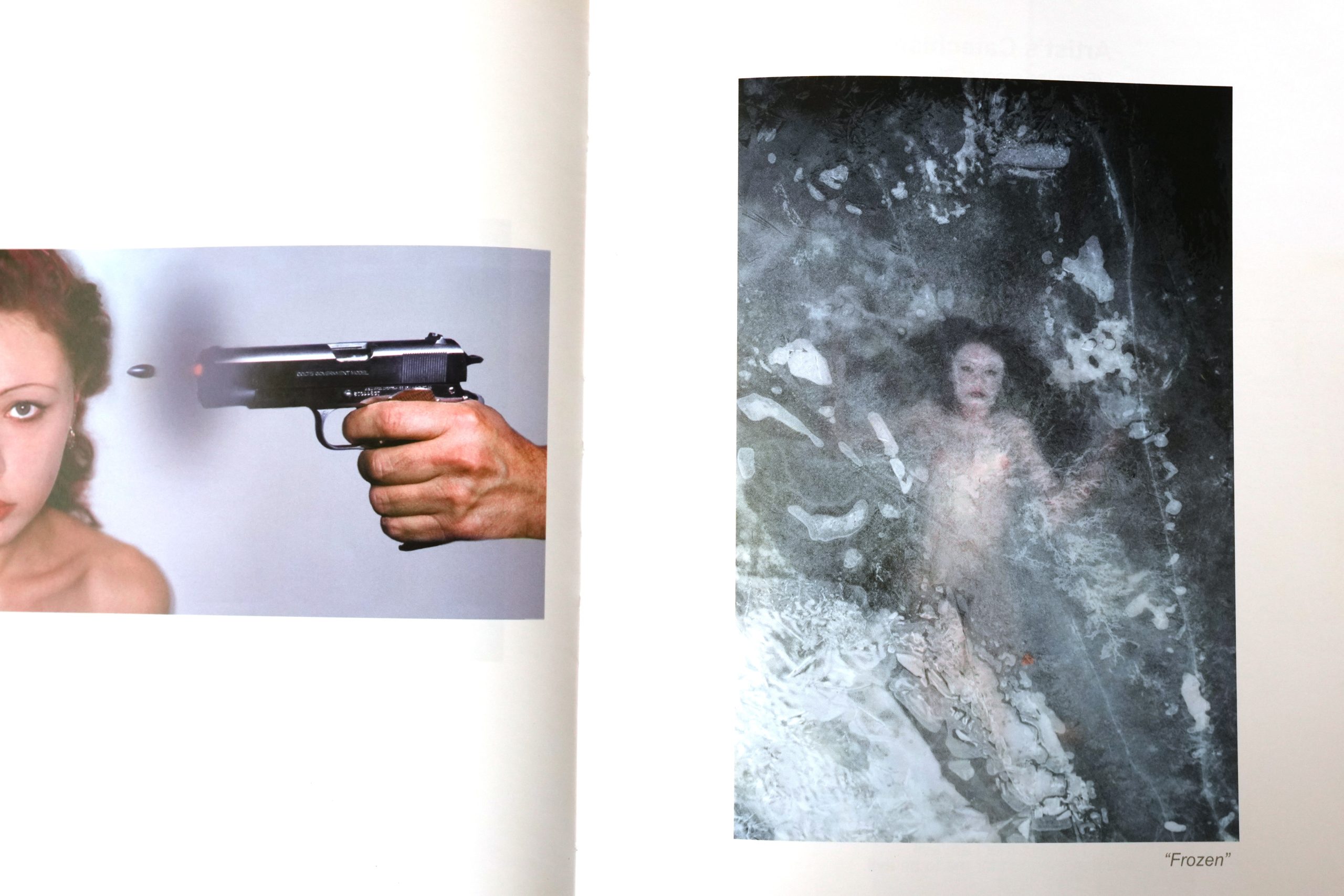
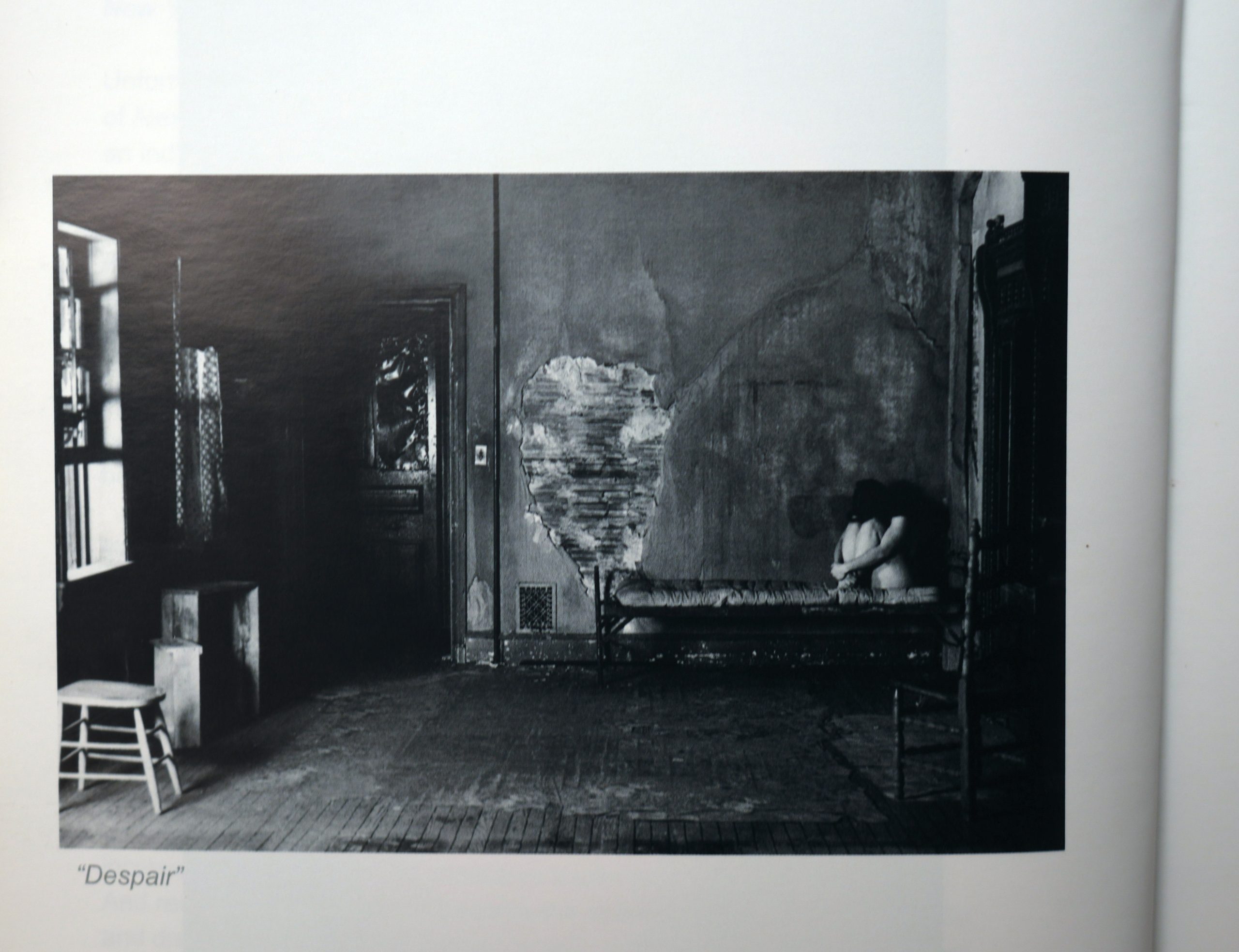
Pages from Raymond Horsch’s 2003 two-volume photobook “Eroto~ To The Prurient Interest” showing an unidentified woman, whom Raymond Horsch introduced as his “wife” Anna, depicted in multiple staged “deaths.”Obtained by The Inquirer
In a dozen films, novels, and photo books, Raymond used women suffering from addiction as props for his violent fantasies, subjecting them to simulated strangulation and drowning. He adopted the persona of an “empathetic” serial killer who murdered addicts to end their pain. And he claimed his writings were autobiographical, yet laced with threads of fiction — toying with his audiences by leaving them to discern what was real.
Meanwhile, Raymond’s sensationalistic art is overshadowed by his almost implausible life story.
An Inquirer review of hundreds of pages of police and court records, newspaper clippings, Raymond’s artistic portfolio, and interviews with more than 30 people has uncovered the saga of a thrill-seeking criminal artist and his troubled son.
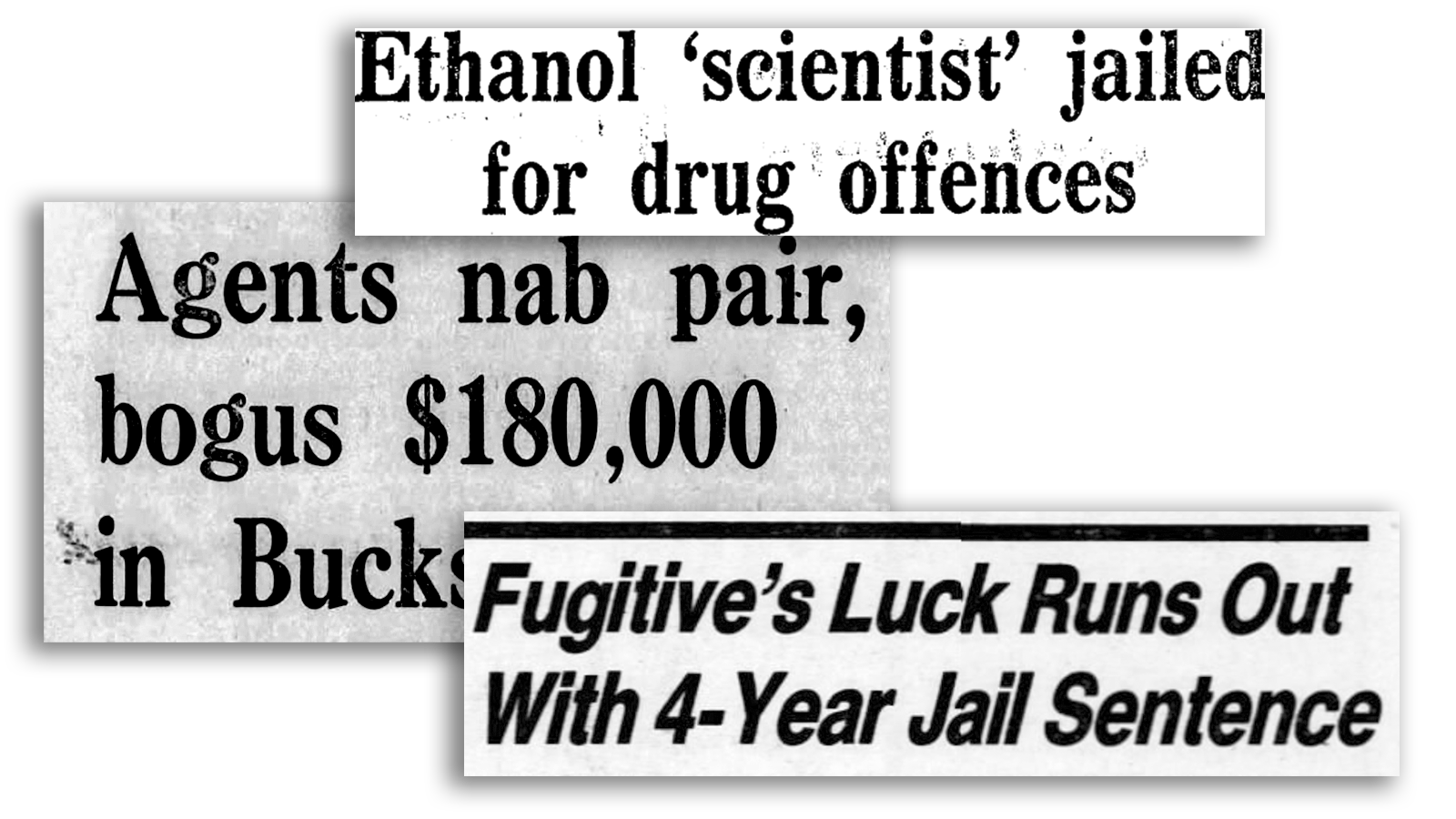
Various newspapers chronicled Raymond Horsch’s exploits, including (top) the Press of Christchurch, New Zealand, in 1985 about Horsch’s arrest in the U.S. after he was revealed to be an imposter; (middle) the Allentown Morning Call from December 1974 about the bust of his Doylestown-based counterfeiting operation; and Daily News in 1985 about Horsch’s sentencing on drug manufacturing charges.Obtained by The Inquirer
Raymond’s humble beginnings in rural Pennsylvania gave way to a career as a drug manufacturer, an identity thief, and an international fugitive in seaside New Zealand. He returned to Pennsylvania to raise Eugene and continue pursuing his dreams as a pornographic artist, luring heroin-addicted sex workers off the streets of Kensington.
At least five women connected to Raymond ultimately died of accidental drug overdoses. Among them is Killen, who overdosed last year at the age of 47, according to the city medical examiner. Eugene would later tell people close to Killen that she had died just outside his Olney house, or shortly after he took her to the hospital.
Those close to McHale and Tonzelli remain tormented by the lack of any such closure. McHale’s mom, Gloria McHale, said she always suspected that Raymond was somehow involved.
“A long time ago, before she even married him, she told me if anything ever happens to her, that he was the one,” McHale said.
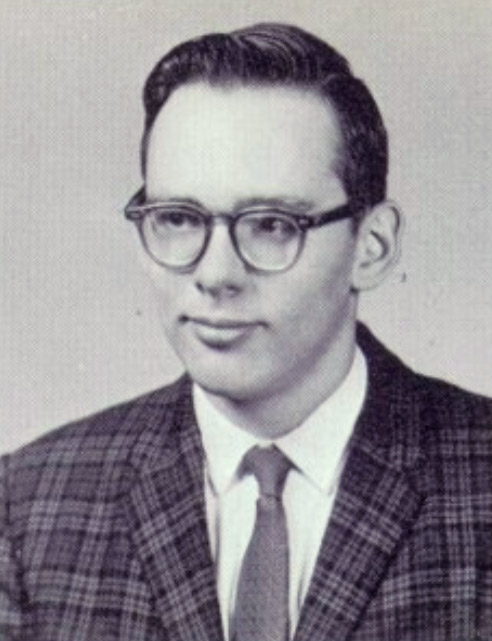
Raymond Horsch was born in 1943, the son of a World War II glider pilot, and grew up on a farm in East Stroudsburg, Pa. His parents relocated to Chalfont, in Bucks County, where he graduated in 1961 from Central Bucks High School as editor of a school magazine and a National Merit Scholar.
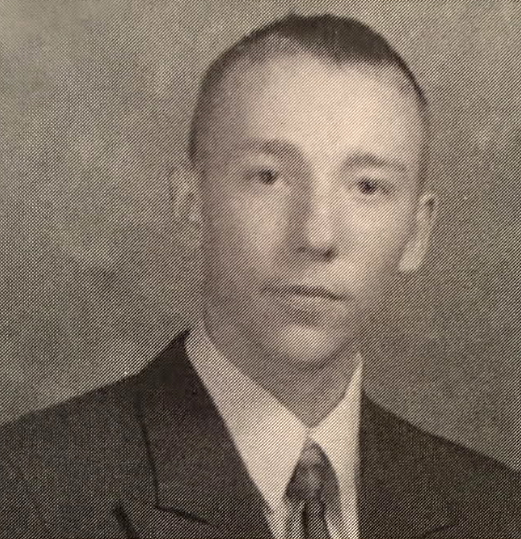
In yearbook photos, his dark hair is cut short, and he wears a tie and glasses with a thick black frame. He would later call his younger self a “totally asexual nerd.”
He married his 19-year-old high school sweetheart in 1964, and the couple moved to Rittenhouse Square in Philadelphia. Raymond worked commercial film and photo jobs while his wife taught public school.
Raymond C. Horsch in his 1961 Central Bucks High School yearbook.Obtained by The Inquirer
He was ill-suited for domestic life, someone who, when he watched Westerns as a kid, did not identify with heroes in white hats.
“I came out of the theater wanting to be the villain,” he said. “I certainly became a villain later in life.”
As the 1960s counterculture movement swept the city, Raymond ran the avant-garde Underground Cinema 16 — later the Roxy — on Sansom Street, then a beatnik mecca. He joined the Pennsylvania National Guard but deserted after he was moved toward active service in Vietnam. Instead of going to war, he traveled to New York City to work in film and showcase his own hyper-sexualized photography in Greenwich Village, alongside contemporaries like Robert Mapplethorpe.
His wife left him in 1970 after finding a women’s nightgown on their bed. In an interview with The Inquirer, in which she agreed to be quoted on the condition of anonymity, she said Raymond was never violent but was an “emotionally abusive” philanderer with an oppressive ego.
“Raymond really thought he was smarter than anybody,” said the 81-year-old Pennsylvania resident. “And he thought that he could get away with anything.”
During the so-called Golden Age of Porn in the early 1970s, when movies like Deep Throat crossed into the mainstream, Raymond worked odd jobs as a crewman on porn shoots. But he dreamed of making his own erotic movies.
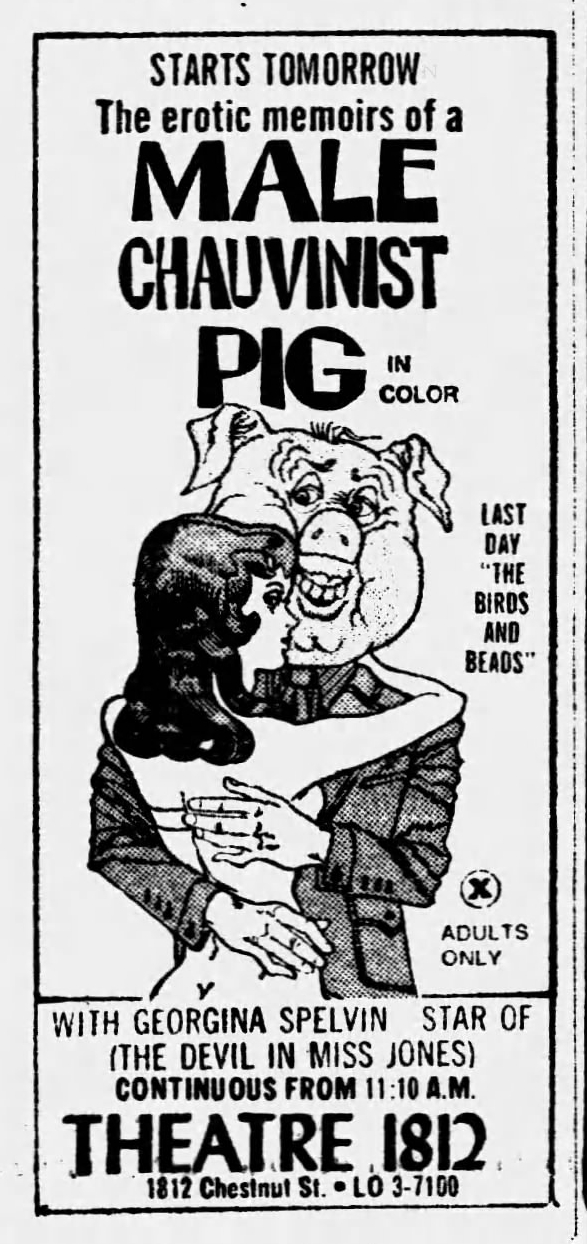
An advertisement in a 1974 edition of the Inquirer for a screening of Horsch’s cinematic debut, “The Erotic Memoirs of a Male Chauvinist Pig.”The Philadelphia Inquirer archives
He got his chance after befriending the Philly tavern owner and mob associate Salvatore “Sam the Barber” La Russa at his long-gone Bag of Nails bar at 13th and Locust. La Russa, who died of a heart attack in 1996, helped Raymond produce The Erotic Memoirs of a Male Chauvinist Pig, which featured Georgina Spelvin, the star of the well-known erotic film The Devil in Miss Jones.
Raymond’s film premiered in 1973 at the 1812 Theater on Chestnut Street. It was a low-budget effort that depicted rape, bondage, underage sex, and the titular character’s violent relationship with a drug-addicted woman — a “sweet comedy,” Raymond later joked.
Raymond’s movie did not experience the same cultural, critical, and financial success of the better-known erotic films of that era. But his mob-backed dream of becoming an auteur was soon interrupted by his other passion: crime.
In 1974, the U.S. Secret Service busted the homegrown counterfeiting operation Raymond ran in Doylestown, seizing the equivalent of over $1 million in phony $10 bills. He served two years in prison.
After he got out, authorities busted him again in 1977 for operating a methamphetamine lab in Philadelphia.
Facing more prison time, Raymond skipped bail and went on the run.
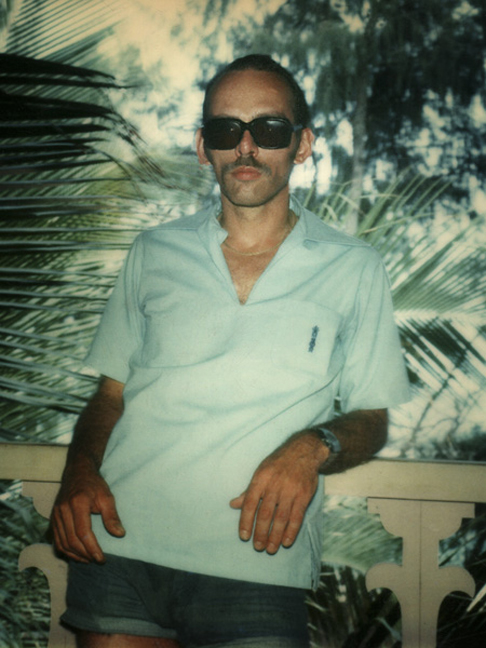
Raymond fled to the West Coast with his longtime girlfriend, Myroslawa Anna Ferkuniak, whom he met sometime after she was arrested in an LSD raid at a house near Temple University. He assumed the identity of Dr. Stanley Eugene Stokowski, a real-life chemist in California with a doctorate from Stanford University.
In 1980, Raymond married Ferkuniak in Nevada using the Stokowski alias. They boarded a plane for New Zealand to evade federal investigators.
They settled in the sleepy port city of Timaru. Raymond, whose years as an illicit drug maker had made him a skilled chemist, boasted that he had a doctorate and got a job with an alternative fuels company with a fraudulent academic transcript under Stokowski’s name. He launched a facility that converted whey into ethanol fuel.
Horsch at an unspecified location in the 1980s.Obtained by The Inquirer
In 1981, Eugene was born, entering the world against the backdrop of his father’s deceit.
Raymond traveled back to the United States multiple times using different aliases. But in 1984, he was caught reentering New Zealand with five fake passports, according to news reports. The incident sparked national inquiries in New Zealand into how a fugitive impostor had managed to get work as a prominent chemist.
Raymond did not stick around for more questioning. He allegedly broke into a house, stole another passport, and fled to America before he could be charged. He left Anna and Eugene behind, and they returned to America later.
The FBI caught up with him in Orlando and extradited him to Philadelphia in 1985. A psychologist, in a court-ordered exam, noted that Raymond had an IQ of 140 but suffered from “deep-rooted emotional problems.”
A federal judge sentenced him to four years. Raymond expressed no regrets.
“I loved being a fugitive,” he would later say. “It was always exciting, always thinking, ‘Who am I going to be today?’”
After an early release from prison in 1987, Raymond moved his family to Northeast Philadelphia and got a job as an IT director. His wife, Anna, found work cleaning houses.
Although Raymond claimed he never took drugs, he watched Anna fall into addiction.
She died in 1989, at the age of 39. She was sitting in their living room and accidentally overdosed on glutethimide and codeine, a dangerous heroin alternative prone to abuse when combined. Eugene, then just 7 years old, was in the room at the time.
Raymond, in a later interview, expressed resentment about his wife “killing herself.”
“All the while things were bad, she held it together,” he said. “Then when things were good, she fell apart. My basic reaction was anger, because she bailed out and left me with a kid to raise.”
Raymond and Eugene moved to a three-bedroom home in Chalfont, close to family. He opened a barbecue restaurant with a colleague from the adult film industry, pursued his art, and raised Eugene as a single father.
In 1994, he directed and starred in Lovers, which was produced by Femme Distribution Co., a feminist porn studio. One reviewer described it as a moody feature that intercut scenes of rape and bondage with “thought-provoking dialogue.”
But Raymond was facing the reality that his attempt to blend pornography and cinema was a commercial failure.
Raymond “R.C.” Horsch in 1999.S. E. Stokowski / Wikimedia
Now well into his 50s, he wallowed in an artistic gutter. He performed in at least eight pornographic films, primarily low-budget exhibitionist features called Streets of New York that were shot in the dumpster-packed alleys of Manhattan.
He also began photographing sex workers, using Kensington Avenue as his casting room. He would shoot photos of women working corners, often without permission, and earned a reputation under the El tracks as a lurker who offered cash or drugs in exchange for nude film shoots.
He launched a now-defunct personal website, Eroto.com, in the late ’90s. Paid subscribers could access his photos and videos depicting sexual violence and women who appeared to be shooting heroin.
Raymond saw himself as a feminist and critic of modern society, but he was unapologetic about exploiting drug-addicted women. He likened himself to the snake in a parable about a woman who cares for a serpent, only to be bitten once it reaches maturity.
“The woman asks, ‘Why?’ And the snake says, ‘Because it’s my nature.’”
Although he had a young son, Raymond didn’t let that stop him from bringing his work home.
In the early ’90s, Raymond placed an ad for a housekeeper and hired a teenage girl, 33 years younger than he was and addicted to heroin. She “looked like a child,” her mother, Charlotte Ring, said. “I think he just wanted to use her for porn.”
They applied for a marriage license in June 1999 but never tied the knot. Ring said she could not persuade her daughter to return to their nearby home in Chalfont until she eventually went into rehab.
Eugene, meanwhile, was a straight-A student, just like his dad had been, at Central Bucks West High School. But his father’s career was a source of embarrassment, according to Eugene’s former classmates, who found Raymond “creepy.”
It was no secret that Eugene’s dad worked in porn. Hanging on a wall of their home was a huge photograph of Raymond — with thinning hair and a ponytail — receiving oral sex from a woman while she held a knife to his head.
Eugene Horsch’s graduation photo in the 1999 Central Bucks West High School yearbook.Obtained by The Inquirer
Yet friends said Eugene shared many of his father’s other interests: chemistry, forgery, and eluding capture. He once swiped a lawnmower from Home Depot and wheeled it home. When his dad gave him money to go buy groceries at Giant, Eugene preferred to steal them.
“It was like a thrill for him,” one friend recalled.
Eugene’s friends called him “Gizza,” after the Wu-Tang Clan rapper “GZA.” In a trailer in Eugene’s backyard, they smoked weed lifted from Raymond’s grow operation, listened to Wu-Tang, and skateboarded on a halfpipe. According to two former classmates, Eugene sometimes smoked crack cocaine and “wet” — marijuana laced with PCP.
He had an older cousin who was a role model and one of his best friends. But when Eugene was in high school, his cousin, at age 19, crashed a convertible and died.
The loss devastated Eugene.
“When his mother died and his cousin died, he had no moral anchor,” said one relative, who asked not to be identified out of privacy concerns. Eugene “didn’t stand a chance.”
Despite their conflicted relationship, Eugene acknowledged the role his father had played in his life. In a 1999 yearbook graduation photo, Eugene eulogized his cousin and ended with a note to his father: “Thank you Dad, for all you have done for me.”
Eugene never officially graduated from Central Bucks West, according to school administrators. A friend said he forged his diploma, showing off the fake document in his bedroom. It is not clear if he completed his high school education elsewhere, but Drexel University confirmed Eugene enrolled there between 1999 and 2003.
His academic career ended in 2003, following a night of drinking at a Northeast Philly bar. Eugene blew a red light and T-boned another car. The driver suffered a catastrophic brain injury and spent 16 years in a vegetative state before dying.
In 2004, Eugene pleaded guilty to driving under the influence and aggravated assault. He was sentenced to two to four years in prison.
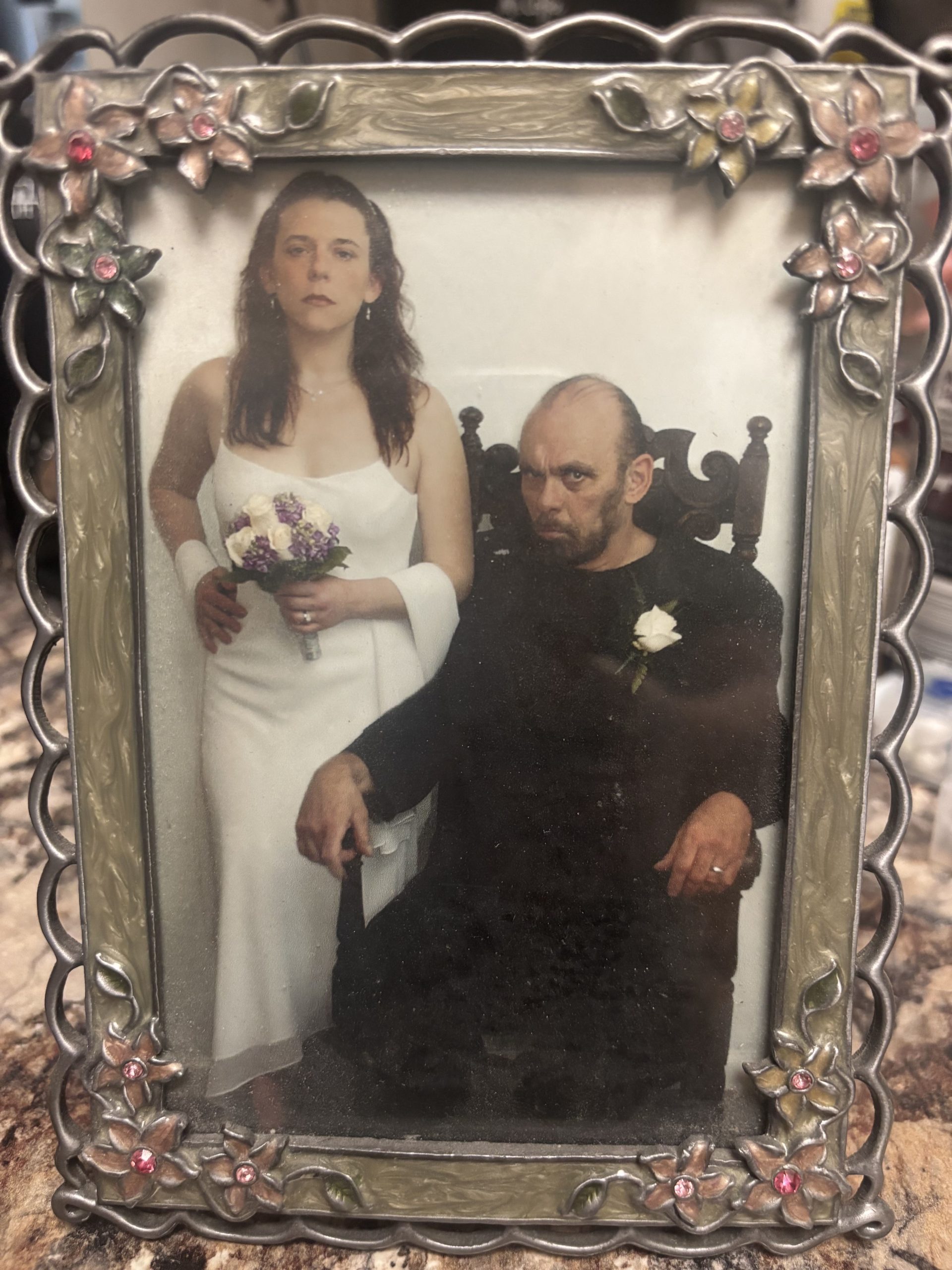
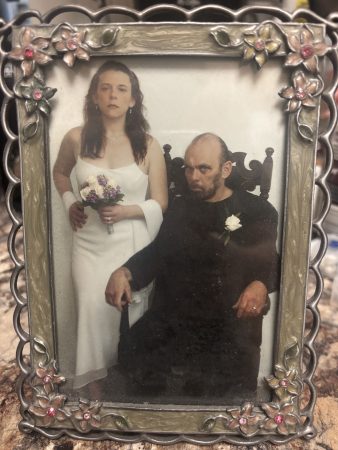
A wedding photo of Amy McHale and Raymond Horsch in 2004, taken during a small ceremony at his residence in Chalfont. The couple divorced a few years later. McHale was last seen at Horsch’s Olney home in 2016.Courtesy of the family of Amy McHale
Raymond was always looking for new women — particularly those who resembled his deceased wife, Anna.
He once asked one of Eugene’s high school friends, who was working at a car wash, if she wanted to star in his films. Another woman heard about him from a cellmate when she was locked up in a Bucks County jail on a drug charge. She later agreed to be photographed nude at his studio for money and drugs. He said she reminded him of Anna and asked her to star in Slaves, a 2003 film he was producing.
Raymond met Amy McHale in Kensington. She was struggling with mental health issues and drug and alcohol addiction, and she came to view Raymond as her savior after he got her off the streets. She costarred with him in a pornographic film.
McHale, 30 years Raymond’s junior, later married him beside a greenhouse in the backyard of his Chalfont home in September 2004, not long after Eugene pleaded guilty to DUI.
That same year, Raymond inherited the Olney house from his aunt. In two self-published photo books — featuring women recruited from Kensington in sexual bondage — a few pictures appear to be staged there.
Eugene got out of prison in 2006. Raymond remained in Chalfont, and he transferred the Olney property into his son’s name.
Three years later, a “highly intoxicated” 21-year-old woman called 911 to report a burglar in Raymond’s Chalfont residence. Responding officers found no evidence of an intruder, but they did find 455 marijuana plants in the basement and two shotguns.
The feds seized the Chalfont home.
After pleading guilty to three felonies and receiving a 54-month sentence, Raymond spent his time in prison writing a series of novels about serial killers and sexual deviants that he later self-published.
In 2013, when he was released from prison at the age of 70, Raymond and Eugene were together again in Olney, living in the aging family home-turned-porn studio.
Raymond described himself as a frustrated, aging porn star.
“I walk down the street seeing all these beautiful, breathtaking women who are now totally inaccessible to me. Totally off-limits now,” he said. “If I stay away from mirrors, I can still convince myself that I’m 18 years old.”
Raymond “R.C.” Horsch in character for a film role, 2014.S. E. Stokowski / Wikimedia
Raymond started wearing an eye patch, although friends were unsure if it was for medical reasons or simply to bolster his villainous persona. His art found a few admirers, including in Europe, and some of his photos appeared in an anthology of erotic art in New York City, prefaced by the prominent critic Camille Paglia.
But Raymond seemed resigned to obscurity, noting that few galleries wanted photographs of “wasted emaciated heroin junkies.”
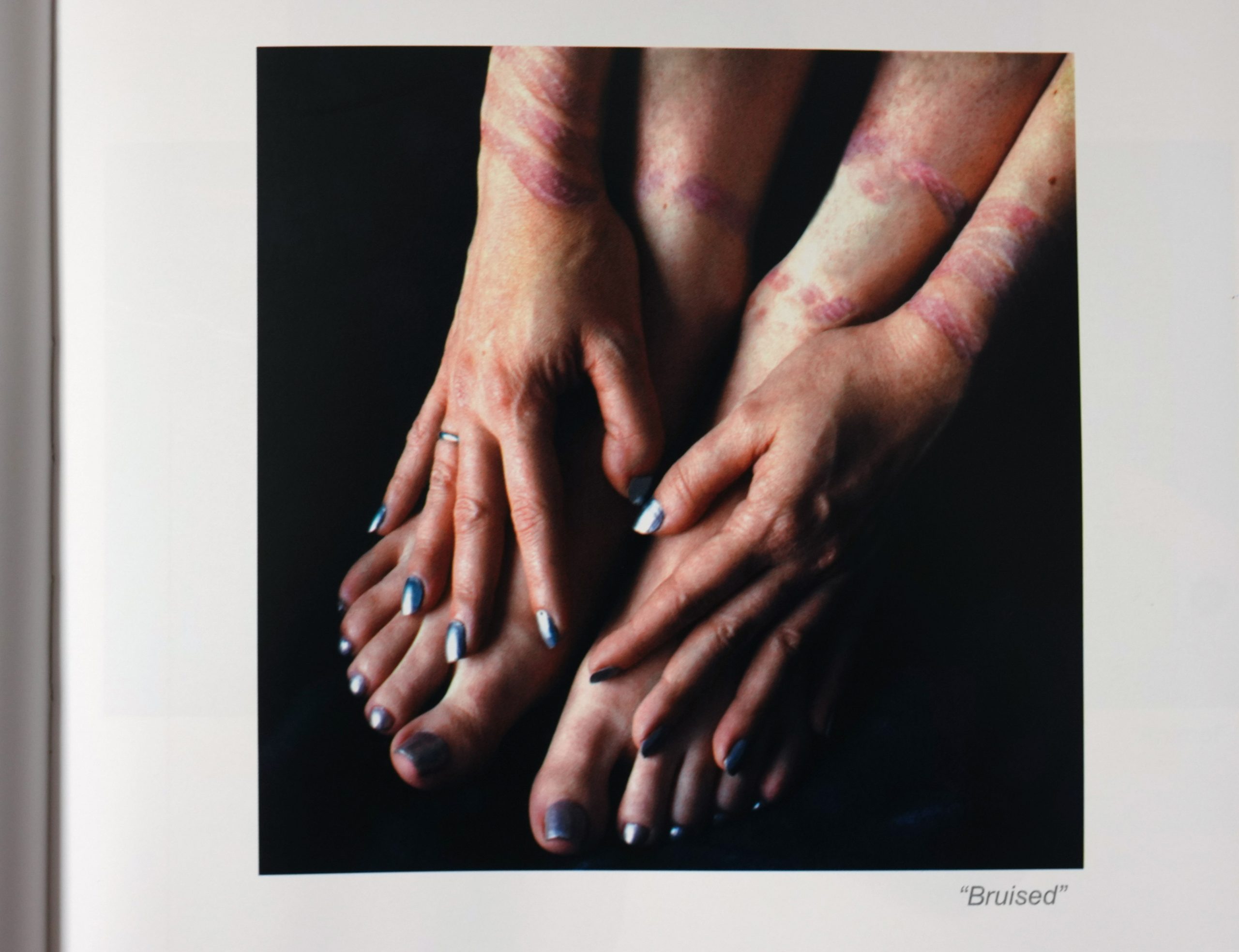
From Raymond Horsch’s photobook “Eroto~ To The Prurient Interest”: Ligature marks on the arms and legs of an unidentified woman, and an unidentified woman in what appears to be Horsch’s Olney bedroom.Obtained by The Inquirer
He landed a 2014 show at the Papermill artist studios in Kensington. Raymond set up a slideshow photo gallery in a warehouse surrounded by needle-littered railroad tracks. The series began with photos of naked women, who became more gaunt and sickly as heroin took its toll. Several shots showed syringes dangling from arms pocked with bruises and sores.
As a finale, Raymond played a video showing the body of a naked woman. Raymond claimed she had died of a drug overdose after he had paid her for sex. The video shows her body being loaded into an oven and cremated.
Some of the attendees were shocked and disgusted. One of them, local audio-visual technician Justin Roman, recalled that Raymond was “totally shameless” when confronted.
“He was doing it all because he wants to have sex with women who are addicted to heroin,” Roman said. “And he seemed very self-aware that he could not stop this compulsion.”
Amy McHale, who married and divorced Raymond, was last seen at the Olney house and reported missing in 2016.Courtesy of the family of Amy McHale
McHale and Raymond divorced in 2008, but she kept returning to visit after he moved to Olney.
She was at the Chew Avenue home on June 13, 2016, when she called her mom to tell her she was coming home. She sounded drunk, so her mother told her to stay.
Early the next morning, McHale — a strawberry blond 44-year-old grandmother of three — left a voicemail with her daughter saying she was OK.
She was never heard from again.
McHale would sometimes be gone for a couple of days, but never much longer. Her daughter, Amanda Stofer, said McHale had been looking forward to Stofer’s forthcoming wedding.
“My mom had her struggles with addiction,” said Stofer, 38. “But my mom would not want to disappear in my life.”
Raymond told police and the McHale family the same story: She was drinking vodka and he went to bed. When he woke up, she was gone.
Eugene Horsch, in a June 5, 2017 photo. He was still in prison at the time of McHale’s disappearance.Pennsylvania Department of Corrections
At the time, Eugene was back in prison for drugs and would not be released until a month after McHale’s reported disappearance.
Detectives were suspicious of Raymond, McHale and Stofer said, but they did not have probable cause to obtain a search warrant. Eventually, Raymond stopped reaching out to her family.
“When she would disappear before, Raymond would always keep calling me,” McHale said. “After this, I never heard from him.”
Years later, Raymond, now in his late 70s, frequented a onetime crackhouse on Wensley Street in Kensington.
He would come there to “pick up [drugs] and grab the girls” for video shoots, said Anna Marie Reveron, 58, who was something akin to a grandmother for the drug-addicted women who lived there.
One of the women Raymond picked up was Blair Tonzelli. She was estranged from her family in Northeast Philadelphia and had been in and out of prison. Friends recalled her as loyal, someone who would “literally give you her last $2.”
Blair Tonzelli, in a photo she posted on Facebook.Facebook account of Blair Tonzelli
It was not unusual for Tonzelli to stay for long stretches at the house in Olney, where Raymond claimed she worked as his home health aide.
David McCarty, 72, said he stopped hearing from Tonzelli entirely in August 2022. The last time she posted on her Facebook account was Aug. 17 of that year.
Fearing the worst, two of Tonzelli’s friends reported her missing in February 2023. One told police she was last seen at Raymond’s house on Chew Avenue.
Another woman who spent time at the home described overdose deaths as a grim reality — but not mysterious cases where bodies vanish.
“I’ve lost probably six to seven friends who overdosed — on the street, in abandoned houses, in cars,” said the woman, a 37 year-old friend of Krista Killen’s who lived at the Olney house last year. “And their bodies are always found. Always.”
Krista Killen under the El tracks, as featured in Raymond Horsch’s 2017 documentary “Whore!”Obtained by The Inquirer
While an array of different women cycled through the Olney property, often for brief stretches, Killen was an old-timer.
She first appeared in Raymond’s 2003 movie Slaves and watched him eat a raw steak and drink prop blood out of a wine glass for one scene.
Years later, in Raymond’s 2017 documentary, Whore!, hefilmed Killen using drugs and describing her own behavior as “slow suicide.” Killen reflected back on her scene with Raymond in Slaves and said she had wondered: “Is he gonna f— kill me?”
“This is a movie,” he reassured her. “I don’t want you to be scared.”
Killen lived off and on in the Olney house while continuing to perform risky sex work. She ran errands for Raymond when his eyesight deteriorated, driving him around in an aging Chrysler luxury sedan.
He would get upset when she left. He once posted on Facebook a photo of Killen in withdrawal, doubled over on a toilet — just to “get back” at her, according to a friend.
Killen never feared Raymond would harm her. But she worried about what might happen if she was left alone in the house with Eugene.
“Krista was always fearful that if something happened to Ray or he passed away, Eugene would not know what to do and not know how to control himself,” said Danielle Wynne, 46, a longtime friend of Killen’s.
Krista Killen lived at the Horsch home off and on since 2016 until her death last year.Krista Killen's Facebook pages
In late 2024, after a yearslong infection in Killen’s leg, doctors had to amputate it above the knee. A month later, BabyCat died of a brain tumor. Raymond’s health was also in decline, and after he died in May 2025, Killen was suddenly alone in the house with Eugene.
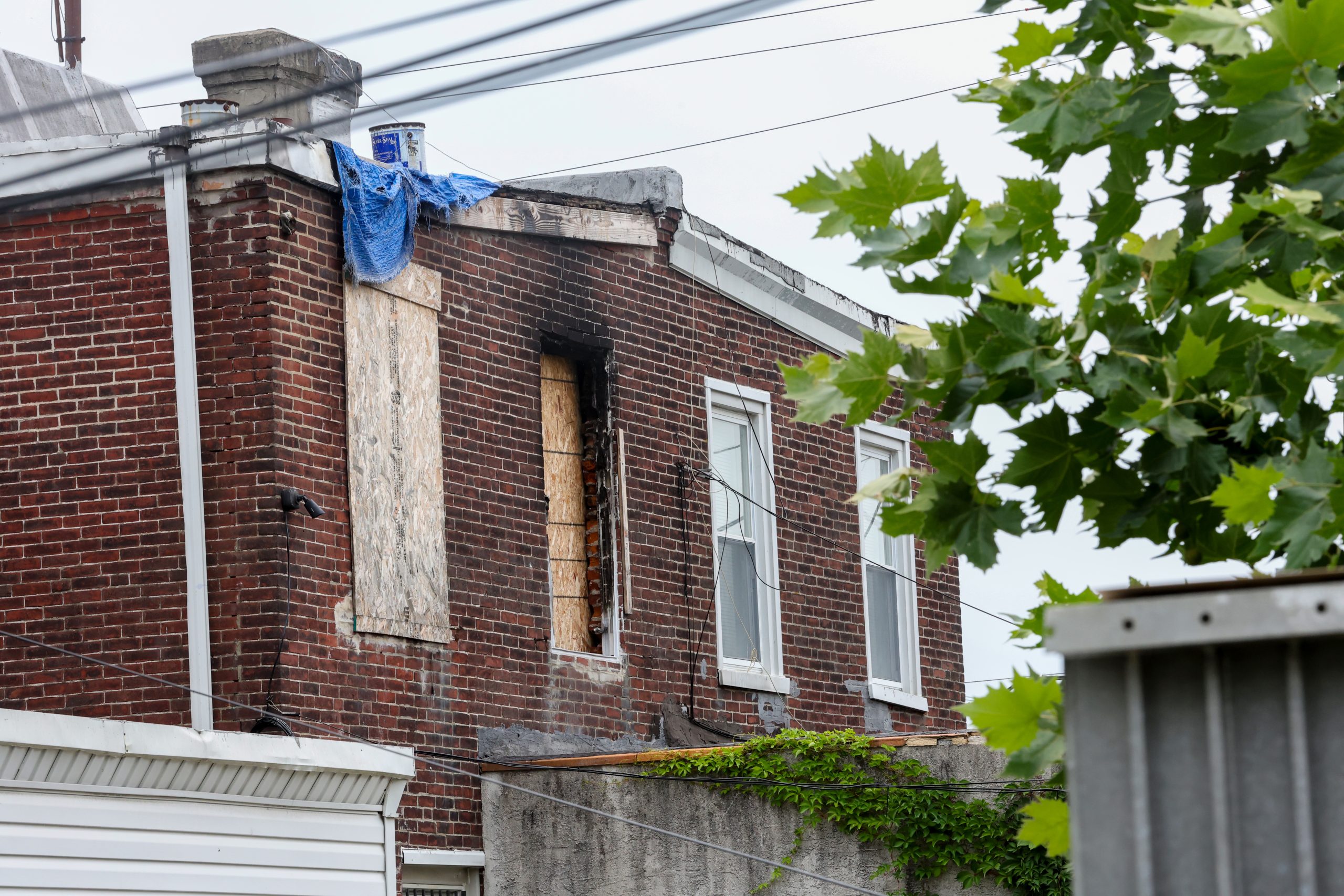
Three days after Raymond’s death, a lit cigarette sparked a fire in Killen’s second-floor bedroom, where she had moved after losing part of her leg. The blaze destroyed most of her belongings, leaving charred bricks and boarded-up windows.
The back of Horsch’s Olney home on June 27, 2026, showing damage from a fire that occurred last summer and led investigators to a weed growing operation and a cache of illegal weapons.Aidan T. Gallo / Staff Photographer
The fire led to police finding guns and a marijuana grow operation inside the property. Eugene was jailed again.
The fire had torn a gash in the roof, and rain pelted into the kitchen, the dining room, and Killen’s bedroom. On Aug. 16, 2025, three months after Raymond passed, she died of a drug overdose.
Eugene announced Killen’s death on her own Facebook page.
“Please let everyone know we were in love and we were going to get married,” Eugene wrote.
Her friends said neither of those things was true.
Eugene’s life continued to unravel in the wake of his father’s death.
Neighbors said they saw him outside, quiet and jittery, often obsessively washing his black BMW. He would be dressed in a nice shirt, as if he were heading to an office, although his only means of income appeared to be selling drugs.
He was arrested again this year in March after he stabbed a man in the stomach during an apparent dispute over a woman at Eighth and Market Streets. The case was withdrawn when the victim failed to appear in court, and Eugene was released from jail in May.
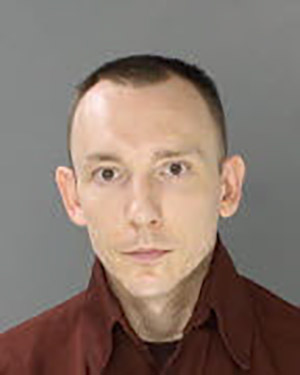
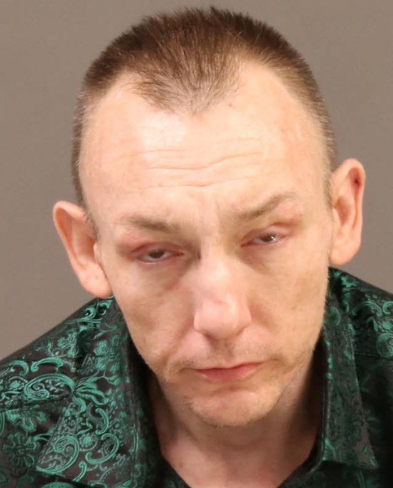
Eugene Albert Horsch, 44, of Philadelphia.Courtesy of Philadelphia police
Just a few weeks later, on the morning of June 19, a U.S. Park Police ranger approached Eugene’s BMW parked near Sixth and Market. A woman inside sounded distraught.
As the ranger got closer, the woman in the back seat said to Eugene, “You’re going to hurt me.”
Inside the car, officers found narcotics, two firearms with obliterated serial numbers, and other weapons — along with a fake U.S. Drug Enforcement badge with Eugene’s photograph under the name “Eugene Frederick Steiner.”
Police called real DEA agents to the scene, who turned their attention to the woman in the car.
The 39-year-old woman told police her name was Blair Tonzelli. She showed officers an ID card bearing her photo, but with Tonzelli’s name. It did not take long to determine she was lying.
She told investigators that she did not know Tonzelli and was not aware that she was missing.
“But I think something bad may have happened to her,” she said.
She said she was afraid to enter the basement of the Olney house because Eugene told her he had hurt people there. He had never been violent toward her, she said, but he was obsessive and would sometimes sit for 24 hours outside her house. She said he had told her he knew which chemicals are needed to reduce a human body so it could be flushed down a toilet.
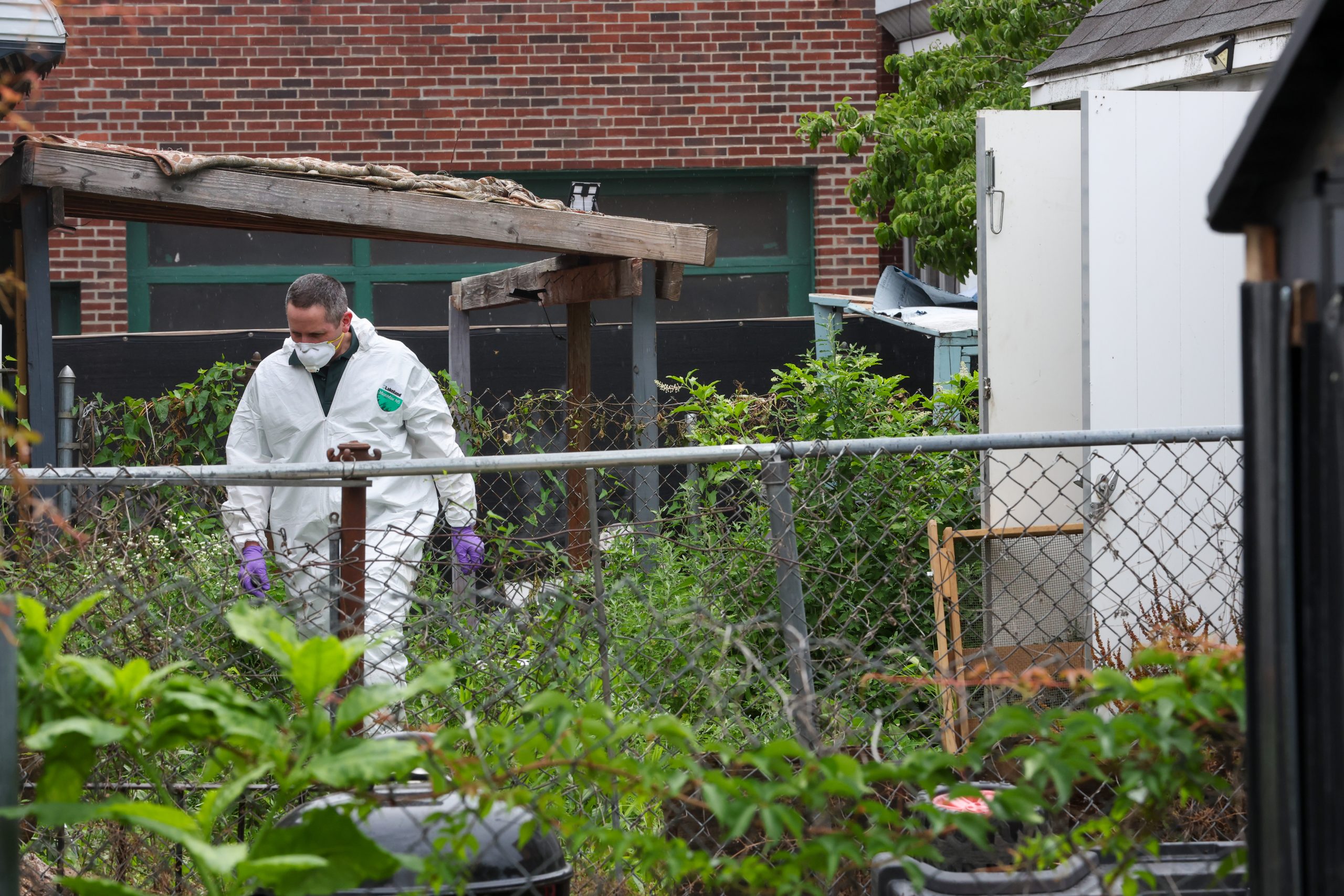
An investigator searches the backyard of Horsch’s home in Philadelphia, on June 27, 2026.Aidan T. Gallo / Staff Photographer
Authorities, including FBI forensic experts in hazmat suits, searched Eugene’s home. They found bank cards in Tonzelli’s name, Killen’s death certificate, and five urns containing plastic bags of unidentifiable cremains. One bore the name Raymond Charles Horsch.
Other findings only deepened the mystery of what had been happening at the house: hidden compartments, including one in a hollowed-out stair; vats filled with chemicals; and a 55-gallon drum with connections to water lines leading into a hole in the ground.
The note mentioning Ted Bundy included confessions for acts of violence, such as having “a 2ft zip tie in my pocket and a drum set up.”
“I had been ready and waiting and I damn sure showed no hesitation,” the note states. “And it was fun.”
Investigators are reviewing Raymond’s films and reading his novels for clues — giving his work the attention in death that he always hoped to achieve in life.
His books describe ways to murder women. One scene depicts a body being dissolved with chemicals in a bathtub.
That same book includes tales of Raymond’s bizarre life story, interspersed with passages that he concedes are complete fiction.
But he leaves the reader guessing.
“Would it surprise you,” he wrote, “to learn that I’m lying?”
Staff writer Michelle Myers contributed to this article.
A detective at the crime scene on Horsch’s property in Philadelphia on June 26, 2026.Jessica Griffin / Staff Photographer
Philadelphia police this week acknowledged that the sprawling missing persons investigation in Olney has evolved into something even more complex — a death investigation without any dead bodies.
Adding to the challenge is that there are now at least four missing women linked to a crumbling house on West Chew Avenue, where for decades, Raymond “R.C.” Horsch had lured drug-addicted women to shoot pornographic photos and movies depicting graphic violence.
On Wednesday, Police Inspector Raymond Evers said a hard drive recovered from the family home of Raymond and his son Eugene Albert Horsch contained “images and video of what appeared to be two deceased females” taken inside — and that police believed the women had really died there, even though they have found no human remains.
“Usually when we have a homicide investigation, we have a body, we have body parts,” Evers said. “This time we do not.”
Police said they have not yet determined when Gabrielle Amarando and Maribel “Bella” Fresses died. Without a body, the medical examiner, too, cannot determine a cause or manner of death, and officials did not share publicly, or with the women’s families, the extent of their injuries.
Law enforcement sources said the images showed women with ashen skin, posed in ways that would be nearly impossible for someone who was still alive. Authorities are still working to identify dozens more people featured in the materials to determine where they are today — and if they’re still alive, said the sources, who spoke on condition of anonymity to discuss an ongoing probe.
The images are further complicated by the fact that Raymond Horsch spent decades using women struggling with addiction as models in apparent snuff films and pornographic photos that featured bondage, sexual violence, and death. Some appeared to be staged or digitally altered.
Michael Yoder, a retired FBI agent who has advised on over 45 no-body homicide cases, said he had never seen a case of this nature, as the typical such case involves a missing spouse or relative.
“This is a no-body homicide and a potential serial homicide case,” Yoder said. “The fact that you also have these videos of simulated deaths or assaults, I’ve never seen that in a no-body homicide case.”
Gabrielle Amarando (left), missing since 2012, and Maribel Fresses, 27, reported missing in 2018. Police believe they were killed inside the Olney home.Obtained by The Inquirer
Detectives have so far reviewed around 5% of hundreds of thousands of photos, videos, and written materials recovered in the home. Yet despite the trove of digital files, police say they have found not a trace of human remains or DNA from any missing women.
Police say they have evidence that some works likely went beyond make-believe.
The two women police said died at the house were last seen about a decade ago.
Evers said Wednesday that “if the images and the video are real and not altered in any way,” the women are dead. That leaves police facing the unusual prospect of seeking formal death declarations for both women in the city’s Orphans’ Court without a body, which adjudicates the rights of persons unable to handle their own affairs.
Police were first led to the home after Eugene Horsch, 44, was arrested during a June 19 car stop that uncovered illegal weapons and the phony ID in the name of another woman, Blair Tonzelli, who was reported missing in 2023 and last seen at the Olney home. A fourth missing woman, Amy McHale, Raymond’s ex-wife, was also last seen at this house in June 2016.
Inside the crumbling twin, investigators found chemical vats, dozens of computers and hard drives, and a cryptic handwritten note that referenced harming people and alluded to serial killer Ted Bundy.
Raymond Horsch died last year. Eugene has not been accused of any violent crimes. He was incarcerated at the time of at least one disappearance. An attorney for Horsch has declined comment.
After years of silence from their daughters, the Fresses and Amarando families said they were devastated to learn from police that the women are dead. But their relatives still don’t have all the answers they seek.
“I hate to say it, but I don’t have an actual body to say, ‘OK, this is my daughter,’” said Patricia Fresses, Maribel’s mom. “I need to see it.”
Maribel Fresses, 27, reported missing in 2018. Police believe she was killed inside the Olney home.Courtesy of Melissa Fresses
A rise of no-body homicides
Bodiless murder cases have become more common in recent decades, thanks to advances in forensic technology that have enabled prosecutors to bring charges in cases with limited physical evidence.
Some past cases locally have ended in successful convictions.
In 1997, the FBI arrested former Delaware prosecutor Thomas J. Capano, who was a suspect in the 1996 disappearance of congressional aide Anne Marie Fahey in Philadelphia.
To this day, Fahey’s remains have never been found. However, the pair were known to be having an affair, and they were last seen together dining in Center City. Letters written by Capano pointed to an increasingly controlling romantic relationship, and a search of his car and home later revealed traces of Fahey’s blood.
The former prosecutor was later arrested and convicted in 1999 of murder.
But that outcome is not always certain.
In Chester County, in 2025, Malvern resident Allen Gould was charged with homicide following the 2017 disappearance of his wife, Anna Maciejewska, who has also never been found. Prosecutors alleged that Gould demonstrated little concern about this vanishing, reporting it to law enforcement only under pressure from family and friends.
Yet without a body or murder weapon, Gould’s lawyers have argued the prosecution is built on circumstantial evidence.
That case is expected to proceed to trial later this year.
A former U.S. Attorney told The Inquirer in 2013 that, nationwide, 88% of the 400 no-body homicide cases that had gone to trial ended in convictions. Yet this figure only accounts for the cases that are actually brought before a court.
In the Capano matter, investigators were able to charge the former prosecutor because of additional forensic evidence, and the suspect’s own inconsistent testimony about their final moments together.
But investigators in the Horsch case face three steep challenges: There are no bodies, no other human remains, and one potential suspect — Raymond Horsch — died last year from a lung condition at the age of 82.
Yoder, the retired FBI profiler, said a no-body homicide prosecution would require evidence that clearly shows someone else was responsible for the deaths, and said additional forensic details like metadata taken from the photographs could establish a compelling timeline. Raymond’s graphic fantasies, he reasoned, would be irrelevant to the prosecution of another suspect.
“If you say he videoed women in fake death or fake assaults on video, it’ll throw a jury through a loop,” he said. “You’re getting the point of, if they don’t believe something, they won’t believe everything.”
Gabrielle Amarando as a child. Gabrielle was missing since 2012 and police believe she was likely killed in the house on Chew Avenue in Olney.Courtesy of Karen Amarando Riley
No bodies, no closure
Regardless of the possibilities for justice in court, death declarations also generally mark the end of any hope that an individual or their remains will ever be found or properly interred.
In a 1980s article on the Orphans’ Court, a judge told The Inquirer they handled about a half dozen bodiless death declarations annually, but could not recall any in which a missing person was later found.
“Most of them just disappear,” the judge said.
Last year, Gabrielle’s mom, Karen Amarando Riley, talked to a psychic in a desperate attempt to get answers about her missing daughter.
Riley said the psychic described Gabrielle’s descent into addiction, and that she couldn’t see Gabrielle alive past the age of 27, which would have been in 2017.
The mother was shaken.
“She nailed everything … the time she started doing drugs and what drugs she did and everything in her life,” she said. “The last image she could get was Gabrielle standing in front of a brick building in a city.”
“I just wanted closure,” she said. “And she couldn’t give it to me either.”
Gabrielle Amarando with her mother, Karen Amarando Riley. Gabrielle was missing since 2012 and police believe she was likely killed in the house on Chew Avenue in Olney.Courtesy of Karen Amarando Riley
The families of the Fresses and Amarandos — and potentially others seeking loved ones who vanished in Kensington — now face the possibility of closure without the recovery of a body or, possibly, a homicide conviction.
Riley, of Ocala, Fla., last heard from her daughter Gabrielle when she called from a Philadelphia prison on Christmas Day in 2012.
“I thought maybe she overdosed because she would have been in touch with somebody, if not me, somebody,” Riley said.
She is tormented by the thought that her child was reduced from the beautiful aspiring model she once knew, falling into addiction and, police say, ultimately being lured into the home on Chew Avenue.
“It tears me up. I don’t know what he did to her before he killed her,” she said. “I always wanted closure, but I didn’t want this.”
What started as a routine car stop in Philly quickly evolved into a mystery concerning the fate of two missing women — and a boarded-up home in Olney that contained a confounding set of clues.
In June, police encountered 44-year-old Eugene Horsch with a woman near Independence Mall, carrying drugs, illegal guns, and fake IDs. One of them featured the name of Blair Tonzelli, a woman who has been missing for three years.
That led local and federal investigators to Horsch’s twin house in Olney, where they unearthed an array of disturbing evidence, including vats of chemicals, notes describing serial killings, and Tonzelli’s bank cards. Tonzelli’s case also resurfaced questions about Amy McHale, who was last heard from at the Olney house in 2016 and is the ex-wife of Eugene Horsch’s deceased father, Raymond “R.C.” Horsch.
Eugene Horsch remains in jail on illegal gun and drug charges, as well as one count related to carrying fake federal law enforcement credentials. No bodies have been found, and police have not charged him with any crimes related to the women.
Despite the disturbing evidence found in the Olney home, the investigation is clouded by the unusual lives and predilections of Eugene Horsch and his father, who was an erotic filmmaker and photographer obsessed with depicting sexualized violence against women in addiction — many of whom he lured to his home studio with drugs.
To unravel the backstory behind the case, The Inquirer interviewed more than 30 people familiar with the Horsch family, reviewing hundreds of pages of police documents, court records, newspaper clippings, and archived interviews. The result is a portrait of a thrill-seeking criminal artist and his son as they navigated seaside New Zealand, rural Bucks County, and the drug markets of Kensington.
Here are five takeaways from our weeks of reporting:
Raymond ‘R.C.’ Horsch’s directorial debut was a violent pornographic film financed by a Philly mob associate.
Raymond Horsch was a bookish engineer from Bucks County who underwent a sexual awakening during the so-called Golden Age of Porn in the 1970s. His 1973 film, The Erotic Memoirs of a Male Chauvinist Pig, was financed by Philly mob associate Sam “The Barber” LaRussa, a nightclub owner and friend of Nicodemo “Little Nicky” Scarfo, who went on to run the Philadelphia-area Mafia.
The low-budget movie depicts rape, bondage, underage sex, and the titular character’s violent relationship with a drug-addicted woman.
These hypersexualized themes would become a constant fixation of Raymond Horsch’s later life and artistic works.
Raymond and Eugene Horsch have long criminal histories.
In the late 1970s, Raymond Horsch was busted for printing counterfeit money, and then a few years later for running a methamphetamine lab. He skipped bail after the second arrest and absconded to coastal New Zealand after stealing the identity of a real-life chemist.
He married a longtime girlfriend, who gave birth to his son, Eugene, while Raymond Horsch was an international fugitive. Raymond Horsch worked in the port city of Timaru at a chemical plant thanks to his adopted alias and a forged Stanford diploma.
He was ultimately caught in New Zealand with five fake passports and fled back to the U.S. He was apprehended in Florida and returned to Philadelphia, where he was sentenced to federal prison.
Raymond Horsch recruited dozens of women in addiction by trading drugs if they agreed to appear in his pornographic art.
Between stints as a porn actor and director, Raymond Horsch searched the streets of Kensington for women in addiction to use, in his description, as models. He asked one of his son’s high school friends to star in one of his films. He recruited another woman with a classified ad for a housekeeper. He offered them cash and drugs in exchange for sexual favors and to appear in films or photographs, which often featured simulated acts of violence or death.
After he was arrested in the 2000s on another drug charge, he lost his home in Chalfont. Both father and son moved into the home in Olney, which they had inherited from relatives, and Raymond Horsch allowed some of the women he recruited to reside in the home, sometimes for years.
At least five women connected to Raymond Horsch died of accidental drug overdoses.
Krista Killen lived off and on in the Horsches’ Olney house from 2016 until her death last year at the age of 47. Killen, who had been estranged from her family, told friends that Raymond Horsch was never violent toward her and that she cared deeply for him.
But she told friends that she was scared of Eugene Horsch. She told two friends that one night, she was asleep when Eugene shattered her bedroom door and threatened to kill her. Raymond, then 80, had to pull his son away.
In late 2024, within a span of a few months, doctors had to amputate part of Killen’s leg, her beloved tabby BabyCat died of a brain tumor, and Raymond Horsch died of a lung condition, leaving her alone in the Olney home with Eugene. Three months after Raymond’s death, Killen died of an overdose. Eugene Horsch shared the news on Killen’s own Facebook page. He wrote that he and Killen were in love and had planned to get married, something her friends said was not true.
Raymond Horsch said his art blended facts with his violent fantasies, and he wanted people to wonder what was true.
Investigators are reviewing Raymond Horsch’s films and self-published novels, some of which depict various ways to murder women. He casts himself in some of the stories as an “empathetic” serial killer who preys on addicted women and kills them to end their suffering. The books are billed as true stories that include both real details from Horsch’s improbable life story and passages that he concedes are fictitious — noting that he wanted readers to parse fantasy from reality.
In a scene from one of his novels, Raymond Horsch describes how he dissolved a body with chemicals in a bathtub. Is it just another of his violent fantasies? Complicating that question is the fact that a woman told investigators that Eugene Horsch told her he knew how to dissolve a body with chemicals, making it small enough to flush down a toilet.
Amy McHale and Raymond “R.C.” Horsch met on the streets when she was battling pneumonia and needed medical care.
She had long struggled with mental health issues and drug and alcohol addiction. She saw Horsch, an erotic photographer and filmmaker 30 years her senior, as her rock, said her mother, Gloria McHale.
“He was like her savior.”
They held their wedding reception beside a greenhouse in the sprawling, serene backyard of his Chalfont home in September 2004. The marriage lasted only a few years, but Amy McHale kept going back to Horsch after he moved to a house on West Chew Avenue in the Olney section of Philadelphia with his son, Eugene Albert Horsch.
She was staying there on June 14, 2016, when she left a voicemail message for her daughter, Amanda Stofer, saying all was OK. At the time, Amy McHale was a 44-year-old mom and grandmother of three.
She has been missing ever since.
“She would never leave her daughter and grandchildren,” Gloria McHale, 79, said by phone after news broke this week that authorities had been combing through that house for days. “She loved them, adored them.”
For more than a week, Philadelphia police and federal authorities have been searching the crumbling Horsch twin home to determine if there is any connection to the disappearance of Amy McHale and one other woman.
R.C. Horsch was a controversial figure who had been convicted of forgery and drug manufacturing when he died in May 2025 of chronic obstructive pulmonary disease at age 82. Police have not named him as a person of interest in a missing-person investigation.
His son, Eugene Albert Horsch, is being held on $500,000 bail at Curran-Fromhold Correctional Facility on charges of illegal gun possession and drug crimes. He had a criminal history that included at least 10 other arrests for drug possession, dealing, assault, and drunken driving when he was arrested earlier this month near Independence Hall after his actions drew the attention of U.S. Park Police.
“This is much ado about nothing,” said Eugene Horsch’s attorney, Jerome Brown, of his client’s connection to any missing-person investigation. “They’re barking up the wrong tree.”
When the news broke, McHale’s mother and daughter thought they might finally discover what happened.
“But I don’t feel much closure, and today is an emotional low,” McHale’s daughter, Amanda Stofer, said Saturday. “I was hoping for some answers about my mother from the home, but I’m doubtful that will happen.
“It just feels heavy and sad.”
The case came to light under bizarre circumstances. U.S. Park Police stopped Horsch, 44, near Sixth and Market streets on June 19. In his black BMW, officers recovered two firearms with obliterated serial numbers and a phony drug enforcement badge with Horsch’s photograph under the name “Eugene Frederick Steiner.” He also had large amounts of cocaine, fentanyl, and marijuana, according to an affidavit of probable cause for his arrest.
A woman with Horsch gave officers a false name, one that belonged to a 38-year-old woman who had been reported missing in Kensington in February 2023. Horsch’s passenger told investigators that he had made her fake ID cards with that name before and advised that if she was ever stopped by police, she could use them.
Law enforcement wearing FBI clothing at the scene of an ongoing investigation in the 400 block of West Chew Avenue, searching a home in Olney.Jessica Griffin / Staff Photographer
In Horsch’s dilapidated home, investigators found another handgun, hidden compartments, a 55-gallon drum with connections to water lines leading to a hole in the ground, and chemicals and bottles of liquid that forensics investigators are working to identify. There were also what appeared to be urns holding remains, one set of which was apparently his father’s. The basement resembled some sort of chemical lab.
Federal investigators also found a unsigned and handwritten letter that referenced hurting unspecified people and the serial killer Ted Bundy, according to an affidavit of probable cause obtained by The Inquirer.
Investigators are working to verify the authenticity of the letter, and whether it was meant to serve as a portion of a novel or screenplay.
Under a gloomy sky Saturday, about 15 FBI agents, some wearing hazmat suits, streamed in and out of the boarded-up twin home. “They’ve begun processing the scene,” Philadelphia Deputy Police Commissioner Frank Vanore said. Forensic experts were determining what evidence had to be sent away for scientific analysis, he said. “It’s going to take some time.”
Art and weed
R.C. Horsch, who was born in East Stroudsburg, Monroe County, in 1943, is described in an author’s biography as “an artist, filmmaker, composer, writer, porn performer, drug smuggler, sometime political activist, art forger, counterfeiter, pot grower, air show pilot, army deserter, fugitive, sociopath, ex-convict and all-out villain.”
Throughout his life, R.C. Horsch worked on avant-garde artwork and erotica, often focused on scantily clad women in sadomasochistic settings, including a book described as an “autobiographical memoir of a caring, empathetic serial killer.” He directed his first film, The Erotic Memoirs of a Male Chauvinist Pig, in 1973.
A 1968 news report identified Horsch, then in his mid-20s, as the operator of a theater on the 2000 block of Sansom Street known as “Underground Cinema 16” — later the Roxy — which screened avant-garde films, including his own, but was shut down for operating without a license.
Horsch was married at least three times. He married Anna Ferkuniak, a native of Nant-y-moel, Wales, who was Eugene Horsch’s mother. She died in 1989 at age 39 after a lengthy illness, according to her obituary.
R.C. Horsch also had an extensive criminal history.
He pleaded guilty to passing bad checks in North Carolina in 1973, and the following year the Secret Service charged him and another man in Doylestown with passing nearly $180,000 in fake 10-dollar bills and possessing phony driver’s licenses.
In 1977, federal authorities raided what was described as his home laboratory, seizing equipment they alleged was meant to make methamphetamine. But Horsch left for New Zealand, later returning to California, according to court records, and operating under the alias “Richard Harris.”
Eugene Horsch was born in 1981, while his father was still a fugitive.
Authorities captured R.C. Horsch in Florida in 1985. A psychologist hired by his defense attorney claimed Horsch had a 140 IQ, according to court records, but had “deep rooted emotional problems.”
He was sentenced to three years’ imprisonment, plus probation. He later settled in Chalfont but acquired the Chew Avenue house after his aunt died in 2004. In 2007, he used power of attorney to legally transfer ownership to his son for $1.
In 2009, R.C. Horsch was indicted in Chalfont for growing “455 marijuana plants.” Investigators also confiscated two shotguns. The feds seized his suburban home and he was sentenced to 54 months in prison.
Federal inmate records show he was released from prison in 2013, and later moved into the Chew Avenue property, where he would reside until his death. He authored several erotic novels in the 2010s, often focused on women battling substance abuse or mental health issues.
Krista Marie Killen is credited as appearing in multiple erotic films that he directed, including one released as recently as 2021, and at times listed the Chew Avenue house as her residence.
In 2025, a motorist sued R.C. Horsch, Killen, and an unidentified man, claiming the trio crashed their Chrysler 300 into her SUV near Adams Avenue and Montour Street in 2023. Court papers list Killen’s occupation as “caregiver” and the “adult in charge of residence.”
She died the next month, according to an obituary, three months after Horsch.
In searching the home recently, investigators found a death certificate for Killen. According to the affidavit of probable cause, the cause of death was drug intoxication.
‘People don’t vanish’
R.C. Horsch and Amy McHale had become a couple in the 1990s.
“I was a young kid when they started dating, and I want to say he had been around for at least 10 years by the time they got married,” Stofer recalled.
They divorced after a few years and McHale moved in with her mother on South Hutchinson Street in Philadelphia. She went to Peirce College, became a paralegal, and was trying to get her life back on track, said Gloria McHale, 79.
But she could not kick her drug and alcohol addiction, she said. She would periodically return to Horsch’s home on Chew Avenue.
“They stayed friendly with each other,” Stofer said. “I’m sure it had something to do with the drugs and alcohol. I think he enabled her with things that weren’t really permitted in my grandmother’s house.”
On June 13, 2016, she went to Horsch’s. She called her mom that night to tell her she was on her way home. “She was obviously very drunk and I told her to stay where she was, because to get home she would have to take the subway, and she was in no shape to take the subway.”
The next day, she called Stofer and left a message. “She told me she was at Ray’s house and she was OK.”
That’s the last they heard from her.
Amy McHale would sometimes be gone for a couple of days, but never for much longer, they said. Stofer had three children, and her mother doted on them. Stofer was planning her September wedding.
“My mom had her struggles with addiction,” said Stofer, 38. “But my mom would not want to disappear in my life. She would never do that. She always came back around. She never missed big things like my kid’s kindergarten graduation.”
Gloria McHale searched all over for her daughter. “I put signs up all over Kensington,” she said.
Detectives interviewed Horsch. He told police and the McHale family that she was drinking vodka and he went to bed. “He said when he woke up, she was gone,” McHale said.
And Horsch stopped reaching out to her family.
“When she would disappear before, Raymond would always keep calling me. ‘Did you hear from her?’ And after this I never heard from him.”
McHale is hoping someone will come forward now with new information.
“Somebody has to know something,” she said.
“People don’t vanish into thin air.”
Amy McHale.Courtesy of the family of Amy McHale
Staff writers Brett Sholtis, Michelle Myers, and Isabel Maney contributed to this article.
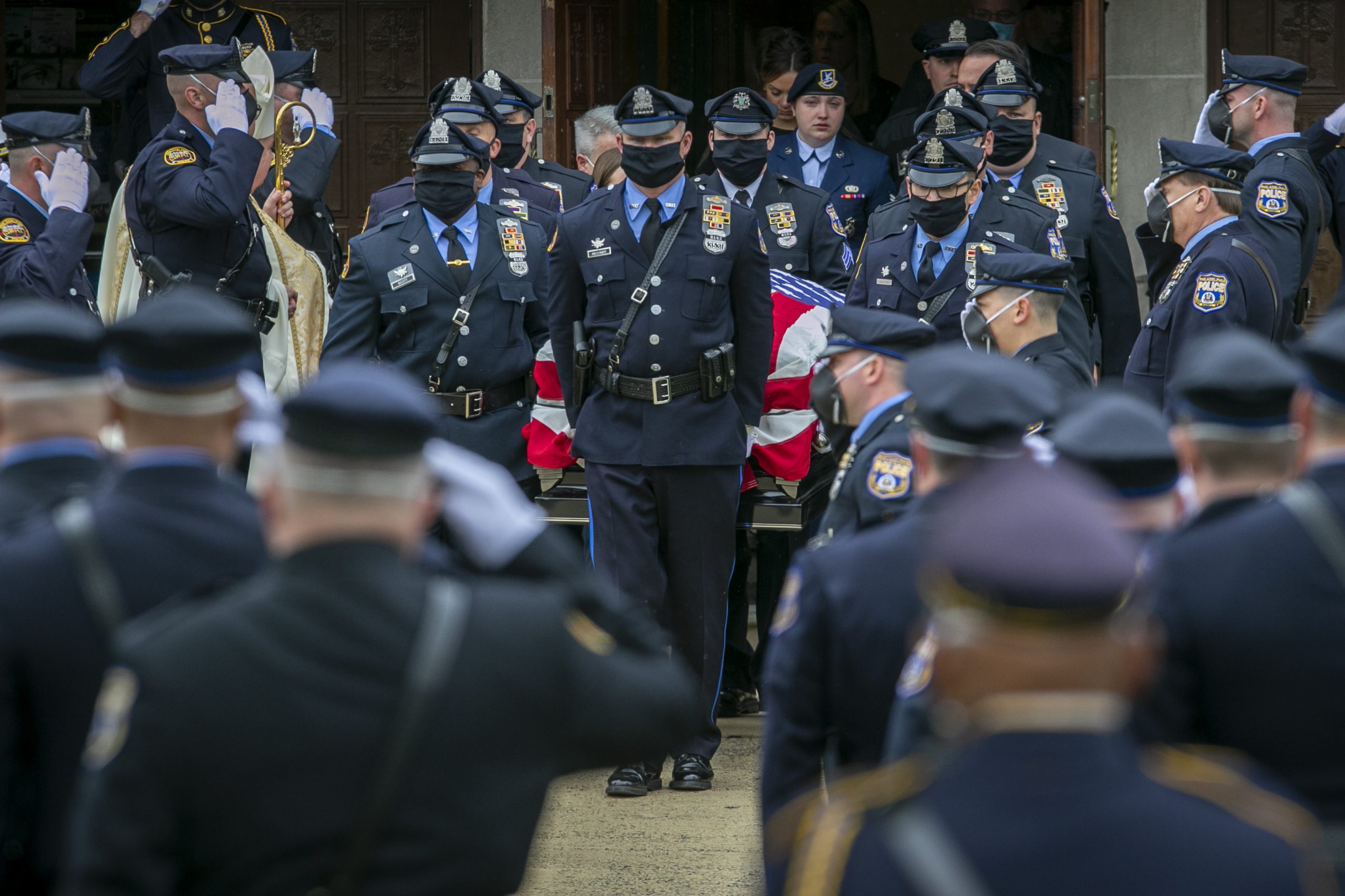
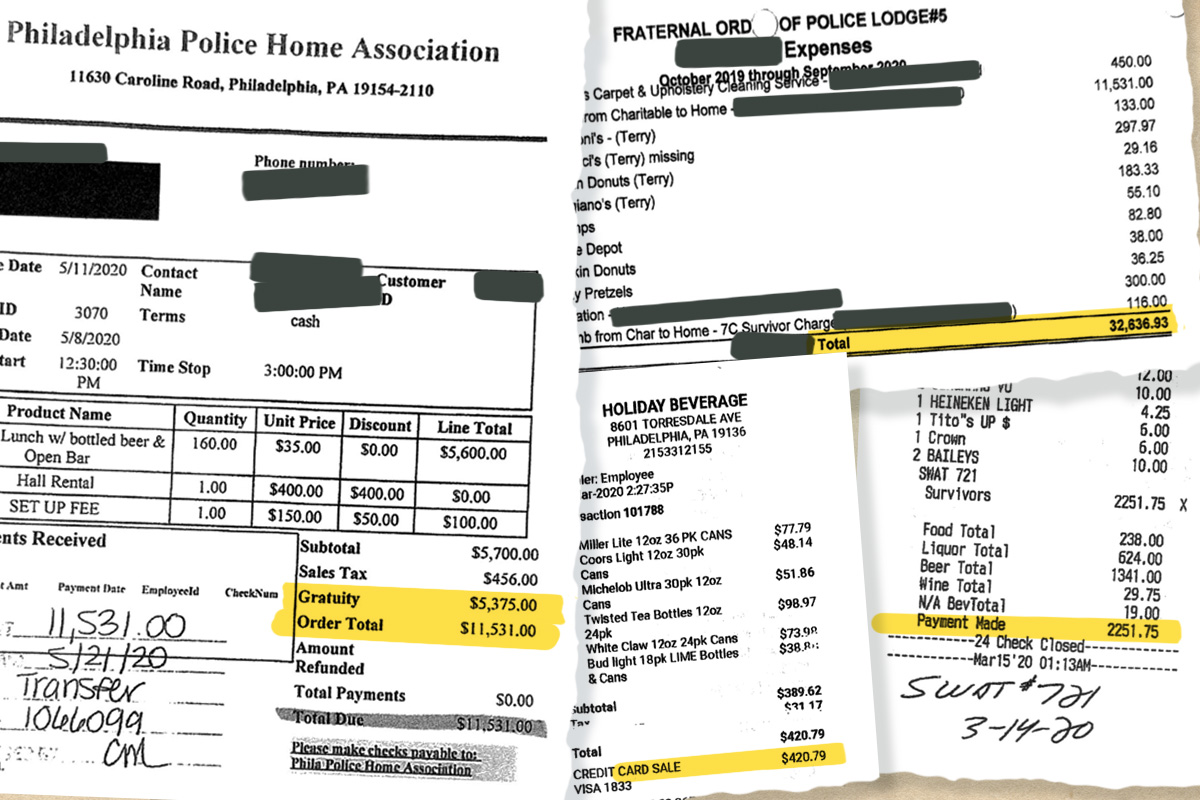
Philadelphia’s police union issued a statement criticizing city officials for failing to promptly reimburse expenses incurred for officers who died in the line of duty, and disputed the city’s claim that it did not use tax dollars to cover a roughly $11,500 funeral luncheon, which included a 94% “gratuity.”
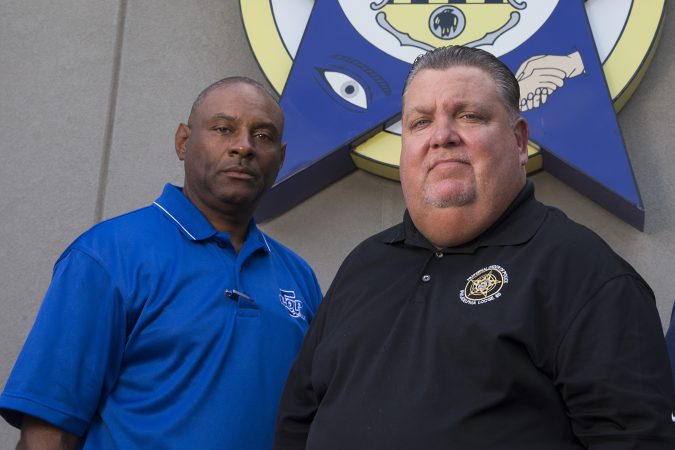
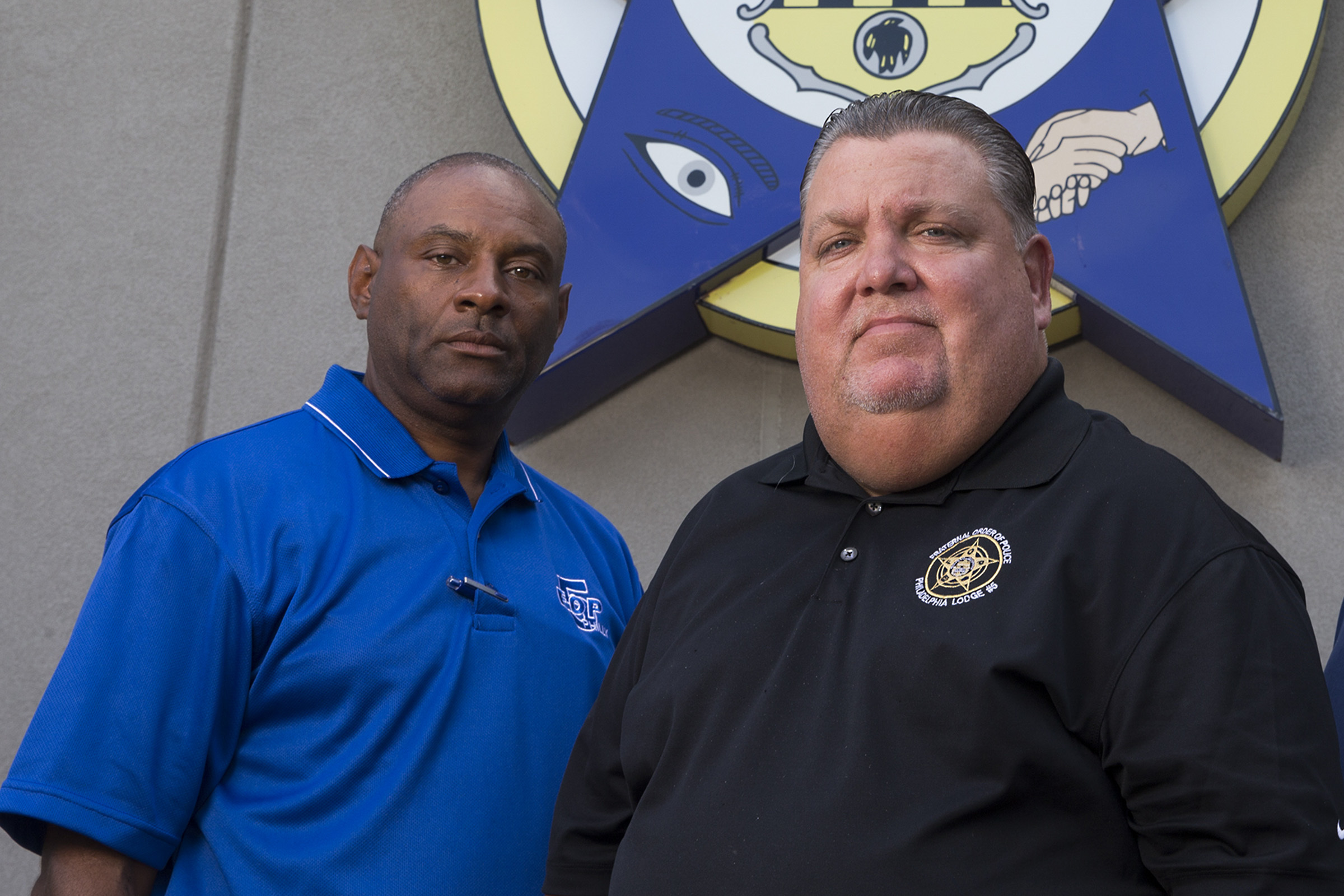
The Fraternal Order of Police Lodge 5’s statement, which was posted on Facebook last week and emailed to its members, followed an Inquirer investigation that found the union has for years billed the city following an officer’s death for expenses that are unrelated to funeral home and cemetery costs.
“The problem has always been and continues to be the city of Philadelphia’s ineptitude to pay bills in a timely fashion,” the FOP wrote. “Which leads to the survivors’ families having to make large financial decisions for funerals, services, luncheons, transportation, cemeteries, funeral attire, and cremations within days of suffering a traumatic life-changing event.”
Since 2014, the city has contributed up to $75,000 in tax dollars for each line-of-duty death, up from $15,000. The FOP’s contract with the city calls for the union to be reimbursed for “reasonable and necessary funeral expenses.” But there is no further explanation of what would qualify, and The Inquirer found the union has asked the city to pay tens of thousands of dollars for everything from bar and restaurant tabs to socks and underwear.
The FOP has also billed the city for at least eight events at its own bar, 7C Lounge, located inside its sprawling headquarters in Northeast Philadelphia. One of those events was a luncheon in May 2020 for Cpl. James O’Connor IV, a 23-year veteran and married father of two, who had been shot and killed in March of that year.
His funeral had to be postponed for eight weeks due to the COVID-19 pandemic and only a limited number of people, all in masks, were permitted inside the church.
Pallbearers carry the body of slain Philadelphia Police Cpl. James O’Connor IV outside Our Lady of Calvary on May 8, 2020. O’Connor was killed in the line of duty.Alejandro A. Alvarez / Staff Photographer
Even though the city had restricted bars and restaurants to takeout and delivery service, the FOP held a 2½-hour lunch for O’Connor at its own bar.
Records show the FOP billed the city for $5,700 worth of bottled beer, an open bar, and food for 160 people. The union added a $5,375 gratuity.
Sharolyn L. Murphy, the city’s risk manager and deputy finance director, wrote in an email to The Inquirer that the city did not reimburse the FOP for the O’Connor luncheon.
The FOP statement claims otherwise. The union wrote that it provided the city with comprehensive documentation and was fully reimbursed.
The FOP statement also says that the $5,375 was not all a gratuity — which is how it is listed on the bill — but just $925 for a tip while the rest was payment for kitchen and catering workers, bartenders, servers, and managers.
“This was the only way to add the payroll and gratuity expense to the catering invoice,” the FOP wrote. “This was all documented and explained in timestamped email records and provided to the city which is why they approved the reimbursement.”
The FOP attached to its statement copies of six emails listing the amounts paid to the staffers, all of whose names are redacted. Names of the senders and recipients are also redacted, except for then-FOP president John McNesby’s.
The emails were not included in the Right-to-Know records The Inquirer received from the city. The city did not respond to questions about whether the risk management team had gotten them and, if so, why they were not among the documents previously provided to the newspaper.
But Murphy on Tuesday e-mailed The Inquirer a breakdown of the items the city denied from a $32,600 reimbursement request, including the cost of the O’Connor luncheon, as well as liquor bills totaling $800 and $50 in miscellaneous beverages.
“The city provides expeditious payment of funeral expenses to support families of those who made the ultimate sacrifice to service to Philadelphia,” Murphy wrote in an e-mailed response to The Inquirer. “At the same time, the city has a responsibility to ensure that taxpayer funds are spent appropriately.”
Current FOP president Roosevelt Poplar and McNesby, who served as the union’s president for 16 years before stepping down in 2023, did not respond to multiple requests for comment before The Inquirer published its investigation. In its June 13 statement, the FOP called The Inquirer’s investigation a “hatchet job hit piece.”
The Inquirer’s examination of the funeral expenses underscored questions about the FOP’s nonprofit Charitable Foundation, commonly known as the Survivors’ Fund, which raises money to pay for funerals and support the families of officers who were killed or seriously injured in the line of duty.
A 2025 Inquirer investigation found that the FOP reported spending hundreds of thousands of dollars on “funerals and special events” in years when no officers died in the line of duty, and that its expenditures and cash donations had been loosely documented and were difficult to track.
The Inquirer sought further clarity by filing Right-to-Know requests with the city for more than 1,000 pages of invoices, bills, emails, and other public records concerning 17 police line-of-duty deaths since 2014. Eight of the deaths were attributed to COVID.
The FOP publicly criticized The Inquirer’s records request.
Included in the documents were FOP submissions of receipts from businesses such as Target, Home Depot, Walmart, Acme, 7-Eleven, and CVS that include no explanation as to why they were funeral expenses. The union has also forwarded statements of corporate credit cards requesting reimbursement for restaurants and beer stores.
Some reimbursement requests lacked receipts or itemized breakdowns, and at least two were for cash. The FOP did not address the cash requests in its statement.
The Inquirer found that the city has covered the bulk of the FOP’s requests, although in almost all cases, the documents do not point to which specific reimbursements were approved or denied. An FOP request for $1,870 to cover two bar tabs and pipes and drums after a dinner is the only explicit denial in the records.
The FOP wrote in its statement that its “finance office and accounting firm have comprehensive, accurate, and detailed records for all financial transactions for our multiple accounts. There are no missing or incomplete records.”
After a tragic and unprecedented spike in officer deaths, Philadelphia’s police union made an emotional plea for help: Its charitable organization was running low on funds and struggling to give fallen officers the respectful burials they deserved.
City officials stepped up, agreeing in 2014 to significantly boost how much they would pay to cover funeral expenses. Since then, for each officer who died in the line of duty, the city has contributed up to $75,000 in tax dollars, up from $15,000.
But an Inquirer investigation found that the Fraternal Order of Police Lodge 5 has billed the city for an array of expenses that are far outside the scope of funeral home and cemetery costs. The union has asked to be reimbursed tens of thousands of dollars for bar and restaurant tabs, alcohol, catering costs, car repairs, carpet and upholstery cleaning, socks and underwear, garbage bags, and paper towels.
The FOP has submitted receipts from businesses such as Target, Home Depot, Walmart, Acme, 7-Eleven, and CVS that include no explanation for why they qualify as funeral expenses.
The union has also forwarded monthly statements of corporate credit cards held by various members of the FOP leadership team, circling bill totals mostly for restaurants, bars, and beer stores. Other reimbursement requests lack any receipt or itemized breakdown, or are simply requests for cash, making it practically impossible to judge their merits at face value.
Records show the FOP has billed the city for food and alcohol for at least eight events at its own bar, 7C Lounge, located within the union’s 50,000-square-foot headquarters in Northeast Philadelphia.
One of the 7C events resulted in a $5,700 bill, plus an additional $5,375 for a “gratuity.”
And in one handwritten memo, an FOP official asked the city to reimburse the union $3,500 in cash for a survivor’s family, with no explanation except that it was “per John McNesby,” then the FOP’s president.
Current FOP president Roosevelt Poplar and McNesby, who served as the union’s president for 16 years before stepping down in 2023, did not respond to requests for comment.
FOP Lodge 5 President Roosevelt Poplar, left, in a portrait next to John McNesby, right, who at the time led the union on Sept. 4, 2019.Charles Fox / Staff Photographer
The city’s $75,000 contributions for officer funeral expenses, which have not been previously reported, prompt new questions about the FOP’s Survivors’ Fund, the union’s charitable organization that raises money to pay for funerals and support the families of officers who were killed or seriously injured in the line of duty.
A 2025 Inquirer investigation found that the FOP reported spending hundreds of thousands of dollars on “funerals and special events” in years when no officers died in the line of duty, and that its expenditures and cash donations had been loosely documented and were difficult to track.
The Inquirer sought further insight by examining more than 1,000 pages of invoices, bills, emails, and other documents obtained in Right-to-Know requests for public records concerning 17 police line-of-duty deaths since 2014. Eight of the deaths were attributed to COVID-19.
The FOP publicly criticized The Inquirer for requesting the records.
The city’s risk management team is primarily responsible for deciding which costs the city should reimburse. A third-party administrator, with expertise in workers’ compensation laws, offers guidance.
Emails, memos, and copies of checks show the city has covered the bulk of the FOP’s requests, although in almost every case, the city’s documents do not indicate which specific reimbursement requests were approved. An FOP request for $1,870 to cover two bar tabs and pipes and drums after a dinner is the only explicit denial in the records.
Mayor Cherelle L. Parker and Sharolyn Murphy, the city’s risk manager, declined to be interviewed.
The Inquirer sent Murphy and Parker’s office a list of the FOP’s expenses that did not appear to be directly related to funeral costs. In an email response, Murphy said that the city did not reimburse the FOP for the 7C event with the $5,375 gratuity and that the city does not reimburse for alcohol. She did not include explanations for the other expenses.
Barry Scott, who headed risk management for 21 years before retiring in 2024, said the city would deny beer runs and State Store bills, but would approve restaurant bills if they appeared to be tied to a funeral.
“Frequently the bills were not specific enough that it was difficult to discern whether or not there was alcohol involved,” he said. “We tried to make the best decision that we could with regard to how we approached the particular bill and the funeral-relatedness of the expense. Where we did not feel we had sufficient justification or documentation in order to make a determination, we would not pay the bill.”
Barry Scott, the city’s risk manager for 21 years until retiring in 2024, in his office in November 2021.Tyger Williams / Staff Photographer
Scott acknowledged that once the city increased its maximum contribution, the FOP started asking for more and more expenses to be reimbursed.
“It’s hard to know exactly what happened and why we saw such a precipitous increase in invoices from the FOP,” he said. “But the sharp increase to $75,000 did leave an opportunity for it to be abused.”
Separate from the city’s contribution, the FOP’s Survivors’ Fund raises money by hosting benefits, often at the 7C Lounge, in which it charges around $45 a person in cash at the door for food, soda, and beer. Most attendees donate money, participate in raffles or auctions, or buy memorial T-shirts.
McNesby has previously described himself as the “Santa Claus” of the Survivors’ Fund, which exists not just to pay for funerals but also for when “families request help with their houses, or issues with their cars,” he told The Inquirer in 2023.
Meanwhile, the FOP’s arrangement with the city does not appear to be widely understood, and rank-and-file cops may assume that the Survivors’ Fund takes care of funerals and assorted costs for families of officers killed in the line of duty.
The Inquirer interviewed a dozen active and retired police officers about the city’s financial contribution in the wake of an officer’s death, and all said they did not know the city was paying as much as $75,000. Half said they believed the city covers some of the funeral costs, while the FOP pays for luncheons and bar tabs. The other six said they had no idea the city contributed anything.
“It was always my understanding that the FOP, through its Survivors’ Fund, paid for any and all funeral expenses for an officer killed in the line of duty,” said a retired veteran with more than 30 years on the job, who was granted anonymity in order to speak openly.
“The fact that the fund deals in cash and is untraceable is extremely disturbing,” the retired officer added. “There is no accounting of any kind as to how these funds are distributed.”
‘Public money requires public eyes’
The FOP’s contract with the city calls for the union to be reimbursed for “reasonable and necessary funeral expenses.”
There is no clarification on what would qualify under either standard, and it does not explain how reimbursement requests will be processed. The records the city provided seem to reflect a haphazard system in which the FOP submits incomplete expenses to the Philadelphia Office of Risk Management and then follows up by email several times to ask when payment could be expected.
Murphy wrote that although there is not a list of allowed expenses, the city typically will not cover luxury caskets, large floral arrangements, catering or reception costs, and travel expenses for family members.
Officer Raul Ortiz, in suit, was with Officer Richard Mendez when Mendez was fatally shot at Philadelphia International Airport while attempting to stop a car theft. Ortiz was shot in the arm. The funeral for Mendez was held on October 24, 2023.Alejandro A. Alvarez / Staff Photographer
Experts say both the FOP and the city should have clear policies for which expenses are considered funeral-related, what documentation is required, and who should have authority to approve reimbursements.
“Public money requires public eyes,” said Andrew McGinley, vice president of policy for the Committee of Seventy, a civic leadership organization that works to promote effective and ethical government. “We want the union to be able to support families who are grieving and provide whatever support they can in this horrible, tragic circumstance. But that doesn’t mean we shouldn’t also make sure that the public money spent is accountable and appropriate.”
McGinley suggested the city’s controller’s office or City Council require proper recordkeeping. “As stewards of public dollars, we have to be able to ensure that the money is being spent for things that it’s allocated for, and right now it doesn’t sound like we’re able to track it.”
Joseph H. Thompson, a former federal prosecutor who served as acting U.S. attorney for the district of Minnesota until 2025, said tax dollars require transparency and extra scrutiny, particularly when public confidence is strained.
“Those entrusted with public resources, especially in law enforcement, must remain above not only impropriety, but even the appearance of it,” he said.
The money that the FOP receives from the city is not required to be itemized — or even mentioned — in federal tax filings, making it even more difficult to reconcile the money moving in and out of the Survivors’ Fund.
For example, Police Officers Richard Mendez and Jaime Roman were shot to death in 2023 and 2024, respectively. The city paid for both funerals, totaling nearly $76,000. The FOP submitted to the city additional expenses of more than $20,000, including a catering bill and two bar tabs, one of which was at 7C Lounge.
But in federal tax documents that cover that time frame, both FOP Lodge 5 and its Survivors’ Fund reported spending a total of $745,000 for funerals, memorials and events, or help for survivors.
In 2024, 10 years after the city bumped its funeral expense contribution for the police to $75,000, the union representing Philadelphia firefighters reached a similar agreement. (There are no reimbursement requests from firefighters because none have died in the line of duty since. But roughly the same number of police officers and firefighters have lost their lives in the line of duty over the last decade.)
Unlike the FOP, the International Association of Fire Fighters, Local 22, does not act as a go-between to handle the city’s money. The Philadelphia Fire Department, not the union, sends the funeral home and cemetery bills to the city’s risk management office, which then reimburses the vendors directly.
The union has previously contributed $5,000 of its own funds to the family of a deceased firefighter to help cover the costs of a memorial reception and meal, according to Tommy McKiernan, Local 22’s first vice president.
Going forward, he said, he would submit that bill to the city so the family did not have to pay out of pocket.
“Our intent is to keep the cost to the family as minimal as possible,” McKiernan said.
Unanswered questions
On March 13, 2020, members of the Philadelphia Police Department’s SWAT team climbed a flight of stairs to the second floor of a stash house crammed with guns and drugs on Bridge Street in Frankford to serve a murder warrant.
A gang member fired a semiautomatic assault rifle 16 times through a bedroom door, striking Cpl. James O’Connor IV in the neck and arm.
O’Connor, a 23-year veteran and married father of two, was declared dead at the hospital not long after at the age of 46. It was a tragedy that was amplified due to his family’s multigenerational roots in law enforcement: His father was a police officer, his son is a current officer, and his cousin was a homicide detective. O’Connor was posthumously promoted to sergeant and awarded the department’s Medal of Honor, a Purple Heart, and the Medal of Valor.
Because of the COVID pandemic, his funeral was delayed for eight weeks, and a limited number of people were permitted inside Our Lady of Calvary Church for the memorial. Most mourners had to sit on opposite ends of the pews, and all had to wear masks.
Pallbearers place the body of Cpl. James O’Connor IV in the back of an armored vehicle named after him. The funeral for O’Connor, who was killed in March 2020, was held at Our Lady of Calvary Church in Philadelphia on May 8, 2020. ALEJANDRO A. ALVAREZ / Staff PhotographerAlejandro A. Alvarez / Staff Photographer
“The city has not, and the city will not, forget Cpl. James O’Connor,” then-Mayor Jim Kenney said at the funeral ceremony. “We won’t forget the sacrifices he made, or the sacrifices your family has made.”
The city reimbursed the FOP $30,075 to cover O’Connor’s funeral home and cemetery costs.
But additional requests for money kept coming in, totaling 108 pages.
The city had imposed restrictions on restaurants and bars, limiting them to takeout and delivery service to prevent the spread of COVID. After the funeral, the FOP held a 2½-hour lunch for O’Connor at its own bar.
The FOP billed the city for $5,700 worth of bottled beer, an open bar, and food for 160 people at the 7C Lounge, then added a 94% gratuity, for a total bill of more than $11,500.
The one-page reimbursement document for the luncheon does not include an itemized receipt and describes the terms of the lunch as “cash.” At the bottom of the page is a typed request: “Please make checks payable to: Phila Police Home Association,” the charitable organization that manages the 7C Lounge.
The body of slain Philly Police Cpl. James O’Connor IV leaves Our Lady of Calvary Church in Philadelphia on May 8, 2020. Cpl. O’Connor was killed in the line of duty. ALEJANDRO A. ALVAREZ / Staff PhotographerAlejandro A. Alvarez / Staff Photographer
Although the records do not indicate it, Murphy said the city did not reimburse the FOP for the O’Connor luncheon.
Additional reimbursement requests included more than $1,600 at beer distributors, $450 for carpet and upholstery cleaning, and a $2,375 invoice from Dunphy Ford to make repairs on a F150 truck.
The records also include a handwritten note on FOP pension chairman Michael Shellenberger’s stationary that requests “$3,500 in cash given to Mrs. O’Connor per [then FOP president] John McNesby.” The records include no further explanation.
In July 2020, an FOP treasurer sent then-Deputy Mayor Richard Lazer a $32,600 reimbursement request for “expenses associated with services provided and caring for the O’Connor family during their mourning.” The amount was separate from the previous bill for funeral costs.
The city approved $20,256 of that amount and sent a check to the FOP’s Survivors’ Fund. The documents do not indicate which specific expenses the city approved and denied.
One tragedy after another
Beginning in 2006, Philadelphia police suffered through a brutal three-year stretch.
Seven officers were killed in the line of duty, more than in any other law enforcement agency in the country during that 33-month span. Five were shot to death. The other two were struck and killed by other drivers while in their patrol cars.
The tragic ritual of honoring fallen officers became too familiar. Hundreds of police officers in dress blues and glossy black shoes, their white-gloved hands raised in salute as the flag-draped coffin is hoisted into the church. Motorcades of blue- and red-flashing squad cars and motorcycles escorted the funeral procession to the cemetery.
At the grave site, Taps is played on a bugle and then “Amazing Grace” on bagpipes. The flag on the coffin is neatly folded and given to the widow. And a police radio calls out the officer’s name and badge number for the last time, acknowledging a job well done.
The body of Sgt. Stephen Liczbinski, who was killed in the line of duty, is carried into the Cathedral Basilica of Saints Peter and Paul in Philadelphia on May 9, 2008. Alejandro A. Alvarez / Staff Photographer
The city paid for all seven funerals, totaling almost $200,000, exceeding the $15,000 limit for each at the time, according to city records.
But by 2008, McNesby and other FOP leaders said the Survivors’ Fund was seriously depleted. FOP vice president John McGrody told The Inquirer that the fund may be called on to spend up to $50,000 for each burial, meals for the bereaved, and school expenses for the fallen officer’s children. These expenses can occur even in years when no officer has died.
The spate of fatalities paved the way for the city to honor the FOP’s request for help during contract negotiations. A three-member panel — one person appointed by the city, one by the union, and the other from the American Arbitration Association — agreed to contribute more taxpayer money toward the cost of burying fallen officers, beginning in 2014.
“At that point it was much easier to go into excess just because there was so much money potentially on the table,” Scott said. “But at some point when we reach the $75,000 number, I think we are beyond what is absolutely directly related to the funeral of the officers.”
If Scott and his staffers had questions, their point person at the FOP was Terry Reid, a member of the union’s executive board and its disability coordinator.
Records show she sent the majority of the emails and requests for reimbursement to the city, as well as American Express charges for food establishments ranging from Dunkin’ Donuts to Maggiano’s. A nearly $300 reimbursement request for the restaurant Santucci’s that Reid sent in 2020 includes the notation “missing,” presumably indicating there was no receipt.
In July 2023, McNesby fired Reid when the family of a late police officer alleged that she had borrowed at least $20,000 from the officer’s widow and then ignored the woman’s requests to be repaid.
Reid did not respond to requests for comment.
City officials balk
In most cases, the records are unclear as to which specific items the city denied. A few, however, spell them out.
The FOP sent the city a list of expenses after the death of Mendez, who was a 22-year veteran when he was killed in 2023 while interrupting a car theft at Philadelphia International Airport.
Pallbearers carry the body of Officer Richard Mendez out of the Cathedral Basilica of Saints Peter and Paul on Tuesday, October 24, 2023. Mendez was shot and killed at the Philadelphia Airport.Alejandro A. Alvarez / Staff Photographer
The reimbursement requests were not for the funeral home, which was covered in a separate invoice for $33,576.
The list included payment for two 60-passenger buses, food, catering, ceremonial pipes and drums, two bar tabs, and the cost to detail three cars. The total amount was nearly $21,000.
This time, city officials balked.
In an October 2024 email, Raashida Fleetwood, Philadelphia’s risk management counsel and employee disability manager, wrote to PMA Management Corp, a third-party company the city paid to help manage claims for workers injured or killed, explaining what the city declined.
“Here is the updated expense sheet,” she wrote. “We are not paying for Bar Tab- $667.00, Pipes and Drums after dinner- $839.44 or Bar Tab- $363.60.”
PMA issued a check on behalf of the city to the FOP’s Survivors’ Fund for $18,651, about $1,900 less than what the FOP had requested.
The COVID pandemic created an additional complication in that it required city officials to determine whether an officer who died of COVID had gotten sick while at work. That would make it a line-of-duty death and entitle the officer’s family to additional benefits.
Risk management officials determined that in a single year, six officers who succumbed to the virus had contracted it on the job, including Officer Vladimir Nikolaev Maleev, 39, who died Aug. 6, 2021.
A native of Karlovo, Bulgaria, Maleev had come to America at the age of 19, and his parents and extended family wanted his remains flown home. The FOP asked the city to pay the $7,115 bill for the international flight. The city agreed.
When Officer Tab T. Ali — a former Marine and a 25-year veteran of the department — died in November 2020 from COVID complications, his aunt paid $7,056 to the funeral home. The city reimbursed her.
The FOP subsequently forwarded an additional invoice totaling $6,708 for Ali’s headstone and foundation. Emails between city risk management officials and PMA questioned whether this should be covered.
“Have we paid up to $75k already,” the city’s employee disability manager wrote. “If not, you can process for payment.”
“Not even close. We only paid $7056.00. We get the additional payment processed. Grand total increases to $13,764.00,” a PMA regional claims supervisor replied.
The most recent Philadelphia police officer to die in the line of duty was Highway Patrol Officer Andy Chan, 55, a married father of three. He died in December, almost seven years after he was struck while riding his motorcycle in Northeast Philadelphia.
On Dec. 16, a horse-drawn carriage took Chan’s body in a cherrywood coffin draped in an American flag to the Cathedral Basilica of SS. Peter and Paul in Philadelphia. Officers towed Chan’s motorcycle, still bearing his name, in the procession.
The funeral caisson for Philadelphia Highway Patrol Officer Andy Chan arriving at the Cathedral Basilica Saints Peter and Paul on December 16, 2025. Chan died six years after a driver struck his patrol motorcycle. Alejandro A. Alvarez / Staff Photographer
On that frigid, windy Tuesday, hundreds of police officers joined city leaders to memorialize the man who had wanted to be a cop since childhood.
By the time of Chan’s death, The Inquirer had already filed Right-to-Know requests with the city asking for records of city payments or reimbursements to FOP Lodge 5 for all funeral-related expenses for officers killed in the line of duty. FOP leadership publicly criticized the records request on social media, contending that The Inquirer was seeking “private financial information” to “put a price tag on our heroes.”
The body of Philadelphia Highway Patrol Officer Andy Chan arriving at the Cathedral Basilica Saints Peter and Paul on December 16, 2025.Alejandro A. Alvarez / Staff Photographer
The reimbursement requests for Chan’s funeral show the FOP was unusually restrained.
The city received two documents, this time from the Philadelphia Police Department instead of the FOP: a bill for the funeral home and one for the carriage service. The total was $48,983.
The FOP did not submit any invoice, bill, or credit card statement for items unrelated to a funeral.