Mount Airy’s dining scene suffered a big loss in September 2025, when chef David Jansen closed his eponymous French-inspired restaurant, which tony Northwest Philadelphians and beyond had loved for a decade.
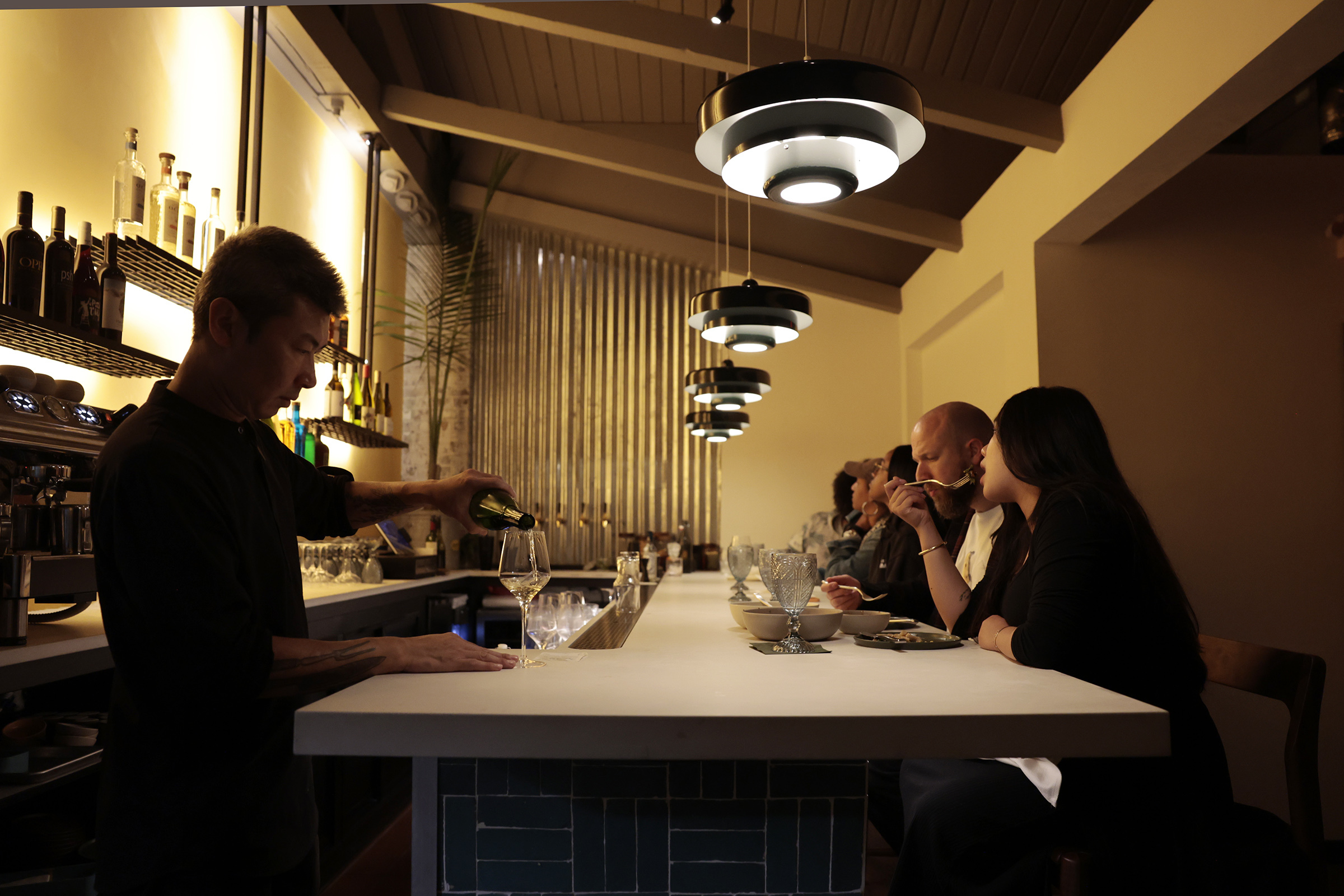
Luckily, the neighborhood didn’t have to wait too long for another date-night destination to step in. Doho, a chic 41-seater, opened in October 2025 with a dimly lit bar and dining room marked by marble tables, gold accents, and plush seats.
Bartender Huy Pham pours wine at the bar during a busy night at Doho restaurant, 18 W. Hortter St.Elizabeth Robertson / Staff Photographer
Doho’s modern aesthetics stand out in this part of town as much as its globally influenced menu, whose supporting ingredients are always on the move: Delicate masa gnocchi studded with Tajín-laced corn nuts and queso fresco in late summer turns to tomato masala and pickled tomatillos as temps fall; duck gets plated with charred peaches in one season and charred apples in the next; the sungold tomato sauce dressing the housemade “rad” noodles (stretched-out radiatori pasta) in early October shifts to a chorizo-laced red curry number by November.
“There’s a lot of care that goes into everything here,” says chef de cuisine Lee Richards, who was preparing handmade shrimp dumplings late last month for a midautumn menu debut.
Richards leads the kitchen at Doho, which is attached to owner Peter Loevy’s Catering by Design at Germantown Avenue and Hortter Street. Though executive chef Roth Perelman oversees both operations — and directs much of the cocktail menu at Doho — the two outfits don’t mix much otherwise. (Meaning catering clients can’t order Doho food for their events — yet, Loevy says.)
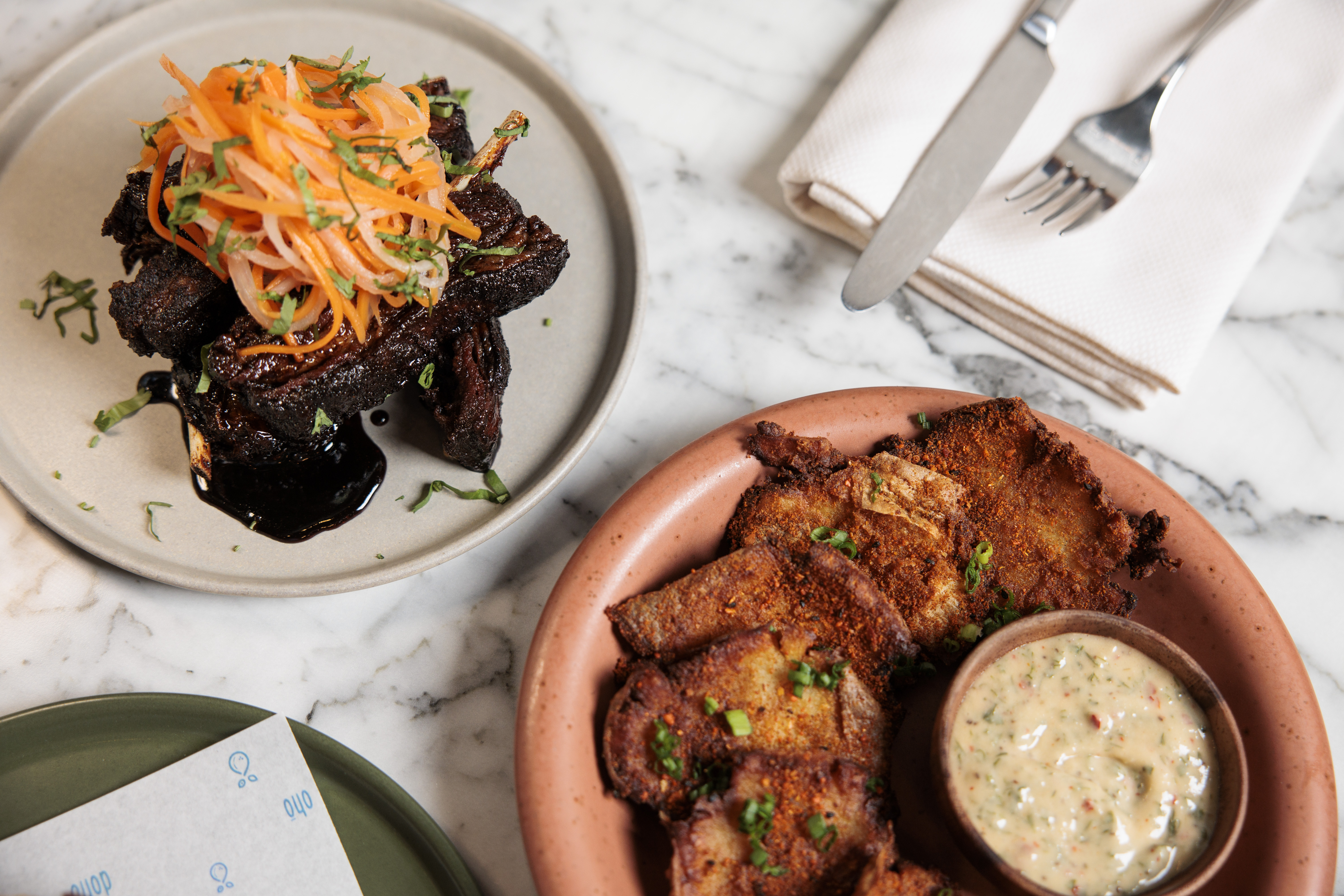
The lamb ribs and sweet potato tostones at Doho.Monica Herndon / Staff Photographer
“We kind of pull away and do our own thing,” Richards says, adding that Doho’s staff, which works in a separate kitchen area from Catering by Design’s team, does get to enjoy an abundance of cookware.
My favorite way to play this globe-hopping, tradition-mixing menu is to focus on the interesting lineup of small plates. There’s usually about 10 items to choose from, including oysters, fish crudo, tuna tartar, Badger Flame beets, and a Caesar salad (whose greens change regularly). You never know what might round out the rest — be it a shrimp quesadilla griddled in paratha bread, a blue crab-stuffed Vietnamese crepe, or a crescent-shaped pretzel roll served alongside mushroom pâté. (There are even more creative bites during the bar’s four-night-a-week social hour, from 5 to 6:30 p.m.)
At my most recent visit, we grazed on tender lamb ribs glazed in a savory-sweet fish sauce caramel as well as crispy sweet-potato tostones generously dusted with chipotle-suya spice mix. The lamb ribs and tostones are both fixtures in the small-plate set, but Richards tweaks the tostones preparations seasonally, swapping in caramelized onion aioli, say, for a miso ranch dipping sauce.
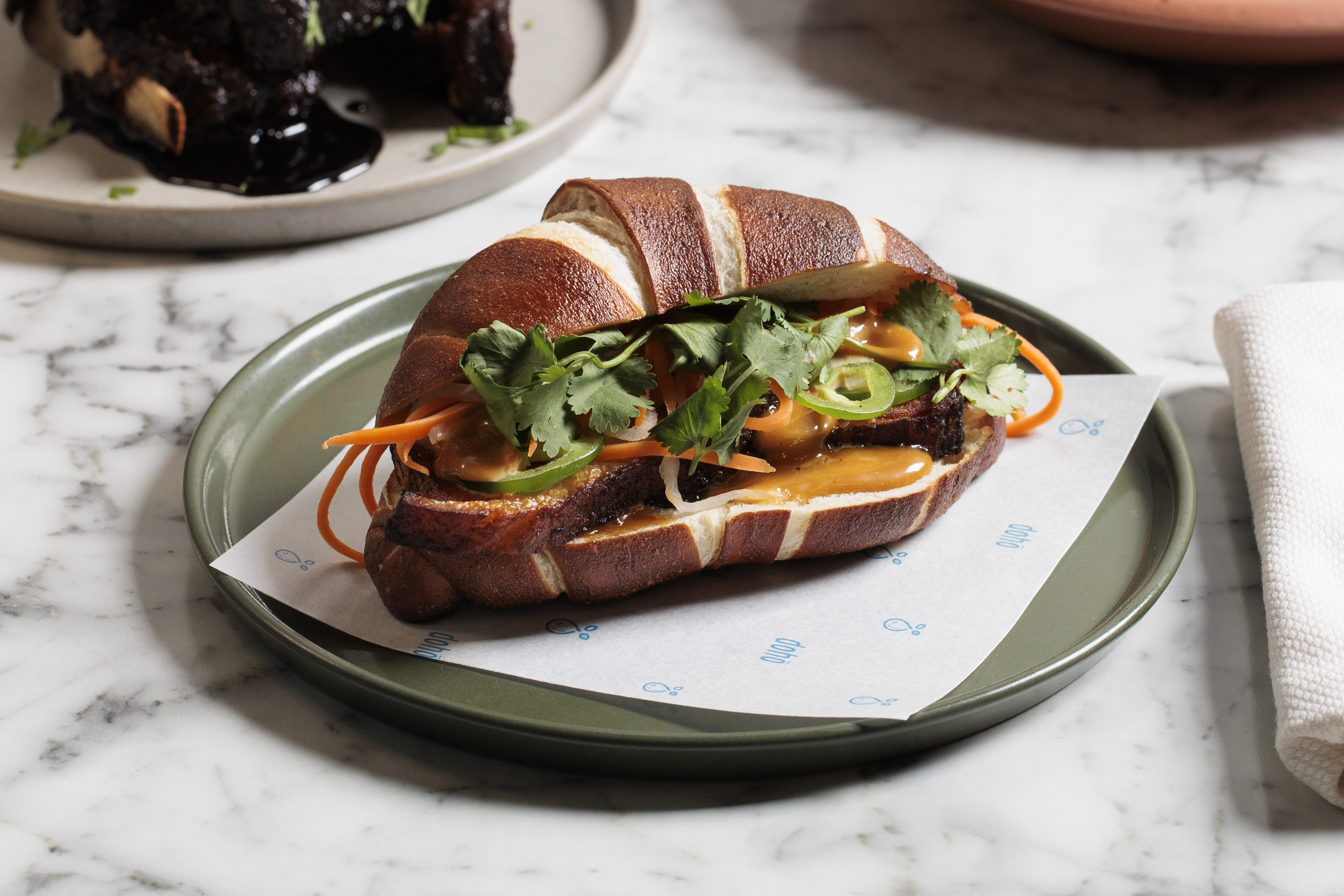
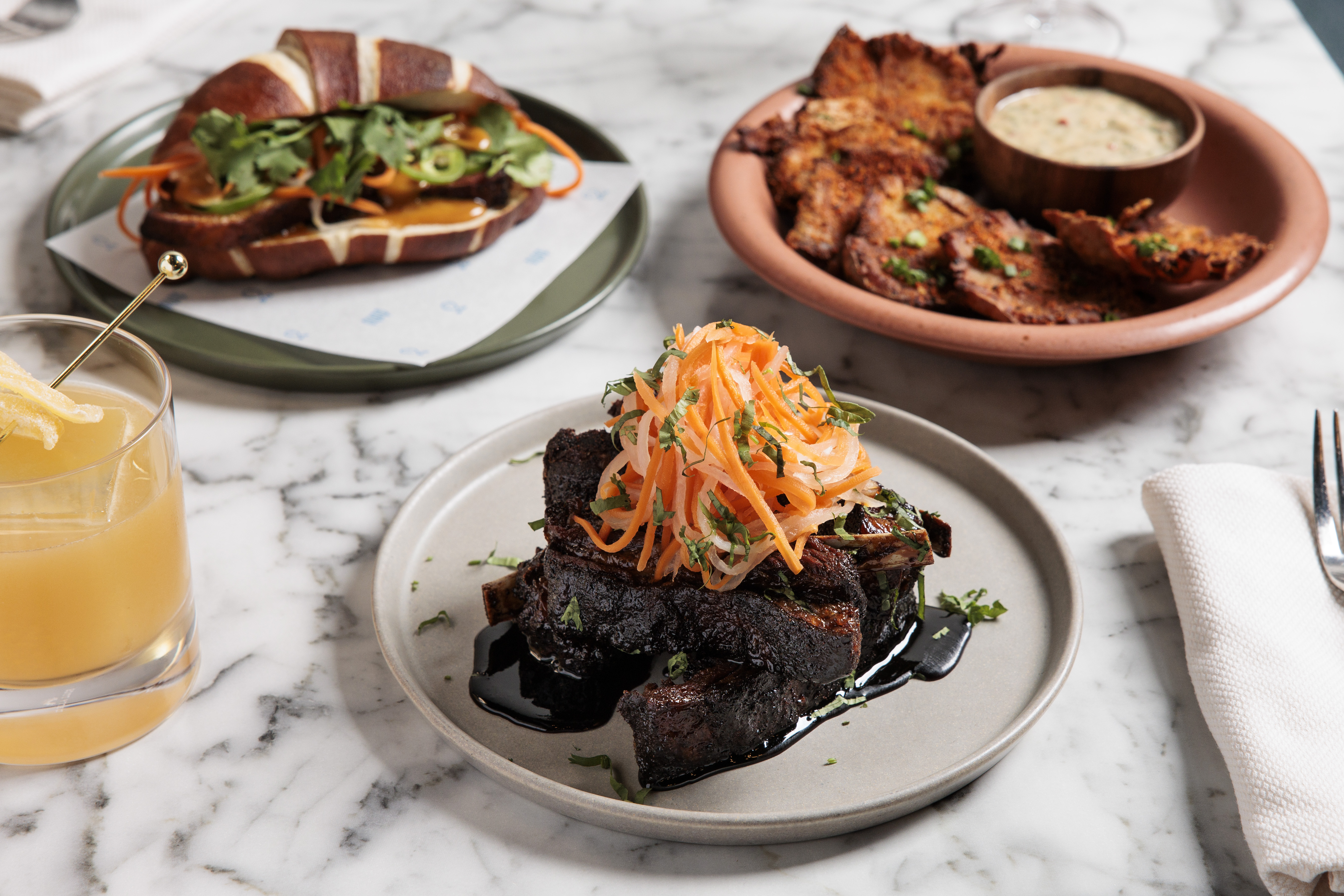
(Clockwise from left) The Electric Touch cocktail, pork banh mi, sweet potato tostones, and lamb ribs at Doho. Monica Herndon / Staff Photographer
Even tastier was the pretzel banh mi, served on shio pan, or Japanese salt bread, a cushiony, salt-speckled bun that tastes like it’s part pretzel, part croissant, and part Parker House roll. The bread, which gets spread with that same fish sauce caramel (in place of pâté), cradled a salty slab of pork belly, threads of pickled carrots and daikon radish, cilantro leaves, and thin slices of jalapeño. The only flaw I could find — other than the banh mi’s limited availability on the social hour menu — is that you will not want to share it, even with your partner.
Doho’s cocktails are well matched with these boldly spiced dishes. You can’t go wrong with their very gingery Penicillin riff (the Electric Touch), but I was especially taken with a Tajín-rimmed corn margarita (Don’t Leave Me Now) made with tortilla-infused tequila, corn liqueur, and sweet corn. Alas, it was off the menu just a few weeks later. Not to worry: There’s always something new and intriguing here to keep the locals coming back.
“One great thing our neighbors say is that it’s a Center City restaurant that [they] don’t have to go to Center City for,” Loevy says.
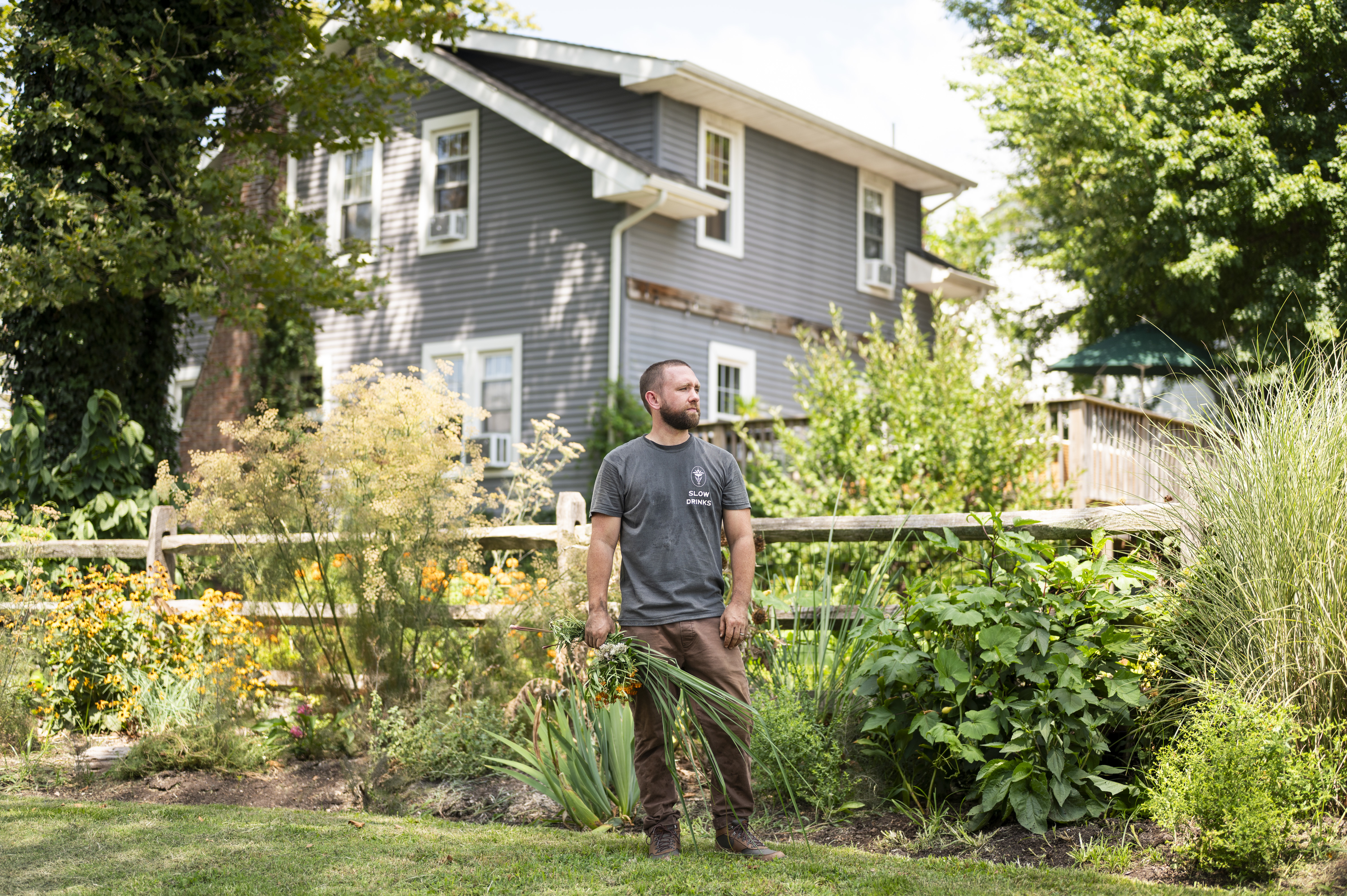
There’s an unassuming backyard in South Jersey that powers some of the area’s most interesting cocktails. The third-of-an-acre Pennsauken plot looks like that of any suburban home, with a weathered swing set and plenty of lawn, but it generates over 100 species of fruit, vegetables, herbs, and flowers each year, a mix of the familiar — lavender, dill, celery, tomatoes, peppers, etc. — and the far more intriguing: dandelion chicory, huacatay, prickly pear cactus, pawpaws, yuzu, jujubes, wormwood, and Jenny Lind melon.
Ingredients from this garden have been showcased in drinks at some of Philly’s best cocktail bars, as well as bars in Chicago; Cleveland; Berlin; Mexico City; Turin, Italy; and Bacolod, Philippines. That’s because the garden’s keeper, James Beard Award-winning beverage writer and bartender Danny Childs, knows how to transform the bounty into a liquid treasure trove.
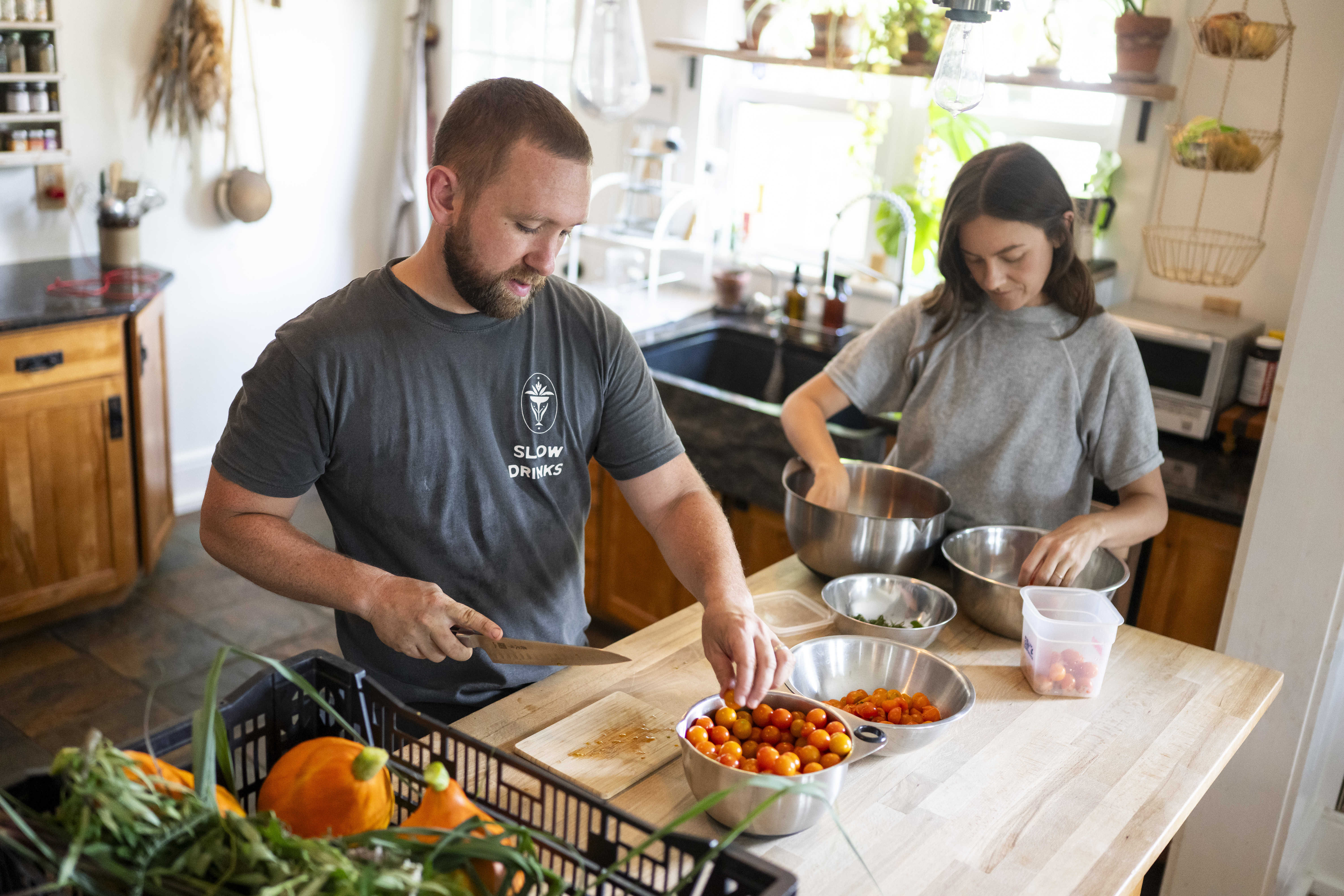
Danny Childs and his wife Katie sift through tomatoes picked from their garden at their home in Pennsauken, N.J., while making lacto-fermented tomato water.Allie Ippolito / For The Inquirer
This backyard and the wilds of South Jersey inspired Childs to develop a range of farm- and field-to-bar beverages, alcoholic and non, collected and detailed in his 2023 book, Slow Drinks.
The principles and practices in the book combine to form a drink-making theory that’s familiar to anyone who’s dined in a farm-to-table restaurant. The best illustration may be homemade amaro, which can capture a time and a place in a bottle by way of its botanicals. Slow Drinks has a recipe for every season — in spring, it’s a strawberry-tinged rabarbaro with roasted dandelion root; in fall, it’s a wormwood-heavy génépy spiked with apples, cranberries, and figs.
The theory behind Slow Drinks, which Childs views as larger than the book itself, emphasizes seasonality, local sourcing, preservation, and storytelling, and it can be applied anywhere.
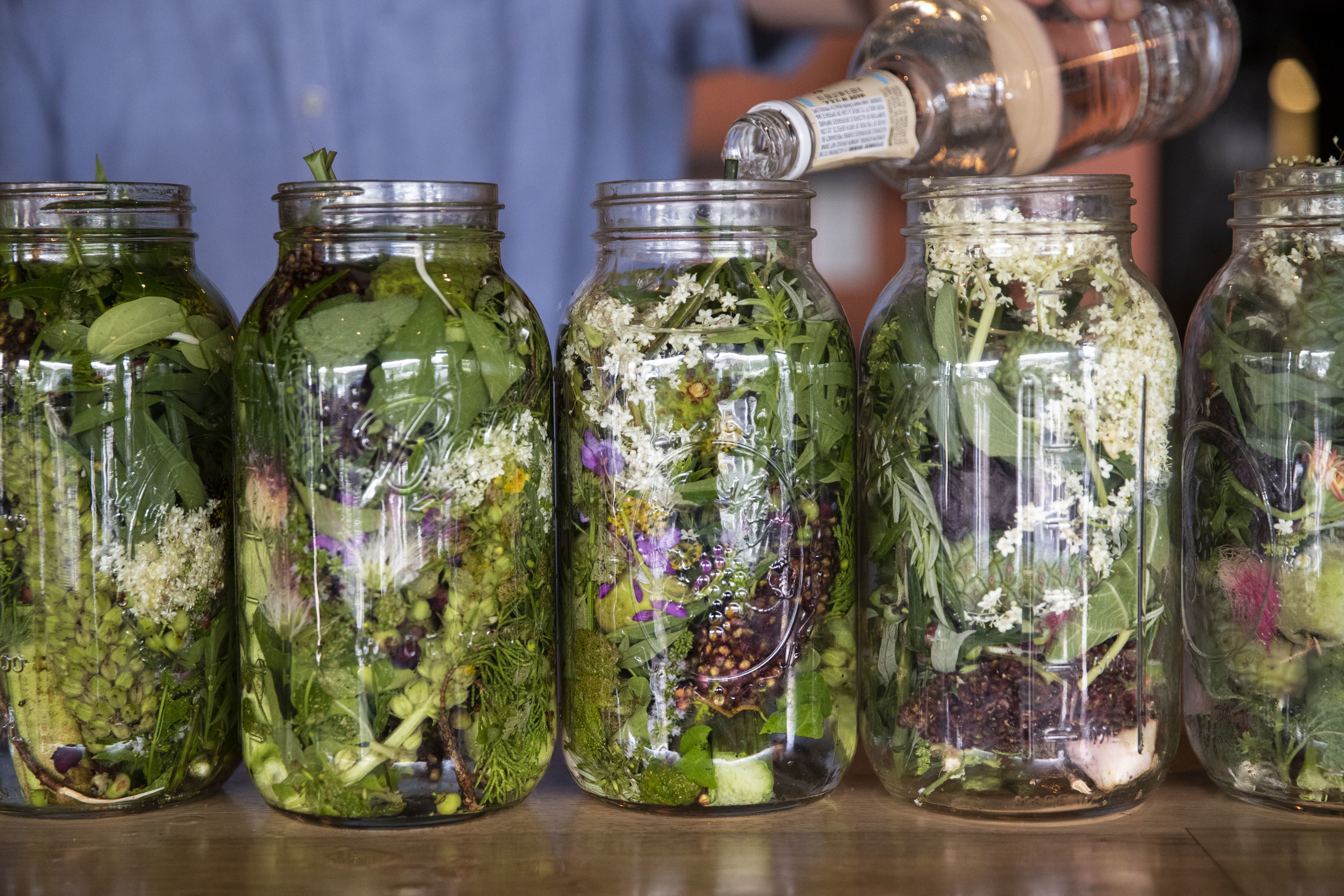
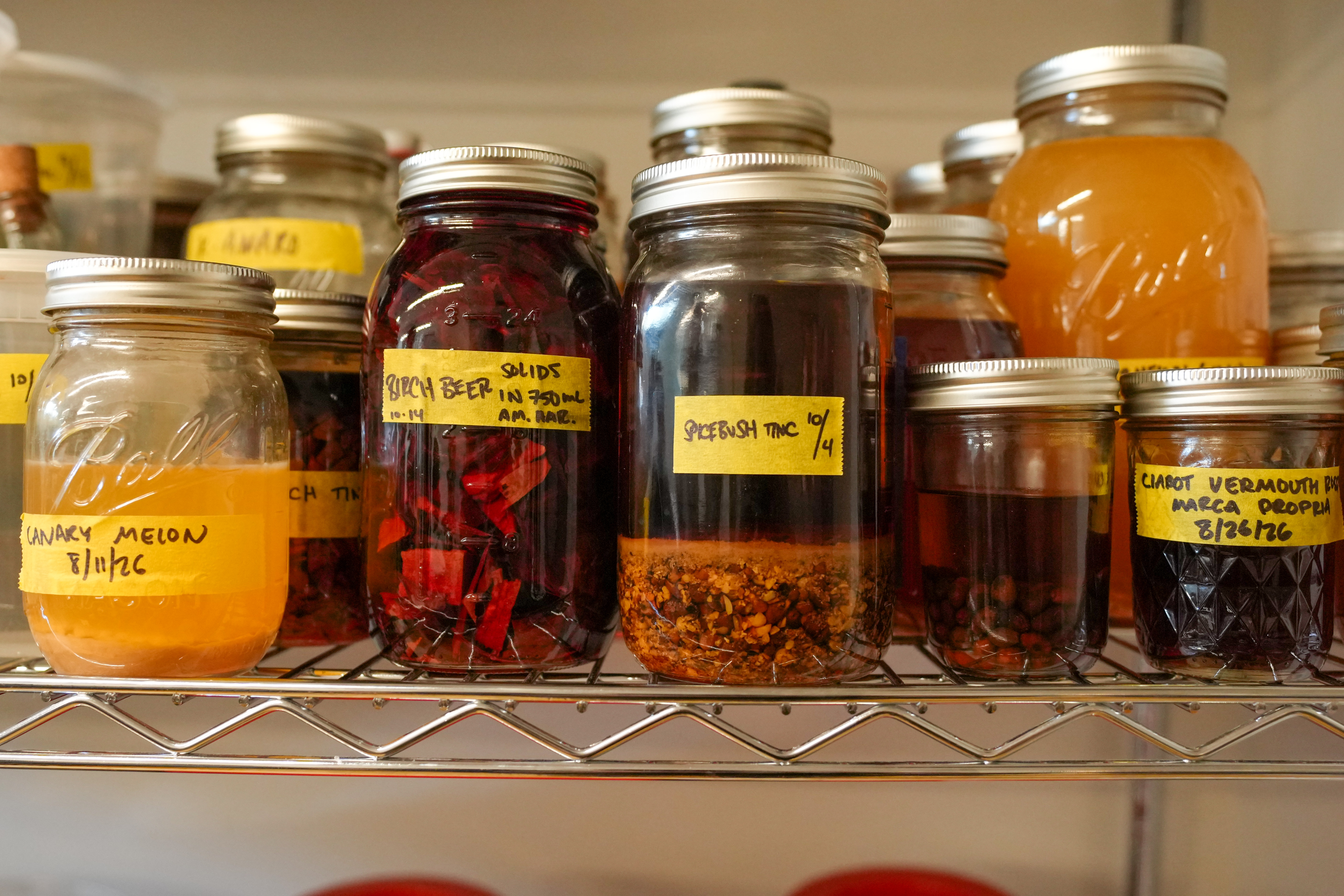
Childs’ South Jersey-inspired amari are infused with botanicals from backyards, forests, and parking lot shrubberies. MONICA HERNDON / Staff Photographer
The farm- and field-to-bar approach has caught the attention of prestigious bar programs here and abroad: Slow Drinks has sold 14,000 copies in English and some 4,000 copies in Italian. It was recently translated to Mandarin.
Though Childs has consulted on several beverage programs in Philly, this year marks the opening of his first bar, Field Day, in Northern Liberties, which he owns with his wife, Katie. Flagged as a “regional cocktail bar,” Field Day will filter its menu through a Slow Drinks lens, showcasing the breadth of ingredients and culinary traditions that swirl around our pocket of the Mid-Atlantic, from the Jersey Shore to Pennsylvania Dutch country. Think sherry and cherry wishniak highballs, boozy gelati, and a daiquiri-colada hybrid flavored with pawpaws and strawberries, along with regional foods like tomato pie, Lebanon bologna, and steamed clams.
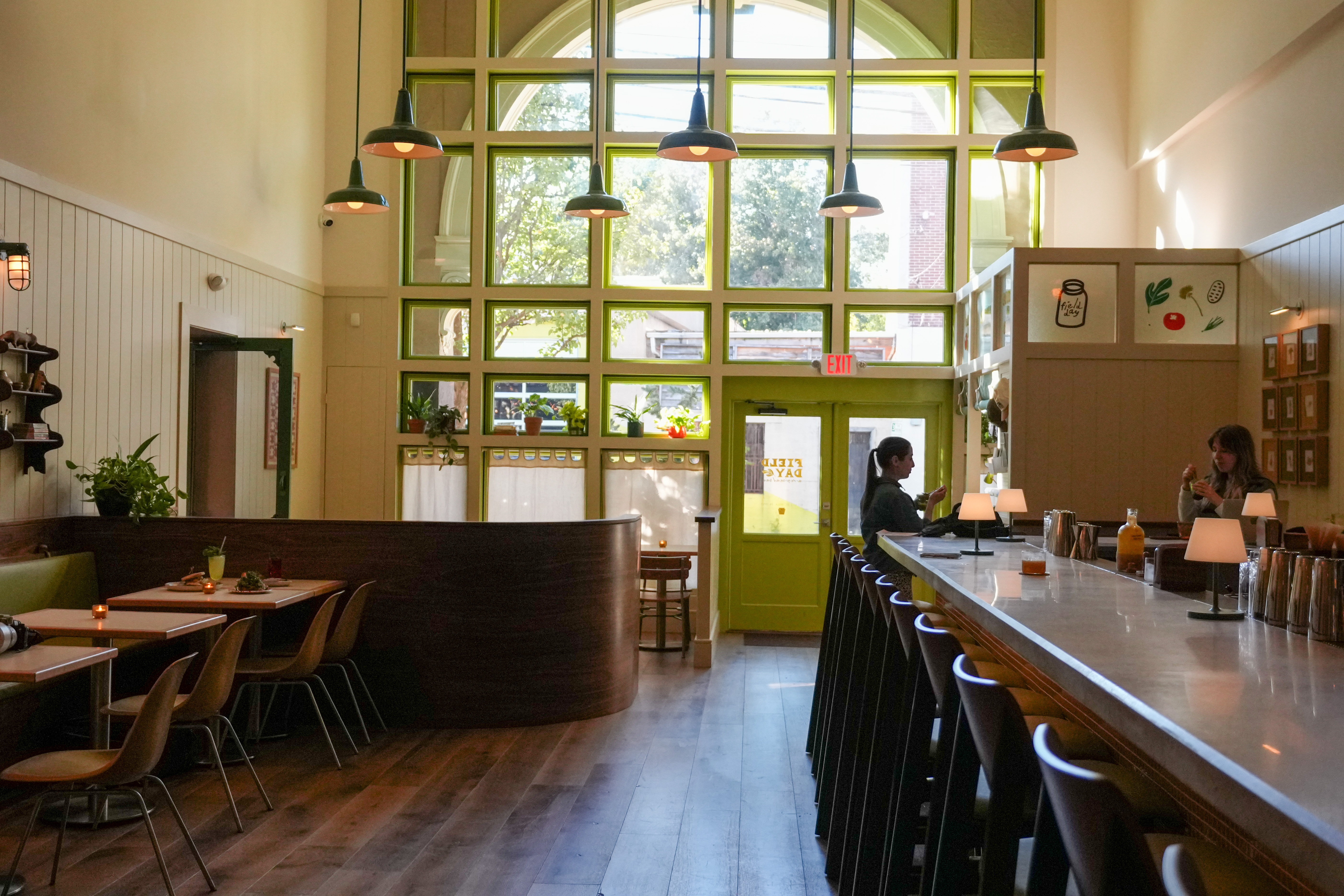
Field Day, in Philadelphia’s Northern Liberties neighborhood, opened Oct. 21.Jessica Griffin / Staff Photographer
The bar’s debut marks the culmination of years of work. But Childs’ ultimate goal is much bigger. He wants Slow Drinks to take root at bars everywhere. He’s made some headway, but just as it takes time to turn black walnuts into booze, sowing the seeds of a cocktail revolution is no fast or easy feat.
Pitching a movement
It was steamy outside but freezing inside the Ritz-Carlton New Orleans, where Childs was presenting at 2025’s Tales of the Cocktail, the national drinks-industry conference that is nerdy and bacchanalian in almost equal measure.
The annual convention brings together a wide range of beverage professionals — bartenders, bar owners, distillers, marketers — who converge on seminars that would likely bore a layperson to tears. Slideshows on backbar configuration, viscosity, extraction, and “sensory analysis of spirits” were standing-room only, even as cocktail samples were being passed outside conference-room doors. The most-anticipated presentations saw people queue up outside the meeting rooms up to 45 minutes beforehand.
Childs had organized a panel with himself, bartending legend Jim Meehan (best known for cofounding the East Village cocktail bar Please Don’t Tell, or PDT), and Matchbook Distilling’s Leslie Merinoff Kwasnieski. It was slated for a Thursday morning, the penultimate day of the five-day-long conference and when many bartenders fly back home to work lucrative weekend shifts. That may have accounted for the relatively modest crowd in the double-wide meeting room that had been jam-packed for a boisterous lecture on dilution two days before.
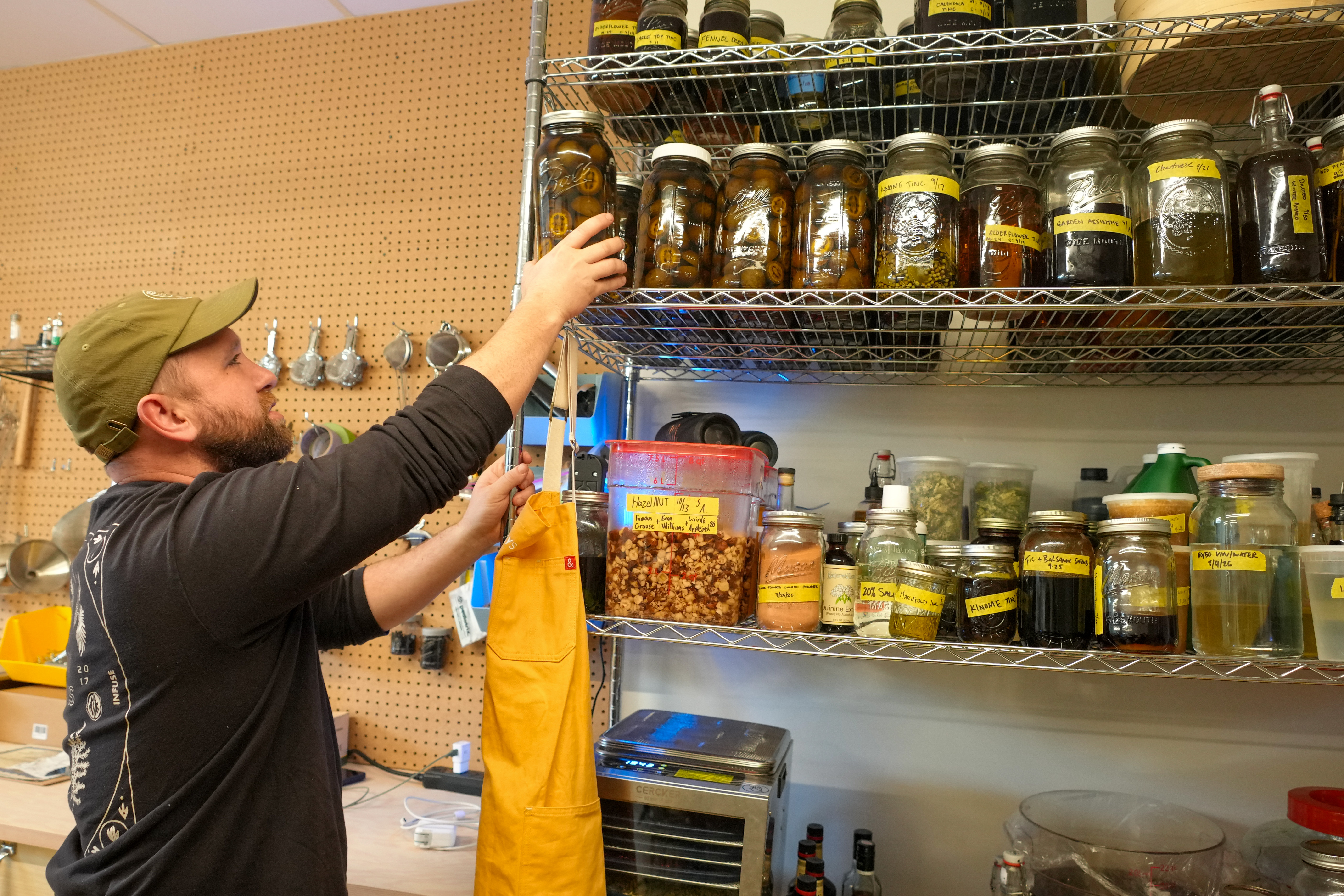
Local botanicals and produce macerate above Field Day, in the Slow Drinks’ second-floor HQ.Jessica Griffin / Staff Photographer
Another factor that may have contributed to crowd size? Compared to some more granular items on the Tales of the Cocktail agenda, the panel — entitled “the Slow Beverage Movement” — promised to be a little lofty.
Over an hour, fielding questions from then-executive director of Slow Food USA Bilal Sarwari, the panelists made the case for cocktails concocted the locally inflected way. The discussion at times veered into very dry territory: Childs waxed on ethnobotany, Meehan meditated on our world’s disappearing biodiversity, and Merinoff Kwasnieski, at one point, gushed about fungal networks’ impact on soil quality.
The talk was well-received by the audience (a small contingent of which were Slow Food Negroni Week scholarship recipients, whose rides to the conference had been subsidized by fundraising efforts that Childs had a hand in), and a couple queries ate up the 10 minutes left for questions. Reliably upbeat, Childs said he couldn’t have been happier with how it went.
Having sat in on several other seminars with higher-energy audiences, I myself wasn’t so sure how well the pitch had landed. A bartender with a gardening habit might be an easy sell. But could Slow Drinks’ time- and labor-intensive cocktail theory gain a foothold in the mainstream? How many bartenders are willing to ferment their own ginger beer, forage ingredients for housemade amari, or harvest actual roots for root beer?
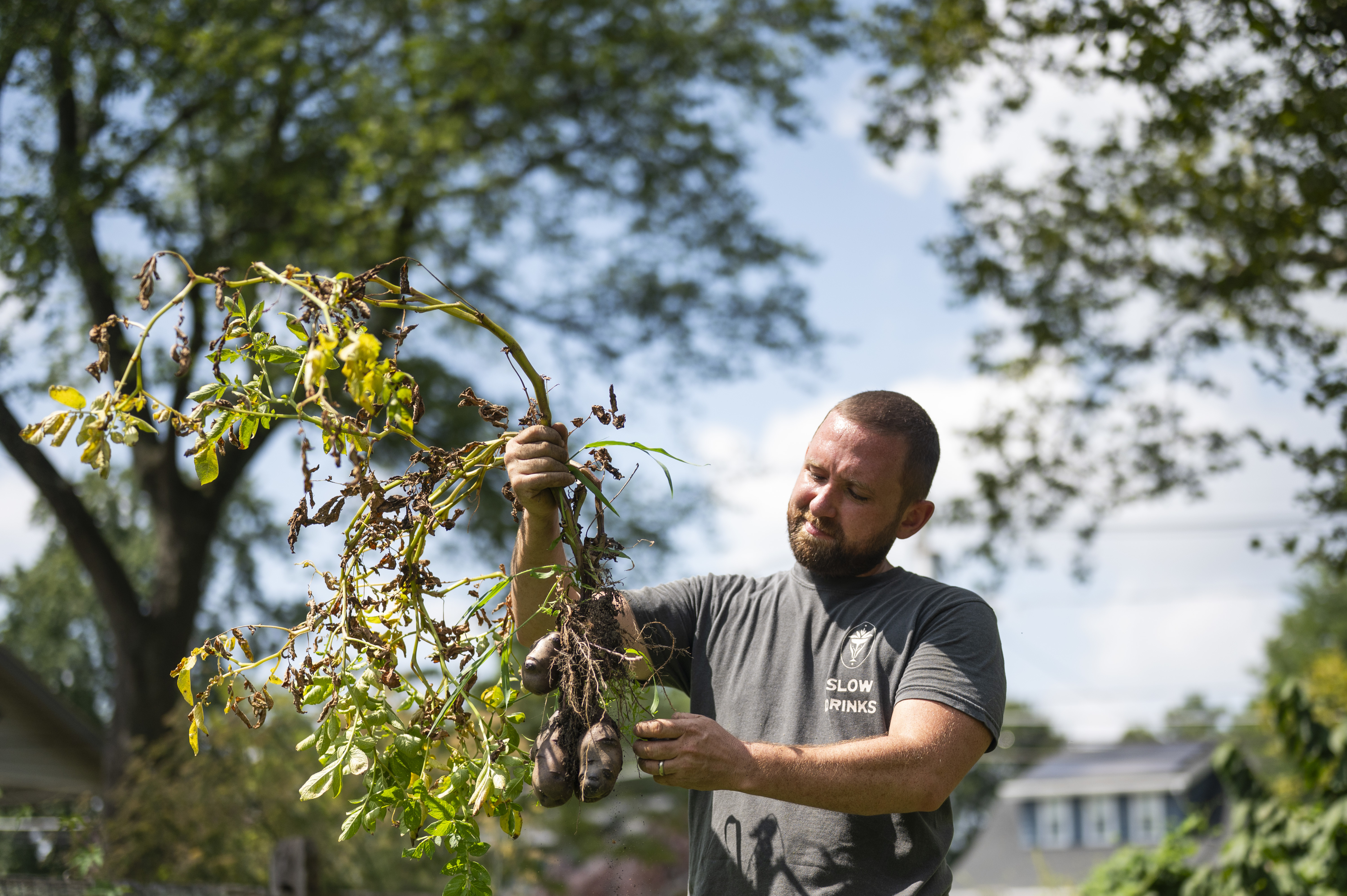
Purple potatoes are among the hundreds of plants Childs grows in his backyard. Allie Ippolito / For The Inquirer
Deeply unpopular, very important
I asked Meehan later about the challenges facing this prospective movement. In 2024, Meehan released a book, The Bartender’s Pantry, written, as he framed it in our interview last year, “in the wake of the reindustrialization of the craft cocktail.” He considers it in league with Slow Drinks — acall to think harder about cocktail ingredients and their sourcing in a time when “our world and our climate is under great duress.”
Like Childs, Meehan feels strongly about this cause, but he’s skeptical about industry uptake. “Are people doing this? Absolutely not. And will they do this? I don’t know. I doubt it,” he said.
But Meehan had reason for optimism, too. “As I think back to the early days of the craft cocktail movement that I participated in [in the aughts] … it is very hard to describe to today’s young bartenders how deeply unpopular what we were doing was — how unpopular, unprofitable, and how vain and silly most people viewed us.”
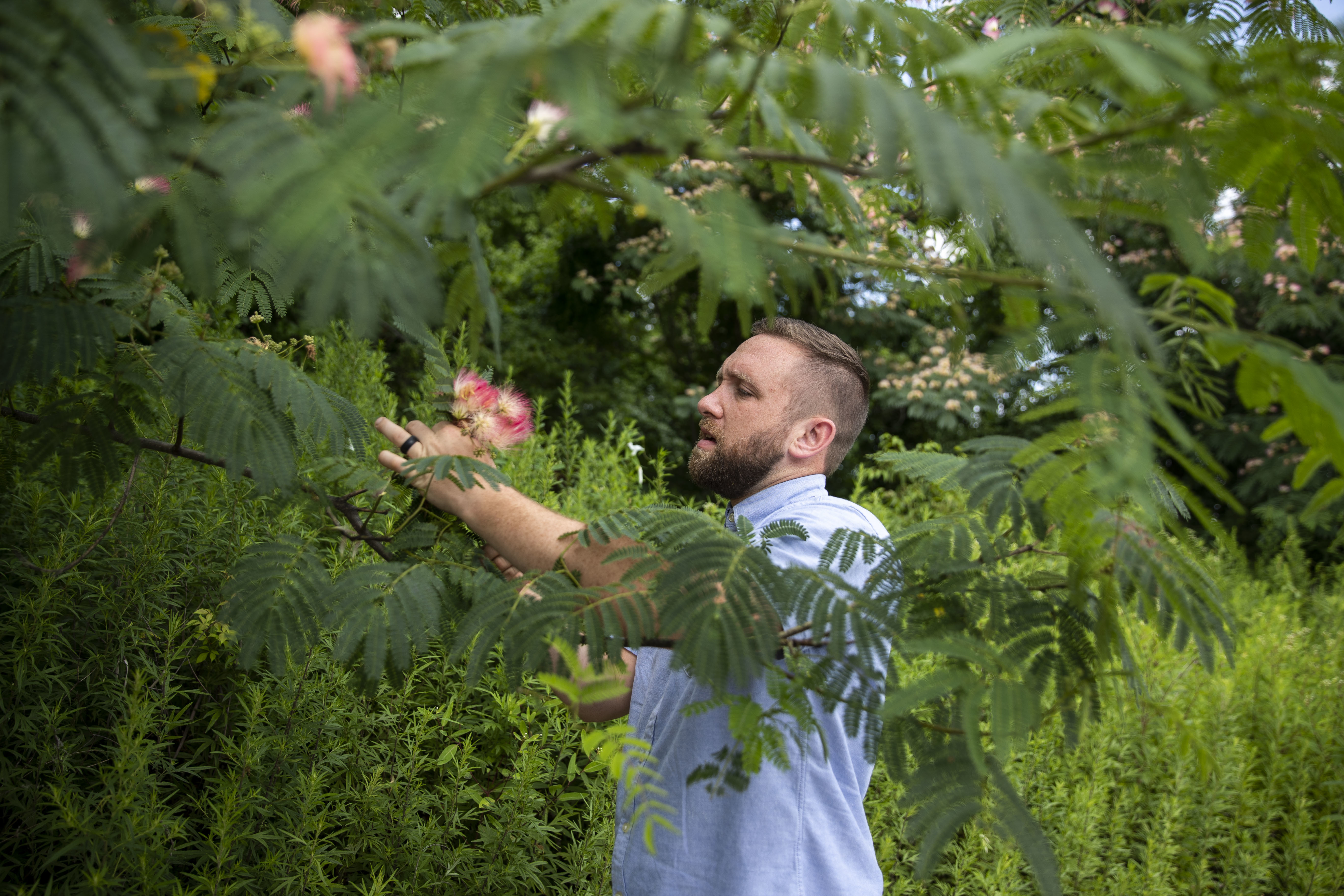
Danny Childs foraging for blooms from a mimosa tree in 2021, when he was still bar manager at the Farm and Fisherman Tavern.MONICA HERNDON / Staff Photographer
He remembered working 12-hour shifts at Pegu Club, the storied New York cocktail bar that opened in SoHo in 2005, and earning just $80, a fraction of what he would make at Gramercy Tavern. He would repeatedly deny requests to sub vodka in for other spirits on the cocktail menu. “It was tough,” Meehan said.
Time and “a never-ending parade of great press” eventually moved the needle, he said, as a curious clientele of mostly young professional women came in, dragging their vodka-drinking boyfriends with them. He was surprised to see customers casually embracing whiskey and gin drinks within just a couple of years. By the 2010s, craft cocktail bars were opening in cities all over the country.
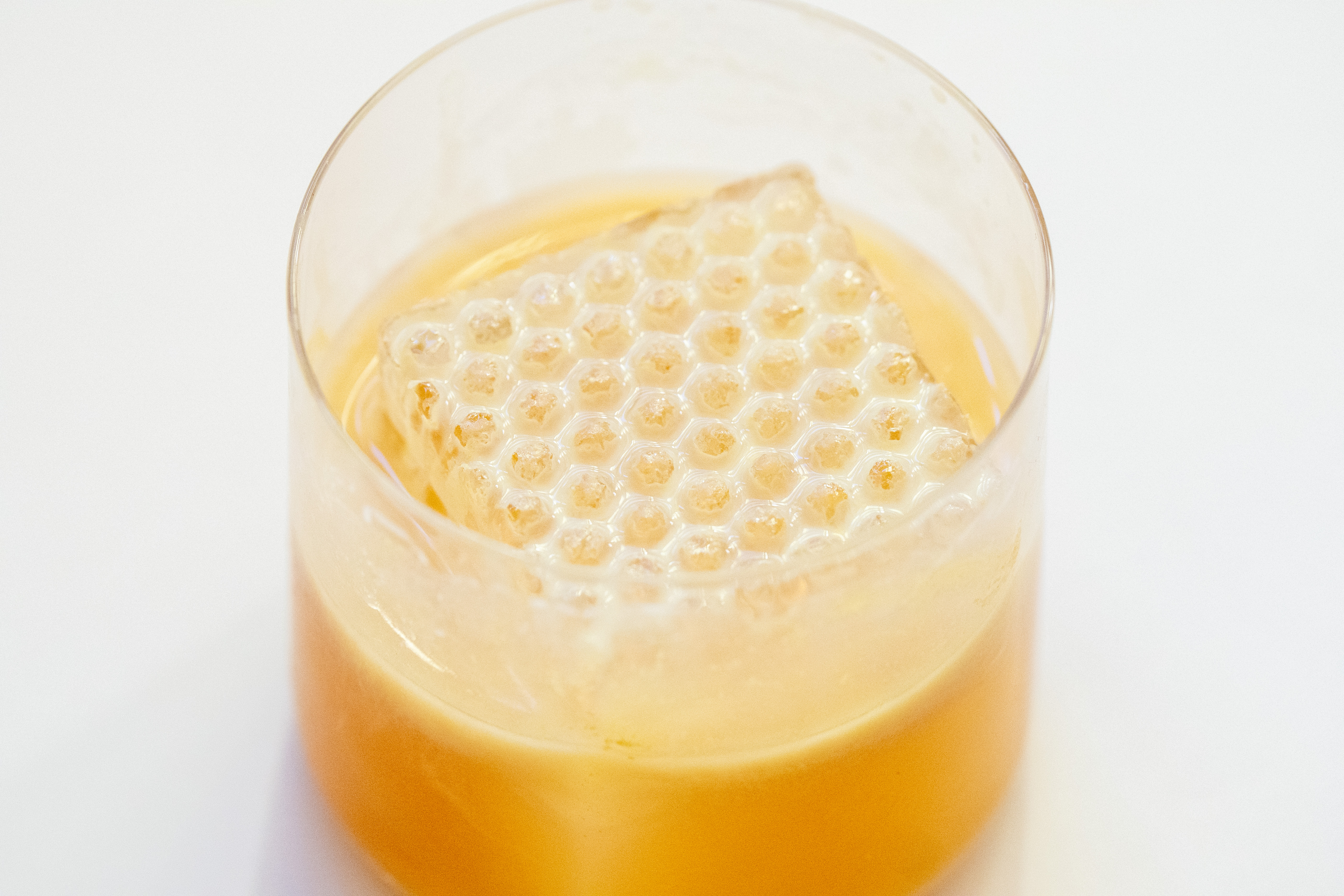
Liquid Gold, an Old Fashioned riff that uses beeswax, propolis, and raw honey, at Field Day.Jessica Griffin / Staff Photographer
To some extent, Meehan — no longer bartending — finds himself on the outs again, having taken up a new mantle in advocating for a more thoughtful, sustainability-minded approach to beverages. He considers himself in the same camp as Childs in that sense, but he thinks Childs has an edge he and his cocktail-pioneer comrades didn’t: “We were weirdos, and Danny is, frankly … very normal and very reasonable and very articulate, and I think mostly he’s very positive,” Meehan said. “For these reasons, I think this guy has a very good chance of being successful.”
“I think that there’s something revolutionary about what Danny’s putting out there,” Meehan said. “I’m sure people think that we look like some bartender form of Alice Waters, but I think that it is very important work.”
Changing perceptions
Childs is well aware that the very idea of locally inflected cocktails can come across as pretentious and twee — they’re the kind of thing you might have seen skewered on Portlandia.
But it’s also hard to imagine a better ambassador for what seems like a very fancy thing: Childs first developed Slow Drinks as a concept while working as bar manager at Farm & Fisherman, a family-friendly tavern in a Cherry Hill strip mall. Over a decade, he hooked suburbanites on sophisticated cocktails that were also approachable and highly drinkable, only going on a spiel about sourcing when prompted.
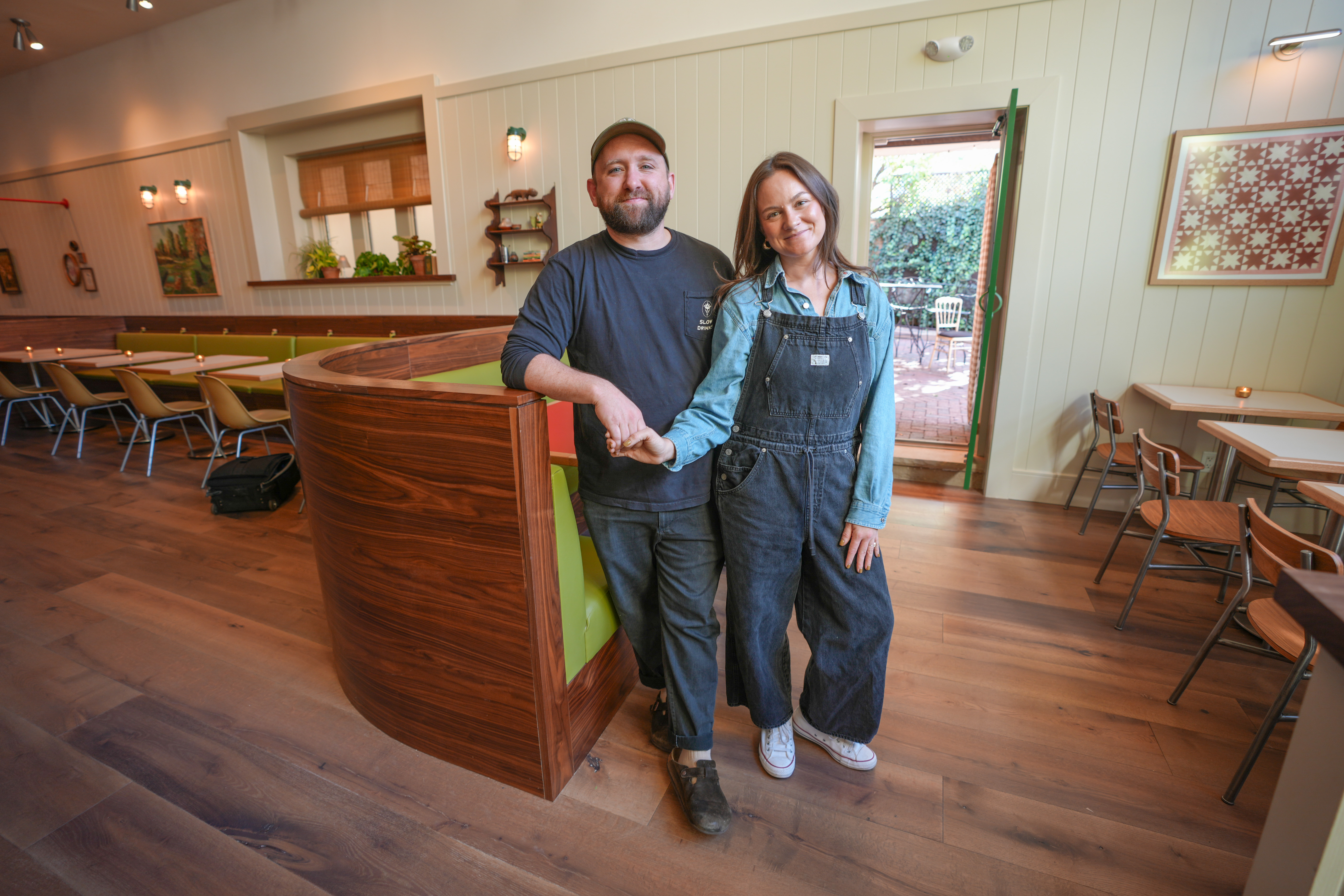
Danny and Katie Childs at their regional cocktail bar Field Day. “He looks like a he looks like a Division Three running back,” bartender and beverage writer Jim Meehan said of Danny Childs. “He’s very approachable.”Jessica Griffin / Staff Photographer
Childs’ upbringing no doubt plays a part in his innate ability to soft-sell. Before he moved to Marlton at age 11, he grew up in Delco: first in his grandparents’ house and then a Clifton Heights apartment complex. His dad bartended at the Clifton Inn (now Murray’s Bar & Grille) for years. “I grew up in that bar in a lot of ways,” Childs said. He remembers learning to play pool and shuffleboard there, and having his first underage drink one Christmas Eve.
His blue-collar roots are balanced by a deeply nerdy side. Childs’ fascination with plants, fostered by his naturalist-oriented uncle and grandfather, kicked into high gear when he studied anthropology and ethnobotany at the University of Delaware. He spent four years traveling through South America to study the use of medicinal plants among Indigenous people. (If not for a bartending gig in Chile, Childs might be an M.D./Ph.D. teaching and practicing ethnomedicine today.)
He swerved out of academia postcollege, when a would-be gap year sent him down an agricultural rabbit hole: first on a Marlton Christmas tree farm — where he and Katie homesteaded in a military tent equipped with a wood-burning stove for nine months — and then over stints at Urban Roots Farm in Newtown Square and at Plowshare Farms in Bucks County.
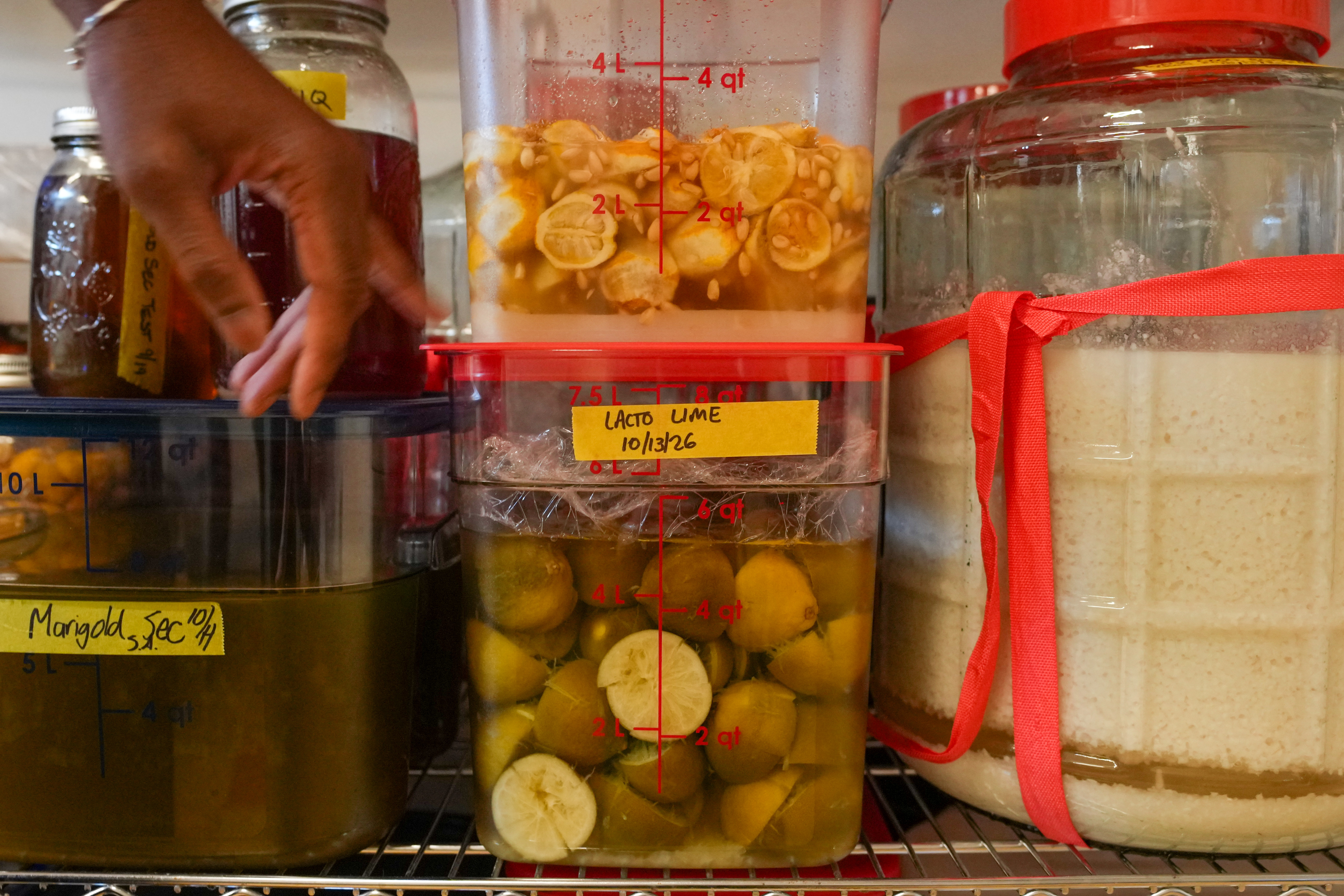
Lacto-fermented limes sit below a bin of trifoliate oranges steeping to eventually make cheong (fermented syrup) in the Slow Drinks HQ and Field Day R&D lab in Northern Liberties. Jessica Griffin / Staff Photographer
Those various walks of life all braided together when Childs took a job at Farm & Fisherman in 2013. It was there that he started dreaming up “cocktails through an anthropological lens” — a phrase, as he writes in Slow Drinks, that he scrawled on a bar napkin, then spent years teasing out. He started applying age-old practices of fermentation and infusion to the local ingredients surrounding him, then mixing them up behind the bar.
Childs codified these methods in Slow Drinks, which is intended as a springboard for other bartenders and home enthusiasts, offering building-block master recipes for shrubs, liqueurs, aromatized wines, and more preserved, distilled, and infused liquids. Cocktail recipes (pickled ramp martini, stone-fruit amaretto sour, clarified persimmon punch, etc.) round out the book, showing region-specific applications season by season.
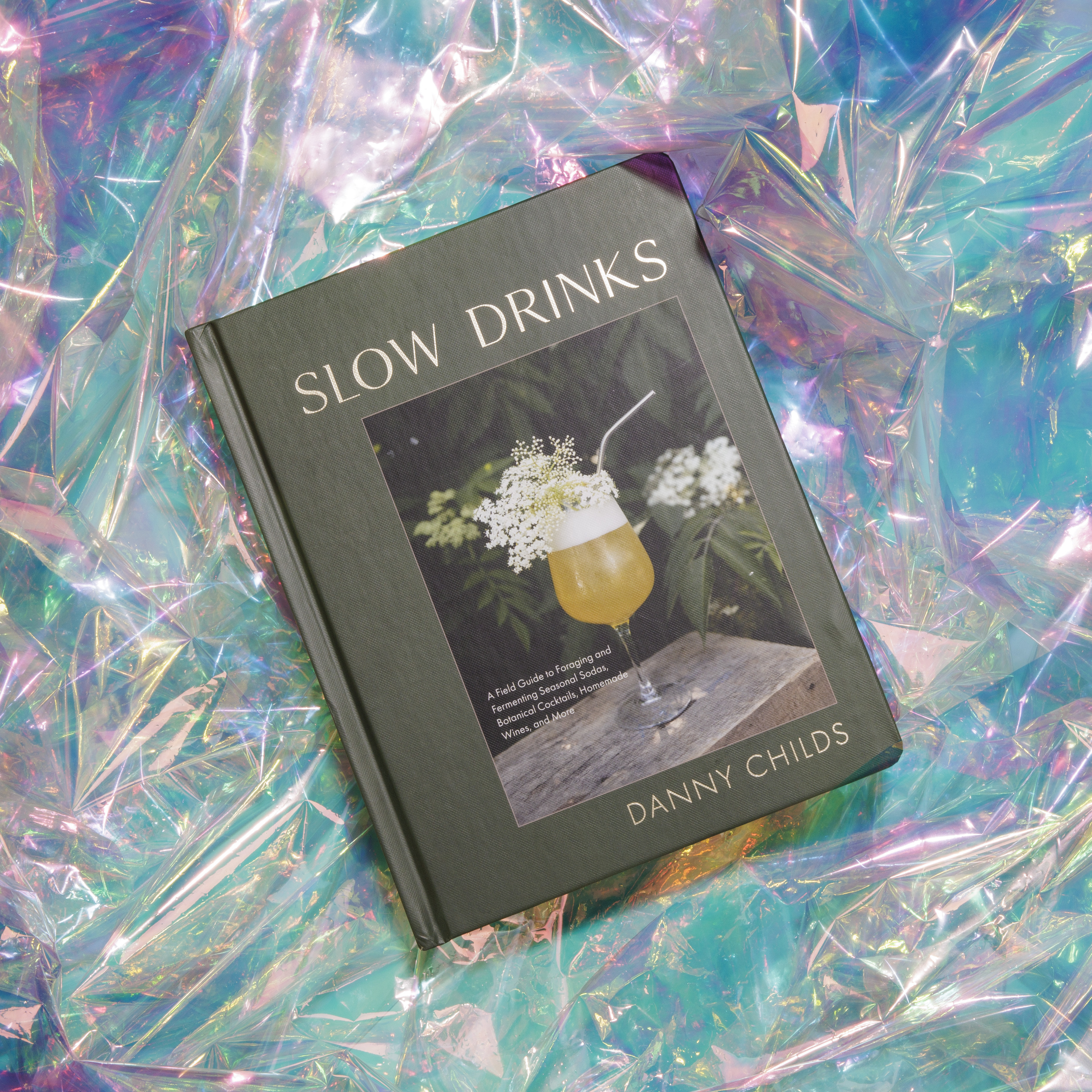
The Slow Drinks book by Danny ChildsMonica Herndon / Staff Photographer
Just as he knows the larger theory runs the risk of feeling esoteric to guests, he recognizes the work required may intimidate industry pros. “Bartenders are taught how to make syrups and mix cocktails with ingredients that are on their backbar. It’s changing a little bit, but the bars pushing that envelope are still like the top 1%,” he said. “I know it might seem difficult or out of reach.”
Childs’ ultimate counterargument is a humble one: He’s not actually doing anything new here. “People have been doing this for hundreds and in a lot of cases thousands of years.”
Local gaze, global ambition
Childs has been dedicated full-time to Slow Drinks as a business and a concept since 2023, when he left his role at Farm & Fisherman. The departure gave him time to promote the book but also more flexibility and autonomy over where the larger idea might go.
“It was kind of like jumping out of the plane without a parachute and hoping for the best,” Childs said of the decision to leave.
Childs handles nocino in the Slow Drinks HQ above Field Day.Jessica Griffin / Staff Photographer
In the years since, he’s consulted on several bar projects in the Philly area (most notably Almanac and La Jefa, both James Beard Award nominees). With Katie as copilot, he’s grown the Slow Drinks brand via pop-ups and collaborations, some of which have left lasting impressions. (If you find yourself at Mexico City’s Baldió, ask to try the chinampas Chartreuse and agave amazake.) He’s also established a close relationship with the international organization Slow Food that’s taken him to various cities and countries to present on the budding movement, often with an entourage of scholarship-backed bartenders who are practicing this style of drink making already.
Childs also spent much of the last two years laying the groundwork for Field Day, whose staff claims a number of Philly’s most promising restaurant-industry talent, including chef Melissa McGrath and fermentation whiz Jamaar Julal.
Even as he becomes a bar owner, Childsis going full tilt on Slow Drinks. The business’ headquarters live above the bar, in an office/lab that shares space with Cescaphe Ballroom’s wedding complex. This summer he and Katie hired Canyon Shayer, a Philly Distilling and Heaven Hill alum, to be the S corporation’s COO and “director of culture,” working with clients on developing and implementing Slow Drinks-style beverage programs.
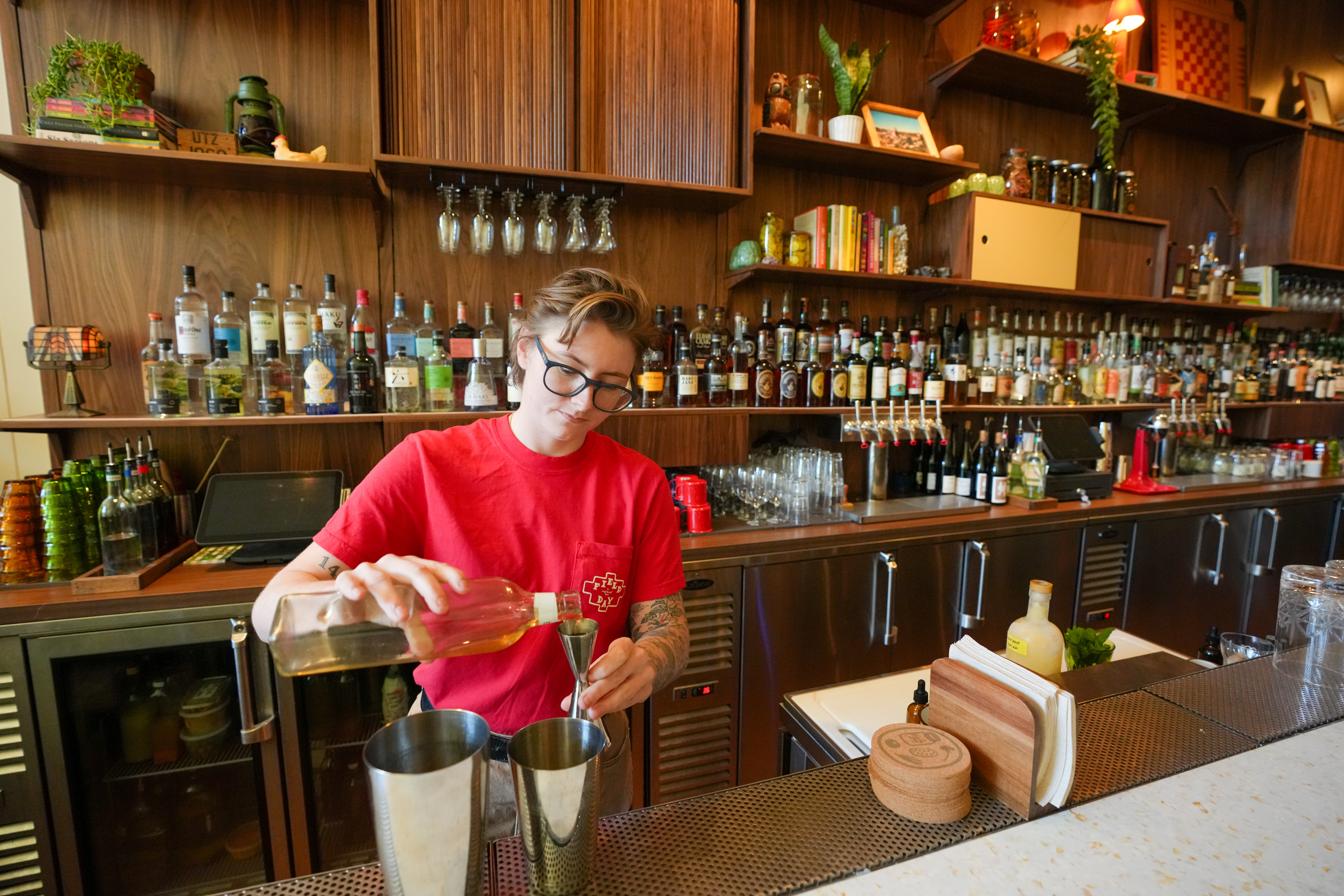
Erin Dassler makes cocktails at Field Day. Childs hope the bar serves as a model of a full-fledged Slow Drinks program. Jessica Griffin / Staff Photographer
In a way, Field Day is a test case, “a blueprint for, this is what [Slow Drinks] looks like in practice day in and day out,” Childs said. “I think we’ve just really scratched the surface of getting people fully bought into it, and that it is something that can leave the industry better than we found it.”
If Childs gets his way, bartenders all over will see potential ingredients every time they step foot outside — even if it’s just into their own backyards.
Northern Liberties has had a humming bar scene for decades, long anchored by Ortlieb’s and Standard Tap. Splashy newcomers come (and go) on occasion, thanks to the Piazza and other developments along Second Street, and there are standout restaurants like Pietramala, Pera, and Apricot Stone. But by comparison, NoLib’s food and drink landscape has been dwarfed by that of Fishtown and Kensington, where buzzy openings happen on the regular.
This week, however, Northern Liberties scores one of the most anticipated new bars of the year. Field Day, from James Beard Award-winning bartender Danny Childs and his wife, Katie, opens today.
Field Day, at 923 N. Second St., is a love letter to our region. Its food and drink menus highlight ingredients and culinary traditions from as far west as Appalachia and Lancaster County, as far east as the farmlands of South Jersey and the Shore, and as far south as the Chesapeake Bay. Early food hits from the bar’s soft open include tomato pie and seasonal Roman-style “field pie,” Lebanon bologna sandwiches on sourdough English muffins, a roast pork “Philly dip” with long hots and broccoli rabe, skillet chocolate chip cookies, and fluffy seasonal water ice (currently Concord grape).
The bar is a showcase for Slow Drinks, shorthand for Childs’ farm- and field-to-bar beverage approach, documented in his award-winning book by the same name. He first developed it at Cherry Hill’s Farm & Fisherman Tavern, where he worked for nine years, and he’s since applied it as a consultant at bars like Almanac and La Jefa, where Slow Drinks-style cocktails — heavily influenced by local, seasonal ingredients and ancient fermentation practices — are interpreted through Japanese and Mexican lenses, respectively.
The Liquid Gold is a tribute to bees. Local beeswax-washed gin gives the cocktail a smooth mouthfeel, as do bitters infused with propolis, which bees use to seal their hives. Raw honey from Kara Jo Bee Farm sweetens the Old Fashioned riff.Jessica Griffin / Staff Photographer
At Field Day, Philly and its surrounds get the Slow Drinks treatment. That means a cream-clarified cream soda cocktail that gets its vanilla notes from shagbark hickory bark harvested in Tewksbury, N.J.; an umami martini enriched with brown butter, sweet Jersey corn-made miso, and lacto-fermented beech mushrooms from Kennett Square; and an orange crush flavored with house ginger beer and wild persimmons from Childs’ own backyard.
The list goes on. There are 36 cocktails in the bar’s keystone-stamped, leather-clad “Field Guide” menu (designed by Haridelle’s Kylie Silvestri) that’s divided by highballs, martinis, shaken, stirred, dessert drinks, and nightcaps. The guide details the ingredients and backstory behind each drink, with a legend to indicate its sourcing and processes. In that sense, Field Day is a textbook destination cocktail bar, but that’s not the owners’ goal.
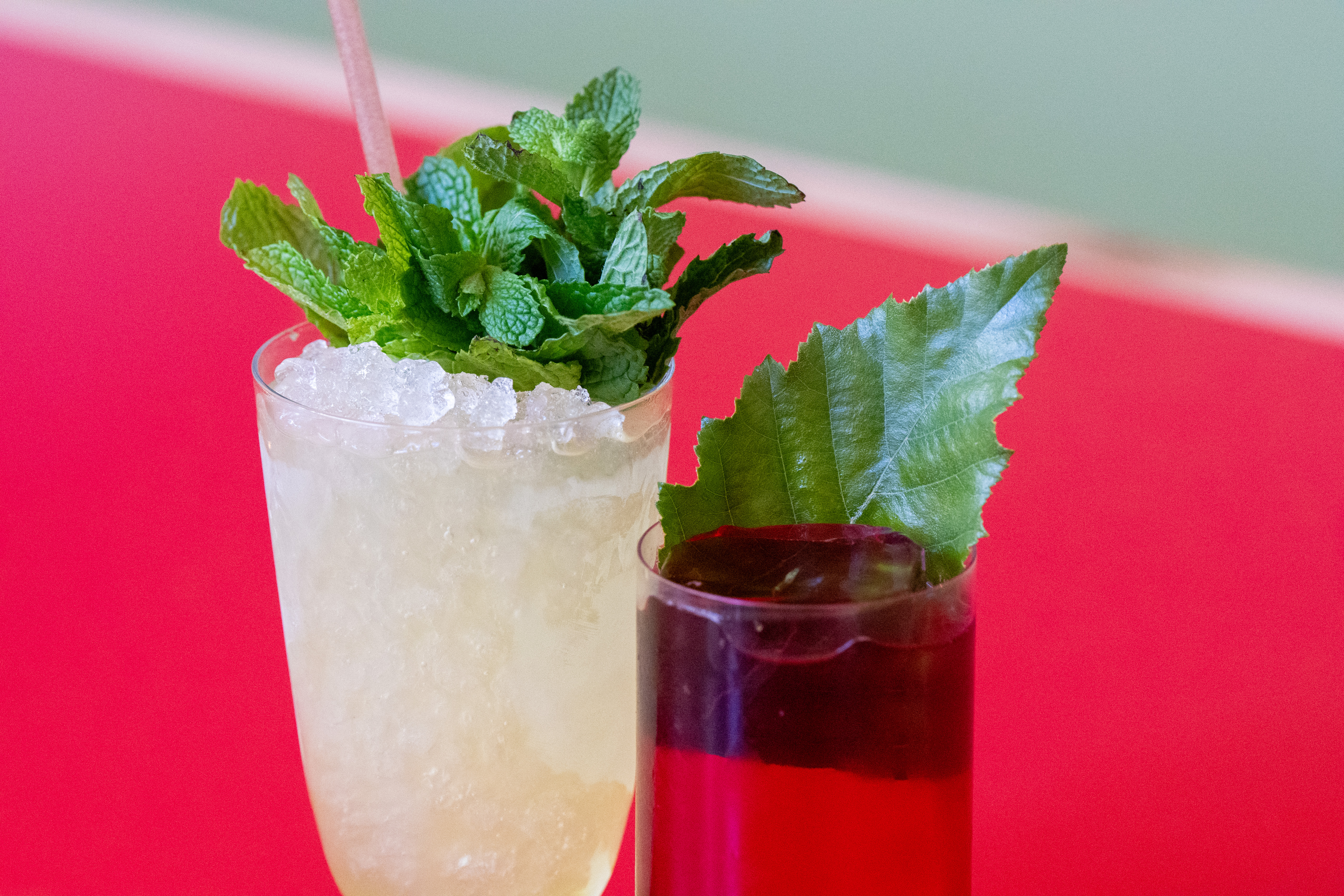
Field Day’s Jenny Lind Tokyo Tea (left) combines vodka, gin, rum, a Jenny Lind melon liqueur, and cucumber shrub. The Birch & Bourbon highball (right) mixes Baby Jane bourbon with house birch beer, made with Pennsylvania-harvested birch bark and homegrown hibiscus (to make it red). Jessica Griffin / Staff Photographer
“We want anybody to walk in here and feel welcome, and that it’s not like they’re going to school, that they’re just at a great bar,” Childs said. “And if they want to learn more, they can.”
For the locals
The Childses, who live in Pennsauken with their two young kids, want Field Day to be for the neighborhood, too. To that end, they have a streamlined “$15 Holler” cocktail list — nine drinks, no notes — targeted to locals dropping in for a casual drink and a bite. There’s a robust lineup of nonalcoholic drinks, including housemade sodas, kombucha, and lemonade, plus coffee, tea, wine, a Tonewood-brewed house lager, and Guinness. There’s also a kids’ menu, complete with a botanical-themed coloring page and crayons.
Erin Dassler, who moved from Chicago to head up Field Day’s bar staff, makes cocktails at the bar.Jessica Griffin / Staff Photographer
The family-friendliness is also borne out in the personal touches that suffuse the bar’s design, overseen by Katie Childs and Betsu Studio’s Laura Weiszer. The walnut shelves above the bar are lined with souvenirs from their travels as well as family heirlooms, including both of their great-grandfathers’ bottle cappers (Danny’s brewed sassafras root beer, Katie’s dandelion wine). Portraits of the couple are framed inside the bar’s host stand, drawn by Italian illustrator Gianluca Cannizzo, whom Childs met on a Slow Drinks work trip. There’s another Cannizzo illustration in the bathroom, depicting the military tent the couple lived in for nine months on a Marlton Christmas tree farm, at the beginning of their Slow Drinks journey.
All the little things are an effort to transform this former auxiliary space for Cescaphe Ballroom into a homey, welcoming spot that’s trying to telegraph comfort above all else. Roughly half the seats in the space, including all 20 bar seats, are earmarked for walk-ins.
All-star staff
With a 50-seat dining room and 25 employees, Field Day is arguably just as much restaurant as bar. The kitchen is led by James Beard-nominated chef Melissa McGrath of Sweet Amalia fame, who’s bringing to bear her considerable South Jersey seafood expertise with steamed clams, smoked fish dip, and a fish fry. McGrath is backed by sous chef and preservation pro April McGreger, whose pickle plate is already a must-try.
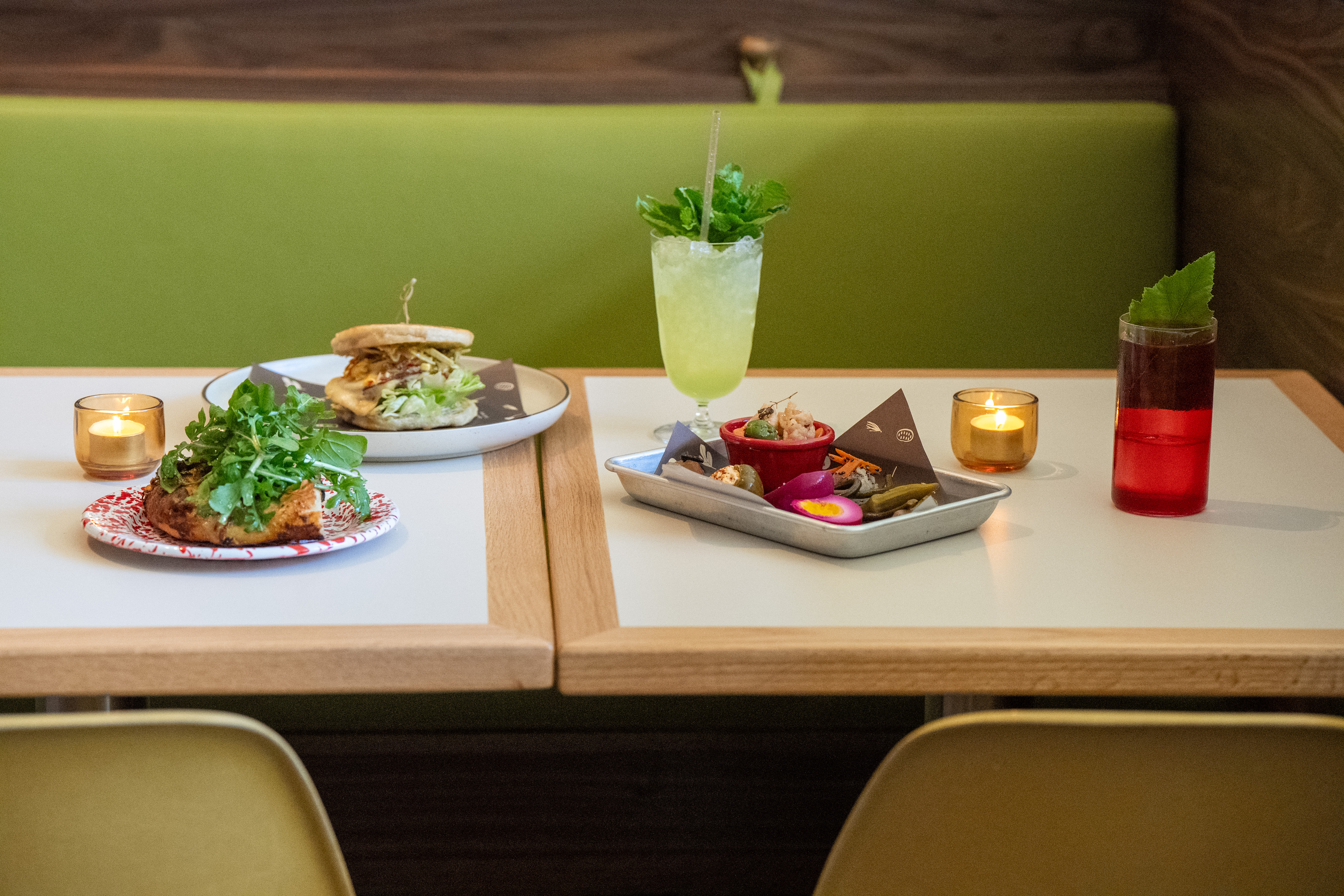
Food at Field Day, (from left): the field pie, the Lebanon bologna sandwich, and the pickle plate. Jessica Griffin / Staff Photographer
Splitting time between the kitchen, bar, and Field Day’s upstairs R&D lab is Jamaar Julal, who spearheads various fermentation projects, including miso made from stale tomato pie and several cheongs (fermented syrups) made from foraged fruits.
McGrath, McGreger, and Julal are part of a deep bench of talent that also includes floor lead Jonathan Doherty, who’s worked with Childs since his Farm & Fisherman days, and bar lead Erin Dassler, a Chicago transplant who was previously at legendary tiki bar Three Dots and a Dash and Kitty’s Cosmopolitan Club.
Childs is thrilled to have assembled a team of this caliber. “These are people that I love and respect and look up to in a lot of ways,” he said. “To see them all coming here, working for Katie and I — we go home at the end of the day every day and we’re like, ‘Oh my goodness.’”
Field Day, 923 N. Second St., 215-703-9458, fielddayphilly.com. Hours: 4 p.m. to midnight Wednesday through Saturday, 4 p.m. to 8 p.m. Sunday. Reservations available on Resy.
Pink and polished, Rittenhouse Square’s All Aboard Candy store doesn’t have old-school confectionery vibes, but the names of the products that fill its bulk bins sound like they’re straight out of Willy Wonka’s factory. There are Dizzy Skulls, Strawberry Dreams, Rambo bites, sour belts, Swedish diamond rings, rainbow bricks, Pucker-Up Lips, fruity fizzy beans, and several variations of Bubs.
These colorful sweets, many imported from Europe, command a hardcore set of followers. Since All Aboard opened at 20th and Locust Streets in June 2025, the shop has sold tens of thousands of pounds of candy from its gummy wall alone. Customers call in regularly to inquire what flavors and shapes are in stock — and they keep All Aboard’s three-woman team on its toes.
“If you don’t have the [Swedish candy brand] Bubs in the store, then people give you bad Google reviews,” said co-owner Alyssa Bonventure. “The Bubs fly off the shelves.”
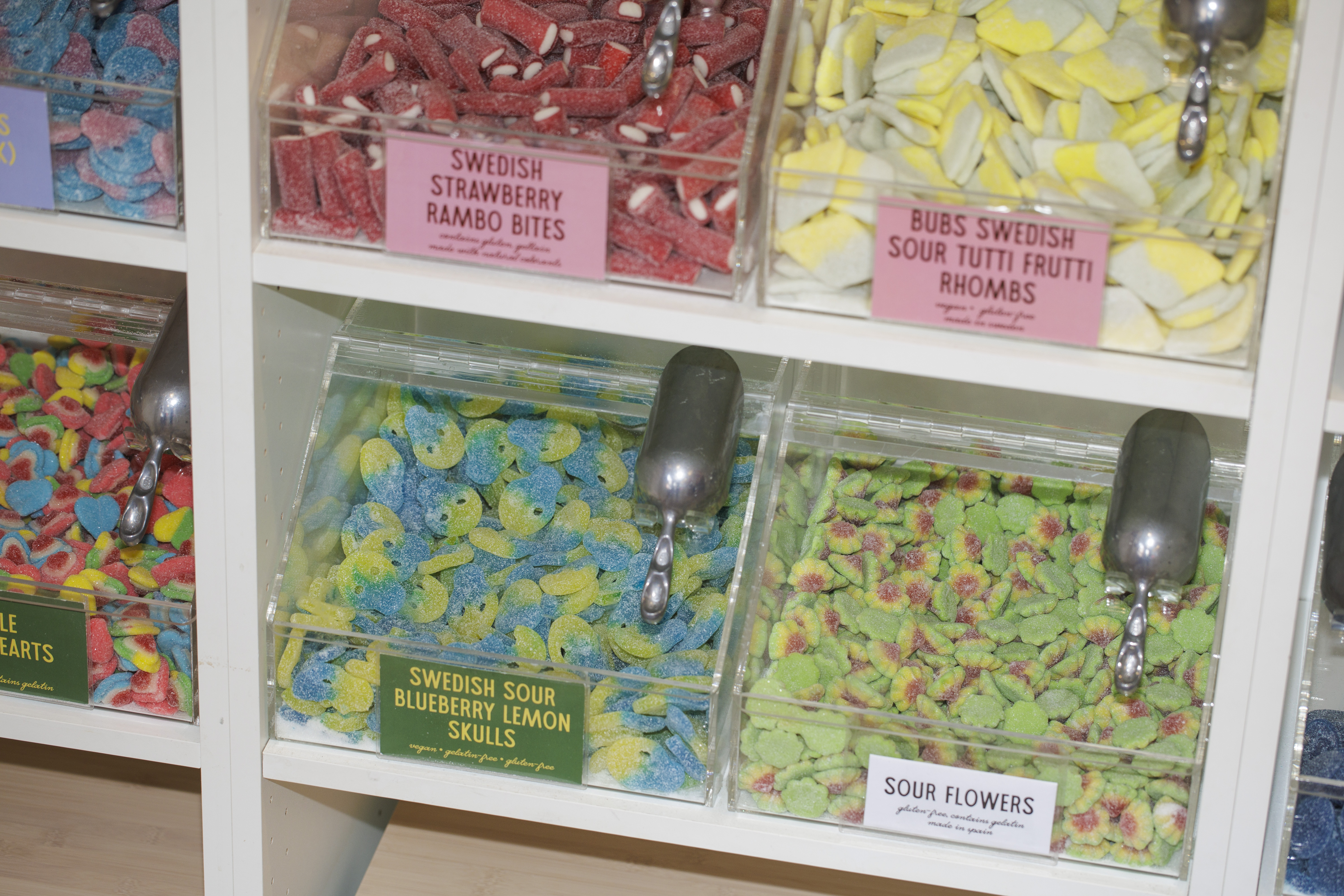
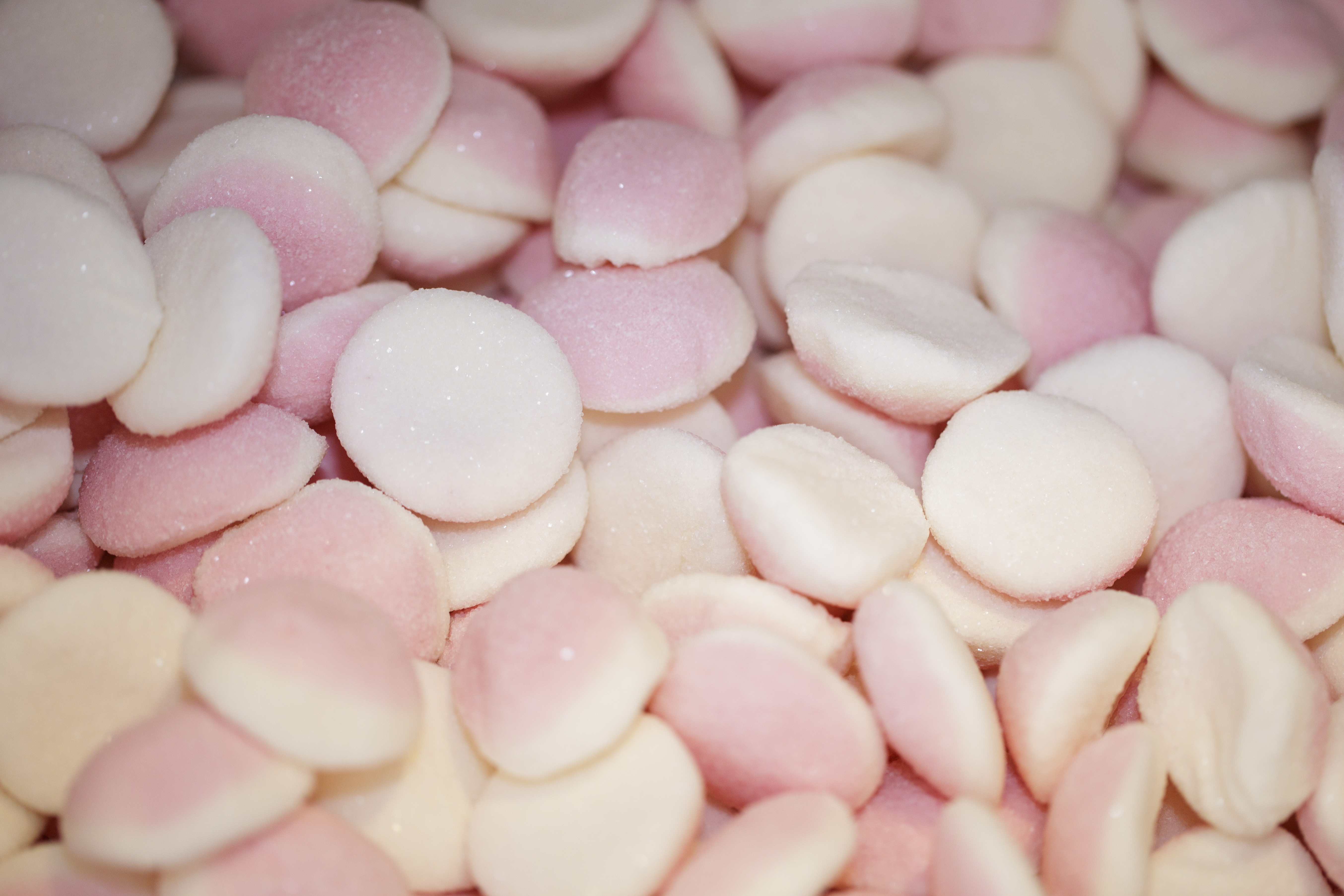
Swedish Strawberry Dreams at All Aboard Candy on Wednesday, Sept. 9, 2026, in Philadelphia.Monica Herndon / Staff Photographer
All Aboard is part of a wave of new-school candy stores that are springing up in cities alloverthecountry. A trend that was seeded pre-pandemic then exploded in the TikTok era, the shops deal in often-imported gummy candies. (Though All Aboard sells candy made in the U.S., Spain, Australia, Spain, Turkey, and more, “Swedish candy” is a good catchall term.) Their ingredients are “cleaner” than, say, your average gelatin-based bear or worm. Many are vegan, and some are low-sugar.
Bonventure demonstrated, picking up a bag of BonBon Sour Blackberry Fish, which are actually made in Sweden (vs. the conglomerate-owned Swedish Fish, which are largely produced in Canada and Turkey). She read the end of the ingredient list: “Made with black carrot concentrate [for color], natural blackberry flavors, coconut oil,” she said. “It’s not made with whatever dyes and chemicals.”
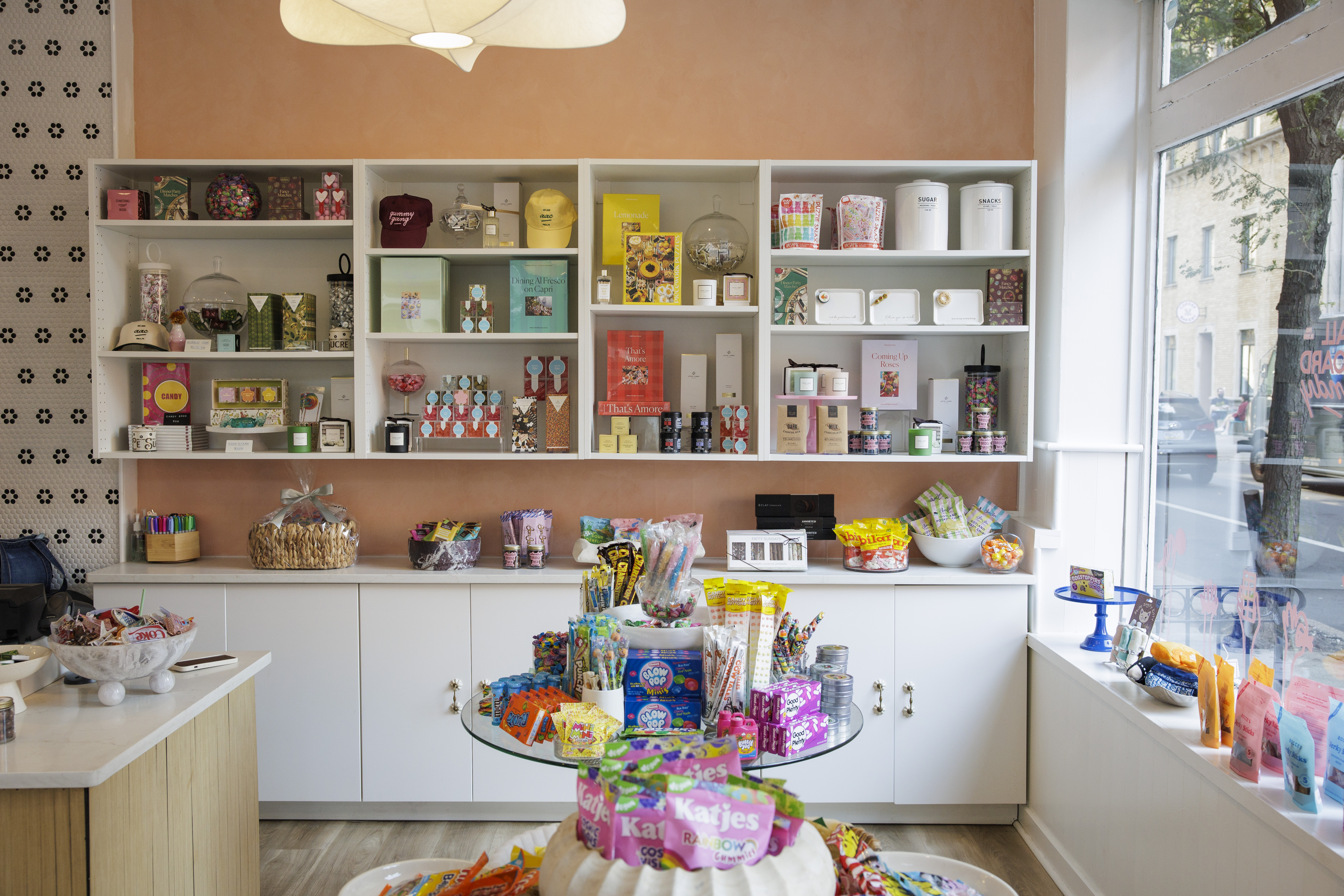
The interior of All Aboard Candy on Wednesday, Sept. 9, 2026 in Philadelphia.Monica Herndon / Staff Photographer
In the gummy-candy world, fruit flavors predominate. Think strawberry, watermelon, peach, raspberry, cherry, apple, and blue raspberry, accented by more offbeat combos like banana toffee and sour cola. Some shapes, like skulls, are popular year-round, but seasons bring fun candy shapes. In summer, it’s ice cream cones, starfish, seashells, and lobsters; in winter, it’s trees, snowmen, mittens, snowballs, dreidels, snowflakes. Halloween sees bats, pumpkins, brains, and teeth, while Easter ushers in eggs, bunnies, and carrots.
The selection at All Aboard changes weekly. The shop replenishes its supply — sourced from individual brands as well as candy distributors — on a near-daily basis. “We’ve never had a customer say our candy is stale,” said Bonventure. “A lot of the bigger stores have warehouses … we just have the basement storage. That’s why we get deliveries every week vs. every month or every quarter.”
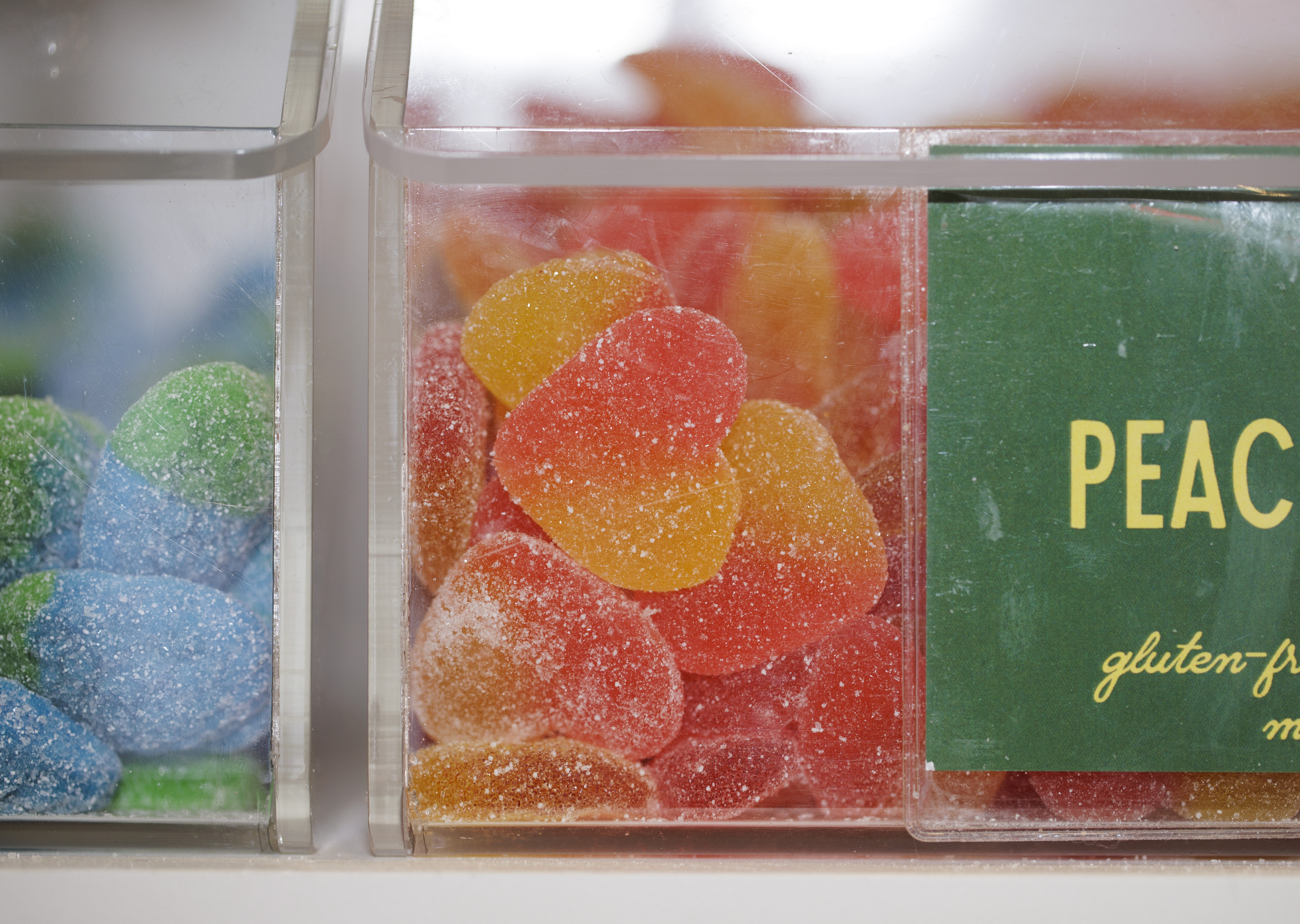
Candy on display at All Aboard Candy on Wednesday, Sept. 9, 2026 in Philadelphia.Monica Herndon / Staff Photographer
As you might expect, the customer age demographic is sprawling: “It literally ranges from like a 3-year-old to people in walkers,” Bonventure said. “You’re laughing, but I’m not kidding.”
All Aboard sells its bulk candy by weight ($4.85 per 4 ounces), going through anywhere from 330 pounds to 800 pounds a week, depending on time of year.
“You can come in here and spend 50 cents, or some people spend up to $300,” Bonventure said. “Some people will come in and get five pieces.”
Unlike many of the new-school candy shops, All Aboard stocks plenty of chocolate and traditional candy brands, too. You can find high-end chocolate (including locally made Eclat) and fancy Danish licorice, as well as Laffy Taffy, mini M&Ms, Charleston Chews, Ring Pops, and other ordinary offerings. Bonventure said it’s an effort to keep the experience approachable for all shoppers.
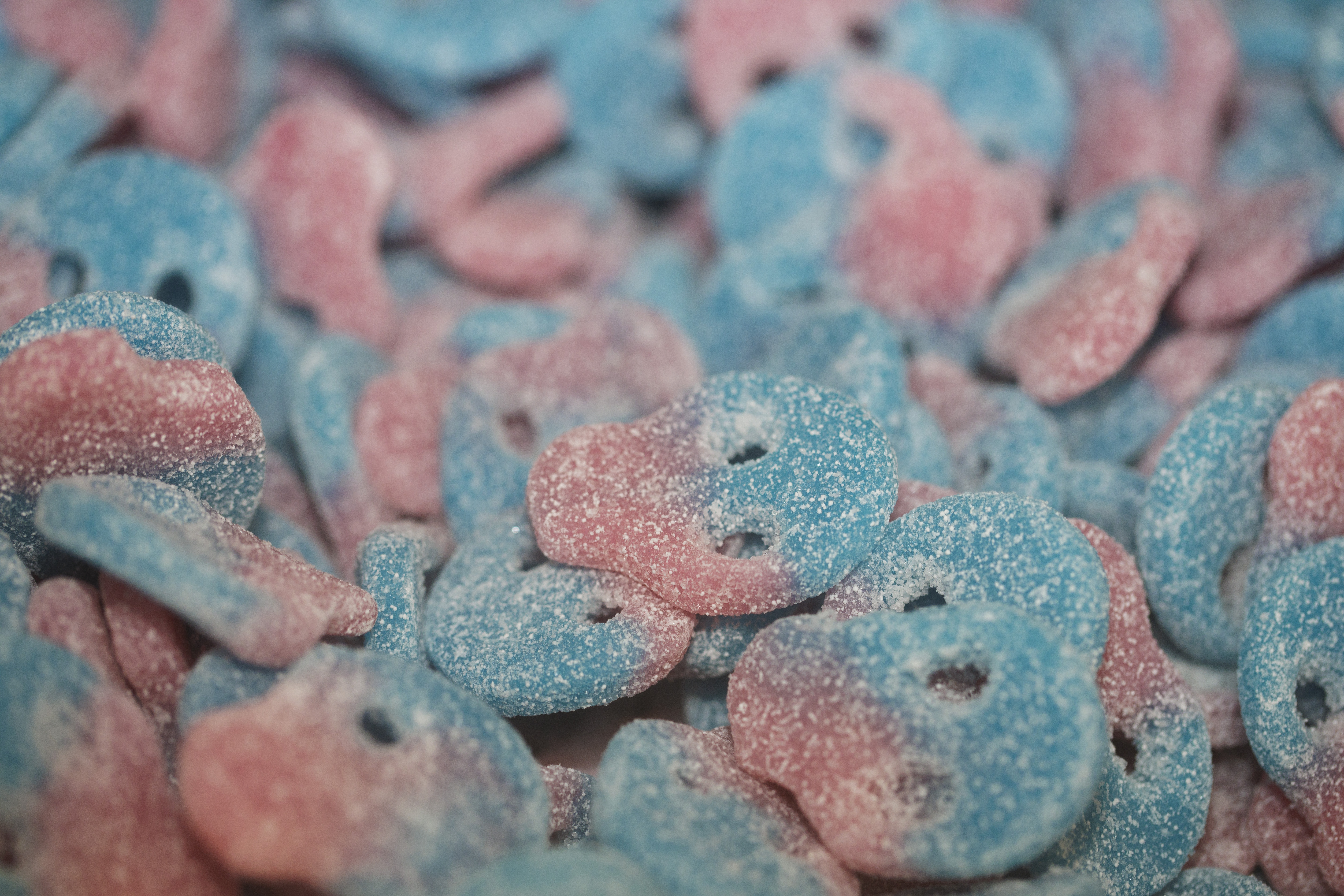
Fizzy Skulls (Blue + Pink) at All Aboard Candy on Wednesday, Sept. 9, 2026 in Philadelphia.Monica Herndon / Staff Photographer
“Sometimes kids that are younger are very intimidated by this wall, and they just run over there and they pick, like, an Airhead,” she said.
In the time since All Aboard has opened at 233 S. 20th St., right next door to 1-900-ICE-CREAM, Bonventure has gotten used to seeing kids and their parents negotiate.
“There’s a lot of meltdowns. [Parents will] be like, ‘You can either get candy or ice cream,’” she said.
She’s learned to refrain from offering a solution: “I’m like, ‘Oh, is it a money thing? You can have it for free.’ They’re like, ‘No, it’s a sugar thing.”
Get a goodie bag from All Aboard Candy at The Inquirer’s Food Fest on Nov. 14. They’ll be on site at the Fillmore with an exclusive pick-and-mix selection for subscribers.
It’s hard to lure downtown diners to Bucks County, and Roberto Carollo knows it.
Carollo’s wood-fired pizzeria inside Doylestown’s Main Street Marketplace, Spuntino, has a loyal, longstanding following, so much so that when the Washington Post analyzed 7.5 million nationwide Yelp reviews in 2023, it determined Spuntino to have the highest-rated Neapolitan pie in Pennsylvania.
“We’ve had a lot of love from the people that matter to us, but I still feel like the suburbs are a really tough place to get attention,” Carollo said. “We’ve been here 12 years, but even Doylestown residents are still finding out about us.”
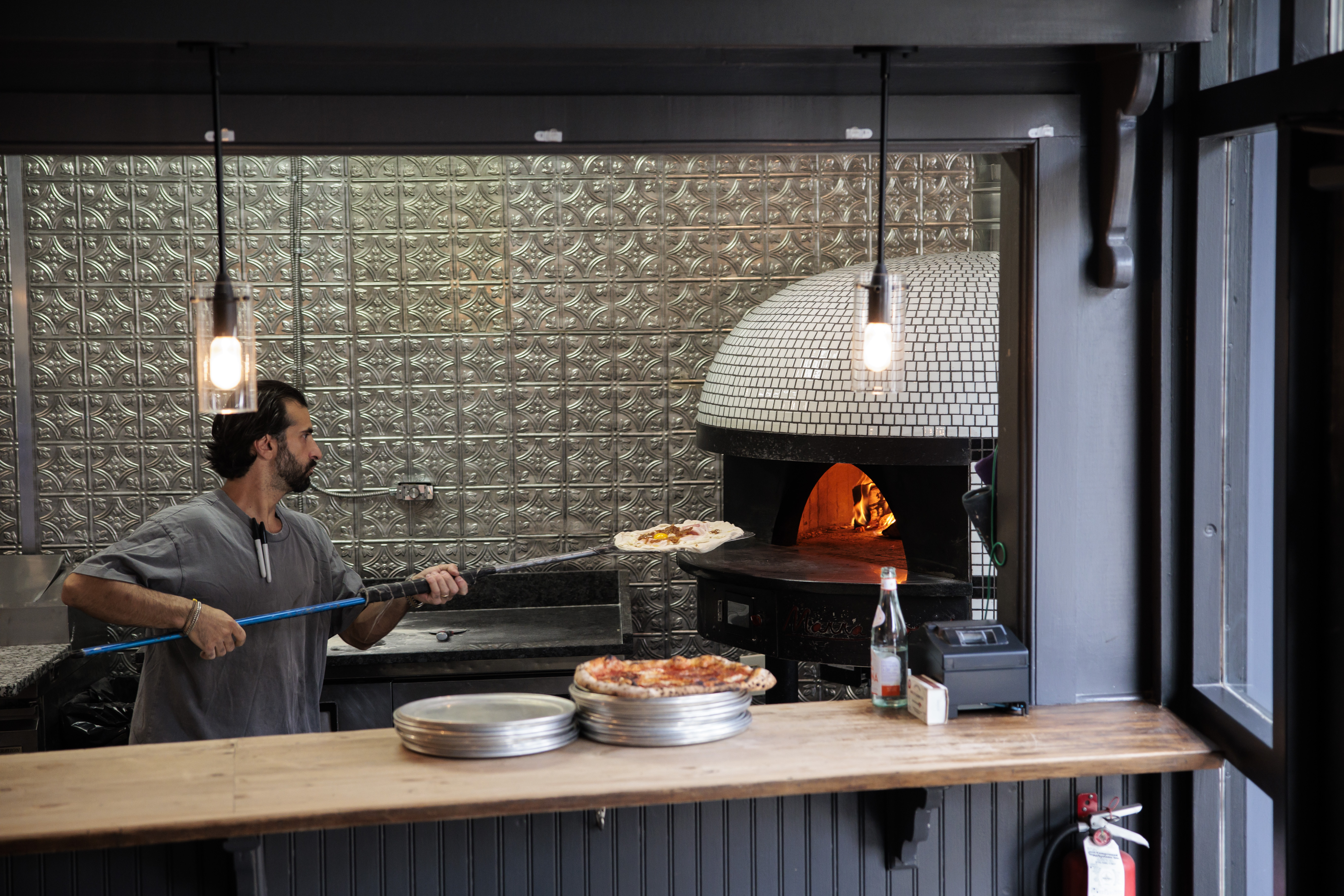
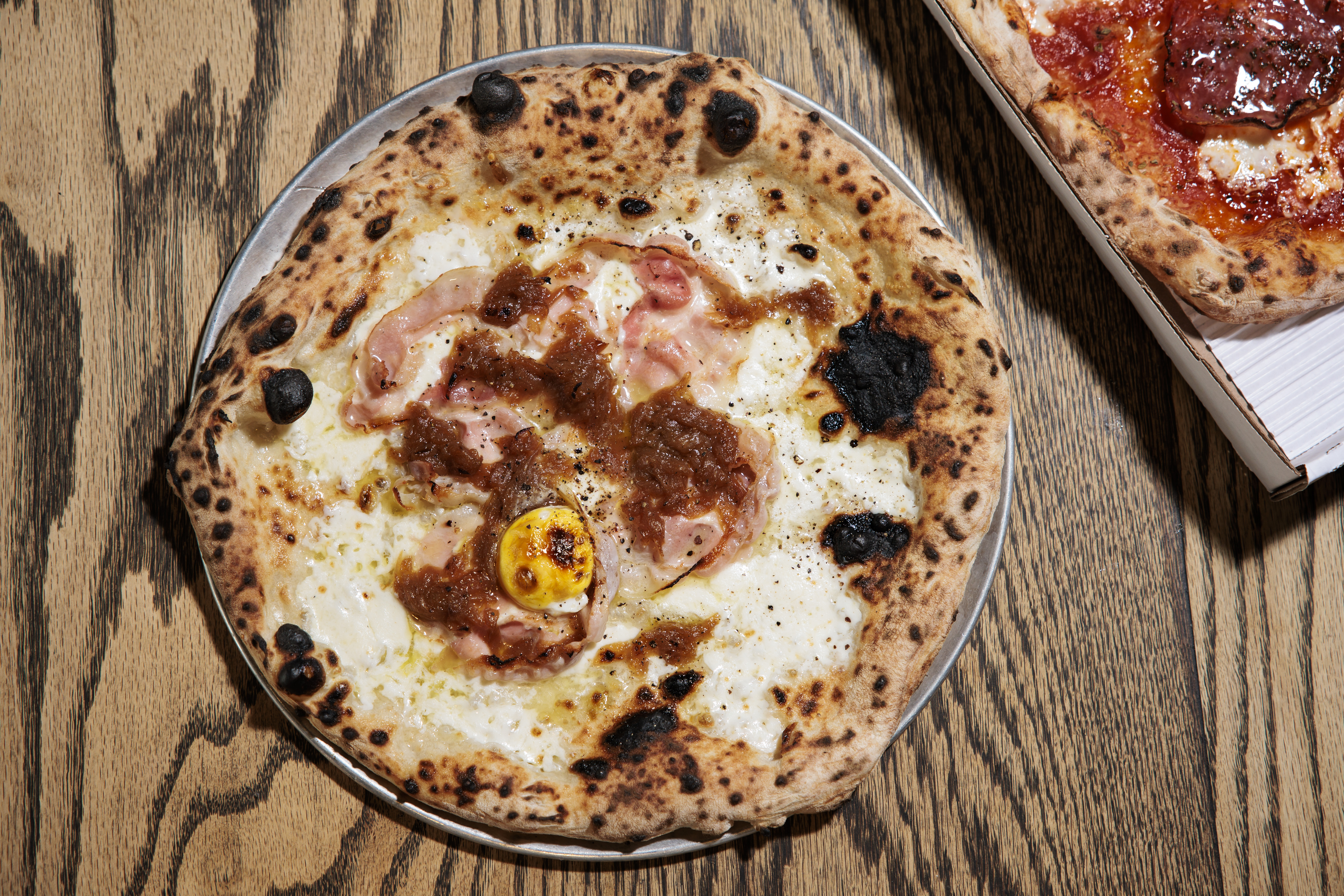
Roberto Carollo makes the Carbonara pizza at Spuntino on Monday, Aug. 31, 2026 in Doylestown, Pa.Monica Herndon / Staff Photographer
But Spuntino’s puffy, leopard-spotted pies are worth a trek from wherever you may be. Thin, chewy, and judiciously loaded, the pizzas are best eaten then and there, at one of the several tables Spuntino claims inside the market. (Takeout — and leftovers — are perfectly satisfying, too.)
Carollo opened Spuntino in Doylestown in 2014 with his brother Salvatore. (They also had a Northern Liberties location from 2015 to 2023. Carollo is now Spuntino’s sole owner.) The brothers are fourth-generation pizza makers, dating back to their Sicilian great-grandfather’s bakery days. They had grown up working in their father’s Philly-area neighborhood pizzerias — “your big 16-inch pies, hoagies, sandwiches,” Carollo said — but they hadn’t made Neapolitan pies before, and they had no experience with wood-fired ovens.
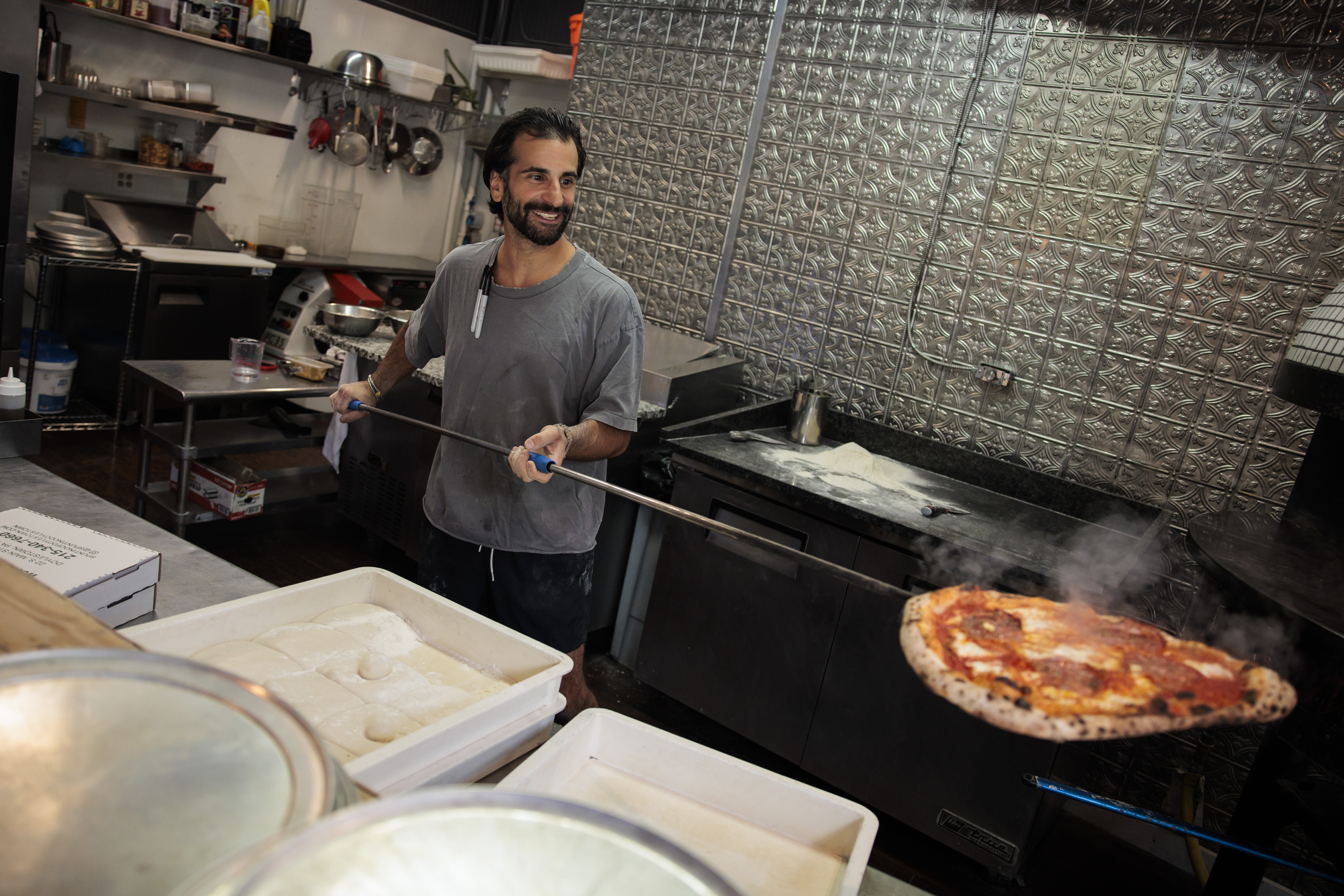
“We kind of just were going in on a prayer,” Carollo said. They had their work cut out for them with this exacting style of pizza. At Spuntino, a 250-gram ball of 48- to 72-hour fermented dough is stretched into a millimeters-thin 11-inch round, then covered with sauce, cheese, and toppings before being pitched into afiery 900-degree oven, where it cooks in about 90 seconds. The pizzaiolo needs to have an eagle eye. “Five or six seconds too long, and the pizza’s burned,” Carollo said.
Roberto Carollo pulls a Ronzio pizza from the oven at Spuntino on Monday, Aug. 31, 2026 in Doylestown, Pa.Monica Herndon / Staff Photographer
Evidently, his prayers were heard: Inquirer critic Craig LaBan named Spuntino among the suburbs’ best pizzas in 2017. Carollo said his chops have only gotten sharper since. “[The pizza] is so much better, and I think that’s natural, that’s normal. Anybody who has any profession — a major athlete — when they start at 18, they’re not as good, hopefully, as they are when they’re 25.”
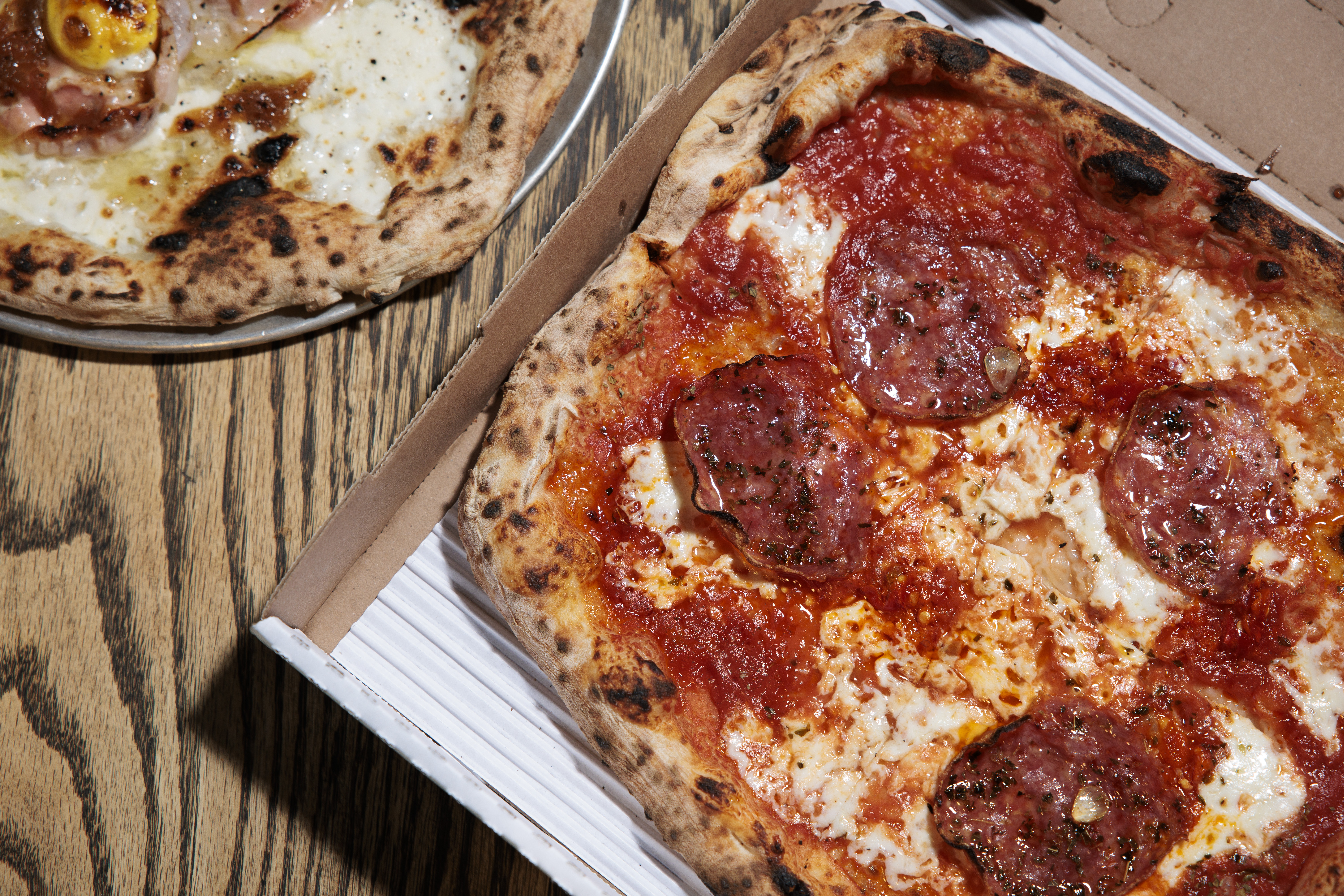
It’s hard to choose among the 23-pie menu, but Carollo always recommends setting a baseline with a Regina, with milled San Marzano tomatoes, Lioni buffalo mozzarella, fresh basil, and salty pecorino Romano. My family scarfed one of those down, but our favorites were the Ronzio — with the same tomatoes and mozzarella, plus thin-sliced soppressata, shaved garlic, Sicilian oregano, mild Calabrian chilies, and a drizzle of honey — and the Carbonara, a white pie with pancetta, caramelized onions, fresh mozz, pecorino, and an egg yolk that’s finished with black pepper and olive oil.
The Carbonara and Ronzio pizzas at Spuntino on Monday, Aug. 31, 2026 in Doylestown, Pa.Monica Herndon / Staff Photographer
We’ll be back for what Carollo considers his most underrated pizza — the Tonno, a red pie with Sicilian tuna and red onion — plus another spin through his fellow vendors in the family-friendly Main Street Marketplace, including Hops/Scotch and the Department of Note stationary store and boutique. Carollo makes a very good point, and Spuntino is proof: “There are a lot of places out in the suburbs that are making such amazing pizza.”
Spuntino, 22 S. Main St., Doylestown, 215-340-7660, spuntinowoodfiredpizzeria.com
Several weeks ago, The Inquirer food desk deliberated on declaring a sandwich of the summer, after the New York Times designated Italian piadinas their pick for said title (a phenomenon that seems mostly confined to Brooklyn). Personally, I think the designation is pretty silly. Why?
The hot dog is the sandwich of the summer. It always has been, but it’s especially true now.
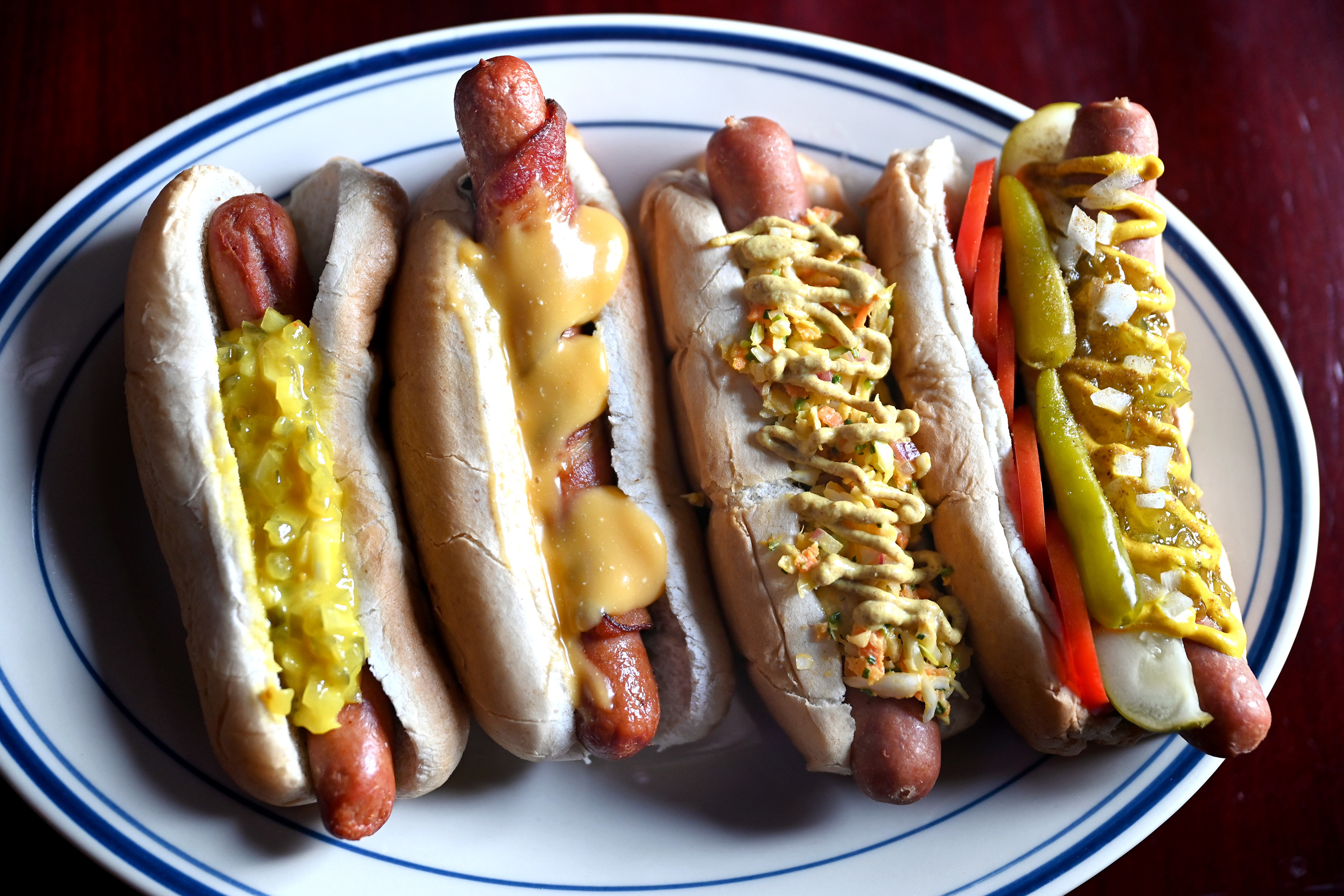
Hot dogs at Royal Tavern’s Dog Days of Summer special, held annually in July. (A few dogs remain on the menu in August.)Tom Gralish / Staff Photographer
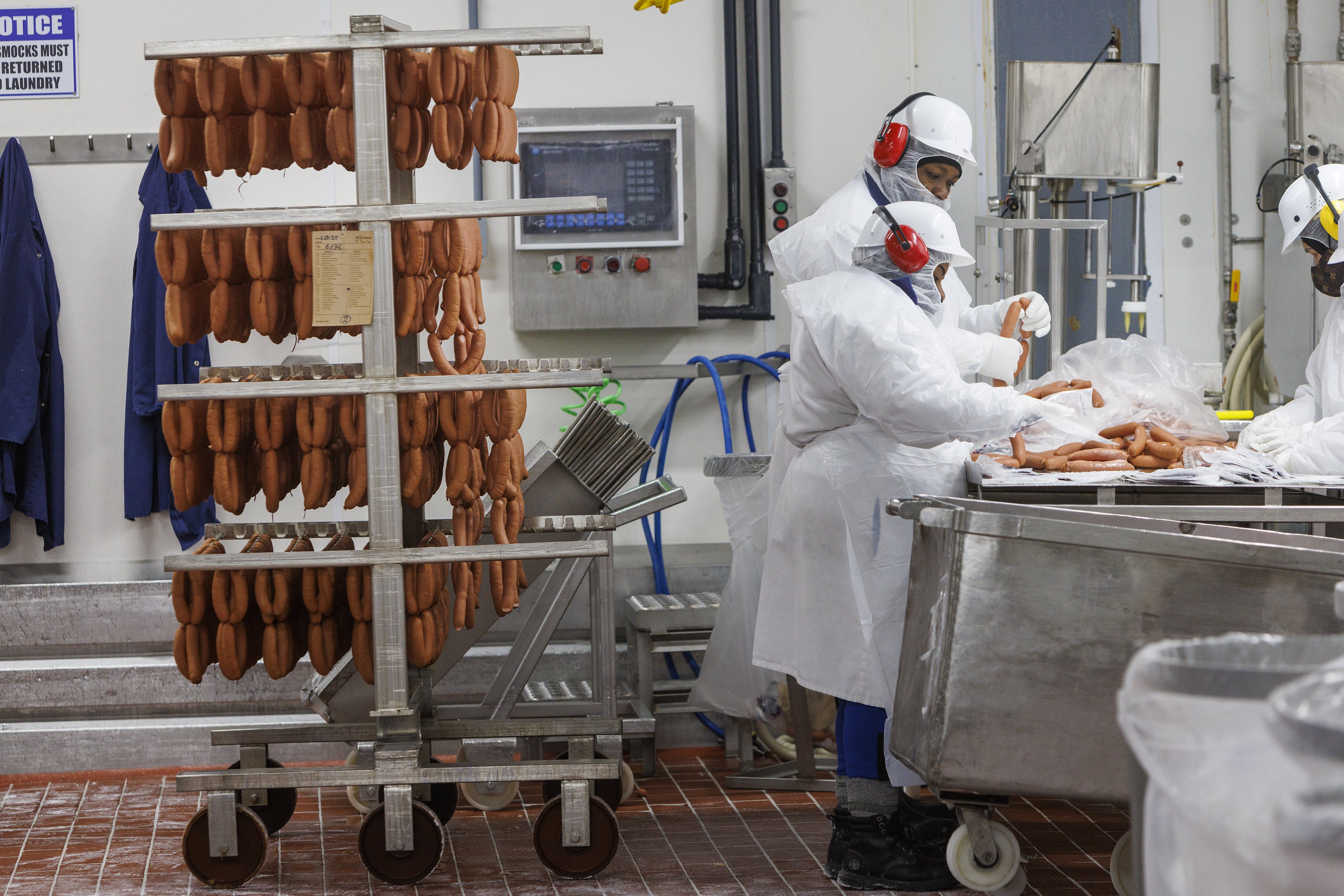
The boom times won’t necessarily end after Labor Day, but, for many people, hot dogs have a season, and it is summer. After all, nearly half of the 100 million hot dogs made annually by Dietz and Watson, Philly’s homegrown deli meat maker, are sold between May and August, according to Lauren Eni Canseco, Dietz’s vice president of brand strategy and fourth-generation family owner.
Food handlers packaging Black Forest Uncured Knockwurst at Dietz and Watson plant Philadelphia in 2025. Dietz and Watson produces and distributes deli meats, cheeses, and other specialty food products.Alejandro A. Alvarez / Staff Photographer
That the hot dog is the sandwich of the summer, here or anywhere, seems so obvious, it almost shouldn’t even need to be verbalized. It’s ballpark food, barbecue food — summer food.
The one major hitch? The enduring, irreconcilable debate over whether a hot dog is a sandwich. This is well-tread ground among hot dog enthusiasts, a subset of civilization that is fiercely opinionated and quite vociferous.
To give both sides of the argument equal air time, I asked several local glizzy authorities — makers, avid consumers, etc. — to weigh in. Is a hot dog a sandwich? Here’s what they said:
Craig LaBan, Inquirer restaurant critic: Technically, yes. As much as a hoagie, or hot roast beef, cheesesteak or cutlet can be a sandwich. You put sausage on a bun and call it a sandwich. Hot dog is a sausage, so …That is not to say hot doggery is the same thing as eating a peanut butter and jelly. … and it’s true hot dogs can absolutely exist on their own — in a pot of beans or Korean Army soup, baked into a croissant, wrapped in a blanket, in which cases they are not a sandwich. So … now that I rethink it, a hot dog is NOT a sandwich, but it can become one.
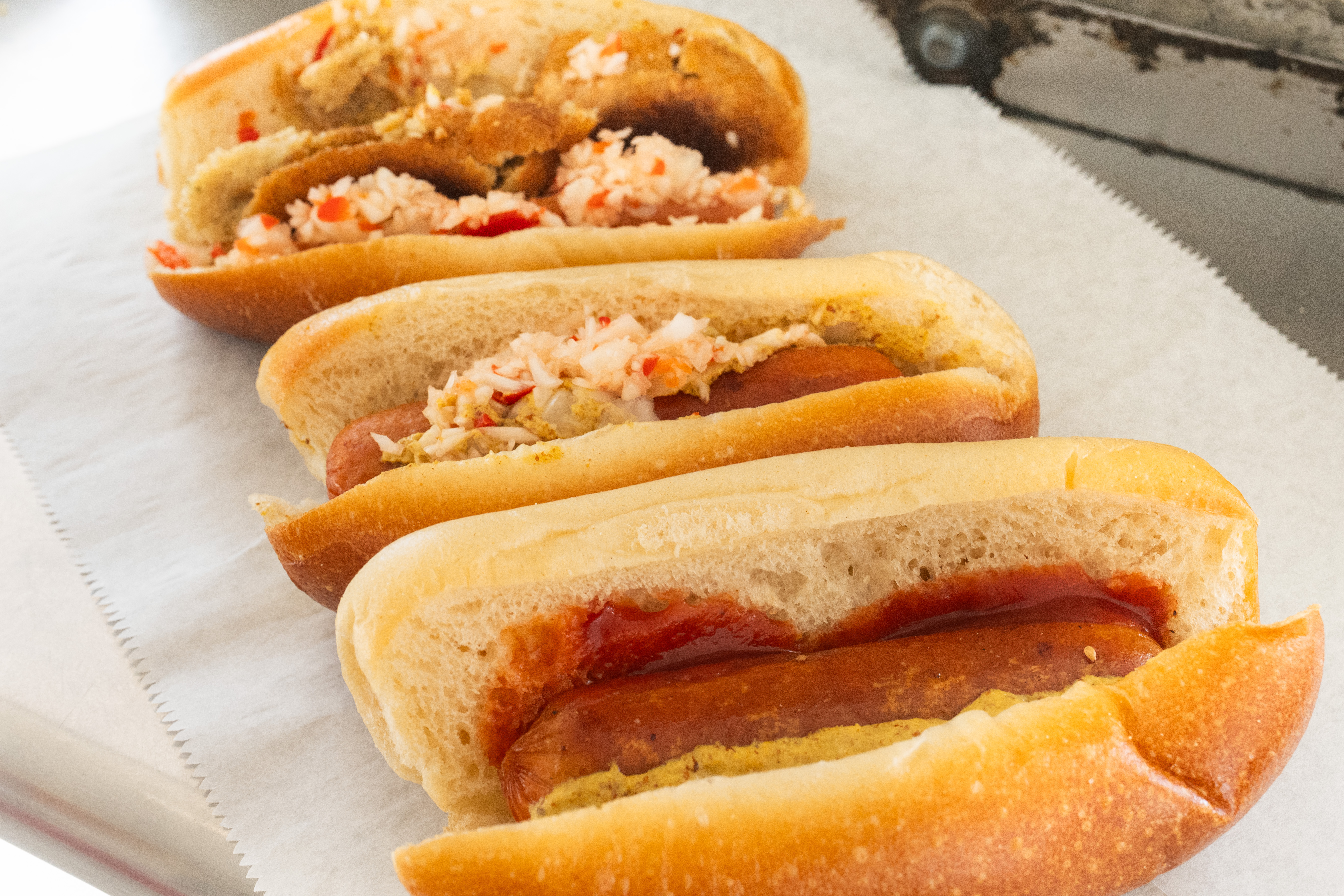
Standard hot dog with ketchup and mustard, hot dog with pepper hash, and hot dog with fish cake and pepper hash at Johnny’s Hots on Aug. 17.Jessica Griffin / Staff Photographer
Chris Barnes, owner of Lucky’s Last Chance: A hot dog is a hot dog! It’s unique and perfect and one of one. Anyone who says otherwise probably also likes ketchup on it.
Jen Zavala, owner of Juana Tamale: Yes, a finger sandwich.
Sandwiches are commonly considered a complete meal. One hot dog is a snack. You need two or three to make a meal.
Sandwiches are usually portable, packable. Something you can put in a Ziploc, bring for lunch, or save for later. This is not a pleasant or regular practice with hot dogs, they are designed to be eaten immediately.
Sandwiches are usually COLD, unless advertised as a “hot sandwich.” Hot dogs are almost NEVER served cold.
Hot dogs and sandwiches are best purchased from different sorts of vendors. You probably wouldn’t want a hoagie from your favorite Center City hot dog lunch cart; and you probably wouldn’t want a hot dog from your favorite Philadelphia deli (I’ve tried) — unless it was Famous 4th Street.
I’ve been painting and writing about hot dogs for almost 20 years. Poring over old articles, menus, going back to the early 1900s. Very rarely, or maybe even never, have I seen a hot dog historically referred to as a sandwich.
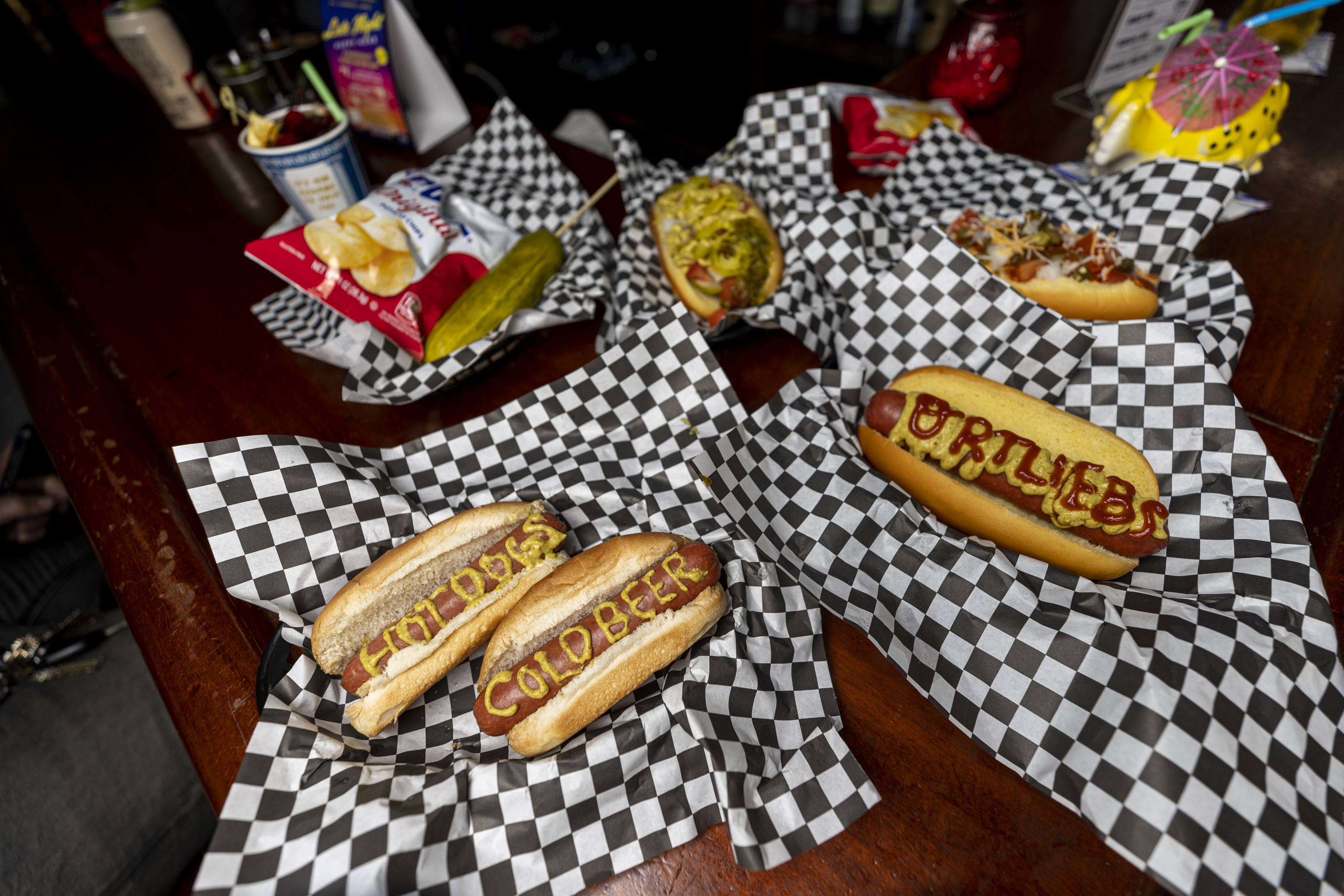
An assortment of classic hot dogs with mustard and ketchup writing at Ortlieb’s in Northern Liberties.Tyger Williams / Staff Photographer
Nic Macri, chef at Royal Tavern: Considering a hot dog is a hot dog without the bun, I am going to say no. I’ll tell you what is not a hot dog — a sausage in a hot dog roll!
Pierre Li Peters, aka @theehotdogsummer: A hot dog is not a sandwich because it’s an entirely different art form. A hot dog is a hot dog, even when it doesn’t look like the classic Nathan’s frank we all imagine. For example, a corn dog could be considered a part of the hot dog family but doesn’t really fit into the sandwich category … The beautiful thing about the hot dog community: It’s not limited in being classified as a sandwich; creativity flourishes due to unique characteristics shaped by the regions that enjoy them.
Lauren Eni Canseco, Dietz & Watson VP: A hot dog CAN be a sandwich, but it can also be an ingredient, an entree, or a snack! If it’s a high-quality, high-protein dog, the possibilities are endless.
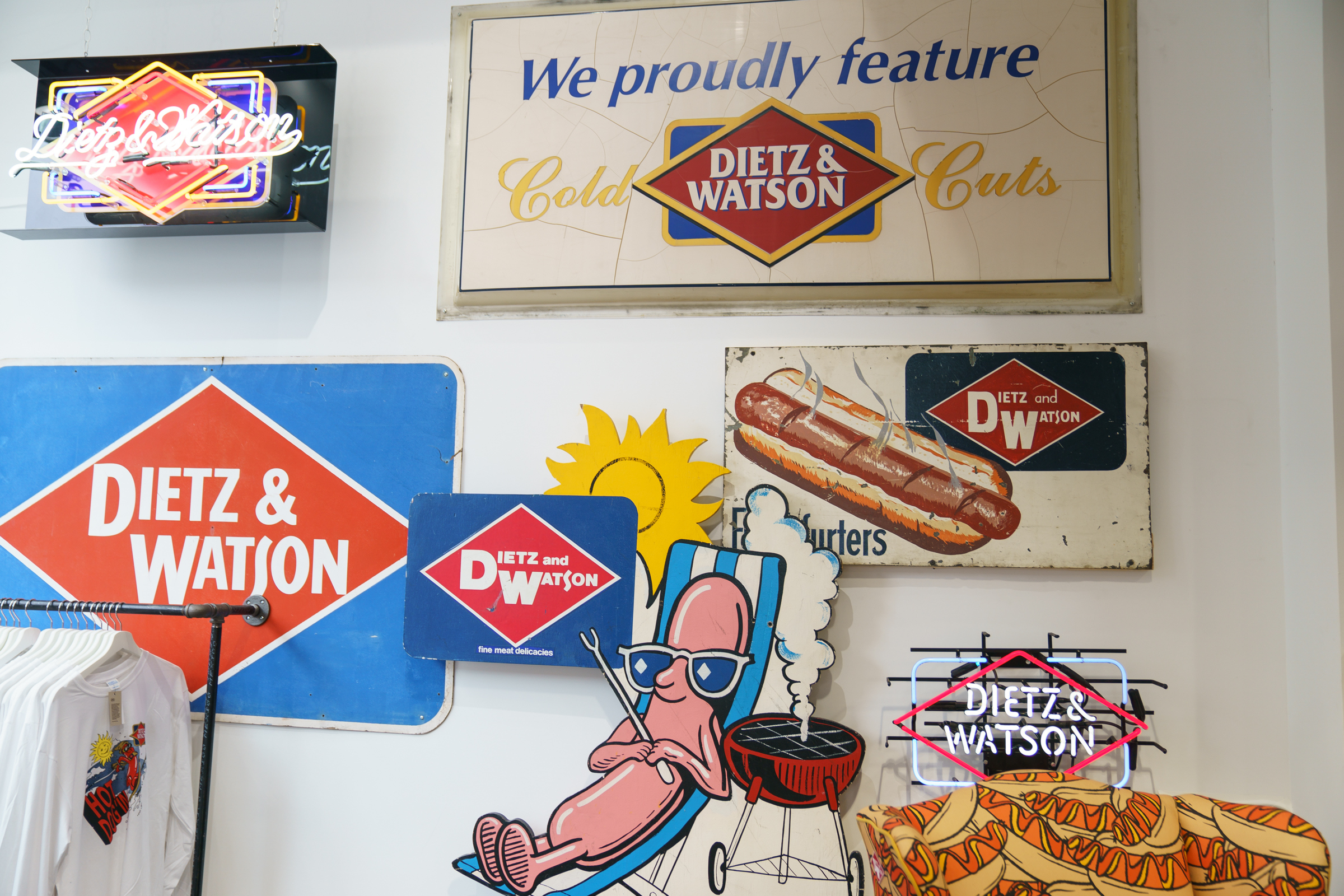
Retro wall decor at Dietz & Watson pop-up store at Fifth and South Streets in 2019.JESSICA GRIFFIN / Staff Photographer
Emilie Dormer, aka @glizzygirliez: In my heart, I don’t consider a hot dog a sandwich. A hot dog feels like its own category entirely. There’s something culturally distinct about it that gets lost when you simply call it a sandwich. That said, if you forced me to place it into one of the traditional food categories, I’d have to admit that yes, structurally, I guess that it probably qualifies as a sandwich. Bread, filling, handheld … the evidence is unfortunately there.
Ralph Stollenwerk, artist and hot dog illustrator: I think a hot dog is as much of a sandwich as a hoagie. Nobody officially calls it a “hoagie sandwich,” [just] as nobody calls it a “hot dog sandwich,” but it is meat held between bread. I’m calling it a sandwich, but I would NEVER call it a sandwich in public.
As for me, I pretty much agree with Stollenwerk. You can quibble with my headline, but the substance of the argument is undeniable: The hot dog is the sandwich of the summer, even if the “sandwich” is silent.
In early 2025, John Goncher knew it was time to get out of his living room.
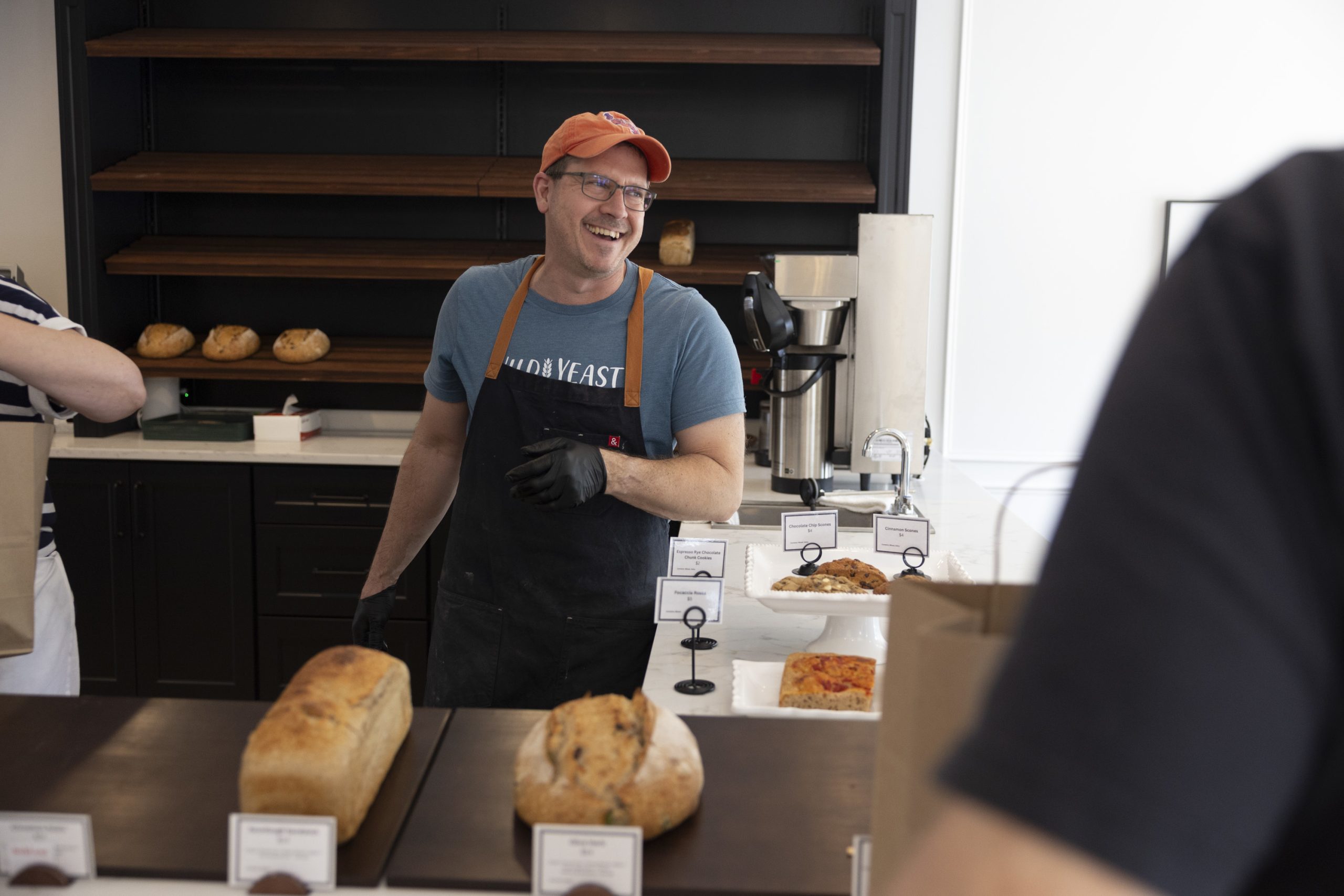
That’s where the ex-CFO and Rosemont resident was singlehandedly baking some 700 loaves a week for his sourdough startup, Wild Yeast Bakehouse. Between mixing and proofing dough, packing all his product, working weekend markets, and dropping bread at a couple hundred subscribers’ doorsteps, Goncher was running on fumes. Even his smartwatch knew it.
“My little watch told me, ‘You’re averaging more sleep this year.’ I went from three hours and 10 minutes to three hours and 20 minutes over the year,” Goncher said over a recent interview at Wild Yeast’s newly opened brick-and-mortar bakery in Wayne’s Eagle Village shopping center.
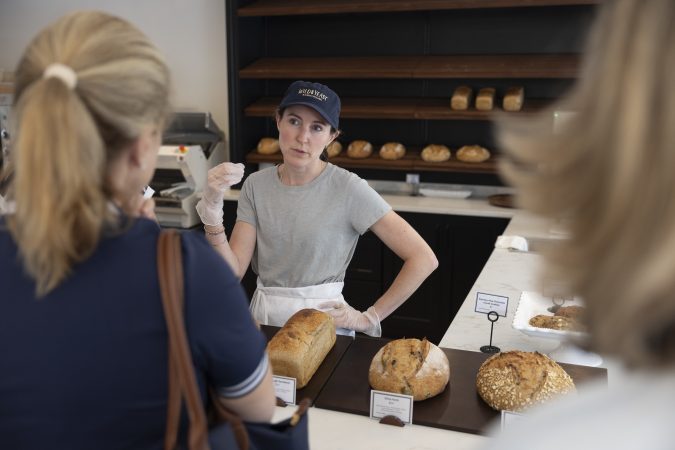
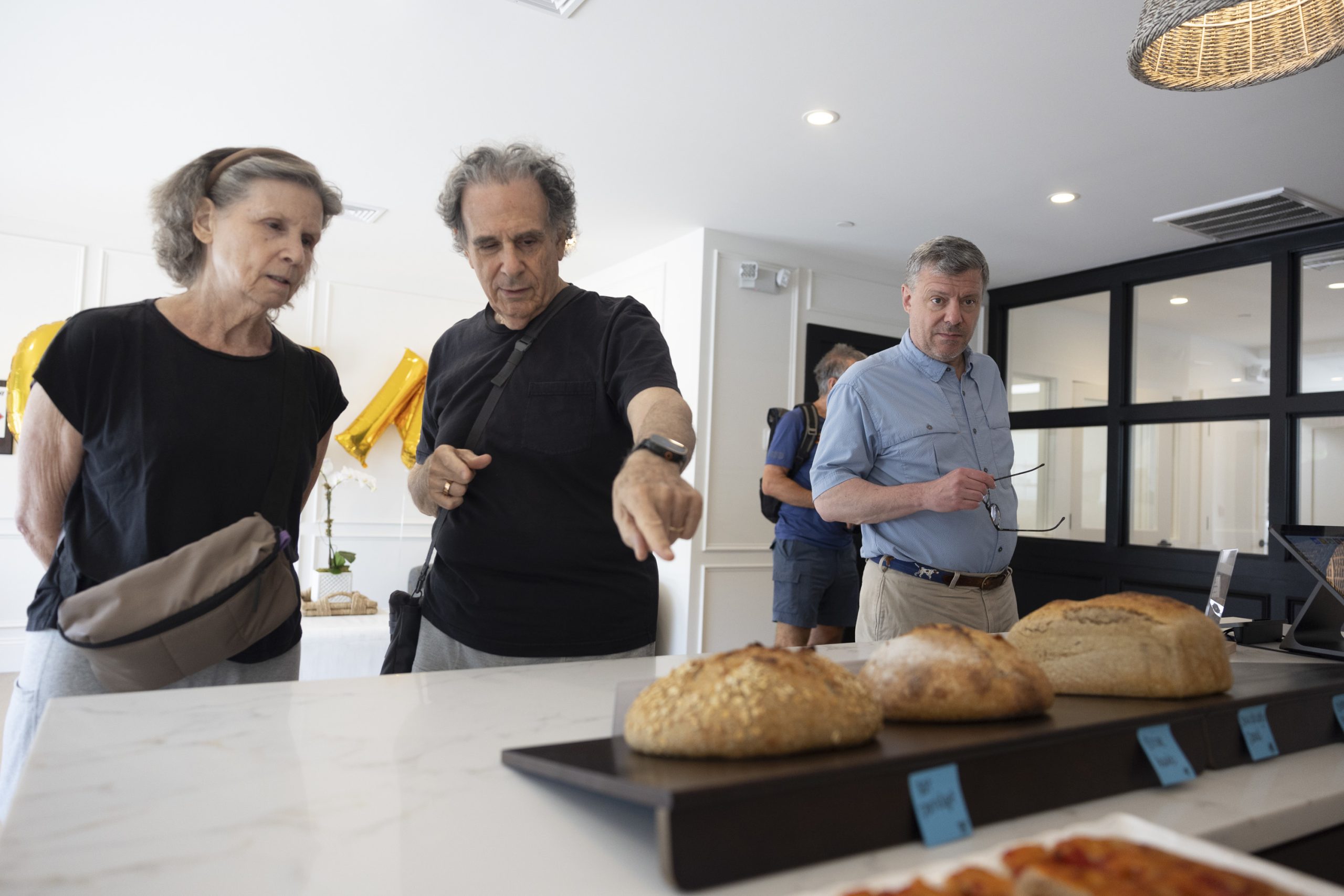
Owner John Goncher, chatting with D’Arcy Lyness and her husband, Larry Richard, of Wayne, Pa., who discovered the Wild Yeast Bakehouse yesterday and came in to buy some bread on Wednesday, July 22, 2026.Tyger Williams / Staff Photographer
Sandwiched between two well-established Main Line restaurants (Autograph Brasserie and The Silverspoon), Wild Yeast officially opened July 18. It joins Wayne’s burgeoning food scene: Notable newcomers include the splashy Maison Lotus, Main Line darling Johnny’s Pizza, and boutique wine bar Nature’s Vin.
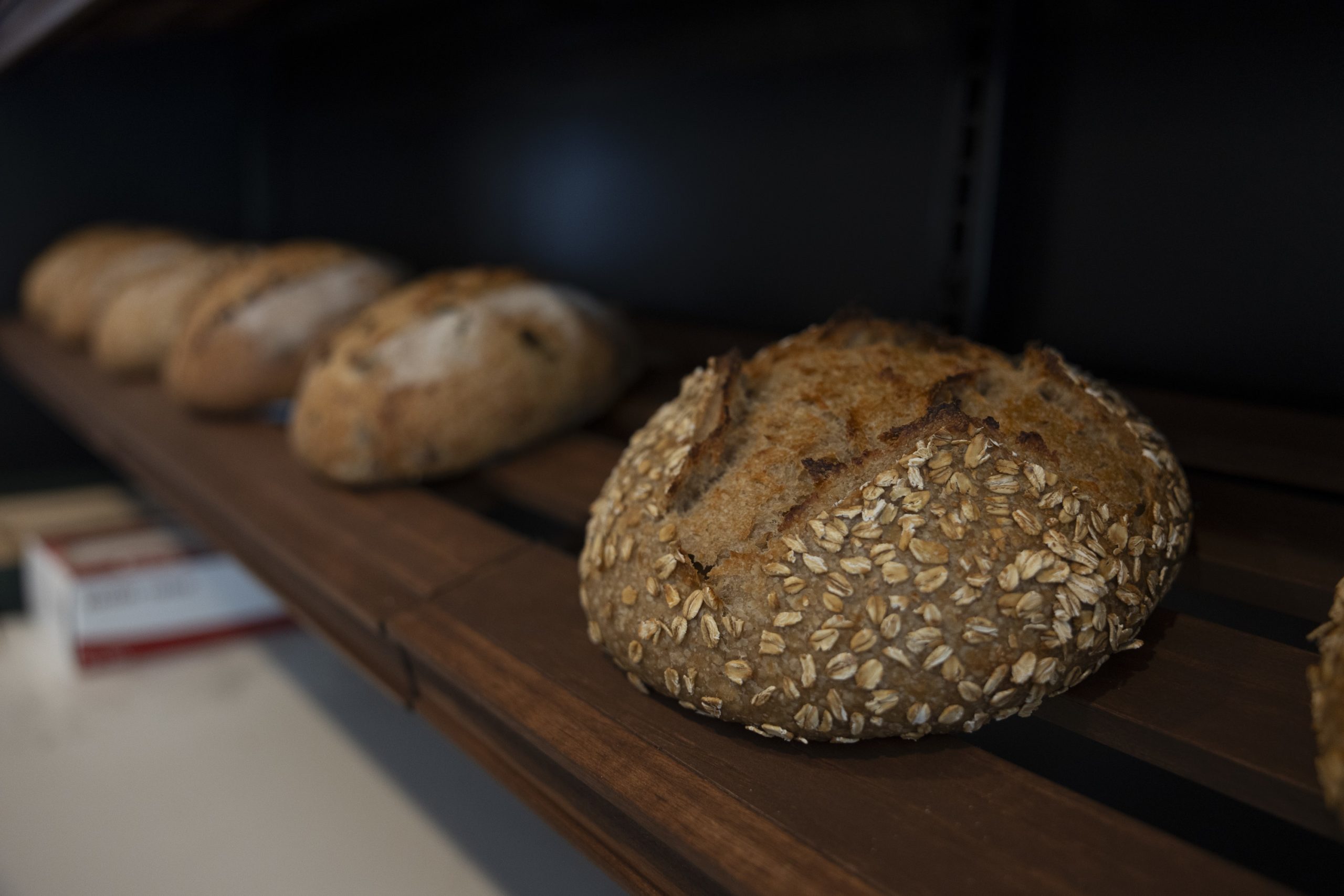
The bakery is open Wednesday through Sunday, selling a variety of sourdough loaves, from kid-friendly cinnamon-raisin and sandwich bread to olive herb and oat porridge boules. You can also score Gryphon coffee, whole-grain Castle Valley Mill flour, and Wild Yeast’s own sourdough focaccia, cookies, and scones for now. (More discard-fueled pastry projects are in development.)
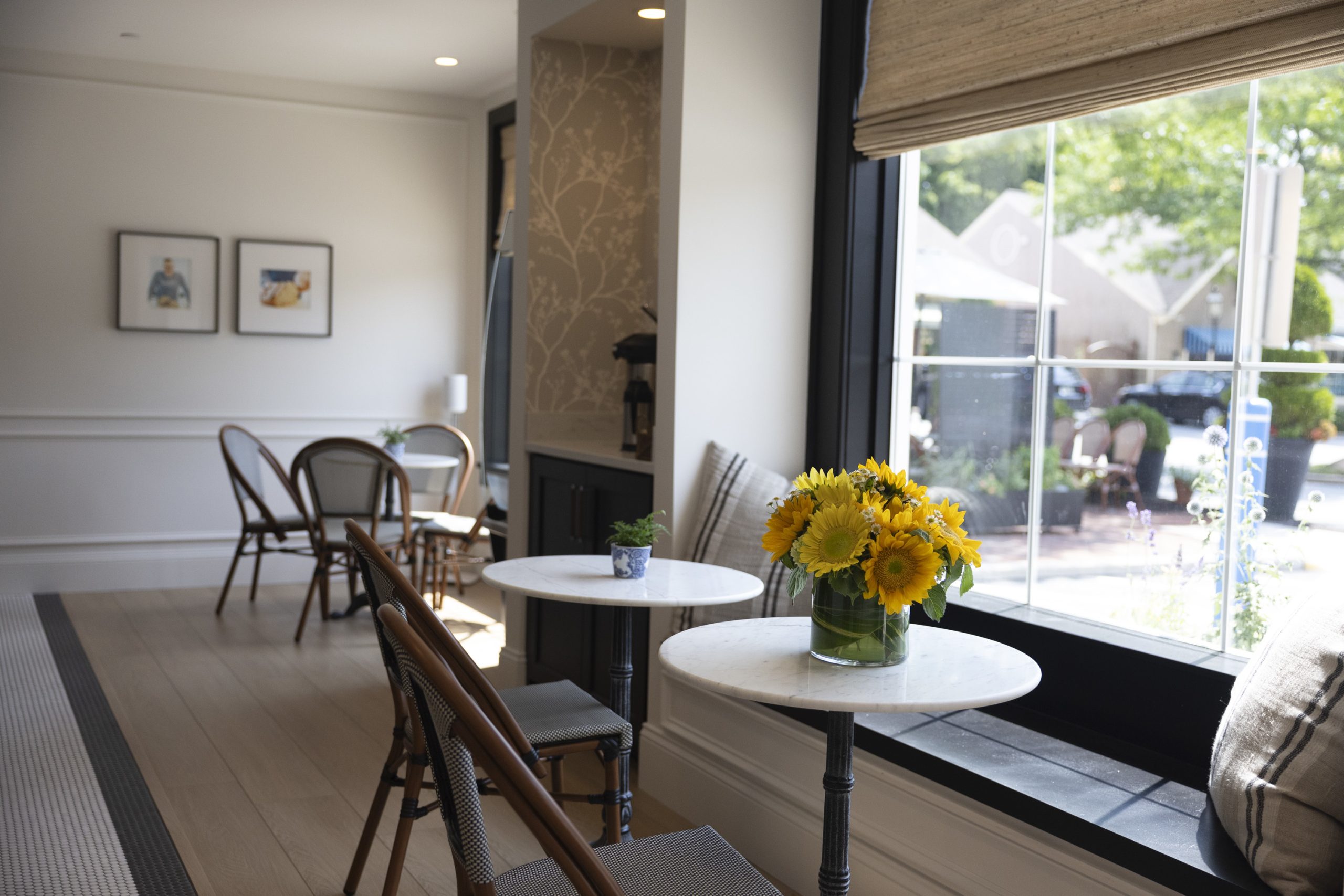
With crown molding picture boxes, a cozy-chic sofa, and a sunny window seat, the bakery has a living room vibe — perhaps not surprising given Goncher once dreamed of baking out of his living room forever.
The inside of Wild Yeast Bakehouse in Wayne, Pa., on Wednesday, July 22, 2026.Tyger Williams / Staff Photographer
It was in early 2025 that Goncher first started looking at spaces to move his cottage business, which he started in 2021 after leaving a career in finance. Thanks to a combination of farmers market traffic and media attention, his business had ballooned. He was baking bread for half a dozen wholesale clients and nearly 250 monthly subscribers, plus a sell-out crowd at the Media farmers market.
Keeping up with that demand meant maintaining a brutal schedule seven days a week. Goncher would roll into his living room shortly after 2 a.m. and bake until 6 a.m. The meat of the day consisted of readying and making deliveries (or working the market), followed by afternoon and evening dough prep. Most nights, he went to bed at 11 p.m. Meanwhile, he was turning away new business.
“I said to my wife, ‘It either has to contract or it has to really grow,’” Goncher remembered. “We have to move out and do something with it.”
D’Arcy Lyness and her husband, Larry Richard, of Wayne, Pa., picking out some bread at Wild Yeast Bakehouse on Wednesday, July 22, 2026.Tyger Williams / Staff Photographer
Goncher initially considered spaces in Bryn Mawr — “I was looking close to home, because [I had a] 10-second commute, I figured under 10 minutes would be ideal” — but shifted his sights elsewhere when he learned Malvern’s Buttery would be opening a new location there. He looked at leases in Ardmore as well before landing on the bustling Eagle Village complex, which numbers home and clothing boutiques, a florist, a barre studio, and Main Line Mahjong among its varied tenants.
“This place [gets] constant traffic,” Goncher said.
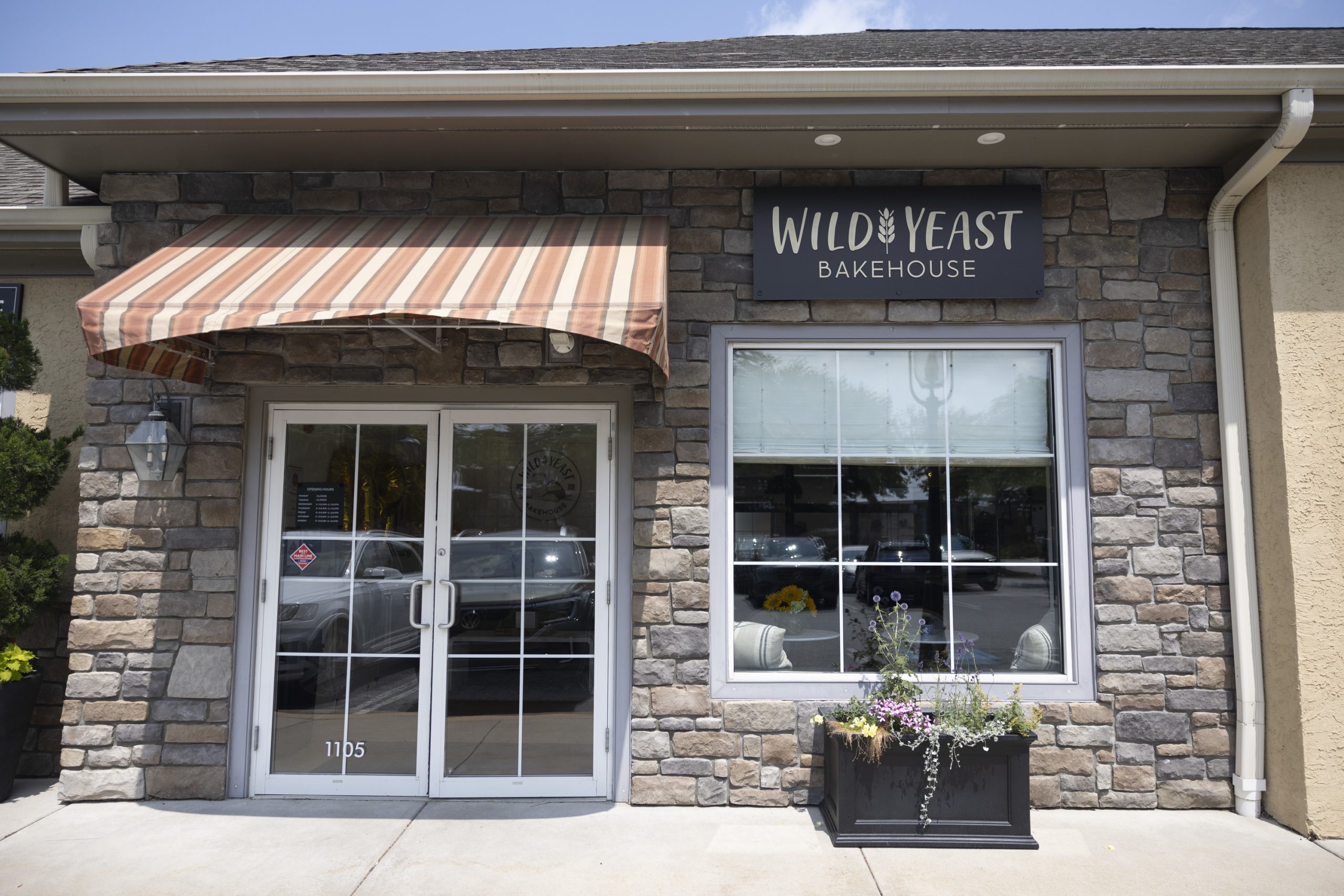
Goncher inked the lease on the stone-faced storefront at 503 Lancaster Ave. last November. He spent six months renovating it, working with the same architect and builders who renovated his own home. The 1,500-square-foot space features a retail counter and small seating area, and is subdivided by large picture windows that overlook a roomy, well-lit kitchen destined to be used for evening baking classes.
The outside of Wild Yeast Bakehouse in Wayne, Pa., on Wednesday, July 22, 2026.Tyger Williams / Staff Photographer
Offering classes is one aspect of growth the brick-and-mortar space allows for, Goncher said. But it will also enable him to take on more subscribers and wholesale accounts in the near future, expand Wild Yeast’s offerings, get more involved in the Main Line community — and, hopefully, reclaim a whiff of work-life balance.
Wild Yeast now has six employees, including an operations manager, a delivery driver, and three other bakers besides Goncher.
Fresh oat porridge at Wild Yeast Bakehouse in Wayne, Pa., on Wednesday, July 22, 2026.Tyger Williams / Staff Photographer
The additional hands have already helped Goncher get a little more sleep — “my goal is [to work] 5 [a.m.] to 6 [p.m.], I’m 3 to 9:30 as of yesterday” — not to mention most of his living room back. He’s looking forward to what a new chapter holds for Wild Yeast.
“I was ready to have this stop being about me,” Goncher said. “I want it to to be something that starts to have a life of its own.”
Wild Yeast Bakehouse. Hours: 9 a.m. to 3 p.m. Wednesday through Sunday; 503 W. Lancaster Ave., Suite 1105, Wayne; 610-672-6884; wildyeastbakehouse.com
For years, the Germantown-based members of Northwest Philly’s Weavers Way Co-op have had to travel north to shop at one of the grocery stores in which they hold a stake. Shopping at the closest one — the original Carpenter Lane store in Mount Airy — means navigating a two-story 3,000-square-foot rowhouse filled to the gills with goods and other customers (1,000 a day, on average). It’s charming but cramped.
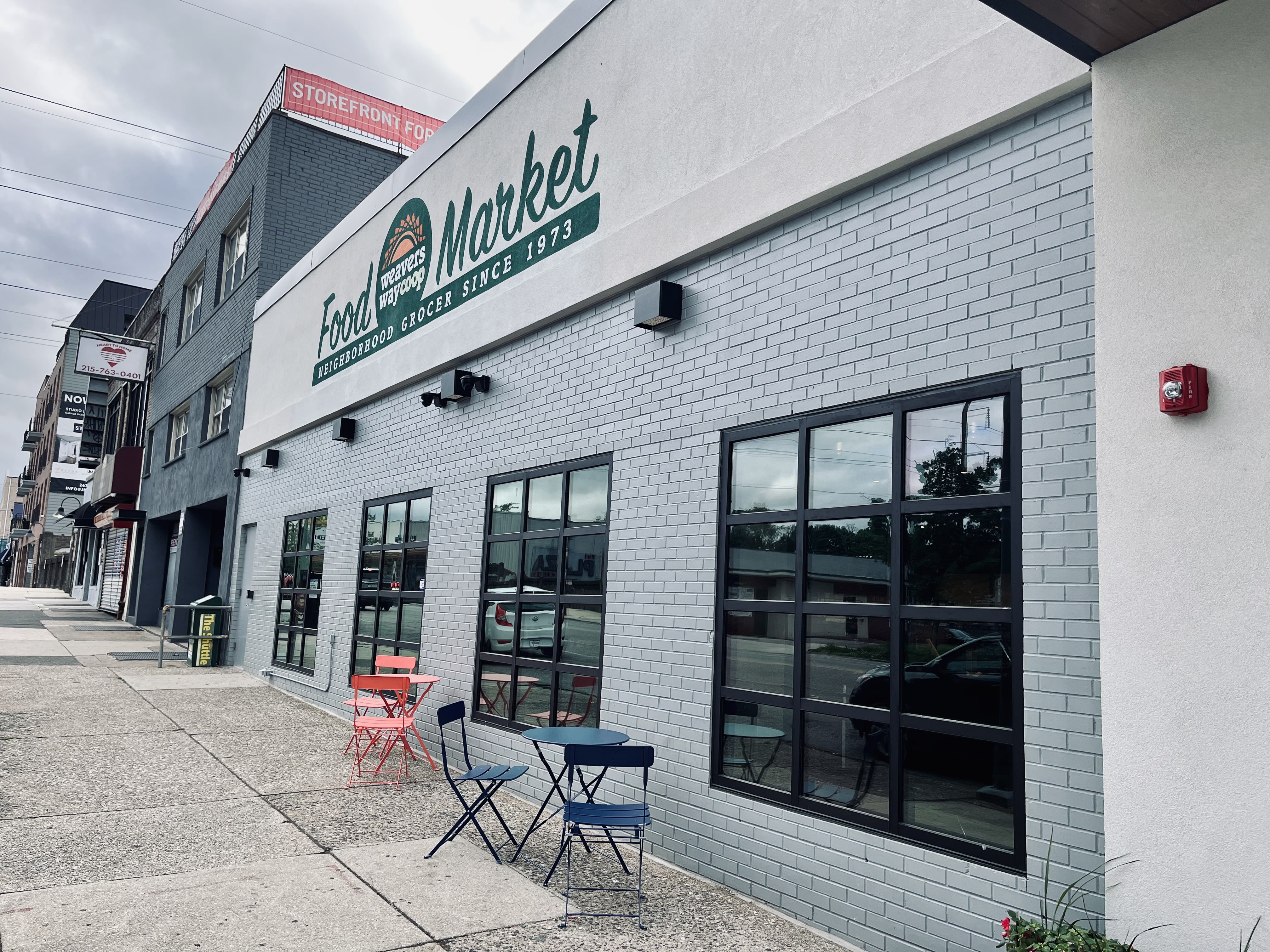
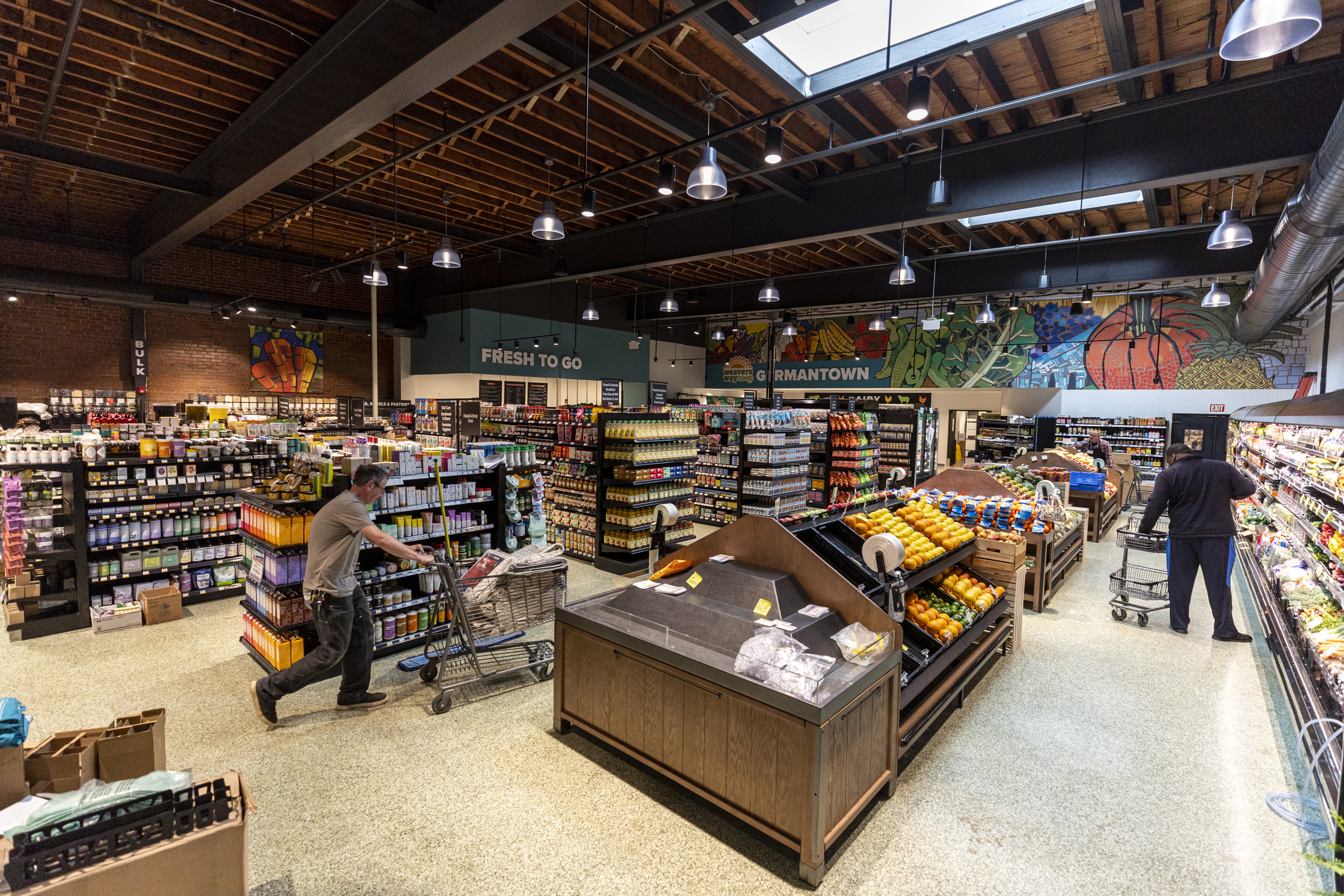
Germantown shoppers will have room to spread out now that Weavers Way’s latest location, at the corner of Chelten Avenue and Morris Street, is officially open, two yearsafter it was first announced. The 6,000-square-foot full-service grocery store includes a bulk goods section, fresh produce and dairy, prepared foods, a bakery case stocked with fresh-made bread and pastries, and a deli counter offering made-to-order sandwiches and bowls.
Weaver’s Way Food Market, which will open soon this week in Germantown, Pa., on Tuesday, May 14, 2024.Tyger Williams / Staff Photographer
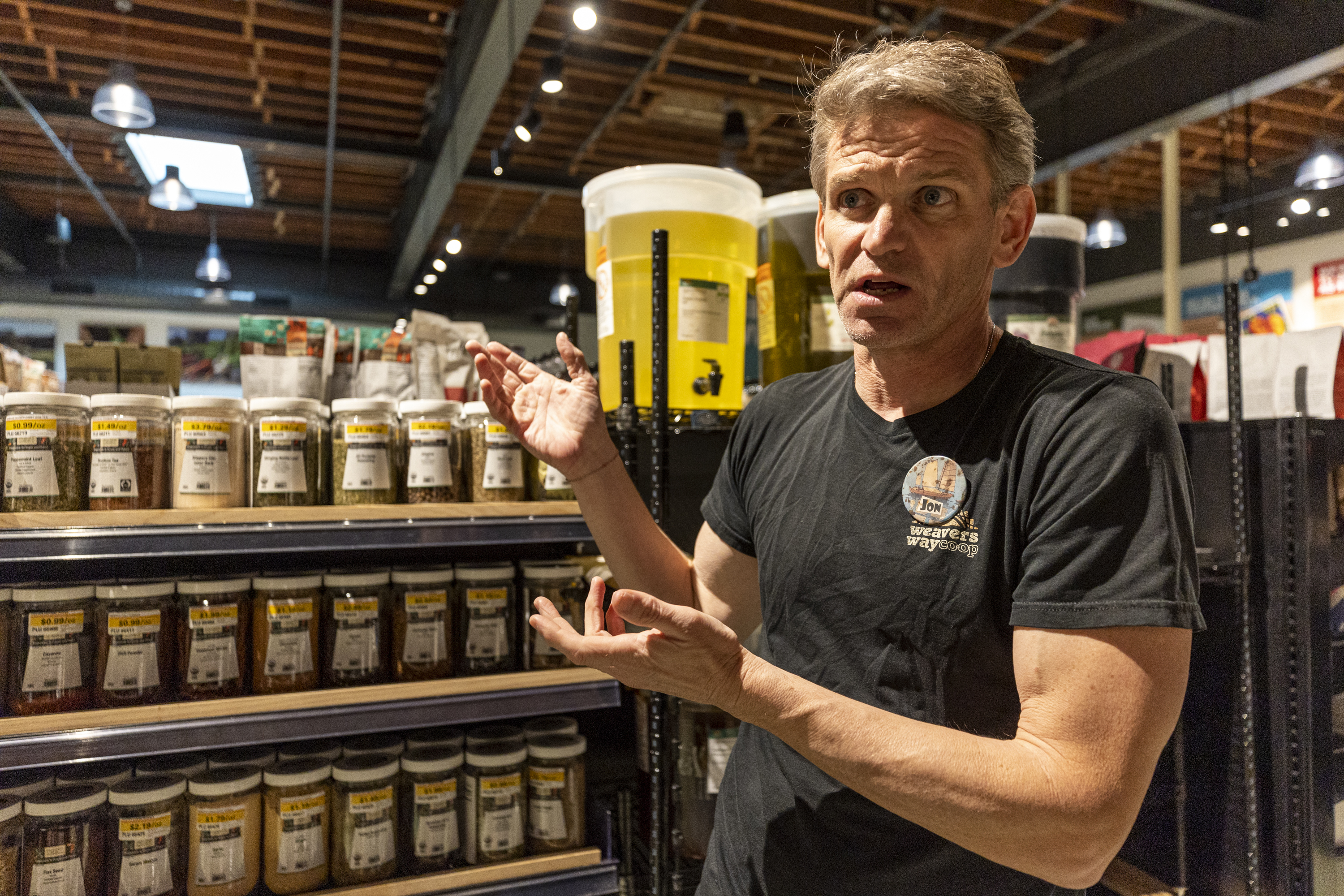
General manager Jon Roesser said the store’s larger footprint affords more than just a less-stressful shopping experience. “Because this store and [Weavers Way] Ambler are bigger, it allows us to get more flexible with the product mix. We can offer stuff at a lower price point, more conventional stuff — good-quality conventional stuff,” he said in an interview Tuesday, as workers finished stocking the shelves.
Besides hot roast chicken, store-brand olive oil, bulk cashews, frozen pizza, THC gummies, and houseplants, the store features a deep bench of local products: Dietz and Watson deli cuts, Milk Jawn ice cream, Merzbacher’s bread, beef and turkey from Ed Hipp’s in Olney, injera wraps from Germantown’s Salam Cafe, grab-and-go items from Moshe’s in North Philly, and salad greens grown on Weavers Way’s Henry Avenue farm at W.B. Saul Agricultural High School.
The store also features products from fledgling businesses like candles from Philly-based Luminous Intentions and body scrubs from Oreland’s Natural Body Essentials. “These are super hyperlocal, very small vendors that have never retailed before and we work with them to get their products onto our shelves and hopefully then they can launch to other shelves,” said development director Kathleen Casey.
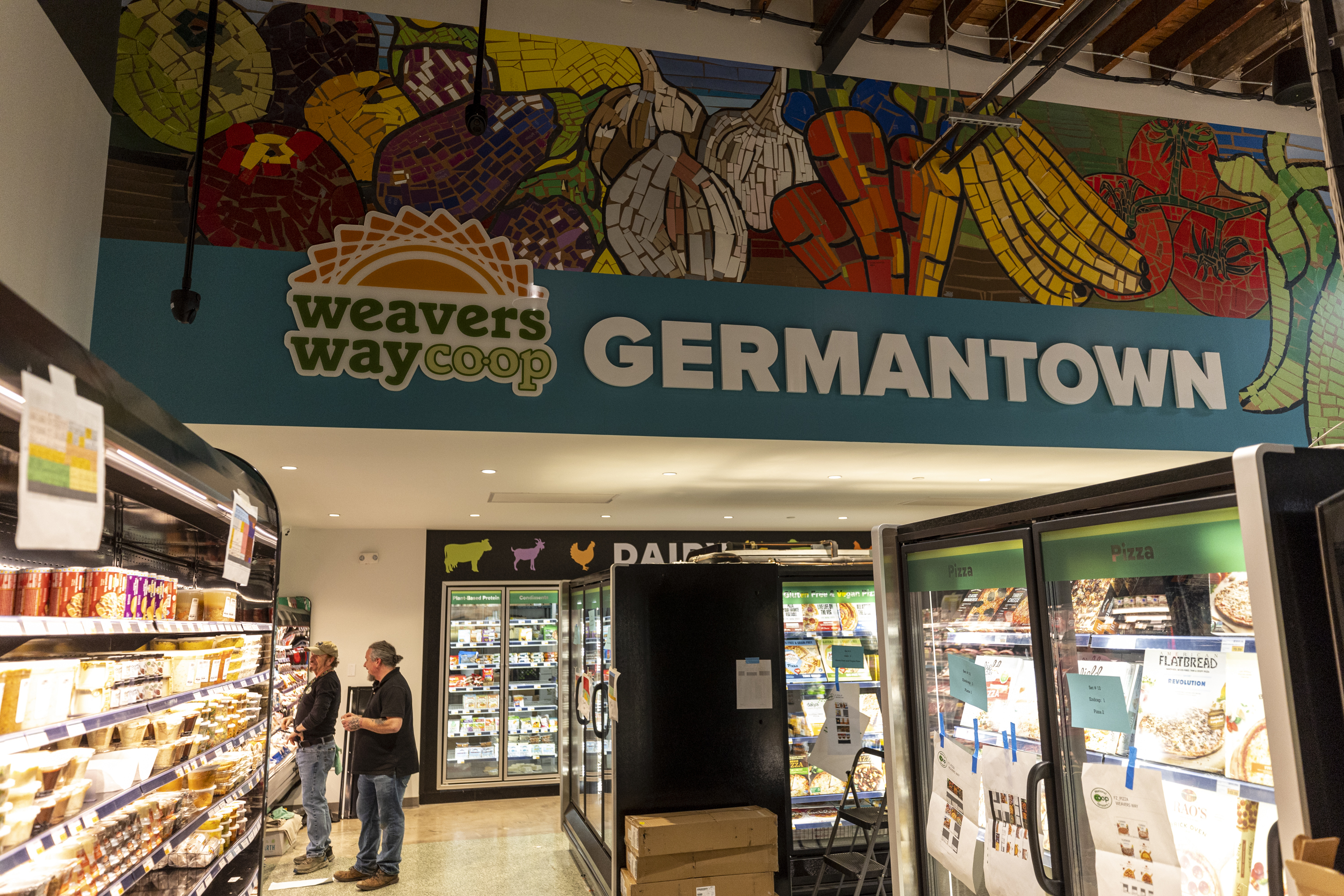
Weavers Way Germantown features original terrazzo floors, a wood ceiling, exposed brick, and mosaic art made by Philadelphia schoolchildren via the nonprofit Fresh Artists. Tyger Williams / Staff Photographer
The co-op estimates that the Germantown store will see about 620 customers a day. The member-owned cooperative, founded in 1973, has more than 1,400 members in the 19144 zip code. (Only Mount Airy claims more — about 3,000 members.) You do not need to be a member to shop at Weavers Way, though working members are eligible for a 5% discount on purchases.
The new store employs 40 workers, most of whom live within walking distance, according to Roesser and Casey. One of them is prepared foods manager Asia Simmons, who has lived in Germantown for five years. “There weren’t a lot of options in this neighborhood for fresh, local food, which is something that I strive for for myself and my family,” Simmons said. “It means a lot that I can actually walk here and get my groceries.”
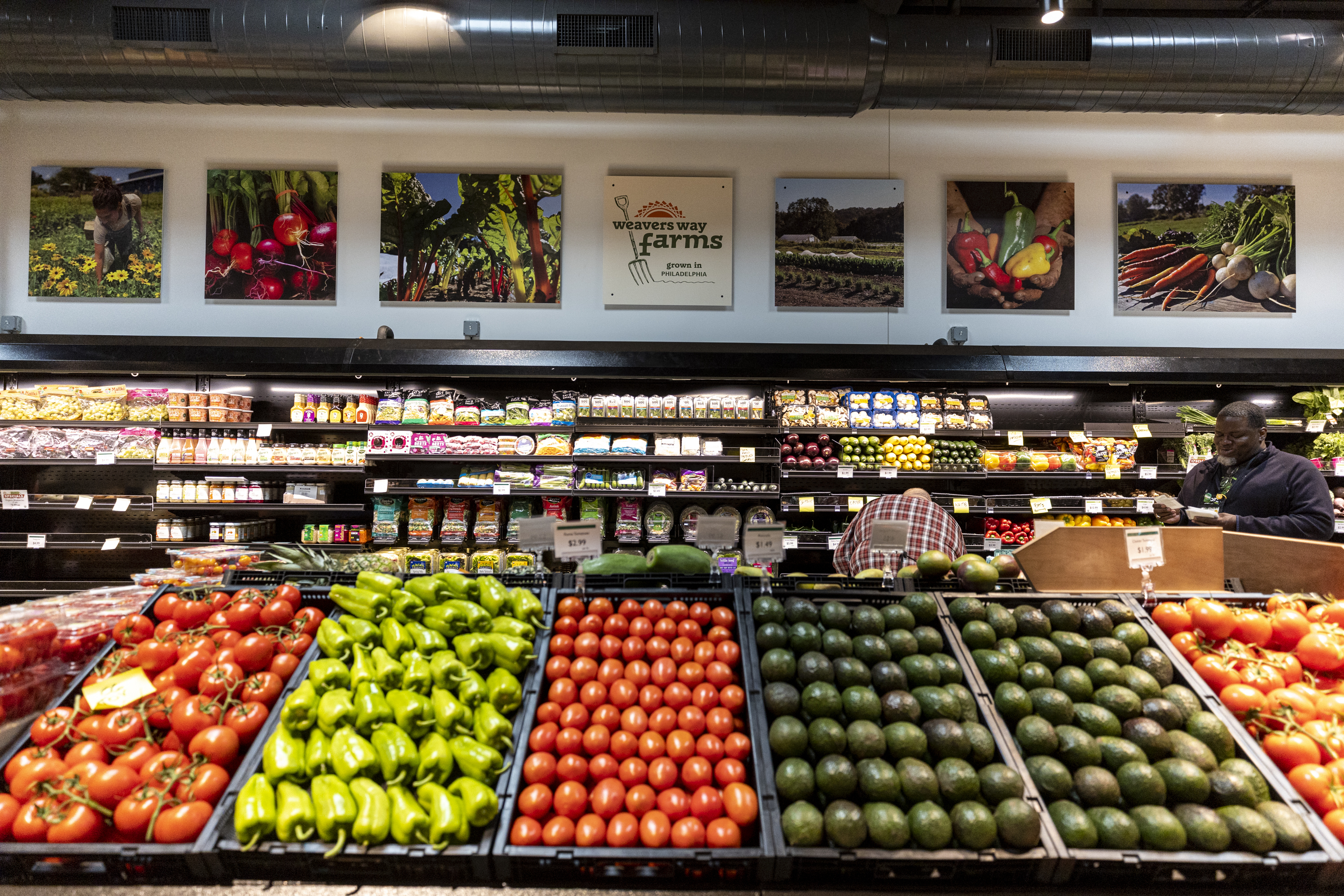
Fresh fruits and vegetables stocked up at Weaver’s Way Germantown. The store accepts EBT and will be WIC-certified soon. Tyger Williams / Staff Photographer
While a Save-A-Lot and an IGA are within a few blocks of the new Weavers Way, Roesser and Casey pointed to recent market studies of the area that identified significant unmet demand for grocery stores, specifically those with healthy and organic options. The studies also indicated Germantown residents did most of their grocery shopping in other neighborhoods.
“They’re going up to City Avenue, they’re going to the ShopRite on Fox Street, they’re going up to the Weavers Way in Mount Airy or the Acme at Germantown and Sedgwick,” Roesser said, adding that Chelten Avenue sustained several grocery stores in the commercial corridor’s heyday.
When Weavers Way first announced the Germantown project, it originally targeted opening in summer 2023. The wait for the store’s completion lasted months longer than anticipated, but much of the neighborhood has been waiting even longer. Germantown residents have been vocal about the desire for a grocery store of this caliber for more than a decade. In 2011, a Fresh Grocer at the corner of Chelten and Pulaski Avenues closed after just five years, with the owner citing insufficient business and residents citing unsanitary conditions and poor-quality food in the store. Plans to redevelop the store’s lot and replace it with a Save-A-Lot and a Dollar Tree, among other retailers, rankled the community but were eventually carried out.
So it was a years-long answer to locals’ wishes when Weavers Way alerted members the new store’s doors had finally opened Wednesday afternoon. Starting Thursday, the store will be open daily 8 a.m. to 8 p.m.
Originally an Acme, the building at 328 W. Chelten Ave. had been used for social services in more recent years. It had been vacant since 2015 before Weavers Way signed a long-term lease in May 2022. The co-op ultimately purchased the property for $2.4 million in 2023, according to city records, accounting for the most substantial expense in the $8 million project. While Weavers secured numerous grants — from the city, state, and federal governments, as well as healthy-food-focused organizations like the Food Trust — to back the project, Roesser notes the main source of financing came from member loans, which will be repaid over time.
“We can’t attract private equity, Wall Street’s not interested in investing in a co-op,” Roesser said. “We could not do this without members investing in the business that they own.”
“As a consumer cooperative, we exist to meet [members’] needs,” says Weavers Way General Manager Jon Roesser. “Our expansion to Chestnut Hill and to Ambler and Germantown has all been predicated on membership expansion in those neighborhoods first.”Tyger Williams / Staff Photographer
Weavers Way Germantown, 328 W. Chelten Ave., 215-843-1886, weaversway.coop