Author: Ethan Kopelman

  • Cups of coffee: Jeff Owens’ one NFL game ended in injury, stopped his career

    Cups of coffee: Jeff Owens’ one NFL game ended in injury, stopped his career

    Inspired by Pro Football Reference’s “Cups of Coffee” database, The Inquirer identified more than two dozen living players who appeared in just one NFL game — and played that game as an Eagle. We’re seeking to tell some of those stories in our semiregular Cups of Coffee series.

    Former Eagles defensive tackle Jeff Owens played his first NFL game on Dec. 28, 2010. A gruesome knee injury made it his last.

    “It looked that bad when you watched it,” Owens said.

    His NFL debut came in Week 16 vs. the Minnesota Vikings, which was played on a Tuesday night at the Linc in bizarre circumstances. A snow emergency that had been forecast for the area meant the game was moved from Sunday Night Football, and it became the NFL’s first scheduled Tuesday contest since 1946.
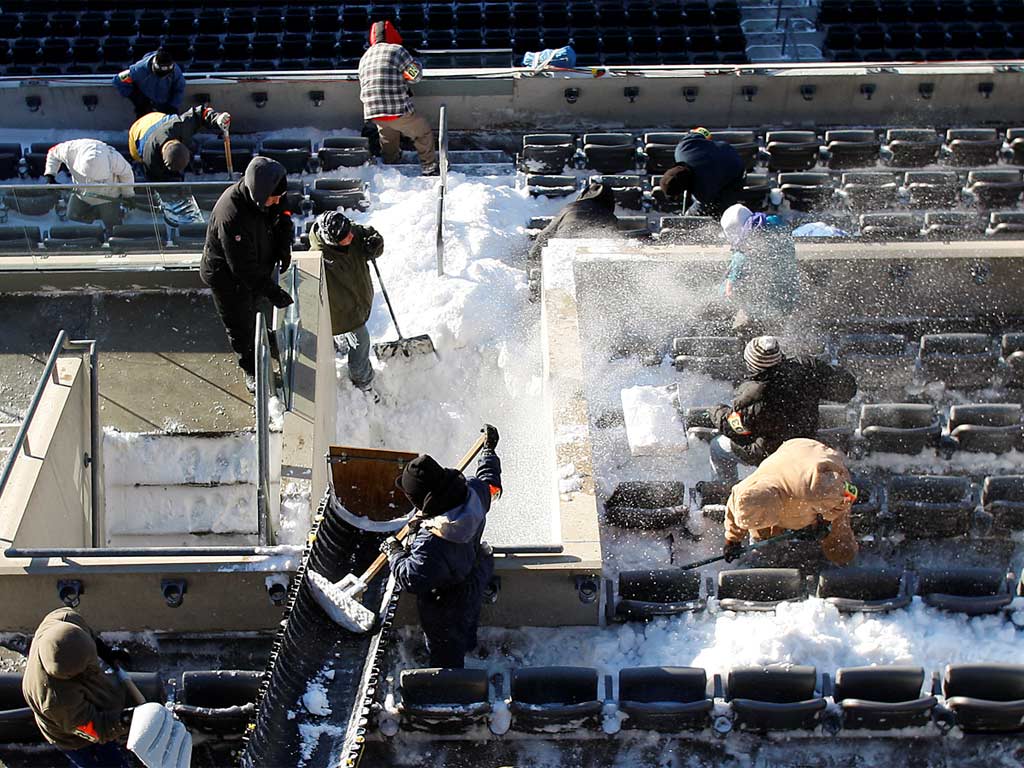
    Workers at Lincoln Financial Field clear snow from the upper stands on Dec. 27, 2010, a day after a game against the Vikings was postponed.

    The Vikings were 5-9 and playing out the string behind a quarterback, Joe Webb, who was a converted wide receiver.

    The heavily favored Eagles were 10-4 and had already clinched the NFC East, but needed the win to stay in the hunt for a first-round playoff bye. They wouldn’t get it.

    Owens, a seventh-round draft pick out of Georgia who had spent the season on the practice squad, was helping to fill in on the front seven for rookie Brandon Graham, who had torn his ACL and meniscus two weeks prior.

    While the snow subsided, the temperatures remained frigid. Cold winters were somewhat foreign to Owens, who spent his childhood in the Fort Lauderdale, Fla., area and played college football in the SEC. Now 39, Owens thinks the weather played a massive role in his injury.

    “I’m trying to warm up, get in the hot tub before the game and all that; we got the benches warm … and it’s a big difference when you’re trying to go full speed, 100 miles per hour in that kind of weather and stopping on a dime. My body just wasn’t used to it,” Owens said.

    Late in the third quarter, Owens fell backward while trying to chase Webb out of the pocket. He remained down and immobile for minutes before being carted off the field. He was placed on injured reserve the next morning, with a ruptured left patellar tendon. The injury itself was devastating for Owens, but the injury’s timing made the situation worse.

    “You don’t have surgery till January/February, and the expectation is you’re not going to be ready to play when training camp comes back,” Owens said. “Then when I came back … that first day, I didn’t pass my physical because I wasn’t ready.”
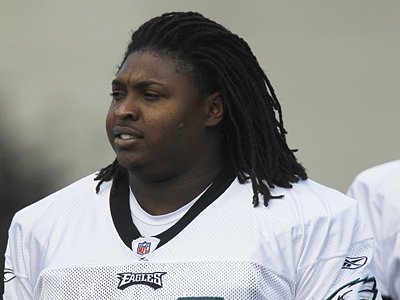
    Jeff Owens was promoted to the Eagles’ active roster in December 2010.

    To add insult to literal injury, the Eagles lost the game, 24-14. They didn’t win again that season, falling to the Green Bay Packers 12 days later in what became the final playoff game of the Andy Reid era.

    There was more working against Owens after the injury. An NFL lockout spanning from late March to late July 2011 prevented him from entering the team facility to rehab. Once it finally opened back up following the signing of the collective bargaining agreement, the Eagles didn’t have the patience to wait for Owens’ return and released him on the first day of training camp.

    “Maybe if I was a third-rounder, second-rounder, I would’ve had more leeway, but I was a seventh-rounder,” Owens said.

    Before entering the NFL, the Plantation (Fla.) High School alumnus had surgeries on both knees. Despite a successful career at Georgia, his medical record likely played a role in a draft slide. Owens believed he would be picked earlier, and was told on draft weekend that the Kansas City Chiefs considered drafting him in the third round, as did the Chicago Bears in the fifth round. Neither materialized.
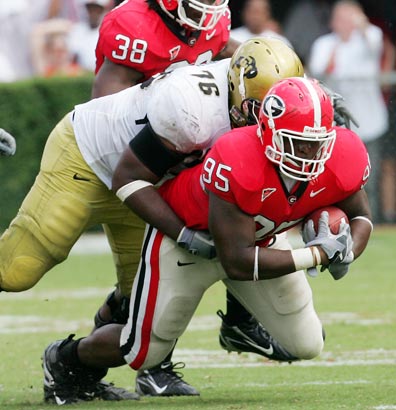
    Jeff Owens (95, intercepting a pass against Colorado) was a decorated defensive lineman at Georgia but was burdened by his medical history.

    The injury also was his biggest reason for hanging up the cleats after getting released by the Eagles.

    “I could have tried to fight to come back, but I already had my degree from Georgia, so it’s like, ‘Might as well start working,’” Owens said.

    But work didn’t take the former Eagle far from football. Owens quickly landed a job as an assistant coach at West Forsyth (Ga.) High School. Fifteen years later, he still works in coaching and is now the defensive line coach at NAIA Campbellsville University in Kentucky. What’s kept Owens in the profession so long is the impact he’s had on his players.

    “Taking a kid who really didn’t have a direction, then see the kid graduate, see the kid become a husband, see the kid become a dad, and then years later, I have guys I’ve coached … [who] reach back out,” Owens said. “So that’s what’s impactful, is knowing that it doesn’t go in vain.”
  • Cups of coffee: Ron Fazio played one game for the Eagles, then became the Toxic Avenger

    Cups of coffee: Ron Fazio played one game for the Eagles, then became the Toxic Avenger

    Inspired by Pro Football Reference’s “Cups of Coffee” database, The Inquirer identified more than two dozen living players who appeared in just one NFL game — and played that game as an Eagle. We’re seeking to tell some of those stories in our semiregular Cups of Coffee series.

    Ron Fazio was working at a racquetball club and serving as a substitute teacher in Willingboro in 1987, trying to make ends meet and decide what to do with his future. The New Jersey native certainly didn’t think it would include suiting up in the NFL.

    Fazio had been in training camp with the Cowboys and Eagles, but the former University of Maryland tight end had not made an active roster in three attempts. While with Dallas in the summer of ’85, he suffered a hand injury that erased any chance he had to make the team. Fazio was connected with the Eagles a year later, when the athletic director of the Willingboro School District where he worked called Eagles general manager Harry Gamble as a favor to him.

    Gamble invited Fazio to a team workout, where he got to catch passes from Randall Cunningham and Ron Jaworski, while working alongside Mike Quick and John Spagnola. Fazio was invited to training camp and got cut again, but he remembered that experience fondly.

    “They didn’t treat me like a rookie. They treated me like a free agent, so it was kind of cool,” Fazio said.

    His return to the NFL didn’t include similar sentiments from his would-be teammates.

    Eagles GM Harry Gamble gave Ron Fazio his chance to suit up in the NFL.

    When Gamble called in the fall of 1987 to see if Fazio was interested in playing for the replacement team amid the NFL player strike, his employers at the racquetball club — Jaworski, Quick, Spagnola, and former Eagle Joe Pisarcik — were not pleased by the prospect. Spagnola, the Eagles’ union rep and starting tight end, took Fazio aside.

    “He goes, ‘You shouldn’t do this. You shouldn’t cross the picket line.’ And I said, ‘It’s an opportunity.’ I said, ‘You have every right to strike; I have every right to try to play.’”

    Fazio promptly was fired from his day job. The general public supported his stint in the NFL about as much.

    “You know that a lot of the unions are upset that there’s these replacement players and … you just kind of knew that things [were] probably gonna get nasty,” he said.

    Growing up just a half hour from Veterans Stadium, the Oct. 4, 1987, game against the Chicago Bears should have been a true homecoming for Fazio. It was the Eagles’ only home game during the strike. But Fazio specifically told his family not to attend, out of concerns for their safety.

    The controversy surrounding the game also necessitated significant logistical planning. The team was well-aware of the many pro-union protests planned to block anyone from entering Veterans Stadium. So the team buses arrived at the stadium at 5 a.m.

    “That was unheard of,” Fazio said. “It was crazy.”

    The game day environment ended up being tense, including for the 4,000 fans who showed up to one of the least-attended NFL games on record. Well before kickoff, unions coordinated the presence of trucks and tractor-trailers surrounding the perimeter of the Vet. Many of the fans who persisted were met by hostility from protesters.

    “They had it very well-planned, and they were just circling the streets,” Fazio said.

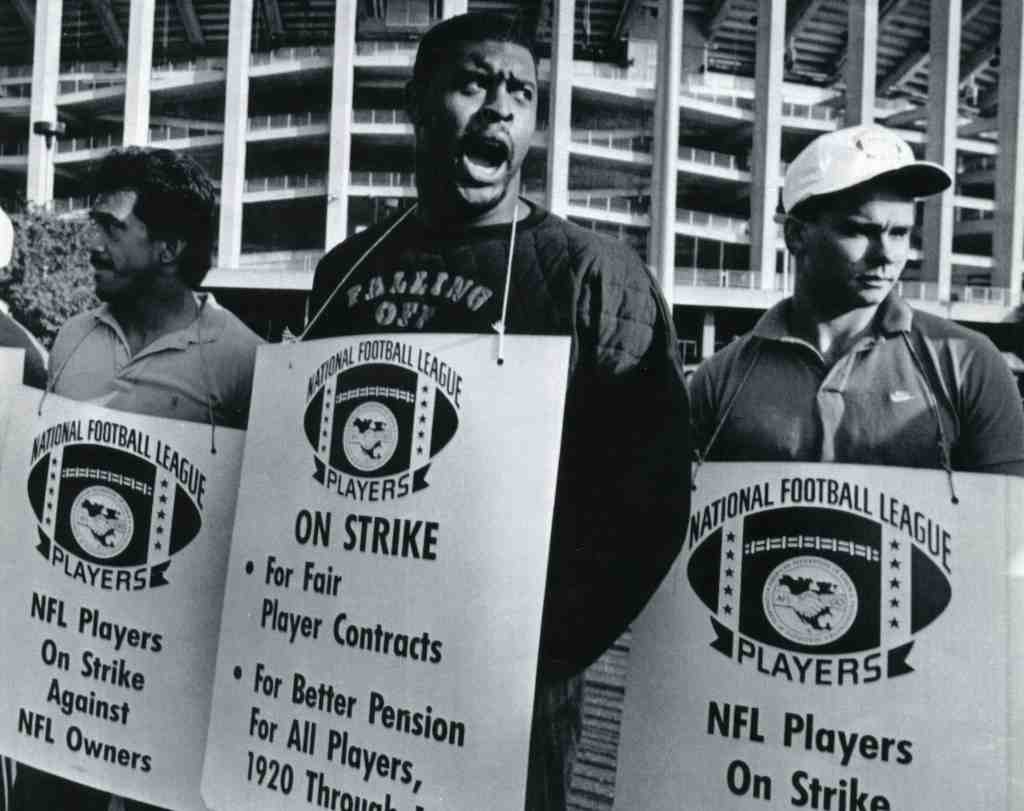
    Picketing Eagles Junior Tautalatasi (left), Reggie White, and Brad Booth blocked the entrance to the Vet in 1987.United Press International

    Inside the stadium, Fazio earned his first and only game appearance as an Eagle. He played on the kickoff return team and was even on the field for a few offensive sets. While he didn’t see much time, getting a chance to play was extremely meaningful to him.

    “It’s kind of cool, and I’m thinking, ‘That’s my pride and joy,’” said Fazio, whose NFL whirlwind came to an end just weeks later when the strike was settled.

    As he sought a new career, Fazio bizarrely ended up starring in a sequel to a cult classic low-budget movie less than two years after his football career ended. He’d been working as a bouncer in New York City when a coworker signed up to be an extra in The Toxic Avenger, Part II. Out of curiosity, Fazio joined her. On the first day of filming, Fazio was asked to stay behind.

    “Because I was 6-3, 6-4, 240 [pounds] at the time, they said they wanted to see if I could be the Toxic Avenger second-string guy, and I was like, ‘Oh, sounds great,’” Fazio said.

    Fazio was hired primarily as the stuntman, while John Altamura was set to reprise his role as the lead. But the producers quickly grew tired of Altamura and his attitude toward those on set. So they got rid of him, and Fazio became the replacement Toxic Avenger. He’d never held an acting job and hadn’t acted in school — or ever. The way he got the gig was awfully similar to the way he made it to the NFL.

    “When they came to me, I was like, ‘Oh, thank you. Yes of course I would do this. This is great. I’ll step right in and do whatever you need me to do,’” Fazio said.

    The promotion also came with a significant pay raise, from $50 a day as an extra … to $70.

    “They kind of had [me] by the good ones there … it’s like, ‘If you don’t want to do it, we’ll get someone else,’” Fazio said.

    What nobody knew at the time was that Fazio actually would star in two movies. Once filming wrapped, the producers realized they had overshot significantly. They decided to use the extra footage to create The Toxic Avenger Part III, which was released at the same time.

    Neither film came close to the success of the original. And while they have provided Fazio the opportunity to sign autographs at conventions to this day, he couldn’t land much more acting work.

    Ever since, Fazio has lived a life more removed from the spotlight. After a hospital visit, he was inspired to work in the medical field and has worked as a cardiovascular physician assistant for the past 36 years.

    “You help people, that’s the bottom line,” Fazio said. “That’s what I like about it.”

  • Dick Allen documentary tour makes a stop in Philly, telling ‘a great story that nobody’s told’

    Dick Allen documentary tour makes a stop in Philly, telling ‘a great story that nobody’s told’

    When production started for My Father, Dick Allen, it was supposed to be a one-hour documentary on the former Phillies star. Four years later, it’s a five-part series, featuring interviews with sportswriters, Allen’s loved ones, and former coaches and players.

    The cast is loaded with Hall of Famers, including Mike Schmidt, Goose Gossage, and Andre Dawson. For co-executive producer Sharon Pannozzo, the biggest surprise was seeing just how enthusiastic everyone they asked was to participate.

    “Not one person batted an eye and said, ‘Well, I can’t do that. You know, I don’t have time’. Everybody made time,” she said.

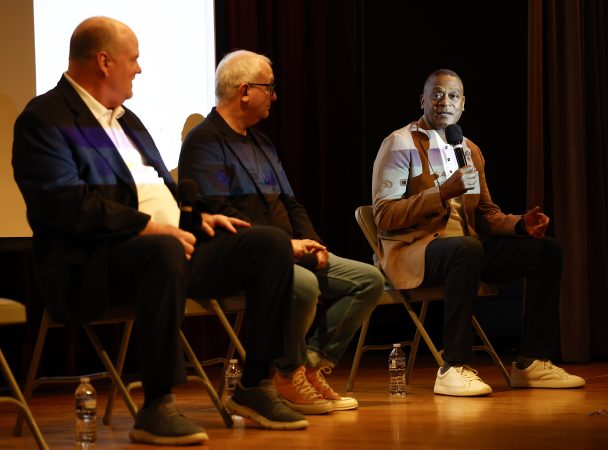
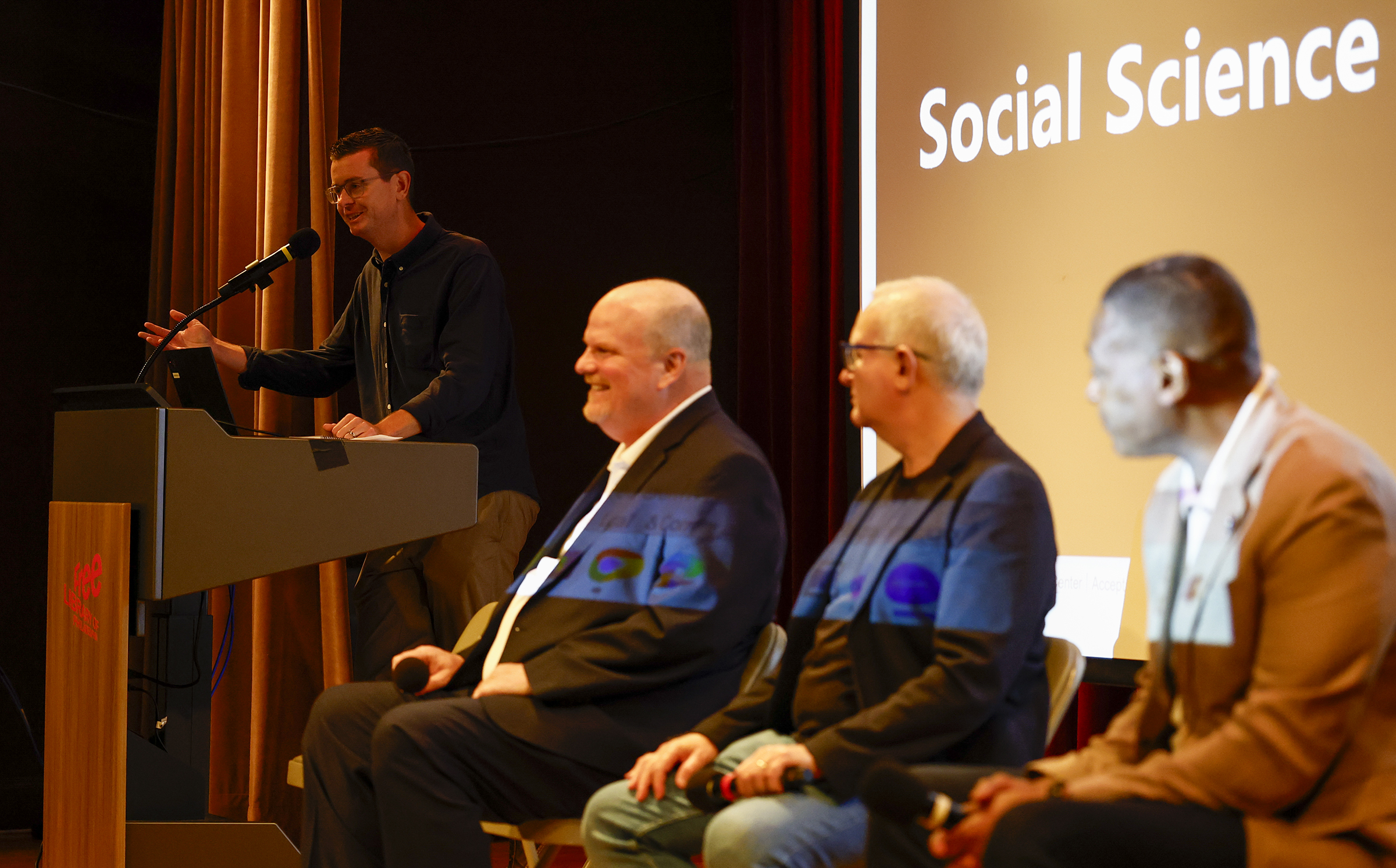
    Over the past few months, the documentary’s production team has put on screening events across the U.S., as they look to find a partner to license the series. On Thursday night, they stopped in Philadelphia, where Allen played nine of his 15 seasons. Fans were given the chance to see the third episode of the series, which focuses on Allen’s first stint with the Phillies from 1963-69. Following the screening was a panel moderated by The Inquirer’s Matt Breen. The participants included director Andy Billman, graphic designer Todd Radom, Allen superfan and co-producer Andy Wooley, and Allen’s son, Richard Jr.

    “Being here is like being at home,” said Allen Jr., known affectionately by his dad as Doobie. “I’ve grown up seeing that Phillies P and the Phillies logo my entire life.”

    Allen Jr. also serves as a producer for the series. Well before filming even started, one of his greatest passions in life was preserving his father’s legacy. For decades, Allen Jr. advocated for his father’s induction into the Baseball Hall of Fame. Allen died in 2020 at 78.

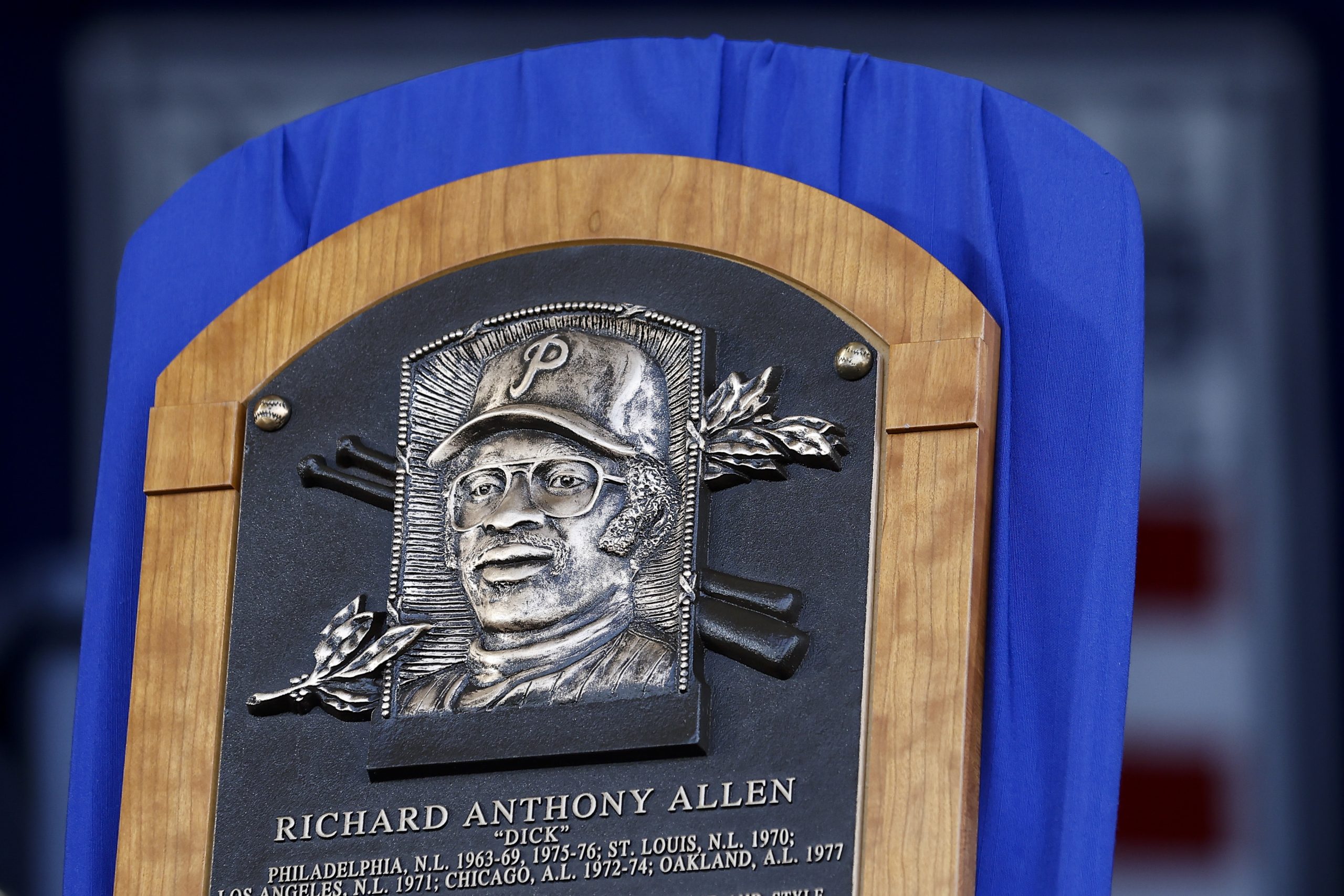
    Dick Allen finally got into the Baseball Hall of Fame in July of 2025, almost 50 years after he stopped playing. Monica Herndon / Staff Photographer

    Allen, who hit 351 career home runs, fell off the ballot in 1997 but was brought up for consideration by the Veterans Committee in 2014. He fell short by just one vote. Allen was brought up again in 2021 but also came up short. Last summer, he finally got into Cooperstown after 20 attempts, receiving 13 of 16 votes from the Classic Era Committee.

    “You can work on a film in the film business for years sometimes, and then all of a sudden it comes together,” said Pannozzo. “We would’ve told the story whether Dick got into the Hall of Fame last year or not … but we had a good ending.”

    When Allen was inducted last summer, Pannozzo and Allen Jr. were given a tour of the Hall of Fame storage vault. The artifact that stuck with Allen the most was a questionnaire his father had filled out at 18 years old, right after he started playing for the Class D Elmira Pioneers. Allen was deeply moved by that piece of paper.

    “My whole life, [baseball was] all he talked about, and I thought, OK, OK, OK, and then I get there, and it’s like, ‘Oh my gosh, he really wasn’t lying,’” Allen Jr. said.

    Another meaningful experience for Doobie was visiting Little Rock, Ark., where his father had played for the triple-A Travelers in 1963. It was that year that the Phillies moved their affiliate from Buffalo to the South. Allen had previously never been to the South and begged the organization to assign him elsewhere, but he didn’t have a choice.

    Inquirer sports reporter Matt Breen (left) moderates a discussion on the life and legacy of Phillies legend and Hall of Fame baseball player Dick Allen in the Montgomery Auditorium at the Parkway Central Library on Thursday.Yong Kim / Staff Photographer

    Allen became the first professional Black baseball player in the city of Little Rock, and it was a brutal year for him. Fans shouted slurs his way at the ballpark, in the parking lot, and throughout the city. Little Rock was also segregated, meaning that Allen was isolated from his teammates except when at the ballpark. He refused to return to the city with any of his kids.

    But the documentary dedicated a whole episode to the horrors Allen faced during his time in Arkansas. When Allen Jr. explored the city for the first time, however, he wasn’t doing it alone. Hall of Fame pitcher Ferguson Jenkins, who also played for the Travelers, volunteered to go through the city with Doobie. Jenkins was very close friends with Allen and overlapped in Little Rock with him briefly in 1963.

    “[He] pretty much substituted for my father, going to the high school, you know, and Little Rock … that would be my favorite part,” Allen Jr. said.

    At this point, the team does not have a deal lined up with a distributor for the film. But they know how important it is to be able to tell the story of Dick Allen to a younger generation of fans who did not see him play.

    “This is a great story that nobody’s told,” said Pannozzo. “Now we have to sell our project.”

  • Cups of Coffee: Quarterback Marty Horn remembers his single NFL game… when he suited up for the Eagles

    Cups of Coffee: Quarterback Marty Horn remembers his single NFL game… when he suited up for the Eagles

    Inspired by Pro Football Reference’s “Cups of Coffee” database, The Inquirer identified more than two-dozen living players who appeared in just one NFL game — and played that game as an Eagle. We’re seeking to tell some of those stories in our semi-regular Cups of Coffee series.


    Marty Horn stayed ready.

    After four record-setting seasons as Lehigh’s quarterback, Horn had his sights set on the NFL. The North Jersey native was brought to training camp twice by his hometown New York Jets, but didn’t make the roster in 1986 or 1987.

    Horn kept training, hoping for another opportunity in the NFL, which was essentially the only game in town. The USFL had just folded, leaving a massive void in secondary football leagues until NFL Europe debuted three years later in 1989.

    “No one really had anywhere to go,” Horn remembers.

    Soon after, the league’s largest-ever labor dispute gave him his big break. The NFL Players’ Association (NFLPA) went on strike after Week 2 of the 1987 NFL season, protesting the absence of free agency for players. Five years prior, the union went on strike for improved revenue sharing, and seven games were wiped out. This time, team owners played hardball. As rumblings of a potential strike grew louder, it became clear that the NFL’s full slate of games would be played, regardless of who was playing in them.

    It was against that backdrop that Horn’s phone rang. On the other end was Eagles general manager Harry Gamble, who was familiar with Horn because of his time coaching Lafayette, Lehigh’s bitter rival. It all happened in an instant. Days after Week 2’s conclusion, hundreds of retired NFLers, ex-training camp signees, CFL players, and former college standouts had jobs in the league. Just over a week later, they took the field.

    The roster turnover the league experienced was completely unprecedented. Approximately 15% of the union’s players decided to suit up through the strike. Two teams didn’t have any players cross the picket line — one of which was the Eagles.

    Marty Horn’s impression of then-Eagles coach Buddy Ryan remains ingrained in his memory. Jerry Lodriguss / Staff Photographer

    On Horn’s first day on the job in South Philadelphia, he entered a locker room with 44 players just as new to the team as he was.

    “It was kind of fun getting to know all of these guys,” said Horn. “There were all different walks of football life. It was pretty cool.”

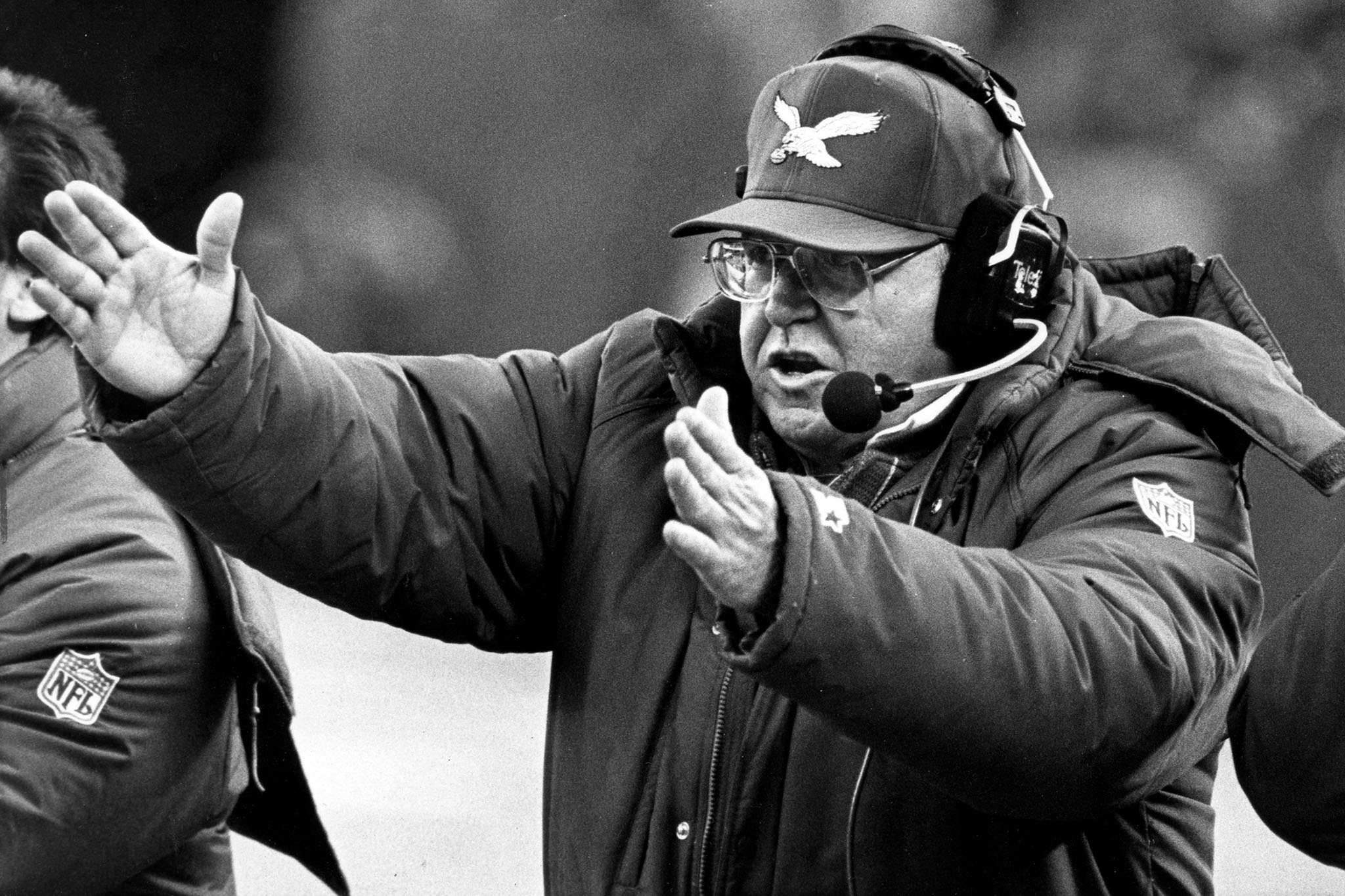
    But what Horn remembers most from his first day is the presence of head coach Buddy Ryan… or rather the lack thereof.

    “He didn’t even coach us for the first two weeks. He said, ‘We’re not going to play a game; you guys aren’t going to play a game,’ so he didn’t coach us. And then when we got to game week and the team said we’re going to play the game, he was like, ‘Oh, you know what, we better start coaching these guys.’”

    Across the Eagles’ three “replacement” games, only their first, a matchup with the Mike Ditka-led Chicago Bears, took place in Philadelphia. To describe the level of fan excitement as apathetic would be generous. While nearly every team saw a dip in attendance, nowhere saw one more dramatic than Philadelphia. The NFL averaged over 17,000 fans during week one of the strike games, but just over 4,000 fans entered the Veterans Stadium gates to see the Bears dominate the replacement Eagles 35-3. Horn believes that the biggest factor in the low attendance was Philadelphia’s identity as a union town, which he got a good look at when observing the scene outside of Veterans Stadium on gameday.

    Picketing Eagles (from left) Junior Tautalatasi, Reggie White, and Brad Booth blocked the entrance to the Vet in 1987.United Press International

    “It was crazy, you know. They circled the stadium with truckers’ unions and all that, and made it really difficult for people to get in,” said Horn. “We had to switch hotels in the middle of the night because they were going to block the buses from going in.”

    As Horn arrived to practice the day following the loss, he noticed a shift in Ryan’s attitude toward the team. As the players gathered in the locker room, they realized that none of them had received their game checks. Once Ryan caught wind of the situation, he issued the team stern instructions.

    “He was like, ”Don’t set foot on that field until you get your paychecks.’”

    Once Ryan told management why practice had yet to begin, the paychecks suddenly materialized.

    “It was funny because Buddy Ryan was such a players’ guy, and once he realized we had to play the games, [his] player-coach mentality took over.”

    Regardless of how hard the Eagles practiced, their next game against Dallas would be an extreme challenge. The difference between the two weeks was night and day; Dallas had 21 players cross the picket line, including four Pro Bowlers. In Irving, things were business as usual, and over 40,000 fans made their way to Texas Stadium to see the Cowboys play the Eagles.

    As expected, the Cowboys cruised to a relatively stress-free win. But the lopsided 41-22 score provided Horn the opportunity to make his NFL debut. With 6:51 left in the fourth quarter, it was the North Jersey native jogging in from the sideline, which signaled an informal concession by the Eagles. Dallas didn’t get the memo and kept all of their starters in.

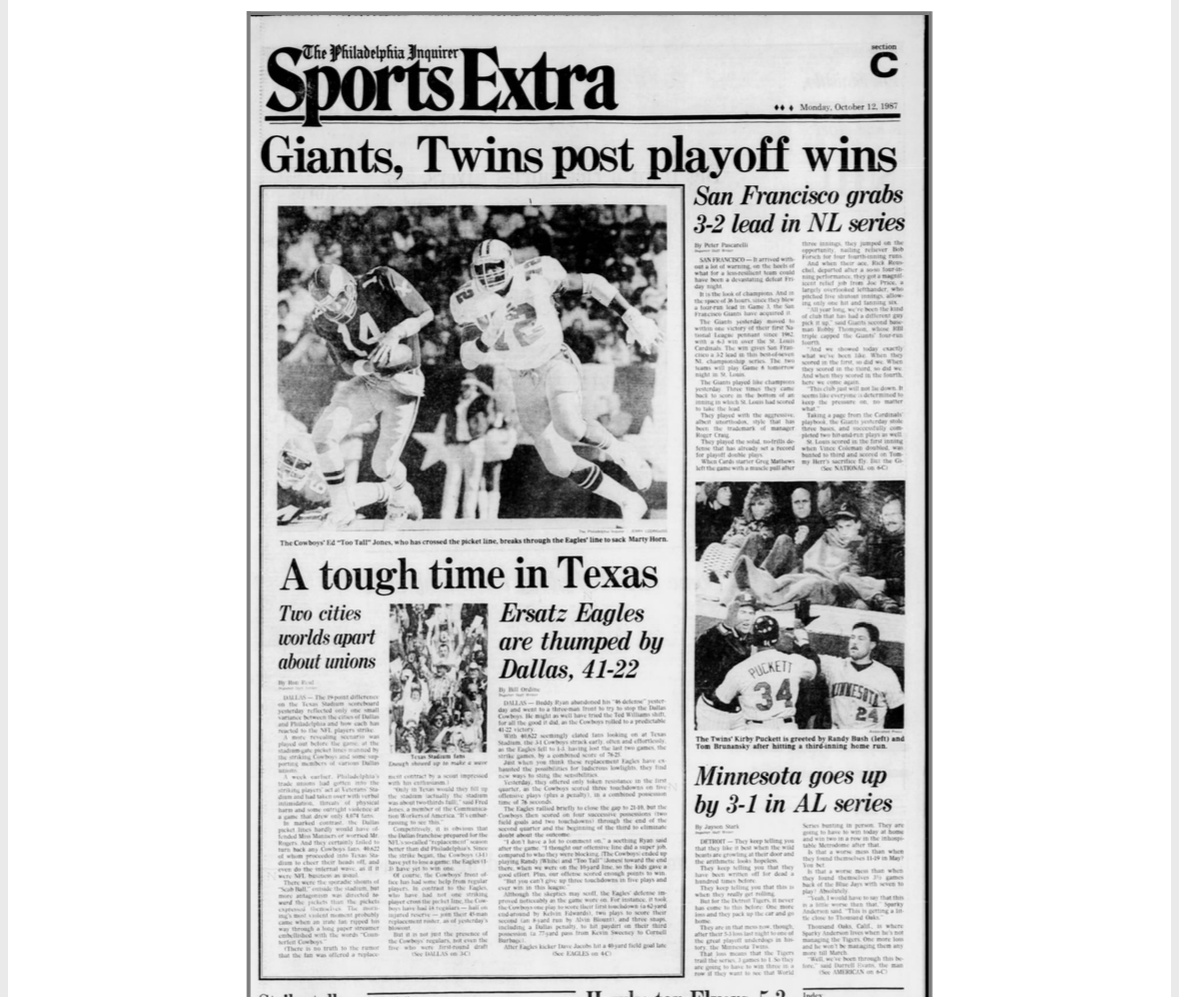
    “I found that a couple of years ago … there is a picture of me getting sacked by Too Tall Jones. That was my claim to fame,” joked Horn, who was featured on the front page of The Inquirer’s Monday sports section.

    Marty Horn’s sack by Ed “Too Tall” Jones late in the Cowboys game was immortalized forever in The Inquirer.Inquirer Staff Photographers

    Jones, who stood 6 foot 9, made three Pro Bowl teams and totaled 106 sacks across a 15-year career.

    Besides getting to play against Dallas, one of Horn’s favorite memories from his month as an Eagle was practicing with the non-replacement team. The league and the NFLPA came to an agreement before the next scheduled game against the Green Bay Packers, but the replacement players were kept around as it was too late for the union’s players to get into game shape and play that Sunday.

    As the “real Eagles” began to arrive back to the facility, their biggest objective was to help their replacements win a game that held the same importance as any other.

    The Birds ended up losing that game in overtime, 16-10, and it spelled the end of the road for Horn and nearly 1,000 other replacement players across the NFL. Looking back on his experience, Horn couldn’t have enjoyed the five weeks more.

    “They bused us into practice every day, and you know, we just partied at night and hung out with the guys, and people didn’t really care,” Horn said. “We were just young football players having a good time.”

    His biggest regret? Not taking his jersey.

    “At the end of the game, you all throw your dirty uniforms in a pile… and the equipment guy came in, and he was like, ‘If anyone steals their jersey, if it’s not in this pile, we’re gonna dock your paycheck $350 bucks,’” Horn recalled. “I should’ve kept my jersey, but I didn’t.”

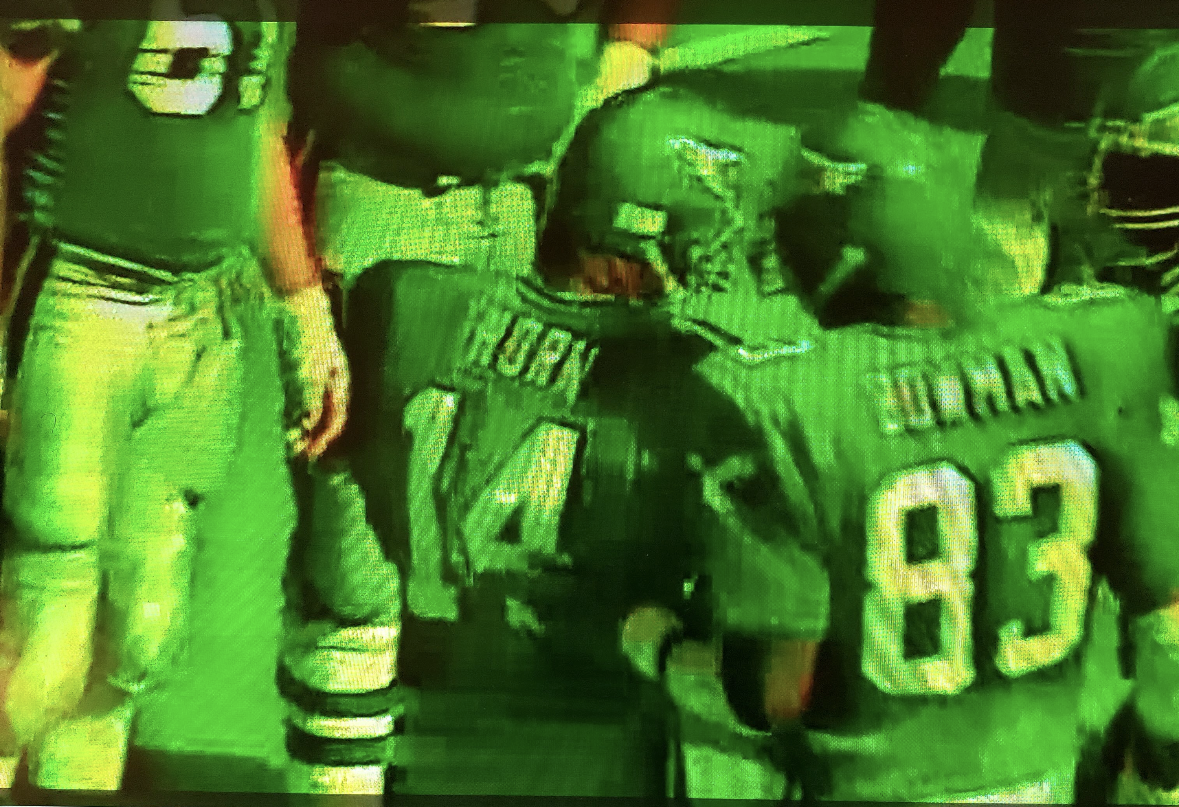
    Marty Horn’s (14) cup of coffee as an Eagles quarterback lives on in the game footage he keeps on his computer of the 1987 meeting with the Cowboys.provided by Marty Horn

    Following his playing career, the former Eagle picked up work in a variety of fields. Primarily, he returned to his family’s restaurant business in North Jersey, eventually owning the two properties alongside his brothers Don, Peter, and Jimmy.

    On the NFL side, Horn has remained a fan of the Eagles long past his playing days. In addition to playing for the Birds, Marty’s son, Shane, attended Alabama, and he enjoys rooting for Jalen Hurts, DeVonta Smith, and the team’s other ‘Bama alums.

    Horn also had a reunion with his alma mater, Lehigh, serving as the football color commentator for 20 years. But the broadcast side wasn’t the only connection the Millburn High School alum maintained to football. Horn worked as an assistant coach at Madison High School for 20 years before stepping away after the 2025 season. Horn always enjoyed seeing the reactions of his players who found out he made it to the league.

    “Every once in a while they’d come in when they do a Google search on [my] name, and they were like, ‘Coach, I didn’t realize you played in the NFL.’ And I said, ‘Well, you know, I played during the strike. I never made an active roster,’” recalled Horn. “But they got a kick out of that. It gives me a little more street cred.”

  • Angels trade former Phillies prospect Logan O’Hoppe to Rangers

    Angels trade former Phillies prospect Logan O’Hoppe to Rangers

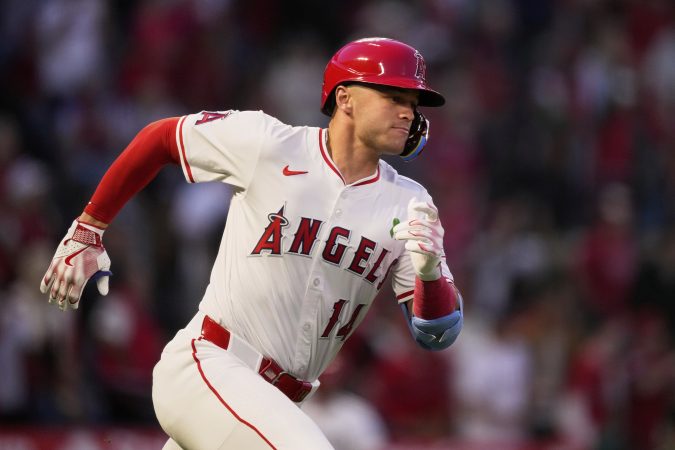
    Former Phillies catching prospect Logan O’Hoppe was traded by the Los Angeles Angels to the Texas Rangers on Wednesday along with reliever Chase Silseth for third base prospect Angel Arredondo.

    The Angels acquired O’Hoppe, 26, from the Phillies in exchange for outfielder Brandon Marsh just before the 2022 trade deadline. At the time, O’Hoppe was the Phillies’ fifth-ranked organizational prospect. Marsh was named a starter in his first All-Star Game appearance earlier this month.

    O’Hoppe had his best season with Los Angeles in 2024, when he hit 20 home runs and had a career-high 2.7 wins above replacement. He is batting .209 with a .565 OPS in 256 plate appearances this season.

    Out of the 20 catchers with 250 plate appearances, O’Hoppe ranks 18th in on-base percentage, 19th in batting average, and tied for last in home runs. Texas plans to option him to triple A, according to the Dallas Morning News.

    Silseth, 26, was an 11th-round pick by the Angels in 2021 and is having a breakout season. He led the Angels with 47 appearances and had a 2.72 ERA.

    Arredondo is a 19-year-old third baseman who has spent all of 2026 with single-A Hickory. He is slashing .247/.372/.397 in 361 plate appearances. Arredondo wasn’t ranked among Texas’s top 30 prospects, per MLB.com, although pipeline rankings have not been updated since the start of the season.

  • LeBron James has been working out with Tyrese Maxey for years. Is this their first time as teammates?

    LeBron James has been working out with Tyrese Maxey for years. Is this their first time as teammates?

    LeBron James isn’t waiting to get to work with his new teammates.

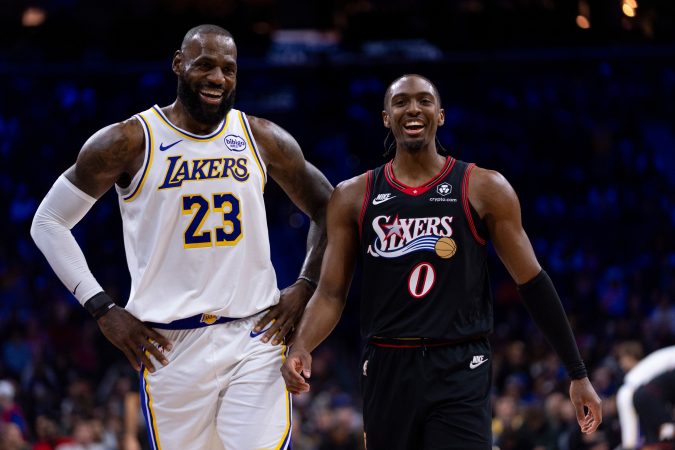
    On Monday morning, basketball trainer Chris Johnson posted a slideshow of James and Tyrese Maxey working out together, which appears to be from a recent session.

    On Friday, it was announced that James would be signing a $4 million contract with the Sixers for this season, with a player option for the next. The move was officially announced by the Sixers on Monday.

    While James and Maxey will get to share the court this upcoming season, the two have a well-documented relationship off the court. The Kentucky alum is represented by Rich Paul, a longtime friend of James who built the Klutch Sports agency with LeBron as his very first client. Since getting drafted in 2020, Maxey and James have worked out together on many occasions.

    James has also thrown significant praise the 25-year-old’s way.

    “Every morning, 5 a.m., we’re in the gym, 5:30, whatever, in the gym. And you just see his dedication,” James said in January on the Mind the Game podcast, which he hosts alongside two-time MVP Steve Nash. “Shows up on time, on target, every single day. A guy who just loves the game and is taking full advantage of the opportunity in Philly.”

    There are plenty of reasons to believe that Maxey’s presence was a large factor in James signing in Philadelphia. At the onset of free agency, Paul sat with Max Kellerman on their Game Over podcast to break down James’ prospective landing spots across a whiteboard. With little information available, many fans heavily parsed every detail of the whiteboard for potential clues.

    What stood out most was that Tyrese Maxey was the only player to have a star next to his name.

    Maxey’s actions proved that James’ supposed desire to team up with the two-time All-Star was not one-sided. ESPN’s Shams Charania reported that Maxey and Joel Embiid were both instrumental in recruiting James.

    Following the signing, Maxey took to TikTok to express his excitement. “I’m like Coach Cal,” the caption read, referring to longtime college head coach John Calipari, who recruited Maxey to Kentucky.