Author: Marcus Hayes

  • The PGA Tour finally got the FedEx Cup playoffs right, just in time to ruin them. It’s an impossible product to sell.

    The PGA Tour finally got the FedEx Cup playoffs right, just in time to ruin them. It’s an impossible product to sell.

    It was a historic Sunday afternoon at Atlanta’s East Lake Golf Club in the penultimate Tour Championship in its present form, which begged the question: Why change?

    With the exception of contrived, boorish, international gimmickry, golf will never be relevant after majors season ends. With apologies to the British Open, golf’s not particularly relevant after Father’s Day and the final round of the U.S. Open. This was proved again last weekend when everything was up for grabs: golf’s biggest money, its MVP trophy, a Tiger record, all swirling around the game’s biggest star.

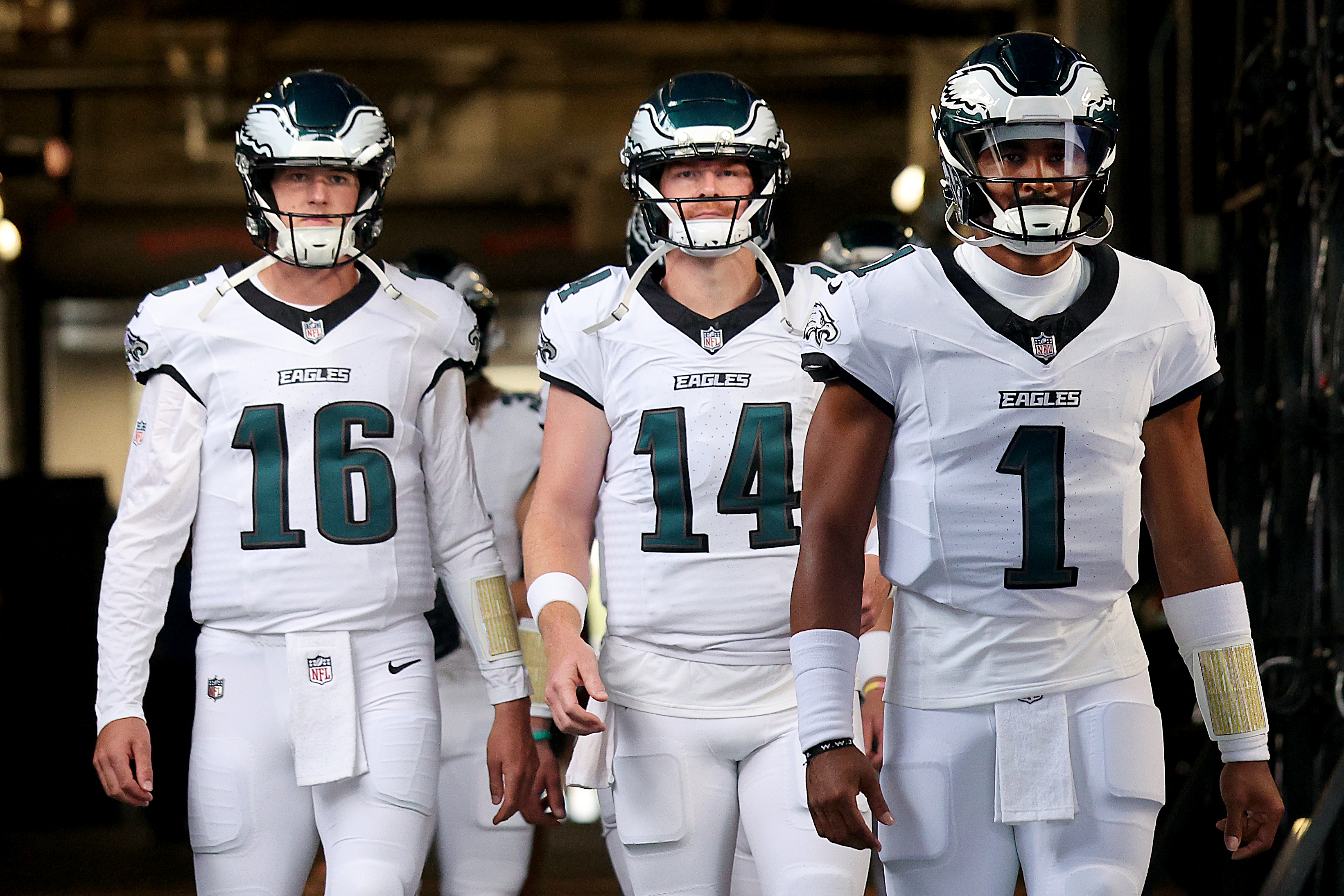
    And all most sports fans cared about was if Bill Belichick’s lousy college football team would win in Ireland (they did; ugly), how many NFL teams would keep four quarterbacks (four teams did, including the Eagles), whether Aaron Donald would unretire to join Myles Garrett with the Rams (he did; yikes), and if the Brewers and Rays are for real (TBD).

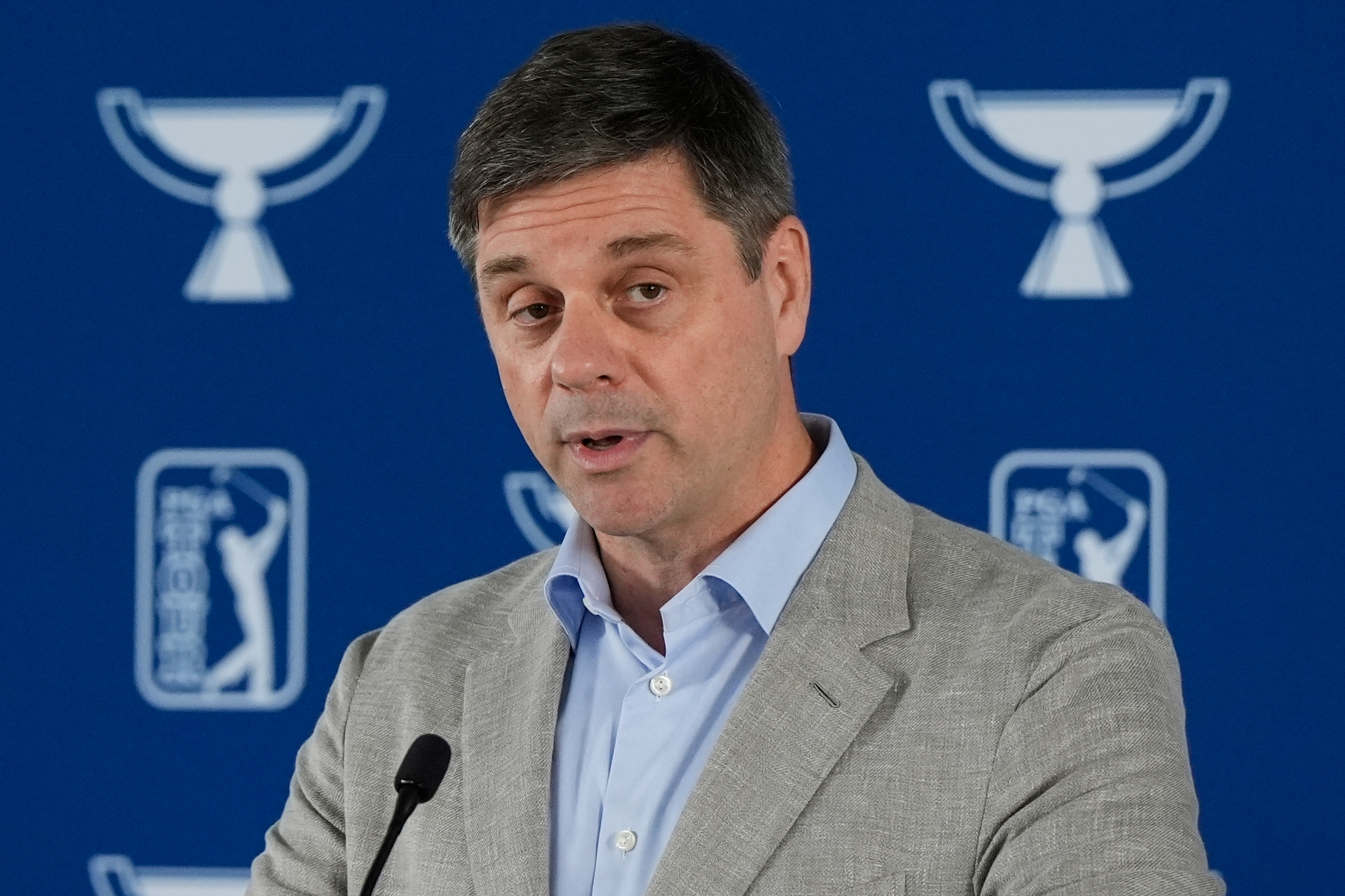
    Meanwhile, golf’s most monied weekend delivered. It was a closed, $40 million tournament with mostly the same old names, but it delivered more drama than any 16-man, single-elimination tournament will deliver when the latest format begins in 2028, the year after FedEx’s deal expires with the Tour.

    This is the brainchild of a panel of existing Tour stars and new PGA Tour CEO Brian Rolapp, the latest attempt of Big Golf to extend interest to compete with MLB’s stretch run, the NCAA’s kickoff frenzy, and the NFL’s annual four months of dominance. Past formats have included cumulative points systems that rendered playoff events (as many as four of them) moot, as well as a system that awarded the best players with pre-tournament handicaps that absurdly skewed the odds of winning the Cup.

    Currently, players compete for FedEx Cup points to determine the field for a playoff tournament for the top 70, which winnows the next field to the top 50, which winnows the next field to the top 30, the winner of which wins the Cup and the $10 million first-place check.

    It is imperfect, but it is simple, and it is elegant.

    Beginning in 2028, a bifurcated series of Tour events will assign qualifying points to determine the top 90 golfers, who will compete in a stroke-play tournament to determine a top 32 in points. That group will compete for a week in round-robin, match-play in pods of four. The two top players from each pod advance to a Sweet 16, single-elimination, match-play tournament to determine a playoff winner.

    The problems:

    1. Match play is boring, even if it winds up at non-traditional venues like Pine Valley or Bandon Dunes. The Ryder Cup is the only exception, but that’s more about jingoism and theater than it is about golf.
    2. Stroke play is a truer test of quality. There’s a very real chance that Min Woo Lee and Viktor Hovland would have been the finalists had the 2028 format been used this year. Yawn.
    3. This year’s tournament absolutely delivered.

    Got it right

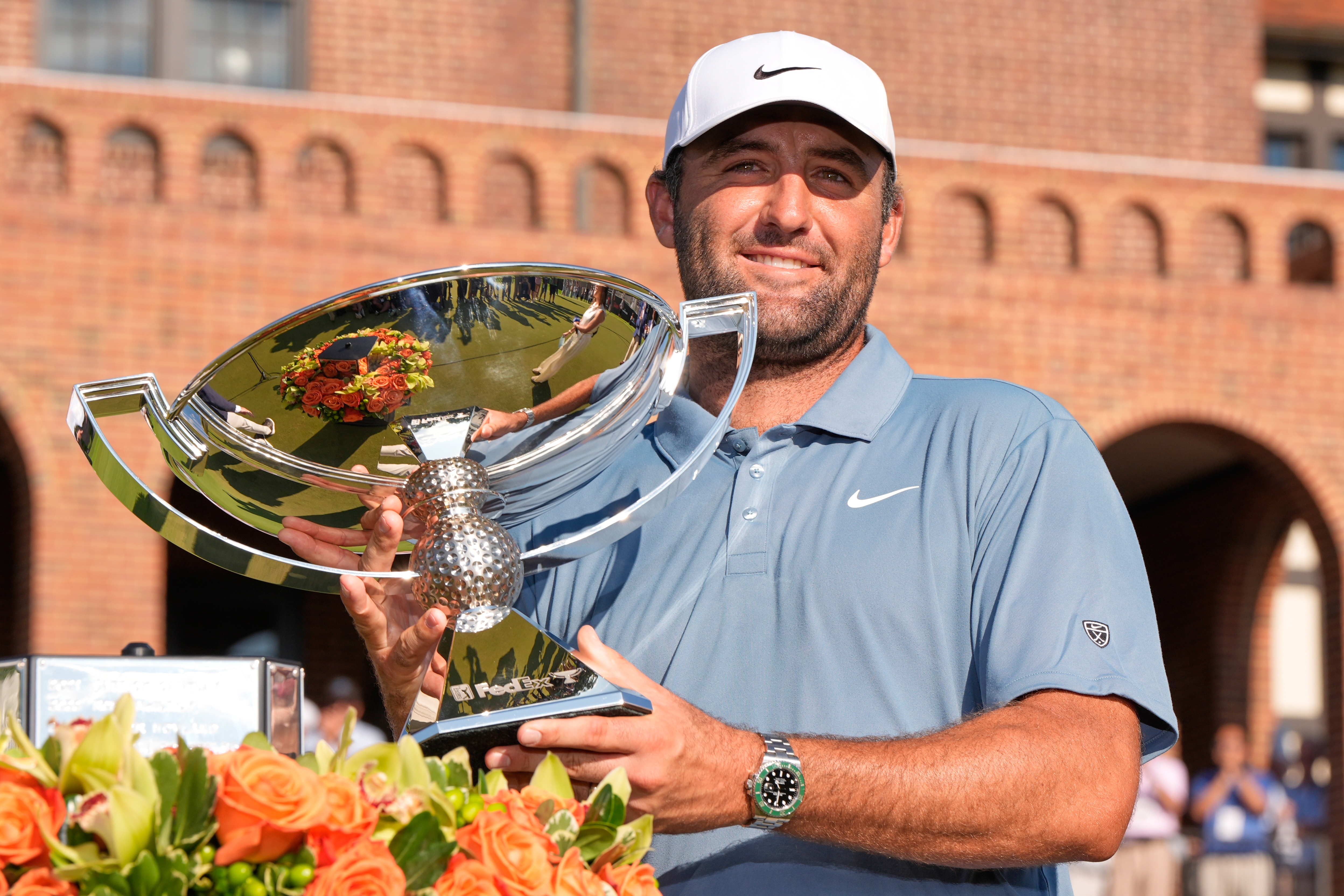
    The best golfer of his generation came from three strokes down for a three-stroke win to claim his second FedEx Cup title and surpass the winnings of the best golfer of any generation.

    Scottie Scheffler passed Tiger Woods and became the all-time leading money winner in PGA Tour history.

    The win, Scheffler’s third of the season, his second of the playoffs, and his 22nd of his career, surely secured his fifth straight Player of the Year award. It will be announced in December, and the five in a row ties him with Tiger. (The award has only existed since 1990, so it postdates Jack and Arnie and Gary Player, but Tiger also won it three times in a row and 11 times overall.)
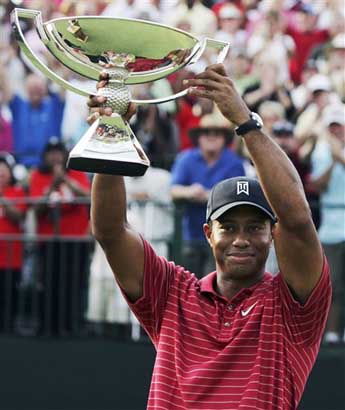
    Tiger Woods, who won the FedEx Cup three times, was the tour’s player of the year 11 times.AP

    Before the 30-man Tour Championship there was, incredibly, some debate over whether Scottie should win it over a handful of other players. This, even though Scheffler had a lead of more than 1,400 points over the next closest Tour Championship qualifier; had won two tournaments; and led the Tour in second-place finishes (five), top-5 finishes (13), scoring average (by nearly three-quarters of a stroke), birdie average, greens in regulation, scrambling, and, with more than $20 million in the bank, had earned more than $6 million more than his closest competitors — Matt Fitzpatrick, Wyndham Clark, and Cameron Young.

    Uphill battle

    At any rate, Scheffler took care of business — a business that he has dominated. Since Official World Golf Rankings began 40 years ago, his 207 weeks at No. 1 are third-most in history, including the last 172 weeks, the third-longest streak in history. He recently ended a streak of 78 consecutive cuts made, sixth-best in history.

    In a world of self-promoting social media wankers, he’s about as interesting as warm skim milk.

    It’s not his fault. In the midst of golf’s most divisive era, Scheffler won’t say anything controversial. In the midst of America’s most heated political climate in 60 years, Scheffler is apolitical. He’s a retiring Christian family man who tries to play the best golf he can every time he plays.
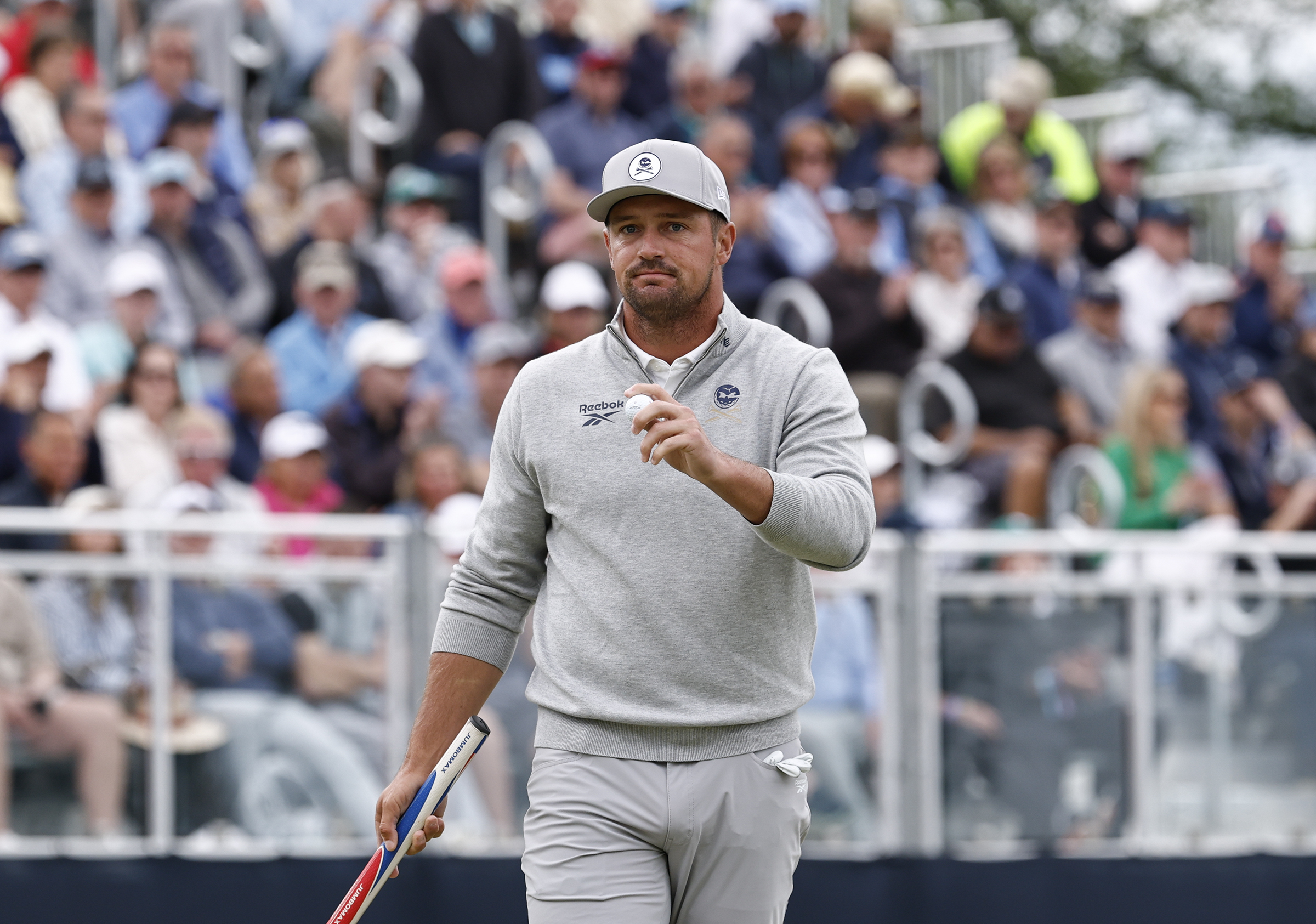
    Bryson DeChambeau is always interesting, no matter how he plays.Yong Kim / Staff Photographer

    He lacks the additive abrasion of Bryson DeChambeau. He lacks the international appeal and frank assessments of Rory McIlroy, a glib Northern Irishman, or Jon Rahm, a prickly Spaniard.

    Exhausted

    More than anything, the Tour’s long, top-heavy schedule is its own worst enemy.

    Its best tournament, the Players Championship, happens in March. Its most beloved tournament, the Masters, happens in April. Its best major tournament, The PGA Championship, now comes in May. Its toughest test, the U.S. Open, is in June. Its oldest and coolest tournament, the British Open, is played in July.

    By August, all but the most rabid golf fans (hand raised) are burned out. Every other year the casuals need the eight weeks between the British and the Ryder Cup to refuel. (We’ll keep ignoring the President’s Cup until it matters.)

    As LIV dies and its prodigals return, the Tour Championship in its present form only would have become better. Now, instead of being virtually assured of having DeChambeau, Rahm, LIV stud Joaquin Niemann playing against Rory and Scottie at East Lake on the final Sunday of the 2028 season, you’re guaranteed to have no more than two of them.

    More than likely, you’ll have none of them.
  • World Series or bust? The surging Phillies should know that answer by the time they leave Arizona.

    World Series or bust? The surging Phillies should know that answer by the time they leave Arizona.

    In October of 2023, the Diamondbacks dashed the Phillies’ dream of winning consecutive pennants.

    In September of 2026, the Diamondbacks will serve as a benchmark as to whether these Phillies even have a chance of achieving what the 2023 Phillies came so close to achieving.

    Hard to believe, Harry.

    A month ago, as the Phillies foundered on the edges of relevance, none of this seemed to matter much. Today, the Phillies have found an identity grounded in smart at-bats, a solid starting rotation, and unexpectedly competent defense. Suddenly, what seemed like a wasted season through four months has transformed into a season of hope and expectations.

    As in, if the Phillies are playing this well now, there’s no reason to think they can’t win their first World Series in 18 years.

    We’ll know better by dinnertime Wednesday.

    The Phillies on Monday night begin a three-game series in Arizona that could determine whether the Phils host a wild-card series in October. The D-backs lead the season series after winning two of three in Philly in April.

    As this series begins, the Diamondbacks hold the final wild-card slot but stand 4½ games behind the Phillies. The Phillies are tied with the Cubs, but the Cubs won six of seven against the Phillies in the April games that exhausted the teams’ head-to-head matchups. Should the Diamondbacks surge and the Cubs stall, there’s a chance this week’s results provide the tiebreaker that gives the Phillies the top wild-card spot, the No. 4 seed in the National League playoffs, and home-field advantage over No. 5 that comes with it.

    Of course, the Phillies can render these scenarios obsolete if they clobber the Diamondbacks, pass the Cubs, and maybe even catch the Braves for the NL East title, in which case tiebreakers won’t matter. But the Braves lead by five games with 25 to play, so that seems a bit much to ask.

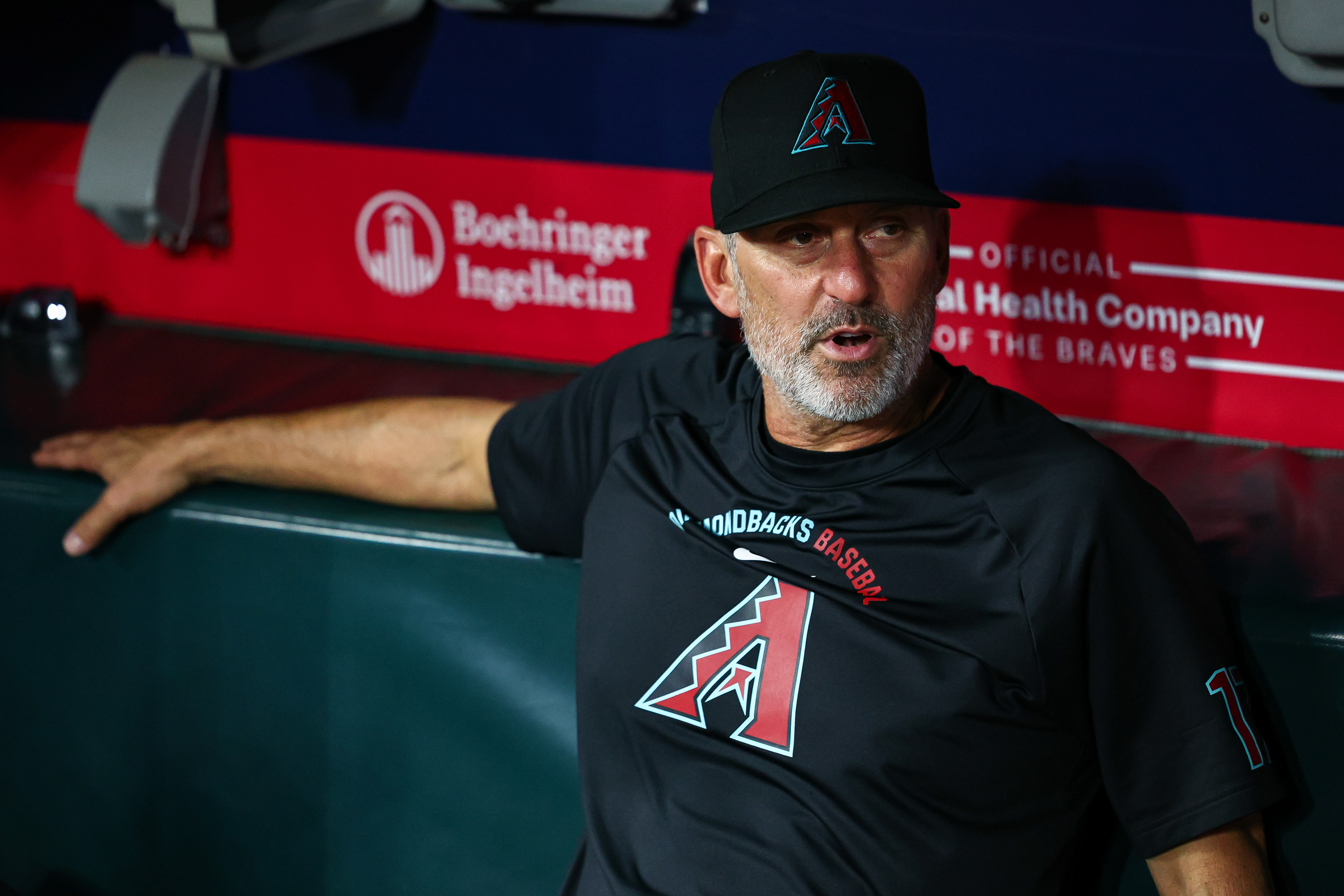
    Manager Torey Lovullo’s Diamondbacks have a half-game lead on the Padres for the third and final wild-card spot going into Monday’s series opener against the Phillies.Colin Hubbard

    For the moment, it’s more important to judge whether the Phillies can play excellent baseball on the road against a team that is 13-8 against them since Game 3 of the 2023 NLCS.

    The magnitude of the lows might skew the emotions, but the lows against the Diamondbacks seem to be lower than most of the other lows this Harper-Wheeler-Schwarber edition of the Phillies has delivered since 2022.

    It begins with that 2023 NLCS, when the Phillies’ bats deserted them and they lost Games 6 and 7 at home. The Phils haven’t won a season series against Arizona since, and their first meeting this season did not portend favorably.

    The Phillies struck out 16 times against the Diamondbacks on April 10, 16 games before the Phillies fired manager Rob Thomson and promoted new bench coach Don Mattingly to interim manager. The 16 Ks remain a season high, part of the 8.8 strikeouts per game that was among baseball’s worst rates.

    Now, though, they’re striking out 2.5 fewer times per game, the second-best rate in baseball. It is the most promising stat of a slew of numbers that indicate that this Phillies team might even be able to topple the Dodgers in the postseason.

    If it’s hard for you to believe, that’s completely understandable. Even in the middle of their recent nine-game winning streak, their longest in four years, the Phillies supplied little real reason to believe they might make another long run into October.

    Shortstop Trea Turner’s Season from Hell continued. The bullpen remained unreliable. And the two best pitchers weren’t the two best pitchers.

    Things change.

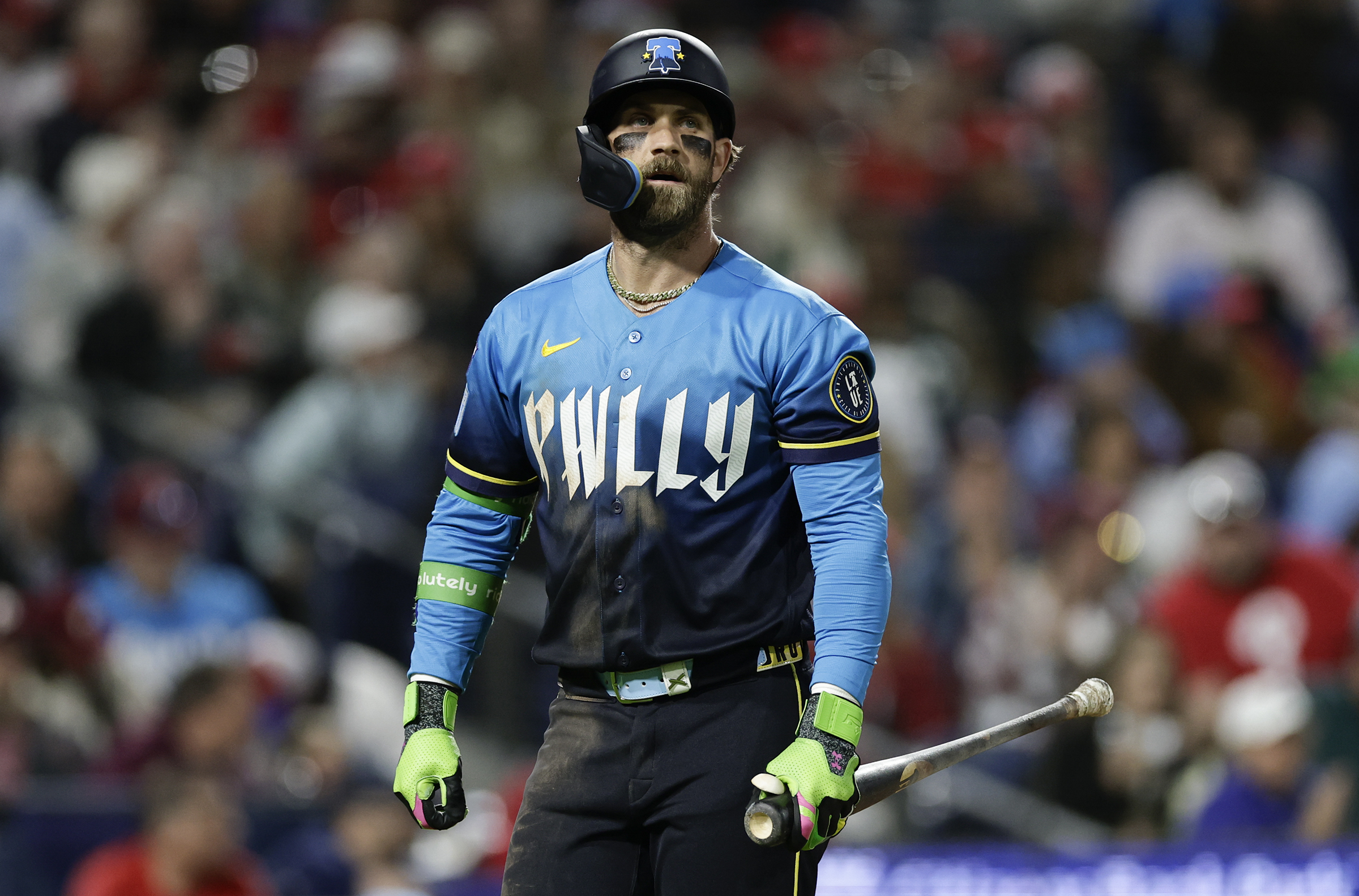
    Phillies first baseman Bryce Harper after striking out against the Arizona Diamondbacks on April 10.Yong Kim / Staff Photographer

    Struggling aces Cristopher Sánchez and Zack Wheeler just combined to allow one run over 13 innings Saturday and Sunday against the Angels. Which, of course, makes them formerly struggling aces Cristopher Sánchez and Zack Wheeler. Add in Jesús Luzardo’s seven shutout innings in Seattle on Wednesday, and that’s one run allowed for the Big Three in their last 20 innings.

    That’s just the icing.

    Consider the continued efficiency of No. 4 starter Aaron Nola, who’s on a six-game heater, and rookie Andrew Painter, who’s been better than a No. 5 in five of his six starts since his recall from the minors, and the Phillies transform from Lost Cause to Title Contender.

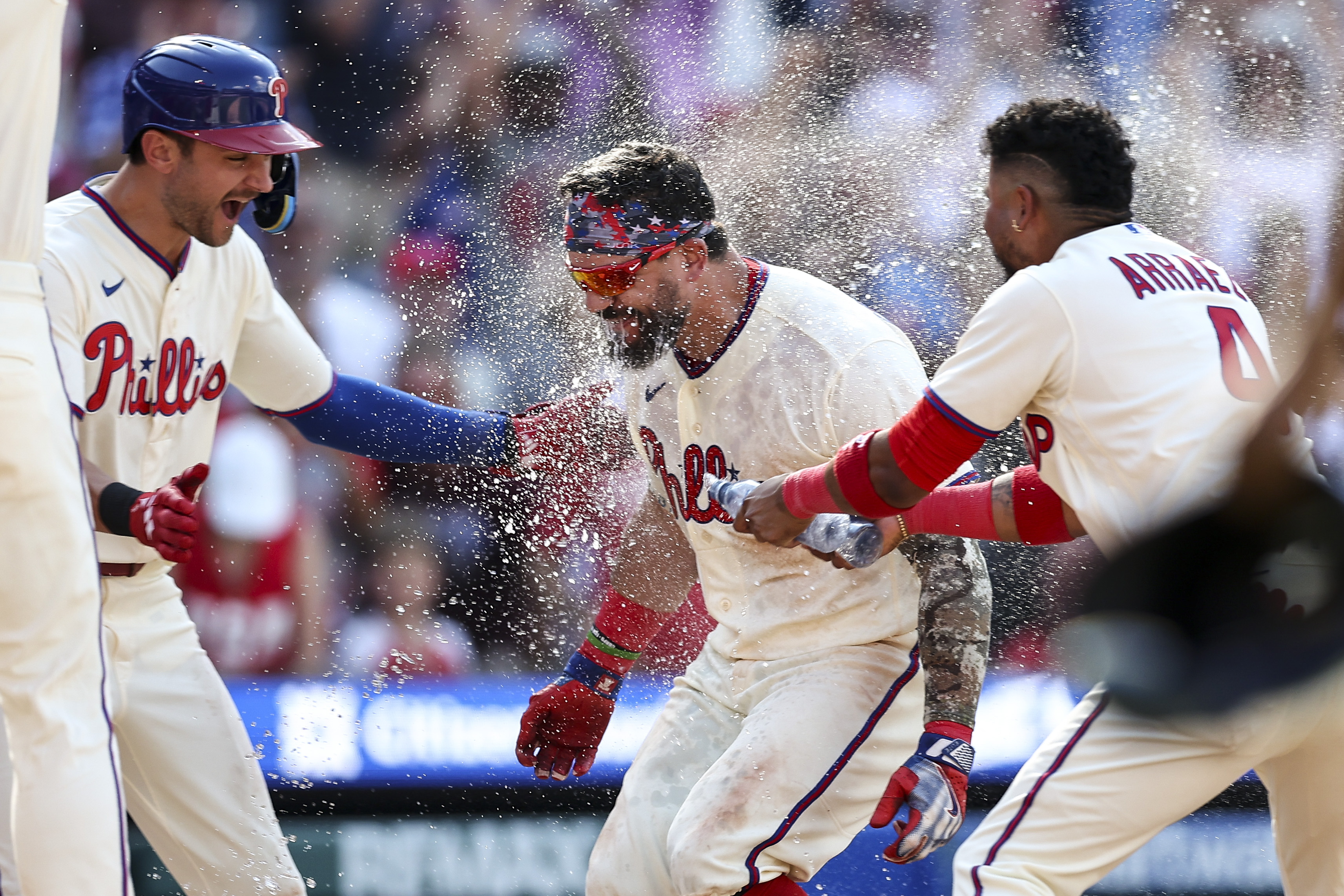
    They’ve won 13 of 15 games, six of those wins on the road, three of the last five in their last at-bat.

    Oh yeah.

    The hitting.

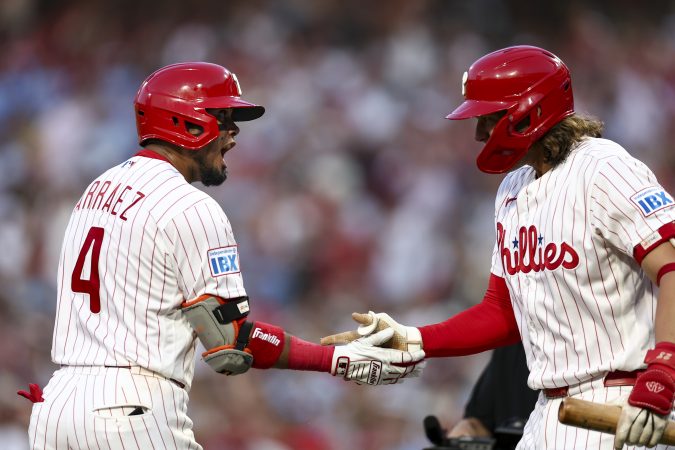
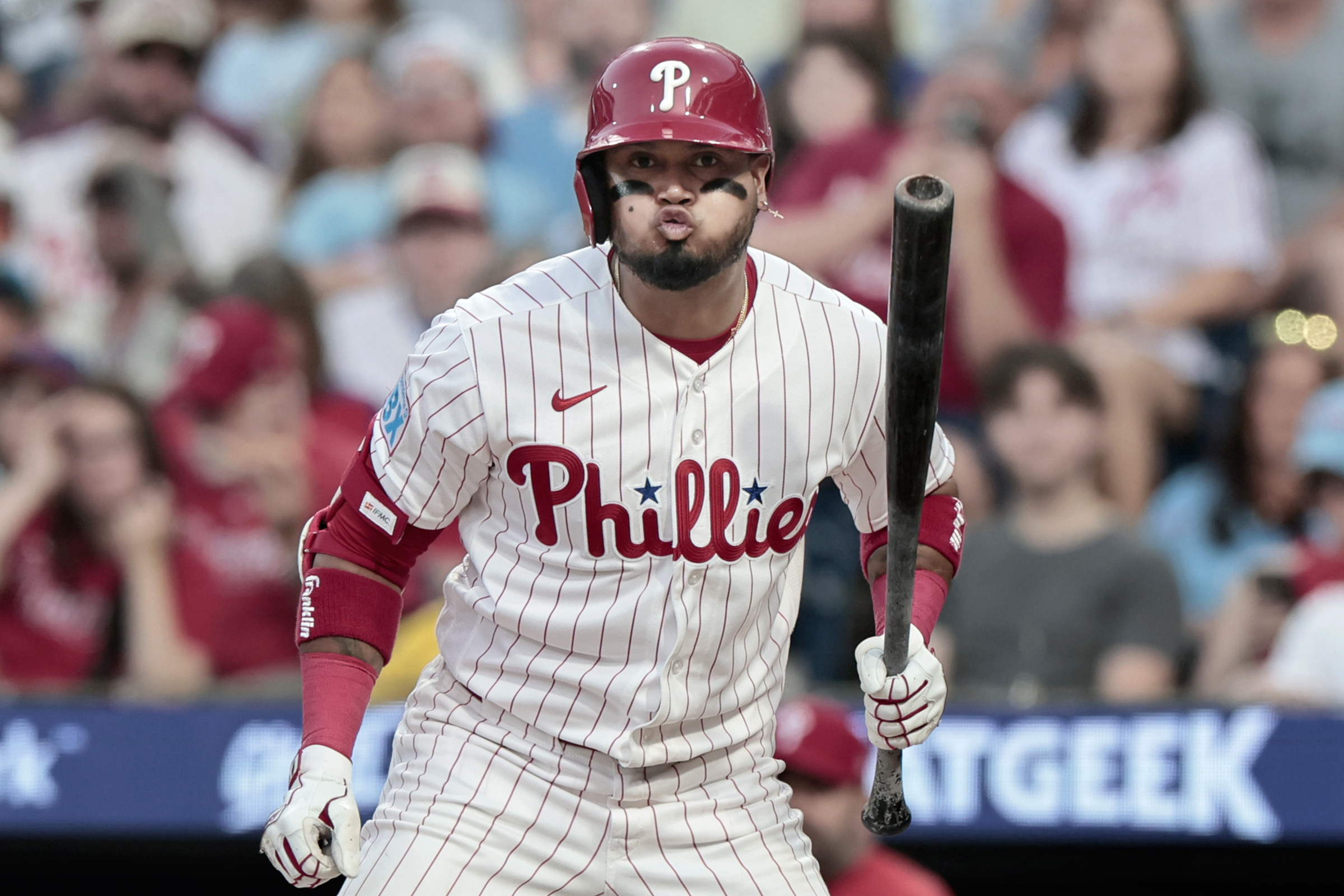
    Since three-time batting champ Luis Arráez played his first game Aug. 4 just after Dave Dombrowski’s latest deadline magic, the Phillies lead Major League Baseball with a .272 batting average and are tied with the Red Sox for the lead in on-base percentage, at .353, improvements of 35 and 48 points, respectively; their .305 on-base percentage had been third-worst. In that same span, they lead the National League with 100 walks. They are averaging 5.5 runs, an improvement of more than a run per game.

    Since Arráez slid into the cleanup spot they are 16-7, have gone from eight games above .500 to a season-high 17 games above .500, and are tied with the Cubs atop the National League wild-card standings going into Monday.

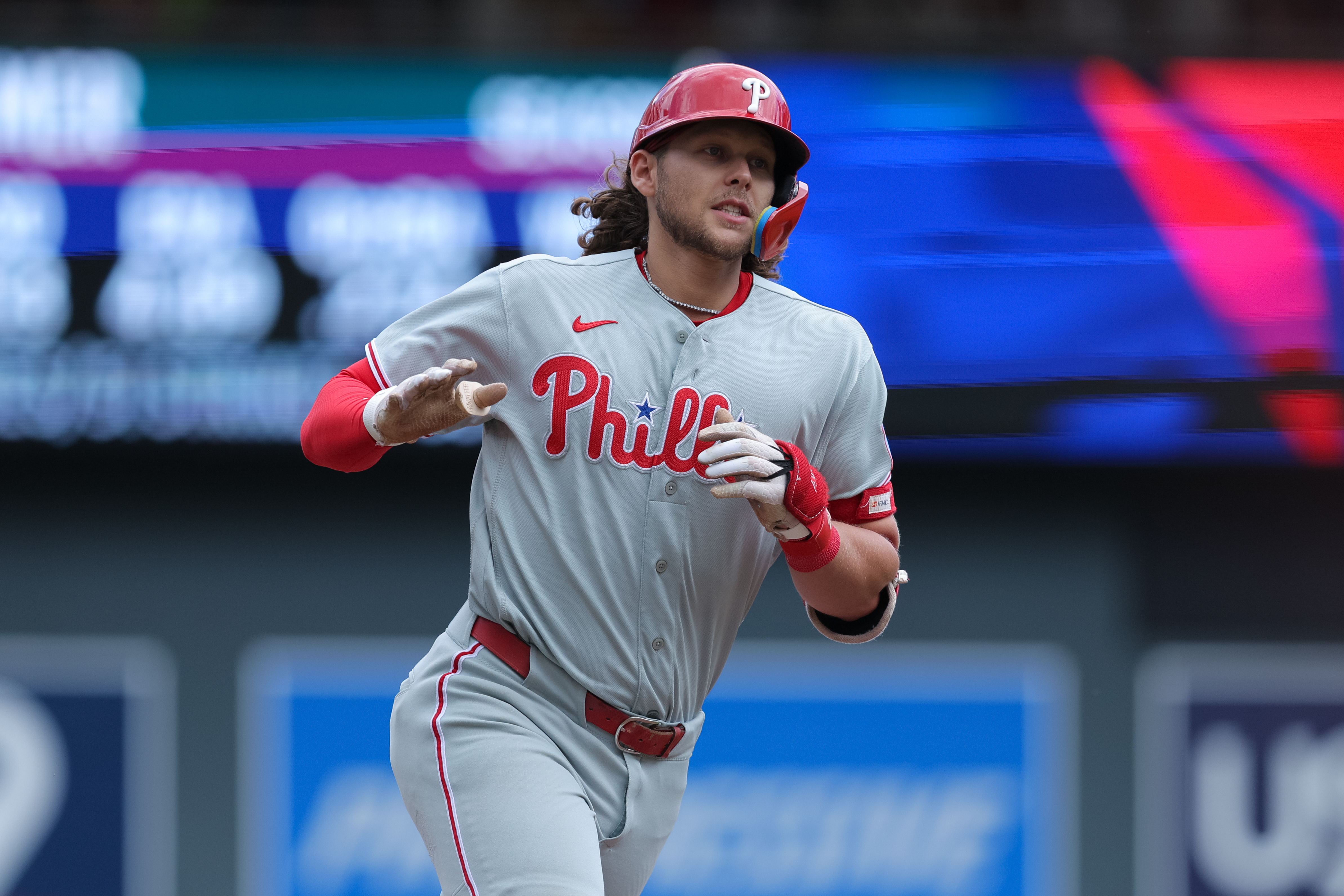
    Arráez’s arrival shuffled the defense, an unintended consequence that reaps daily rewards. Arráez is best at second base, so Bryson Stott moved to third base, where he has proved to be the best third baseman in baseball since the move. Third baseman Alec Bohm pushed first baseman Bryce Harper to right field, where both are at least average, whereas neither was average in his previous position.

    In the middle of it all, Harper has reached base in 32 consecutive games, a career best. A two-time MVP in the midst of his most efficient stretch of offense would be the biggest news of all on a team that didn’t have so much to win, so much to lose, and so much scar tissue since its NLCS collapse in 2023.

    Still.

    Listen, the Phillies aren’t the best team in baseball. They still make too many baserunning errors. Wheeler is still walking too many batters (three more Sunday). The bullpen is still thinner than the Arizona atmosphere.

    But if they take off from PHX on Wednesday night with two or three wins in hand, maybe overtake the Cubs if the Brewers beat up on them the next four days, and sustain this surprising run of professionalism and competence, then yes.

    Believe it.

    World Series or bust.

  • Violence against women in a Good Good ad stains slow responders: PGA Tour, Callaway, Golf Galaxy, Golf Channel

    Violence against women in a Good Good ad stains slow responders: PGA Tour, Callaway, Golf Galaxy, Golf Channel

    The only thing more disappointing about the slow and weak response by the principals in the Good Good Golf YouTube channel scandal was its utter predictability.

    There should have been immediate distancing and disassociation from Callaway Golf and Good Good Golf after they aired an outrageous commercial that endorsed violence against women. Instead, it took almost a week.

    Why?

    Because corporate America, the foundational structure for the golf industry, hoped it would all blow over.

    It did not.

    Last Friday, an ad aired online in which Good Good Golf co-founder Garrett Clark rushes across a tee box and levels a female golfer who is looking in his bag, then stands over her, points at her on the ground, and says, “Do not touch my new driver.”

    Who thought this was acceptable? Who thought this was funny? Who thought this was anything but horrific?

    Good Good, that’s who. Of course they did.

    It’s a frat bro content creator and apparel company with more than 2 million subscribers to its YouTube channel, making goofy videos. It also sells ugly hats and even uglier shirts. When you hear some idiot on TV scream, “Get in the hole!” when a pro golfer tees off on a par-5, dollars to doughnuts he’s wearing Good Good gear, hat on backward, shirt untucked.

    Then, the commercial.

    There was, appropriately, immediate backlash that convinced Good Good to delete the ad. The backlash snowballed into international outrage, with resounding consequences.

    Cool. It took far too long.

    The ad aired Friday.

    By Saturday night the PGA Tour, Tour CEO Brian Rolapp, Callaway, Dick’s Sporting Goods and Golf Galaxy, and Golf Channel all should have cut ties with Good Good. The fact that none did until they were forced by public sentiment tells you everything to need to know about these folks and how they view women.

    In case anyone wants to argue that this commercial was not an endorsement of violence against women, know that Callaway, as penance, on Thursday committed $1 million to support initiatives that combat violence against women.

    The club in question was a driver made by Callaway in collaboration with the new hip-and-with-it brand. The ad was vetted by both Callaway and Good Good. Incredibly, it raised no alarms at either place, with anyone, until social media began its cycle of outrage.

    The irony is few brands had done as much to promote women in golf than Callaway, which has perhaps the most potent brand-to-athlete recognition relationship in the women’s game, the one-time face of women’s golf, Annika Sorenstam. She condemned the ad but, sadly, did not condemn either Callaway or its leadership.

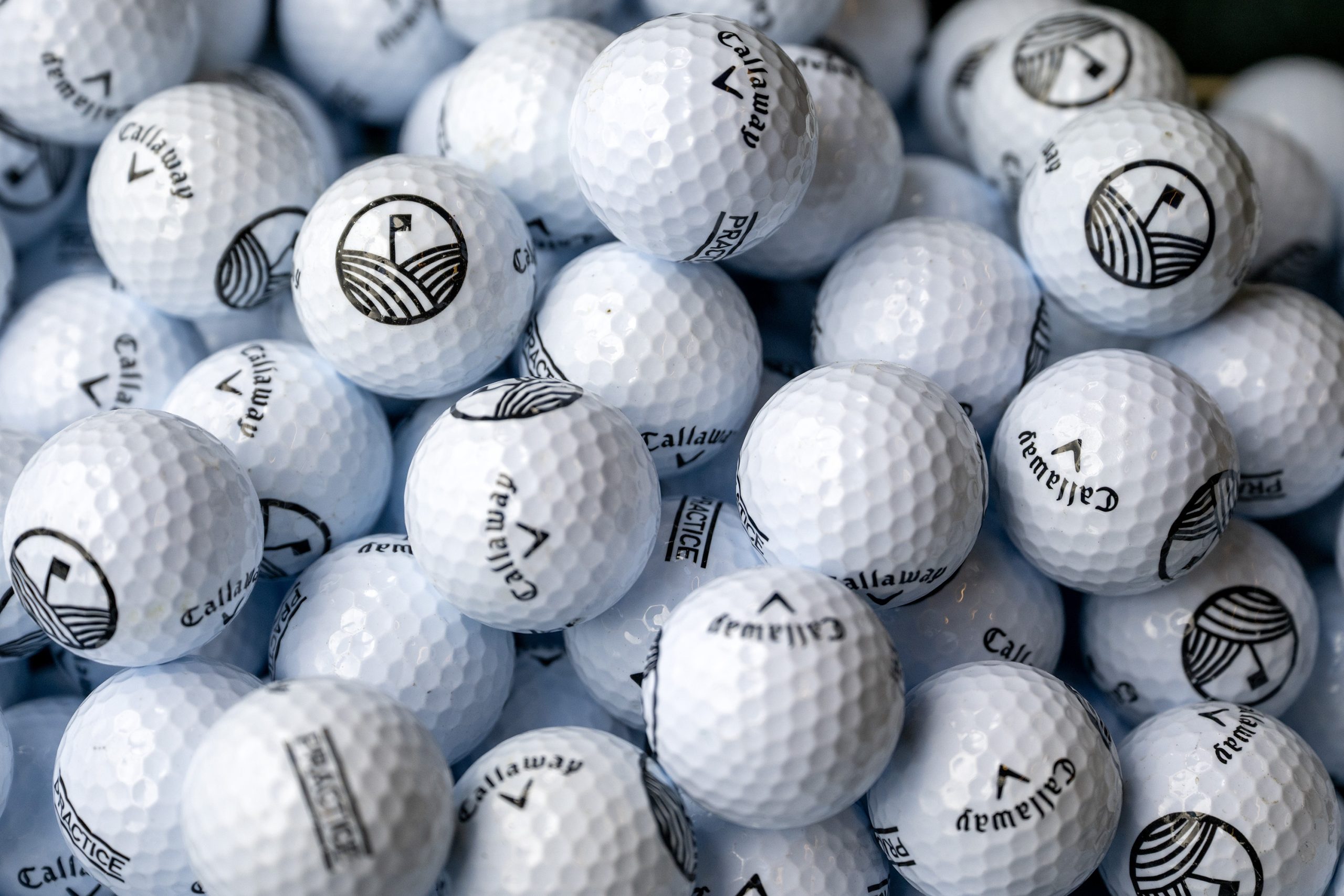
    Callaway Golf balls shown at the Cobbs Creek Golf Course.

    This comes at the height of the Caitlin Clark era, when women’s sports are surging like never before. She’s a basketball player, but she loves to golf.

    Her involvement in the game might have helped spur the biggest growth spurt women’s golf has ever seen. The COVID-19 lockdown triggered massive growth in the golf industry in the United States, and the segment that has grown the most by both percentage and raw numbers is women’s golf, up 45% and 2.5 million golfers compared to 12% and 2.3 million for men, according to the National Golf Federation.

    Callaway just scored the worst own-goal in sports marketing history.

    More than 8 million women now play golf, but the chairmen of all of the entities in question — the Tour, Callaway, Dick’s, and Golf Channel — all are men. Which might explain the slowness and gradualness of the only acceptable responses.

    So we had the scramble, and the admonitions, and the apologies, and the disassociations. The problem with all of it is, nobody wanted to do the right thing unless they had to. Everybody wanted to try to ride it out. Which means they are all as guilty as they could possibly be.

    That includes the Tour, which, on Thursday, announced that Good Good would no longer be the title sponsor of a tournament in Texas in November.

    That includes Golf Channel, which needed four days to decide to not air the Good Good edition of “Big Break,” which was due to begin Tuesday but, after sponsor Golf Galaxy pulled out, was initially pushed back a week and has since been canceled altogether.

    That includes Dick’s Sporting Goods and Golf Galaxy, which needed five days to decide to pull Good Good merchandise from its shelves.

    That includes Rolapp, who only responded to the commercial’s misogyny when he was questioned at a press conference four days after the incident, then landed this stinging indictment: “I think what we saw was concerning.”

    Rolapp’s milquetoast response was a resounding reminder that, before moving to the PGA Tour last year, Rolapp spent more than two decades working for the NFL, America’s most notorious sports league when it comes to ignoring issues like domestic violence and sexual harassment in the workplace.

    That includes Callaway, whose executive roster looks like President Donald Trump’s cabinet. After one day, Callaway issued a chastisement … of Good Good. After three days, Callaway pulled the driver from its website. After six days, as its stock continued to lose value, Callaway finally cut ties with Good Good.

    Callaway’s abrupt about-face, after partnering with Good Good for three years, might have been prompted by Callaway being threatened with exclusion by huge retailers like Costco, which apparently removed access to Callaway products Thursday, at least temporarily.

    And, of course, there is Good Good.

    Clark is the general manager.

    He should resign.

    He should have resigned Saturday morning.

    Instead, five days after the commercial aired, as Dick’s, Golf Galaxy, and the PGA Tour Superstores began pulling Good Good stock from their shelves, Clark issued a rambling, 8½-minute “apology.” In it, he explains the process of the production of the ad, and insists that the woman was not injured, and that Good Good is women-friendly — as if any of this matters.

    At all.

    It does not.

    The obtuse and embarrassing statement just paints Clark and Good Good as defensive, tone-deaf, and completely uncomprehending of the gravity of the moment.

    As tone-deaf as Rolapp, the PGA Tour, Callaway, Golf Channel, and Dick’s/Golf Galaxy.

    All of them did the right thing, eventually, when forced to do so.

    But none of them did the right thing for the right reasons in the right time frame.

  • Andy Dalton? Tanner McKee? Please. The Eagles lack a real backup quarterback. Unusual. Unsettling.

    Andy Dalton? Tanner McKee? Please. The Eagles lack a real backup quarterback. Unusual. Unsettling.

    The Eagles used to value the backup quarterback position, perhaps more than any other team in the NFL. Looking at their rosters in 2025 and 2026, it’s hard to believe they still do.

    This might not matter at all, except Eagles starter Jalen Hurts gets hurt a lot, and quarterbacks are the most important players in all of team sports.

    Still, it seems like a lot of energy to spend on a guy who won’t play much. Backup quarterback angst: The sort of nattering matter that makes the NFL preseason interminable; the sort of infuriating football geek-talk that fantasy nerds Snapchat about.

    You know. Guys like Lurie and Roseman.

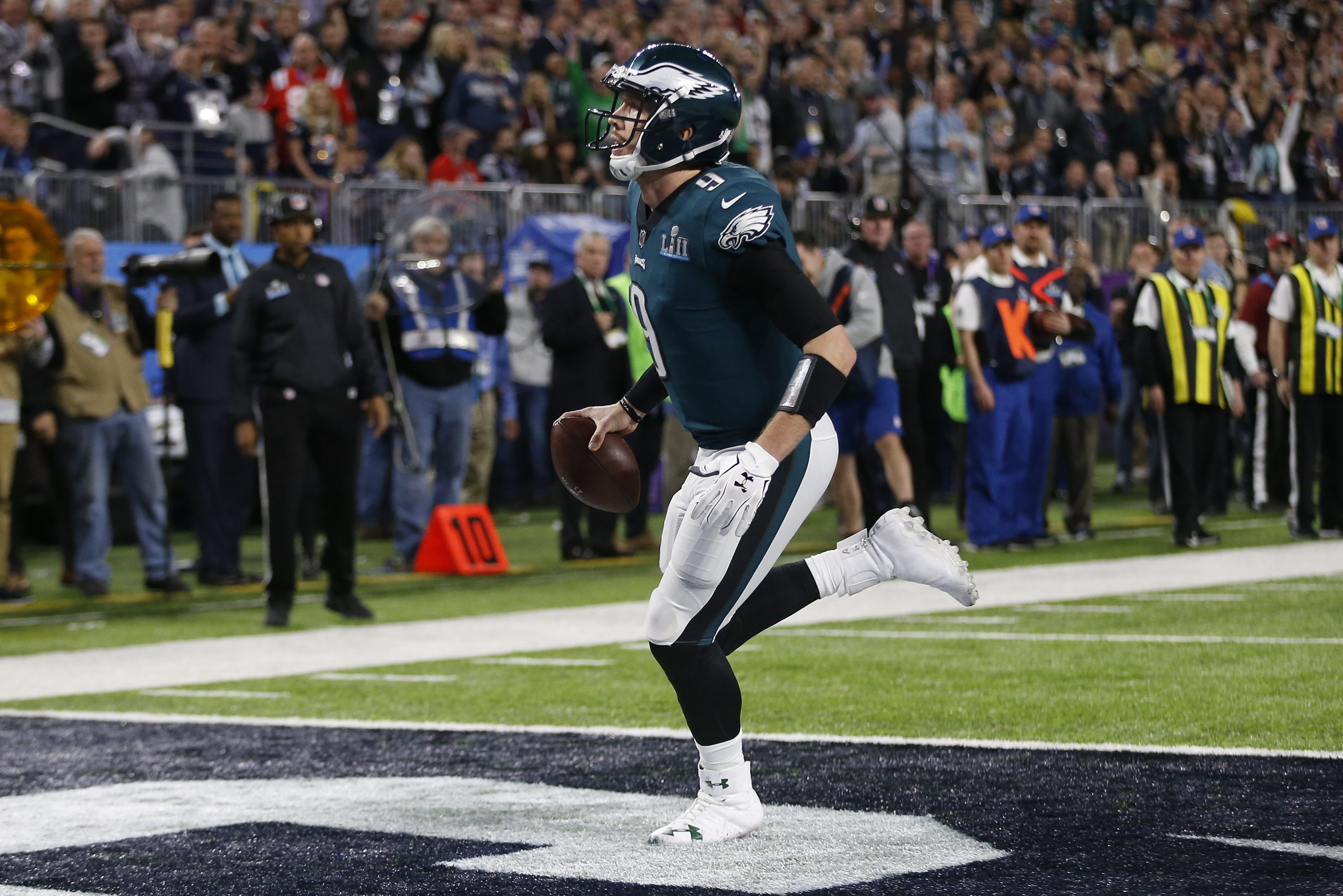
    In 2017, the Eagles committed $11 million to their backup quarterback spot. So important was the position to owner Jeffrey Lurie that he told GM Howie Roseman to sign Nick Foles, whom Andy Reid had just cut from the Chiefs. It meant eating $7 million of the contract of Chase Daniel, whom the Eagles promptly released.

    Despite missing the playoffs in 2016 with rookie Carson Wentz at quarterback, Lurie saw 2017 as a real chance to win the franchise’s first Super Bowl, and he considered Foles, who’d had a strong run as an Eagle, to be a better option than Daniel, who’d never had a strong run anywhere.

    The rest, as they say, is history: Wentz got injured, Foles replaced him, played well down the stretch, and won the MVP award inSuper Bowl LII where he outplayed Patriots legend Tom Brady and outfoxed coach Bill Belichick.

    Nick Foles became an unassailable Eagles legend, but that doesn’t mean all backup quarterbacks are created equal. Michael Bryant / Staff Photographer

    “Our priority, as you’ve seen, is to make sure we have the very best possible other starting quarterback,” Lurie said during Super Bowl week.

    That’s generally been true, and it’s generally made sense for the Birds, since Lurie prefers mobile quarterbacks, who, of course, are more likely to get hurt.

    Lurie signed Michael Vick out of prison in 2009, and Vick supplanted Donovan McNabb the next season and went to the Pro Bowl in his second of four years as an Eagle. Lurie drafted Hurts in the second round in 2020 with plans that Hurts would be the long-term backup to Wentz, but that’s before Ginger Jesus lost his job, and maybe his mind. Lurie sanctioned the recent, sensible acquisitions of Gardner Minshew, Marcus Mariota, and Kenny Pickett.

    But in 2019, Lurie also approved the signing of Josh McCown, a 40-year-old with a 79.7 passer rating with eight other teams. McCown replaced Wentz early in the Eagles’ home wild-card playoff game, played atrociously (predictably), and cost the Birds their postseason.

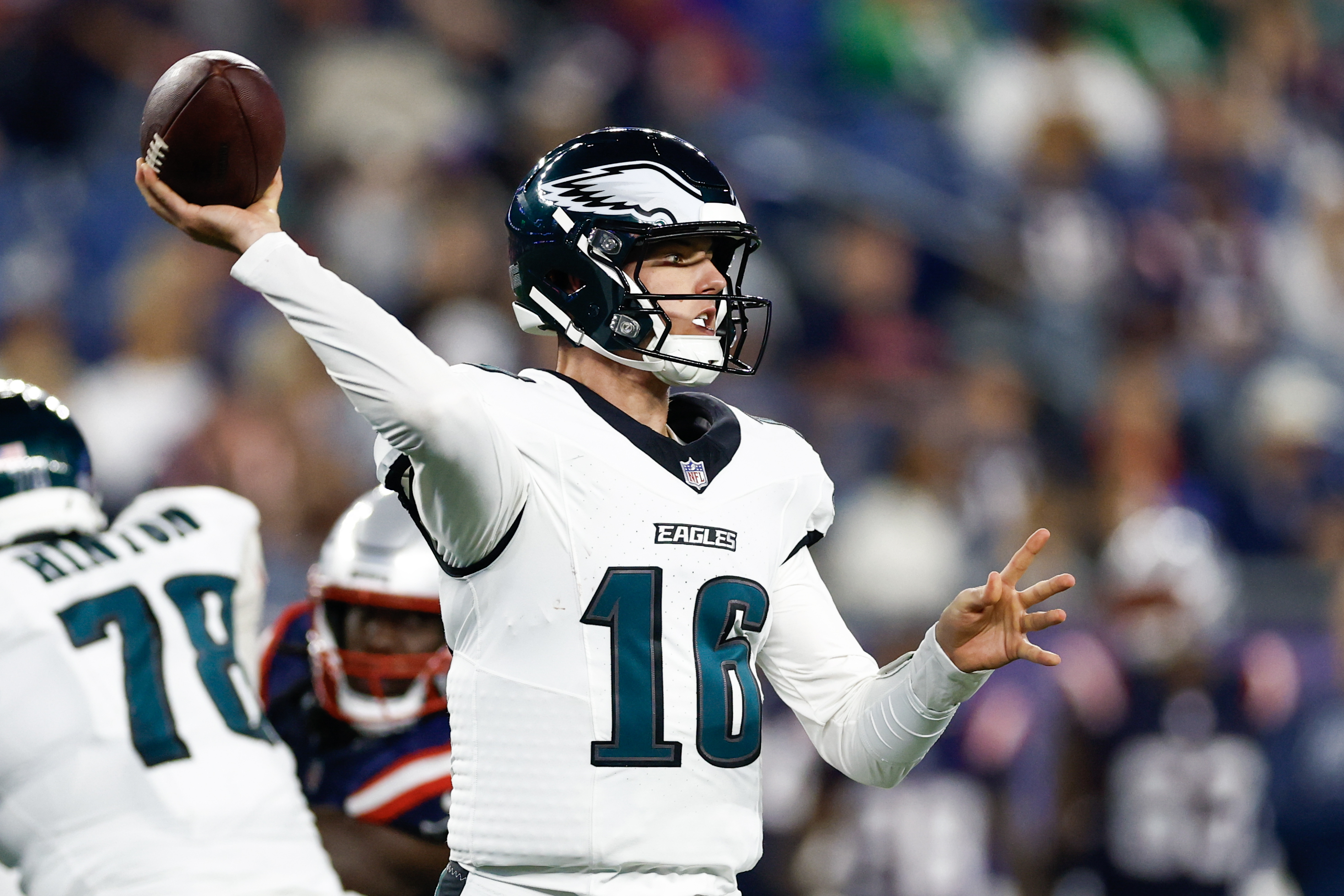
    Last season, Lurie allowed the Birds to enter the season with third-year sixth-round pick Tanner McKee as the backup of a team defending its second Super Bowl title. It didn’t matter, since Hurts stayed healthy. But McKee got to start game 17 against the Commanders, and he was poor: 21-for-40, 241 yards, one touchdown, one interception, with a forgettable fourth quarter that cost the Eagles their chance to win the game and capture a better seed. It looked OK in the moment, but upon further review, the Eagles (and I) decided that McKee is not the answer.

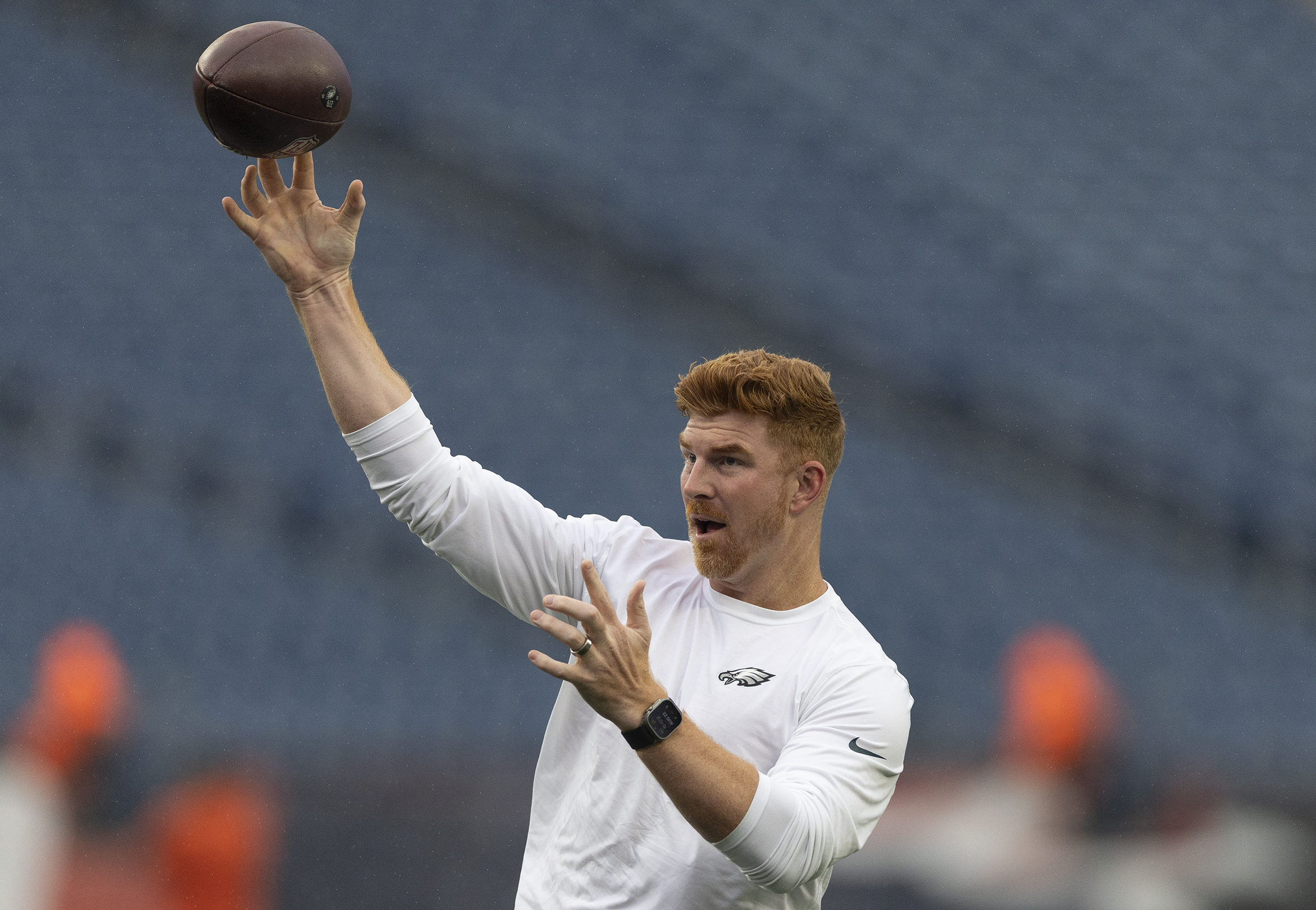
    The Eagles (not I) determined that Andy Dalton is the answer.

    They were wrong.

    The Eagles’ bet on Andy Dalton does not appear to be going according to plan. Yong Kim / Staff Photographer

    The Birds in March traded a seventh-round pick to the Panthers for Dalton.

    No player at Eagles preseason work or in training camp has been a bigger disappointment than Dalton.

    That isn’t really fair. There should have been minimal expectations of Dalton.

    He’ll be 39 in October. He’s 1-6 in his last seven starts over the past three years, during which time his passer rating is 84.5. Aberration? No. In the five seasons before that, his rating was 85.5 in 57 games. He’s been the backup in Carolina the past three seasons, essentially a big brother for Bryce Young, the underperforming No. 1 overall pick from 2023, and an assistant coach of sorts.

    That’s the role he was expected to serve in Philadelphia, where new offensive coordinator Sean Mannion has installed a new scheme. Dalton can help with the adjustment for Hurts, and you’d think Dalton would have a significant advantage over McKee in executing the offense.

    Tanner McKee again appears to be the best backup option for the Eagles. Yong Kim / Staff Photographer

    But no. Dalton has looked appreciably worse than McKee — so much worse that McKee’s unremarkable performance looks good by comparison.

    Entering the third and final preseason game Friday, the competition, such as it is, for the backup job clearly tilts in McKee’s favor. Which delivers this uncomfortable truth:

    The Eagles, who have made the playoffs five years in a row, don’t really have a viable backup quarterback. That’s the fault of the front office.

    Roseman.

    Lurie.

    What should they have done?

    Maybe they should have signed Mitch Trubisky, who got two years and $10.5 million to back up Cam Ward in Tennessee. Maybe another dance with Minshew, who got $8.25 million to back up Jacoby Brissett in Arizona. Both would have cost a lot more than Dalton’s $1.5 million, but that’s also just about what Tua Tagovailoa got from the Falcons to be the emergency plan if Michael Penix Jr. wasn’t back in time from his knee injury.

    All three of those QBs are in spots where they will have a likelier chance to resurrect their careers. Maybe that’s why the Eagles weren’t able to land one of them, and why they had to trade a pick for Dalton.

    To be fair to Roseman and Lurie, the Birds also drafted a quarterback in April: Cole Payton, in the fifth round, out of North Dakota State, who currently is not close to being an option.

    To be fair to Payton, he might be as good an option as the other two.

  • Here’s 5 reasons to give the Phillies your heart again. What have you got to lose — besides your sanity?

    Here’s 5 reasons to give the Phillies your heart again. What have you got to lose — besides your sanity?

    The Phillies are the hottest team in baseball, hotter than they’ve been all year, winners of nine straight for the first time since May of last season and just the second time in the Schwarber Era, which began in 2022.

    We’ll call it the Schwarber Era because it was Kyle Schwarber’s 459-foot, two-run, walk-off Schwar-bomb that extended the winning streak Sunday afternoon, and because, with due respect to Bryce Harper and Zack Wheeler, Schwarber is the soul of this ballclub.

    Everybody always loves Schwarber. Not everybody loves these Phillies.

    Maybe you don’t. Who can blame you? Whether it’s collapses against the Diamondbacks or Mets, or an inexplicable bunt or an unforgivable error against the Dodgers, these Phillies have a way of breaking your heart.

    “Once bitten, twice shy,” as the philosopher band Great White once sang?

    Once bitten, twice bitten, thrice bitten … goodbye?

    Paul told the Galatians, “Be ye not faint of heart,” but the greatest apostle would be ashamed of Phillies fans today. Why?

    Because these Phillies are for real.

    They’re beating good teams by playing mature, sound baseball, and they’re doing it generally without the best efforts of their best players.

    Nevertheless, they’re 16-5 in their last 21 games and a season-high 15 games over .500 going into Monday’s series opener in Seattle. They were 9½ games behind the Braves in the NL East when the streak began, but now they’re just three games out with 31 games to go, seven of them head-to-head with Atlanta. The Phils held the No. 2 wild-card slot, two games behind the Cubs, two ahead of the Padres, and four games ahead of the Diamondbacks, the first team out.

    The Phillies on Monday began a nine-game, 10-day road trip three time zones west. They face the Mariners, then the Angels, two relatively poor American League teams, by the time they get to Arizona.

    They swept Miami, St. Louis, and Minnesota, all teams with valid playoff aspirations, at least until they played the Phillies. That’s the biggest reason why you should learn to love again.

    Here are four more.

    The Phillies are winning despite middling performances of late from their aces, including Cristopher Sánchez.Yong Kim / Staff Photographer

    2: They’re streaking without good starts from the Big 3

    During the streak, top three starters Wheeler, Cristopher Sánchez, and Jesús Luzardo all left the game while trailing after an ungainly outing. They surrendered a combined 10 earned runs in 17⅔ innings. The Phillies won anyway.

    All three are healthy. They just faced decent offensive teams in the dregs of summer. The Mariners have scored the fewest runs in baseball. The Angels have the second-worst OPS. The next seven days should be a feast for the Big Three.

    Luis Arraez is an unconventional but productive cleanup hitter for the Phillies.Elizabeth Robertson / Staff Photographer

    3: The Arraez Affect

    Since three-time batting champ Luis Arraez, a deadline addition, joined the lineup Aug. 4, the Phillies have mimicked his approach. Their swings are more controlled. The hitters are more on balance.

    The result: fewer home runs, but more hits.

    They’ve hit nine homers in the nine wins, a rate of 1.0 per game. They’d hit 148 home runs in their first 123 games, a rate of 1.2 homers per game. Sometimes, less is more.

    Since Arraez’s arrival and his insertion in the No. 4 spot, No. 3 hitter Bryce Harper has a .506 on-base percentage with 25 walks. No. 5 hitter Alec Bohm saved his season: He’s hitting .393 with a 1.015 OPS and 15 RBIs in 17 games. Bryson Stott, who bats sixth, is hitting .295 with 15 walks.

    Bryson Stott has been great at third base since his move there following the Arraez trade.Elizabeth Robertson / Staff Photographer

    4: The defense got better

    The Phillies chose to play Arraez at second base. This meant Stott had to move from second to third base, Bohm had to move from third to first base, and Harper had to move from first back to right field.

    The unintended consequence: This is the best Phillies infield since 2011, when Placido Polanco won a Gold Glove at third base and Jimmy Rollins should have won it at shortstop. Granted, this is a low bar — Phillies infields have been atrocious for 15 years — but Stott, a shortstop by birth, already was an elite second baseman, and his play at third has been otherworldly. Bohm is an unnatural third baseman but a natural first baseman, unlike Harper, who is a very good outfielder. Arraez is a fine second baseman, and even Trea Turner looks better at shortstop.

    Aaron Nola has been solid of late after a very slow start to his season.Yong Kim / Staff Photographer

    5: Andrew Painter and Aaron Nola settled in

    Andrew Painter, who is 23, spent all of 2025 in triple A coming back from elbow surgery that cost him all of 2023 and 2024. His big-league debut was March 31. He was inconsistent, and was sent back to triple A in mid-June.

    We call this “normal.”

    Aaron Nola, who is 33, threw more innings than anyone else from 2018-24. In 2025 he suffered his first significant injury since 2016, which cost him three months in the middle of the season. He struggled the first three months of this season.

    Again: “normal.”

    Painter has a 3.62 ERA in his five starts since he was recalled. He’s had one bad start. He’s throwing his four-seam fastball with authority.

    Nola’s ERA in his last nine starts is 3.63. He’s had one bad start. He’s learned to lean on his knuckle-curve.

    You know what happens when you get 3.6-ish ERAs from fourth and fifth starters? You win divisions, you win pennants, and you win back the hearts of your fans.

    Love Hurts

    I get it. It’s hard to love a team with a $300 million shortstop hitting .245; a team that had to release $20 million outfielder Nick Castellanos and $18 million starter Taijuan Walker; a team with a bullpen that is injured and ineffective and, with the exception of the closer, utterly maddening.

    But in matters of the heart, there are no guarantees. You take a chance, you ride the thrill, and, as fate decides, your devotion is rewarded … or not.

    After all, as Lord Tennyson penned in elegy of a friend who died too young:

    “ ‘Tis better to have loved and lost than never to have loved at all.”

    Lord Tennyson was English, and he died in 1892. His grandson, Lionel, became England’s cricket captain, and Tennyson simply wallowed in heartbreak: It took him 17 years to finish the elegy.

    In a different time the poet properly known as Alfred, Lord Tennyson — a moderate conservative rashly bearded — surely would have been a baseball fan.

    Given his predilection for misery, he probably would have followed the Phillies.

  • Wins matter most for Phillies and Eagles, not Zack Wheeler’s and Jhoan Duran’s ERAs or Jalen Hurts’ QBR

    Wins matter most for Phillies and Eagles, not Zack Wheeler’s and Jhoan Duran’s ERAs or Jalen Hurts’ QBR

    Zack Wheeler was driving angry.

    He’d allowed two runs off two hits and four walks over five innings in a 6-4 Phillies win Tuesday night over the Marlins. It was the fifth consecutive start in which he’d failed to pitch at least six innings (one was affected by rain). His fastball velocity this season had been the lowest it’s been in eight years, at 95.1 mph.

    He’s 36. He’s coming off surgery to address thoracic outlet syndrome that cost him the last seven weeks of 2025 and the first month of 2026. Was it his age? Was it the surgery?

    Did it really matter? After all, the Phillies did win.

    “I was thinking about that on the way home,” Wheeler admitted. “I was, like, ‘I guess that’s not the worst start.’”

    He calmed down and drove on.

    The Phillies won two of Wheeler’s last five starts. They’re 16-8 this season when he starts, and he’s 10-5 with a 2.92 ERA. Since arriving in Philadelphia in 2020, Wheeler has been the best pitcher in baseball. He remains just that.

    When he pitches, the Phillies have a great chance to win, style points be damned. That’s all that matters. But even Wheeler has a hard time seeing the forest for the trees, since the game has changed since he hit the bigs 14 years ago.

    “I think the win column doesn’t matter as much as it used to,” Wheeler said. “Just, because, there’s more numbers and all the other crazy stats that there are.”

    Nevertheless …

    “But, you know, I think when they put your name on a lineup card and we go out as starters, we’re expected to give the team a chance to win.”

    And that’s all.

    The Phillies are 16-8 when Zack Wheeler pitches, including Tuesday’s game despite some struggles. Yong Kim / Staff Photographer

    Wheeler’s interim manager, Don Mattingly, believes that, regardless of max velo or walk rate, Wheeler always provides the Phillies an excellent chance to win, even if his fastball sits at no more than 95 mph.

    “What I worry more about is, ‘Is this guy giving us good starts and keeping us in the game,’ more than anything else,” Mattingly said Tuesday. “Zack’s not one of the guys I worry about, if that’s what you’re asking.”

    Mattingly seemed a bit bemused at the line of questioning, and just a smidge perturbed.

    After all, they’d won the game.

    Act II: Strategy

    Mattingly had the same tone the next afternoon, when he was asked about a strategy on the radio pregame show regarding holding runners.

    In the ninth inning Monday, with a 6-4 lead, Duran allowed a leadoff single to Xavier Edwards. Edwards is an effective base-stealer. Duran is generally ineffective at holding runners. The Phillies did not hold Edwards. Edwards took second base on the first pitch, moved to third on a groundout that might have been a double-play ball had he been successfully held at first base. He then scored on a single. Duran retired the next two hitters and the Phillies won, 6-5.

    In the daily pregame radio show the next afternoon, Mattingly was asked about the strategy of not holding the runner. Mattingly explained that, with a two-run lead, he usually considers that run inconsequential compared with the defensive compromise of having the first baseman hold the runner, which opens a much wider hole between first and second base.

    This is not a hard-and-fast rule, just a sound general strategy. Outs with leads equal wins.

    In the ninth inning Sunday, with a 7-5 lead and one out, Victor Caratini walked. Caratini is an ineffective base-stealer. The Phillies did not hold him. Caratini advanced to second on a single. Duran stranded both runners with consecutive strikeouts.

    In the ninth inning Wednesday, with a 4-1 lead, Duran allowed a leadoff single to Heriberto Hernandez, who is a moderate threat to steal. The Phillies did hold Hernandez, who was forced out at second on a ground ball by Owen Cassie to shortstop.

    Jhoan Duran got the final out Wednesday, allowing a leadoff hit before earning the save.Matt Slocum

    Mattingly acknowledged that this strategy works best if the pitcher is selfless enough to not worry about giving up an earned run. A single earned run for a reliever, especially a closer, has a much greater effect on his ERA than it would for a starter or a long reliever since closers seldom pitch more than a single inning in a game.

    Duran’s ERA rose from 1.66 to 1.86 on Monday. He was asked before Wednesday’s game if he’d cared about risking that earned run.

    “It all depends,” Duran said. “In that situation, I understand. They explained it to me. We’re on the same page right now.”

    Several factors influence the decision to hold a runner or not. Does the runner run well? Does the batter make consistent contact, especially on the ground to the right side? Does the batter make better contact with a runner on base? It might not get that granular in every situation, but if we know anything about today’s baseball, it’s that things can get as granular as you like.

    Monday, the evidence was more empirical than analytical. Duran has blown just two saves this season, but his last was against the Marlins on July 27. In that game, they held the runner, and a soft grounder to the right side got through, a big part of a killer, three-run inning.

    “Sometimes, we cover the runner, and they get soft contact that way, and it’s a base hit,” Duran said.

    Act III: Aphorisms

    No one gets more annoyed than I do when Jalen Hurts, the Eagles’ 28-year-old sage, drops his saccharine maxims. But one of them resonates every time:

    “You gotta keep the main thing the main thing.”

    This is Hurts’ general fallback line when asked about the efficiency of the team’s offense, particularly the aesthetic quality of his own often choppy, inelegant passing performances.

    No winner in Philadelphia history has been picked apart more than Hurts. I know, because I’ve done it myself. There somehow is an active debate regarding whether Hurts deserves a contract extension because Hurts can’t sling it like Josh Allen or Joe Burrow. Mike Vrabel, who took the Patriots to the Super Bowl last year and won it three times as a Patriot, considers Hurts a “franchise quarterback.”

    Hurts wins.

    That, more than anything, is what matters.

    But even the athletes can lose sight of that, and that includes the Phillies’ two best pitchers.

    “You know, we won the game,” Duran said, “but, like, we [don’t] want to give up a free run, you know?”

    Wheeler has parameters beyond winning.

    “My mindset is: Six to eight innings every start. That’s what great pitchers do,” Wheeler said. He walked five batters two starts prior, and what bothered him most about Tuesday were the four walks. “It’s hard for me to be, like, ‘Yeah, that’s good.’”

    Understood. After all, Wheeler hadn’t walked 10 batters in a three-game span since early in 2019.

    “I’m used to doing what I have been doing for a long time now — being great — and that’s just not great,” Wheeler said.

    Maybe not.

    But, as usually is the case with Duran and Hurts, even when Wheeler’s not great, he’s more than good enough.

  • Alec Bohm, Bryce Harper, Bryson Stott address how Luis Arraez helped save the Phillies’ offense

    Alec Bohm, Bryce Harper, Bryson Stott address how Luis Arraez helped save the Phillies’ offense

    Athletes mimic.

    Whether it’s Kobe Bryant mirroring Michael Jordan or Joel Embiid mastering Kobe’s footwork, imitation is the sincerest form of flattery (which actually is the case for that aphorism, since Oscar Wilde borrowed it from Charles Caleb Cotton).

    The Phillies aren’t exactly mimicking deadline light-hitting addition Luis Arraez, but his arrival on Aug. 3 has meant everything to a team that had the most disappointing offense in baseball through two-thirds of the season.

    The Phillies’ on-base percentage on Aug. 3 was .305, which was third-worst in baseball. The Phillies’ on-base percentage since Aug. 3, entering Wednesday night’s game, was .367, which was the best in baseball.

    What happened between Aug. 3 and Aug. 4?

    The Phillies traded for Arraez.

    This makes sense — right? — since Arraez won league batting titles in 2022, 2023, and 2024, and he led the National League entering Wednesday, at .317.

    However, since his arrival, Arraez has generally slumped. He was hitting .274 with a .292 on-base percentage since arriving from San Francisco. This might be because he’s batting fourth in the order after spending almost all of his career batting first or second. At any rate, it’s OK.

    Because this has less to do with Arraez’s production than with Arraez’s presence and how it has affected the hitters around him.

    Bryce Harper, the No. 3 batter in front of Arraez, was hitting .255 with an .862 OPS on Aug. 3. Since then, he’s hit .295 with a .939 OPS, fueled largely by his .530 on-base percentage, which includes 22 walks in 14 games.

    Alec Bohm, hitting fifth behind Arraez, was hitting .226 on Aug. 3. Since then, he’s hit .396 with a 1.038 OPS and 11 RBIs in 14 games.

    Bryson Stott, who bats sixth, was hitting .253 on Aug. 3. Since then, he’s hit .367, has a 10-game hitting streak, and, like Harper, his on-base percentage of .508 has as much to do with his eye as with his hands: Stott has 14 walks in those 14 games.

    Harper has begged for protection for two seasons.

    Now, he has it.

    “As a lineup, any time you’re able to add somebody like that, obviously, it’s going to be really good for the team,” Harper said. “You know he’s [going] to put the bat on the ball.”

    There might be other factors.

    The Phillies held a hitters’ meeting just before Arraez arrived, and they talked a lot about being selective-aggressive, as hitting coach Kevin Long has preached since his arrival in 2022.

    Long’s a superb hitting coach, but Long doesn’t hit. Long doesn’t set an example. Arraez does both, and his presence seems to have more obviously impacted production.

    Between the meeting and Arraez’s arrival, the Phillies’ on-base percentage rose two points.

    Between Arraez’s arrival and Wednesday night, the Phillies’ on-base percentage rose 62 points.

    It’s not as if Arraez sets an example of selectivity. In fact, he’s seeing just 3.74 pitches per plate appearance this season, well below the big-league average of 4.13. And Arraez doesn’t walk much: he’s averaged 37.2 walks in his five full seasons, and he has 27 this season.

    Luis Arraez doesn’t walk much, but he strikes out even less.Elizabeth Robertson / Staff Photographer

    So, has he really affected the middle of the lineup?

    “Yeah, for sure,” Stott said. “When you’re the guy behind him, you see him, when he swings the bat, it just feels like he’s going to get a hit.”

    Bohm spoke after Tuesday’s win over the Marlins, in which the Phillies collected 10 hits. Nine of them were singles, but, really, Bohm’s double was a single, too, but the Marlins threw to the wrong man, so he stretched it into a double.

    The core of the Phillies’ order is swinging at fewer tough strikes, waiting for their pitch, making balanced, controlled swings, keeping the bat in the strike zone longer, and not trying to hit home runs. Harper, Stott, and Bohm struck out just 17 times combined in the last 14 games.

    Homers have become coincidental.

    On Tuesday, the Phillies scored at least six runs in a fifth straight game, the first time they’ve done that this season. They scored six on Monday, too, with 10 singles and a double.

    They’ve become a fun team to watch by adding a fun player.

    “He’s one of those infectious energy guys,” Bohm said. “And you see the ways he plays, the way he takes his at-bats, watching his at-bats — you spend time around good hitters, good hitters can make other hitters better.”

    The sincerest form of flattery, indeed.

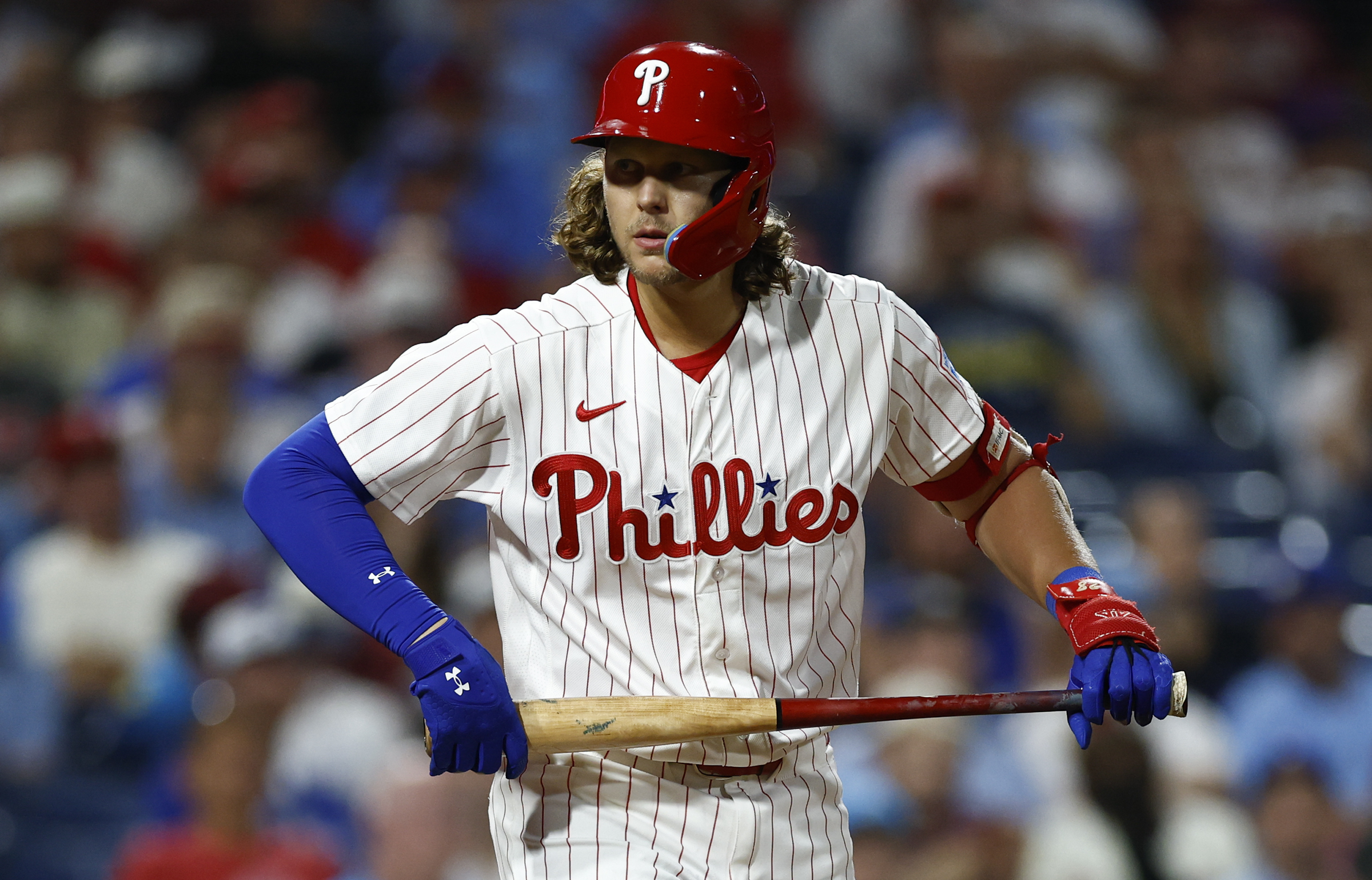
  • Alec Bohm, Philly’s latest scapegoat, nears the end of his run as a Phillie. Appreciate him.

    Alec Bohm, Philly’s latest scapegoat, nears the end of his run as a Phillie. Appreciate him.

    Nobody eats their own like Philadelphia.

    This time, this is about Alec Bohm, a career .273 hitter with a .734 OPS entering Monday night. That’s about 30 points better than the average major league batting average since Bohm hit the big leagues in 2020, and a slightly above-average OPS in the same span. That batting average is second-highest among the 11 everyday third basemen who have played at least 600 games at third since 2020.

    He does not stink.

    You’d never know that to listen to the critics.

    The ones who wanted Bohm traded in the offseason.

    The ones who wanted Bohm out of the lineup so Bryce Harper could move back to first base from right field, his natural position and where he was forced to return when the Phillies added infielder Luis Arraez near the trade deadline (Arraez’s arrival moved second baseman Bryson Stott to third base and Bohm to first).

    The ones who went mysteriously silent over the last seven games going into Monday, in which Bohm hit .542 with four doubles, a homer, six RBIs, and a 1.426 OPS.

    Monday night, he added what became the game-winning RBI.

    These are the same folks who will tell you that Sixers cornerstones Andre Iguodala was overrated, Tobias Harris stole money, and Shayne Gostisbehere … yawn.

    To this day, Sixers aficionados will deride Iguodala as the first casualty of Josh Harris’ disastrous ownership tenure, traded after the 2012 season as part of a package that brought Andrew Bynum to Philly for a season in which Bynum did not play. Iguodala was an All-Star that year, was first-team All-Defense two years later in Golden State, where he won four titles and the 2015 NBA Finals MVP award.

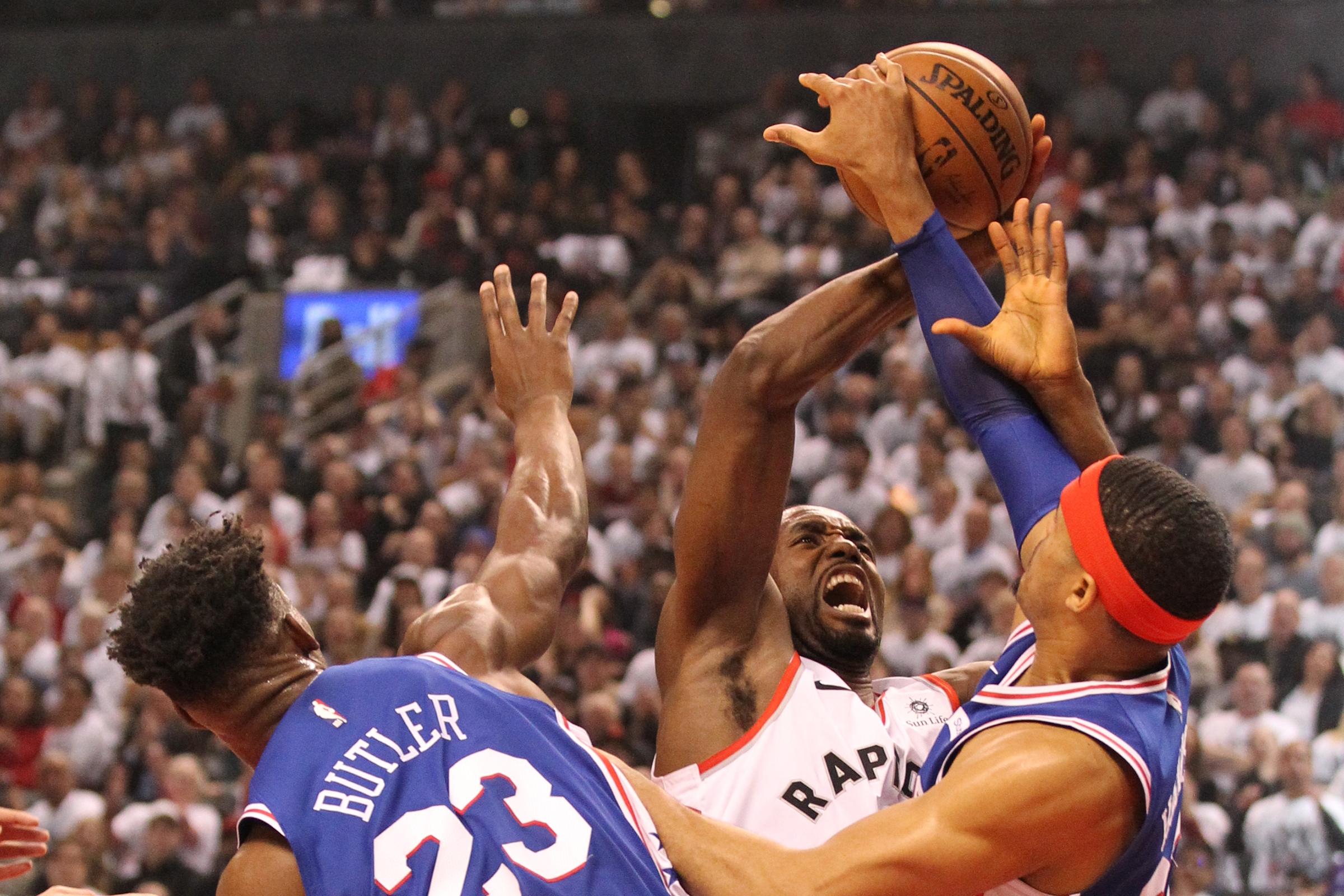
    They’ll also bury Tobias Harris, who, in their minds, the Sixers chose to retain over Jimmy Butler in 2019. That’s a vast oversimplification, since there’s no real reason to believe the Sixers would have been better with Butler, who benefited from the presence of Harris that season, when Harris scored 18.2 points and pulled 7.9 rebounds and played well in the playoffs. Harris has had issues in other playoff appearances, but it’s foolish to let them diminish his overall body of work.

    But this isn’t about whether Harris was better than Butler. It’s about whether Harris was a good player. And he was. Maybe not good enough to warrant a maximum contract, but he was really good, and, on a team that gave players playoff games off for having upset tummies, Harris showed up; only eight players in the NBA played more minutes between 2019-20 and 2023-24 than Harris.

    Jimmy Butler (left) benefited from the presence of Tobias Harris in 2019.CHARLES FOX / Staff Photographer

    As for “Ghost,” the Flyers traded him to Arizona in 2021 for salary-cap relief. He’d accumulated 219 points in six seasons by then, but nobody much cared that he was gone. He’s got 243 points in the five seasons since, and he just won the Stanley Cup with Carolina, while the Flyers are still looking for a defenseman to run the point on their power play.

    I’ve been keeping this one in my holster for a few weeks, waiting for Bohm to surge. Even with his recent proficiency, Bohm is hitting .242 with a .684 OPS. He’s not having a great year, but few players have great years every year. Besides, there are obvious reasons.

    First, he’s in a contract year. He’ll be a free agent for the first time after this season. That’s a lot of pressure on any player regardless of their personal situation.

    Second, he’s got a personal situation. As the season began, Bohm sued his parents for mismanaging his money. The suit remains active, the next hearing is scheduled for Sept. 3.

    Third, Bohm changed positions. He went 3-for-16 in his first five games at first base.

    Should stud players be able to play through the noise and changes? Yes. Is Alec Bohm a stud player? Probably not.

    But he does not stink.

    For some, Bohm, who turned 30 two weeks ago, is the embodiment of Gen Z entitlement.

    Alec Bohm will be a free agent for the first time after this season.Yong Kim / Staff Photographer

    He’s a first-round pick, No. 3 overall in 2018, who signed for a nearly $6 million bonus and has made almost $30 million. He’s also 6-foot-4 and weighs 218 pounds — both likely outdated underestimates — but has just 14 homers this season and, since he’s 16 shy, he probably won’t break the 100-homer mark as a Phillie, assuming they don’t re-sign him.

    Further, in 2022, after Bohm made two errors, he said, on camera and on the field, “I (bleeping) hate this place.” He apologized, and he has been effusively pro-Philly since, but, for some, this was unforgivable.

    Also, he was an All-Star in 2024. He has not been an All-Star caliber player since, but he hasn’t stunk, either.

    Finally, he pouts. He sulks. He has not been alone in this behavior — Taijuan Walker and Nick Castellanos come to mind — but now it’s part of his brand. Of course, the Phillies released both Walker and Castellanos this year, but less for their attitude than for their aptitude.

    Bohm remains because his aptitude outweighs his occasionally sour attitude.

    Dave Dombrowski, clearly a learned classicist, paraphrased the Greek aphorism “Familiarity breeds contempt” when asked recently why he didn’t trade Bohm at the deadline:

    “When you see a player every day, you have a tendency to look at their downside.”

    And that’s a choice.

    As of Monday, Bohm’s tenure as a Phillie included just 37 more regular-season games. It would be wise to choose to appreciate him.

  • Merion and Philly fans shine again with record-breaking crowds at the U.S. Amateur

    Merion and Philly fans shine again with record-breaking crowds at the U.S. Amateur

    Move over, Florida, California, and New York City. There’s a new golf mecca, same as the old golf mecca.

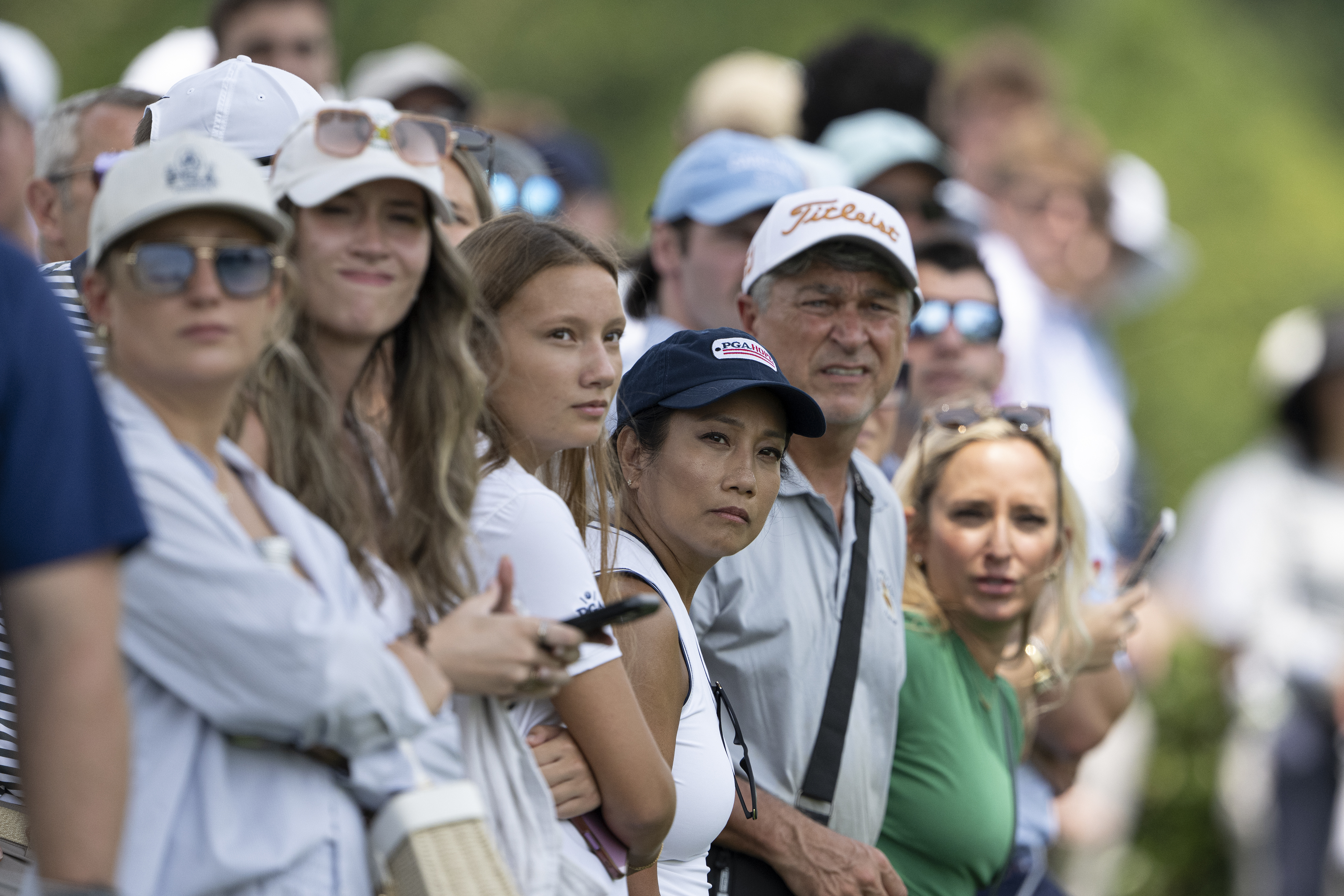
    More than 2,700 fans made their way to the lush fairways at Merion Golf Club on Friday, making it the best-attended single day in U.S. Amateur history, according to a United States Golf Association spokesperson. By the time the Am ends Sunday evening, as many as 20,000 fans are expected to have entered the main gate at the iconic, tiny par-3 13th hole, blowing away the record of 14,000 set last year at The Olympic Club in San Francisco.

    An hour after the final putt dropped, more than 200 fans waited in line to buy U.S. Am gear at the pro shop.

    Surprised? Don’t be.

    It’s Philly. It’s golf.

    It’s back.

    At the turn of the 20th century, Philadelphia was the epicenter of the golf explosion in the United States, where Donald Ross and A.W. Tillinghast and Merion architect Hugh Wilson carved masterpiece after masterpiece. As the PGA Tour migrated ever more south and west, the game’s biggest names and tournaments were absent, and fans’ attention turned to arenas, stadiums, and ballparks. The golf industry has seen the error of its ways, and now given the chances, Philly fans are representing again — especially when they get a chance to see how the other half lives.

    Throngs flooded Merion when Justin Rose beat Phil Mickelson at the waterlogged 2013 U.S. Open, and they surely will return for the U.S. Opens scheduled to be played here in 2030,2040, and 2050.

    Pine Valley in Camden County often is ranked No. 1 in the world, but you’ve got a better chance of seeing the Shroud of Turin than of walking Pine Valley’s fairways. Merion, meanwhile, consistently ranks among the world’s top 20 courses, and Philadelphians take advantage of rare opportunities to visit.

    It’s not just Merion.

    Legions came to see Keegan Bradley win the sodden 2018 BMW Championship at Aronimink Golf Club (Ross), and they returned to the ’Mink in May to watch Aaron Rai win the 2026 PGA Championship. Huge crowds toured The Philadelphia Cricket Club (Tillinghast) last year at the Truist Championship, where Sepp Straka won.

    Rosey and Phil and Captain Keegan aren’t at Merion this weekend, but the next Rosey or Phil or Keegan just might be.

    For most golf fans, when they hear “Merion” and “Aronimink” and “Cricket,” they equate these sites with places like the Taj Mahal, only far less accessible … unless there’s a tournament. It takes $70,000, some serious connections, and proper breeding (shirt tucked in, hat faced forward, and no loud swearing) to access membership at Merion. However, for less than 40 bucks and a SEPTA pass for the Paoli/Thorndale train, they can get off at the Haverford station and crash this billionaire’s haven for a day.

    Since play began Monday with 312 qualifiers, thousands have done just that. As play continued with quarterfinals on Friday, hundreds of those thousands had found a local Cinderella to support. Briefly.

    Michael Lugiano, a native of Jackson Township, Pa., roughly 40 miles southwest of Scranton, is ranked 335th among the world’s amateurs, but for four days he played the best golf of his life. He finished tied for 16th in stroke play to earn one of the 64 match-play spots, then won his first three matches.

    Day 6 was different, through no fault of Lugiano’s. His opponent, Logan Reilly, shot 6-under in the first 14 holes to advance, 6 and 4 (ahead by six holes with four to play). Lugiano didn’t play badly. Reilly was just too good. How good? Lugiano was 1-under after the first nine holes but two down in the match.

    He just finished his sophomore year in college. In the past few months, Reilly sank the putt that won his Auburn Tigers the NCAA title; he qualified for and played in the U.S. Open at Shinnecock Hills; and he finished top five in his last two tournaments.

    Those Philly fans appreciated Reilly, but they loved Lugiano. He’s a rising junior at Liberty, the first from his school to qualify for the NCAA Tournament, and he played in last year’s U.S. Am, but he still couldn’t believe all the love.

    “I found out I have a lot more supporters than I realized,” Lugiano said. “There were hundreds of people that came here, just for me.”

    Said Bobby, his older brother and, this week, his caddie:

    “It was massive.”

    Of course it was.

    It was Philly.

  • Chris DiJulia’s funeral celebrated an indomitable spirit … and Philadelphia’s amazing basketball family

    Chris DiJulia’s funeral celebrated an indomitable spirit … and Philadelphia’s amazing basketball family

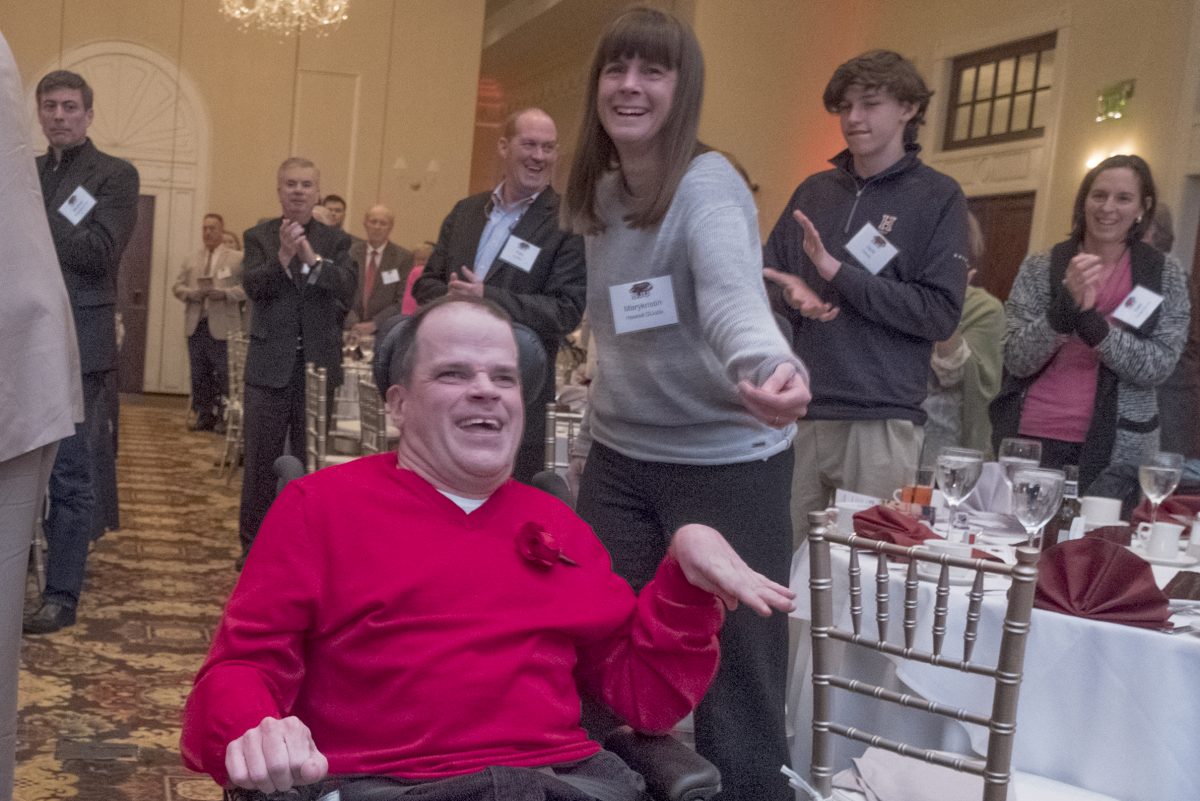
    Chris DiJulia never played a minute and he never coached a game, but at 11 a.m. Wednesday, he was the king of Philadelphia basketball.

    More than 600 people crowded into St. Denis Catholic Church in Haverford for an 80-minute celebration of 56 years of life well-lived. DiJulia, a fixture at St. Joe’s basketball games, had cerebral palsy, and so spent his life in a wheelchair, and died July 27 of natural causes related to his condition. A few people have ever lived a fuller life; the DiJulias prayed Chris would live to be 5, much less 56.

    As was the case for so many of the Phillies games Chris attended, it was standing room only for his memorial service Wednesday; more than 100 folks leaning against the walls and watching from the knave. They came from Chicago, Atlanta, Buffalo. It was streamed online, and it got views from as far away as Alaska. There were more college basketball coaches at the funeral than there were at LeBron and Kobe’s high school games.

    The event was more than a home-going for a man of unequaled strength and unmatched faith. It was a testament to the close-knit family of Philly college hoops.

    There is nothing like it, not anywhere in the world. It is a club, a cult, and, as the kids say now, a vibe. It goes beyond just the Big Five, beyond just the City Six (hello, Drexel), beyond men’s basketball. It is D-I and D-II and D-III and junior college. It is all of it.

    It took his daddy’s breath away.

    “Chris was unique,” said Don DiJulia, the retired athletic director at St. Joseph’s University. “But having all this happen, to even think there would be 600 people at 11 o’clock on a Wednesday … couldn’t even think that.”

    Legendary Temple coach John Chaney would have been there too, but he predeceased Chris by five years. How can you be sure? Because Chaney famously once said that Chris was the only person from St. Joe’s that Chaney liked.

    St. Denis was the site on Wednesday, and Wednesday will be remembered as a quintessential Philly hoops moment, even though there were no refs and no clock.

    More than anything, Philly basketball is its sites and its moments. It is the Palestra, the best place to shoot on God’s green earth, and Lynn Greer leading Temple back from 16 down to beat St. Joe’s in double OT there in 2002.

    It also is the DAK at Drexel and Gola/Glaser at La Salle, and it has been the smoky Philadelphia Civic Center, where I covered La Salle’s men years ago, and, of course, St. Joe’s Alumni Fieldhouse/Hagan Arena, where the DiJulias watched their Hawks play and soar and crash. All of these places can be deafening and intimidating and, by city requirement, always over-warm.

    On Wednesday, it was a gray stone Catholic church. For once, Chris was the star.

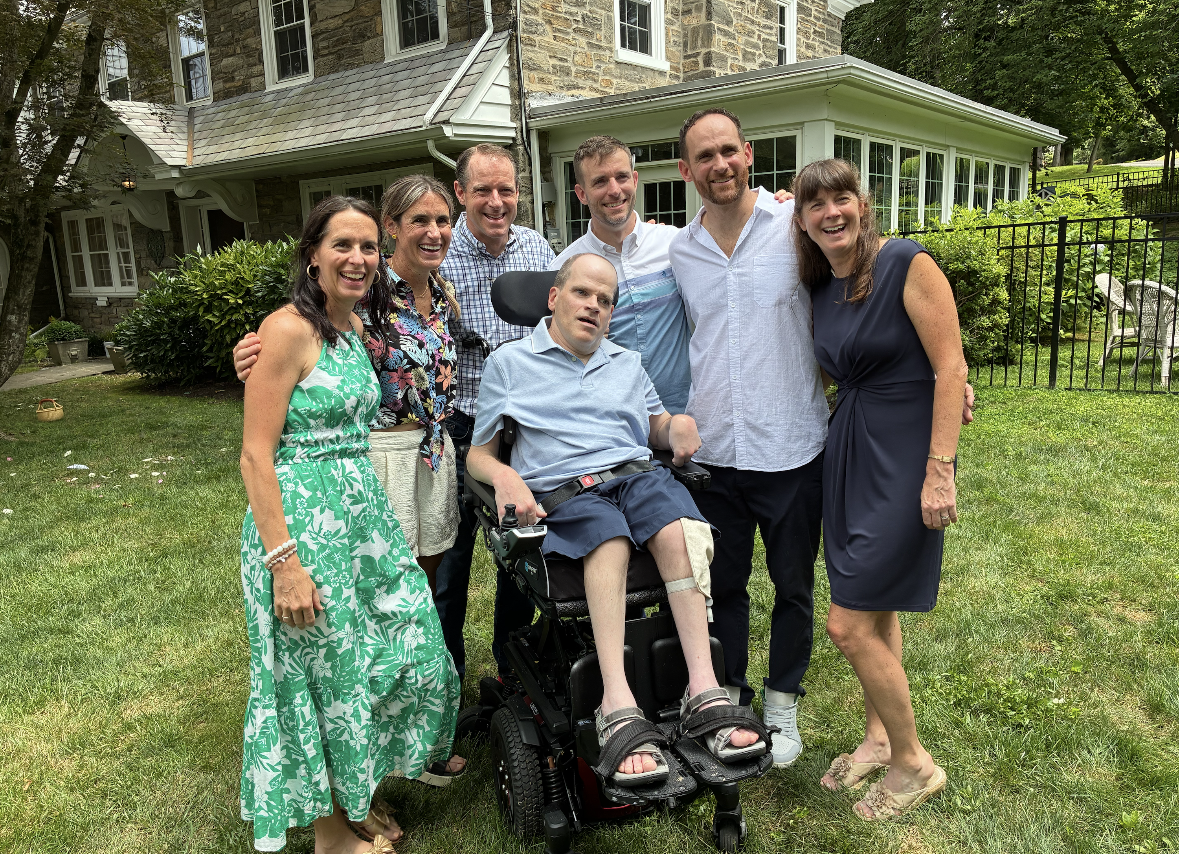
    DiJulia was the son of retired St. Joseph’s University athletic director Don DiJulia, and, despite his disability, for more than five decades Chris was everywhere basketball was played, loud and critical and present. Family and friends overfilled the pews, crammed shoulder-to-shoulder with giants from the media and, more than anything else, with Big Five royalty.

    You’ve probably been to funerals where there wasn’t a dry eye in the place, but most of the tears shed at St. Denis were tears of laughter and of joy. Chris was known best for his wry wit. In their eulogies, Chris’ siblings and parents proved again and again that wit is genetic.

    Chris loved the local pro teams and he was nuts about golf, so more than half the assemblage, to honor his fandom, wore jerseys instead of mourning clothes. The best: A shamrock-green Tug McGraw No. 45 and a pinstriped Richie Ashburn No. 1. Chris suffered and celebrated the maddening Phillies, and he so adored baseball that the service began with the national anthem and included a seventh-inning stretch complete with God Bless America.

    Chris DiJulia, with his parents and siblings.provided by Kath DiJulia Cloran

    It was in his blood

    But as much as Chris loved the pros he was of college hoops, especially Philly college hoops. It was in his blood. Don played basketball (and baseball) at St. Joe’s, and he coached college basketball before he directed college programs.

    Don played for Jack Ramsey’s 26-1 team in 1965. He is a charter member of the Philadelphia basketball aristocracy. Chris is a legacy member.

    Membership can be earned.

    The first sporting event I attended after I arrived in Philly in February 1995 was a 30-point Penn men’s win over Brown at the Palestra, but that didn’t earn membership. It takes decades as a fan, years as a media member.

    I fast-tracked.

    I married in.

    My wife, Dr. Shelly Bowers Hayes, scored more than 1,100 points as Penn’s point guard until 1995. We met playing pickup on the Palestra floor that March, started dating a year later, and we’ve coached our kids the last six years (mostly, she coaches).

    I’ve done this job for 31 years. I’ve belonged to lots of clubs and organizations and associations. There’s no community like the community of Philly college hoops. Proved again for 80 minutes of joy, and a little pain, at St. Denis on Wednesday.

    This year Philly has hosted the NFL playoffs, the men’s NCAA Tournament, the NBA playoffs, the NHL playoffs, the Unrivaled women’s 3-on-3 league, the PGA Championship, the FIFA World Cup, and the Major League Baseball All-Star Game.

    Wednesday’s sellout was the most deserving of them all.