Author: Jeff Gammage

  • A Delco nurse has lived legally in the U.S. since childhood. ICE arrested her as she took her 3-year-old son to Disneyland.

    A Delco nurse has lived legally in the U.S. since childhood. ICE arrested her as she took her 3-year-old son to Disneyland.

    Delaware County nurse Monica Ryadi and her husband couldn’t wait to take their 3-year-old son to Disneyland, so he could meet his adored Cars movie characters — Lightning McQueen, Tow Mater, and the rest.

    They didn’t get there.

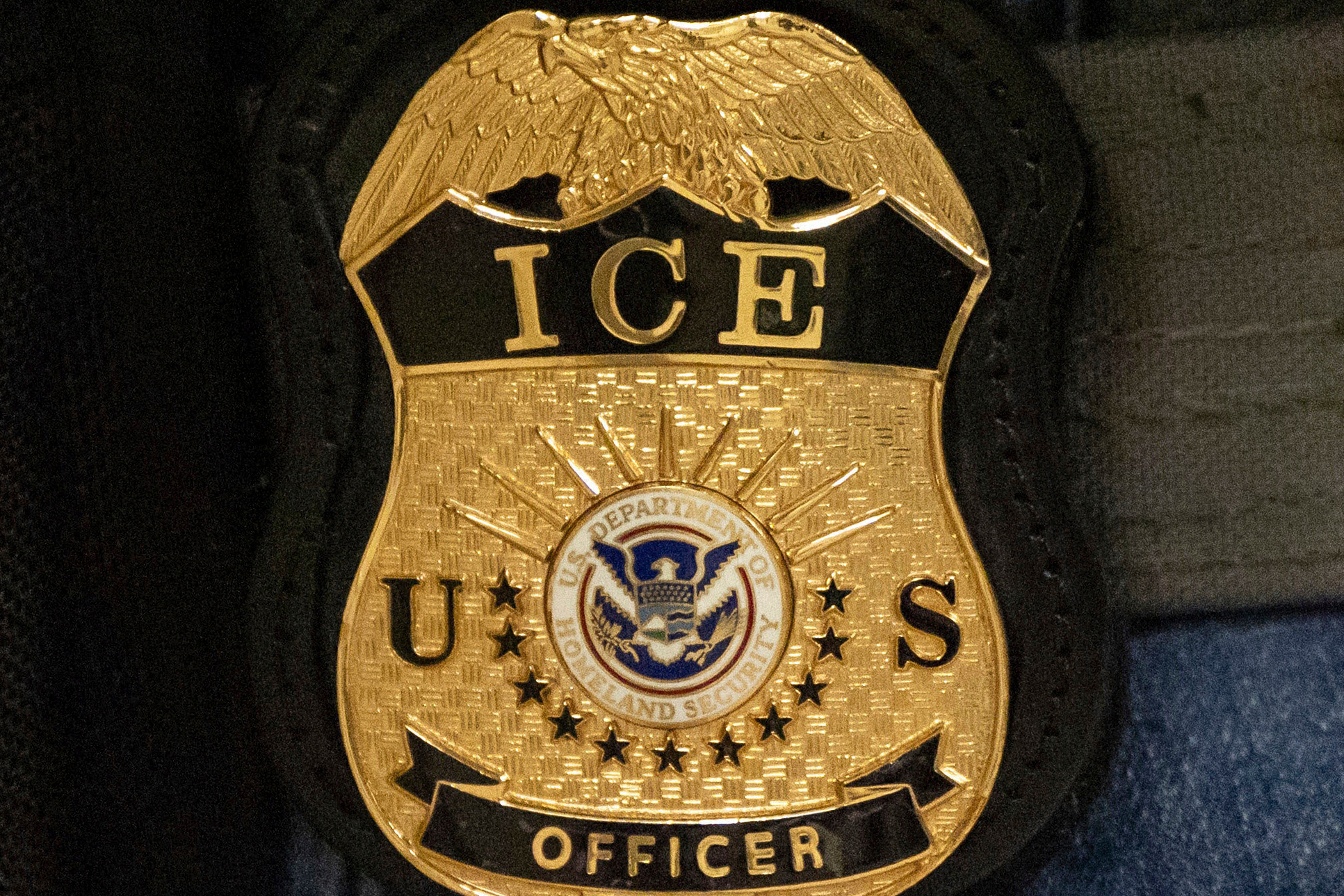
    The family had barely stepped off the plane at Los Angeles International Airport on Sept. 15 when they were surrounded by four or five men in street clothes who said they were ICE agents, flashed a badge, and snapped Ryadi into handcuffs.

    When her husband protested, the officers threatened to arrest him and send their toddler, Luca, to child-protective services, the couple said in court filings. One officer told Ryadi she was here illegally and, “I don’t care if you are the president of the United States or a congresswoman like Ilhan Omar,” court records say.

    Ryadi, 30, said she kept insisting that she was a legal immigrant.

    And that’s true.

    She has lived in the U.S. since she was 9, brought to this country by her parents when they fled religious persecution in Indonesia.

    They entered on legal visas in 2005, and five years later were officially granted what’s called “Withholding of Removal.” That’s where an Immigration Court judge agrees that deporting someone to their homeland could get them hurt or killed.

    It’s similar to asylum, the key difference being the federal government retains the right to deport someone if it can find a third country willing to take them. Withholding does not include a path to citizenship.

    Traditionally, people who gained that relief were left alone.

    Now that’s changed, as the Trump administration takes a new, hard view — seeing those who have Withholding, even those who have lived here for decades, as candidates for deportation. Some immigrants are held in ICE detention for months while the administration tries to find a foreign government to accept them.

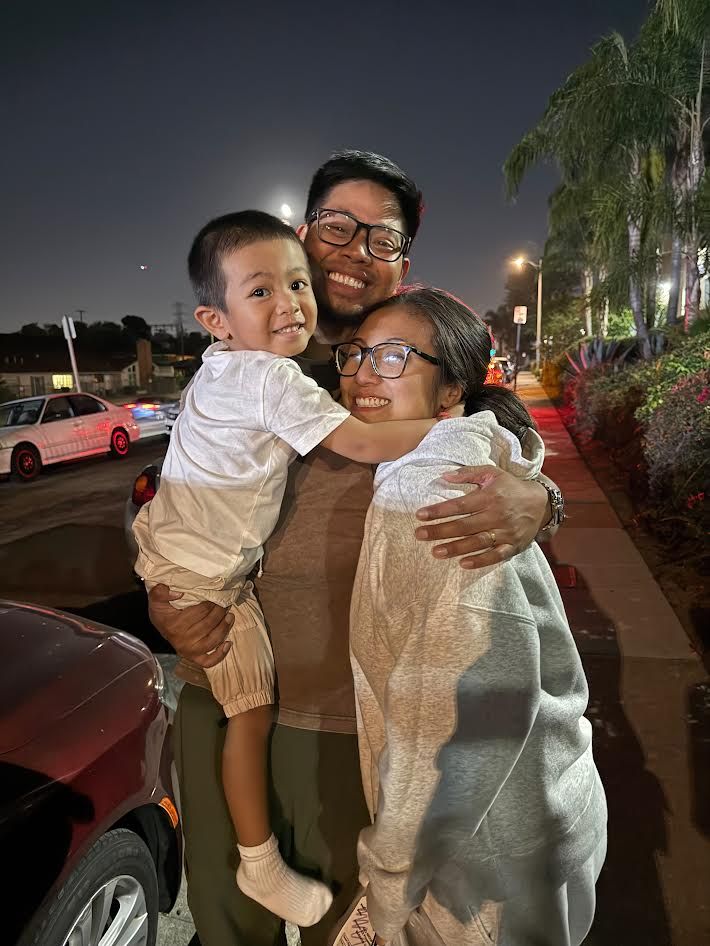
    On Tuesday, after 15 days in custody at the Adelanto ICE Processing Center in California, Ryadi was ordered freed by a U.S. magistrate judge. Her husband and son flew to her immediately, and the family reunited that night, at the same Los Angeles hotel they booked when they planned to visit Disneyland.

    “It’s a lot of emotions,” Ryadi said in an interview after her release. “I am still terrified, I’m still living under fear.”

    At the same time, she said, “I can’t stop thinking about the other women that are in there.”
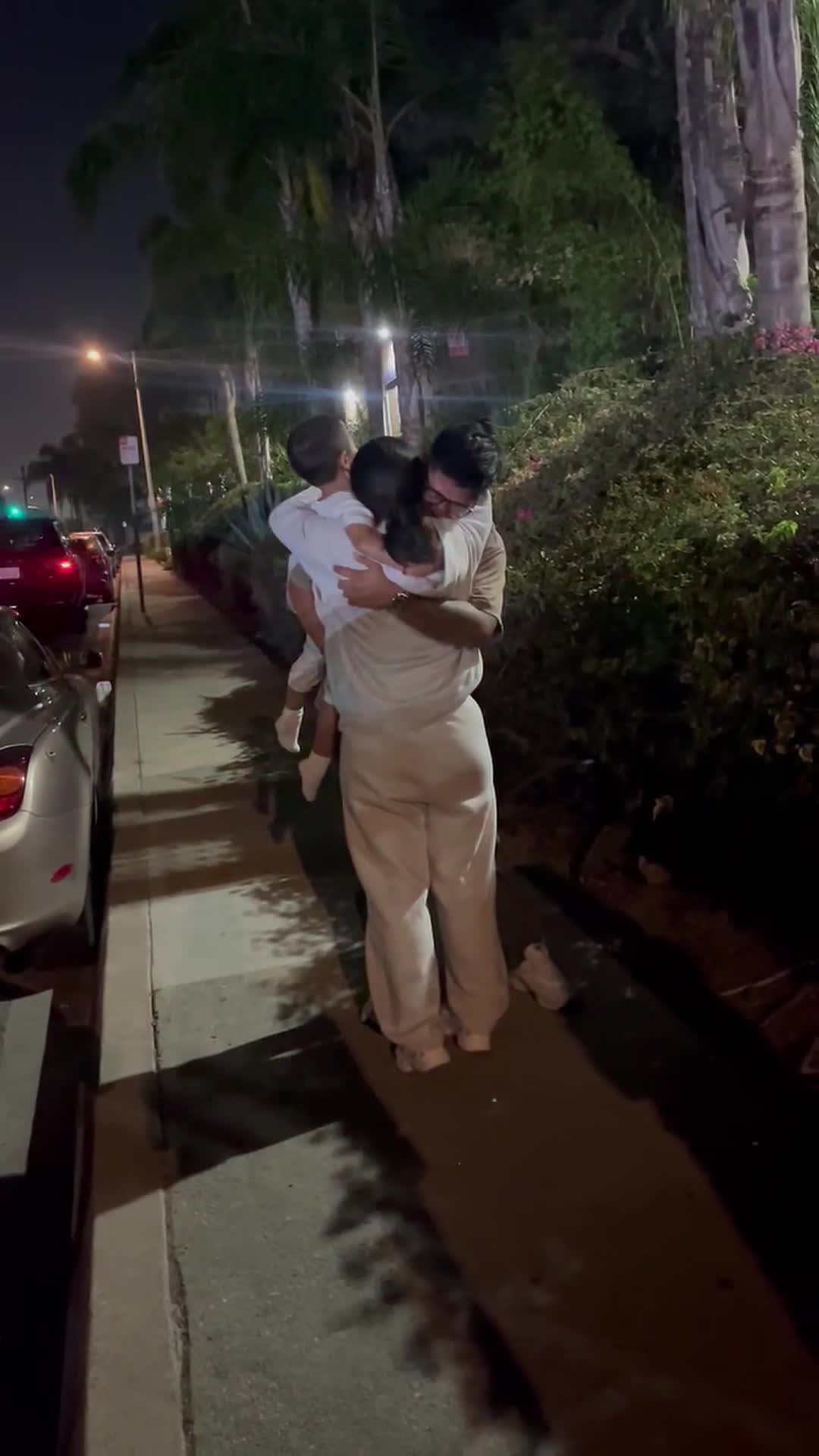
    A Delco nurse arrested by ICE reunites with her family
    Video: A Delco nurse arrested by ICE reunites with her family

    The Department of Homeland Security said in a statement that Ryadi was “an illegal alien” taken into custody “during a targeted enforcement operation at Los Angeles International Airport.”

    DHS said she entered the U.S. legally in 2005 but “overstayed her welcome” in violation of immigration laws. An immigration judge issued a deportation order in 2010, DHS said, but did not note that such an order is a standard part of receiving permission to stay, work, and live in the U.S. under a grant of Withholding of Removal.

    Ryadi’s husband, Steven Sary, 35, said he was overjoyed to be reunited with his wife. “But there’s still work to do,” he said. ”What’s the next step for us? We’re still living in fear.”

    He tried to stay positive and supportive while Ryadi was detained, even at moments when they were both crying on the phone. He told her, “You don’t have to worry about Luca, I’m doing the best I can.”

    The couple has arranged their lives around their son, setting schedules so one parent is always home with him. Ryadi works weekends at Riddle Hospital in Media, while her husband works Monday to Friday as a UPS truck driver.

    The two met when they were children growing up in Philadelphia, and married in 2021.

    Ryadi graduated high school from the Academy at Palumbo in the Bella Vista neighborhood, then earned an associate degree at Philadelphia Community College before obtaining her bachelor’s degree at Ohio University.

    She became a nurse, she said, because she wanted to help people.

    The court order that freed Ryadi came the same day that the Supreme Court ruled the Trump administration could resume the fast deportation of immigrants to countries other than their own.

    The court granted the government’s emergency request to block an appeals court ruling that said the process was unlawful, because immigrants were not given sufficient opportunity to raise safety concerns.

    The Supreme Court said it would hear oral arguments in the case in December, with a final ruling likely next year.
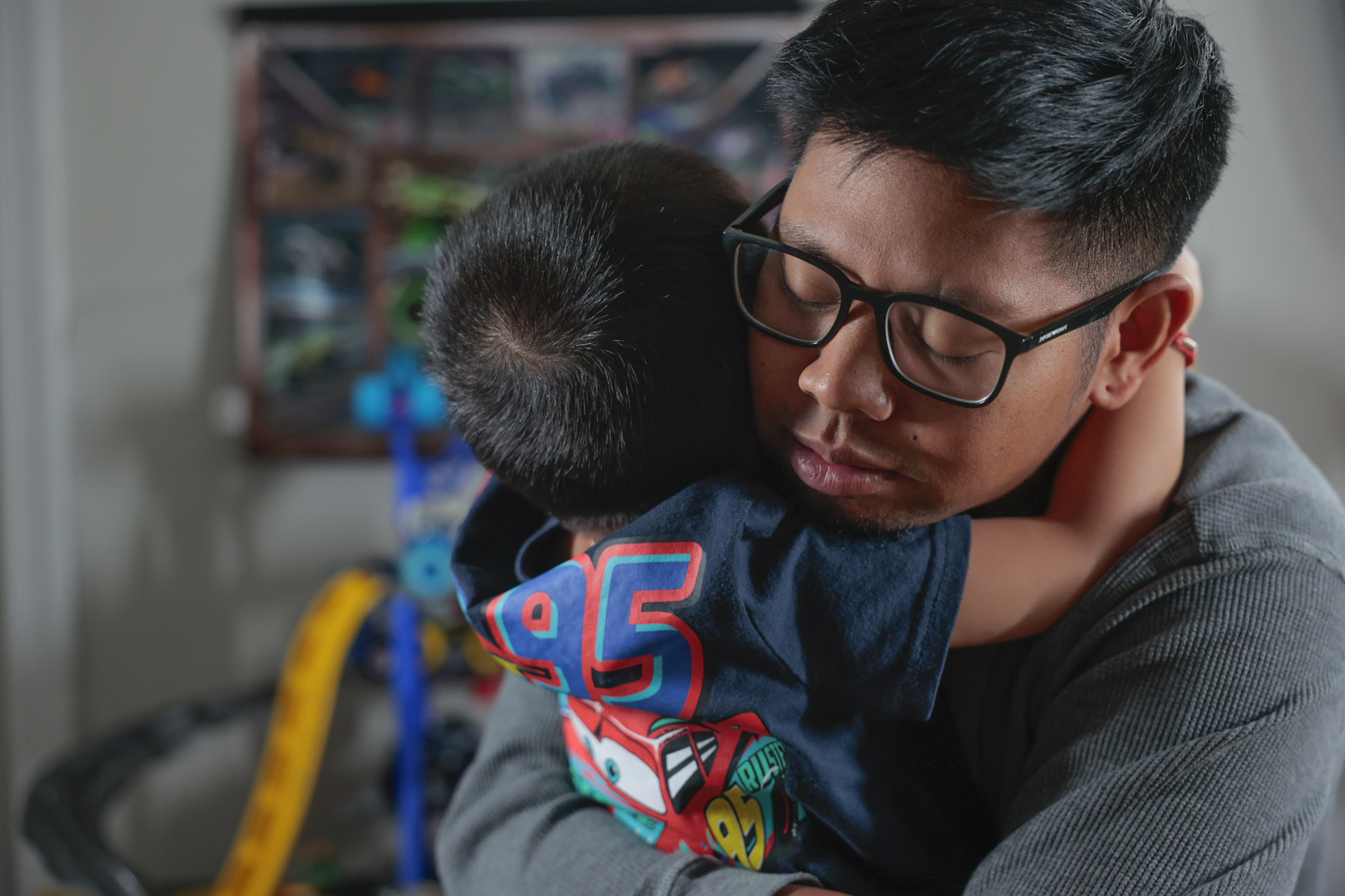
    Steven Sary hugs his 3-year-old son, Luca, at their Delco home, waiting for word on his wife, who at the time was detained in California by ICE. She was detained by ICE agents after getting off a plane in Los Angeles as the family traveled to Disneyland. Steven M. Falk / For The Inquirer

    “What happened to Monica should be treated as an extrajudicial kidnapping,” said Ryadi’s Philadelphia immigration attorney, Eric Rosenfeld, who is handling the case pro bono.

    He noted that Ryadi is a registered nurse, the wife of an American citizen, and the parent of a son who is an American citizen — yet ICE casually told her she would be sent to an undisclosed third country.

    She was never given any type of document or warrant to explain her arrest, he said. Upon release she was fitted with a GPS ankle monitor, and she knows ICE will likely try again to deport her, the attorney said.

    “This is a respite. Not security,” Rosenfeld said.

    As the Trump administration pursues its mass-deportation agenda, the protection offered by Withholding and similar relief “is proving to be very little protection at all,” the American Immigration Council wrote. “The Trump administration is trying to ship them out wherever it can — and keep them locked up in the meantime.”

    A Philadelphia man who was arrested in July remains in detention, despite having lived legally for almost 20 years.

    Mamadou Fadel Cherif of West Oak Lane was granted protection from potential political violence in his native Guinea. Now the administration wants to deport him to Ghana.

    Ryadi’s arrest added to the steadily growing number of immigrants taken into custody at American airports. The Philadelphia advocacy organization Asian Americans United estimates more than 20 people have been arrested at Philadelphia International Airport or while seeking to fly there since July 12.

    To receive Withholding of Removal, applicants must prove they were persecuted in the past or that their lives would be threatened in the future, that their home government harmed or will harm them — or failed to control others who might do so.

    When that relief is granted, the immigration judge also enters a deportation order, then tells the government it cannot deport the person to their homeland. In that way the removal is “withheld.”

    “We were planning to have an amazing trip with the family,” Sary said, “to see Cars Land with our son. But that changed.”

    This image shows Delaware County nurse Monica Ryadi, left, in white, being arrested by ICE agents at Los Angeles International Airport on Sept. 15. She and her husband were taking their 3-year-old son to visit Disneyland.Courtesy of the family

    “It felt like I was kidnapped,” Ryadi said. “I kept saying, ‘I’m legal, I’m a legal immigrant.’”

    She grew up in the United States with government permission, has work authorization, a Real ID, and a Social Security number. She pays taxes. Yet she was chained wrist, ankle and waist like a criminal, she said.

    Ryadi wonders if the ICE operation against her began in Philadelphia. As her family waited to board the plane, she said, a woman in a black jacket approached and made small talk.

    The woman didn’t have luggage, Ryadi said, and she didn’t get on the flight. Instead, she walked away to talk to a man who also did not appear to be a passenger.

    When Ryadi was released from the Adelanto detention center, 90 miles northeast of Los Angeles, immigrant-aid volunteers gave her a ride all the way to the city.

    There she flew into the arms of her husband and son.

    “I’m so happy to see you!” she cried.

    At the hotel, the family saw people decked out in Disney attire, coming back from the theme park. Young Luca asked if they could go.

    On Wednesday his parents took him to Cars Land.

  • A Philly man is deported to London. He was arrested by ICE last month while attempting to fly home from a business trip.

    A Philly man is deported to London. He was arrested by ICE last month while attempting to fly home from a business trip.

    A Philadelphia man who thought he was waiting for approval of a green card was deported to London on Wednesday night, his wife said, removed a month after being arrested by ICE at a California airport.

    Michael “Sandy” Sims, 42, had flown to California in September for what was supposed to be a short business trip, but was stopped outside the San Jose airport when he arrived to fly back to Philadelphia. He was held at the Immigration and Customs Enforcement detention center in Bakersfield, Calif.

    His wife, Jennifer Sims, 46, an American citizen, said Thursday that she had spoken to her husband, who was safe and in England. He was deported days before a scheduled Oct. 8 bond hearing that the couple had hoped would free him from detention.

    Jennifer Sims said she and her husband were now trying to figure out the next steps for their future.

    The Department of Homeland Security said Thursday that Sims was “a criminal illegal alien” who on Wednesday was lawfully deported to the United Kingdom.

    “This administration will not ignore the rule of law,” the department said in a statement.

    Sims’ Sept. 2 arrest came as American airports have become risky places for foreigners, even those who are here legally.

    Asian Americans United, which works to track airport arrests, estimates more than 20 people have been arrested at Philadelphia International Airport or while seeking to fly there since July 12. That includes at least 13 taken into custody at the Philadelphia airport itself.

    Sims, a veteran of the entertainment-lighting industry, was born in Ireland and raised in London. He had been expecting approval of a green card that he and his wife sought after they married in 2017.

    He told his wife that immigration agents had been waiting for him when his Lyft driver pulled up at the San Jose airport. He was confined at the Mesa Verde ICE Processing Center in Bakersfield, a 400-bed facility operated by the for-profit, Florida-based GEO Group.

    The Department of Homeland Security earlier said Sims had entered the country legally but overstayed his visa.

    “Criminal illegal aliens are not welcome in the U.S.,” DHS said in a statement. “Under President Trump and [Homeland Security] Secretary [Markwayne] Mullin, if you break the law, you will face the consequences.”

    The department said earlier, and repeated on Thursday, that Sims faces a criminal charge of domestic battery in Nevada, where he lived at one time. DHS provided no further details and, along with ICE, did not respond to requests for information on what allegedly happened and when.

    In a search of Nevada court documents, The Inquirer could find no record of any criminal case against Sims. And Sims’ Philadelphia immigration lawyer said he had no knowledge of and could locate no record of such a case.

    His wife said he had never been charged with a crime.

    Sims’ family and friends started a GoFundMe campaign to cover legal expenses to try to free him from detention and pay related costs. As of Thursday they had raised nearly $21,000 of a $30,000 goal.

    Sims’ wife said he legally entered the U.S. on a work visa in 2016.

    When that expired, he was approved for entry under ESTA, the Electronic System for Travel Authorization. That is an online initiative the federal government uses to prescreen travelers before they visit the United States under the Visa Waiver Program.

    The waiver program allows citizens from 42 countries, including Ireland and the United Kingdom, to travel here for tourism or business for up to 90 days at a time.

    Jennifer Sims said after they wed, she filed Form I-130, the document required to prove a valid family relationship with a foreigner who wants to immigrate to the United States.

    That application, she said, was approved in March 2020 ― a key step toward a green card. Her husband had completed his biometrics appointment, where the government collects the applicant’s fingerprints, photograph, and digital signature, three months earlier, she said.

    The couple thought they were waiting for approval of his green card when he was arrested, Jennifer Sims said.

  • Trump administration has abandoned plans to hold immigrants at a South Jersey military base, GAO says

    Trump administration has abandoned plans to hold immigrants at a South Jersey military base, GAO says

    The Trump administration has dropped its plans to build an immigrant-detention center at Joint Base McGuire-Dix-Lakehurst in South Jersey, according to a new report from the Government Accountability Office.

    The office said that in October, after the opening of an ICE detention site at Fort Bliss in El Paso, Texas, Pentagon officials said they “no longer plan to build detention facilities on other military installations.”

    Specifically, the report said, Defense Department and Immigration and Customs Enforcement officials “told us that they did not move forward with plans for facilities in Indiana and New Jersey.”

    The development was first reported by NJ Spotlight News.

    More than a year ago, in July 2025, the administration confirmed plans to house detainees at the South Jersey base as a way to support President Donald Trump’s plans for mass deportations.

    Estimates were that Joint Base McGuire-Dix-Lakehurst, which spreads through parts of Burlington and Ocean Counties, could hold 1,000 to 3,000 detainees.

    Specific details were not released, and as time went on it was unclear if planning had gone forward.

    In November 2025, local Democratic elected officials said they had received a letter from the administration saying there was currently no approved construction plan, nor a timeline, for confining people at the base.

    U.S. Reps. Donald Norcross and Herb Conaway, both New Jersey Democrats and members of the House Armed Services Committee, requested more information about the administration’s plans from the Department of Homeland Security.

    The administration’s response said the government’s need for more detention space “reflects the Trump administration’s commitment to restoring the rule of law and ending the catch-and-release policies of prior years that jeopardized American communities.”

    The base had been named as one of two sites certified to hold immigrants, the other being Camp Atterbury in Indiana.

    The report by the GAO, a nonpartisan, investigative arm of Congress, said ICE had begun new detention initiatives before developing a plan for expansion, resulting in waste. Since January 2025, ICE had invested significant resources in six new initiatives to increase detention capacity, but by July 2026 had scaled back four of them, the GAO said.

  • A business trip from Philly led to an ICE arrest at a California airport. Now a local man is in detention.

    A business trip from Philly led to an ICE arrest at a California airport. Now a local man is in detention.

    Michael “Sandy” Sims was supposed to be back in Philadelphia by now, after a business trip to the West Coast. Instead, he is locked up in an ICE detention center in California.

    Sims, 42, a veteran of the entertainment-lighting industry, told his wife that immigration agents were waiting for him when his Lyft driver pulled up at the San Jose airport early on Sept. 2.

    Sims was born in Ireland and raised in London, and had been expecting approval of a green card that he and his wife, an American citizen, sought after they married in 2017.

    Now he is in custody as U.S. airports become risky places for foreigners, amid an ICE push for ever-greater numbers of arrests.

    “It’s horrible,” said Sims’ wife, Jennifer, 46. “We thought we were waiting for a green card.”

    For so long, she said, the United States has been a beacon for people around the world who want to come, work, and contribute, to create better lives for their families. Now, she said, “the American dream is gone.”

    Sims is being held at the Mesa Verde ICE Processing Center in Bakersfield, a 400-bed facility operated by the for-profit, Florida-based GEO Group.

    The advocacy organization Asian Americans United, which works to track airport arrests, said it estimates more than 20 people have been arrested at Philadelphia International Airport or while seeking to fly there since July 12. That includes at least 13 taken into custody at the Philadelphia airport itself.

    The Department of Homeland Security said Sims had entered the country legally but overstayed his visa.

    “Criminal illegal aliens are not welcome in the U.S.,” DHS said in a statement. “Under President Trump and [Homeland Security] Secretary [Markwayne] Mullin, if you break the law, you will face the consequences.”

    The department said Sims faces a criminal charge of domestic battery in Nevada, where he lived at one time. DHS provided no further details and, along with ICE, did not respond to requests for information on what allegedly happened and when.

    In a search of Nevada court documents, The Inquirer could find no record of any criminal case against Sims. And Sims’ Philadelphia immigration lawyer, Hunter Yost, said he had no knowledge of and could locate no record of such a case.

    Jennifer Sims said her husband has never been charged with a crime.

    When she subsequently asked her husband about the government’s assertion that he had a pending criminal case, she said, he told her that when he was arrested and handcuffed by Immigration and Customs Enforcement, one of the agents kept saying, “You’re a wife-beater,” and the other repeatedly said, “No, he’s not.”

    Jennifer Sims pictured with her husband, Michael “Sandy” Sims.Courtesy of the family

    Sims’ family and friends have started a GoFundMe campaign to cover legal expenses to free him from ICE detention and pay related costs, so far raising more than $20,000 of the $30,000 goal.

    Sandy Sims sent a note from detention that was posted there:

    “Hello to everyone from Dorm B Mesa Verde Detention Center,” he wrote. “Thank you one and all for your support. … I’m so grateful. Thank you all and I hope this situation will be over soon.”

    Sims’ wife said he legally entered the U.S. on a work visa in 2016. When that expired, he was subsequently approved for entry under ESTA, the Electronic System for Travel Authorization. That is an online initiative the federal government uses to prescreen travelers before they visit the United States under the Visa Waiver Program.

    The waiver program allows citizens from 42 countries, including Ireland and the United Kingdom, to travel here for tourism or business for up to 90 days at a time.

    Jennifer Sims said after they wed, she filed Form I-130, the document required to prove a valid family relationship with a foreigner who wants to immigrate to the United States. That application, she said, was approved in March 2020 ― a key step toward a green card. Her husband had completed his biometrics appointment, where the government collects the applicant’s fingerprints, photograph, and digital signature, three months earlier, she said.

    He was given a U.S. Social Security number, she said.

    The couple worries their green-card paperwork might have been lost when they relocated to Las Vegas and back to Philadelphia between 2018 and 2021.

    Meanwhile, the Trump administration’s nationwide effort to increase arrests at U.S. airports has spurred warnings from immigration attorneys that even those with valid work permits and government-issued identification can be in danger.

    An ICE summer push saw a record 49,571 people arrested across the nation in July, many of them taken into custody at airports, courthouses, and scheduled immigration check-ins. That is an average of 1,599 arrests a day, a 15% increase over the previous month, according to figures from the Deportation Data Project.

    The July arrests included 1,174 in Pennsylvania and 2,112 in New Jersey.

    Homeland Security said airport arrests are occurring because the Trump administration “reversed the horrendous Biden-era policy that allowed aliens in our country illegally to jet around our country.”

    “Under President Trump, DHS will no longer tolerate this,” the agency said last month, as news spread of Philadelphia airport arrests. “This administration is working diligently to ensure that aliens in our country illegally can no longer fly unless it is out of our country to self-deport.”

    The Trump administration says that its immigration-enforcement effort targets criminals, that it has been arresting and deporting killers, rapists, and child-abusers to make the country safer. However, the latest data showed that half of those arrested in July had no criminal convictions or charges, and less than 25% had been convicted of a crime.

    Sandy Sims has worked in entertainment lighting since 2002, including on shows for Metallica, Usher, and Florence + the Machine, the popular English rock band, his wife said.

    She said she feels as if the immigration system has been turned into a moneymaker, where people trying to follow the law are charged high fees, and private companies reap profits by keeping people in custody.

    The GEO Group signed a contract with ICE in 2019 to run five locations, including the Mesa Verde center, where Sims is being held, that is expected to bring the company $200 million a year.

    “I feel,” Jennifer Sims said, “like they just want people’s money.”

    Inquirer staff writer Dylan Purcell contributed to this article.

  • Clergy and others gather outside Philadelphia ICE office in aftermath of officer’s suicide

    Clergy and others gather outside Philadelphia ICE office in aftermath of officer’s suicide

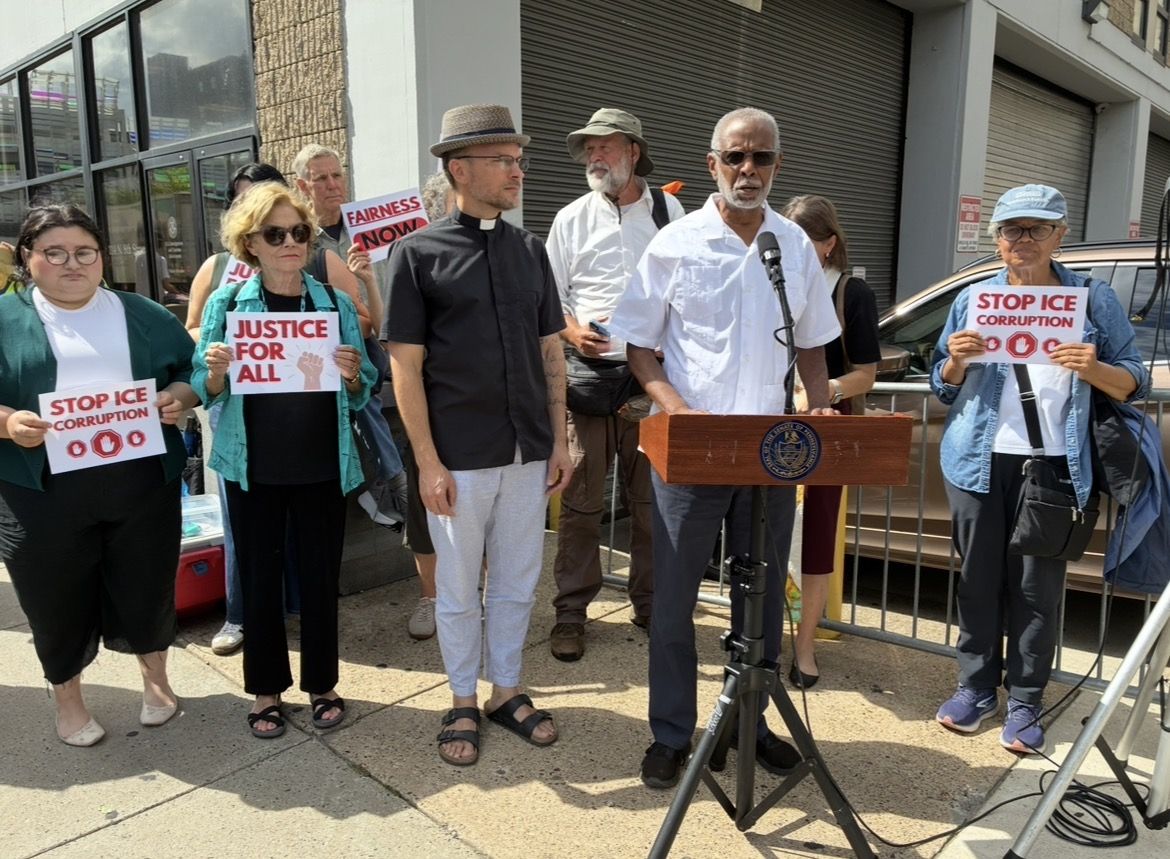
    A group of clergy, political leaders, and activists gathered at the Philadelphia ICE office on Friday in the wake of a deportation officer’s suicide, condemning what they said was the agency’s destruction of lives both inside and outside its ranks.

    Speakers said they said they grieved with the family of Joseph Moore, 38, who died of a self-inflected gunshot wound while parked near the Center City headquarters, and with the families of immigrants treated wrongly and cruelly by the agency.

    Moore died Aug. 28 as he was facing dismissal, along with other new officers brought on amid a huge wave of ICE hiring, one that critics say has led to the employment of unqualified and unvetted recruits.

    “He was an ICE agent,” said state Sen. Art Haywood, a Democrat who represents parts of Philadelphia and Montgomery counties, “but he was also a human being.”

    Local ICE officials did not immediately respond to a request for comment.

    Speakers called ICE a rogue agency, and called on its officers to quit their jobs.

    One man, who kept vigil outside ICE headquarters nearly every day in August, said he tried to talk to officers as they went inside, and wished he could have talked to Moore.

    Generally, said Jim Nicholson, who described himself as Quaker and non-violent, the officers he addressed were “not interested in being human, compassionate beings,” that they told him everyone they arrest is a criminal.

    “I’m a very sorry to hear an agent of ICE committed suicide. That’s a tragedy,” he said. “If the agent had come to us, to me, I would have tried to help.”

    U.S. Immigration and Customs Enforcement, charged with carrying out President Donald Trump’s mass-deportation plan, has been on a hiring binge that more than doubled the size of the agency. Now ICE has begun quietly firing some of those new officers, The Washington Post reported, citing multiple officials who said officers were put on the streets without being properly vetted.

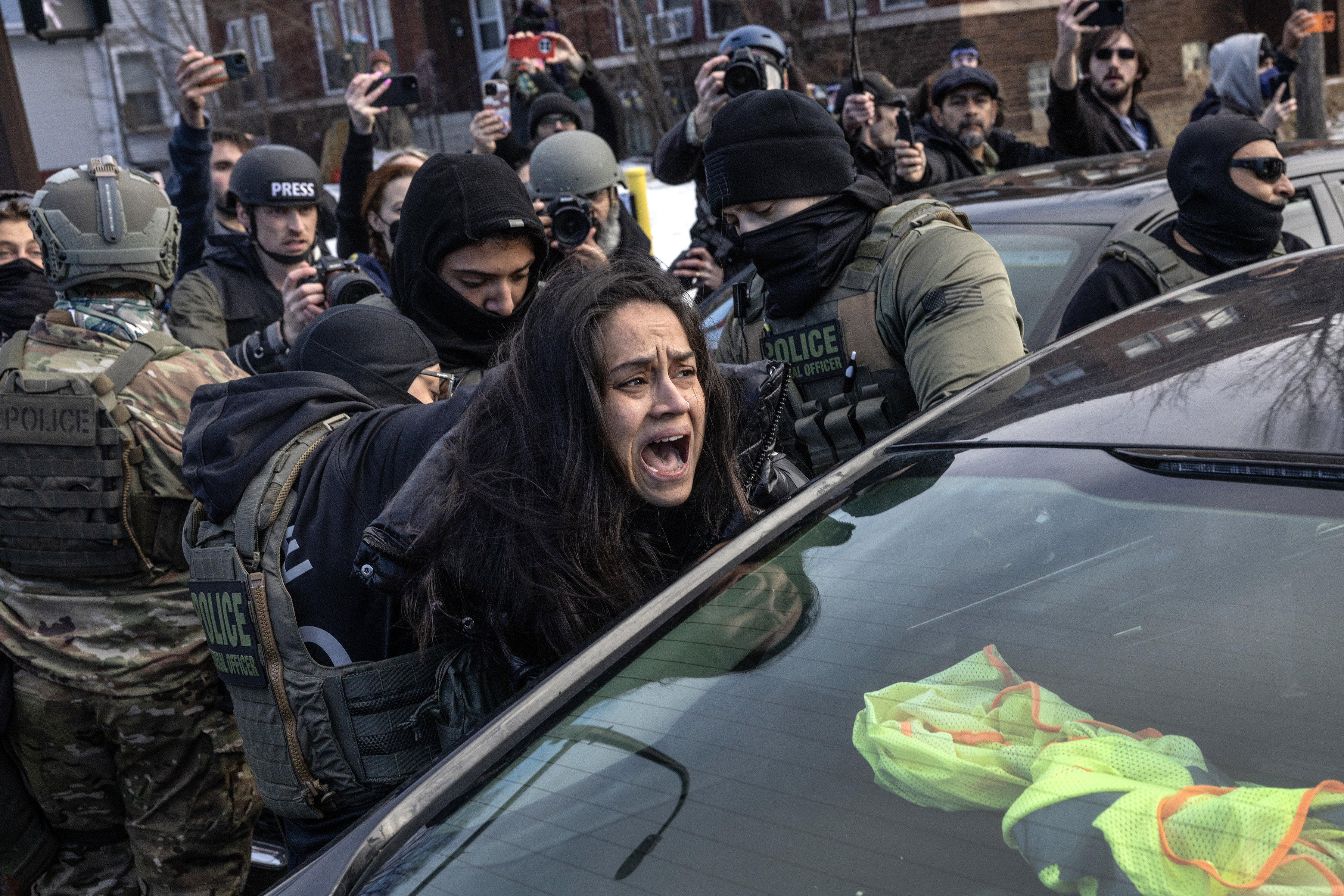
    Federal agents arrest a woman after smashing her car window and dragging her from the vehicle in Minneapolis on Jan. 13, 2026. The legality of the Trump administration’s tactics during its immigration enforcement operation, known as Metro Surge, in Minneapolis early this year was challenged by a series of federal lawsuits.DAVID GUTTENFELDER

    The Post reported on Monday how Moore, a Marines reservist who graduated from Cheltenham High School in 2006, died by suicide while parked near ICE headquarters.

    The newspaper said ICE notified Moore in late August that he would be fired, and told him to come to the Philadelphia office at Eighth and Cherry Streets. His family has disputed the suicide ruling, according to The Post.

    Philadelphia police officials said officers called to the scene tried to stop Moore from hurting himself.

    Police were summoned to the area of Eighth and Race Streets ― the ICE office is one block south ― for a report of an armed man in distress who had barricaded himself inside a vehicle, officials said.

    The officers communicated with the man and tried to de-escalate the situation, but he drew a gun and shot himself, police said. No Philadelphia officer fired a weapon, the department said.

    Police, without identifying Moore by name, said they have finished their inquiry into the death, and would provide no additional details because it involved a suicide.

    In mid-2025, ICE received massive new funding for hiring — about $30 billion, part of $76.5 billion it received through President Donald Trump’s “Big Beautiful Bill.” The administration has said it wants to deport a million people a year, which would require a vastly larger ICE and extensive new detention capability.

    In January, ICE said an unprecedented nationwide recruitment campaign had shattered expectations, resulting in the hiring of more than 12,000 officers.

    That more than doubled the staff from 10,000 to 22,000.

    “That’s a 120% increase in our workforce,” Tricia McLaughlin, then an assistant secretary at Homeland Security, said at the time. “And that’s in just about four months.”

    Part of the lure was a promised $50,000 signing bonus.

    ICE said the majority of new hires were police and military veterans, but an investigation by The Associated Press found evidence that applicants with questionable histories were not fully vetted or were hired in spite of their pasts.

    The Post said Homeland Security would not answer questions about specific hiring decisions. It did say that some applicants received “tentative selection letters” and offers to begin working on a temporary status before being subjected to full background checks.

    The hiring happened so fast that new officers were put on the streets before being adequately vetted, multiple former officials told the Post. One ICE whistleblower urged officials to halt the expansion, saying in an August 2025 memo that the “overwhelmed” agency had hired officers without checking their fingerprints or their identities, the Post said.

    In recent months, ICE has begun quietly firing some of the recruits, the Post reported, citing three former DHS officials who spoke on the condition of anonymity. They said ICE has cited poor performance or red flags that should have been identified earlier.

    The Department of Homeland Security rejected those concerns.

    Relatives of an ICE officer who shot a Colombian man in Maine in July told The Associated Press he struggled with serious mental health issues since early childhood, and never should have been given a badge and gun. The revelations about the officer, David Brouillette, brought fresh attention to ICE hiring procedures.

    The Post said Moore had dreamed of a life in law enforcement since he was a teenager. But two law enforcement agencies fired him, and others rejected him. ICE hired him in the fall as a deportation officer.

    Efforts to reach Moore’s family members were unsuccessful.

    His obituary said the father of two served 20 years in the Marines as both an active member and a reservist. And that he graduated with a 4.0 grade-point average from Rosemont College, where he earned a bachelor’s degree in criminal science.

    His funeral is scheduled for Sept. 25 at Hope Community Church in Gilbertsville, Pa.

    If you or someone you know may be considering suicide, help is available. Contact The 988 Suicide & Crisis Lifeline by calling or texting 988.

  • Anti-ICE activists question why Philly police showed up at their meeting. The department is investigating.

    Anti-ICE activists question why Philly police showed up at their meeting. The department is investigating.

    The Rev. Jay Bergen was at the sign-in table inside the Friends Center, where No ICE Philly was holding its regular public meeting last week, when a police civil affairs officer appeared.

    Bergen asked what was happening, and said the officer responded, “We’re just here to make sure everyone’s safe.”

    The activist group was preparing to serve cake, to celebrate its one-year anniversary.

    Bergen, who leads No ICE Philly, was concerned that the officer brought his gun into the Center City facility, which includes a Quaker meetinghouse. The pastor escorted the officer down the hall to the door, explaining that he could attend the public meeting if he wished ― then noticed a second civil affairs officer outside.

    The two officers stayed there, watching, for the duration of the three-hour gathering, Bergen said, their presence leaving those inside feeling confused, intimidated, and surveilled.

    “Who gave the order, and what was the goal?” Bergen asked in an interview. “Why are we more of a threat than ICE agents are? … It’s another instance of the Philadelphia police being interested in targeting Philadelphians instead of protecting Philadelphians.”

    The police department said in a statement last week that “the Sept. 9 event was identified as a scheduled protest.” Civil affairs officers routinely attend demonstrations as part of their duty to public safety and the First Amendment, and “their presence was not specific to No ICE Philly,” the statement said.

    But on Monday, Staff Inspector Frank Palumbo, who oversees the civil affairs unit, said he would open an investigation into the matter.

    Palumbo said he did not know why an officer would have entered the Friends Center. That would be outside department policy, he said, unless there was a disturbance inside.

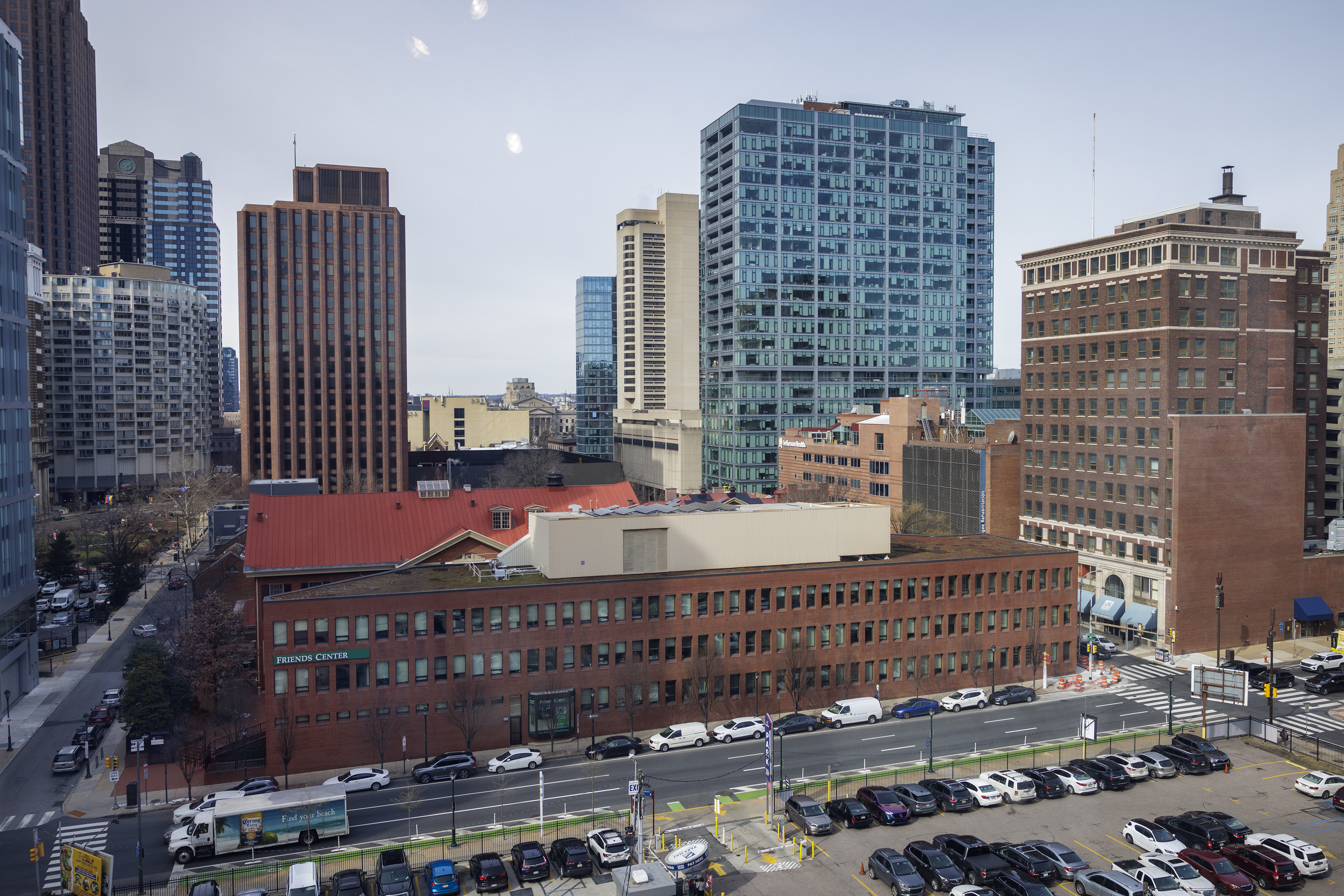
    The Friends Center at 15th and Cherry Streets.Alejandro A. Alvarez / Staff Photographer

    If the group had gathered outdoors, Palumbo said, the department would have sent more officers ― including some in uniform. It did not do so, he said, because “there was no indication whatsoever that there would be destruction of property, violence, or anything that would even result in civil disorder.”

    He added, “This will not continue to occur.”

    Civil affairs units are specialized teams of officers designed to act as neutral liaisons between sides during what might be contentious protests, labor actions, or big public gatherings. Like other officers, they always carry their guns while on duty.

    In Philadelphia, the police department says, civil affairs officers operate in a diplomatic and impartial capacity to ensure that constitutional rights are protected for all. The officers prioritize protection of life and property while preventing vandalism, assaults, or other illegal acts not covered by First Amendment rights, the department says.

    Niles Wilson of the Center for Policing Equity, a California-based research and reform group, said a key question of any investigation into the matter should be why the officers were at the meeting at all.

    “What intelligence did the police department have that would either lead these officers to do this, or were these officers acting on their own?” he asked. “That needs to be answered.”

    The stakes reach beyond any particular meeting, he said.

    A civil affairs unit is an asset, one that can help “towards transparency and building trust between the police department and the community,” Wilson said. But “anytime the public trust is lost in that service, then it disrupts public safety everywhere.”

    Philadelphia civil affairs officers are commonly present at demonstrations led by No ICE Philly, which in the last year has emerged as perhaps the boldest and most visible of the city’s pro-immigrant organizations.

    Its members and supporters have been cited or arrested by different police agencies as they carried out peaceful civil disobedience, including attempting to block federal government vehicles from exiting the U.S. Immigration and Customs Enforcement office in Center City.

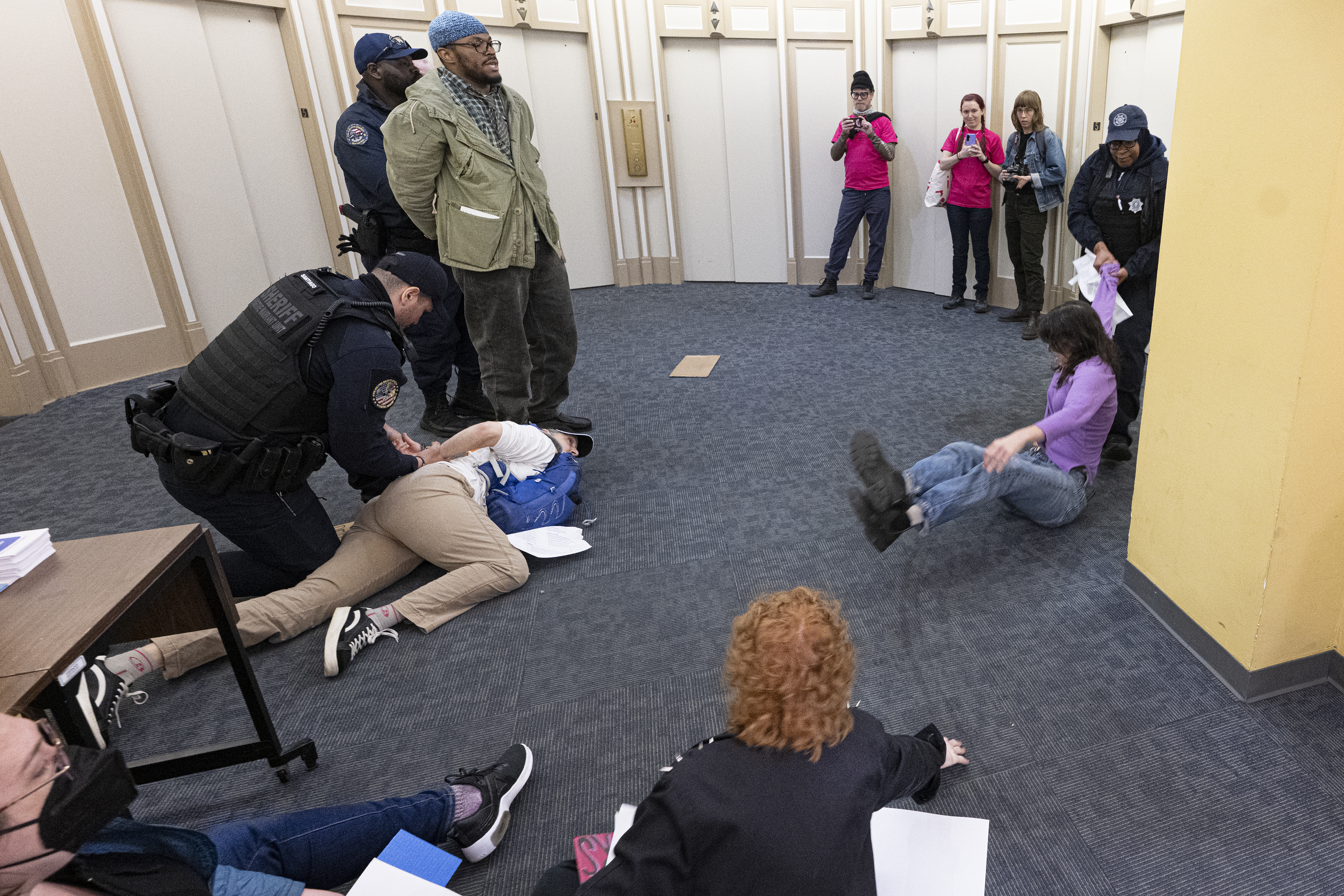
    In one chaotic scene this year, activists were handcuffed and physically removed from the foyer area at the Philadelphia Sheriff’s Office, where they staged a sit-in to demand that Sheriff Rochelle Bilal help stop ICE arrests at the Criminal Justice Center. No ICE Philly holds a weekly “noise demonstration” outside ICE headquarters at Eighth and Cherry Streets, banging drums and blowing whistles to raise awareness and disrupt the work of agents inside.

    No ICE Philly activists and supporters are handcuffed and taken into custody at a sit-in outside the office of Sheriff Rochelle Bilal in April 2026.Jose F. Moreno / Staff Photographer

    The Sept. 9 gathering, however, was a regular meeting, generally held twice a month, open to all, and advertised in advance on social media. Other meetings have drawn far more people than the 60 or so present at this one, organizers said, which made the police presence puzzling.

    “It felt kind of like a threat, like, ‘We’re watching,’” said Em Auerbach, a group member who attended. “It made people feel on edge.”

    As the meeting was ending, Auerbach said, one of the officers approached a Friends Center employee at the front desk and asked: “Are you good? Do you need anything?”

    The worker answered that she was fine, Auerbach said.

    No ICE Philly members waited for the employee to finish her work, and then everyone left together, Auerbach said.

    “It was weird,” Auerbach said of the officers’ presence. “I think they were there to intimidate us. … Unless there was a threat against our group, I don’t think this was a good use of taxpayer funds.”

    Bergen described at one point asking the officers, “‘Why are you surveilling us?’ They said, ‘We’re not surveilling.’ I said, ‘That’s what a body camera is for.’”

    The pastor said that as people entered the meeting, they said the police officers had asked who they were and why they were there.

    Palumbo said if that happened, it would fall outside department policy, that even at combative street demonstrations people generally are not asked their names “unless it is necessary to determine who they are for the purposes of an investigation. This was not an investigation.”

    Palumbo said the relationship between the police and No ICE Philly has been cordial. He estimated that police have cited protesters twice in the last year, issuing citations with $100 penalties that are similar to parking tickets.

    Those citations, he said, are “the most extreme police enforcement we’ve ever done with this group.”

    Correction: This story has been updated to correct the pronouns used by Rev. Jay Bergen and Em Auerbach.

  • ICE arrested nearly 50 immigrant workers in two central Pennsylvania operations, advocates say

    ICE arrested nearly 50 immigrant workers in two central Pennsylvania operations, advocates say

    ICE agents arrested at least 49 immigrant construction workers in two separate operations carried out in the last week in the central Pennsylvania community of Danville, according to immigration advocates.

    All remain in detention, they said.

    The arrests targeted workers who were leaving the construction site at the Geisinger Medical Center, where a patient tower is being built.

    At least 41 people were arrested on Sept. 2 as they left the property around 5 p.m., and eight more were arrested on Tuesday, beginning about 6 a.m., according to Centre County Rapid Response Network, an immigrant-assistance group, and the Pennsylvania Immigration Coalition. The men are nationals from Nicaragua, El Salvador, Honduras, and other countries.

    U.S. Immigration and Customs Enforcement officials could not immediately be reached for comment, nor could those with the Department of Homeland Security.

    The Pennsylvania Immigration Coalition said the arrests represent the largest workplace raid in the state to date.

    In a statement, the Geisinger Medical Center said it was aware of law enforcement activity on Sept. 2 that involved workers from its tower construction project. The activity did not occur on Geisinger property, it said.

    “As with any large construction project, we hire a construction manager to oversee the project,” the statement said. “It is their responsibility to make sure all workers on the project meet all federal and state work eligibility requirements.”

    Immigration advocates said that ICE agents made the arrests with the assistance of Danville police, that workers driving cars were stopped as they left, and that police followed other workers from the edges of Geisinger property to their homes.

    Workers leaving Danville for other parts of the state encountered checkpoints near highway entrances, the coalition said.

    The involvement of local authorities in ICE arrests has been a controversial issue in Pennsylvania, as more police agencies sign on to help enforce federal immigration law.

    The immigration coalition said eyewitnesses to the Sept. 2 operation reported that ICE was using drones, which increased an atmosphere of militarization.

    “We don’t need our local police enforcing federal law. It is not their job and has proven time and again to harm public safety,” said Jasmine Rivera, executive director of the Pennsylvania Immigration Coalition. “ICE and billionaires profiting off federal contracts are making billions of dollars from kidnapping our people. They are terrorizing families and attacking our neighbors who are literally building our communities. We don’t need $240 billion of our tax dollars to go to ICE and [U.S. Customs and Border Protection]; we need that money to make education, healthcare, and housing affordable.”

    Correction: An earlier version identified the construction site by the name of the project designer, which has been deleted from the story. EwingCole does not manage the site and is not responsible for its operations nor the employment of workers there.

  • Across the nation, Salvadoran immigrants brace for loss of temporary protected status

    Across the nation, Salvadoran immigrants brace for loss of temporary protected status

    Weeks after thousands of Haitian and Syrian immigrants saw the end of their protected status in the U.S., exposing them to ICE arrest and deportation, more than 170,000 people from El Salvador now face the same fate.

    And soon.

    Temporary protected status for the Central American nation is set to end on Sept. 9, a deadline that’s provoked urgency and uncertainty among community leaders, activists, and businesspeople around the country. They say the loss of legal status hurts not only the immigrants who have built lives and families here, but also Americans who depend on their labor, expertise, and tax dollars.

    TPS, as it’s called, has been a mainstay of U.S. immigration and humanitarian policy for more than three decades — and now is fast disappearing under the Trump administration.

    It was created by Congress in 1990, and El Salvador became the first country to be designated, in 1991, in response to Salvadorans fleeing a brutal 12-year civil war.

    As of last year the U.S. provided TPS to about 1.3 million people, allowing them to live and work in this country while their homelands grappled with war, environmental disaster, epidemics, or other extraordinary circumstances.

    When Trump returned to office in January 2025, TPS was provided to nationals of 17 countries. Since then the administration has ended or is moving to end status for 13, affecting about 1 million of the 1.3 million recipients, according to the Pew Research Center.

    A key aspect of that evolving effort came in June, when the Supreme Court ruled that the administration could terminate TPS for countries such as Haiti and Syria. And further that Department of Homeland Security decisions about TPS would be largely unreviewable by lower courts, disarming advocates of a weapon they had used to fight cancellations.

    The Trump administration insists that temporary means exactly that, that TPS was never meant to become a path to permanent residency. The White House promises to deport those who lose legal status, an outcome that advocates say is guaranteed to hurt immigrant families that include spouses and children who are American citizens.

    Homeland Security posted video of a Haitian deportation flight on social media, where it said: “Those with terminated TPS are in our nation Illegally. They have two options: LEAVE IMMEDIATELY or be DEPORTED.”

    Some legal groups argue that the law requires the secretary of Homeland Security to formally extend or terminate TPS at least 60 days before the expiration date for any particular country. And that the Trump administration failed to publish such a notice for El Salvador in the Federal Register, meaning that protections should automatically extend for six months.

    However, U.S. Citizenship and Immigration Services says the TPS designation expires on Sept. 9, as scheduled.

    El Salvador has the third-highest TPS population in the U.S. at just over 170,000, ahead of the 101,000 from Ukraine, whose status expires next month.

    Elnora Bassey, a policy attorney at CLINIC, the Catholic Legal Immigration Network Inc., said in a statement that renewing TPS for El Salvador offers the administration “an opportunity to make a choice that demonstrates its ability to protect vulnerable populations, and that we are a nation that demonstrates compassion for all people.”

    The 1991 designation for El Salvador was followed by immigration relief that allowed El Salvadorans to stay when initial TPS finding expired. In 2001 the country was redesignated after two earthquakes killed at least 1,100, injured nearly 8,000, and displaced more than one million people.

    An estimated 2.5 million Salvadorans live in the U.S., according to a Pew Research Center analysis of census data. Philadelphia is home to an estimated 2,759, with about 17,300 statewide and 78,000 in New Jersey.

    El Salvador, known as the “Land of Volcanoes” for its frequent and often destructive eruptions, is roughly the size of New Jersey and has a population of about 6.3 million people.

    For years, the nation was beset by one of the world’s highest homicide rates, more than 100 per 100,000 people. That has declined dramatically amid the government’s use of emergency powers that have seen the detention of more than 80,000 suspected gang members.

    The U.S. State Department ranks El Salvador at Level 1, its safest travel rating, and says “gang activity has decreased dramatically since 2022, causing a drop in violent crime and murders.”

    Research by the National TPS Alliance says that deporting Salvadoran immigrants would deepen difficult socioeconomic conditions in that country and potentially cause political unrest and destabilization.

    The alliance estimates that remittances from the U.S. to Salvadoran families would decrease by more than $1.2 billion. And that poverty rates there would increase 10%, with older, deported immigrants unable to find jobs, and younger ones facing unemployment.

    TPS provides immigrants in the U.S. with work authorization and protection from removal, but no path to permanent residency or citizenship. Once TPS protection ends, holders revert to their previous immigration status.

    For many that means they become undocumented and subject to removal proceedings.

    TPS holders work at higher proportions than the country as a whole, pay billions of dollars each year in federal and local taxes, and contribute to the solvency of a Social Security system from which they are unlikely to ever draw benefits.

    TPS holders from El Salvador annually pay about $1.5 billion in federal, state, and local taxes, according to the National TPS Alliance. They work mainly in construction, in buildings and grounds services, in transportation, and in manufacturing.

    “TPS holders from El Salvador are our neighbors, friends, colleagues, faith leaders, highly skilled workers, and small-business owners,” said Dulce Guzmán, executive director of Alianza Americas, a nonprofit group that supports Latino communities. “At a moment when immigrant communities face tremendous uncertainty and fear, our faith and shared humanity call us to choose compassion, uphold human dignity, and love our neighbors without distinction.”

  • A Guinean immigrant has lived in the U.S. legally for two decades. Unable to deport him to his homeland, ICE wants to send him to a third country.

    A Guinean immigrant has lived in the U.S. legally for two decades. Unable to deport him to his homeland, ICE wants to send him to a third country.

    The lawyer for a Guinean man who has lived legally in the United States for nearly 20 years asked a federal judge to free him from ICE detention on Thursday, even as government attorneys described plans to proceed with his deportation.

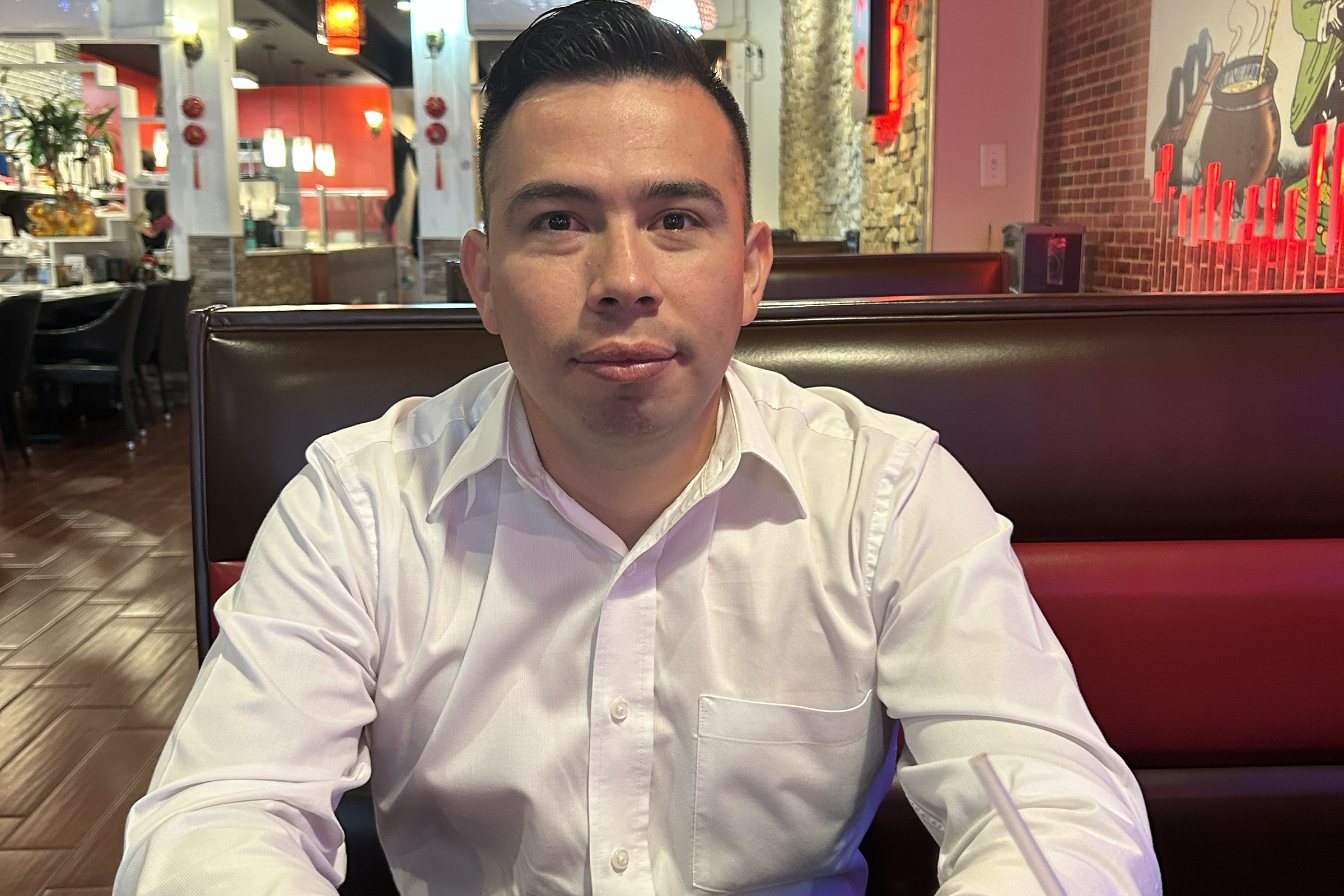
    Mamadou Fadel Cherif, 56, was arrested by immigration officers as he left his West Oak Lane home for work on July 13 and remains in custody at the Moshannon Valley Processing Center in Central Pennsylvania.

    “There’s a human being underlying these proceedings,” attorney Conor Deane told U.S. District Judge Juan Sanchez, as the lawyers debated complicated immigration regulations and law. “An exceptional human being. … He’s the epitome of who you would want to live in this country.”

    Fadel Cherif works in dining services at La Salle College High School, the private Catholic boys school in Montgomery County, and also drives for Uber. He’s the main support for his wife, who has legal permanent residency, and for their four American-born sons, one of whom is a Marines reservist.

    Deane sought Fadel Cherif’s immediate release, saying he has been illegally detained and denied due process under the law.

    Nearly two decades ago, Fadel Cherif was granted what’s called Withholding of Removal, which allows him to live and work in the United States, and bars his deportation to his West Africa homeland, where the U.S. government agrees he could be harmed or killed over his political beliefs.

    That status does not shield him from being sent to a third country, however, if ICE can find a nation willing to accept him. Those kinds of third-country deportations are difficult for the agency to achieve, but the Trump administration has pushed to accomplish them.

    The Migration Policy Institute estimates that during its first year back in office, the Trump administration carried out about 15,000 removals to third countries, a fraction of the total 396,000 deportations.

    Deportations of those who have Withholding of Removal are even more rare, according to the Amica Center for Immigrant Rights in Washington. The center says it is pointless to detain those people while attempting to deport them. If ICE were to release a foreign national and later identify an appropriate third nation, it could simply detain them again.

    In court Thursday, the judge noted that authorities plan to deport Fadel Cherif to Ghana — sparking courtroom debate over the West African land’s assurances to the U.S. government that he would be safe there.

    Deane said those assertions are not sufficient to deport someone. He described Ghana’s diplomatic assurances as “very boilerplate,” and not barring that nation from sending his client to another country or even back to Guinea.

    Assistant U.S. Attorney Landon Jones told the judge he did not have additional information regarding Ghana’s assurances, but the U.S. State Department has deemed them credible.

    Abdoulaye Cherif near his West Oak Lane home in July 2026. His father, Mamadou Fadel Cherif, was arrested by ICE and has been detained while the agency tries to deport him.Yong Kim / Staff Photographer

    Fadel Cherif’s wife and two of his sons, who were in court for the proceedings, declined to comment.

    Advocacy groups and immigration lawyers say the Trump administration is increasingly arresting and detaining migrants who have been granted withholding, keeping them in custody while it pursues removal to a third country.

    One challenge to deportation is even those nations that willingly accept their own citizens can be disinclined to accept other foreign nationals.

    Ricky Palladino, another lawyer for Fadel Cherif, said earlier that there’s no reason for ICE to detain him. He has no criminal record, but does have work authorization, a Social Security number, and a driver’s license.

    Fadel Cheriff is nearing the end of his eighth week in detention.

    In Guinea, a nation of 12 million people that’s roughly twice the size of Pennsylvania, Fadel Cherif was jailed by the government after protesting the results of his country’s 1998 presidential election, which was marred by irregularities. He later fled in fear of being rearrested, using a document that showed a different Guinean identity to enter the United States in New York in November 2003.

    Fadel Cherif was denied asylum — which carries a path to citizenship — when he could not prove that he had filed within a year of entering the United States.

    To receive Withholding of Removal, applicants must prove they were persecuted in the past or that their lives would be threatened in the future, that the government harmed or will harm them — or failed to control others who might do so. They also must show that moving to a different part of their home country would not provide safety.

    When Withholding of Removal is granted, the immigration judge also enters a deportation order, then tells the government it cannot deport the person to their homeland. In that way the removal is “withheld.”

    People with that status cannot leave the United States without triggering deportation, have no path to citizenship, and cannot petition to bring family members to this country.

    Fadel Cherif’s lawyers filed what’s called a habeas petition, which asks a judge to order the government to prove it has the lawful authority to detain the person. The term “habeas corpus” translates from Latin as “you have the body,” and such filings are considered crucial constitutional safeguards against wrongful imprisonment.

    Habeas petitions, once rare, have dominated the docket at Philadelphia federal court since the Trump administration initiated a policy of mandatory detention last year. That provoked an avalanche of lawsuits by immigrants who challenged their incarceration, demanding their freedom or at least a bond hearing in Immigration Court.

    Judge Sanchez gave no indication of when he would issue a ruling.

  • A man seeking asylum was detained during a routine ICE appointment in Philly. He fears being tortured or killed if deported.

    A man seeking asylum was detained during a routine ICE appointment in Philly. He fears being tortured or killed if deported.

    Jhon Perez Romero carries a driver’s license, Social Security card, and an employment permit, working as a Spark Driver for Walmart in York, Pa.

    He also carries the fear of being tortured or killed if he should be deported to his Venezuelan homeland, where he’s been accused as a “traitor” by the government he once served as an intelligence officer.

    Perez Romero, who was interviewed and released by U.S. immigration officials when he crossed the border in 2023, was arrested by ICE in Philadelphia on June 30, when he appeared for what he thought would be a routine check-in. He joined a growing number of immigrants taken into custody even while they pursue asylum, a long-established legal process that can grant permission to live in the United States to people who could be harmed at home.

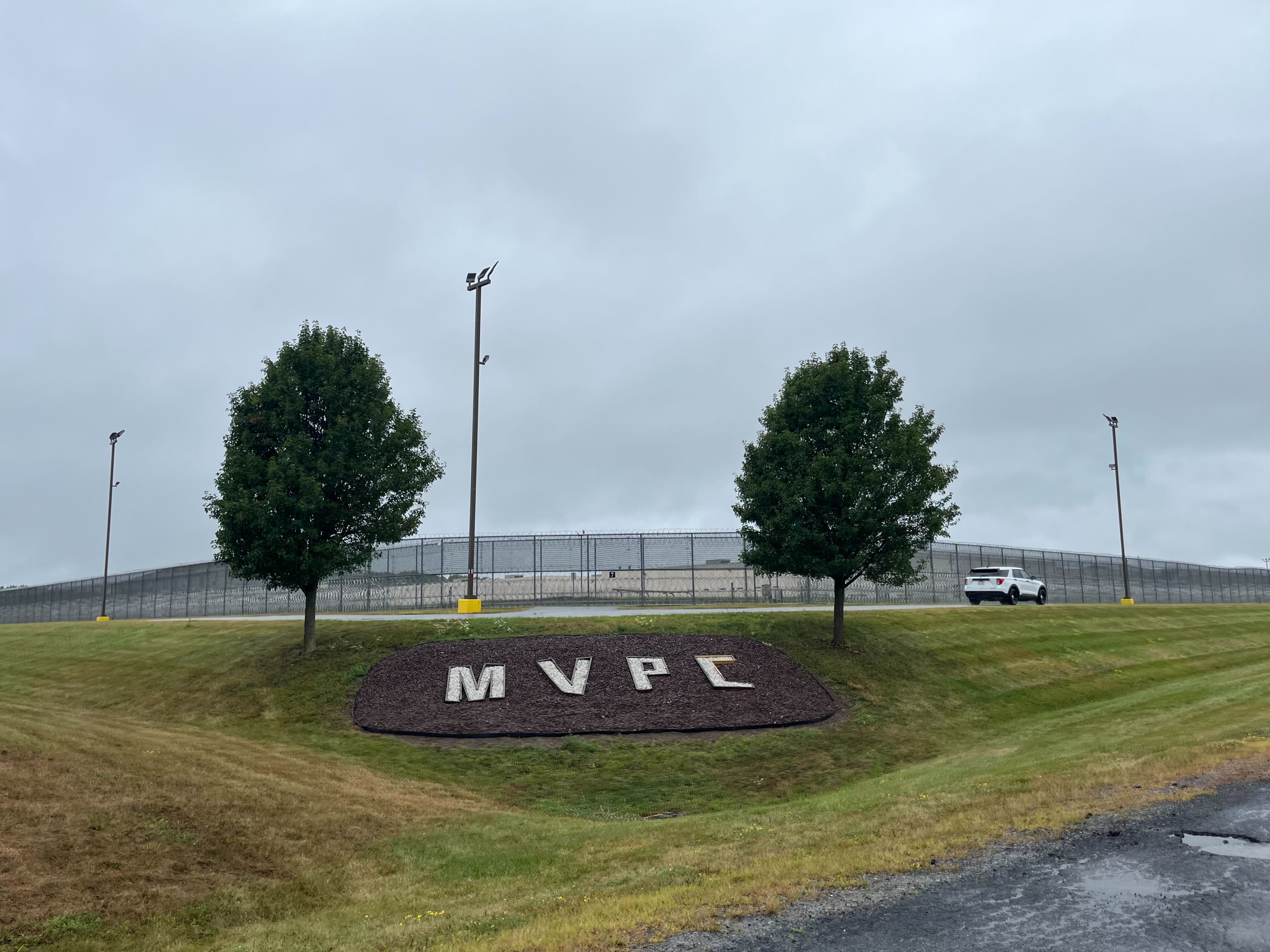
    Perez Romero, 39, is being held at the Moshannon Valley Processing Center, the 1,876-bed ICE facility in Philipsburg, Pa., his future uncertain, his wife and step daughter in anguish.

    “I thought the U.S. represented a place where people who are escaping political or religious persecution can come here and find safety,” said his wife, Sandra Quinones, an American citizen and high school teacher. “Especially if you’re law-abiding and contribute to society. That’s where my heart is broken.”

    The Trump administration’s aggressive approach departs from previous administrations, where asylum seekers with no criminal record were mostly allowed to remain free while they pursued their claims. Now applicants have been detained in communities across the United States, including Pennsylvania and South Jersey.

    Last week news broke that the administration intends to revoke the business and tourism visas of up to 200,000 people who are seeking asylum, putting them at risk of arrest and detention. That comes on top of procedural changes that have made it harder for people to prove they should be allowed to stay.

    A spokesperson for the Department of Homeland Security said Perez Romero was released at the border by the Biden administration, not by officials under President Donald Trump.

    “He will remain in ICE custody pending removal proceedings and will receive due process,” the spokesperson said in a statement. “A pending application does NOT confer legal status in the United States.”

    The agency said that on Jan. 20 Perez Romero was charged with “harassing communication,” an offense that usually involves phone calls or text messages sent to upset someone.

    DHS provided no other information. Dauphin County court records show that Perez Romero pleaded guilty in magisterial district court in March, but do not include details of what occurred. A court worker said Friday she could provide no additional information.

    “Criminal illegal aliens are not welcome in the U.S.,” Homeland Security said. “We will find you, we will arrest you, and we will deport you.”

    Jhon Perez Romero, originally of Venezuela, came to the United States seeking asylum in late 2023, afraid he could be harmed or killed by government agents in his homeland. Now Perez Romero, 39, is being held at the Moshannon Valley Processing Center, the ICE detention facility in Philipsburg, Pa., as the Trump administration detains more people who are seeking safety in the United States.Courtesy of family

    Generally, the government cannot deport someone while their asylum claim is being decided — claimants must be given what’s called a merits hearing, where they can present evidence, before any final removal action.

    The government does have the power to hold asylum seekers in detention for certain reasons, including if it believes the person might flee or is a danger to the public.

    Immigration lawyers argue that there’s no gain for the government in detaining asylum seekers, since their names, addresses, and identifying information are already known to authorities, who require regular, in-person check-ins.

    “The Trump administration is targeting people to subject them to detention, knowing they won’t be able to fight their way out of the system, so they’ll give up and leave,” said lawyer Lilah Thompson, who leads the immigration unit at the Defender Association of Philadelphia. “They’re wearing people down.”

    For immigrants, freedom while pursuing asylum means everything, enabling them to work and earn money to hire an attorney, and to more easily gather evidence and documents for their cases.

    Asylum cases can take years to decide — more than 2.3 million people now await asylum hearings or decisions — and appeals can go on for additional months or longer.

    Prolonged detention leads some to drop their legal cases and accept voluntary departure. Leaving voluntarily avoids the automatic 10-year ban on returning that can accompany a formal deportation.

    “It’s very tough, for people who are facing these choices,” said immigration lawyer Robert Barchiesi II, who represents Perez Romero.

    Thompson is helping defend a Chester County newlywed who has so far spent two months in detention after being arrested at a late-June check-in.

    Nelson Contreras-Gelves, 35, originally from Venezuela, has followed government directions and broken no rules, Thompson said, noting that he recently married a U.S. citizen.

    People seeking asylum must show not only that they could be harmed in their homeland, but also that the danger springs from at least one of five specific causes — their religion, race, nationality, political beliefs, or membership in a particular social group.

    Moshannon Valley Processing Center, in Clearfield County, Pa., is the largest immigrant detention facility in the Northeastern United States.Max Marin / The Philadelphia Inquirer

    People granted asylum can apply for lawful permanent residency and eventually for U.S. citizenship.

    Perez Romero’s life has taken him from a position in Venezuela’s notorious national intelligence agency, to a flight across countries in fear of his life, to love and marriage to a U.S. citizen and a caring role as stepfather to her 17-year-old daughter.

    From roughly 2011 to 2019, according to his asylum application, Perez Romero was an agent at the Servicio Bolivariano de Inteligencia Nacional, known as SEBIN. It was created in 2010 by then-President Hugo Chávez, officially aimed at protecting the nation but accused by human-rights groups of arresting and torturing political opponents, journalists, and activists.

    Perez Romero said he quit the agency after receiving instructions — the specifics were not described in his asylum application — that he refused to obey. His resignation came less than three months after a failed military uprising against authoritarian President Nicolás Maduro triggered a purge of the intelligence services, targeting those suspected of disloyalty.

    Perez Romero was told to report to government officials — and that he was accused of treason.

    “Which is erroneous,” he wrote in his asylum application, “since I have not committed any crime.”

    In March 2020, facing an arrest warrant, Perez Romero fled to Colombia, keenly aware of “what happens to political prisoners in Venezuela, things like imprisonment for life or murder.”

    Two years later, after Gustavo Petro was elected as that nation’s president, he said, he began receiving threats from Venezuelan agents that he would be seized and forced home.

    Perez Romero headed north. On New Year’s Eve 2023, he reached the U.S. border at Eagle Pass, Texas, where he was interviewed and released by immigration agents.

    The next year he met Quinones at La Iglesia de Dios Voz de Alerta Church in York, and they wed in 2025.

    She described him in an interview as an outstanding husband and father, working long hours to provide for their family. He’s deeply invested in their church, she said, and before his detention was developing a resource package to help missionaries serving in remote and dangerous areas.

    Last month, he tried and failed in federal court to win his freedom from Moshannon.

    U.S. District Court Judge Joseph Leeson ordered the government to hold a bond hearing, but Immigration Judge Tamar Wilson ruled that Perez Romero did not show he was not a flight risk or a danger to the community.

    He may say he’s innocent of treason, the judge wrote, but “the court cannot simply take his word for it.”

    Quinones says the family hasn’t lost hope. Their GoFundMe has raised $8,000 of its $9,000 goal, all of it going for legal fees and related expenses. They await the hearing to present evidence to support Perez Romero’s case for asylum.

    Quinones said her husband relies on his Christian faith to stay strong. She’s trying to stay optimistic as well, she said, but so much is uncertain and in flux. Her husband could end up having to accept voluntary departure to a third country, like Colombia.

    She’s prepared to retire early and join him, if necessary, and has begun exploring job possibilities there.

    “I can’t be apart from my husband,” she said. “I can’t picture my life without him.”

    Staff writer Dylan Purcell contributed to this article.