There’s a stretch along the 14.4-mile course of the Philadelphia Cycling Classic that remains a core memory for Freddie Rodriguez.
It’s been more than a decade since his last professional race, but the former American road racer described the course as a scene that engaged all five senses.
Rodriguez referred to it as “the theater.”
“As you come into Ben Franklin Parkway, there’s the park on the right that feels like you’re riding into a stadium,” Rodriguez recalled this week, ahead of the race’s return after a 10-year hiatus. “It all almost feels like a track, like a velodrome; it’s a really cool feeling, and then you head down Kelly Drive, which is open and where the race opens up. And just the mix of people out watching a bike race and all of us [racers] riding really hard, it’s really a great part of what makes this race so special.”
While the famed Manayunk Wall gets all the notoriety, Rodriguez contends that multiple sections of the course are appealing to riders and spectators alike. From going through Lemon Hill to the bottleneck of riding down Main Street Manayunk, Rodriguez says all of it is “iconic to the race.”
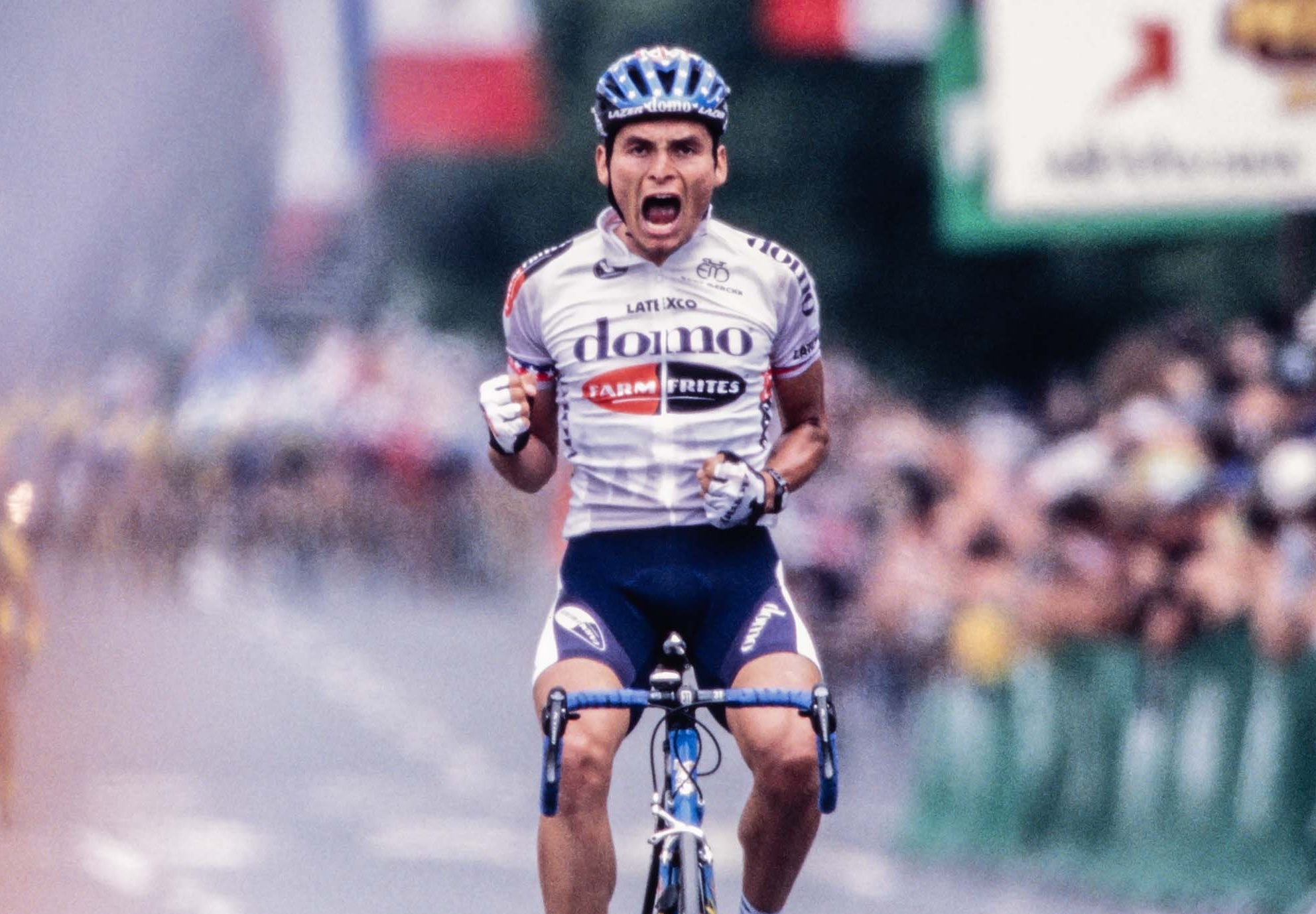
Rodriguez, who won the men’s event in 2001 and placed in the top 10 on four other occasions, including a pair of third-place finishes (2008, 2012), says there was a time when the annual Classic, which has been referred to by many different names over the years, was the preeminent road race in the country.
“I’m not kidding, it was the No. 1 one-day race in America,” Rodriguez, who will be on scene as a commentator alongside former racers John Eustace and Mark Holden for 6abc’s broadcast. “And I do believe it’s now again the number one day race in America. Hopefully, this will also help set a foundation for professional racing in the United States.”
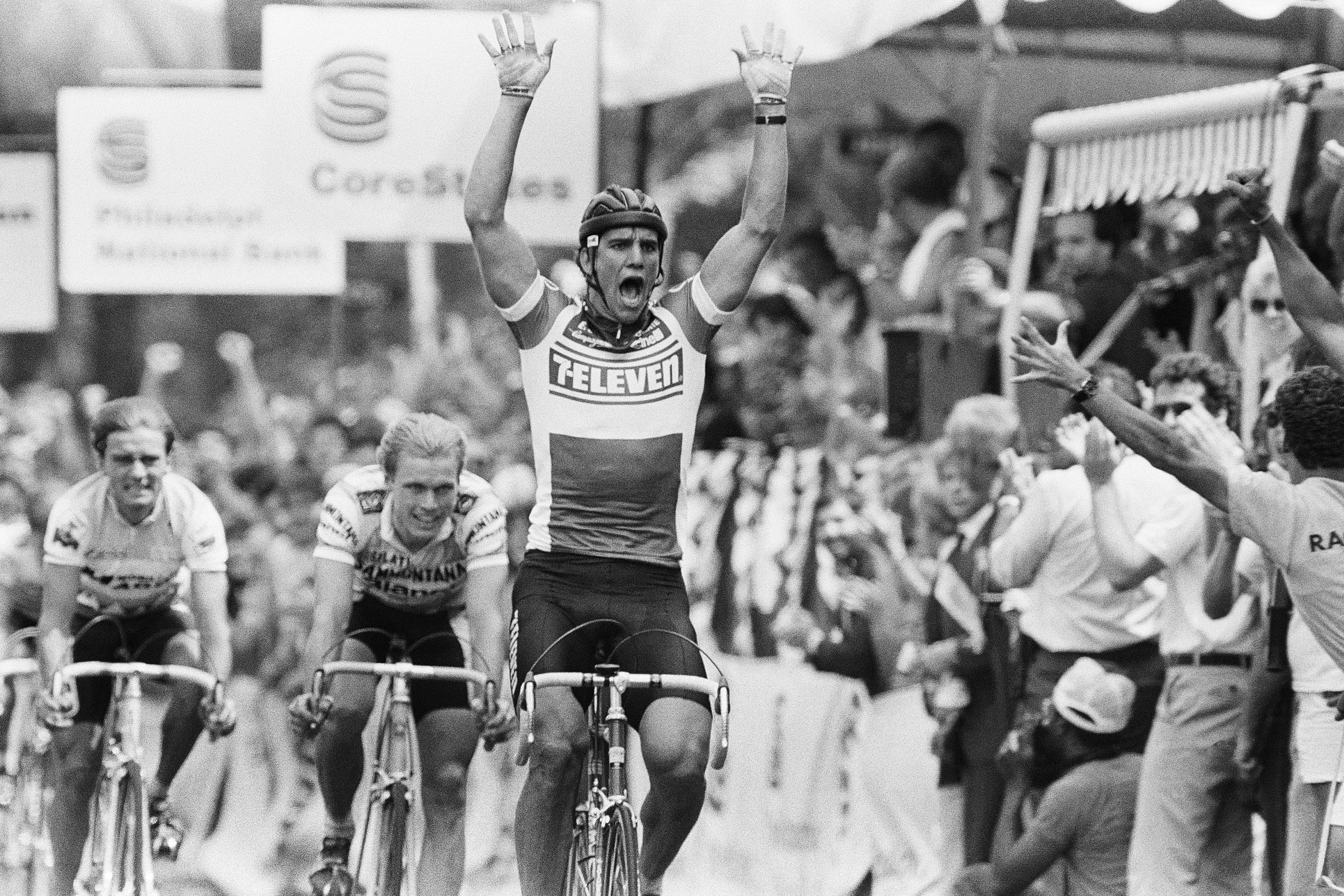
Eric Heiden raises his hands in victory, crossing the finish line for Team 7-Eleven, becoming the first winner of the men’s event.George Widman
‘Ten laps of that thing’
It’s hard to look at the Eric Heiden’s cycling career and not call him an overachiever. The former Olympic speed skater turned cycling road racer, won the first Philadelphia Cycling Classic when it was called the Philadelphia International Championship in 1985, and parlayed a Hall of Fame sports career in cycling and speed skating. Now, he’s an orthopedic surgeon with a practice in Utah, previously serving as team doctor for a number of U.S. Olympic teams and even doing a stint for the NBA’s Sacramento Kings.
His favorite memories mirrored Rodriguez, noting that the stretch along Kelly Drive offered a “recharge.”
“For me, the nicest thing was riding along the river there, the Schuylkill River, just where it was nice and cool,” Heiden recalled. “It was flat and you could kind of recharge before you took that ride and headed into Manayunk, which was very hard.”
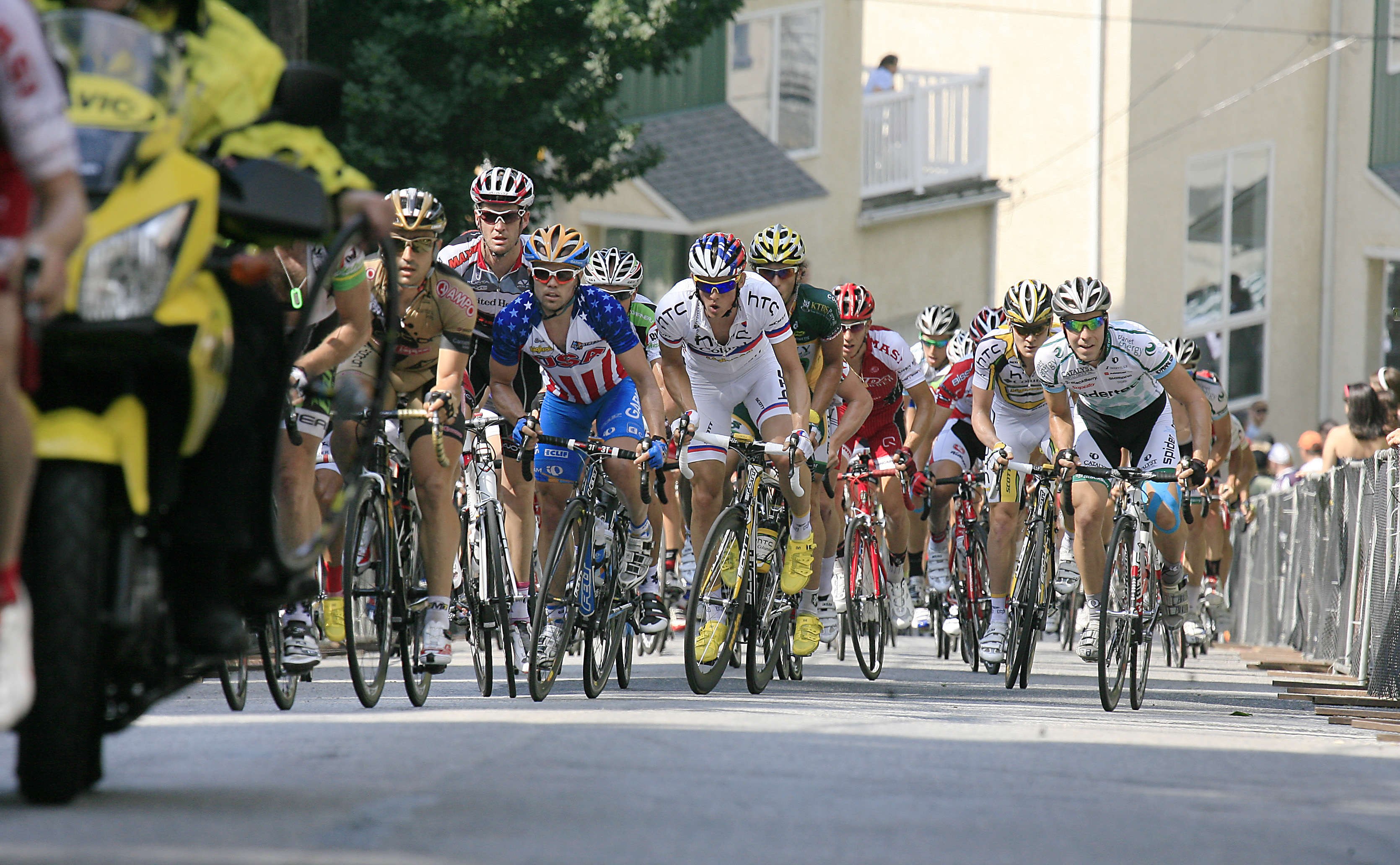
Riding up the steep half-mile stretch of the famed Manayunk Wall has been a daunting task for amateur and professional riders alike. Akira Suwa / Staff Photographer
But his memory of tackling The Wall, the near half-mile stretch of Levering Street in Manayunk, is a memory he’ll also never forget — but not because it was another favorite.
“We had to do 10 laps of that thing,” Heiden told The Inquirer. “And, I’m not a very good climber; I was a little heavy for that climb. Even if you’re a good international racer, it’s a challenge getting up that thing; I’m not going to lie to you. I mean, it’s like 20% grade. Yeah. You look at that, and as you come around the corner you’re going, ‘Whoa, nelly.’”
Heiden, who originally used bikes to cross-train for his Olympic speed skating career, ended his cycling career as an inductee into the United States Bicycling Hall of Fame. Racing in Philly, he says, was a big part of that.
“This race proved a lot to me, not just in my abilities as a racer, but how much I was able to do,” he said. “To me, this was the first legitimate national championship where the distance was significant. The organizers, those guys were passionate about the sport, and they really put together a good experience for the riders and for the teams.
Eric Heiden said that the Philadelphia International Cycling Classic, in all of its iterations, served as a proving ground for many cyclists, including himself. Photo by Lee Rogers
“It was really professionally run. Our team came there expecting to win the national championships, and we had all the top guns and 7-Eleven showing up. It meant that much and was a race that was taken very seriously.”
What does the return of the Philadelphia Cycling Classic represent?
“This race has a strong tradition in the USA, and in the history of USA cycling,” Heiden said. “To see it once again resurrected gives us a lot of hope on where cycling is headed these days.”
And calling Messi “the greatest player ever:” That’s how Union interim head coach Ryan Richter described the Argentinian star, when discussing Messi’s sixth goal in six games against the Union, during his postgame press conference.
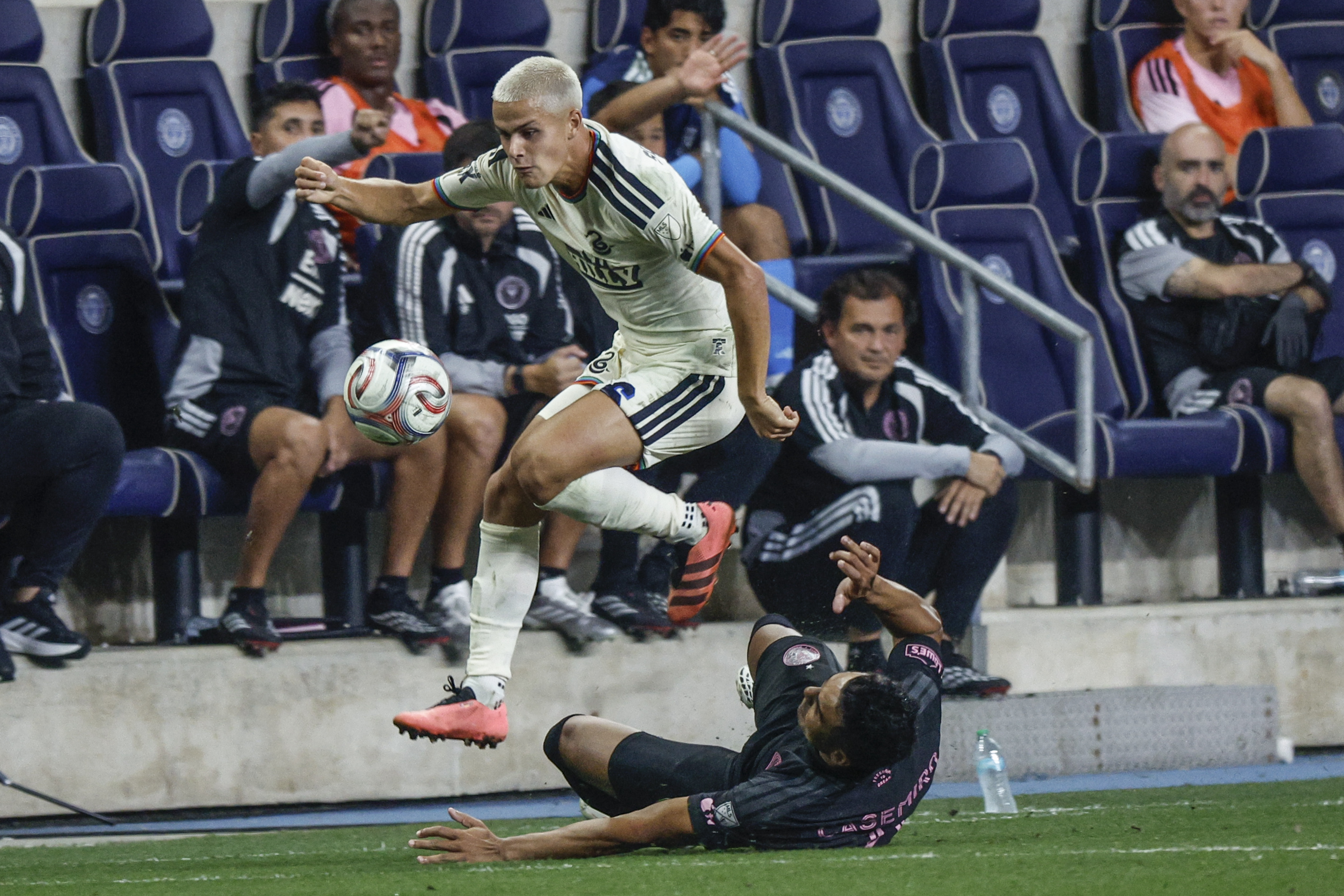
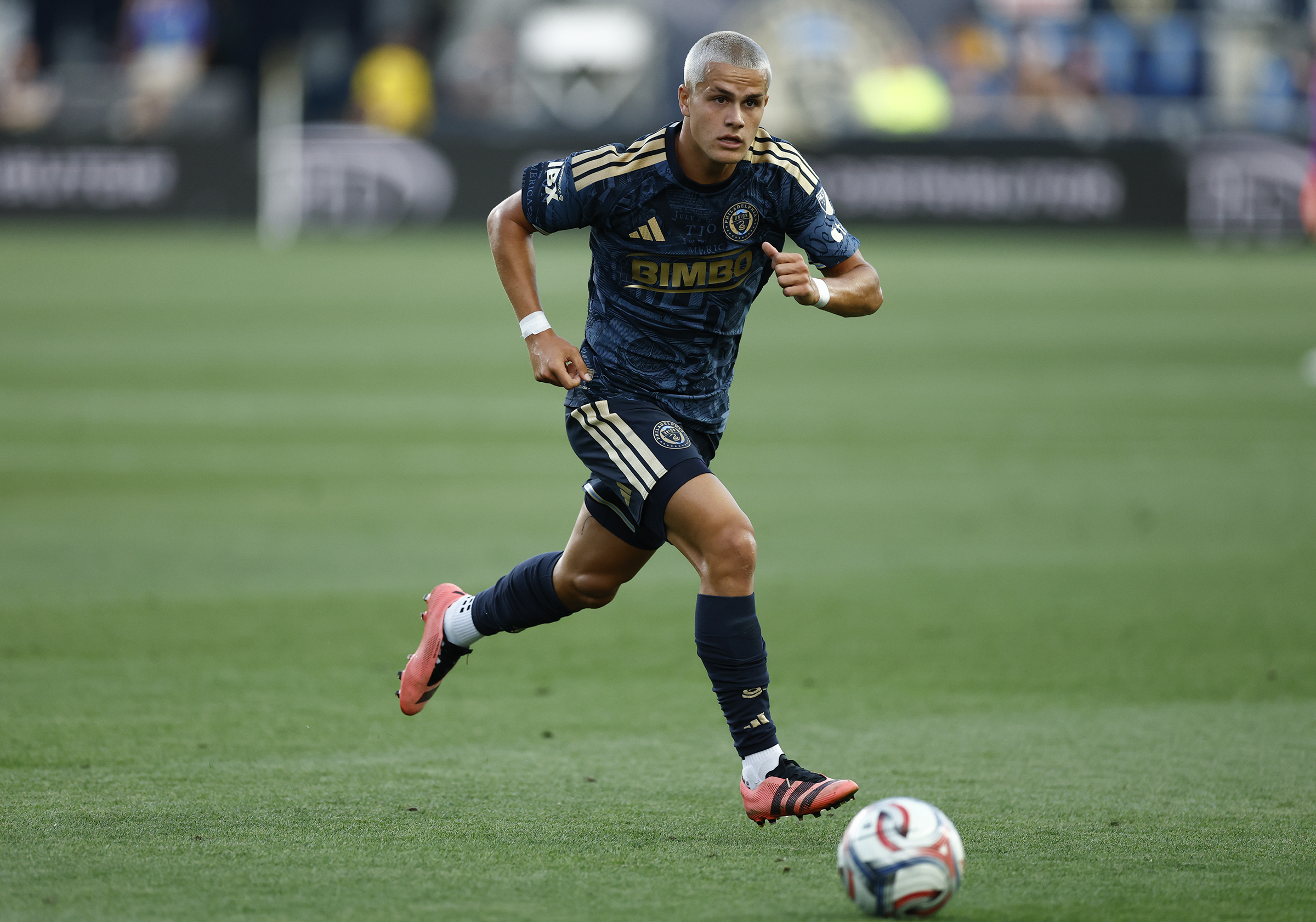
Cavan Sullivan leaps over Miami’s Casemiro during the second half of Wednesday’s game at Subaru Park.Steven M. Falk / For The Inquirer
“I don’t know how he gets it out of his feet to find the finish,” Richter joked. “But that’s why he’s the greatest player ever, because he doesn’t need space to find a goal.”
Despite a display that amounted to a 2-2 draw after close to 115 minutes of soccer, what happened in the final nine-plus minutes of second-half stoppage time became the night’s story.
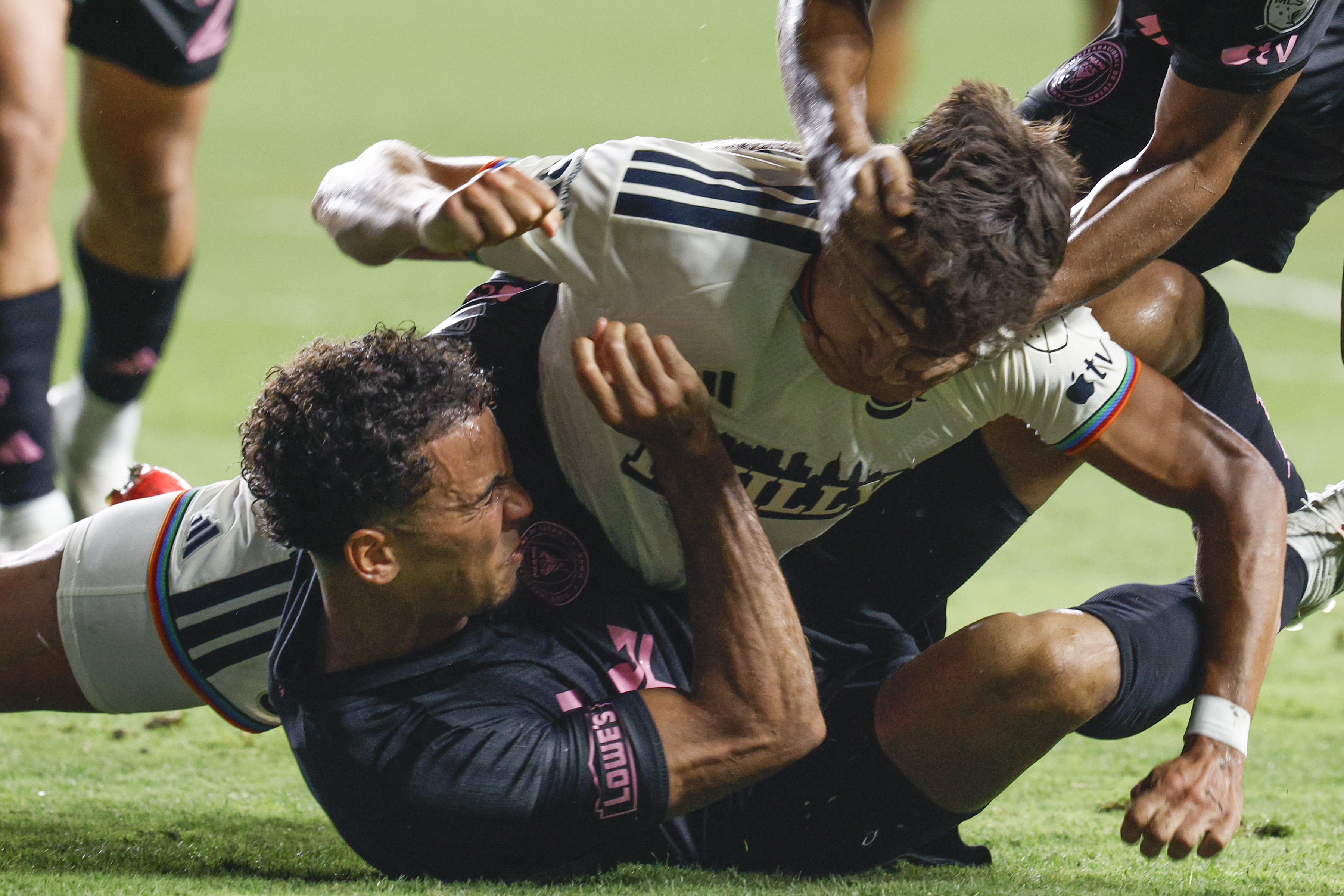
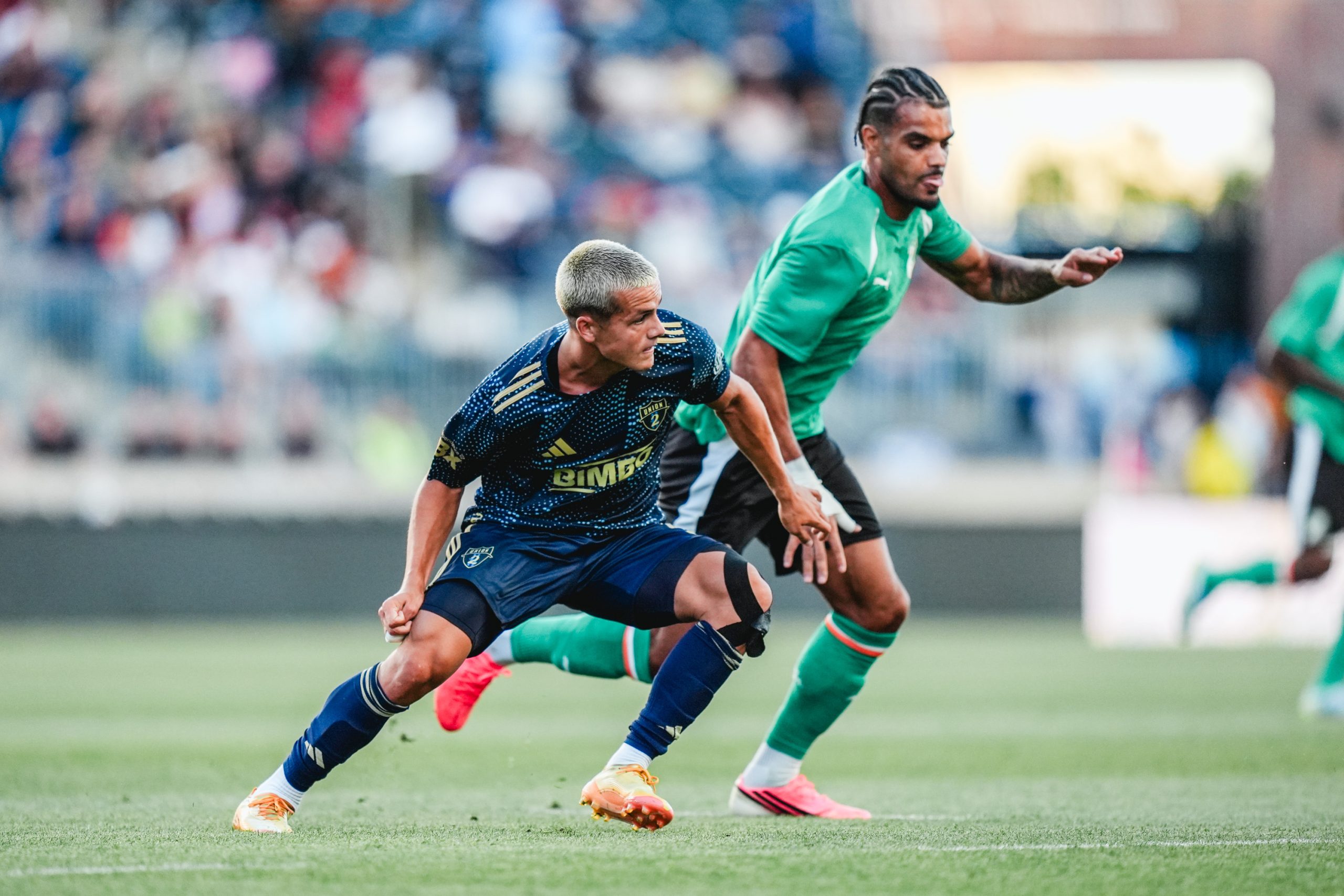
In the 101st minute, Quinn Sullivan, still in recovery from an ACL tear, went down hard in the box. Ian Fray, who defended Sullivan’s attempted ball into the box, got up and tried to step over the Union star by placing his hands on the back of Sullivan’s head and pushing him through his legs.
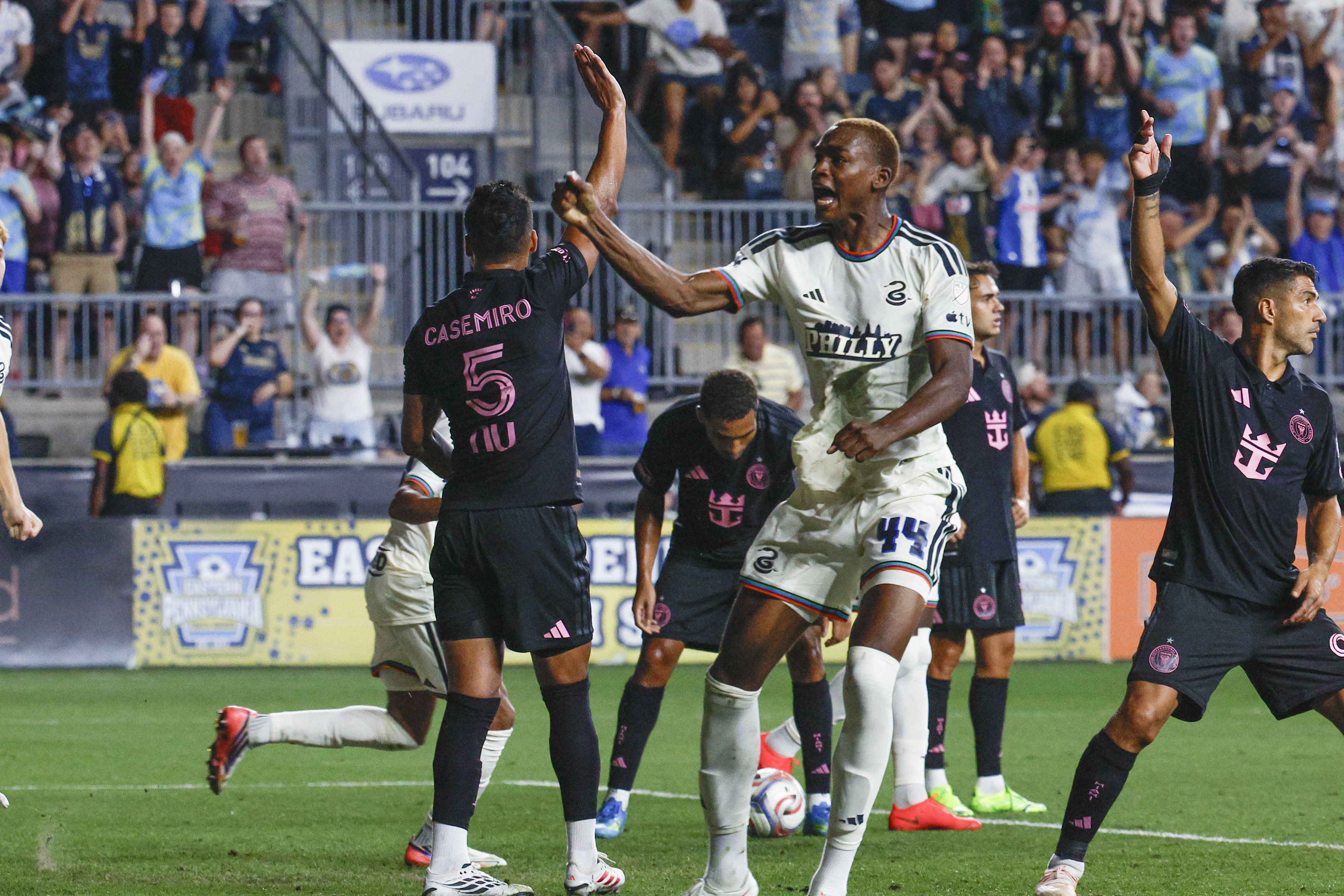
Tempers flared at the end of Philly-Miami 😳
Cavan Sullivan and Yannick Bright were both sent off with reds at the end of the draw.
And it was no surprise that he was quick to let Fray know he wasn’t a fan of that courtesy of a single-leg takedown in the box.
“I thought the action that kicked off that whole situation in scrum was the real lack of respect from Fray,” Richter said. “When he comes over on top of Quinn, goes out of his way to do this … Quinn’s reaction is totally normal of what you would do in that situation. It’s a real lack of respect, and things like that happen when people behave like that.”
A scuffle ensued with Cavan Sullivan, Quinn’s 16-year-old brother, coming to his aid in an attempt to pull people off his sibling and getting punched in the face for his troubles.
In the end, Major League Soccer will have the final say on fines and suspensions that are sure to be levied. As it currently stands, Cavan, who has been the engine in the midfield for this Union club, will miss Saturday’s road match against Austin FC (7:30 p.m., Apple TV).
Quinn is on a yellow; Yannick Bright, who took a swing at Cavan, is also out with a red, but it would be tough to find a world where the league’s disciplinary committee doesn’t extend his suspension.
Messi probably won’t receive any discipline for his slap at the back of Quinn’s head during a heated conversation because, well … does it even need to be said?
Suspensions aside, what was on display at Subaru Park Wednesday night is the type of fire that invigorates an entire team.
No soccer match needs to conclude with punches being thrown — in this case by an Inter Miami team that MLS prides itself on viewing as the class of the league, with its mix of high-priced global stars.
But it’s the type of fire that adds a bit more relevance to the argument that, despite the rough start to the season, this Union collective can push through and gain a spot in the Eastern Conference playoffs. It’s even more believable when you consider that the club, in dead last heading into the World Cup break, is now a mere four points out from the final playoff spot and it’s only mid-August, with two full months of MLS games still to play.
The Union’s Neil Pierre celebrates his goal against Miami during the second half of Wednesday’s game at Subaru Park.Steven M. Falk / For The Inquirer
“When we’re on the field, we have to stand up for each other, we have to,” said Richter. “As a team, we have to always stand up for each other and yet not go across the line where it’s [getting] suspended for games and getting red cards. But that wasn’t the case in this one. So hopefully [it] can be reviewed and [we] get what I think is the fair outcome from it.”
In the moment, Wednesday’s scuffle was a stain on an otherwise evenly matched affair between the Union and Miami, with the fallout anticipated to be worse after MLS’ review. The Union made it clear that despite their place in the standings, a payroll that’s dwarfed by most of the league, and players who aren’t world-renowned like Miami’s, they’re not about to take disrespect.
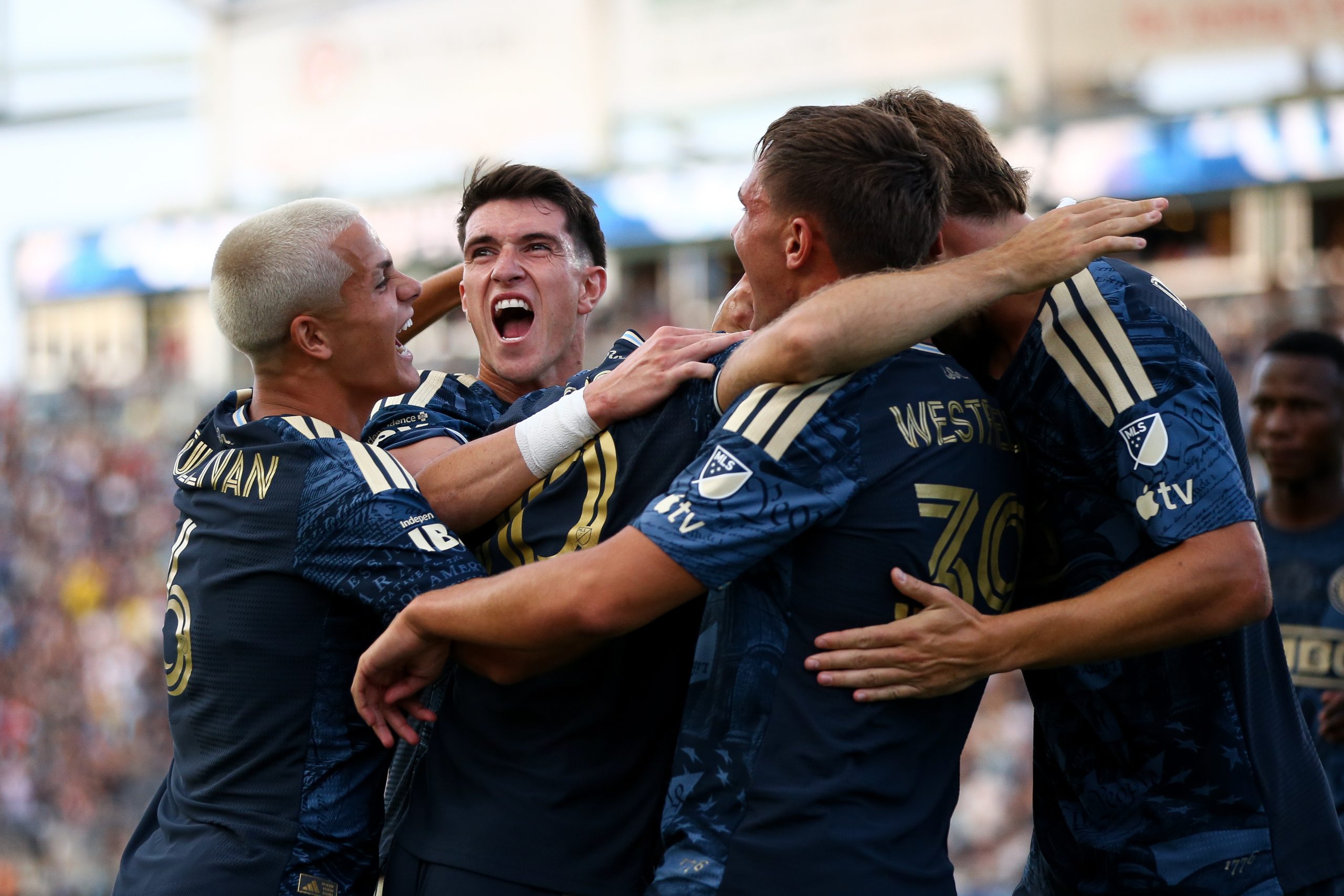
What could be lost in Wednesday’s game is that the goals and assists — on both sides — arrived from many players whose ages still end in “teen.” Westfield, 20, played the perfect ball into Indiana Vassilev, who volleyed home the game’s first goal. The pass into space for Westfield? Cavan Sullivan.
Frankie Westfield keeps it alive, and finds Indiana Vassilev for the first-time finish 🤩@PhilaUnion take the early lead over Miami at home! ⚡ pic.twitter.com/zws8dKmSS4
Neil Pierre, the 18-year-old, 6-foot-7 tree trunk along the Union’s backline, scored on a diving header to tie the game, and would have had an assist on what looked to be a go-ahead goal from Milan Iloski in the 61st minute that was called offside.
Even Miami’s first goal was scored by 19-year-old Daniel Pinter, his first in MLS. In a league long classified as a retirement destination for aging global stars, its future stood out in Chester.
“I think my confidence has slowly been going up,” said Pierre. “[But] I think it’s really from my teammates and them pushing me forward, not so much the games. I think they believed in me the whole time. They said you should have confidence, you should be able to push yourself. And, obviously, it’s been a great result so far.”
Are we starting to see a method to the Union’s madness in believing that they can get first-team results from a grassroots methodology? A few older, experienced pieces aside, the Union surge comes largely from the effort of baby-faced kids.
Westfield, Pierre, Quinn and Cavan Sullivan: four names that started as youngsters on the fields at WSFS Sportsplex when it was still a brainchild. They’ve now not only become Richter’s supporting cast to the more experienced names on the roster, but in some cases they’ve been the show during this up-and-down Union campaign.
At least when late-game mayhem doesn’t steal the headlines.
That’s the number of times UFC has held a sanctioned main event bearing its name inside what is now Xfinity Mobile Arena.
Saturday will be the fourth, and just the second numbered event when UFC 330 comes to South Philly with two massive title fights.
Any MMA enthusiast knows its arrival is a big deal.
But for anyone who has known Philly as a fight town — one with legendary boxers and mixed martial artists, rubber-stamped by a fictional boxer who has personified the culture — realizing that Philadelphia hasn’t been considered fruitful for the MMA giant is surprising.
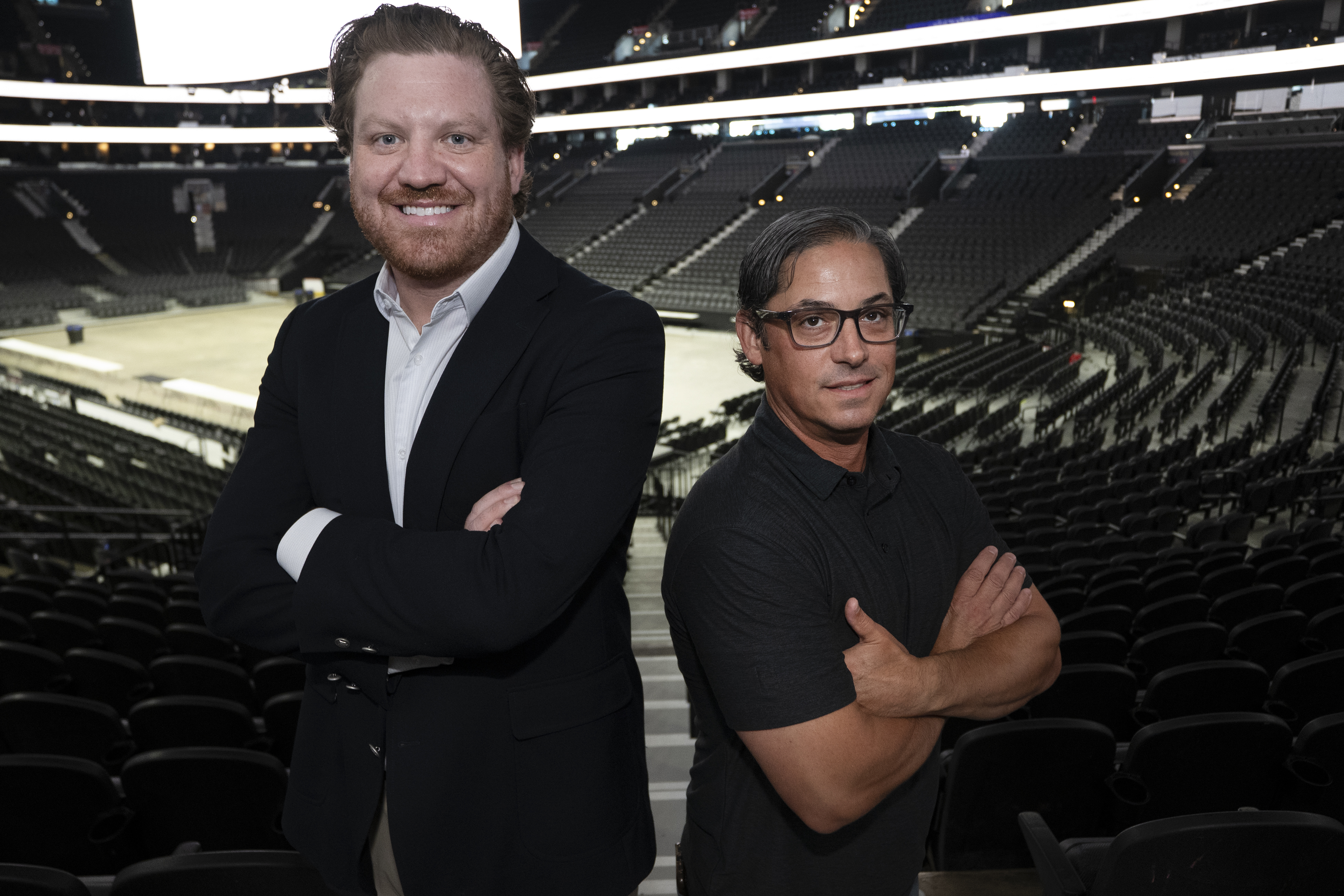
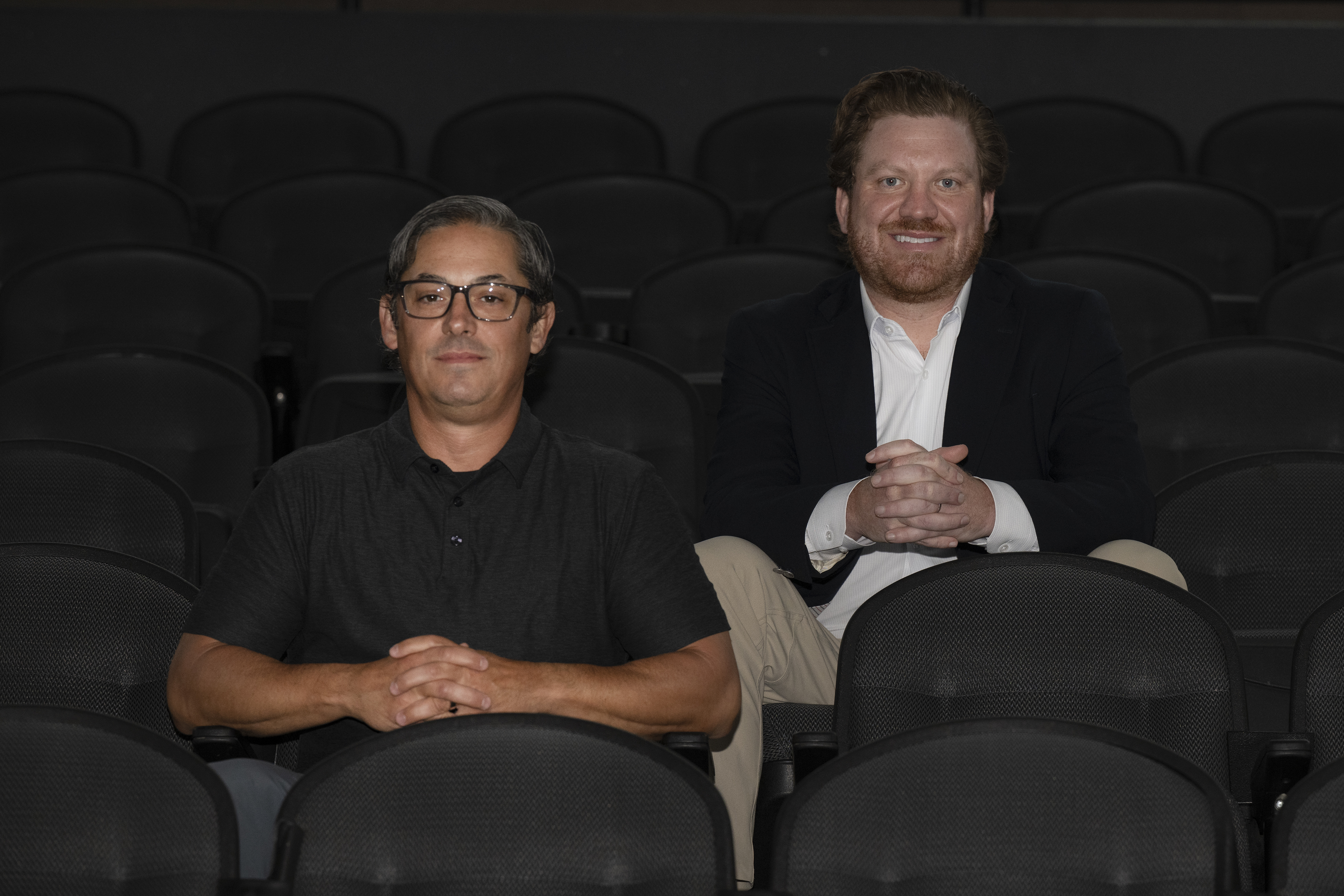
It’s not for lack of trying to get more UFC events, and combat sports in general, to choose the city’s largest arena. For over a decade, that fight has been fought by two main people: Xfinity Mobile Arena senior vice president and general manager Mike Sulkes and Brett Reopell, who has been the venue’s chief booker of talent and events since 2022.
Brett Reopell (left) and Mike Sulkes say that winning the right to host major events is an ongoing and sometimes arduous process. Jose F. Moreno / Staff Photographer
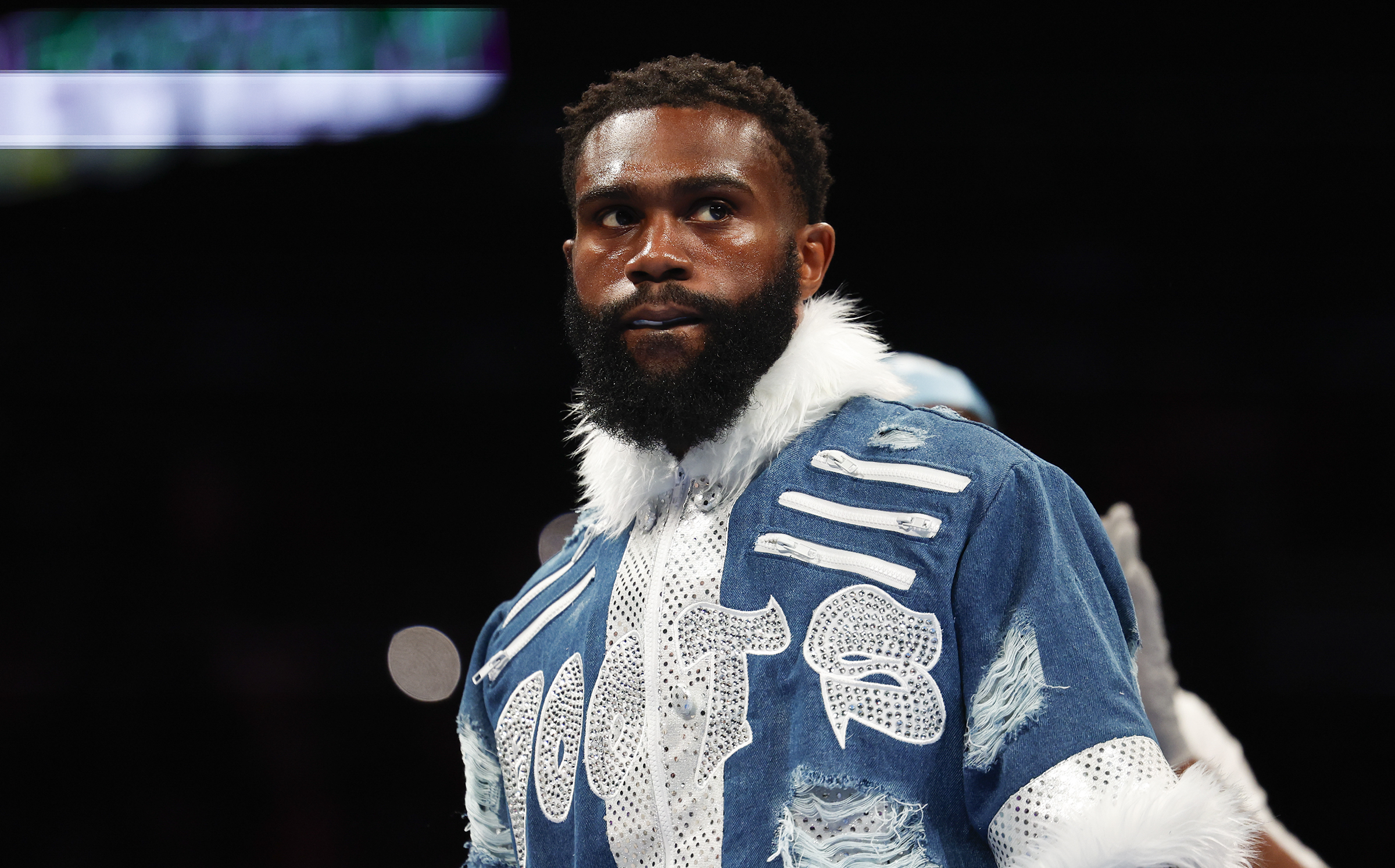
This UFC event is the latest highlight, but it’s been a steady progression of combat sports events flooding the arena since Philly’s own Jaron “Boots” Ennis decided to host multiple title fights at the venue when it was known as the Wells Fargo Center in 2024. He has had three title fights since, including a first-round TKO of Uisma Lima last October.
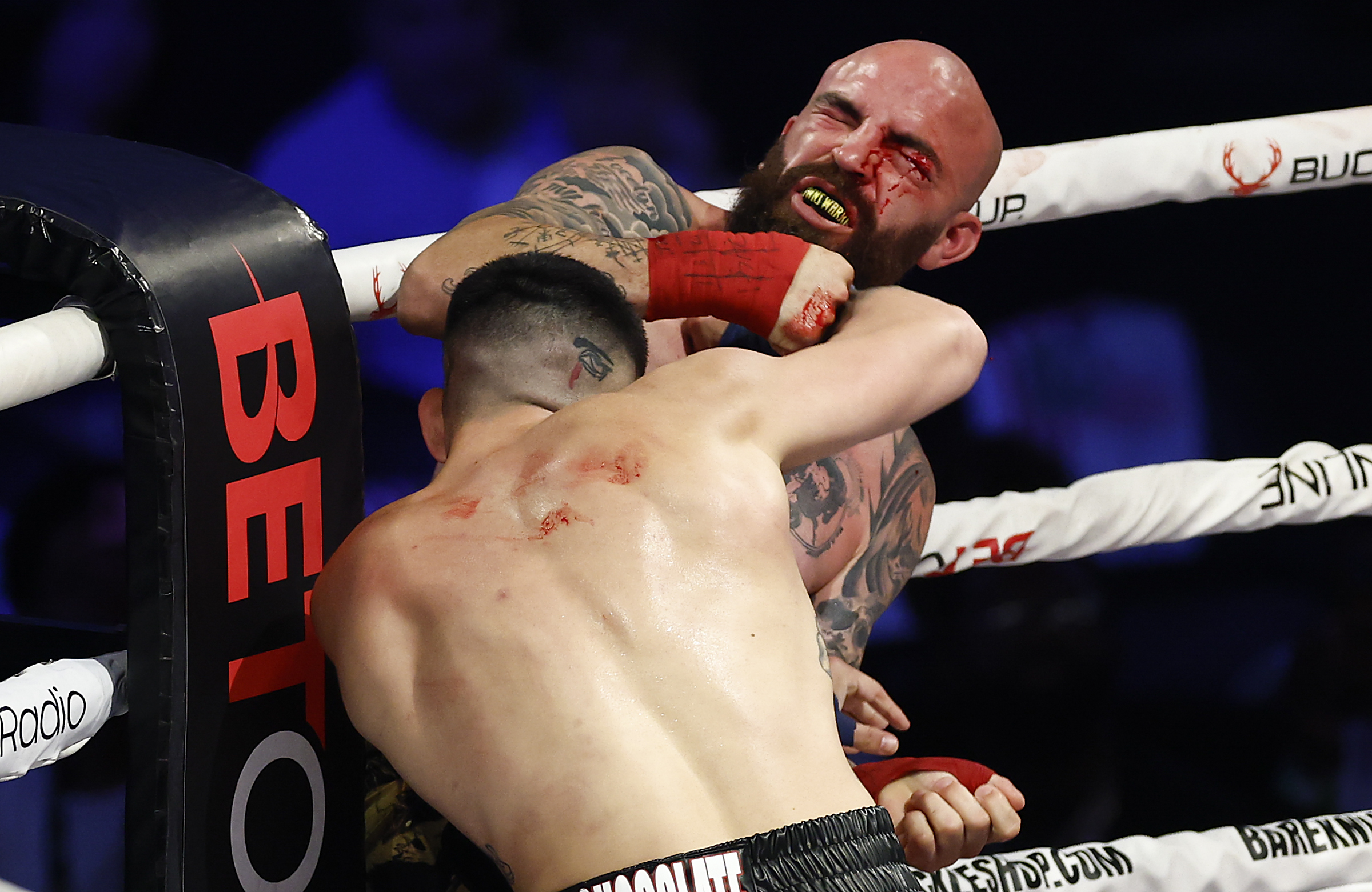
Lately, the arena also has been the home of David Feldman’s Bare Knuckle Fighting Championships, which has considered making its main events a quarterly fixture at the arena.
Brandon Honsvick (right) takes a hit from Matt Turnbull in a lightweight BKFC Liberty Brawl fight at Xfinity Mobile Arena on July 3. Turnbull beat Honsvick by technical knockout.Yong Kim / Staff Photographer
To Sulkes and Reopell, UFC and combat sports historically have been a chase. But that hasn’t stopped them from trying.
They noted conversations with Matchroom Boxing, the promotion company associated with Ennis. Having the Philly fighter choose Xfinity Mobile Arena to host his title fights alongside other notable fighters on Matchroom cards felt serendipitous.
“A lot of it was timing,” Reopell told The Inquirer this summer. “We’ve always been chasing boxing and UFC, but there are a couple of factors with that. UFC has a limited amount of events that they do outside of Vegas and internationally. So it doesn’t leave much for the rest of the domestic arenas to fight over.
“With boxing, you really just need a draw, and with Boots being local, that was the hook. We’ve been in conversations with Matchroom before, and it was just that nothing really made sense. But when they landed [Boots], it was an easy [choice] for us here.”
Philly native Jaron “Boots” Ennis before his fight against David Avanesyan at the then-named Wells Fargo Center in July 2024.Yong Kim / Staff Photographer
Since Ennis’ initial fight in 2024, Xfinity Mobile Arena has hosted seven combat sports events in less than two years.
Make that eight, courtesy of UFC 330.
Additionally, UFC parking its caravan outside Xfinity on Saturday keeps the Philly area at the epicenter in a summer of world-class sporting events. From the PGA Championship to the MLB All-Star Game to six FIFA World Cup matches, there has been no shortage of major events that have come through the region.
But getting UFC to consider Philly is no easy task, Sulkes said. Stakeholders to get 330 to come to Xfinity Mobile Arena included not just organizations, arenas, and promoters, but politicians.
“It’s an extensive process,” Sulkes said. “We are constantly pitching our arena and pitching the city of Philadelphia to promoters. We’re always out there, whether it’s [conversations at] industry conferences, traveling to meet with them in person where they’re at. The pitch never really stops for us. [In the case of UFC], these are contacts that we’ve had for many years. It was a long road to convince them to come back with an event of this size and magnitude.
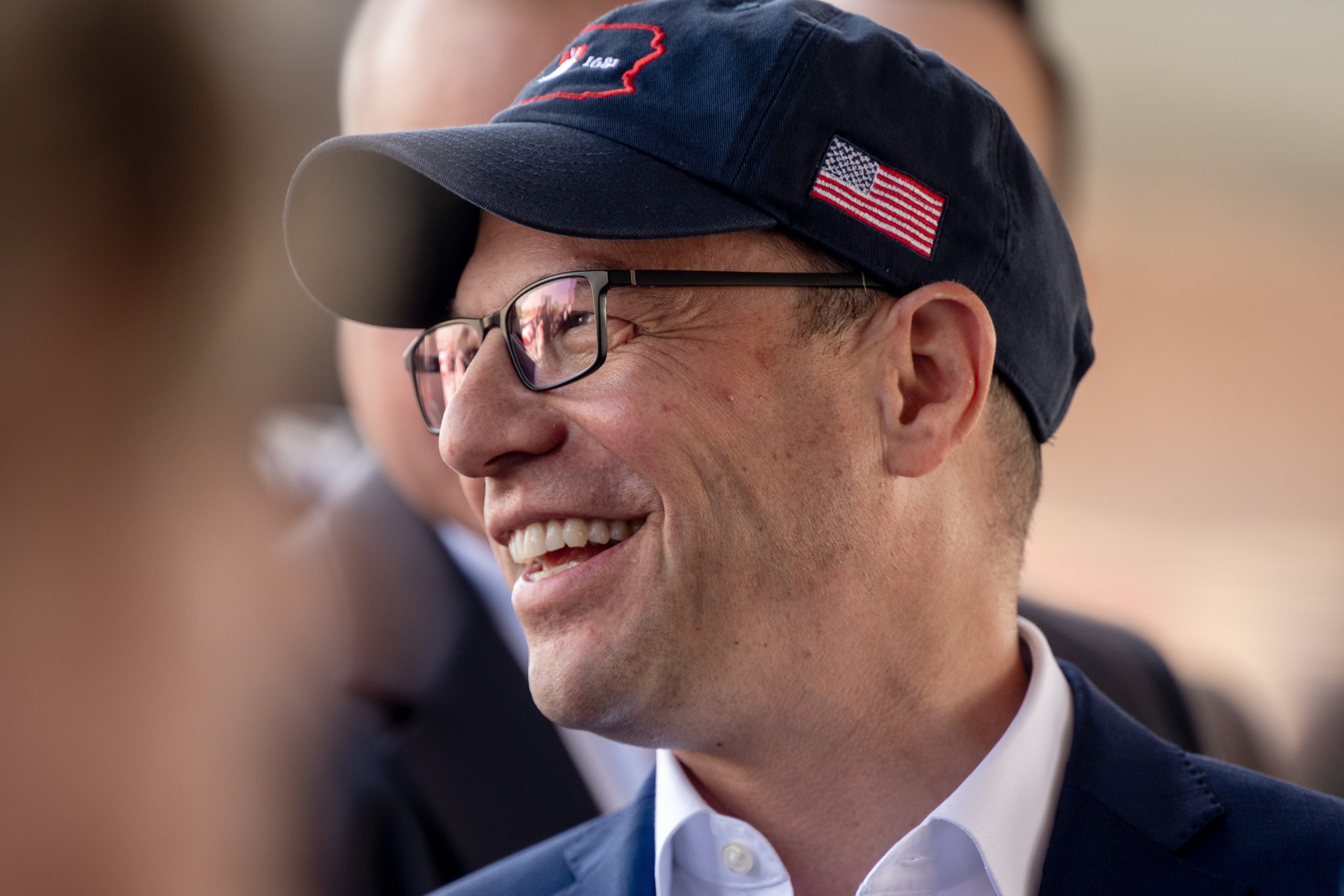
“We had tremendous support from Gov. [Josh] Shapiro as well with his desire to add this to all the USA 250 celebrations. That was a big part of getting this major UFC fight; Philly is really going to be the epicenter of the sports world this summer, and landing a UFC event just felt like a natural hook.”
Gov. Josh Shapiro, seen here at Citizens Bank Park earlier this year, has been a key figure in pulling for more events to come to South Philly, including fundraising for infrastructure improvements to reduce congestion on event days. Tom Gralish / Staff Photographer
Both said discussions are ongoing with BKFC to keep Xfinity as “their home base,” according to Reopell, who noted that the promotion is growing rapidly. Earlier this year, BKFC revealed plans to host smaller events at 2300 Arena and fight camps in the area.
A source also revealed to The Inquirer that Xfinity Mobile Arena could play host to another World Wrestling Entertainment event later this fall.
Sources have told The Inquirer that the next combat event at Xfinity could be hosting a WWE main event this fall.Monica Herndon
Reopell and Sulkes did not confirm the timeline but told The Inquirer that they have agreed to be on a “regular cycle with WWE, doing 2-3 events a year.” The last event was held across the street at Lincoln Financial Field when WWE’s marquee event, WrestleMania, held its 40th battle royale in Philly in 2024.
“Philly is such a great fight town, and it has been for generations,” Sulkes said. “It just felt natural to lean in at this time and host these big events. So it really goes back to our mindset that we’re always looking for great content for the Delaware Valley, and right now, combat sports are having a great moment, specifically here in Philadelphia.”
It would appear that Liga MX team Cruz Azul didn’t get the memo about the now-famed Rocky curse.
Or they did, and don’t care.
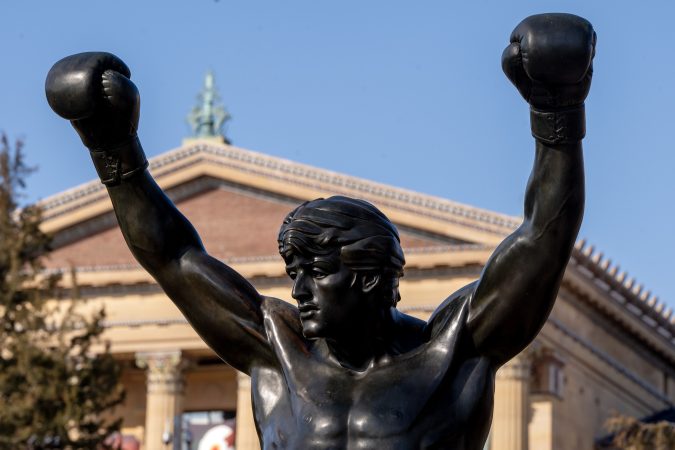
The Mexican side, in town to face the Union Thursday night in the first round of the Leagues Cup, put out a social post Wednesday morning depicting its flag draped over the shoulder of the Rocky statue, which currently sits atop the famed steps of the Philadelphia Museum of Art.
The statue gained worldwide recognition during Philly’s involvement in the FIFA World Cup earlier this summer, when fans were reminded of the lore of visiting teams suffering a loss whenever fans placed the team’s colors on the statue. In June, Ecuador fans learned the hard way, placing the nation’s jersey onto the statue ahead of their Group E match against the Ivory Coast.
Ecuador lost, 1-0, causing some to not only blame the curse but also forcing the fan who put the jersey on the statue into offering a public apology. The viral moment spread quickly, and before the next Philly match, Brazilian fans who marched to the Art Museum steps brought in a security detail and put up a partition around the statue to ensure no one would make the same mistake.
However, later in the tournament, Croatian fans attempted to debunk the myth, with a group called Mi Hrvati (We Croats) claiming to have secretly put Croatian garb on the statue ahead of their Group L game against Ghana. Croatia won the match 2-1, and qualified for the knockout round.
Whether the curse is real or not — and in this case whether the team’s colors were draped on the statue in person or through a really good Photoshop job — remains to be seen. But Cruz Azul’s post set social media ablaze, and even the city of Philadelphia chimed in.
Whether or not Cruz Azul will meet the same fate as Ecuador and others before them will be determined when they take on the Union inside Subaru Park on Thursday night (8 p.m., FS1, Apple TV, UniMas, TUDN). It will be the second time the Union face Cruz Azul in the tournament that features teams from the MLS and Mexico’s Liga MX. In 2024, the Union fell 5-3 in penalty kicks after battling back to deadlock the score at 1-1 in regulation during a match to remember in Chester.
However, the Union head into Thursday’s match behind a three-game win streak since the World Cup break and plenty of momentum to prove that messing with the curse is still not an endeavor worth exploring.
Cruz Azul, on the other hand, sits sixth in Liga MX standings and is coming off a league loss to Atlante last Saturday.
Union president Tim McDermott wants to clear a few things up.
McDermott, 51, who has hit multiple stops along the Philly professional sports highway as a former executive with both the Eagles and Sixers, is in his 11th year with the Union.
He’s been able to do a lot with what some might view as a little by resource standards when it comes to the first team — though he readily contends the money is there from ownership “should the right situation present itself.”
But in a town like Philadelphia, he’s well aware that success, when it comes to sports teams, is a year-over-year proposition. From an optics standpoint, after finishing off another successful season last year, winning their second Supporters’ Shield under a first-year head coach, depending on who you ask, the team has temporarily fallen off the precipice of relevancy — at the worst possible time.
With the eyes of the world on soccer courtesy of this summer’s FIFA World Cup, this was supposed to be the Union’s moment, showcasing itself as a powerhouse club in America’s domestic league situated in a city fortunate enough to be one of 16 that hosted FIFA’s grand event.
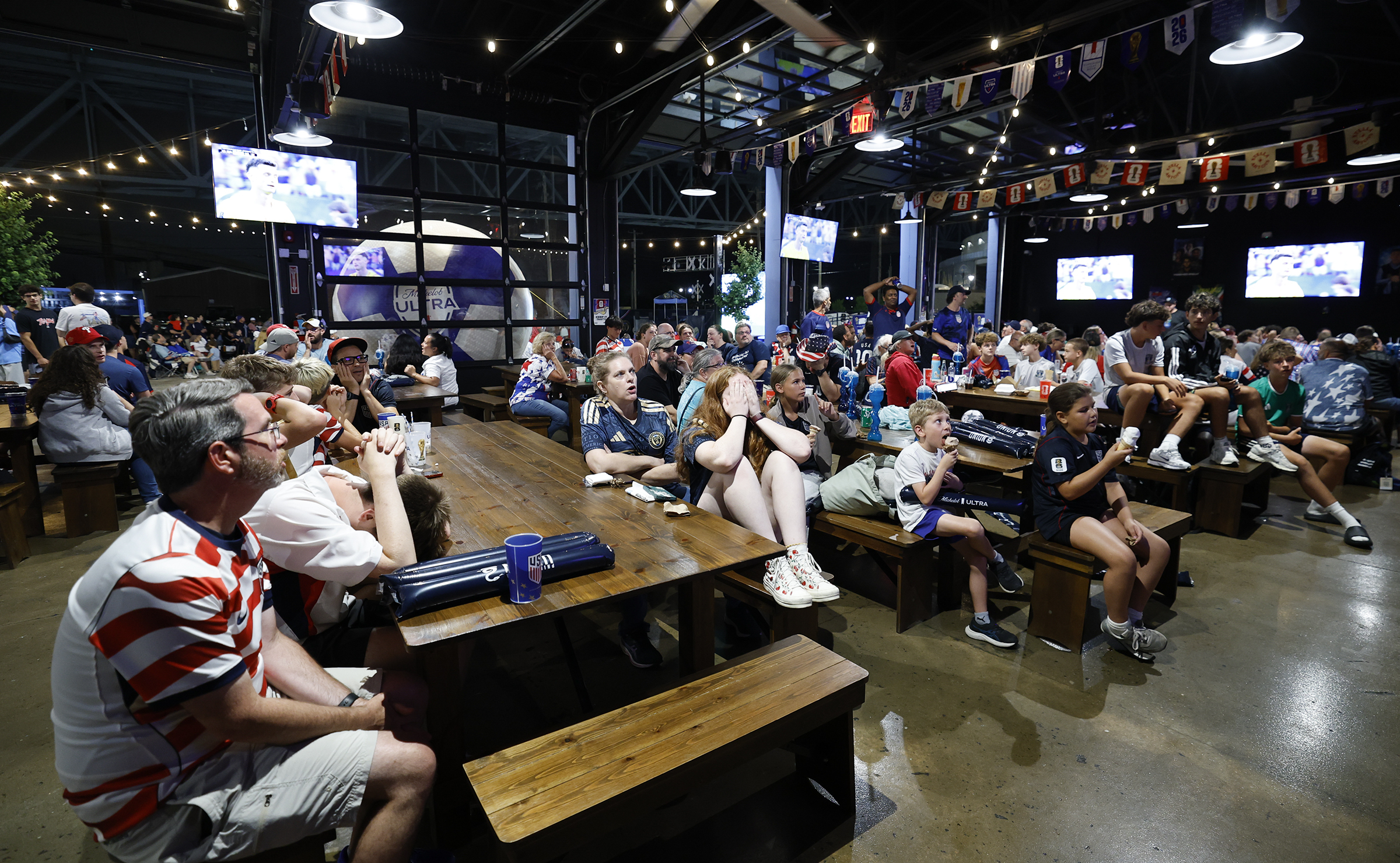
The Union hosted a series of jam-packed watch parties for the World Cup at Union Yards in Chester. However, it went into the World Cup break with just one win and was forced to take a hard look at where the club was going. Yong Kim / Staff Photographer
Instead, the Union limped into MLS’ World Cup break with issues both on and off the field, winning just one game and mired in the drama of its head coach losing a locker room and its sporting director undergoing league-mandated sensitivity training after allegations of misconduct were substantiated.
It forced a reset of almost everything. Ownership let both the coach and sporting director go, ushering in a fresh start in the player personnel department for a team that desperately needed it.
That lack of success has also ushered in reflection, as McDermott explained during a recent interview with The Inquirer. A reset that forced everyone from ownership on down to take a look at the club, not just in its current state, but visualize what the future looks like with the sport getting fresh eyes, courtesy of the World Cup.
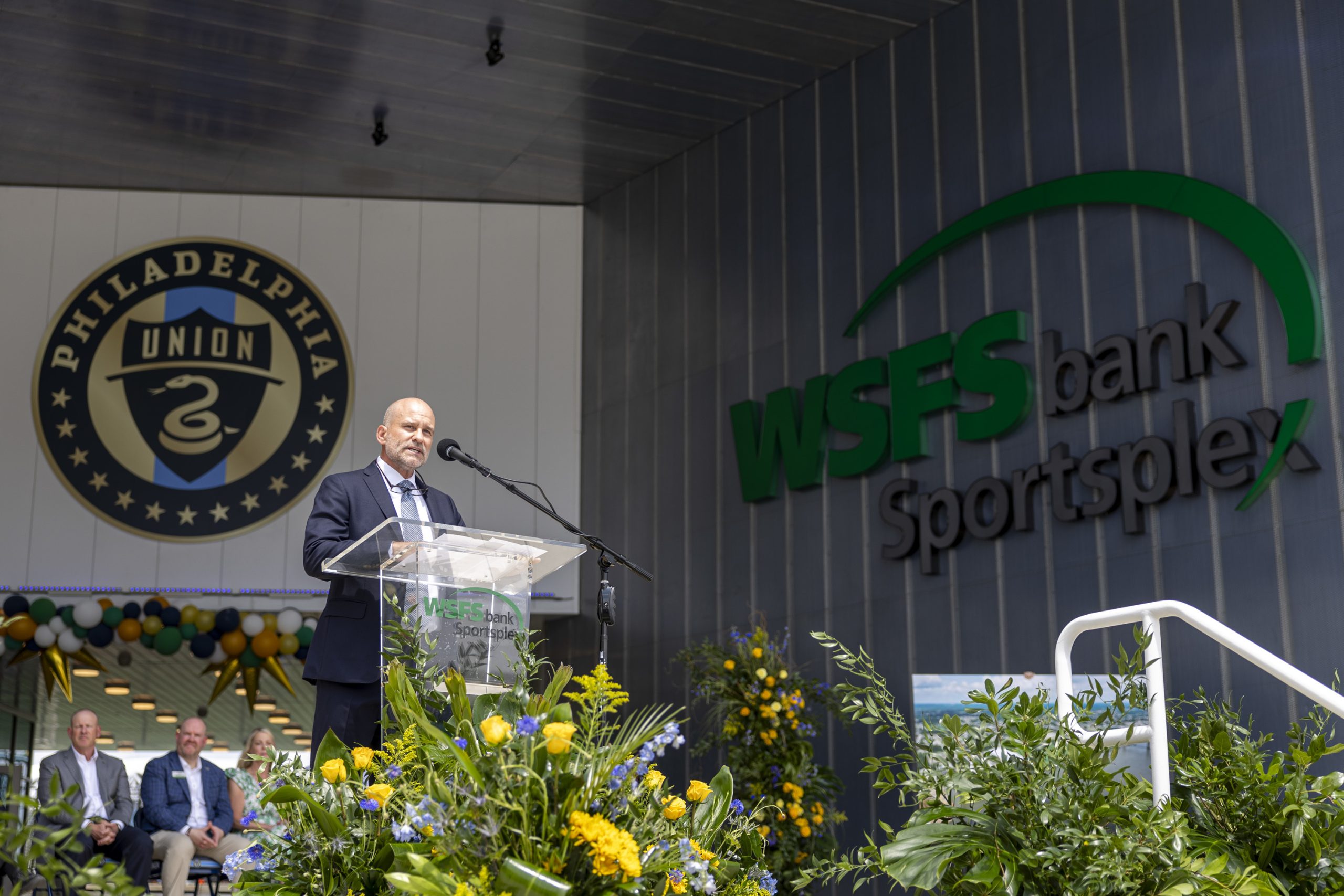
Tim McDermott spearheaded the launch of the WSFS Bank Sportsplex in Chester, a 170,000-square-foot indoor facility complete with a series of outdoor fields, which opened last July. Tyger Williams / Staff Photographer
It’s a wide-ranging analysis, and it comes in two tiers. On one hand, you have devout ticket-paying supporters of the club, who contend that the Union doesn’t spend enough, that they rely on youth over experienced, world-renowned talent to win games.
Some say that among a hodgepodge of players, where is the one that you can build a team around? They’ll point to teams like defending champions Inter Miami, whose budget and star power dwarfs that of the Union.
Or Los Angeles FC, or Orlando City, or Vancouver, or…
McDermott will stop you right there. While he admits that those teams have readily found success with bringing in European stars to build a roster around, their model is very different. McDermott told The Inquirer that an annual investment of $10 million is spent on developing within the Union’s academy system, fostering the growth in everything from its school, YSC Academy, to coaching staffs, to maintaining the sprawling WSFS SportsPlex, basecamp for the Union’s youth movement.
“If you look at the entirety of how we do things, it does rely heavily on youth development,” said McDermott. “We’ve been very good at that, and we’ve been recognized as being the best at that.
“If you look at our [first team] payroll, we’re toward the bottom, and that’s what I think people get upset about, and it’s a fair statement. But what I would say is there’s lots of ways to bring players in, right? You can go free agency, you can go to transfers, you can transfer in the market, or you can bring people in from the league, outside the league, etc. There’s lots of different ways to do it. And we’ve chosen many of those methods, but we’ve [also] chosen heavily in youth development.”
But that’s the other issue. Retention of those young players. Over the last few years, the Union has brokered many of those it groomed within its system for substantial transfer fees to and from other clubs.
Perhaps its biggest young star at the moment, midfielder Cavan Sullivan, is set to move to Manchester City upon turning 18, and U.S. men’s national team standouts like Brendan Aaronson, Mark McKenzie, and Matt Freese were all shipped elsewhere. All of this has prompted the Union to be labeled as a “selling club” by many who say that comes first and that the franchise and ownership are content with just getting into the postseason but not doing anything more to lift a trophy.
Union midfielder Cavan Sullivan, a rising American star who hailed from the Union’s youth academy, is set to head to Manchester City as part of a $5 million transfer fee to the English club. Yong Kim / Staff Photographer
“I totally agree. I don’t think they’re wrong; I don’t think they’re wrong at all, but I think that’s more of a big picture problem that’s out of our immediate control,” McDermott said. “I want this not just for the Philadelphia Union, but for the MLS to grow. There needs to be a point in time where the players that are coming through our youth academies are starting to say, ‘No, I don’t want to leave. I want to do it here in my hometown.
“I think it has to also be on the players themselves [who] are not always looking overseas. We’re developing players, and we’re transacting in MLS, but keeping them in the lab right here is what’s going to elevate MLS to a higher profile.”
‘Our goal is to win’
As McDermott tells it, new sporting director Jon Scheer has been “working the phones heavily.” He says the club knows it needs to bring in new players, and added that there’s a board with “bigger name players” that they’re “actively working” to bring in. However, he contends it has to be a player that fits the club’s current methodology, a high-pressing team that will attack opponents from the outside, and frustrate defenders with dizzying diagonal runs wherever space allows.
The World Cup has offered a great look into some potential names, but at the time of this report, it seemed like it was only a discussion.
“I’ll just tell you right now, we’ve fielded calls for potential players over the last two weeks,” said McDermott. “We have a weekly call with ownership, myself, and Jon Scheer, and these names come up. But the question is always what does that do for our team?
“On the other side, we field calls about our own players and we may or may not transact on a player because we want to make sure that our focus is winning, right? What’s the point of the transaction if it’s going to make us less competitive? Maybe now’s not the time to do it. But you’re always balancing that.
“If somebody makes you an offer, you don’t know if that offer will be there a year from now, right? So you’re always trying to balance that. Our focus is we must win. The goal is not just to develop players to sell them. Our goal is to win.”
Bringing back players like Union left back Kai Wagner (27) cements that the team is looking to align itself with players that want to play in Philadelphia. Isaiah Vazquez / For The Inquirer
A place in Philly
McDermott inherited a hurdle when he joined the Union in 2016. How do you maintain relevancy as Philadelphia’s Major League Soccer representative from 18 miles away in Chester?
He knows that while the team’s marketing efforts aim to keep a grip on the collective consciousness of a city, as it’s stood since its inception, the Union’s success of filling up a stadium each game day heavily relies on people getting in their vehicles and navigating the I-95 corridor. But there begs a question. How many more fans could the club have with a stadium or a facility in Philly proper, situated somewhere fans can access the team by SEPTA, their bike, or even walk?
When asked the question, McDermott noted that the Union isn’t unique in being the only MLS franchise with a stadium outside city limits, and he’s right. Several clubs represent cities with stadiums outside their city limits, but many have begun to realize that there’s a real need to inhabit the city that emblazons your crest.
One of the more recent examples is the Chicago Fire, which last year announced plans for a $750 million, 22,000-seat stadium to be constructed downtown, financed entirely by team ownership.
It’s the type of move that inherently brings interest, and aligns the team more with being a part of the city. McDermott recognizes that too, and didn’t disagree that there is a connection lost by way of the Union’s footprint in Chester. However, in the same breath, he acknowledges just how good Chester has been for the growth of the club.
For the last 16 years, the Union have enjoyed an immense amount of success at Subaru Park, which opened as PPL Park in 2010. Philadelphia Union
But, according to McDermott, that doesn’t mean that the Union isn’t “actively studying” how to replicate what Chicago did.
“We have a great relationship with Delaware County and with Chester; that’s been phenomenal, and they’re incredible supporters of ours,” McDermott said. “But I would say at a more macro level, if you look at all of the teams that have come into the MLS in the last decade, where are they located? A lot of them, not all, but a lot of them are in a downtown location. That fact is not lost on us. I think it’s fair to say we’re proactively studying is that something we need to look at in the future? And is our future in an environment that looks like that?”
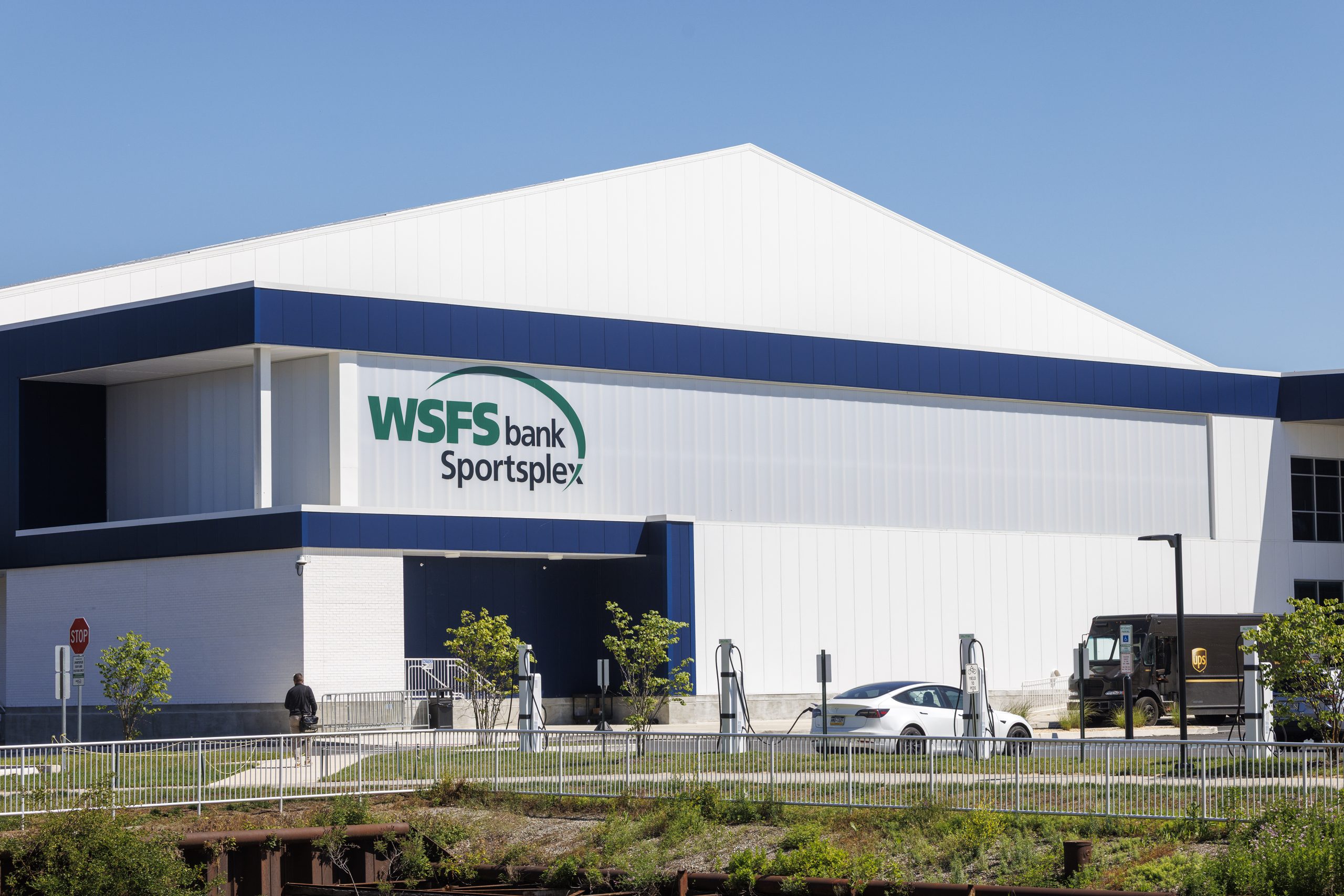
The exterior of WSFS bank Sportsplex in Chester.Alejandro A. Alvarez / Staff Photographer
As it stands, the Union sits on infrastructure, to the tune of over $300 million, when you consider the cost to build the stadium in 2010 for a reported $122 million, the newly designed WSFS SportsPlex, which came in at a $100 million price tag just last year, in addition to its annex for the first team, offices, and school in the adjacent Wharf Building.
“We are very comfortable where we are right now,” McDermott said. “It’s been a fantastic relationship. I think we’ve done a lot in terms of the development that we’ve done in Chester. But thinking about what a move downtown or some other place [within the city] would look like, I think it’s fair to say we have to be aware of it, studying it and being thoughtful to see if our future would be brighter if we were in a situation like that. So, I can say that yes, we’re actively studying that process and what that would look like.”
‘Still have our homework to do’
Perhaps the portion of the sitdown with McDermott where his eyes lit up was the notion that growth and expansion of the club comes from getting people out to matches. It’s a fair point, considering the Union’s gameday experience has been repeatedly lauded as one of the best in MLS, winning a J.D. Power Award for best fan experience just a year after McDermott joined the club in 2017.
Amanda Young Curtis, the club’s vice president of communications, told the Inquirer that fans who attend just three matches are significantly more likely to lock in as season ticket holders.
She said that it comes down to a few facets beyond just increasing brand awareness, but it’s everything from capturing new fan data to wooing potential first-time attendees with discounted tickets to, and perhaps most importantly, “converting attendees into repeat visitors.”
The Sons of Ben have been a devout supporters group for the club. To McDermott, a goal of ushering in more fans to the Union brand has to be the ultimate goal. Isaiah Vazquez / For The Inquirer
McDermott agreed, and added:
“We need to make sure that not only do they come and have a good time, but we’re actively always thinking about how do we get them back two more times. The likelihood of locking them in jumps pretty significantly. It’s why we’ve initiated this whole concept around trial and retention, and I believe that the momentum from the World Cup offers a major strategic opportunity for us to do that.”
But an area where McDermott says the Union still has their work cut out for them is cultivating stronger partnerships with youth clubs from an awareness standpoint so young players and their parents gravitate to the Union as supporters.
And for the youth coaches clutching pearls thinking that the Union is trying to woo a player away from their club, McDermott says it’s not about that. In fact, this notion transcends recruiting. Kind of…
“I think there’s two parts,” McDermott said. “There is the fan development part, and there’s the kind of talent identification part, and they somewhat link together. I’ll go back again to when my kids were 6, 7, 8 years old, and I was on the sideline of my daughter’s games. I looked down the sideline, and I saw all these parents wearing Eagles green.
Union president Tim McDermott contends that while the team has celebrated an immense amount of success, more is yet to come through the planning being done behind the scenes. Isaiah Vazquez / For The Inquirer
“I know we’ll be successful when I look down the sideline at a kid’s game and they are wearing blue and gold. I had many different instances like that where I felt like parents and the kids that were in the youth soccer ecosystem weren’t necessarily matriculating to being a Philadelphia Union fan, and we still have our homework to do to change that.”
McDermott knows the Union has work to do across the board from a grassroots perspective on up. In the immediate, righting the ship in an forgiving league like MLS is the goal, and the club is off to a strong start coming out of the World Cup break, winning two consecutive matches for the first time this season following wins against Red Bull New York and an impressive Saturday win over Seattle, two teams that if the season ended today would be playoff-bound.
It’s a great start in the eyes of a guy like McDermott, who contends his approach has always been to win. And listening to him speak now, it appears that talks are happening between ownership and team leadership about doing so — at all costs.
“As president, my job is solely focused on how can we win, across the board,” McDermott said. “I want to win; everyone in this organization wants that, but the culture is always and has to be first and foremost. You gotta have guys that want to play for each other, that believe in the system, that care for each other, that love one another and that are good quality character people.
“I think on the whole, we’ve really been doing a great job with that over the years. I’m not just talking about where we’re at today, but I’m talking about the last six, seven, eight years; we’ve been building towards having success, and we’ve had success. We’ve won a lot over the last five, six years, so our design works. I think [this reset] provides a real look at what we need to do to get back to that, and in the conversations we’re collectively having daily, I have no doubt that we’ll get there. None.”
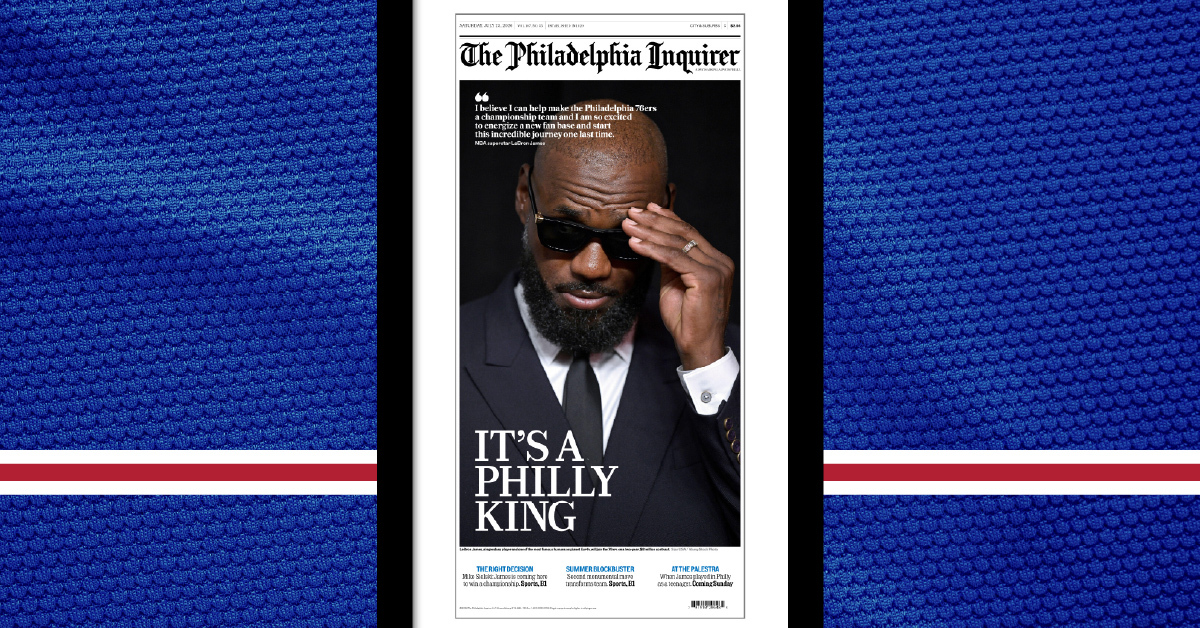
Purchase the front page reprint of The Philadelphia Inquirer from Saturday, July 25, 2026, featuring LeBron James following the news that he was joining the 76ers.
It has the potential of being a dream story, really.
It’s also one the Union have played out before. Stop if you’ve heard this: An area native and former professional climbs the ranks to become the franchise’s manager.
Part 1 of that tale was former manager Jim Curtin. Part 2 is interim head coach Ryan Richter, the Southampton native, 2010 Atlantic 10 Offensive Player of the Year at La Salle, and Union draft pick who played seven professional seasons across MLS and other leagues.
On Wednesday, Richter, 37, stood in the coach’s box on the sidelines at Subaru Park and orchestrated a 3-1 win against rival Red Bull New York.
Congratulations to La Salle grad Ryan Richter, ‘11, as he has been named @PhilaUnion interim head coach!
In this role, Ryan manages team logistics, leads specific training drills, and analyzes player performances.
It was the Union’s first league win at home this season, and, despite their starting centerback holding out, which forced a shift along the team’s back line, the Union (2-10-4, 10 points) looked impressive.
But Richter knows one win doesn’t make him soccer’s Winston Wolf. He’s not quite the fixer yet, but he coaches in a forgiving league. Despite the Union wallowing in the basement of Major League Soccer’s Eastern Conference, there’s still time to chase a playoff run. And that would make it hard for Union brass not to consider revisiting history when it comes to their next full-time manager.
But that’s not on Richter’s mind right now. Well, maybe a little.
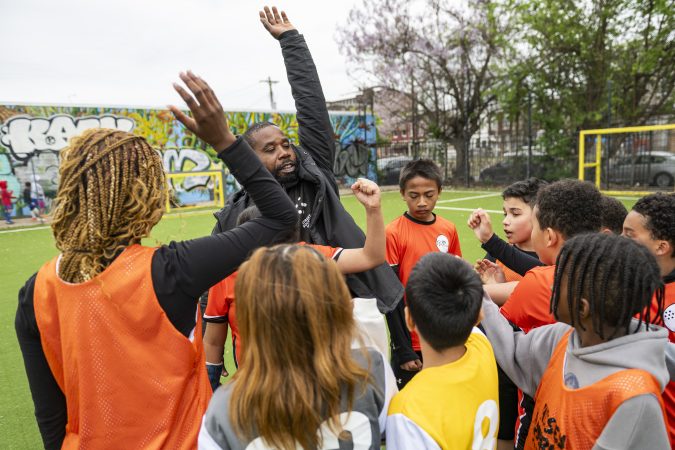
“I’ve been a part of this club since 2011 and in pretty much every role, from a coaching standpoint, that you can be involved in,” said Richter, who in addition to coaching the club’s reserve squad, Union II, has coached on just about every level of the club’s youth system, including SWAG, its developmental program dedicated to introducing an underserved population to high-level soccer training.
“I think over that period, I’ve made a lot of good relationships with people, staff in the academy, staff in the second team, ownership, everyone that’s involved in the club … this opportunity for me, personally, is a reflection of all the people that have helped me in this club, all the people that have helped me get to this point.”
For now, all Richter can do is continue to replicate the success from Wednesday and wait. There’s a prevailing belief that the Union not bringing him on immediately is less that they want to conduct a global search for their next manager, than that they don’t want to be on the hook for paying three. They’re still paying Curtin’s buyout and remain on the books with Bradley Carnell, who lasted a season and a half before being dismissed in May, but has a contract with the club through the end of the year.
Richter took over in an interim role following the departure of Bradley Carnell (above) in May.Yong Kim / Staff Photographer
However, according to a source with knowledge of the proceedings, the Union made few moves to bring in candidates over the seven-week break for the World Cup.
Many within the organization believe Richter already has the respect of the locker room, the tactics to make adjustments within the Union’s playing philosophy, and a “ton of energy,” as Union president Tim McDermott said recently when asked about the team’s coaching situation.
But McDermott’s words felt less like a deflection and more like admitting that right now the club’s on-field leadership is in wait-and-see mode, and part of that is waiting to see whether Richter can turn around the team’s fortunes.
“He interacts and communicates and relates incredibly well to our players,” McDermott told The Inquirer. “He is a guy that’s not too far removed from playing himself, and that brings a lot of credibility. He carries himself in a way that’s highly respected, and he’s good at simplifying messages to the players so they get it. They understand what he’s trying to do.”
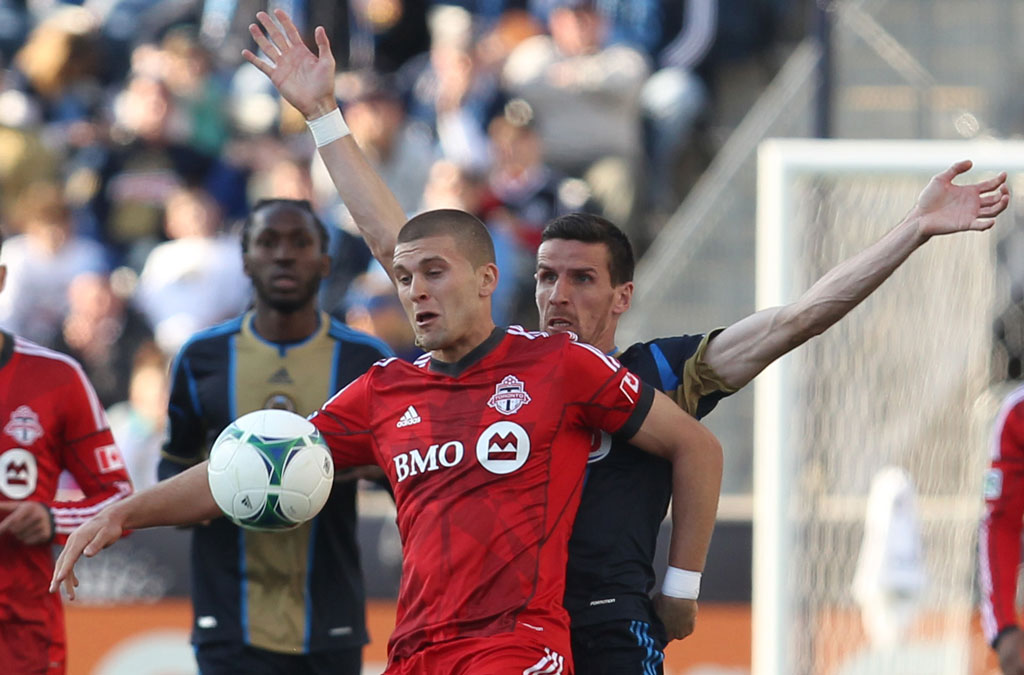
Drafted by the Union in 2011, Ryan Richter also had a stint with Toronto FC in 2013.
Listen to Richter speak about the game, and it becomes clear that the guy knows ball.
“The philosophy is not going to change,” Richter said. “As someone who’s worked in this club for eight years … three of those years, the Union has had the most points in the league. So what I’ve learned and what I’ve seen produce a winning product is playing this style [and] using this methodology.
“I know it can lead to success when it’s done in the right way. Your job as a coach is to put your players in a position where you only see their strengths. So whether that’s a [4-4-2] diamond [formation], whether that’s a 4-2-2-2, we’re going to try to put the players in a position where we can see their strengths in the game.”
Playing to strengths is a novel idea, considering that Richter had to adapt to a new role when he played for the Union. A striker with a nose for goal, Richter often was used as a more defensive player and even played outside back at times. It may not always have felt comfortable, but he was effective and filled a need that got him playing time.
Union interim head coach Ryan Richter relays instructions from the sidelines during the first half of Wednesday’s game against Red Bull New York.Isaiah Vazquez / For The Inquirer
What did look comfortable? His transition to the sidelines, particularly Wednesday. He stood toe-to-toe with former U.S. soccer stalwart Michael Bradley, Richter’s former teammate in Toronto and now the manager of Red Bull and son of U.S. coaching legend Bob Bradley, and outperformed him.
There are a lot of games left, and the Union likely will take their lumps as they look to write history as one of the few teams that bounces back from the bottom of the standings to squeak into the playoffs.
They’ll need more goals, more opportunities. Communication. And, of course, stacking wins. And there are intangibles, too: timing, luck, leadership.
On Wednesday, Richter made a team down on its luck believe it can bounce back. Time will tell if all those stops along the way have made that last one, leadership, his most significant contribution in their run toward the top of the table.
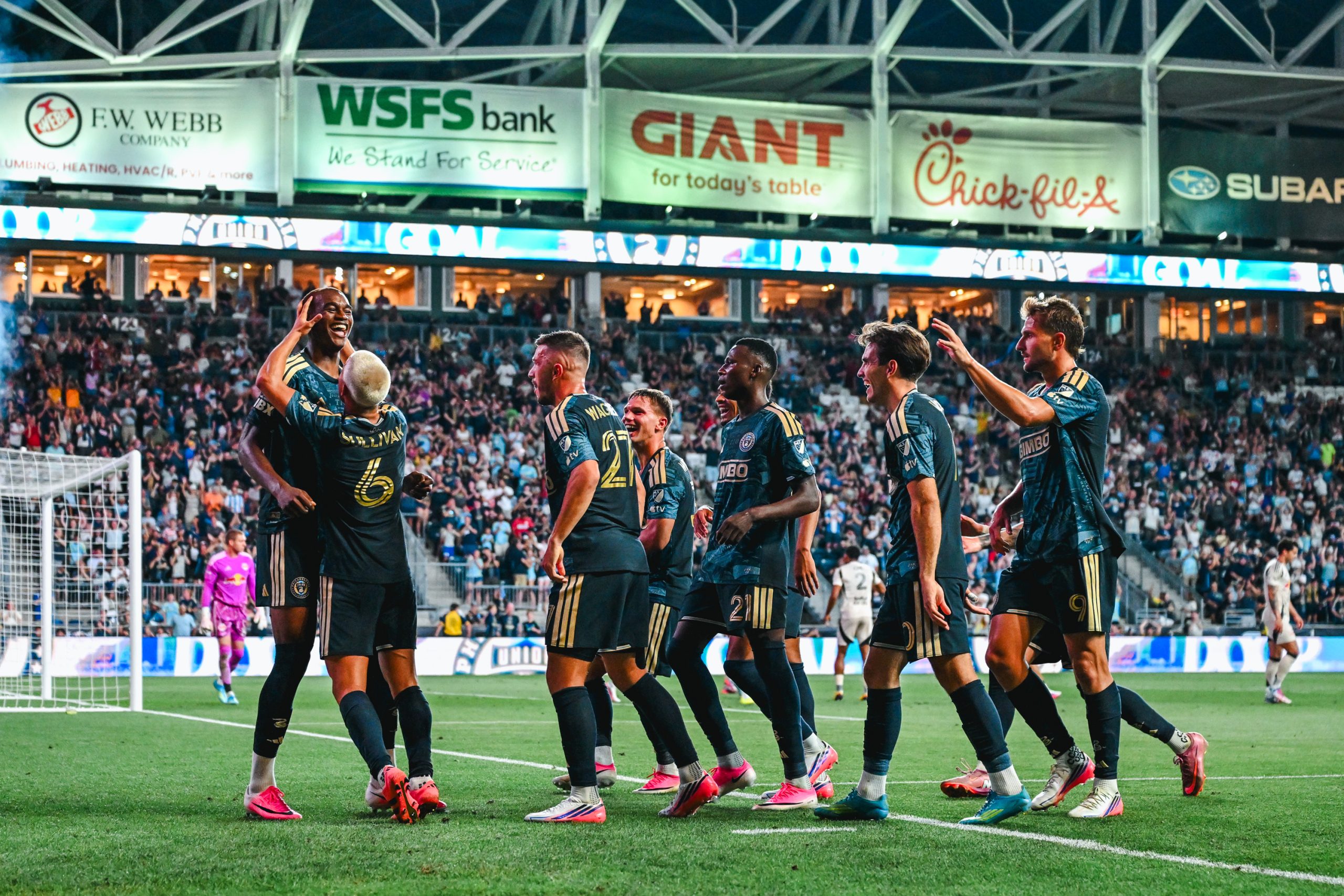
Union midfielder Jovan Lukic (second from left) celebrates with teammate Cavan Sullivan (left) and others in Wednesday’s home win against Red Bull New York. Isaiah Vazquez / For The Inquirer
“The opportunity to take on Union II was something I was really grateful for because it’s so important to learn how to lead a staff,” Richter said. “It’s different when you’re speaking to the players as an assistant coach than when you’re the one making the final decision of who plays on the weekend. Learning that communication piece and learning how to lead people forces you to be honest with yourself every day.
“But, really, it comes down to how you communicate to your players and realizing that everyone’s different. Getting them to do what’s required to be successful is great, and when it all comes together, that’s when you realize that the goals you have for yourself, for them, and for the club are attainable. So, yeah, I’d be lying if I didn’t say I’m excited to see how far we can take this.”
As we speak, the last of FIFA’s traveling caravan has packed up, ready to move onto its next stop, while leaving American fans looking at the soccer landscape in this country, wondering why, with the wealth of raw athleticism we have here, couldn’t one of those two teams in Sunday’s final have been us?
Good news. Historically speaking, every World Cup spawns change. Bad news? When it comes to soccer, the United States has been historically bad at making the changes needed to make a stir. In 2026, emerging from the group stage shouldn’t be a hope — it should be the norm.
The change needed to push American soccer forward is not an easy fix. OK, well, it is, but it requires a dedicated strategy and a collective belief that development, not greed, needs to be at the forefront.
That investment begins at the grassroots level and comes in two main tiers: Investing heavily in identification and developing raw, untapped talent.
The other? Educating parents that there’s more to the game than striving to make the top club team in your area.
You could add a third — offering greater exposure to the game — but that topic sits on its own almost entirely when you consider the level of gatekeeping that exists, from broadcasting contracts going to cable and streaming services to the outrageous price points of tickets.
Cavan Sullivan (left) is an example of the type of player the U.S. could produce behind a deeper focus on development. Philadelphia Union
It already is in some states, like here, in what the Union is doing with youth development that spawns real American hopefuls (see: Cavan Sullivan). Undoubtedly, that last sentence ruffled a few feathers among the club soccer community.
If that’s the case from where you’re standing, well, therein lies the problem.
Recent history has shown that’s not always going to arrive via a traditional club model where parents are overspending, because at the starting-out level, they honestly don’t know any better. It’s not saying the model is all that ails when it comes to development, just that it can no longer be widely considered as a preeminent pathway for children as young as 5.
U.S. Soccer recognizes this. Just last week, it noted that in the aftermath of the national team’s round of 16 exit, it’s “trying to create a new system that then we’d make highly affordable. It’s a bold strategy that comes with a ton of roadblocks. The current model is not just fully ingrained into how we develop talent, but it makes a lot of people really rich off kids with a dream and parents with deep pockets.
But what would an argument be without a solution? Here are two.
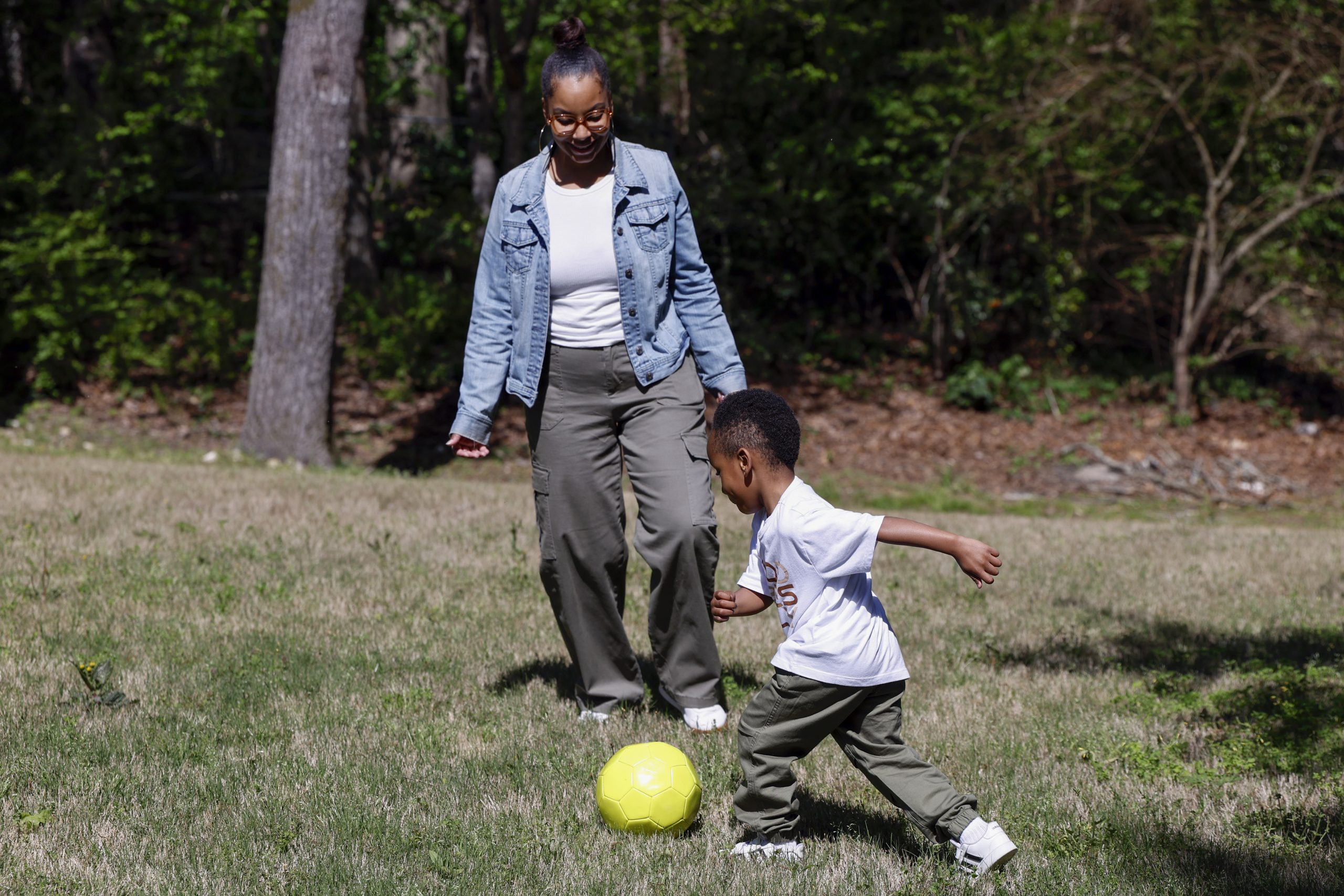
Giving kids an opportunity to ignite a passion for soccer starts with making sure there are ample, unlocked places to play.Allie Ippolito / For The Inquirer
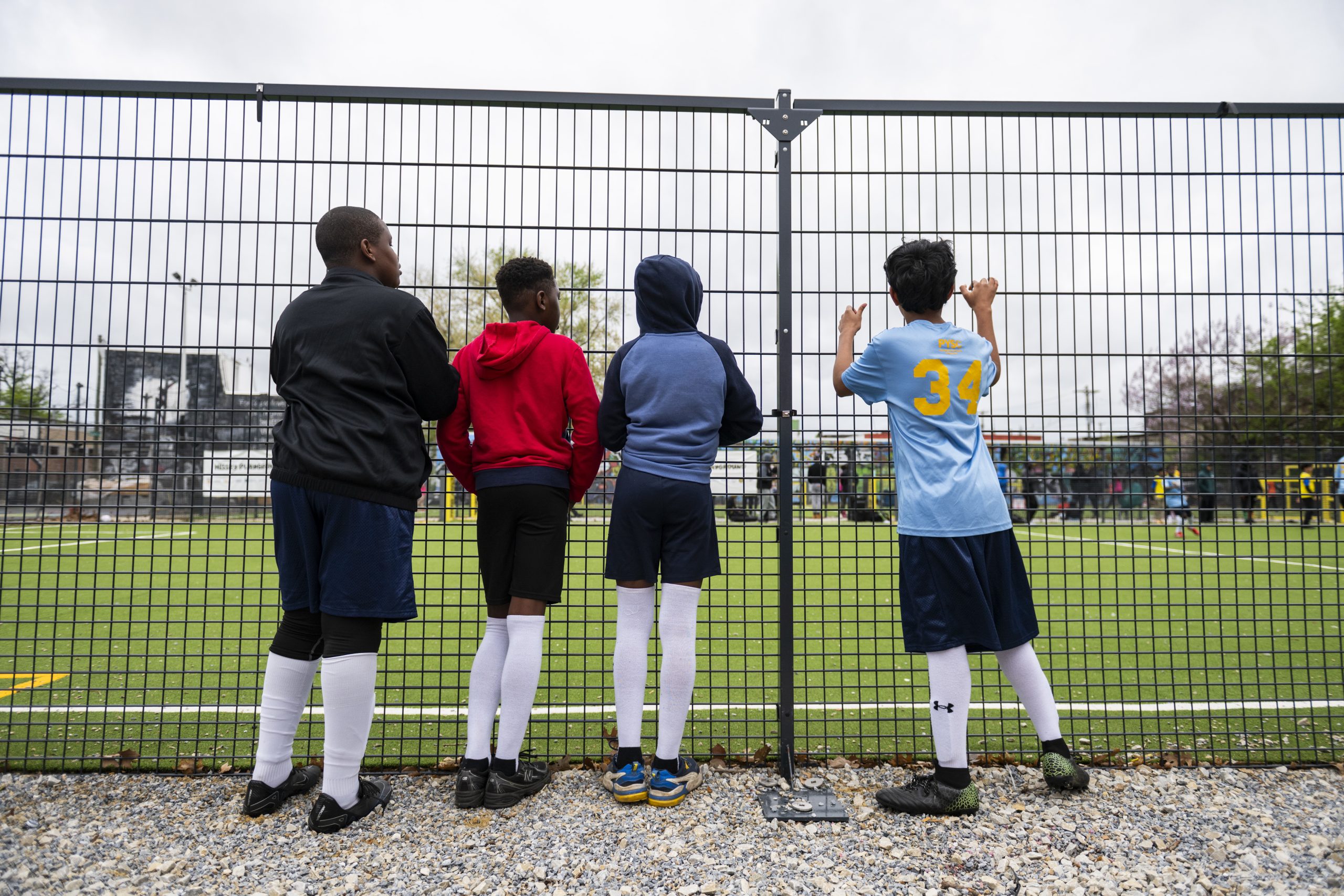
First, foster excitement by putting the game everywhere. Start with a focus on inner cities and rural communities. Loosen the restrictions on accessibility, price, and most importantly, the gates of locked-up ballfields that kids could be playing on.
Second? Put some skin in the game.
Imagine pouring financial resources into underserved neighborhoods. You’ve built the fields, now get kids playing on them. How about a series of cash prize tournaments at multiple age ranges and skill abilities?
Organizers receive winnings under the demand that a substantial amount of the proceeds is used to create more opportunities to foster interest. In turn, U.S. Soccer and the academies of Major League Soccer teams plant scouts at these events to find the raw talent and develop them.
Started in 2018, the Philadelphia Union’s SWAG program offers underserved kids the opportunity to learn the game, and for the ones that show promise, get placed on a developmental path to pro track. STEVEN M. FALK / Staff Photographer
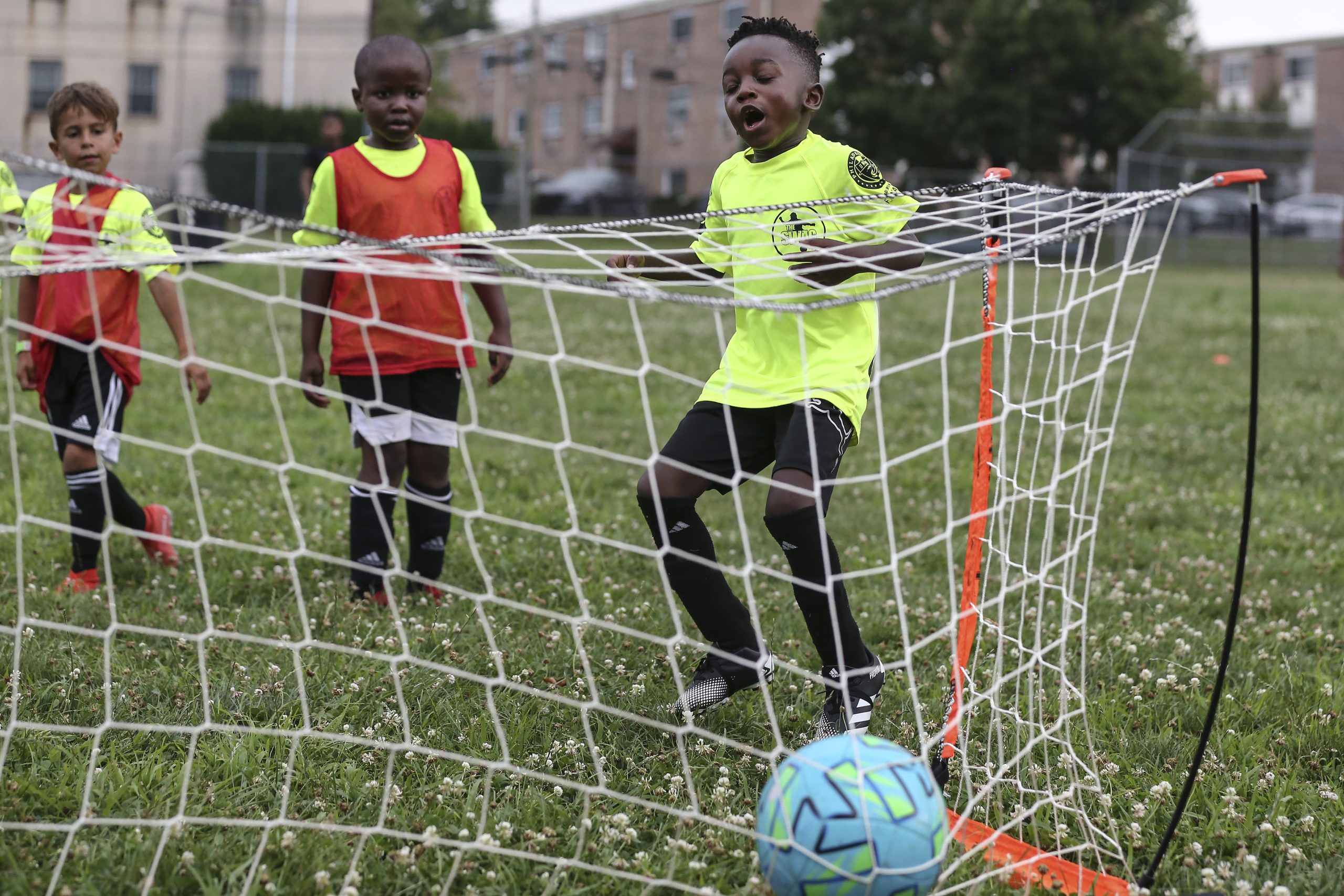
Some of that is already happening. In 2018, the Union created the SWAG program, going into schools, finding kids, developing them from the age of five, and grooming them to be on a professional pathway. It’s the kind of pipeline that city-based organizations like Kensington Soccer Club and Capitolo Soccer AC Fairhill, Street Soccer USA and many more are at the ready to be, and are already finding diamonds in the rough all along the way.
The problem is, as it stands, not enough people in power when it comes to the game care to look.
The parent trap
Listen, at the end of the day, you don’t know what you don’t know.
According to figures from Project Play, a study created by the Aspen Institute, youth sports is a $40 billion a year business, with youth soccer a sizable chunk of that equation.
The reason why there’s so much money to be made? Here’s a big one: uninformed parents.
At a certain level, there is this real fear of missing out from parents when it comes to their kids’ trajectory. The FOMO isn’t in every case, but here’s how it typically works when it comes to soccer in America. It starts innocently, a parent signing a child up for in-house soccer, where you discover, and it’s affirmed by a coach and others, that your kid has real talent.
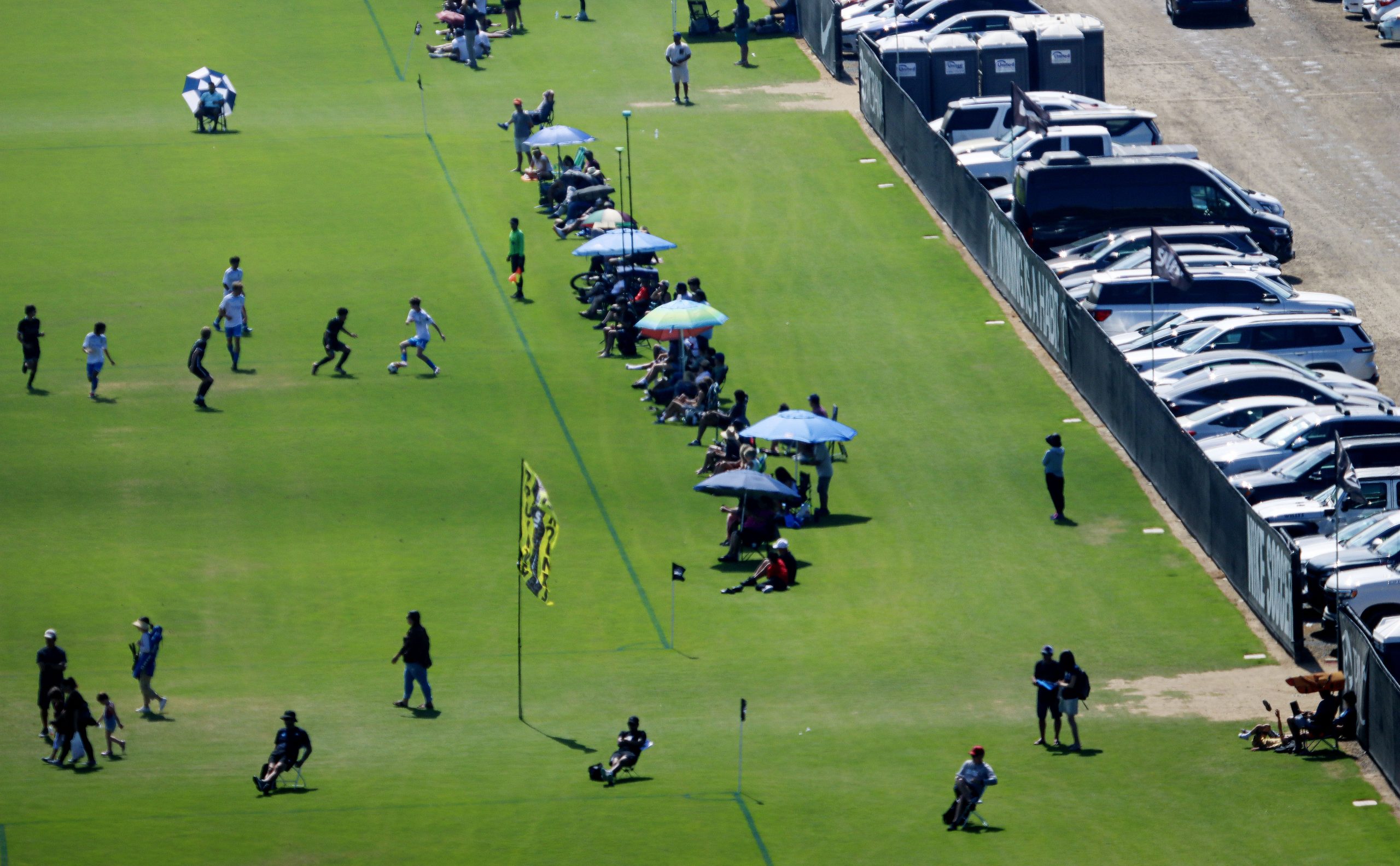
Parents typically spend hundreds on top of committing multiple days of their family’s time to youth soccer tournaments all over the country. Sandy Huffaker
But instead of offering programs to develop that talent and get that child acclimated to the sport at a young age through actual development at a continued low cost, parents are coerced into believing that their child would fit seamlessly on a travel club team. One that competes year-round, practices 2-3 times a week, and plays games and tournaments on the weekend.
And then there’s the time cost. Traveling back and forth between states, sometimes to play the same team from the next town over from your club in a tournament.
If you’re a soccer parent, undoubtedly, you’re nodding your head as it probably sounds like your trajectory in youth soccer to date.
Suppose the solace comes in that you’re not alone?
For many parents, looking for the best place for their child to play the sport at a top level comes at a high cost. Butch Dill
And then there are the buzzwords. “Select.” “Premier.” “A-Squad.” All of these focus not on developing kids into the talent needed to put the U.S. in the best position to win a World Cup, but instead compile the best kids to help that club win across multiple age groups. They’re also words that make parents salivate, spending money they believe will deliver their child to greatness.
Or at least, that team that everyone is talking about.
At the end of the day, parents want to provide what they believe is the best opportunity for their child. Some don’t know what that looks like in soccer.
Can’t fault that. The real fault is in the subsequent exploitation of this ideology by organizations charging thousands for a child to have said opportunity.
Parents in these same circles have revealed that for kids as young as nine and 10 years old, their club won’t even look at kids who don’t already come in with a certain level of skill. Ask yourself: If the mindset has to be about development, how is that mentality not a perceived problem?
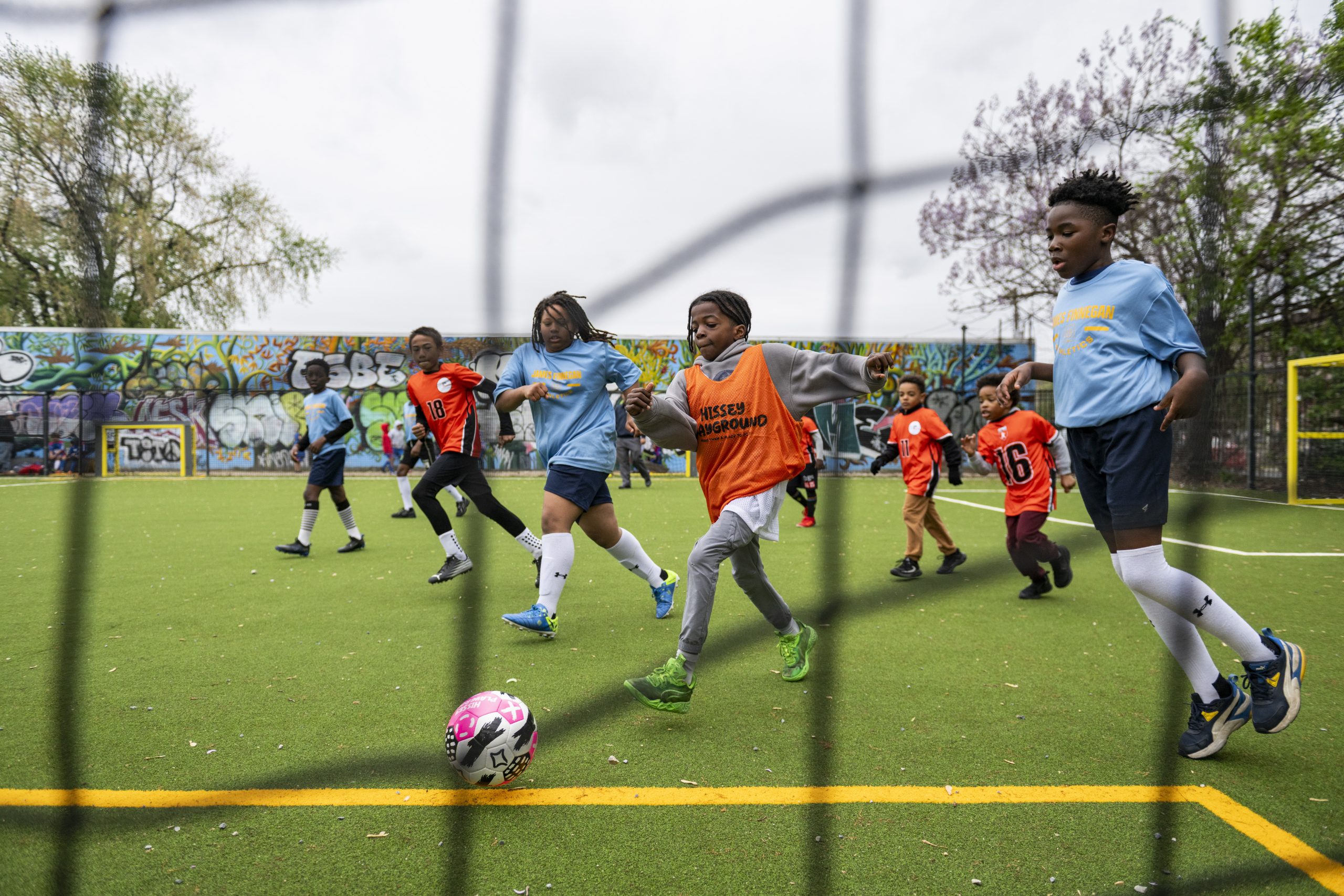
Kids play in Kensington Soccer Club’s Love Street League program at Hissey Playground in Kensington.Allie Ippolito / For The Inquirer
So, of course, that begs the question: “Who pays, then?” Well, there are plenty of youth systems around the world with strategies that give youth soccer in America a fantastic roadmap. Anyone tuning in to Sunday’s final was treated to a great page to start reading if you look at what Spain has been able to do on almost every level over the last 10 years, right up through yesterday.
Two World Cup titles in less than 20 years. A European title. The only nation where both the men’s and women’s teams are defending world champions. If the goal is to crack the code on how to produce players who can go far in a quest to chase a World Cup trophy, maybe start there.
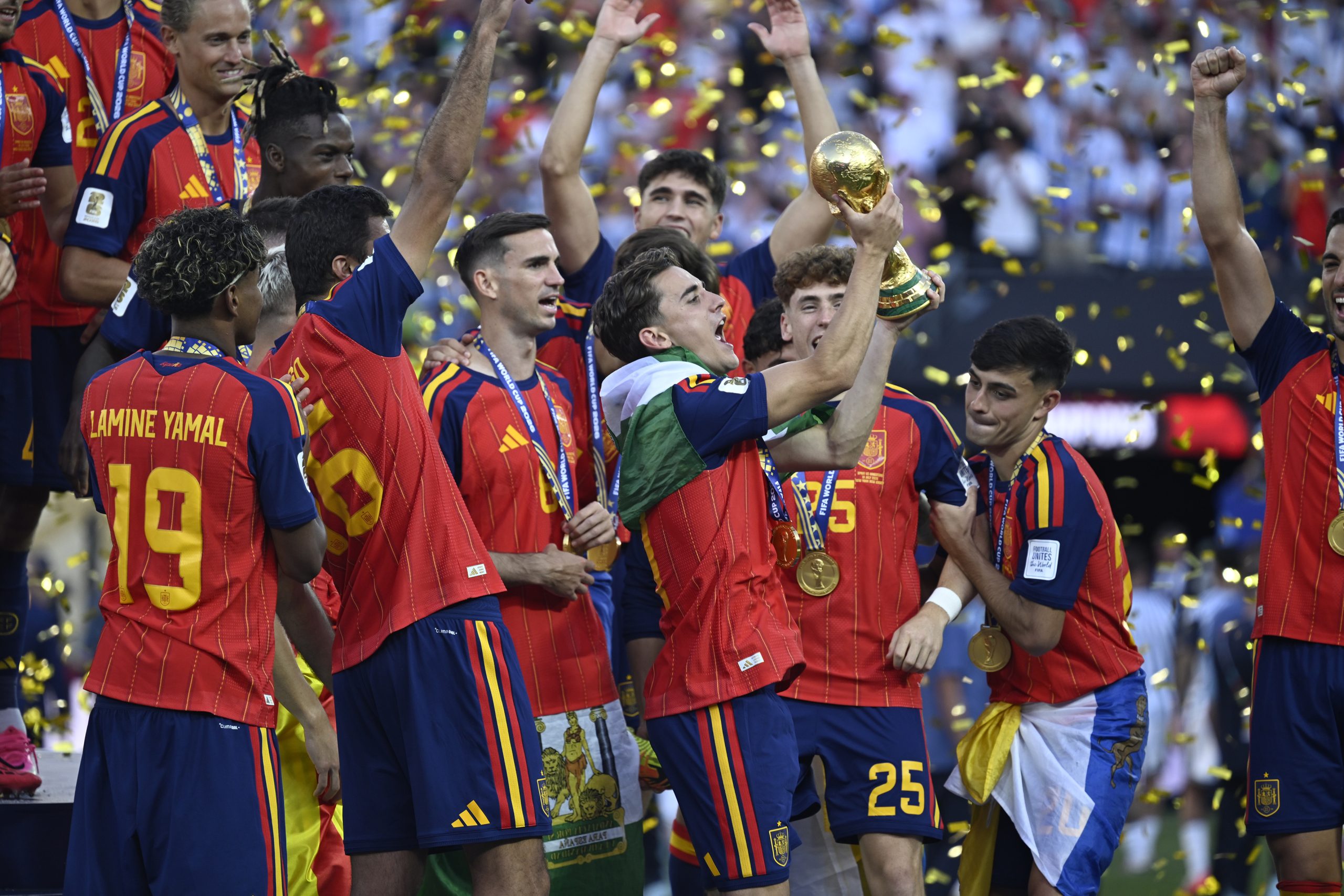
Spain’s Gavi (9) holds up the FIFA World Cup trophy as Spanish players celebrate after winning the World Cup final against Argentina in East Rutherford, N.J., on Sunday.VINCENT ALBAN
As it stands today, club soccer in America serves a purpose. It’s a great conduit for exposure. It offers youth players a firsthand look at the rigors of competition at a very young age. It teaches teamwork and being dedicated to a collective mission.
But it’s not about development. If it were, parents wouldn’t need to consider paying even more for privatized training or skill development camps and clinics. And now, the notion is growing that private equity sees ways in which it can get involved in the gambit. If there isn’t more of a fight to make sure that the status quo doesn’t become the legacy of this World Cup, history looks pretty bound to repeat itself in four years.
So, thinking about going to MetLife Stadium for the World Cup final?
It’s easier coming from Philly than you might think. I know because I’ve taken the trip to New York/New Jersey Stadium (or MetLife Stadium as it’s customarily called) three times for matches between Brazil and Morocco, France against Senegal, and Norway’s quarterfinal win against Brazil.
Certainly learned a lot along the way. Each time felt very different from the first.
I took the public transit route to save some dough and avoid traffic: SEPTA’s Trenton line on Regional Rail from William H. Gray 30th Street Station, and thenthe NJ Transit Northeast Corridor line to Secaucus Junction.
Based on the gridlock I saw on the highways while riding the train — not to mention the cost of gas — this is the cheapest and most efficient way to travel from Philly to MetLife Stadium.
Just make sure you’re ready to get your steps in.
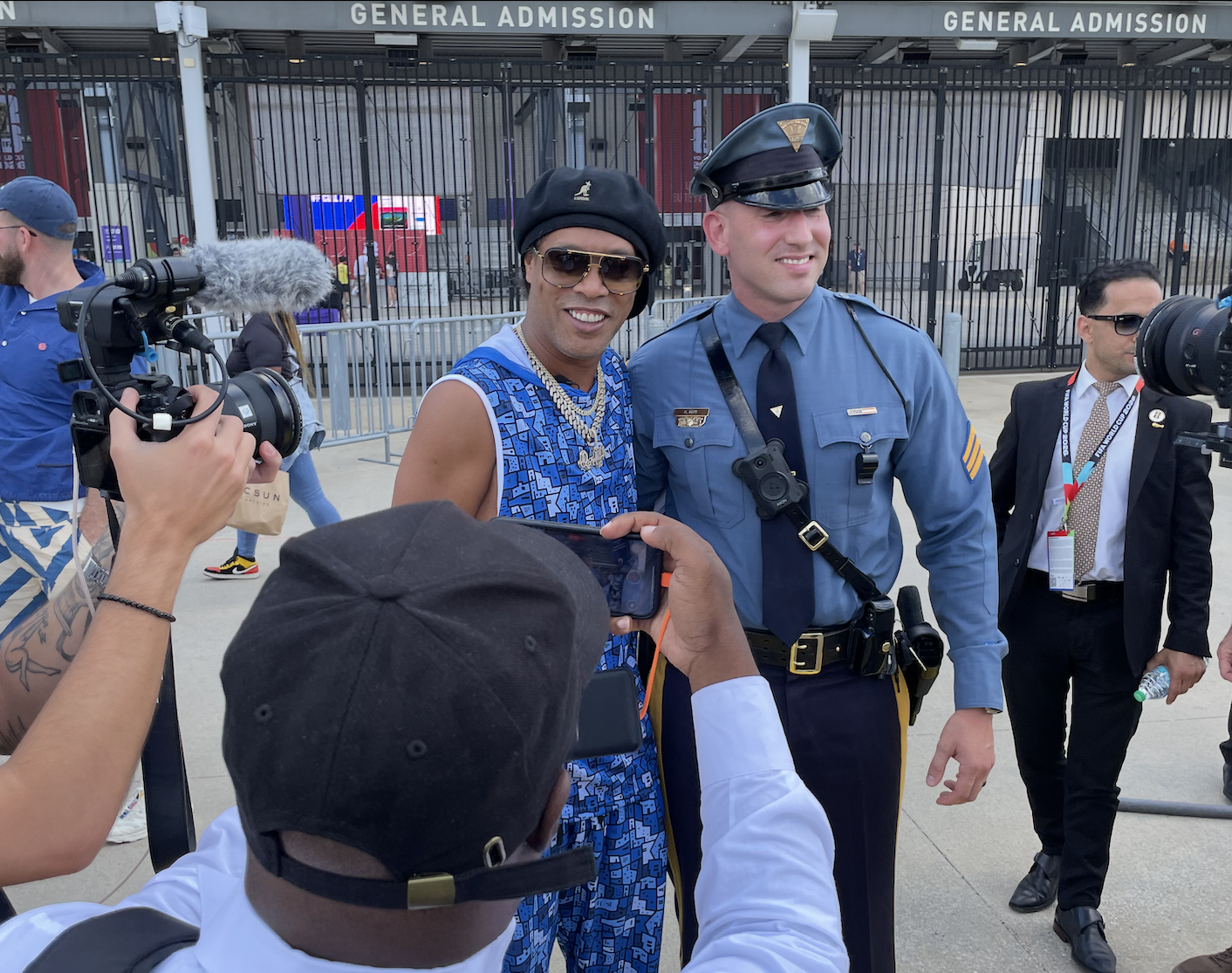
You’ll never know who you might run into once you’re at New York/New Jersey Stadium, kind of like when we stumbled upon soccer great Ronaldinho outside the main gates during the June 13 Brazil-Morocco match.Kerith Gabriel / Staff
Buy your tickets online
Purchasing your trip ahead of time is the way to go, and you can lock that in right now. I bought my train tickets 12 days before through the SEPTA and NJ Transit websites.
A round-trip ticket on SEPTA’s Trenton line on Regional Rail from Jefferson, Suburban, or 30th Street Station is $20. It’s $26 if you purchase on the train. Not only is it cheaper, but buying online allows you to skip the lines at the station.
NJ Transit round-trip tickets to Secaucus Junction are just $40.70 and available for purchase on the NJ Transit website. (It almost makes you feel fortunate you’re coming from Philly and not Penn Station, where tickets are upward of $100.)
The total cost for a trip to MetLife Stadium and back to Center City? Right around $60. For comparison, parking a car in Philly for World Cup games cost between $115-180, and reached $700 for an oversized vehicle.
Getting there
The beauty of taking the train out of the city is that Trenton is the last stop on the line, so no need to ask the conductor when it’s your stop; you’ll know, given that the whole train clears out.
Once you step off the train at Trenton, you’ll need to switch trains. Find the escalators that only go up to the main floor, and according to an NJ Transit ambassador at the station, Northeast Corridor local and express trains have left from a combination of either Track 1 or Track 2, which are located on the same platform.
When in doubt? Look at the big board, which will read New York-SEC (SEC for Secaucus). Secaucus Junction is one of the final station stops before New York Penn Station, so yes, you’re on the right train.
From there, it’s a straight shot to Secaucus. Getting on at Trenton means you’re the first stop on the line, so you’re sure to find a good seat.
Every stop was announced, and conductors shouted instructions to fans on how to navigate Secaucus upon arrival.
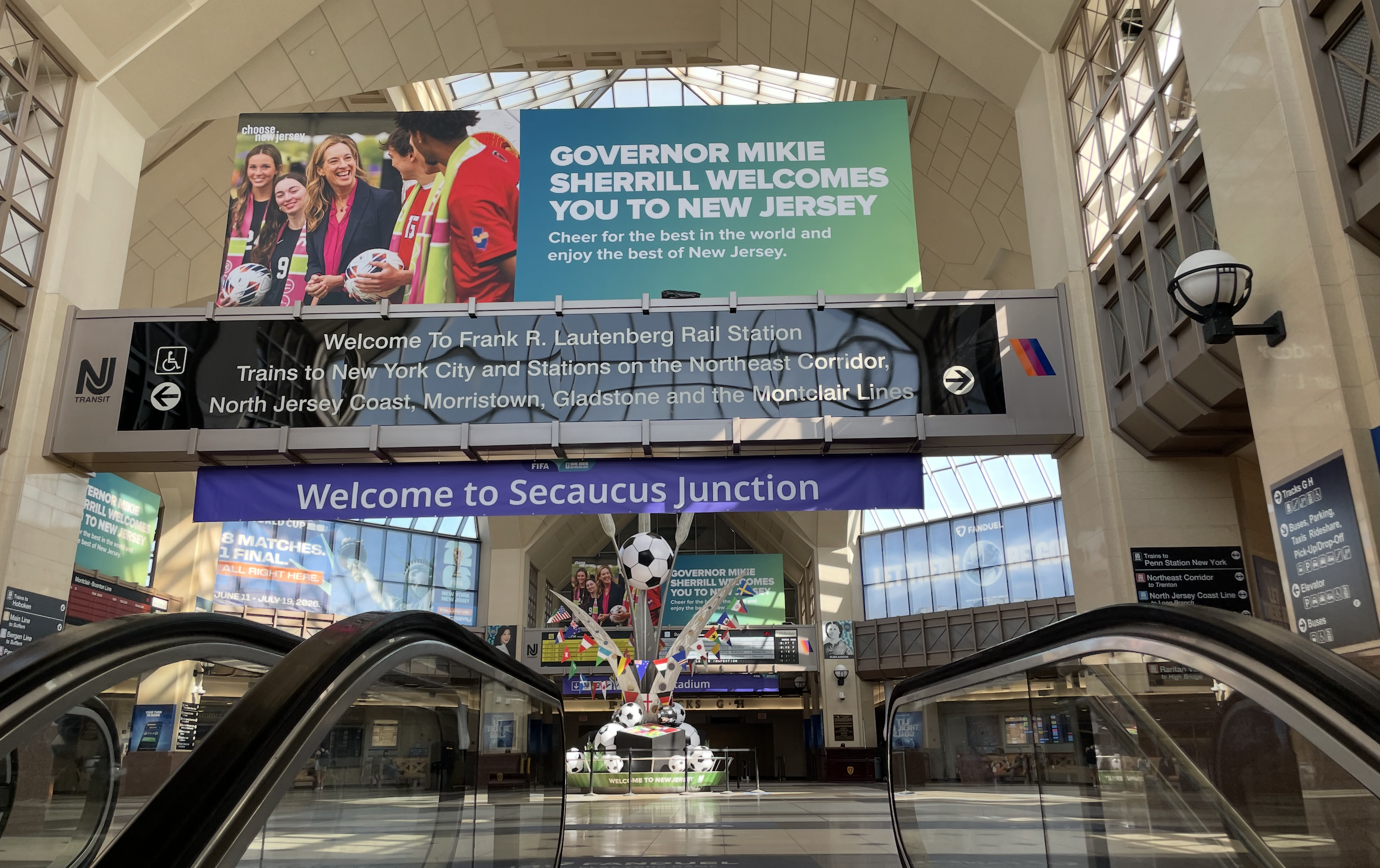
New Jersey is going to great lengths to get people over to matches at MetLife Stadium. If you do it by regional rail, Secaucus is going to be your final stop. Kerith Gabriel / Staff
You’ve arrived in Secaucus …
FIFA volunteers and NJ Transit ambassadors were stationed on the platform to answer questions and direct fans to the ground floor, where NJ Transit buses are ready to shuttle people to the stadium.
The shuttle fare? It’s included in your train ticket, and ambassadors will ask to see both your ticket to the match and your train ticket.
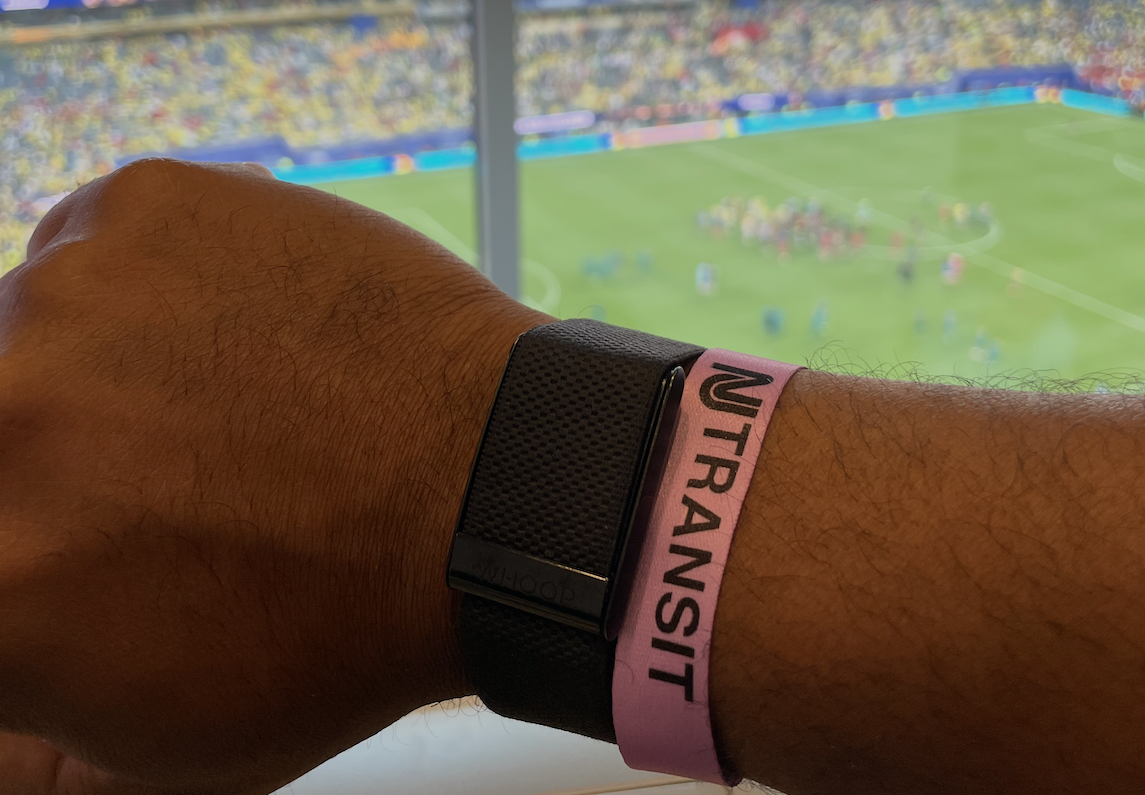
Also, with the snaking line to get to the shuttle, have that ticket ready to show so you’re not holding up the line. You’ll receive a wristband that allows you to board there and come back when the game is over. Don’t lose it.
Technically, you don’t have to worry about losing it, it’s one of those that will require something sharp or really skinny wrists to remove.
If you’re headed to the World Cup final, consider the train, but make sure ambassadors give you a bracelet so you can get back on the train.Kerith Gabriel / Staff
Shuttles run continuously up to an hour before the match. After that, there’s a final courtesy train that makes a run over to MetLife for any remaining passengers. There’s no parking at MetLife, so if you miss that, a ride share is your best bet.
Heading back
Outside MetLife, there are giant purple signs that direct fans looking for shuttle buses. If you get turned around after exiting the stadium, walk toward American Dream, the concert venue adjacent to the stadium. You’ll see the massive bus terminal that shuttles fans back to Secaucus Junction.
You’ll need to show your NJ Transit wristband to ambassadors and some police. Then you’ll board a bus back to Secaucus. The ride will take about 15 minutes, depending on traffic. Then you’re on your way back to Philly, where you’ll have earned bragging rights for your cheap and efficient travel to the world’s grandest sporting event. Enjoy.
When Shane Gillis fans file into Lincoln Financial Field on Friday night for the actor and comedian’s almost sold-out show, they’ll never know that the venue was the center of the soccer universe in Philadelphia for two weeks of the FIFA World Cup.
At least there will hardly be any reminders.
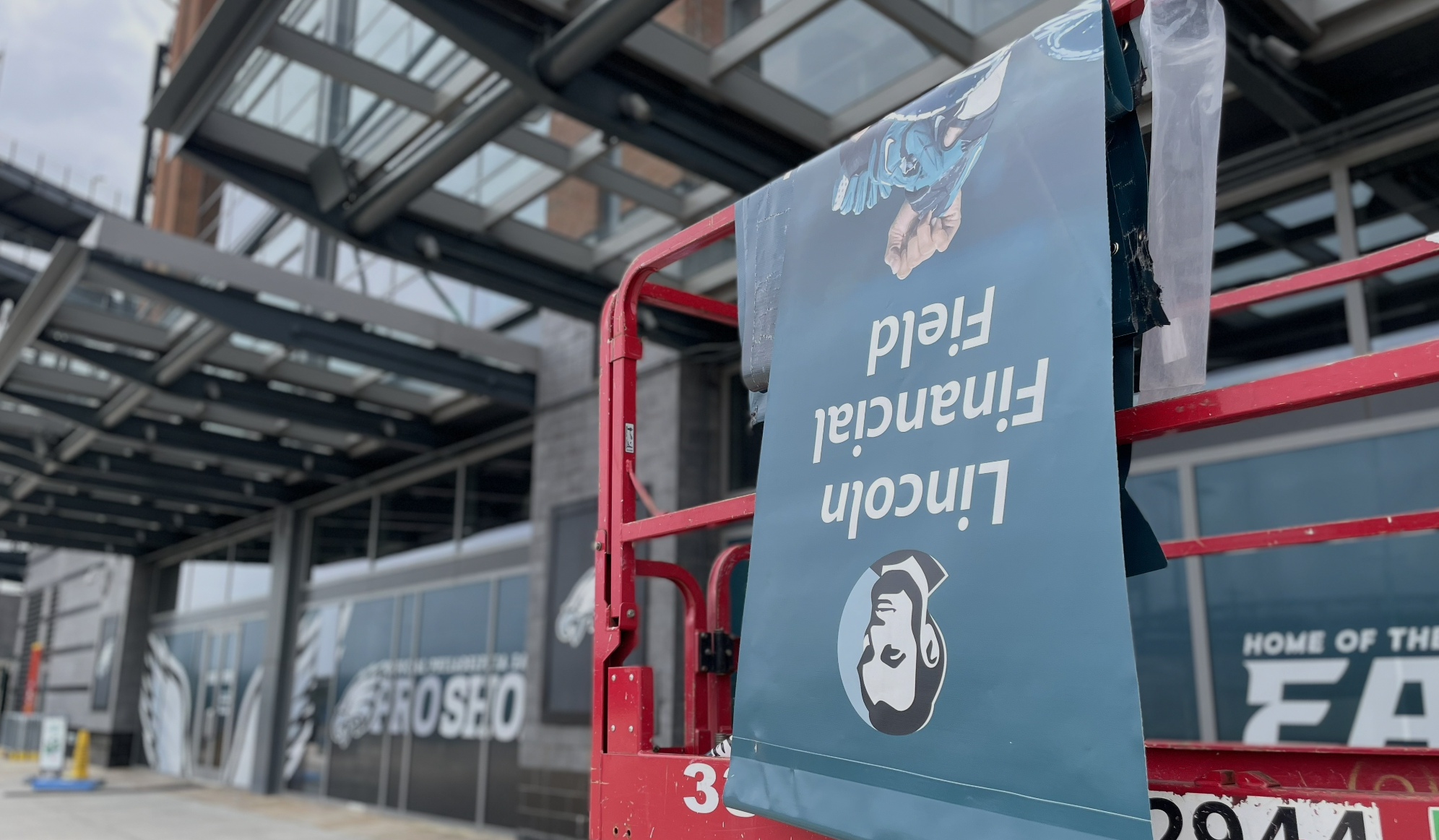
Signage is gone. Seats that were removed to make way for a wider field have been replaced. And when you drive past the south end of the field along I-95, the outline of Abraham Lincoln’s head has returned, instead of the giant blue banner that covered the Lincoln Financial Field sign.
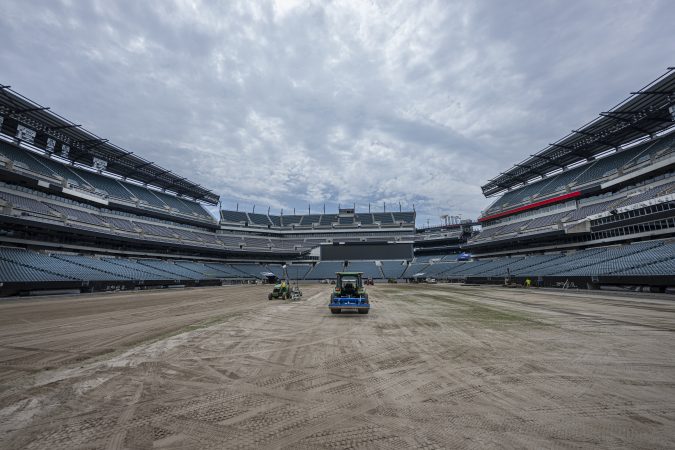
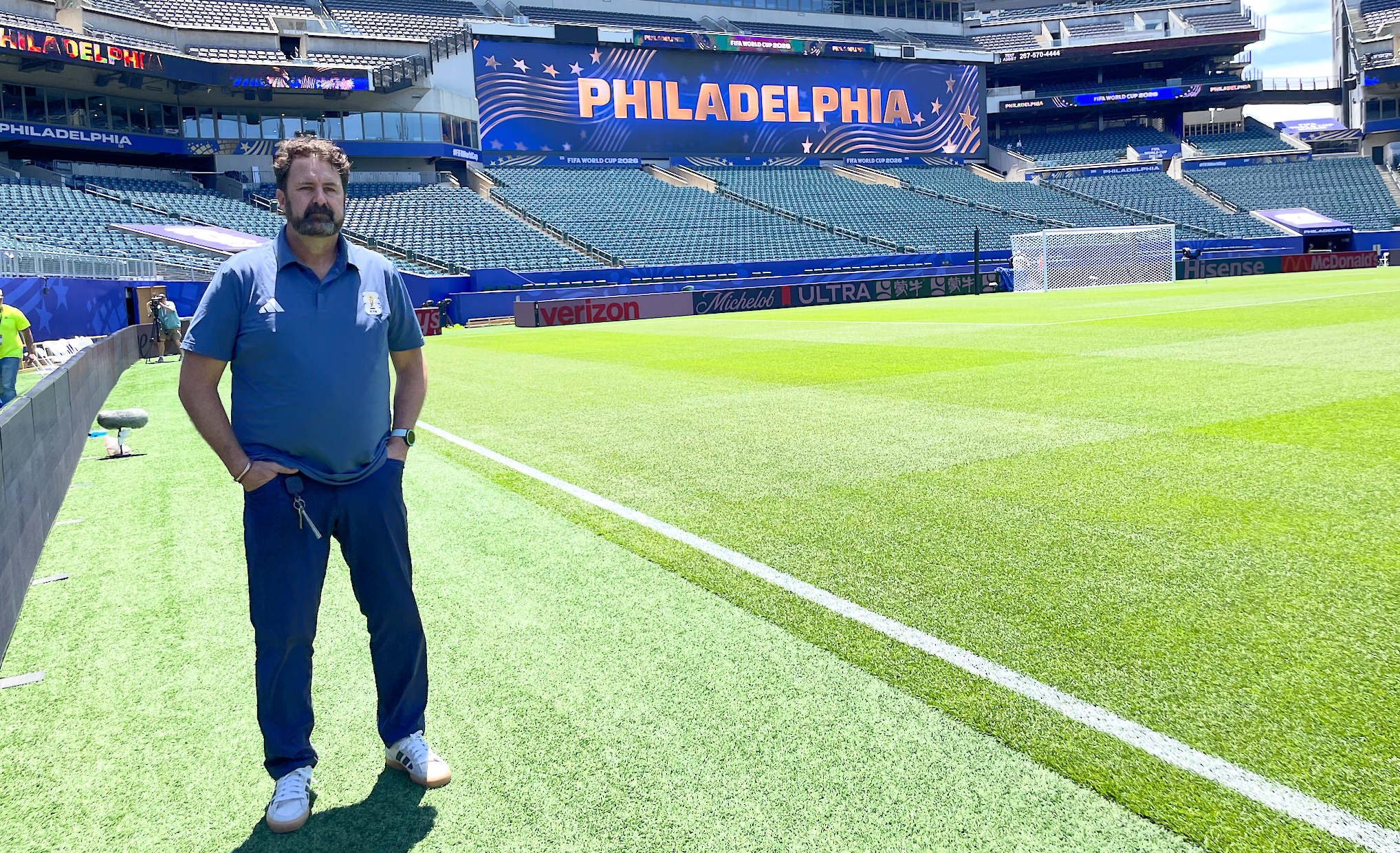
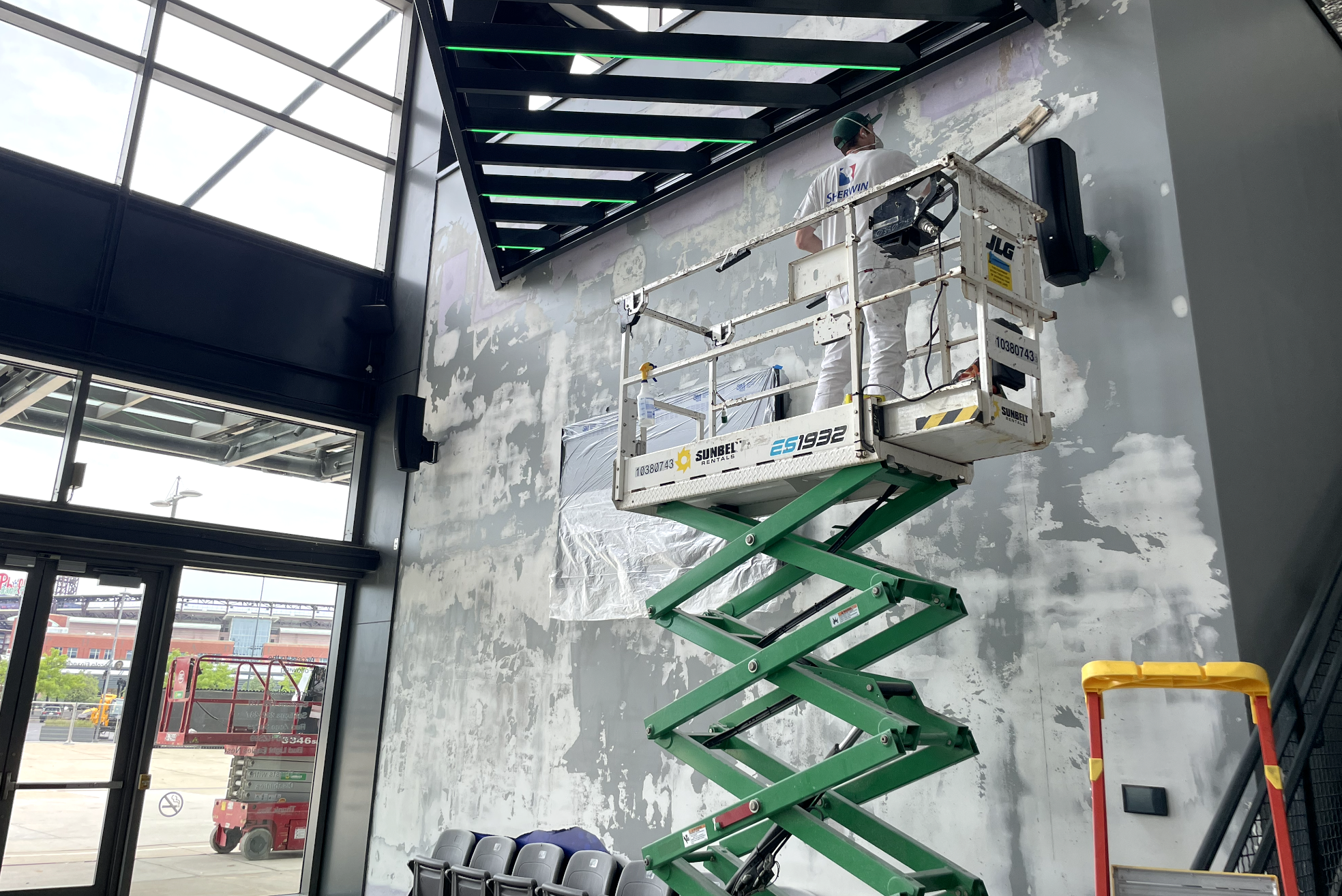
In just 11 days, a team of union workers — from crane operators to field turf professionals to painters — flooded the venue, ripped down anything that had FIFA attached to it, and turned Philadelphia Stadium back into the Linc.
The giant flags during pregame ceremonies? The way finders located both inside and outside the stadium? The caps on the team benches conveying which side each nation has on the sideline?
There’s a WhatsApp group for that.
“A lot of our staff and volunteers who come from those countries get to take them, and people get just so excited when we post them in our WhatsApp group,” said Jolyon Bowman, FIFA’s chief venue operations director for the matches in Philadelphia. “We had a member of our staff the other day show off the banner that she received, and hung it up in her backyard. There’s a lot of pride among all our staff in what we accomplished. And I think people wanted to keep that.”
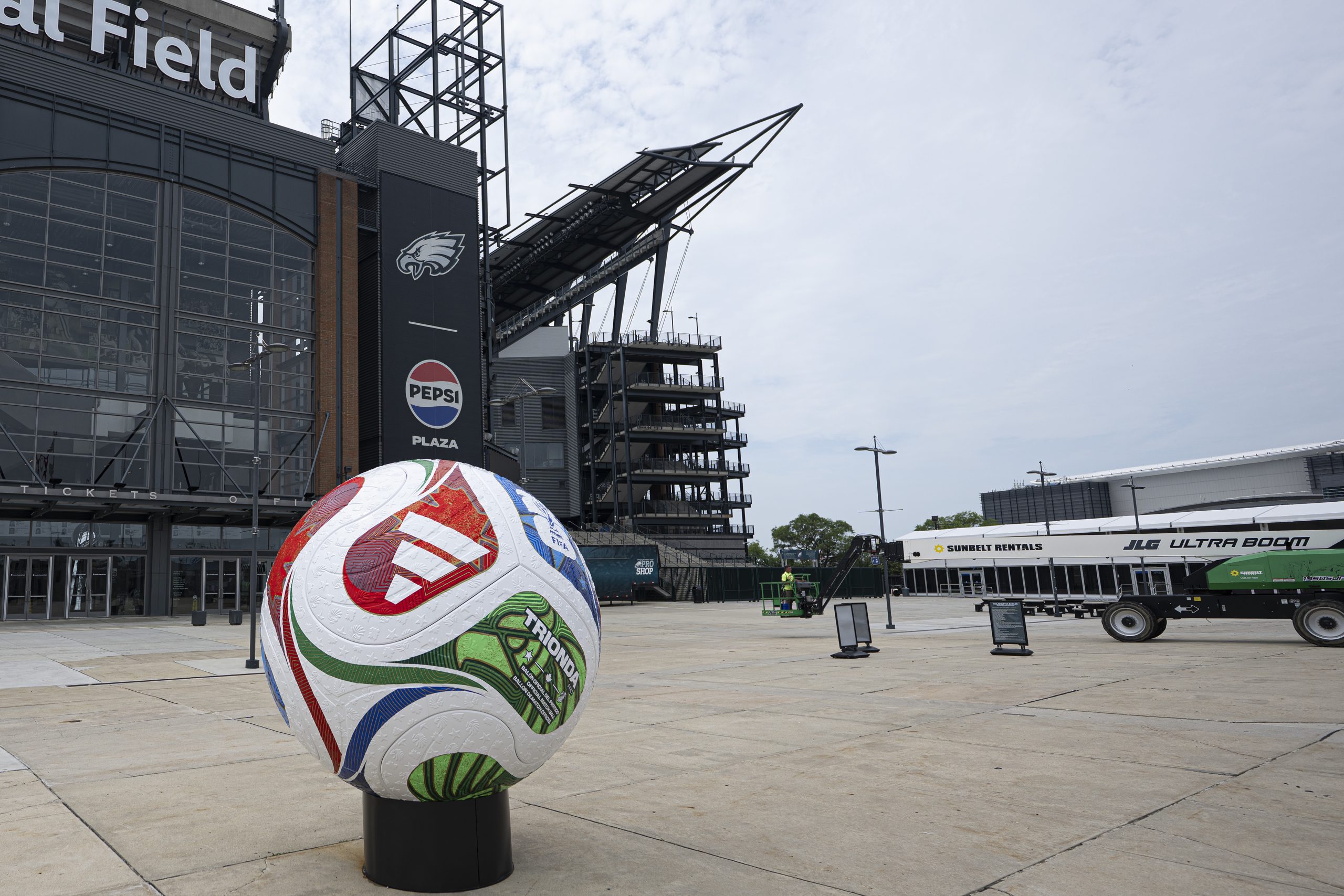
A giant sculpture of the Adidas Trionda match ball remains the only thing that recalls Lincoln Financial Field as a host for World Cup matches, as workers began dismantling signage last week.Jose F. Moreno / Staff Photographer
Bowman says for many of the banners, there’s actually a company FIFA works with that takes them and will create tote bags that also get passed on to staff members as a commemoration of the work they put in.
“We try — I mean, as much as we can — to reduce, reuse, and recycle, and I think we sure did that,” Bowman said. “There are just some things that have to go in the garbage, but a lot of that stuff ends up in the hands of the people [who] have worked the event here; they’re free to take that stuff.”
Staff at Lincoln Financial Field got an opportunity to keep some items as well, but FIFA also noted that it donated leftover food to local charities. Televisions that were used as monitors during the tournament were gifted to the School District of Philadelphia.
Jolyon Bowman, was the venue operations director for FIFA in Philadelphia for the World Cup and says that planning the breakdown happened 18 months in advance of the tournament. Kerith Gabriel / Staff
‘No room for improvisation’
The efficiency in restoring an arena back to its original look in just 11 days began 18 months before the start of the tournament, says Bowman. Coordinating labor, collaborating with the Eagles, and looking at the calendar of events for the Linc all come into play — especially when you’re not trying to overstay your welcome.
“One-hundred percent of it is all talked about and organized before. There’s no room for improvisation when you’re dealing with a change of this scale,” Bowman said. “We start talking about bumping out on the first match day of the whole tournament. We knew there was a huge concert [in Shane Gillis’ show] coming up. Lincoln Financial is going to be hosting 60,000 people on Friday, so we knew we were under the gun to get it done.”
Bowman is very familiar with the process — he’s been in venue operations for nearly 30 years. He can trace his footprint in Philly working as an operations volunteer back to when the Linc first opened in 2003 with a soccer match between European club powers Barcelona and Manchester United.
Though he’s not originally from the area, the native Ugandan who now resides in Washington D.C., says his touchpoints here are numerous, including staying in a section of West Philadelphia while his now wife attended Penn.
Work to restore Lincoln Financial Field to its original look following the FIFA World Cup took place for 11 days, with union working crews doing everything from painting to ripping up the field.Kerith Gabriel / Staff
Above and beyond
During his 18-month preparation, which also included last summer’s FIFA Club World Cup, Bowman says he got acclimated to Philly courtesy of the Eagles, to better understand the day-to-day workings and how to incorporate what they wanted to do both on and off the field.
Perks of the job? He and his team received a season credential to Eagles games to better understand gameday operations, Philly style.
“I spent almost two years in Philadelphia preparing for this,” Bowman said. “The Eagles were on board for the World Cup right after their Super Bowl victory. They gave us the keys to the stadium. I saw a lot of Eagles games and was able to prep at any event I wanted to go to.
“The Eagles gave me a credential to learn as much as I wanted and it really prepared me for the whole thing. Talking to other venue directors [in other World Cup cities], I can tell you that was really unique experience. I just felt like the Eagles went beyond what was expected in trying to host and be a great host, and that just trickled down to everybody in the city.”
That gracious hosting experience started with the Club World Cup, which offered a beta test for how FIFA stadium workers, operations at Lincoln Financial Field, and outside contractors would coexist.
Crews work to put Eagles banners back on the outside of Headhouse Plaza at Lincoln Financial Field on Friday, July 10.Kerith Gabriel / Staff
Bowman estimates “hundreds” of people were directly involved in the operations process from the set up to the restoration, along with scores more who worked in a temporary capacity.
He notes that it’s what made for one of the smoothest restoration projects he’s been apart of, piggybacking what he personally felt was one of the best FIFA World Cups in recent memory.
He would know, considering his life has been setting them up and breaking them down for over a decade.
“I’ve been doing sporting events all my life, but there’s nothing quite like the World Cup that brings that international joy and just happiness of being together,” Bowman said. “[During the June 27 Croatia-Ghana match], I left the soccer game for about 15 minutes to go check out the fan experience [in the Linc’s Headhouse Plaza], and when the DJ played Ghanaian songs, Croatians were dancing. And then the DJ plays the Croatian songs, and the Ghanaians are dancing.
“There was just so much joy, [I think people] enjoyed being together, enjoyed being in Philadelphia. This world needed a World Cup, and I’m happy that I was able to be a little piece of it.”
Less than a week remains in what has been quite the summer of soccer already, thanks to the FIFA World Cup making a pit stop in South Philly and delivering six matches all while bringing a party to the Greater Philadelphia Region.
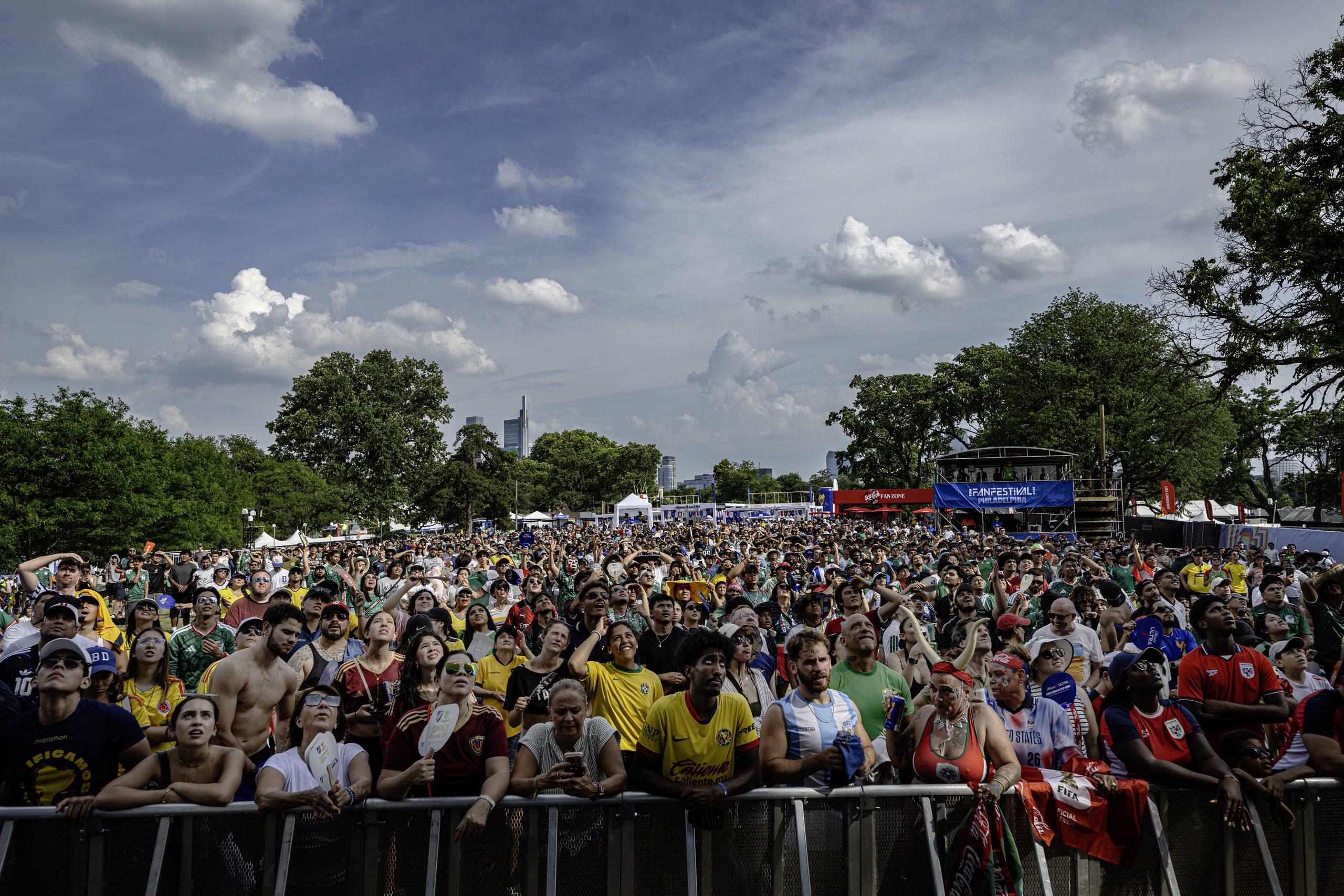
In fact, Philly hasn’t started basking in an afterglow just yet. The FIFA Fan Festival in Lemon Hill, which already committed to remaining open for the full 39 days of the tournament, is still bringing the noise to the Brewerytown section, with a week of scheduled concerts.
Half a million fans. Estimated $770M+ in economic impact. Over 6,600 jobs created. $51M in tax revenue.
The @FIFAWorldCup showed the world what PA can do—and the Philly Fan Festival is FREE through July 19. ⚽
— PA Department of Community & Economic Development (@PADCEDnews) July 13, 2026
This is in addition to showing the semifinal rounds between France and Spain on Tuesday (3 p.m., Fox29) and England and Argentina on Wednesday (3 p.m., Fox 29), all taking place before Sunday’s final match (3 p.m., Fox 29) at MetLife Stadium in East Rutherford, N.J.
Oh, and if you’re into consolation matches, don’t forget the third-place game on Saturday (5 p.m., Fox29).
However, there are a few things that still have an attachment to Philly when it comes to the World Cup. We found three, from the obvious of what’s going on this final week at the Fan Festival, to the not so obvious that you still will want to check out if you’re looking for a lasting piece of the world’s biggest sporting event.
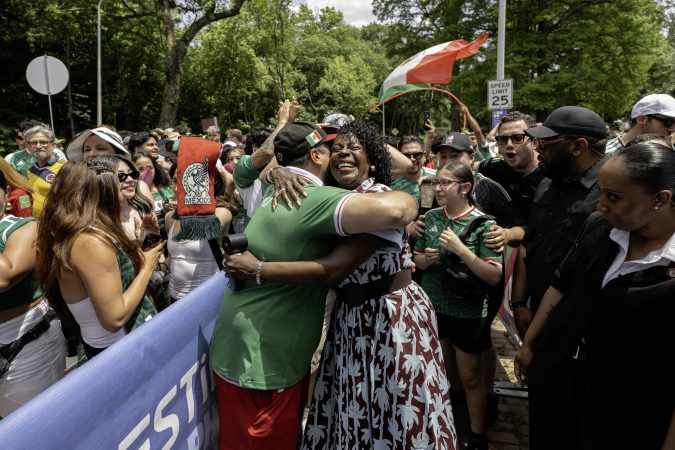
Soccer fans gather to watch Mexico play South Africa on a giant screen during the opening day of the FIFA Fan Festival at Lemon Hill on June 11. Jose F. Moreno / Staff Photographer
Totally free concerts
Philadelphia Soccer 2026 has been keeping the party going with a free concert series that sold out the event on back to back nights with concerts by Wisin on Sunday and the pop punk group the All-American Rejects, packing the house — on a Monday night.
There are still two more concerts to go, with electronic music legend Deadmau5 slated to arrive on Thursday and pop star Bebe Rexha scheduled to close it down on Friday. Both concerts will start promptly at 7 p.m., with festival gates opening at 5 p.m. on both days.
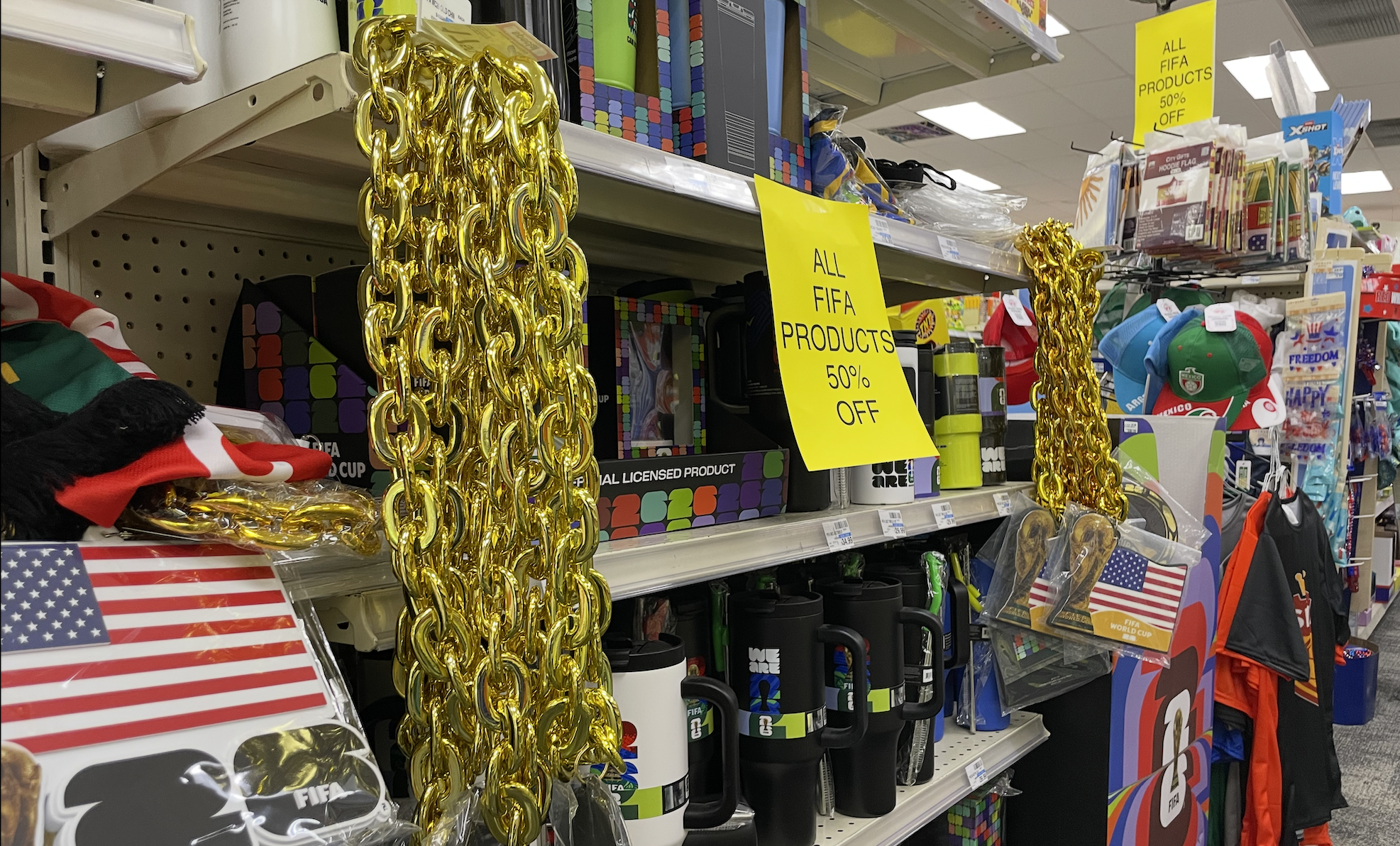
If you were wondering why your local CVS has been a primary supplier of World Cup gear, so were we. Everything from hats, water bottles and other tchotchkes has been on display for the latter part of a month. However, the retail price of some of that merchandise made it a tough call to pick up any swag.
FIFA World Cup merchandise is on sale for up to 50% off at several CVS Pharmacy locations in the Greater Philadelphia Region.Kerith Gabriel / Staff
Not anymore. As of Monday, several CVS Pharmacy stores are selling FIFA merchandise at up to 50% off, and a manager at a Montgomery County location who preferred to remain anonymous informed this reporter that merchandise could drop to up to 70% by the end of the month. So if you were eyeballing that $30 FIFA baseball cap, or that $35 coffee mug, know that you can get it on the low in the same place you pick up your seasonal allergy medication.
The game is still on
World Cup fever is still here throughout the city courtesy of a number of mini pitches that have popped up all over the city. From Fishtown to Queen Village, people are taking advantage of the fields that have been installed to provide more places to introduce the sport.
Most notably, Bank of America, which installed a series of small fields on the site of the old Tip Top Playground near the foot of the Girard Station stop on the Market-Frankford Line in Fishtown/Northern Liberties, which has had decent crowds coming through for pickup games, particularly during the week.
When you take into consideration that these games are going on under a July heat, not only is it impressive, it also confirms that the game always had a grip on Philly, but with the World Cup, it would appear that grip has gotten a bit tighter.