Author: Paul Davies

  • Krasner hasn’t said a word about a growing exoneration controversy — but his own court filing does

    Krasner hasn’t said a word about a growing exoneration controversy — but his own court filing does

    District Attorney Larry Krasner didn’t attend the dramatic three-day evidentiary hearing recently in which four supervisors from his office testified about his conflicts of interest, job threats, and other inappropriate steps, following efforts to overturn a murder case.

    But Krasner’s take on the imbroglio can be found throughout a recent 47-page federal court filing by his office.

    The filing paints a picture of a district attorney unbowed by the controversy that has roiled his office. Krasner’s handling of the exoneration case has prompted one prosecutor in his office to step down following what they described as a loss of confidence in Krasner’s leadership. A federal judge presiding over the case also voiced concern about possible obstruction of justice, perjury, and criminal conspiracy.

    Despite admitting “serious errors” in the original motion that said Dennis Johnson was entitled to a new trial, the filing contains no contrition or introspection by Philadelphia’s DA.

    In the world according to Krasner, he’s right, and everyone else is wrong.

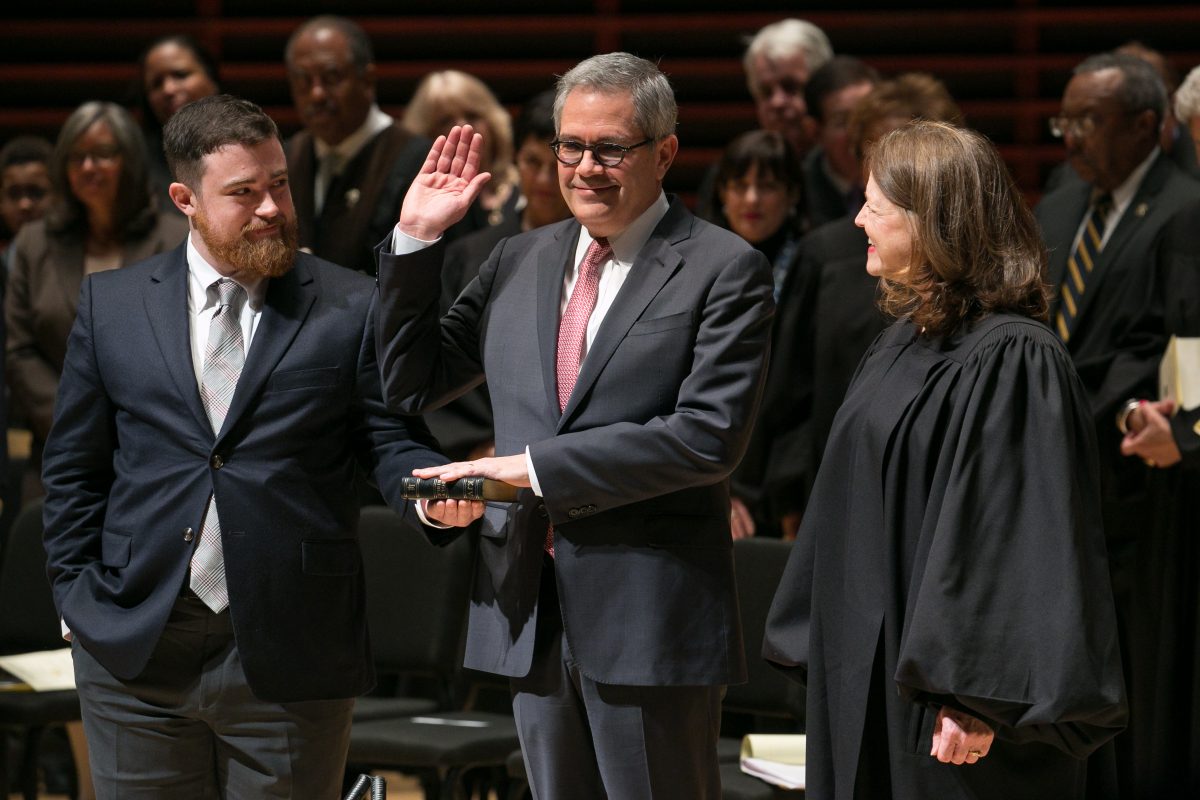
    Krasner’s worldview is hardened by his decades as a public defender and criminal defense attorney before getting elected district attorney in 2017. In the second paragraph of the filing, Krasner’s office blames prior district attorneys for violating “their constitutional duties” to secure convictions.

    The filing makes no apologies for how Krasner’s office handled the appeal by Johnson, who was found guilty of second-degree murder in 2009.

    After arguing for four years to overturn the verdict, Krasner’s office did a 180 in June, claiming its initial concession was “legally erroneous” and “not supported by the record.”

    The reversal came after U.S. District Judge Paul S. Diamond ordered an evidentiary hearing in May. That prompted supervisors in Krasner’s office to take a closer look at the case, in which they discovered “material omissions” in their initial concession claim.

    The blunder stems from the failure of Krasner’s office to fully investigate Johnson’s appeal, and its willingness to go along with the arguments put forward by his defense attorneys.

    Here’s the bigger problem: That appears to be the way Krasner’s office has handled other post-conviction cases. Under Krasner, more than 60 people convicted — mainly of murder — have been set free or had their sentences reduced following concessions despite no incontrovertible proof of the person’s innocence.

    Instead, Krasner’s office has conceded other cases by not mounting a substantive challenge to the arguments put forth by defense lawyers. In many exoneration cases, defendants claim their cases were harmed by their own ineffective lawyers or by prosecutors who withheld evidence; the latter, known in legal circles as a Brady violation, constitutes a major breach of the court’s rules.

    Full steam ahead

    Judge Diamond has yet to decide if Krasner’s office can continue handling Johnson’s case, or if it should be turned over to the state attorney general because of the issues aired during the evidentiary hearing.

    Regardless of the outcome, Krasner appears determined to keep conceding cases.

    “The current [district attorney’s office] administration will continue to do its duty under Brady and to self-correct moving forward, regardless of how the instant matter resolves,” the filing said.

    The full-steam-ahead approach seems obtuse given the controversy that has engulfed the office’s handling of several post-conviction cases.

    In recent months, supervisors in Krasner’s office have been disbarred and suspended for lying in federal court while seeking to overturn the death sentence of a man convicted of killing a couple in their home in East Mount Airy.

    In June, the state Supreme Court ordered judges to ask the state attorney general’s office to review any cases in which Krasner’s office wants to alter a sentence or overturn a past conviction.

    That unprecedented ruling came after the high court found prosecutors in Krasner’s office misled judges in several post-conviction cases. The court said it could no longer trust the word of Krasner’s prosecutors.
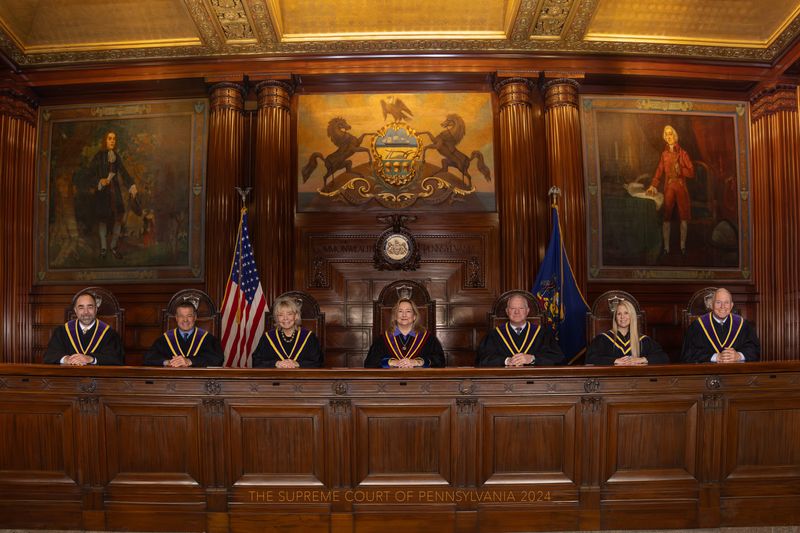
    Pennsylvania Supreme Court justices (from left): P. Kevin Bobson, David N. Wecht, Christine Donohue, Chief Justice Debra Todd, Kevin M. Dougherty, Sallie Updike Mundy, and Daniel D. McCaffery. In June, the court ordered judges to ask the state attorney general’s office to review any cases in which Larry Krasner’s office wants to alter a sentence or overturn a past conviction.Provided by Jen Barker Worley/Ad

    Office strife

    Amid that major setback came the Johnson case, which has splintered Krasner’s office.

    After Judge Diamond ordered the evidentiary hearing in May, Katherine Ernst, the chief of training in the law division, reviewed the initial motion to concede Johnson’s conviction and found multiple errors.

    Ernst worked with three other supervisors — Steven Wildberger, David Napiorski, and Peter Andrews — who all agreed the motion needed to be withdrawn.

    They met with Jaclyn Mason, the assistant district attorney who signed the original motion, and urged her to withdraw the concession and apologize to the judge. Mason argued that her supervisor, Matthew Stiegler, was largely responsible and should also have to sign the motion.

    Fearing she would be forced to take the blame, Mason quit in June. That set off a chain of events that exposed the sloppy handling of the matter.

    Mason testified in July that Stiegler, the head of the office’s Conviction Integrity Unit, colluded with defense attorneys to develop the legal rationale to have Johnson’s case thrown out.

    Mason, who was new to the DA’s office at the time of filing, testified she took direction from Stiegler, who told her that if Johnson’s claims were “good enough for the Innocence Project, it’s good enough for me.”

    To be sure, Mason bears some responsibility because she signed the motion and failed to fully investigate the defense claims. But her instinct that she would be thrown under the bus proved correct.

    The four other prosecutors testified last month that Stiegler proposed reviewing Mason’s other cases to find errors and tell the judge she was a “rogue” actor.

    Krasner backed that plan, telling the prosecutors Stiegler had a good idea.

    In the end, Krasner’s filing largely blamed Mason and said the judge “should not credit” her testimony.

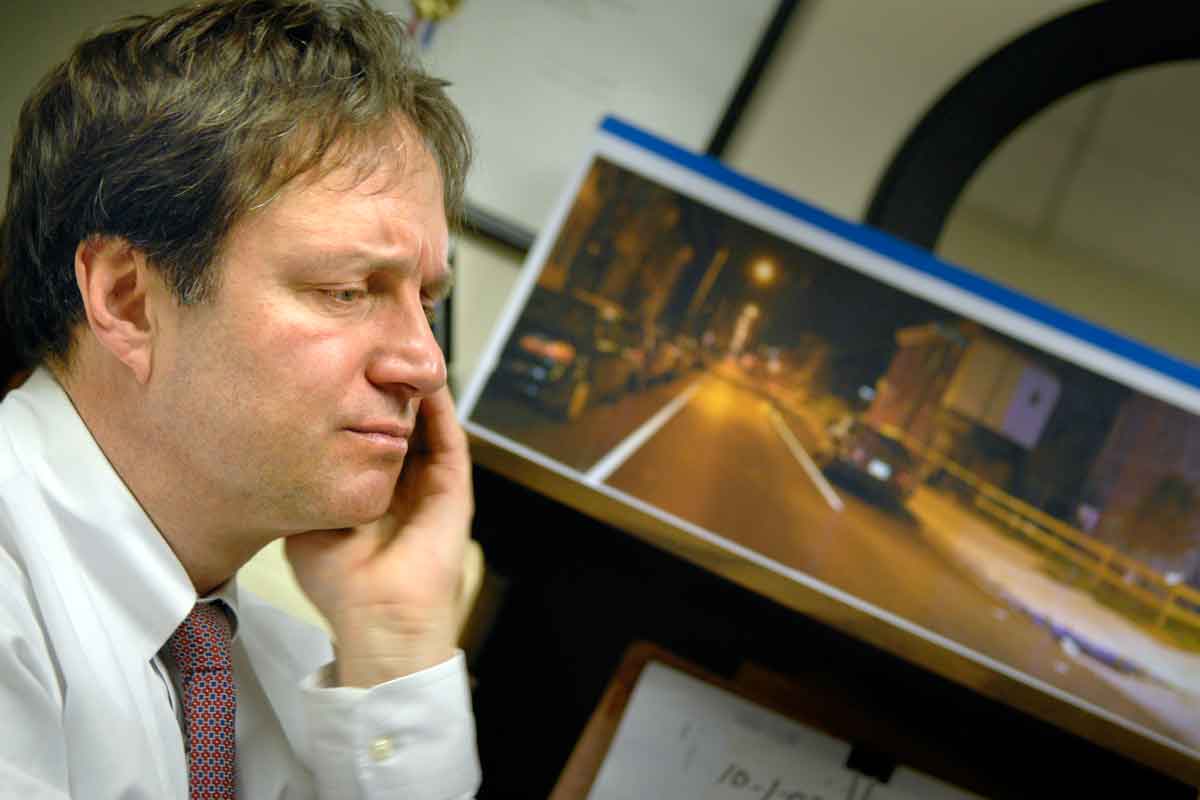
    Posters featuring criminal justice analytics adorn the district attorney’s offices in May. The controversy over the handling of an exoneration case has splintered the office, Paul Davies writes.Tom Gralish / Staff Photographer

    “Mason signed and filed a brief rife with errors that supported the defense’s request for a new trial,” the filing said. “Mason has admitted that she did not review the relevant records, including the trial transcripts, before supporting overturning a murder conviction; she may have simply cribbed and modified the filings of the defense attorneys.”

    The filing said Stiegler “failed” to detect the errors, but largely lets him off the hook. Krasner even went out of his way to change a footnote in an earlier motion that initially said Stiegler “edited several drafts” of the original Johnson filing to instead say he “supervised its preparation.” Stiegler remains in charge of the Conviction Integrity Unit even after other supervisors voiced concerns about him.

    What conflict?

    Meanwhile, Krasner remains adamant his office has no conflict of interest in the Johnson case even after four supervisors withdrew from the case, arguing that they and Krasner had conflicts after the internal machinations went from the legal merits of Johnson’s case to the self-interest of protecting the office.

    Krasner’s filing waved away their arguments and said the prosecutors who left the case acted “without authority or a reasonable legal basis to do so.” He added that he “did not appreciate” his team’s “repeated, unsolicited, and wavering advice” to refer this case to the state attorney general.

    The filing said any potential conflicts have been resolved by Krasner’s recent hiring of an outside attorney, Jean Peters-Baker, a longtime prosecutor from Missouri, to handle Johnson’s case. The AG’s filing argued that Krasner’s conflict can’t be cured by handpicking an outside prosecutor.

    Krasner’s filing did not address the testimony from his own prosecutors who said he warned them there would be “consequences” if they raised the conflict issue with the court.

    The prosecutors also said that Krasner refused to refer the case to the state attorney general because he wanted to “protect the office.” Krasner’s filing said his efforts to maintain control of the case were “entirely appropriate.”

    The filing did not specifically address Krasner’s comments revealed by the supervisors who testified that he called prosecutors in the attorney general’s office “Nazis.” But it shed light on his hatred for the state AG’s office.

    The filing explained that Krasner had a “general mistrust” of prosecutors in the AG’s office “based upon decades of observing their work.” Indeed, several prosecutors Krasner pushed out after he was elected now work in the AG’s office.

    The filing added that “any animus he may have toward individual employees of that office based upon their own actions and inactions has nothing to do with whether he correctly declined to refer a case.”

    Krasner is also apparently not a fan of Diamond, whom he views as a hostile judge, according to people familiar with the matter. Krasner’s contempt stems, in part, from the fact that Diamond spent four years in the DA’s office in the late 1970s and early 1980s, and was nominated to the federal bench by former President George W. Bush, a Republican.

    So, by Krasner’s logic, is everyone who ever worked in the DA’s office before him tainted?

    Krasner’s filing contained a footnote complaining the judge only provided a week, which included a holiday weekend, to address the disqualification issue. The filing added that any ruling that removes his office from the case would be “an abuse of discretion.”

    That seems like a particular failure to read the room given the credibility issues exposed in Krasner’s handling of exoneration cases.

    Judge Diamond’s ruling will likely have a lot to say about this fiasco.

    I’m not a lawyer, but Krasner’s filing doesn’t even seem like the way to win friends and influence people, let alone succeed in a legal argument.
  • After 25 years, hers is the 9/11 story I can’t let go of

    After 25 years, hers is the 9/11 story I can’t let go of

    In the weeks after the Sept. 11, 2001, terror attacks, I went to New York to report on a story about Johanna Sigmund, a young woman from Wyndmoor who perished after one of the hijacked planes rammed the north tower.

    Over the course of my career, I’ve spent more time than anyone would want writing pieces about people whose lives were cut short prematurely. One of the most memorable was Johanna, whose story and positive spirit remain seared into my soul.

    Johanna’s parents invited me, a stranger, into their home at their worst hour. They took the time to tell me about their only daughter, and shared photograph after photograph after photograph — Johanna smiling after she ran the New York City Marathon, Johanna posing with her girlfriends at a wedding, and so on.

    One image stood out.

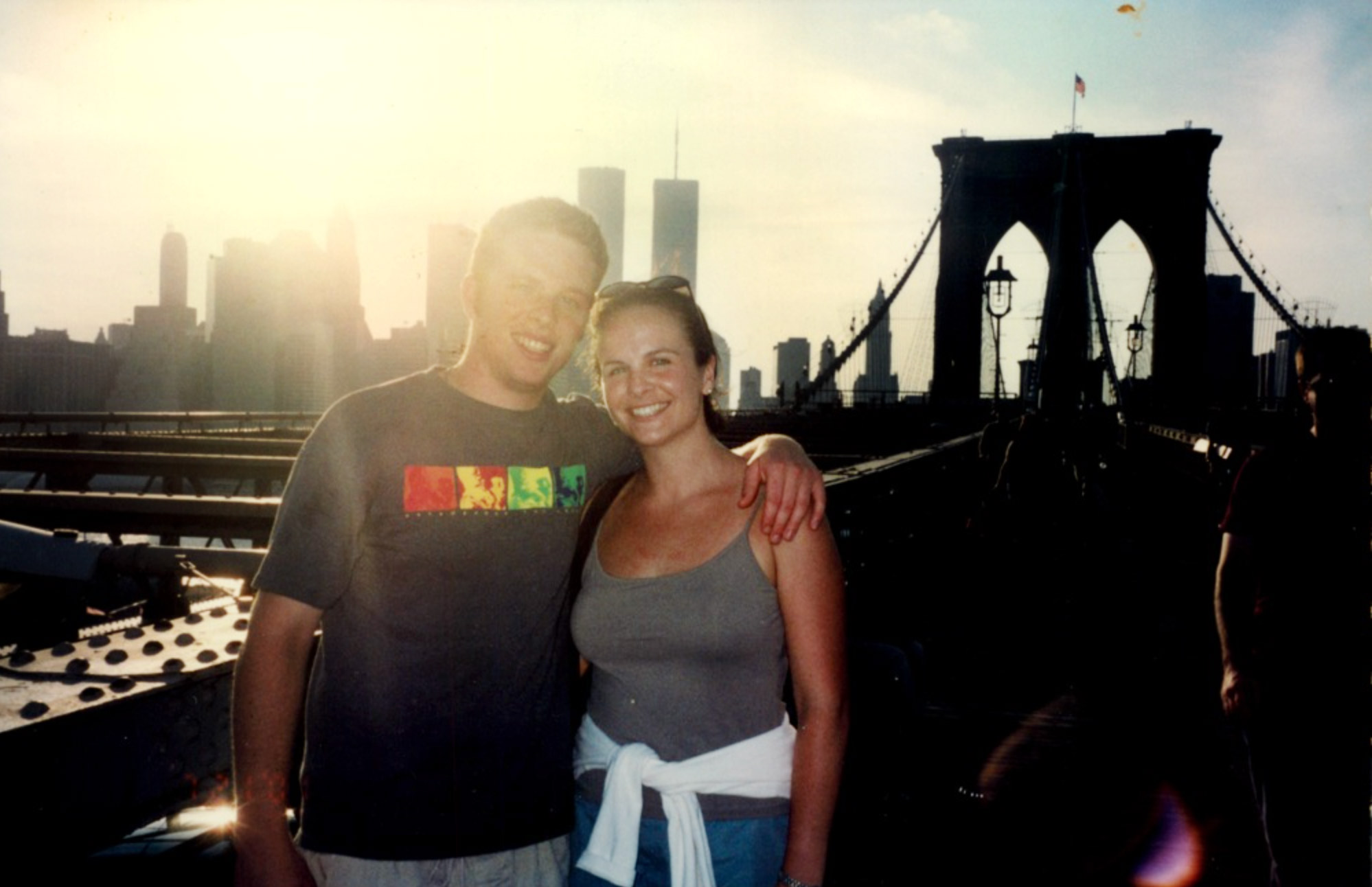
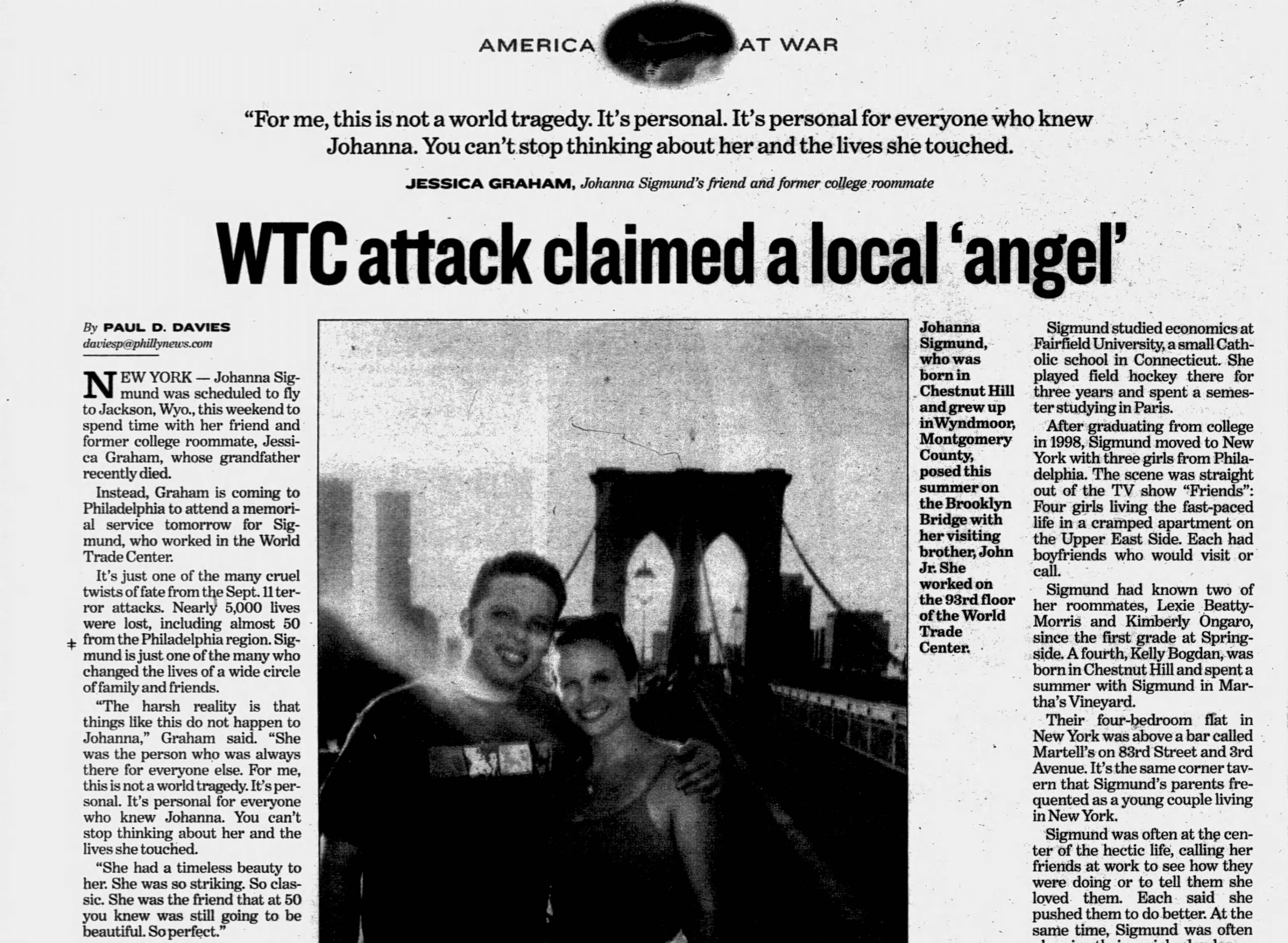
    It was a photo of Johanna, 25, and her brother, John, 23, smiling while standing arm in arm at the foot of the Brooklyn Bridge. The photo was taken two months before the terror attacks. In the background loomed the twin towers.

    An article by Paul Davies about Johanna Sigmund in the Oct. 19, 2001, edition of the Daily News.Staff

    Johanna’s story has stuck with me for a quarter century, but her life is emblematic of the promise and potential of so many others who were lost. At least 40 people with ties to Philadelphia and its western suburbs were killed in the attacks, including 18 from Bucks County, 11 from Montgomery County, five in Chester County, eight from Delaware County, and three from Philadelphia. It may be impossible for any of us to fathom how many other lives were forever impacted by the horrors of that day.

    I wondered how Johanna’s family and friends had fared over the years.

    So much has been lost in the 25 years since 9/11. Johanna would have turned 50 on the first day of summer — the longest day of sunlight. Her elegant beauty remains frozen in time, and — all these years later — her life remains a catalyst for good.

    A scholarship fund set up in her name continues to help students attend St. Malachy School in North Philadelphia, as well as another at her alma mater, Springside Chestnut Hill Academy.

    Johanna packed a lot into her brief time here. She was the captain of the field hockey, lacrosse, and squash teams in high school. She studied economics and played field hockey at Fairfield University, and spent a semester in Paris before moving to New York in 1998 with three friends from Philadelphia.

    When I met with Johanna’s roommates a few weeks after the attack, they shared stories of her love of cooking, dancing, and listening to U2, often replaying the song “Stuck in a Moment You Can’t Get Out Of” that begins, “I’m not afraid of anything in this world.”

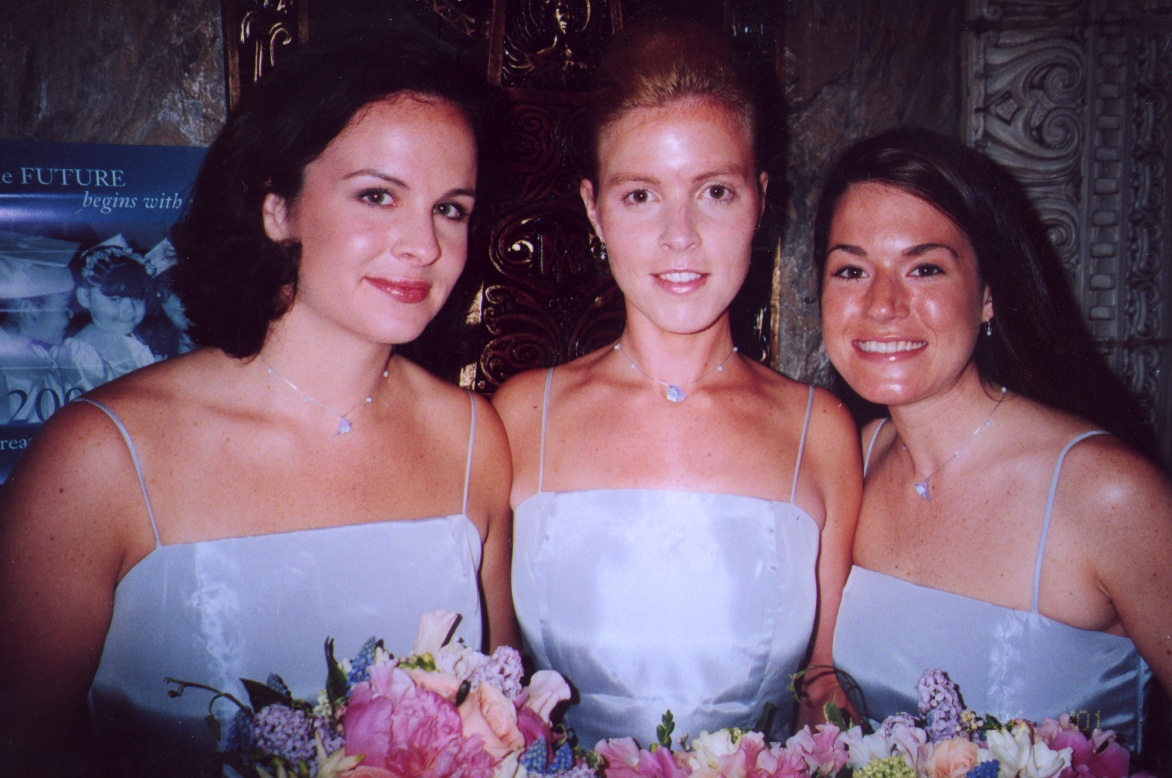
    From left: Johanna Sigmund, Rory McDevitt, and Kim Ongaro were all bridesmaids at the wedding of their friend, Lexie Beatty, in May 2001. Sigmund was one of the victims in the 9/11 attacks.h

    Johanna cared for others. She distributed pizza and McDonald’s to the homeless people in her neighborhood. She helped a woman who was thrown from a taxi get to a hospital. Johanna spent the night by her side and returned home in the morning with blood on her clothes.

    Kimberly Ongaro, a roommate and friend from Springside, called her “an angel.”

    The toughest interview in the weeks after the attack was with Johanna’s boyfriend, Joe Bonavita. They had dated for several years and had discussed marriage.

    Their final weekend together was a whirlwind. They went to the Yankees game Friday night and drove to the U.S. Military Academy in West Point, N.Y., on Saturday, met up with friends, attended the Army football game, and walked through the cemetery for soldiers, which included Gen. George Armstrong Custer.

    On Sunday, Johanna competed in a 5K race down Broadway before continuing on as part of her training for the Philadelphia Marathon. She and Joe shared dinner that night.

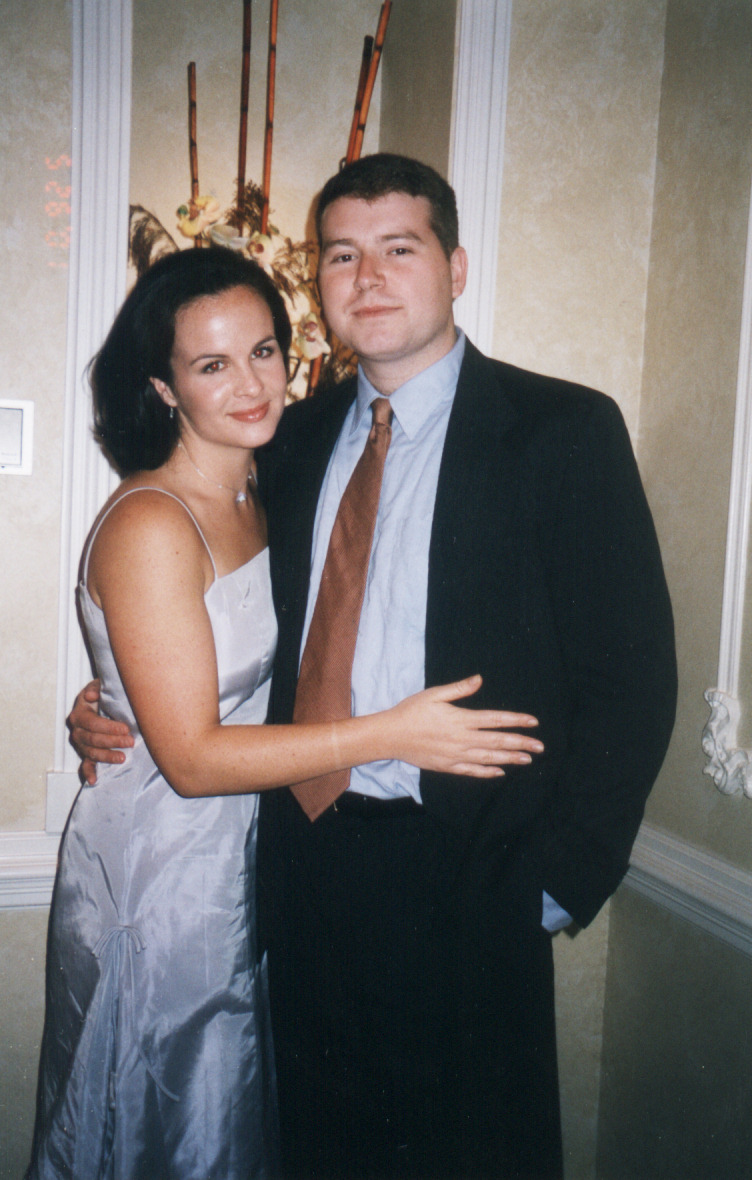
    Johanna Sigmund and her boyfriend, Joe Bonavita, at the wedding of her friend Lexie Beatty Morris.

    Johanna did not feel well on Monday, but went to work. When she was still under the weather on Tuesday — Sept. 11 — Joe urged her to stay home.

    But she went into the office at an investment firm on the 93rd floor of the north tower.

    Joe worked near the Trade Center. As he exited the subway, he saw the first plane smash into the north tower.

    A life upended

    I located her brother, John, and emailed him. He responded a few minutes later and graciously agreed to speak. When we connected after 25 years, it almost felt like old friends catching up.

    John told me how 9/11 upended his life.

    He had planned to move to New York after college, but lost interest after the attack. He visited ground zero to commemorate the first anniversary. President George W. Bush greeted families, including John’s aunt, who offered veiled advice regarding the plans to invade Iraq. “I hope you are making a prayerful decision,” she told the president.

    Bush was taken aback, but continued shaking hands before circling back to tell John’s aunt that he prayed every day.

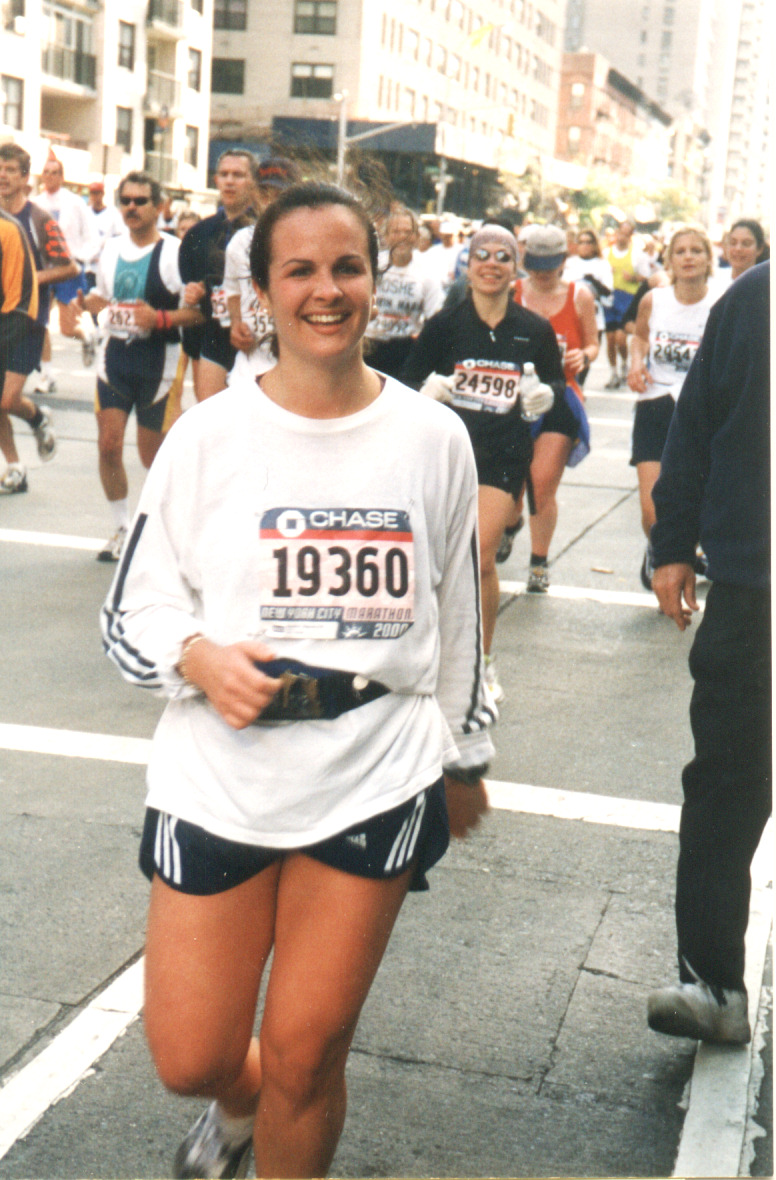
    A photograph of Johanna Sigmund running in the New York City Marathon in November 2000.

    After college, John, a Spanish speaker, spent a year with AmeriCorps teaching literacy to second graders in Kensington. After he explained to one class’s teacher why he wanted to take off for the anniversary of 9/11, she had her students write notes of support. John was struck by how many kids shared stories of loved ones they had lost to violence.

    “Everyone has their 9/11,” he said.

    Along the way, we all pay a price. Some more than others. But how one responds is a lesson for all as we navigate these trying times 25 years after 9/11.

    John said he wonders how his life would have been different if not for Sept. 11. After a year teaching in Philadelphia, he moved to Texas, in part to get away. He earned a master’s degree in art education at the University of Texas in Austin before going on to teach at Say Sí, an after-school arts program in San Antonio.

    John’s attempt to get away brought him back to New York. One of his students won an art award that included a trip for the student and teacher to Carnegie Hall. The artwork was displayed at the Winter Garden located near ground zero in May 2010.

    “My heart sank,” John said. “I didn’t want to go anywhere near ground zero.”

    Even then, nearly a decade after the towers fell, ground zero remained little more than a giant pit with the Freedom Tower slowly rising alongside it. In a macabre daily scene, tourists jammed the sidewalks, gawking and posing for pictures in front of what John could only see as a mass grave, while street hustlers sold photos of the hijacked planes crashing into the towers.

    John tried to maintain his composure as he made his way through the gauntlet to the Winter Garden, but a man stepped in front of him and tried to sell him a fiery photo from the attack.

    John snapped. He grabbed the stack of photos from the man, threw them in the air, and cussed him out. The two got into a tussle. After the fracas, John tried to gather himself by channeling his sister’s unflappable spirit.

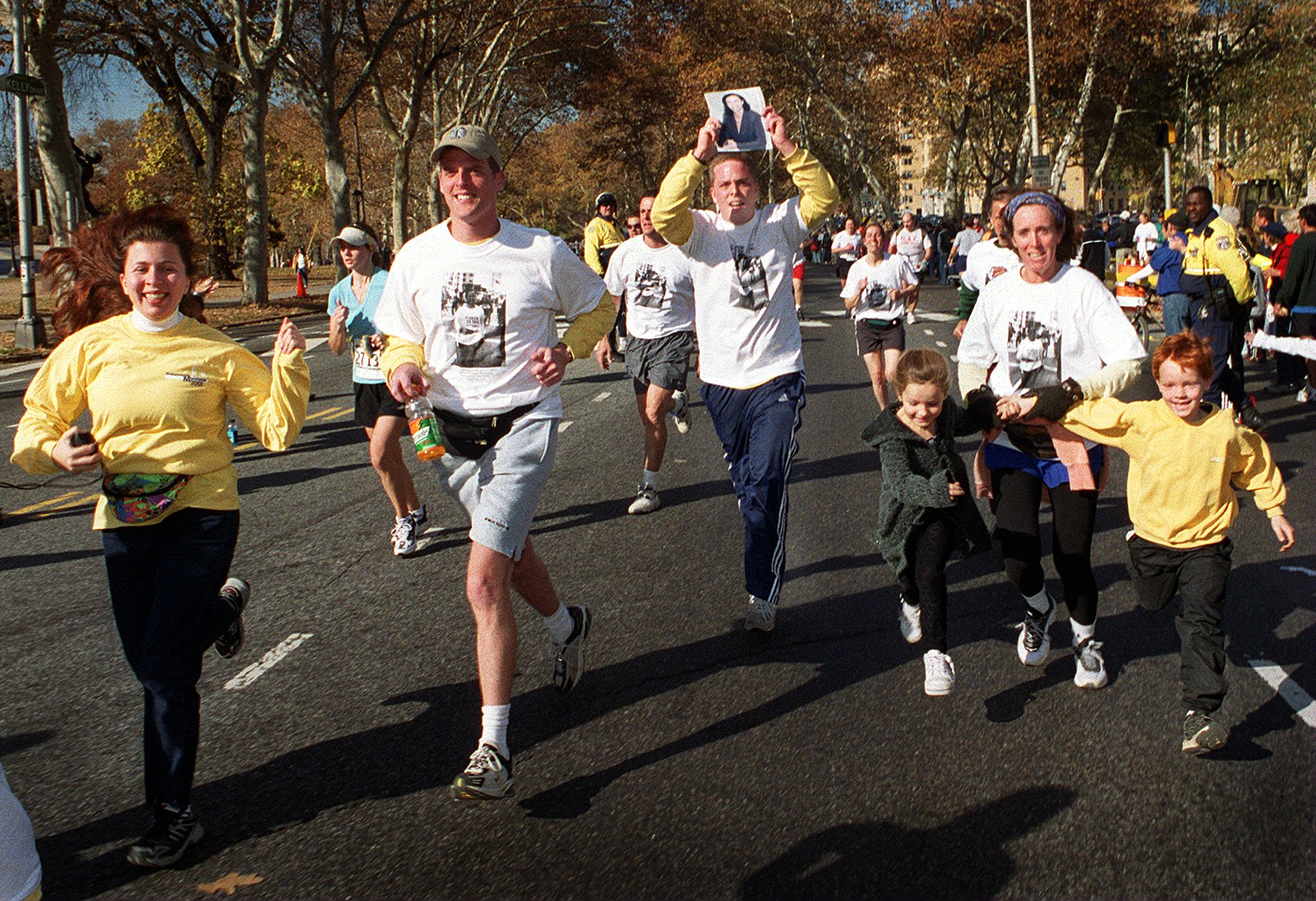
    John Sigmund (center) holds a picture of his sister, Johanna, as he and his family run down Kelly Drive toward the finish line of the Philadelphia Marathon in November 2001.d

    “Johanna, help me,” he said to himself while overlooking ground zero. “I need to get it together.”

    ‘Beyond coincidence’

    John calmed down and carried on. After the event, he met friends at a nearby bar. John was telling them about the run-in with the street hustler when he suddenly saw Johanna’s old boyfriend, Joe Bonavita, across the bar.

    Joe had moved to New Orleans but, in a twist of fate, was in town for a 9/11 event. The two were not close but quickly bonded. John viewed the reunion as his sister’s handiwork.

    “Some things are beyond coincidence,” he said.

    Eventually, John did move to New York. The city helped him better find himself. After years of worrying about disappointing his parents or adding to their suffering, John told them he was gay. His parents, who have a deep Catholic faith, were supportive.

    Twelve years ago, John returned to Philadelphia and fell in love with the city, and especially Fairmount Park.

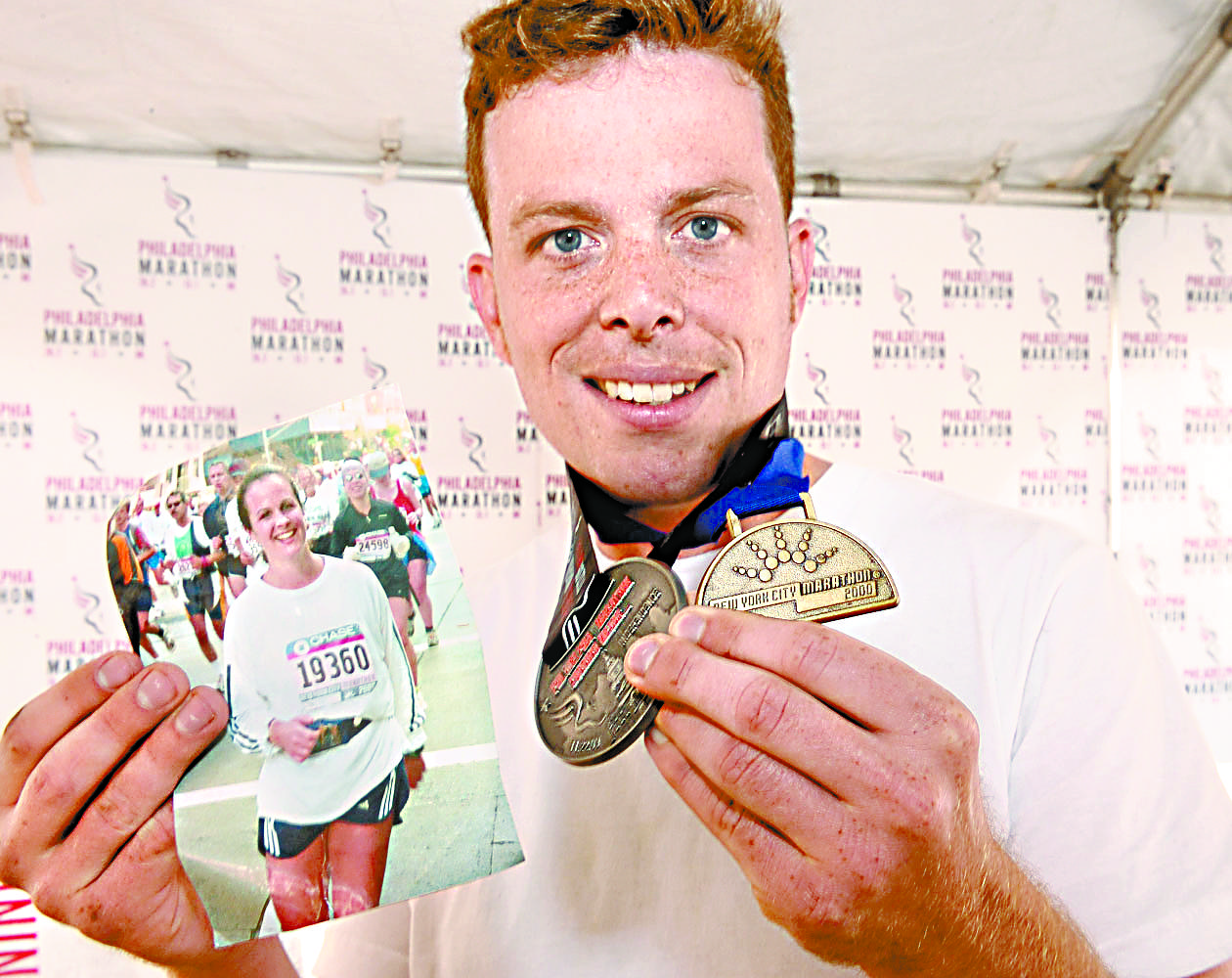
    After running the Philadelphia Marathon in November 2001, John Sigmund holds a photo of his sister, Johanna, and wears two medals around his neck — one he earned after finishing the race and another his sister won after completing the New York City Marathon in November 2000.Courtesy of Tony Webb / Office of the City Representative

    But tragedy struck again in September. Three days after the 20th anniversary of 9/11, his father died.

    For John, September remains the cruelest month. But he credits a strong support network of cousins and friends for helping him navigate life’s challenges — and added that Johanna always feels close by.

    “I have a thing with the wind,” John said. “When I think about her, the wind will kick up.”

    After losing his sister and father in September, John and his partner, Jaime, decided to add some positivity to the month. They got married last Sept. 26 and are planning an anniversary party in a couple of weeks.

    Expect a comforting breeze.

  • The day Larry Krasner’s office was put on trial — by his own prosecutors

    The day Larry Krasner’s office was put on trial — by his own prosecutors

    There were so many jaw-dropping moments in U.S. District Court Judge Paul S. Diamond’s courtroom on Thursday that it is hard to know where to begin.

    For starters, I had a stint covering courts in the mid-2000s, and have never seen a courtroom packed with so many lawyers — including lawyers representing lawyers — for a hearing in an exoneration case. An overflow room was needed to handle the rapt onlookers.

    The hearing grew out of efforts by Philadelphia District Attorney Larry Krasner’s office to overturn the conviction of Dennis Johnson, who was found guilty of second-degree murder in the 2007 shooting of a man at a North Philadelphia convenience store. While Johnson’s future was ostensibly on the line, it quickly became clear that so was Krasner’s.

    By the end of the day, the future for both men looked bleak.

    While Johnson was in court with his attorneys, the hearing focused on the machinations within Krasner’s office.

    The office has already run into a heap of legal trouble over previous efforts to overturn other convictions or reduce sentences, mainly for those convicted of murder.

    Federal courts have disbarred and suspended prosecutors in Krasner’s office for lying to the court. The state Supreme Court found more lies and, in an unprecedented move, appointed the state attorney general to review future efforts to undo prior convictions.

    So essentially, Krasner’s office now has a court-appointed babysitter because it can no longer be trusted.

    It was easy to see why after three prosecutors — who still work for Krasner — provided damning testimony about their own office’s sloppy handling of efforts to vacate Johnson’s conviction. They accused Krasner of conduct that bordered on paranoia and cover-up, and painted a picture of an office that seemed less focused on the pursuit of justice than on shielding itself.

    Katherine Ernst, the chief of training in the law division, went first, followed by colleagues Steven Wildberger, an assistant district attorney in the appeals unit, and David Napiorski, the head of the law division.

    David Napiorski, the head of the law division in the Philadelphia District Attorney’s Office, testified that Krasner eschewed his official email account and “always prefers oral, in-person conversations.”Alejandro A. Alvarez / Staff Photographer

    They came with receipts, providing meeting times, memos, and emails documenting conversations with Krasner about how to handle errors in court filings by the DA’s office related to an attempt to undo Johnson’s conviction.

    Krasner did not respond to a request for comment, but in an earlier filing his office said the prosecutors were “ill informed.”

    The three prosecutors provided alarming testimony detailing how Krasner avoided using his official office email and threatened them.

    “DA Krasner typically didn’t use that email,” Ernst said about his office email. “He wouldn’t check it. And so, if you wanted to email him, then you typically had to email his private address.”

    Napiorski backed that view: “He always prefers oral, in-person conversations.”

    In late June, after the three prosecutors drafted a memo to Krasner detailing the office’s conflict of interest in handling the Johnson matter, he responded with an email sent from the account of his chief of staff, Jennifer Lin, which began, “This response is not from Jen Lin, it is from Larry Krasner.”

    At another point, Wildberger testified that when they presented Krasner a letter turning the Johnson case over to the state attorney general, he went “apoplectic.”

    “He said something about having already told us not to bring him printed-out material, things in writing,” Wildberger said.

    ‘Paraguay’

    The prosecutors pushed for the attorney general to take over, because their self-interest had become a focus rather than the merits of the case. In their view, they had conflicts, and so did Krasner.

    But Krasner wanted to hire an outside lawyer to handle the matter, and repeatedly resisted efforts to turn the case over to the state Office of Attorney General, or OAG.

    Ernst testified that Krasner “hated” everyone in the OAG. Wildberger said Krasner “referred to the Office of the Attorney General as Paraguay” and “the people that work there as Nazis.”

    Adding to the drama was the fact that the attorney questioning Ernst and Wildberger was John Boscia, a senior deputy attorney general in the OAG.

    To clarify, Boscia asked Wildberger, “So that the people from the OAG’s office were escaped Nazis who had gone to Paraguay?”

    “That’s my understanding,” Wildberger responded.

    All three prosecutors testified that throughout the internal discussions, Krasner remained adamant about retaining control of the case in order to “protect the office” — a phrase that came up more than two dozen times during the hearing.

    At one point, Judge Diamond asked if Krasner’s reference to “protect the office” meant “protect himself?”

    “I think that was probably part of it,” Napiorski said.

    In another twist, Thomas Gaeta, the DA’s civil litigation supervisor, was involved in some of the internal discussion, yet he handled the brief and mild cross-examination of his colleagues on Thursday.

    The roots of the DA’s conflict began after Johnson appealed the verdict, claiming his defense attorney was ineffective.

    In 2022, then-Assistant District Attorney Jaclyn Mason filed a document that agreed with the arguments made by Johnson’s attorneys at the Pennsylvania Innocence Project, and that his conviction should be overturned. According to the document Mason signed, the detective’s testimony in Johnson’s trial was improper and had “tipped the scales” toward a conviction.

    But this spring, following an order from Diamond, Ernst and some of her colleagues reviewed the case. Ernst said she found multiple errors in Mason’s motion and confronted her.

    Ernst and her colleagues urged Mason to fall on her sword for the office, take responsibility for the errors, and withdraw the motion. Napiorski said he told Mason he had done something similar in a different exoneration case that blew up.

    Profiles in courage.

    ‘Reluctantly but loudly’

    The main hero in what is shaping up to be an unraveling of Krasner’s mass exoneration scheme appears to be Mason.

    Her dramatic testimony in Diamond’s courtroom last month provided a window into the lack of independent investigation by Krasner’s office into the wrongful conviction claims. (Mason also appears to have provided some backbone to the three prosecutors who testified on Thursday.)

    Mason explained that she had only been on the job a few months in 2022, and had largely taken directions from her supervisor, Matthew Stiegler, who she said told her if Johnson’s claims were good enough for the Innocence Project, they were good enough for him.

    In the meeting with the prosecutors, Ernst recounted that Mason said, “This is all Matthew Stiegler’s fault.”

    Mason told her colleagues that Stiegler should have to sign the withdrawal motion, as well. Apparently, that was not an option. Instead of going along with the plan to take all the blame, Mason resigned on June 2.

    In a two-page resignation letter addressed to Krasner, Mason wrote that she had limited experience with federal habeas law when she was hired. Yet, the first two cases Stiegler assigned to her “involved complicated cases where he determined that it was appropriate to concede habeas relief.”

    Mason said she “trusted” Stiegler, but later learned about a mass exodus of prosecutors when he oversaw the federal litigation unit.

    Mason said Stiegler had “worked closely with the Innocence Project and the Federal Defenders on the [Johnson] case, deeming it worthy of a concession with little independent investigation.”

    Therein lies the problem when it comes to reviewing past convictions. Under Krasner, the prosecution and defense are largely on the same team.

    Mason added that Stiegler reviewed several drafts of the concession she filed in the Johnson case, but did not sign his name to it. Mason ended by writing that she “reluctantly but loudly” resigned.

    After Mason quit, all three prosecutors testified that Stiegler hatched a plan to manage the fallout. He suggested combing through Mason’s past cases for errors and claiming she was a rogue operator.

    Ernst testified that Stiegler asked to meet and told her, “Mason purposely inserted the false facts into the response.” Ernst explained that Stiegler wanted to make it seem as if any mistakes in the case were “100% [Mason’s] fault and 0% his fault.”

    Krasner was on board with Stiegler’s plan, according to Ernst, who recounted a conversation with the district attorney.

    Krasner said Stiegler “gave me this really good idea,” Ernst testified. “I think that we should go through Ms. Mason’s cases, say that this was a pattern by her, and then file something with the court saying that.”

    Why the deference to Stiegler is unclear. He has come and gone from Krasner’s office three times and remains a lightning rod. Stiegler now oversees the Conviction Integrity Unit, a departmental name fast becoming an oxymoron.

    Stiegler sat in the front row of Judge Diamond’s courtroom on Thursday as the other prosecutors testified about his role and reputation with the office.

    Wildberger testified that in the meeting with Mason and the other prosecutors, he told her, “You’ll find no Matt Stiegler apologists here.” He later explained that Stiegler “was not well liked” and had chased away many prosecutors.

    The internal drama and legal troubles have roiled Krasner’s office. Ernst testified that many frontline prosecutors were “angry” at Krasner for what happened to Mason. Wildberger said he had “lost faith in the administration of the Philadelphia District Attorney’s Office.”

    Amid the discussions over whether to tell the court about the errors in the Johnson case came another bombshell.

    Ernst testified that Napiorski warned her Krasner had threatened “to fire anyone who tells the judge about this.” She added that Wildberger clarified Krasner didn’t use the word fire, but said that “there would be consequences.”

    Early on in the proceeding, Judge Diamond signaled his take on the emerging testimony.

    “If what they say is true, potential wrongdoing abounds,” Diamond said. “There’s a question of whether perjury was committed, subornation of perjury was committed, criminal conspiracy was committed, and obstruction of justice was committed.”

    The hearing is scheduled to continue on Tuesday. It is unclear what the judge will do next.

    I left the courthouse thinking about the Watergate hearings and, in particular, a March 1973 meeting in which White House counsel John Dean warned Richard Nixon about a “cancer” on the presidency.

    Has something similar metastasized in Krasner’s office?

  • Krasner’s candor problem started with his first exoneration win

    Krasner’s candor problem started with his first exoneration win

    A number of judges have called out District Attorney Larry Krasner’s office for lying and sloppy lawyering in several recent exoneration cases.

    A supervisor in Krasner’s office was disbarred last year for repeatedly lying while attempting to overturn a death penalty conviction. In June, another former supervisor was suspended from the region’s federal courts for three years for her role in attempting to mislead a judge in the same case. Last month, a former assistant district attorney said she was pressured to lie in court and instead resigned.

    But judges have raised concerns about a lack of candor dating back to the first exoneration Krasner secured after he became Philadelphia’s chief prosecutor in 2018, according to a review of judicial rulings, court transcripts, as well as internal district attorney’s office emails and other documents obtained through discovery in a lawsuit and shared with The Inquirer.

    Exoneration cases often take years to litigate. But just six weeks after Krasner was sworn in, his office vacated the first-degree murder conviction of Dontia Patterson. He was set free three months later.

    Patterson had spent 11 years in prison after being convicted in the shooting death of Antwine Jackson. Patterson’s first trial ended in a hung jury with an 11-1 vote in 2008, but he was convicted at a second trial the following year based largely on the testimony of two eyewitnesses.

    The Pennsylvania Innocence Project, along with pro bono lawyers, began working on Patterson’s post-conviction appeal well before Krasner was elected as district attorney on a promise to end mass incarceration and reexamine past cases. The focus of the group’s claim was ineffective defense counsel.

    Just weeks after he was sworn in as district attorney in January 2018, Larry Krasner secured an exoneration for Dontia Patterson, who was convicted in a 2007 murder.JESSICA GRIFFIN / Staff Photographer

    But Krasner’s office offered a bolder theory: In addition to the ineffective counsel, it claimed prosecutors working under then-District Attorney Lynne Abraham and police withheld evidence that would have bolstered Patterson’s defense.

    In May 2018, Anthony Voci, then the chief of Krasner’s homicide unit, signed a legal motion that called Patterson’s conviction “an egregious example of police and prosecutorial misconduct” and moved to drop the charges.

    Along the way, Voci began coordinating with the DA’s press officer to spread the word to the media. “I think this could be a great story for our office to tell,” Ben Waxman, then the DA’s director of communications, wrote in an email to Voci on Feb. 28, 2018.

    The district attorney’s office did not respond to requests to interview Krasner and Voci.

    Three months after Waxman’s email, in May 2018, Voci made a stirring speech in court that referenced the Declaration of Independence’s guarantees of life, liberty, and the pursuit of happiness and excoriated the former prosecutors, saying they were required to be right, sure, and fair.

    Richard Sax, the former prosecutor who oversaw Patterson’s conviction, denied any wrongdoing. He said jurors concluded Patterson was guilty beyond a reasonable doubt, and a previous appeal of the conviction was denied. He called Krasner’s exoneration of Patterson “a horrific travesty of justice.”

    Beth McCaffery, a former prosecutor who oversaw the first trial that ended in a hung jury, was offended by the attack on her character by Krasner’s office, and decided to fight to clear her name.

    Richard Sax, who oversaw the prosecution of Dontia Patterson, denied any wrongdoing in the case and called the district attorney’s office’s exoneration “a horrific travesty of justice.”David Maialetti / Staff Photographer

    McCaffery filed a Right-to-Know request in 2020 seeking access to the case file, which she believed would show she operated by the book. Krasner’s office initially denied the request, claiming the information was not public, even though it had shared the files with researchers at the New York University School of Law.

    At a hearing last year, McCaffery testified that she kept detailed notes and records of her cases that would show she acted properly.

    Voci, who signed the motion that blamed the former prosecutors, also took the stand. By then, his story had shifted.

    McCaffery’s attorney, Bryan Lentz, wanted to find out what sort of independent investigation Krasner’s office undertook before deciding to free Patterson.

    “Before signing the motion, what did you do?” Lentz asked. “What did you review personally to assure yourself of the facts in this motion?”

    Voci responded, “Virtually nothing.”

    Turns out, prosecutors didn’t interview the two eyewitnesses from the trial or the former prosecutors who tried the cases. They didn’t interview a police officer who lived near the shooting, heard the gunshots, and saw a man fleeing the scene.

    However, Voci did sit in on a PowerPoint presentation by attorneys from the Pennsylvania Innocence Project that focused on Patterson’s ineffective legal counsel, which the DA’s office largely adopted.

    In May 2018, Anthony Voci, then the chief of Krasner’s homicide unit, signed a legal motion that called Dontia Patterson’s conviction “egregious.” He later testified that he hadn’t read the document before signing it.David Maialetti / Staff Photographer

    To be sure, a case could have been made that Patterson, who was 17 at the time of the killing, should not spend his life behind bars. Or that his defense counsel was inadequate, and that eyewitness misidentifications have been found to be a major reason for many wrongful convictions.

    But Voci — who had previously criticized the prosecutors in court — testified that he didn’t believe everything he said.

    “Were you onboard with accusing Beth McCaffery of prosecutorial misconduct?” Lentz asked.

    “No,” Voci said.

    “But you signed the motion anyway, right?” Lentz asked.

    “I did,” Voci said.

    Voci revealed something even more stunning: “I didn’t draft this motion, and I didn’t review it before I signed it.”

    That would appear to violate the Pennsylvania Rule of Criminal Procedure, which makes clear that an attorney signing a motion certifies that he or she has read the document and believes the facts as stated.

    Ed Cameron spent four decades prosecuting cases for the district attorney’s office. He questioned efforts to secure an exoneration for Dontia Patterson.Laurence Kesterson / Staff Photographer

    Ed Cameron, who spent nearly 40 years in the district attorney’s office prosecuting mainly homicide cases, sent an email to Voci at 7:36 a.m. the day after Patterson was released. He said he was “up all night” and proceeded to question the exoneration.

    “A lot of mistakes and misstatements were made in the ‘investigation’ and filing by our Office,” Cameron wrote, adding that he was never consulted about the motion to exonerate Patterson and blame the former prosecutors. After Cameron died in 2020, he was praised for his honesty and experience handling high-profile cases.

    Voci’s testimony echoes a similar issue playing out in a separate exoneration case that is before U.S. District Judge Paul S. Diamond.

    In that case, one of Krasner’s former assistant district attorneys, Jaclyn Mason, testified that the DA’s office failed to do any independent investigation in another exoneration case involving a convicted murderer and instead accepted the arguments provided by the Pennsylvania Innocence Project.

    Mason testified she signed the legal document asserting the man’s conviction should be thrown out, but didn’t independently examine all the evidence. Instead, Mason testified, she followed the orders of her supervisor, Matthew Stiegler, who she said told her, “‘If it’s good enough for the Innocence Project, it’s good enough for me.’” That case is ongoing.

    Like Mason, Voci testified that he was just following orders, and that another lawyer in the office, Patricia Cummings, wrote the Patterson motion.

    Krasner hired Cummings in January 2018 — the same month he was sworn in — to oversee the city’s Conviction Integrity Unit, which was set up to review old cases for wrongful convictions. She came from Dallas, where she started a similar unit, and reported to Krasner.

    Cummings maintained a separate role while working in Krasner’s office as a research scholar at NYU School of Law — the same place that was granted access to the DA’s case files McCaffery had requested.

    Cummings helped research and draft a 180-page report released by NYU that detailed a long history of prosecutorial misconduct in Philadelphia, an apparent conflict of interest that seemingly undermines the report’s independence.

    Cummings had an opportunity to defend Patterson’s exoneration and the NYU report at McCaffery’s Right-to-Know hearing. But when called to testify, she failed to show up. (Cummings did not respond to questions I emailed her.)

    McCaffery sued Cummings and NYU for defamation. The case was dismissed and is now on appeal in the U.S. Court of Appeals for the Third Circuit.

    Separately, McCaffery’s effort to clear her name dragged on in court for four years. In March 2024, Common Pleas Court Judge Anne Marie Coyle issued a stemwinder of an opinion that stretched for 149 pages and found Krasner’s office unfairly accused McCaffery and Sax of misconduct.

    Dontia Patterson is shown at the Philadelphia Criminal Justice Center after a hearing in May 2018, at which a judge cleared him of a 2007 murder and agreed to drop the charges.Chris Palmer

    The judge said the claims by Krasner’s office that the two former prosecutors illegally withheld evidence to secure a wrongful conviction were “intentionally and maliciously created” and “had no good faith basis.”

    Coyle listed 11 scathing findings involving Patterson’s exoneration and the efforts to fight McCaffery’s Right-to-Know request, including that Krasner’s office “misplaced and/or destroyed requested records and relevant evidence.” She found the DA’s office “dishonorably publicly maligned” McCaffery and Sax.

    The judge’s opinion echoed a recent finding by the state Supreme Court in a separate exoneration case when she found “the DA’s office demonstrated a patterned lack of candor” to the courts through “misstatements” and by “omitting salient” facts related to the post-conviction review of Patterson’s case and McCaffery’s Right-to-Know appeal.

    Coyle said a culture existed within Krasner’s office “to denigrate prior prosecutors” and “prior administrations.”

    She fined Krasner’s office $120,000 and called on an appellate court to impose more penalties. The DA’s office is appealing to the Commonwealth Court of Pennsylvania.

    After Patterson’s release, he sued the city and received $1.7 million in a settlement for his time in prison. In 2023, Patterson was arrested for selling drugs in Kensington. He struck a plea deal with prosecutors in Krasner’s office and received two years probation.

    The Pennsylvania Innocence Project stands by its efforts to exonerate Patterson.

    “Before the Pennsylvania Innocence Project agrees to take a case, we conduct a thorough, often yearslong review of the facts and the record,” Nilam A. Sanghvi, the Innocence Project’s legal director, said in a statement. “In this case, the facts pointed to Dontia Patterson’s innocence, and his exoneration was the just result. We will continue to pursue justice for our wrongfully convicted clients based on the facts.”

    Krasner, a former defense attorney, has long railed against what he considered a win-at-all-cost mentality among police and prosecutors in the city. While Philadelphia has a fraught history of overreach by officers of the law and officers of the court, the remedy for any past abuses isn’t more of the same.

  • Larry Krasner’s exoneration push faces a reckoning

    Larry Krasner’s exoneration push faces a reckoning

    No one should have to spend even a single day behind bars for a crime they did not commit. But in his zeal to right legal wrongs, District Attorney Larry Krasner lost the plot.

    Since first getting elected in November 2017, Krasner, a former defense and civil rights attorney, has pushed for scores of exonerations for people convicted mainly of murder. But, it turns out, most are not exonerations in which the convict’s innocence is proven through incontrovertible evidence, such as DNA.

    Instead, the DA’s office often sides with defense attorneys who claim some sort of procedural error, such as withheld evidence or inadequate defense counsel. In most of these cases, there isn’t a court hearing in which the new findings get presented, and witnesses testify under oath. Instead, the prosecutors offer what is known as a concession, which often results in dropping the charges and letting the person go free.

    But state and federal courts are starting to challenge Krasner’s tactics.

    In June, the state Supreme Court rebuked the DA’s handling of a case in which it was seeking to vacate a 2004 murder conviction of Laver Brown, who was convicted of second-degree murder and robbery following the shooting death of Michael Richardson, a Rite Aid worker at a North Philadelphia store.

    In July, former Assistant District Attorney Jaclyn Mason testified in federal court that Krasner’s office did not investigate the appeal of another convicted murderer and instead relied on the claims of his defense attorneys — and then encouraged her to lie about the lack of independent verification. Instead of going along with the scheme, Mason said, she quit.

    That hearing before U.S. District Judge Paul S. Diamond was continued to Aug. 27, where more damning testimony may come.

    The state Supreme Court has already seen enough. The court ordered the state attorney general to be allowed to review future cases in which Krasner’s office is seeking to overturn a conviction.

    “What we have seen in this case and too many others is the opposite of justice,” Justice Kevin Dougherty wrote in the scathing 109-page opinion.

    The high court found Krasner’s office misled the courts and submitted false statements when asking a lower-court judge to vacate Brown’s life sentence.

    In June, the state Supreme Court ordered Pennsylvania’s attorney general to be allowed to review future cases in which Krasner’s office is seeking to overturn a conviction.Tom Gralish / Staff Photographer

    After his conviction, Brown’s attorneys said some earlier witness statements were not provided to his trial lawyer, which violated his right to a fair trial. Krasner’s office agreed and argued that the case file revealed a “pattern of prosecutorial misconduct” and requested Brown receive a new trial.

    But lawyers for the families of Richardson and a second man Brown was convicted of killing in a separate incident asked the state Supreme Court to intervene.

    Lawyers for the victims’ families argued that Krasner had a conflict of interest because two of his former law partners had been involved in Brown’s case.

    The high court ordered a hearing that shed a harsh light on the conduct of Krasner’s prosecutors.

    “We find the [district attorney’s office] … violated its duty of candor to the [Post Conviction Relief Act] court, withheld material evidence from the court, opposed efforts by [the victims’ families] to gain access to this evidence, submitted a false stipulation of fact, misstated facts in its pleadings, failed to conduct a reasonable investigation, and opposed a required evidentiary hearing,” Dougherty wrote.

    Whoa. What the heck is going on?

    The Supreme Court also found the prosecutors filed a joint document with Brown’s attorneys that “was false in multiple respects.”

    The court rejected claims by the DA’s office that it conducted a thorough review of the record in the case. Instead, the court said prosecutors “cut corners” and failed to interview a single witness or any of the original investigators involved in the case.

    The DA’s handling of Brown’s case is troubling enough. But it turns out this was not a one-off blunder. The Supreme Court found the case fit a disturbing pattern.

    “There have been numerous instances of untrustworthy concessions, lack of candor, misrepresentations of fact, lack of adequate investigation, and avoidance of hearings,” the opinion said.

    The Supreme Court went on to highlight problems with the DA’s handling of 10 additional cases, and said there may be many more.

    One case involved efforts by Krasner’s office to overturn the death sentence of Robert Wharton, who was convicted in the 1984 strangulation and drowning deaths of a couple in their East Mount Airy home, leaving their then-7-month-old child alone. She survived.

    The case eventually ended up before a three-judge panel of the U.S. Court of Appeals for the Third Circuit. In a unanimous decision, the panel found that Krasner’s office misled the court and “slant[ed] the facts” surrounding Wharton’s case before a lower federal court in 2019 in an attempt to vacate the death penalty and instead let Wharton remain in prison for life.

    Again, with the lack of candor.

    U.S. District Judge Mitchell S. Goldberg denied the request and imposed penalties that required Krasner to write a letter of apology to the family of Wharton’s victims, which the appellate panel found were both “mild and fitting.”

    “Courts rely on lawyers’ honesty; lawyers may not mislead them,” Circuit Judge Stefanos Bibas wrote in the panel’s March 2024 opinion. “But the Philadelphia District Attorney’s Office did just that.”

    Back to the state Supreme Court.

    After highlighting problems with the Brown case and 10 others, the court wrote, “These cases, and the present one, likely represent only a fraction of the [district attorney’s] problematic concessions since January of 2018.”

    The court said many of the DA’s concessions did not include hearings in which sworn testimony from both sides is presented, which the court wrote “is generally the best means to expose problems and ensure a reliable and just outcome.”

    For his part, Krasner was unrepentant. He issued a video statement following the Supreme Court opinion that leaned on his electoral victories to claim the ruling “undermines the value of a vote in Philadelphia as compared to every other county.”

    District Attorney Larry Krasner (left) and G. Lamar Stewart, head of the community engagement and government affairs division, at Independence National Historical Park in February.Tom Gralish / Staff Photographer

    Krasner added that social justice efforts like his often face a familiar pattern of resistance: “First they ignore you — we’re past it. Then they laugh at you — we’re past that. Then they fight you — and we have been fighting for 8½ years.”

    The district attorney’s website trumpets 59 “exonerations” by the Conviction Integrity Unit created by Krasner. But the National Registry of Exonerations said the total number of exonerations by the DA’s office during Krasner’s tenure is 75 — an extraordinary number given that reversing a conviction faces a high bar and often takes years.

    Nearly all of those set free have been Black men, underscoring how the legal system is often stacked against people of color. At the same time, no new charges have been brought in those cases, leaving killers and other wrongdoers walking the streets.

    There is no denying systemic racism exists across our legal system, including in Philadelphia. I witnessed abuses and failures of cops, prosecutors, lousy defense attorneys, eyewitness misidentifications, and forced confessions up close as a reporter covering the courts years ago for the Wall Street Journal.

    I wrote a story about a Latino man who was convicted of murder in the Bronx, N.Y., despite having a solid alibi: On the night of the murder, he was in prison in the Dominican Republic.

    That’s all to say wrongful convictions happen, and sending someone to prison for a crime they didn’t commit — or worse, putting them to death — is the most heinous abuse of the legal system imaginable.

    That’s why I welcomed Krasner’s efforts to review cases in which misconduct or errors may have occurred.

    But the sloppy work by Krasner’s office has undermined his theory of the case. Sadly, those who have been truly wrongfully convicted will be the ones to suffer because judges will no longer trust the DA’s office.

    When judges in state and federal courts and former prosecutors in Krasner’s own office are citing similar patterns of corner-cutting and lying, there is a serious problem.

    Krasner built his career on demanding accountability from the system. He owes Philadelphians no less from his own office.

  • Who protects problem gamblers? Not the states cashing in on sports betting.

    Who protects problem gamblers? Not the states cashing in on sports betting.

    Terry Thompson’s spiral into gambling addiction offers a window into the human destruction Pennsylvania lawmakers unleashed when they legalized online betting.

    Before sports gambling was legal, the Montgomery County resident placed occasional bets through bookies. But in 2020, shortly after Harrisburg legalized sports betting, Thompson created an account with FanDuel Sportsbook to bet on the Eagles.

    He began placing numerous microbets through FanDuel and DraftKings, the two main gambling apps, and soon became addicted. Within five years, he wagered more than $22 million between the two companies, and lost more than $1.8 million.

    To feed his gambling addiction, Thompson sold his company and took out additional mortgages on his home. He hit rock bottom in February, gambling away his last dollar and planning to take his own life, according to a lawsuit filed in the Common Pleas Court of Philadelphia against FanDuel and DraftKings, and detailed by Inquirer investigative reporter David Gambacorta.

    Thompson’s story lines up with many others who get hooked on gambling. But it included a new wrinkle that adds to the insidious way gambling companies entice people to keep betting.

    In November 2024, Thompson received a personalized video message from Phillies superstar Bryce Harper.

    In the video, Harper references Thompson by name, mentions his young son, and thanks him for his support. Harper adds that he was reaching out on behalf of the VIP manager at FanDuel who wanted to make sure Thompson had an “extra special Thanksgiving.”

    In a personalized video that was sent to a problem gambler, Phillies slugger Bryce Harper said he was reaching out on behalf of an official at FanDuel.Obtained by The Inquirer

    A few days after Gambacorta’s story was published, Harper issued a statement claiming he was not aware of FanDuel’s involvement even though he mentions the company’s VIP manager by name.

    Harper said he joined the messaging site Cameo to engage with fans by providing paid video messages. Indeed, there is no evidence Harper was paid by FanDuel or aware of Thompson’s addiction.

    Strategic ignorance aside, it seems pathetic for a star athlete paid roughly $25 million a year to work a side hustle shilling videos to strangers. Talk about not elite.

    Clearly, everyone is finding a way to make money off gamblers, including state lawmakers, sports leagues, gambling apps, and former and current players.

    It’s all about the fans, right?

    More disturbing is how the apps entice gamblers.

    In Thompson’s case, FanDuel rewarded him with perks, including champagne, hotel stays, and Super Bowl tickets. His VIP manager texted him about the Eagles as well as personal exchanges about family and travel plans.

    FanDuel said its VIP managers do not work on commission. The company has a number of systems in place to help gamblers bet responsibly, including a dashboard so customers can track spending, real-time check-ins if players deviate from usual habits, and devices that let gamblers set limits on losses or time spent on the app, as well as cooldown periods or formal self-exclusions.

    That’s well and good, but gamblers find workarounds, and the VIP perks sure seemed designed to keep high rollers gambling. Expecting gamblers in the throes of addiction to police themselves is not a serious solution.

    One recovering gambling addict not involved in this case told me how FanDuel and DraftKings would send him numerous incentives a day to keep betting.

    Indeed, the gambling business model depends on a small percentage of gamblers making frequent bets. One study found 5% of sports gamblers generate 86% of the industry’s revenue.

    The ease of online gambling has turned everyone’s mobile phone into a casino. Nearly 40% of men and 20% of women gamble online daily, according to the American Psychiatric Association.

    Online betting has enabled companies to attract younger gamblers. Two-thirds of 18- to 22-year-old men surveyed by the NCAA had bet on sports. Many teens and adolescent children have become hooked on gambling, including some as young as 11.

    In a statement, FanDuel said it “is committed to fostering a culture of responsible gaming and protecting our customers” and that “employees are trained to recognize and flag signs of problem gambling.”

    Thompson’s experience, as alleged in his lawsuit, indicates otherwise.

    “There are millions of Terry Thompsons out there,” Harry Levant, a former Philadelphia attorney who is now the director of gambling policy for Public Health Advocacy Institute, told me.

    Levant, an addiction recovery coach, said he gets frequent calls from spouses, parents, and children seeking help for loved ones addicted to gambling. He said he has clients who gamble in the shower or before they get out of bed in the morning.

    Harry Levant, an addiction recovery coach, said he has clients who gamble in the shower or while they’re lying in bed in the morning.Courtesy Harry Levant

    Levant said the surge in online sports gambling has been fueled by a partnership between professional sports leagues and sports betting companies that provide a nonstop stream of in-game betting opportunities on everything from the next pitch to the next home run.

    Microbets — such as betting on the outcome of the next pitch or play — and same-game parlays — where gamblers make a single bet that requires multiple events to happen — keep bettors engaged throughout a game. When the game is over, there is always another game somewhere in the country or across the world.

    Levant said microbetting is designed to be addictive. “We are dealing with a fundamentally different form of gambling,” he told me. “It’s machine vs. humans, and no way can humans keep pace.”

    Levant has called on Congress to pass the Safe Bet Act, which would require operators to conduct “affordability checks” on customers before accepting wagers; prohibit microbetting and the use of AI to track individual gambling habits and offer individualized promotions; and prohibit sportsbooks from marketing during live sporting events.

    Even for us non-bettors, prohibiting sports gambling ads — the same way tobacco ads are not allowed — would be a welcome relief. The incessant ads from casinos and sportsbooks, as well as the in-game promotions, are beyond annoying.

    The problem is the sports leagues, the TV networks, and the gambling companies are essentially in business together. The state lawmakers who are sworn to protect the public enjoy campaign donations from the gambling lobby and hefty taxes for state coffers.

    But it is up to the 39 states and Washington, D.C., that have legalized sports betting to implement real safeguards to protect citizens from a system designed to keep people gambling. The states ignore the reality that all of their betting-related tax revenue comes from the pockets of gamblers.

    Last year, Americans bet more than $166 billion on sports — and billions more at casinos and state lotteries. Before the U.S. Supreme Court cleared the way in 2018 for states to legalize sports betting, sports betting amounted to $4.9 billion.

    Now, up to 30% of Pennsylvania adults engaged in some form of online gambling in the past year, researchers at Penn State University found.

    The Philadelphia-area market leads the country in online gambling. The rapid growth has resulted in a doubling of calls to a problem gambling hotline.

    Anthropologist Natasha Schull wrote a book years ago that explained how slot machines were designed to addict gamblers. The industry jargon was to get gamblers to “play to extinction.”

    Now, online gambling saves a trip to the casino, but the endgame remains the same.