Author: Bedatri D. Choudhury

  • How Pennsylvania’s quarries went on to inspire a national art movement

    How Pennsylvania’s quarries went on to inspire a national art movement

    What often gets called cobblestones on old Philadelphia streets are actually Belgian blocks. But no, the neat rectangles cut so they can fit tightly together did not come from Belgium. They came from nearby quarries, often from the New Hope area.

    Apart from the city’s architecture, Bucks County’s stones have also shaped the Pennsylvania Impressionism movement that flourished in the first half of the 20th century. New Hope, with its location on the Pennsylvania-New Jersey border, right by the Delaware River, was home to several artists who could afford to buy homes in the area, commute easily to Philadelphia to teach in art schools like the Pennsylvania Academy of the Fine Arts, and easily get to New York for shows and other networking opportunities.

    “The land was pretty cheap at the time, and artists could move into an old industrial mill or buy a property for not a lot of money. They could also escape urban life and get out into the country. It was just a really beautiful landscape, so people wanted to live in that area,” said Laura Igoe, chief curator at Doylestown’s Michener Museum and curator of the museum’s ongoing “Abstractions of Nature: Quarries and Industry in Pennsylvania Impressionism” show.

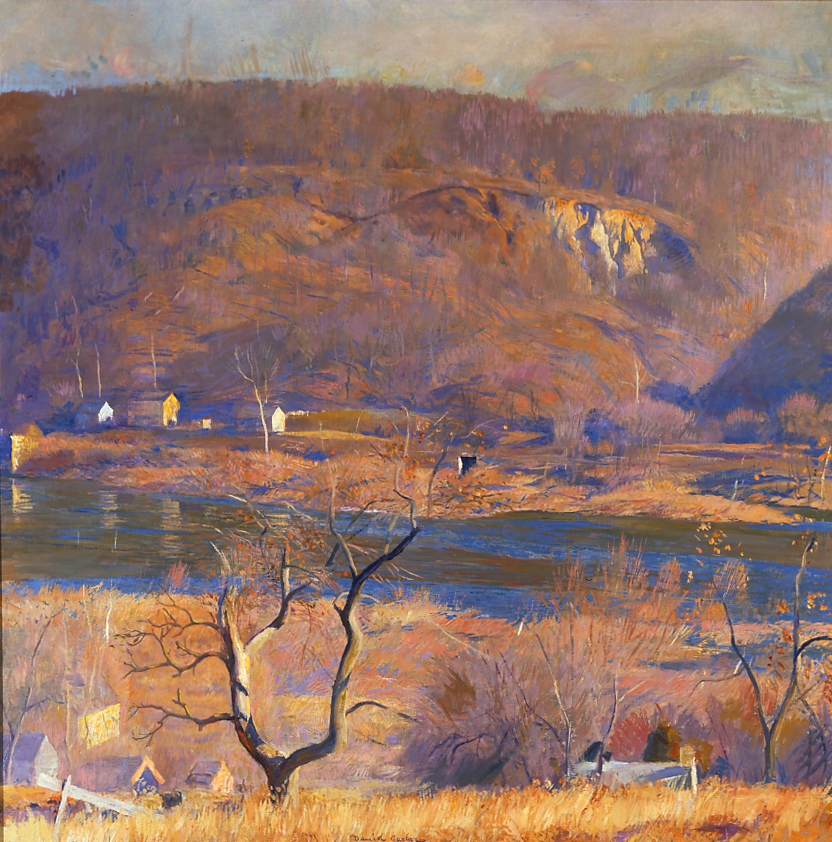
    The artists Edward Redfield and William Lathrop, Igoe said, were the first artists to settle in the area around 1900. Their works are a part of the show. Daniel Garber, who studied and taught at PAFA, soon followed them into the area and became one of the foremost artists living in New Hope. Then his students started moving to the area.

    “It was kind of like this self-perpetuating colony in a way,” said Igoe, “There was a very active artistic community there at the time, and also a lot of quarries.”
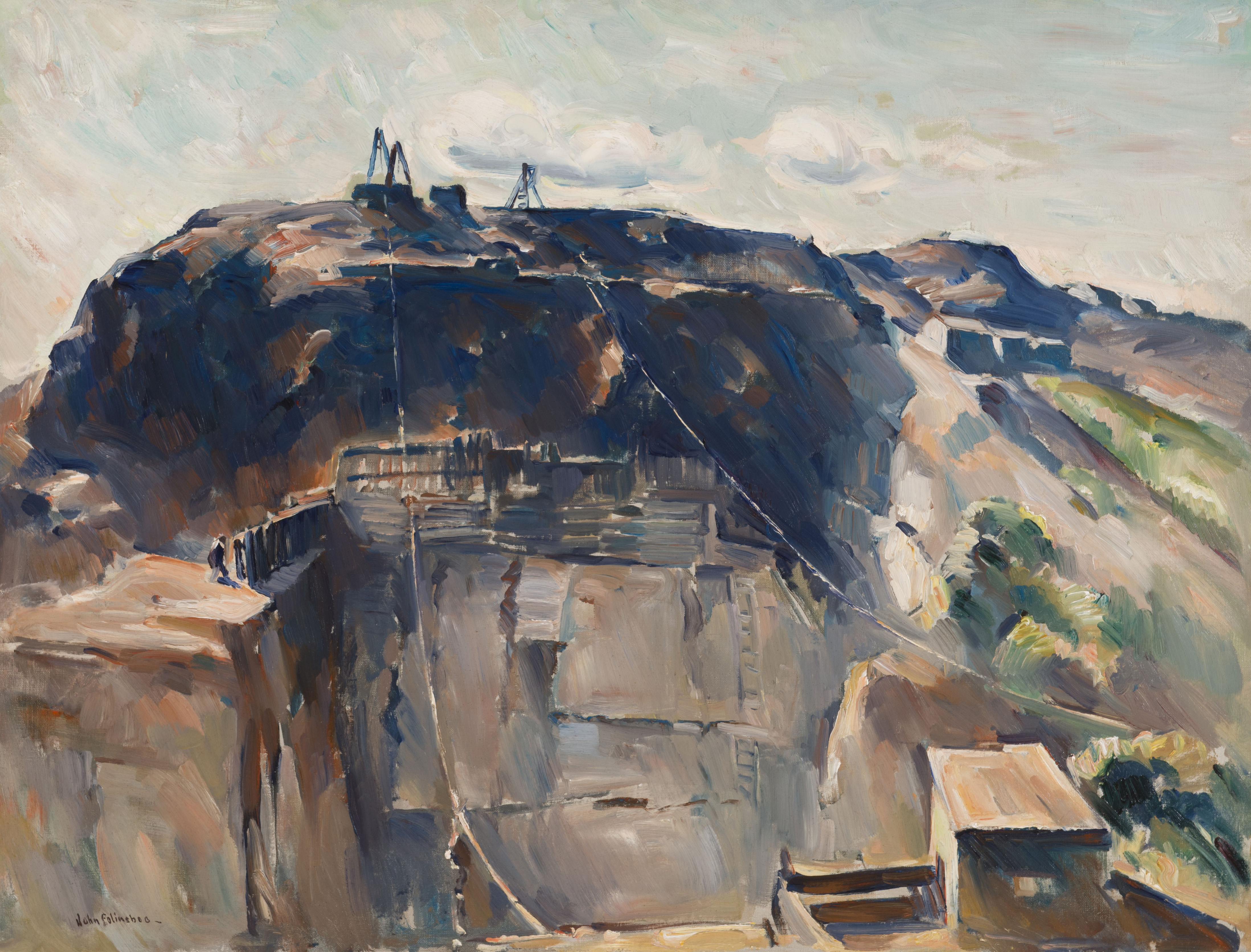
    John Folinsbee (1892-1972), “Slate Quarry, Bangor,” 1929. Oil on canvas, 32 x 40 inches. Courtesy of the Woodmere: Gift of the John F. Folinsbee Art TrustCourtesy of the Michener Art Museum

    Pennsylvania Impressionism by way of Europe

    At the time, there was a new interest in abstraction and Postimpressionism coming from Europe. Cezanne, particularly, was a big influence on some of the New Hope artists who often traveled to Europe and painted in the style of Impressionists like Monet. The Philadelphia art collector Albert Barnes even collected Cezanne paintings where the artist paints abandoned quarries, including Bibémus Quarry (Carrière de Bibémus) (1895).

    Like most Impressionists, the New Hope artists painted landscapes en plein air — outdoors, amid nature, directly drawing from subject matter. Naturally, the quarries that were a part of the landscape made it into the paintings and now form the focus of the exhibition.

    “But while in Europe Impressionism was a much more avant-garde style, it became kind of the style of the academies in the United States,” said Igoe, “so this was what was taught at places like PAFA.”

    “They emphasized capturing effects of light and atmosphere,” said Igoe, “really quick brushwork, quick application of paint.” Many of the artists, she said, were painting landscapes early in the morning or in the evening, painting sunrises and sunsets. “There’s frequently this shimmering sense of light in a lot of these Pennsylvania Impressionist paintings,” she said, “It is this really beautiful reflection of light off the stone that they’re trying to capture.”

    Igoe considers 1900 to the 1930s as the peak of Pennsylvania Impressionism, with the 1915 Panama Pacific Exposition in San Francisco being a highlight. Many of the New Hope Impressionists exhibited their work in the show.
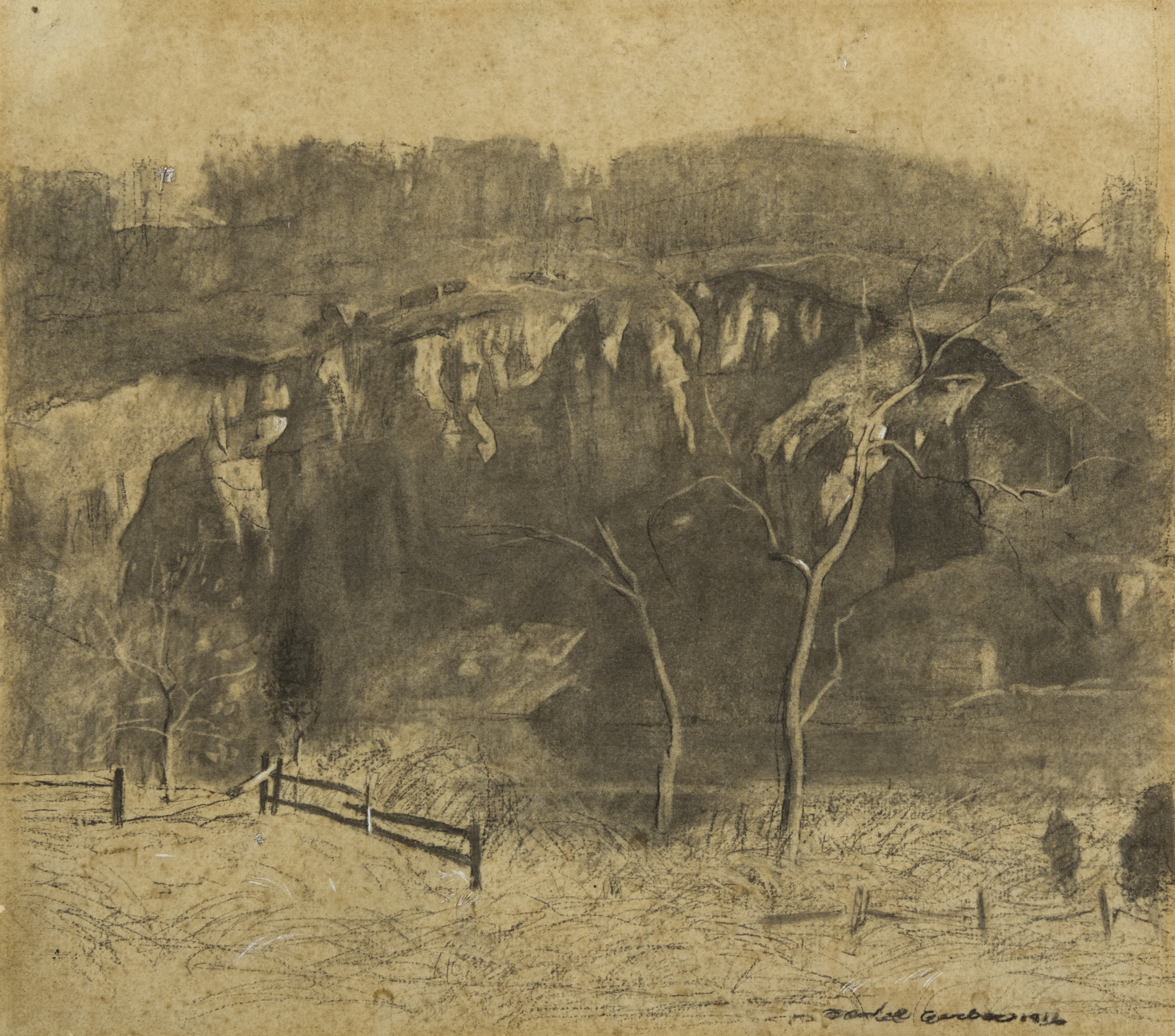
    Daniel Garber (1880-1958), “Abandoned Quarry,” 1916. Charcoal on paper, 10 ¼ x 12 1/8 inches. James A. Michener Art Museum. Michener Art Endowment Challenge Gift of Mr. Herbert WardCourtesy of the Michener Art Museum

    Redfield, notably, had a full room dedicated to his art; “which was an honor that was bestowed upon the likes of John Singer Sargent and Childe Hassam,” said Igoe. Many of the artists won medals at the show “and it led to them being proclaimed by some critics as the most American school of painting at the time,” said Igoe.

    “They painted the landscape of the New Hope area, and they painted in this, what was considered at the time, bold … in this very masculine style. We might not think of Impressionism that way today, but it was considered a very national style for the United States.”

    The artists continued to exhibit under the name of the New Hope Group, and their work was collected by museums across the country. Several women artists were members of the group. Together, they founded the Phillips Mill Community Association in 1929, which remains active as an exhibition venue.

    “The Michener Art Museum was really founded to preserve the legacy of those artists. Especially in Bucks County, those artists have always been well known. But Michener was founded so more people could learn about these artists and preserve their legacy and collect their work,” Igoe said.
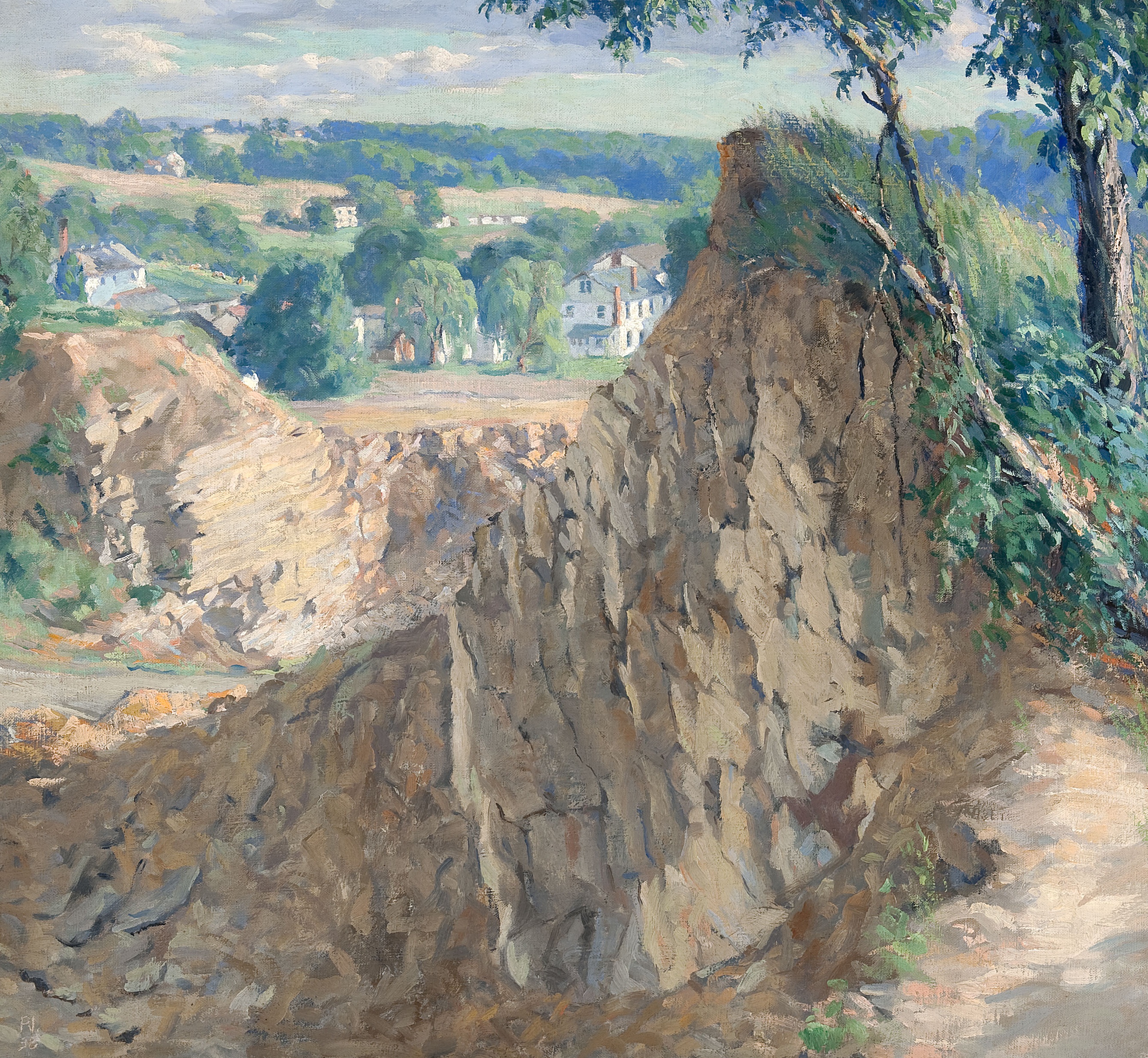
    Roy C. Nuse (1885-1975), “The Quarry at Rushland,” 1938. Oil on canvas, 22 x 24 inches. Courtesy of the Woodmere: Museum purchase, 2012Courtesy of the Michener Art Museum

    Why paint quarries?

    The artists, Igoe said, weren’t always painting exact reproductions of the nature around them, so they had the option of omitting the quarries from their art. “But they frequently chose to include these quarries,” she said, “and that led me to this exhibition where I wanted to look a little more closely at these paintings and think about why artists were so drawn to this subject.”

    Firstly, she thinks, the quarries added a drama to the landscape of New Hope that was attractive to the artists. Comparing quarries to the Grand Canyon, Garber said in an interview that they were “on a scale commensurate with the canvas,” said Igoe.

    “So you can include these dramatic rock faces, but it doesn’t overpower the canvas in the way the Grand Canyon can. You can’t get the Grand Canyon on a canvas, but you can get a quarry,” said Igoe.
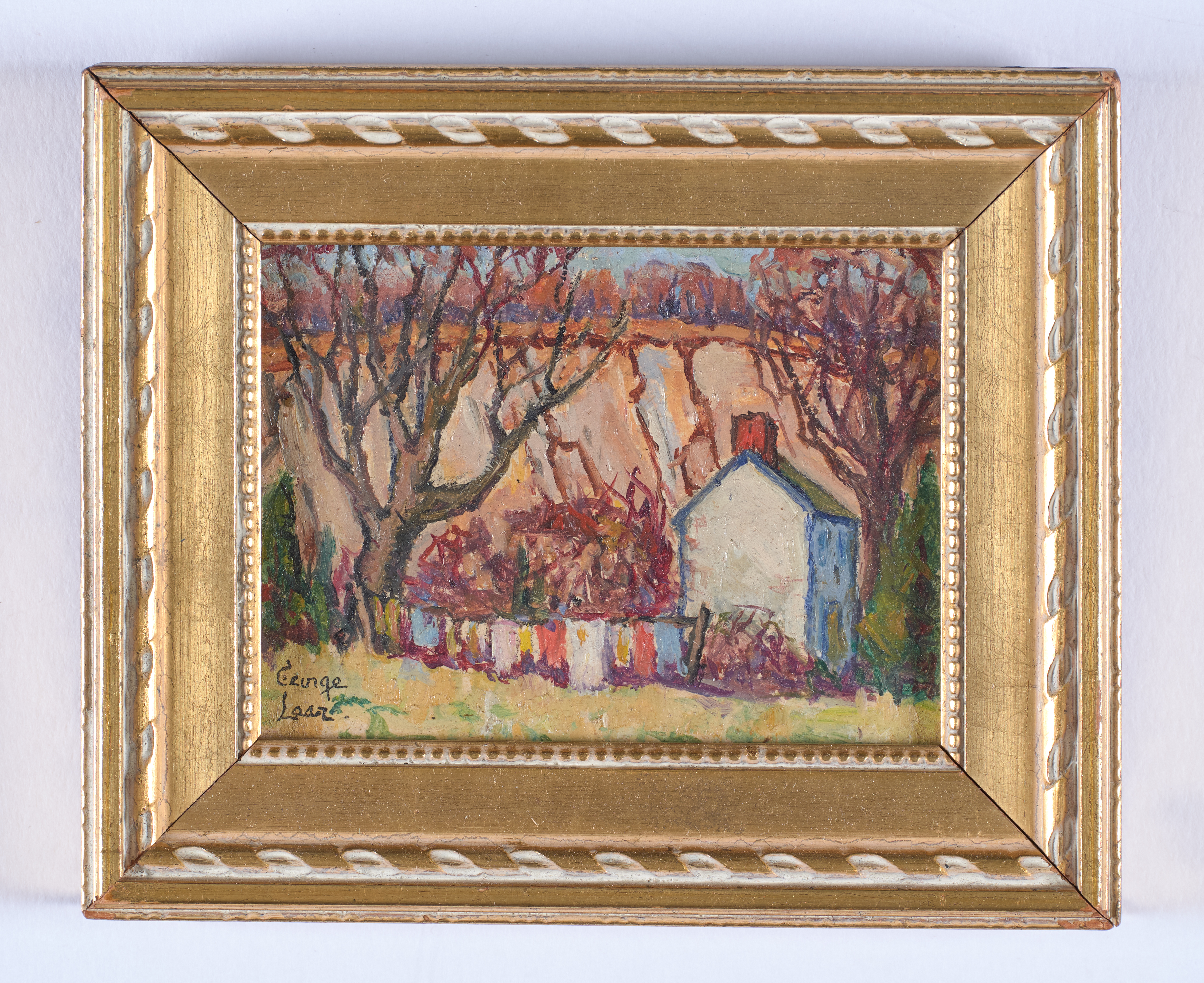
    George Lear (1897-1956), “Quarryman’s House,” ca. 1930-1950. Oil on board, 2 5/8 x 3 ¾ inches. James A. Michener Art Museum. Gift of Drs. Irwin and M. Susan RichmanCourtesy of Michener Art Museum

    The way the light at different times of the day and year reflected off the stones also inspired the artists, as did the geometric forms of the rock face that often inspired the artists to play with abstraction.

    “They were also interested in this human impact on the natural world, the way humans could excavate these rocks, from the landscape, I think was appealing to them,” said Igoe.

    Show highlights

    Many works in the show portray factories, smoke, and industrialization without much critical commentary, but Garber’s Harmonville (1925) shows a landscape near Conshohocken. To Igoe, it is “one of the artworks in the show that is the most critical of industry.” A sickly tree in the foreground of the print, she said, is perhaps Garber’s way of saying “that this industry can be really destructive to nature too.”

    Other artists in the show include Letitia Maxwell Ely, the lone woman artist in the mix, who was one of Garber’s students. “I just wasn’t finding a lot of paintings of quarries by women artists. I am not sure if it’s because it’s perceived as a more masculine subject,” said Igoe. But Maxwell Ely’s work, she said, stands out in the way the artist paints in proximity to the quarries. Masters like Garber, Igoe said, took a distant view of the quarries, not usually engaging with the human labor at the quarries.
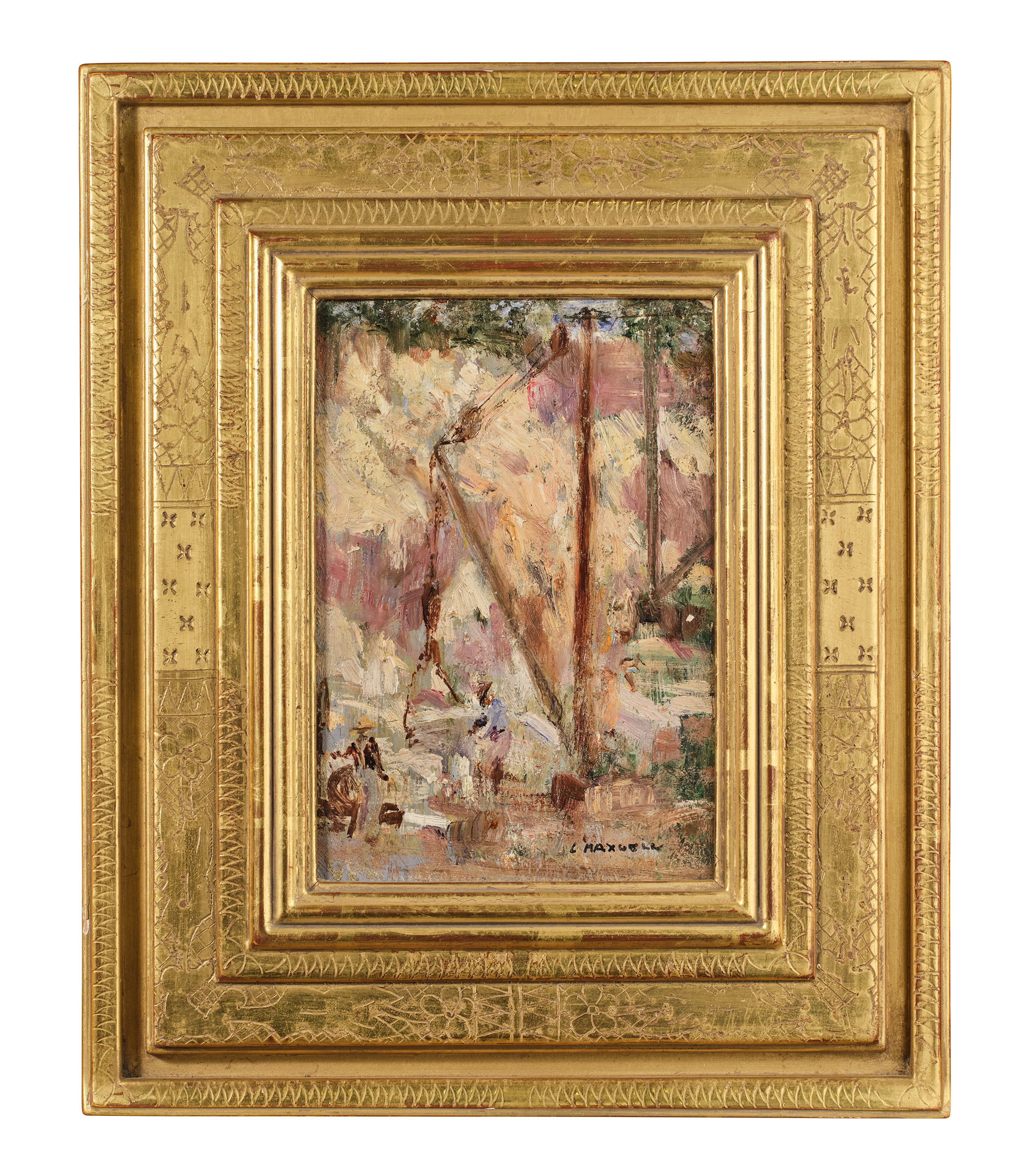
    Letitia Maxwell Ely (1886-1967), “Quarry,” 1914. Oil on board, 8 x 5 inches. James A. Michener Art Museum. Gift of David B. Long.Courtesy of the Michener Art Museum

    But Maxwell Ely, whose work was much smaller in scale, “brings you right into the quarries themselves in those little paintings, and she is more interested in the labor.” In works like Quarry (1914), there are no sweeping vistas, but a more zoomed-in perspective at life of those working in the quarries.

    “There’s not a lot of work known by her that’s still available. She’s an artist that I wish we knew a little bit more about, but she didn’t leave a very large body of work behind,” said Igoe.

    Among the other highlights of the show, according to Igoe, is a postcard-sized painting The Quarryman’s House by the artist George Lear. Another artist is Roy Nuse who lived by the Rushland quarry and painted that quarry many times throughout his life. “Nuse has this reputation as being somewhat of a homebody, he painted things close to his home,” said Igoe. “I just found it interesting that there was a quarry close to his home, and he painted it in all different seasons, in the winter and spring. And I think he really enjoyed the shapes that the quarry provided as well.”
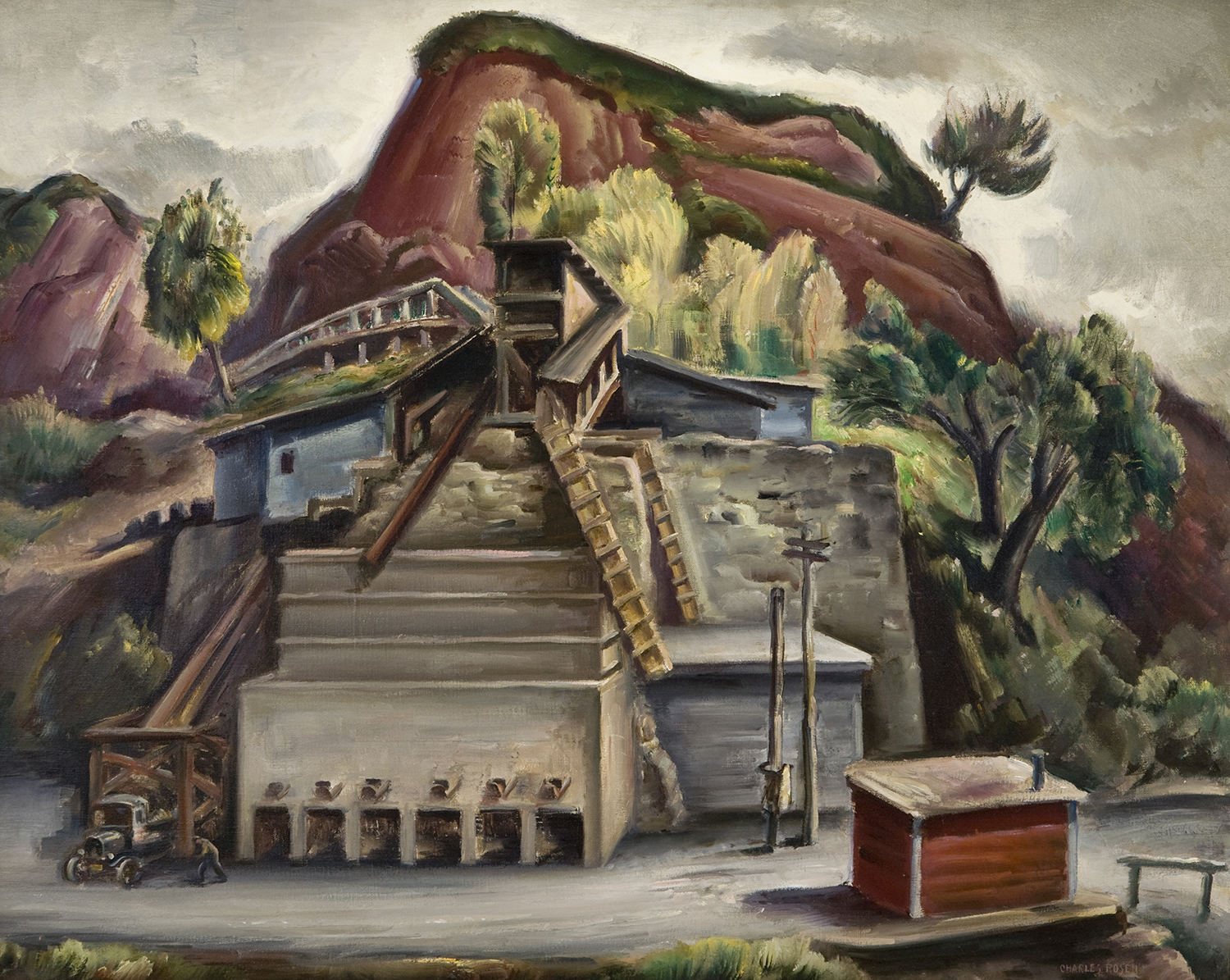
    Charles Rosen (1878-1950), “Quarry and Crusher,” early 1930s. Oil on canvas, 32 x 40 inches. James A. Michener Art Museum. Museum purchase funded by George C. Benson in honor of his friend, John Horton.Courtesy of the Michener Art Museum

    Charles Rosen, another artist in the show, started his career being an Impressionist but moved onto more avant-garde European styles after moving to Woodstock, N.Y.

    Pennsylvania Impressionism eventually dwindled as a movement around the 1940s as public interest shifted to more modern, abstract art forms. Some of the quarries depicted in the show remain active, some are overgrown, and some are part of protected land along the Delaware River.

    Igoe’s colleagues have even picked up some rocks from nearby quarries that, with the art, will also be a part of the show.

    So visitors can touch and feel the stones that they have walked over thousands of times. Stones that, with their jagged faces and smoothened ends, have witnessed artists’ curiosities and have gone on to outlive the hands that painted them.

    “Abstractions of Nature: Quarries and Industry in Pennsylvania Impressionism” runs through Feb. 28, 2027. Michener Art Museum, 138 S. Pine Street, Doylestown, Pa. 18901. michenerartmuseum.org
  • Four Philadelphia artists are a part of this year’s Whitney Biennial

    Four Philadelphia artists are a part of this year’s Whitney Biennial

    Whitney Biennial curators travel the length and breadth of the country, paying visits to artists in their studios, surveying their work, and picking creators whose work they think represents the present climate of art making in the country. Together, they bring a once-every-two-years expansive exhibition to New York’s Whitney Museum of American Art, often regarded as the most prestigious and faithful register of American art.

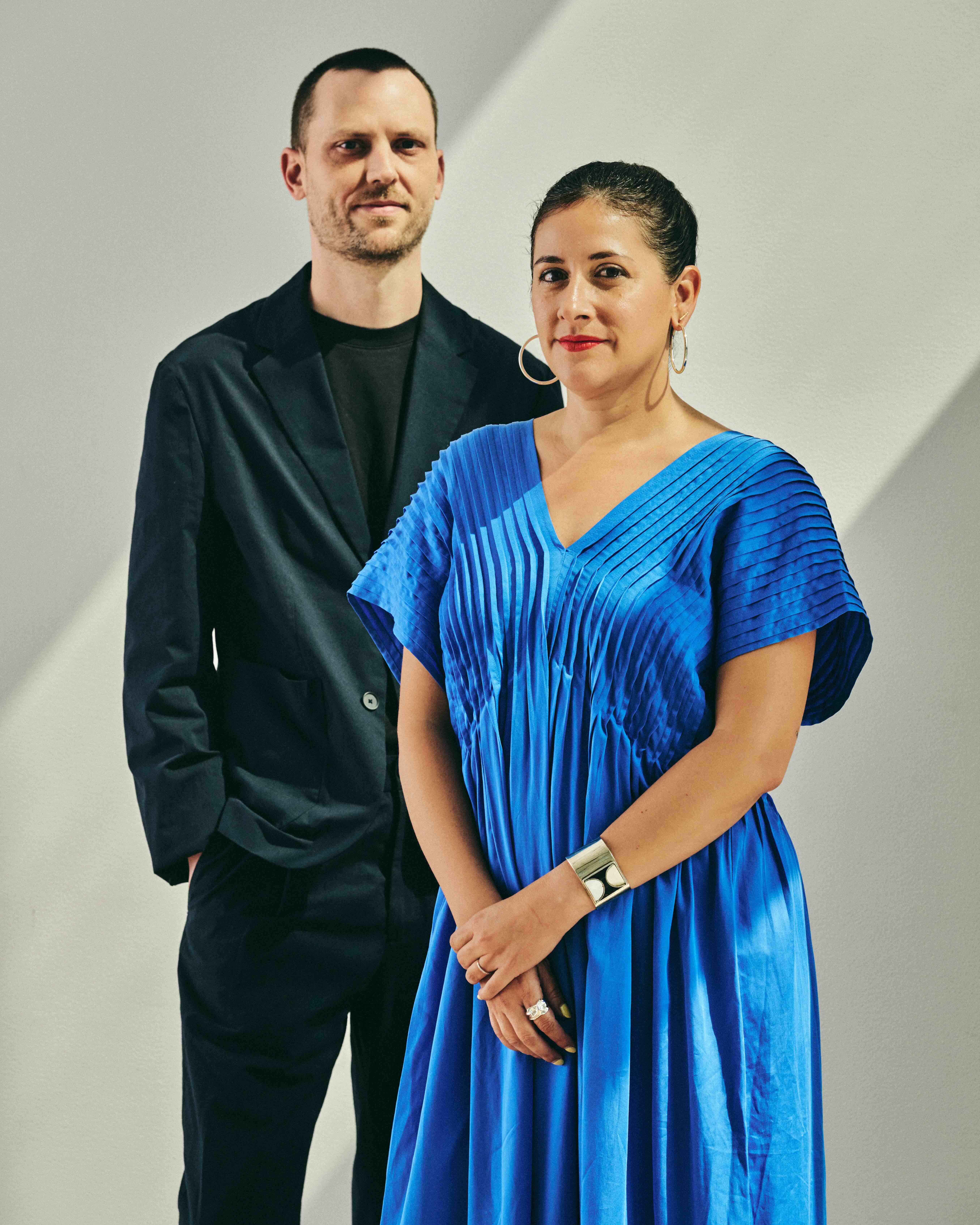
    Past biennial curators — the 2024 edition was curated by the Institute of Contemporary Art’s former associate curator, Meg Onli — have embarked on these travels separately, but for the country’s 250th year and the biennial’s 82nd, Whitney curators Marcela Guerrero and Drew Sawyer traveled together.

    Whitney Museum of American Art’s Biennial 2026 curators Drew Sawyer, Marcela GuerreroBryan Derballa

    “We wanted to just listen to artists and see where they were at, see what they were thinking about, how they were processing recent events,” said Guerrero. They traveled for a bit over a year, nationally and internationally, and visited more than 300 artists.

    “The idea of relationality and how do we relate in different ways” at political and interpersonal levels, is a theme that eventually emerged from their survey, Guerrero said.

    While in the past some curators have traveled as far as Hawaii, Guerrero and Sawyer’s short travel to Philadelphia in the winter of 2024 proved equally fruitful.

    “Philly was such a productive trip and very coherent in terms of what we were hearing from artists on gentrification, displacement, and the cost of living,” Guerrero said.

    Artists in Philadelphia, Sawyer noticed, “seem to be particularly preoccupied with ideas of infrastructure” and there exists a strong sense of connection among them. Several of the city’s artist are graduates of the MFA programs at the University of Pennsylvania and University of the Arts, taught by the same professors like Michelle Lopez (whose work is included in this year’s biennial) and Sharon Hayes (whose work was a part of the 2024 biennial).

    Maia Chao, “Being Moved,” 2026. Performance, Whitney Museum of American Art, New York, May 14–17, 2026. Commissioned by the Whitney Museum of American Art.Julieta Cervantes

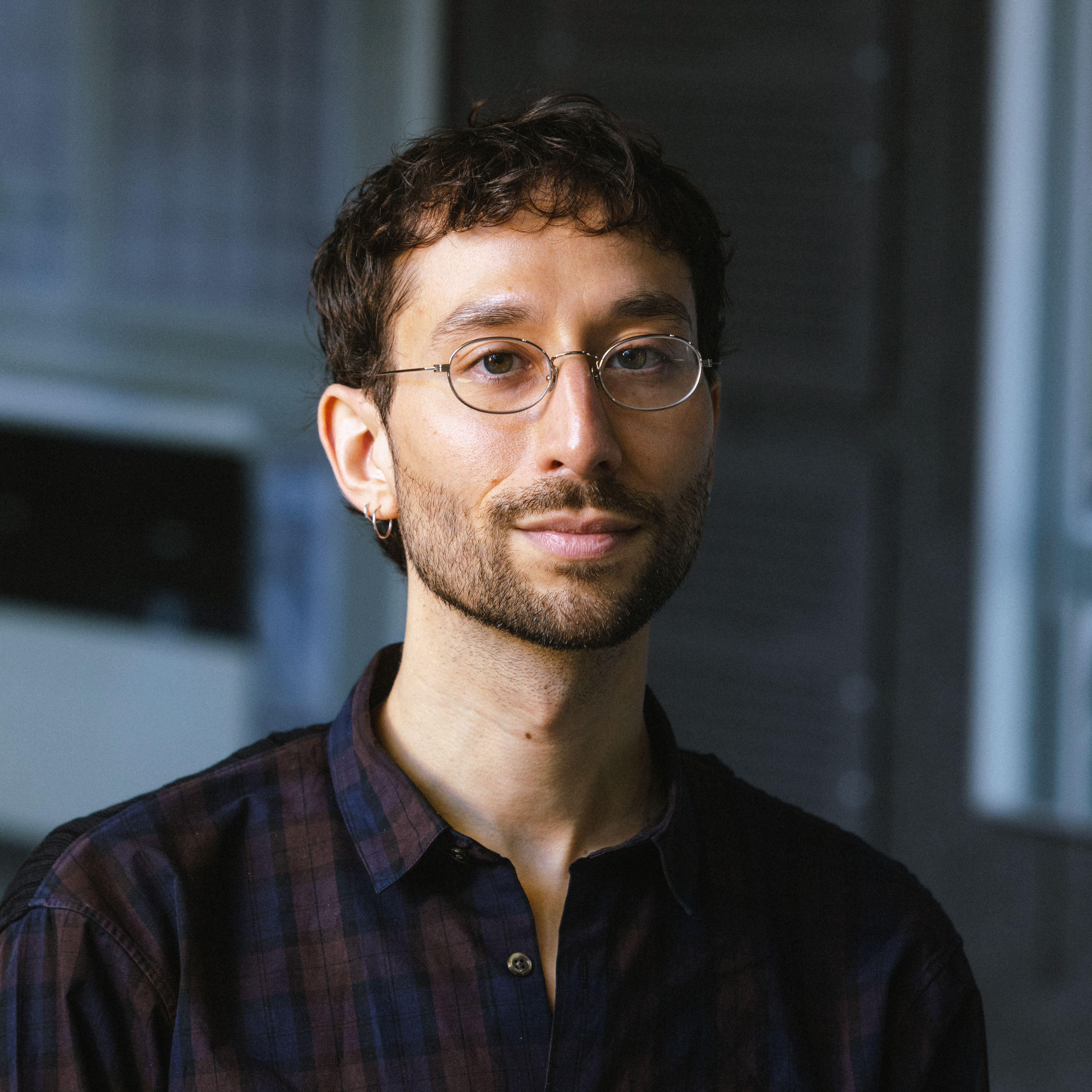
    Performance artists Maia Chao and Jonathan González, both of whose works are part of the biennial, live in West Philadelphia and are friends and collaborators. Emilio Martínez Poppe attended Penn and studied with Lopez, and was particularly interested in the idea of infrastructure from the perspective of the labor of public sector employees to help build and maintain our social and civic architectures.

    “A kind of certain institutional critique, I would say, was common” among Philadelphia artists, said Sawyer.

    “One of my biggest takeaways is the real vibrancy of the artistic scene in Philadelphia,” he said.

    Here are the Philadelphia artists whose works appear in the Whitney Biennial.

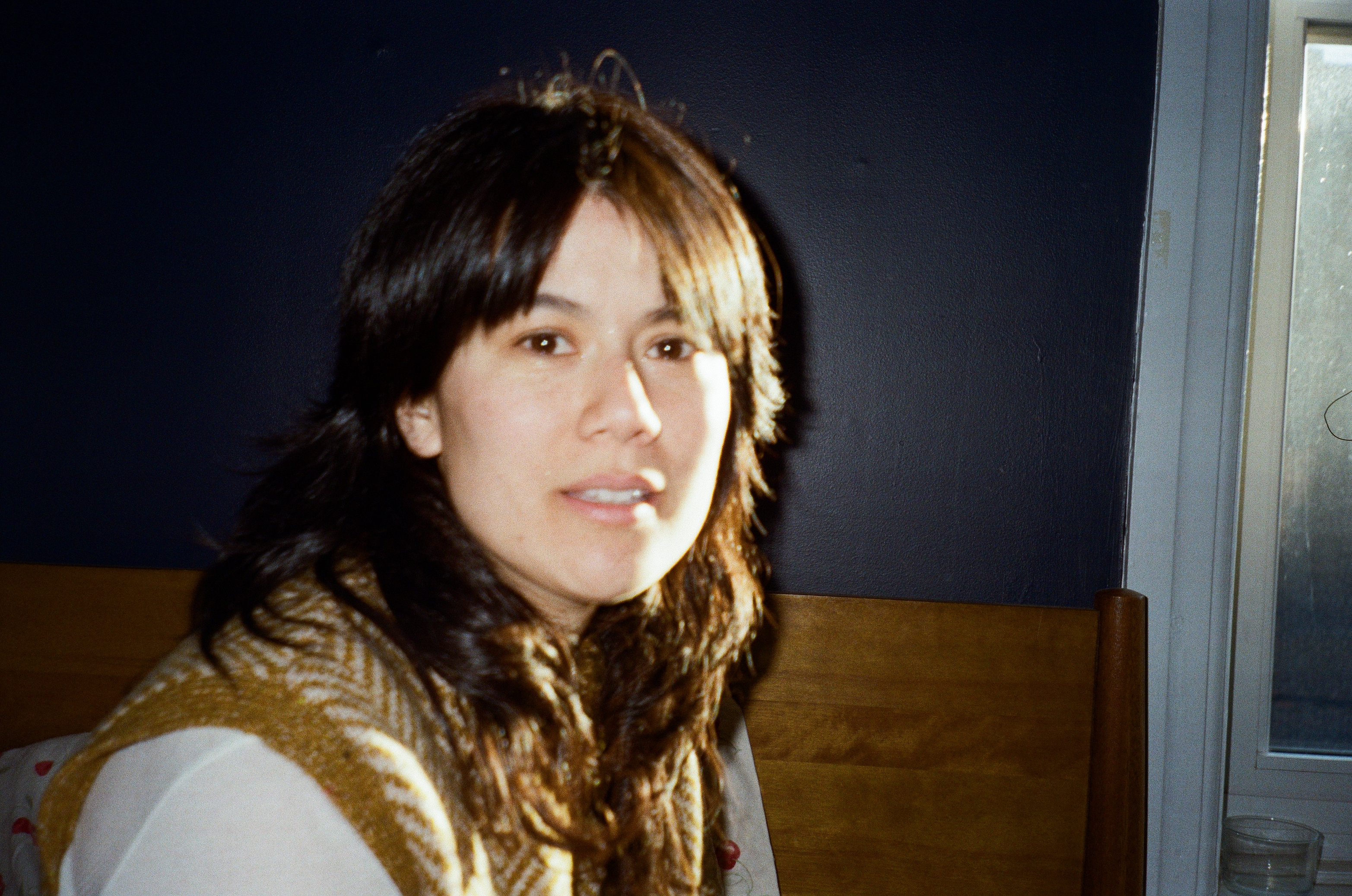
    West Philadelphia-based artist Maia Chao’s performance pieces “Being Moved’ and “Scores for the Museum Visitor” are part of the 2026 Whitney Biennial.Amelia Golden

    Maia Chao

    “Scores for the Museum Visitor,” “Being Moved”

    Maia Chao’s performance art emerges from studying social behavior. Where some might see the mundane walk from home to work, she sees choreography, a rhythm, and an interaction of the body with its surroundings.

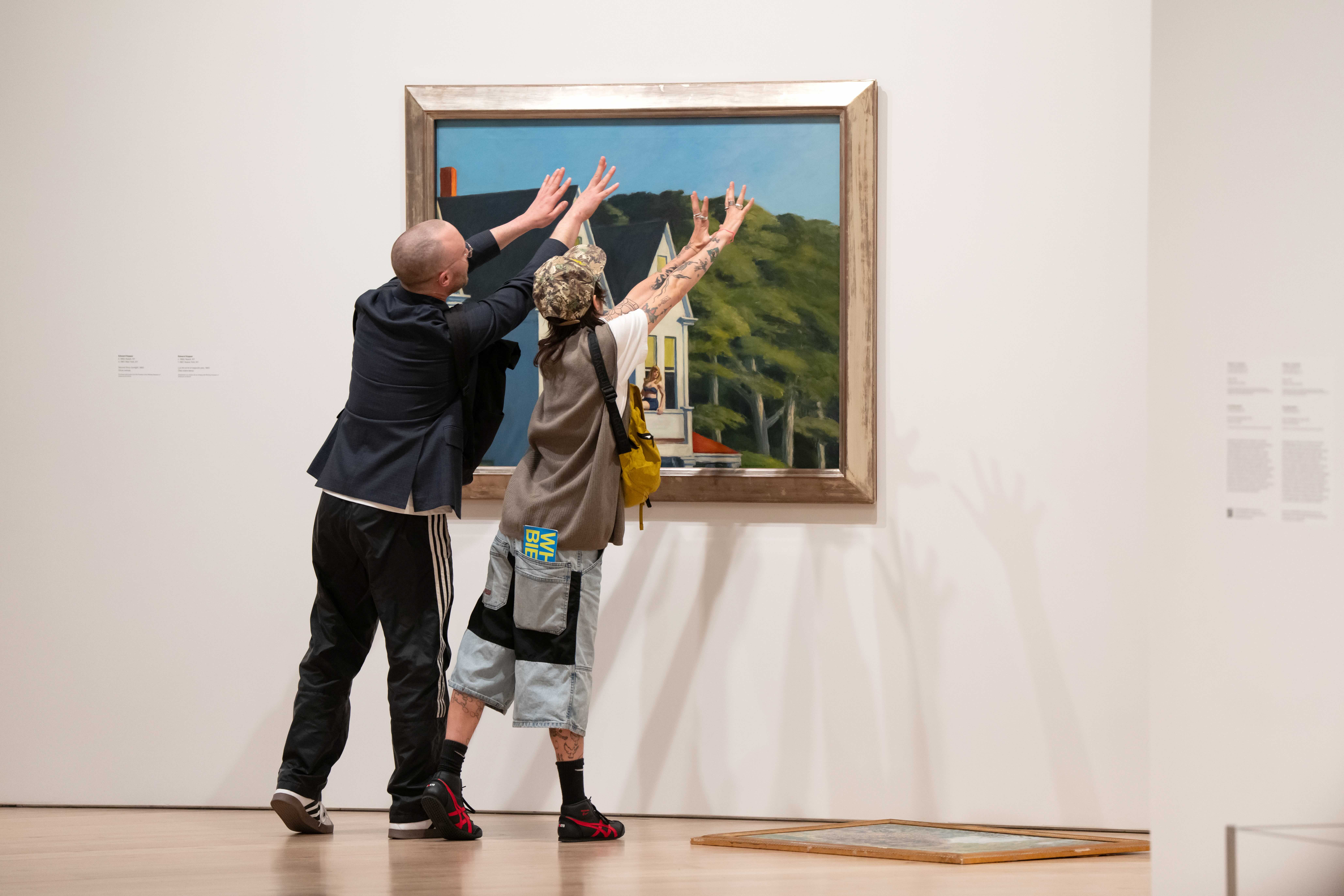
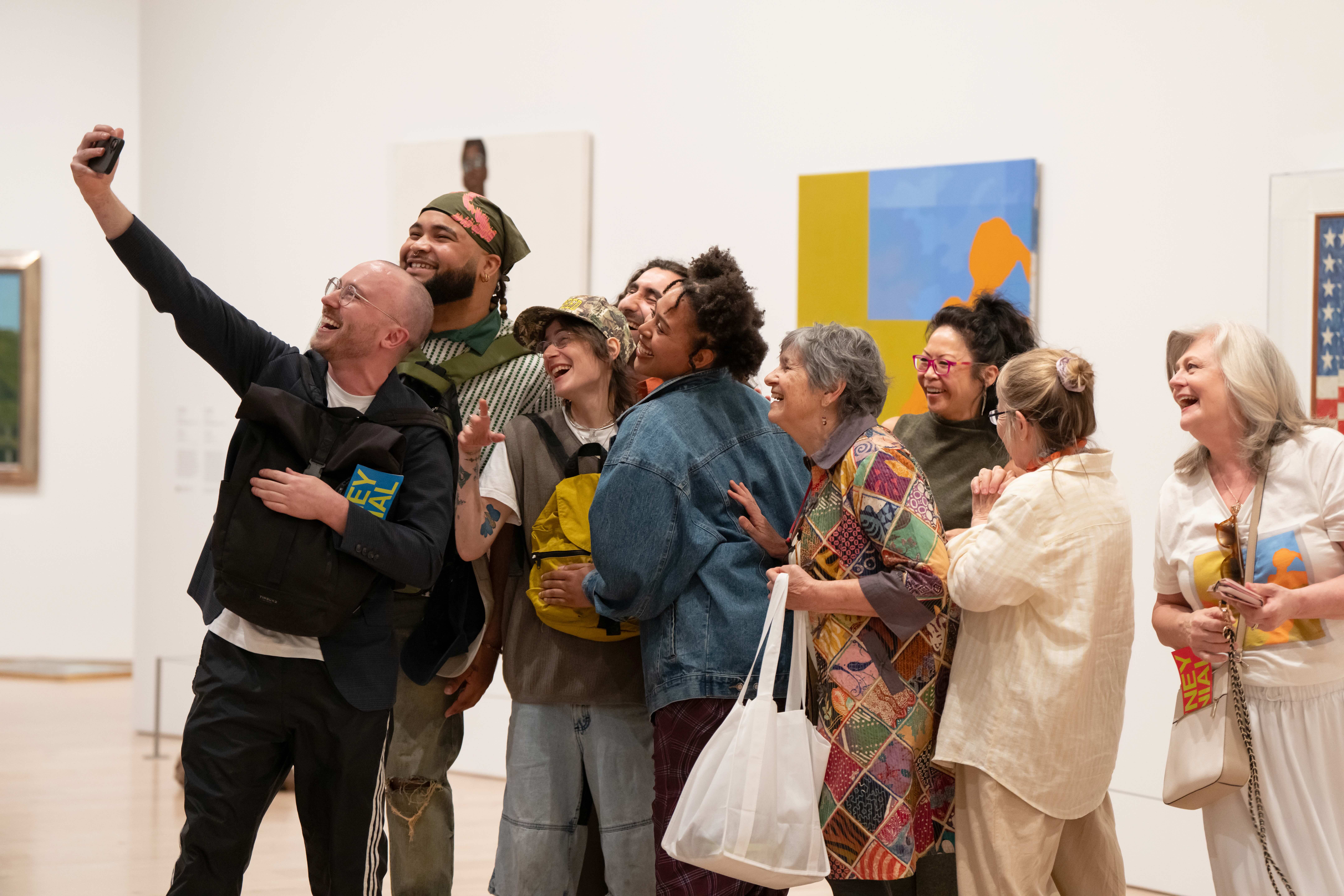
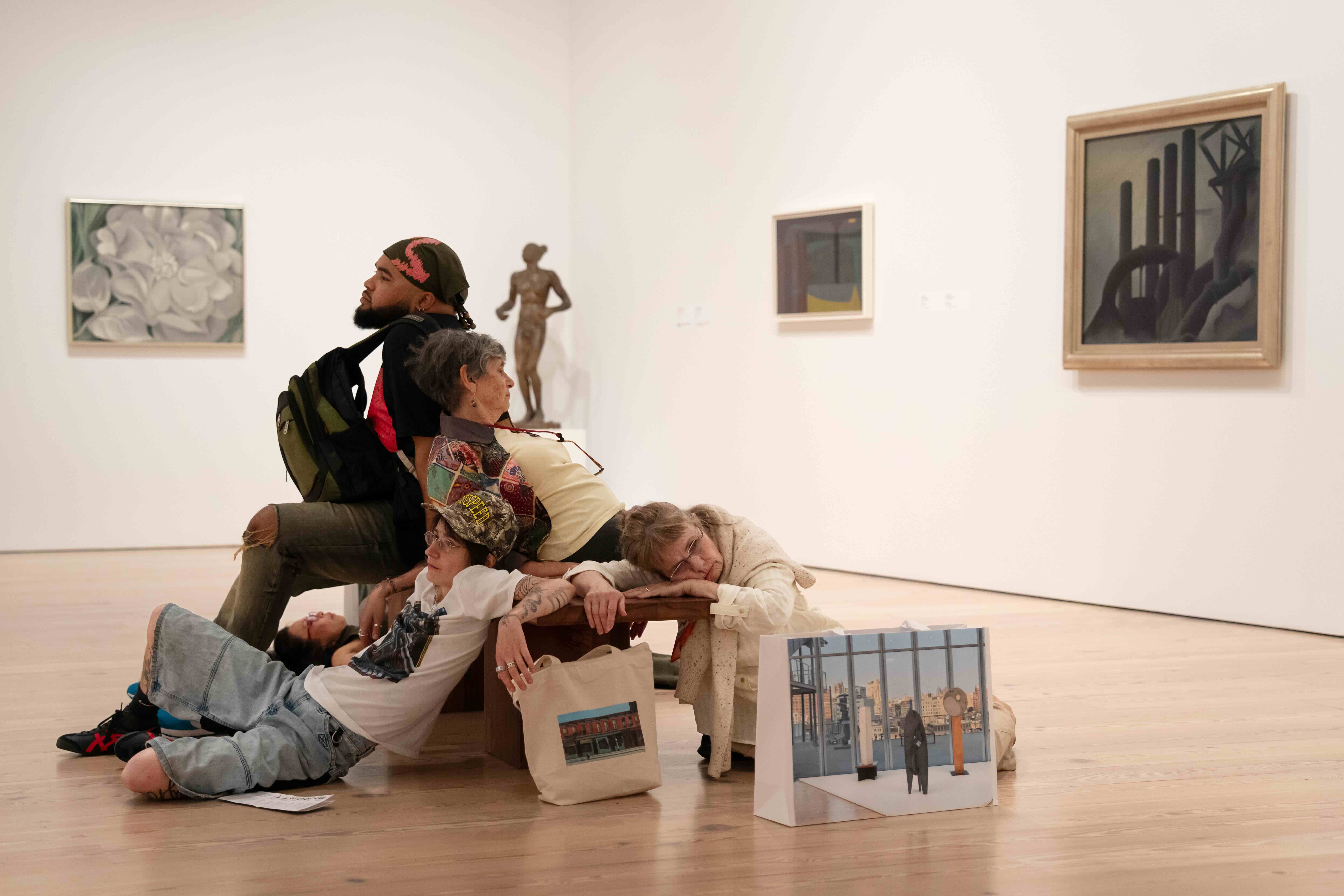
    Her biennial performance piece Being Moved, choreographed by Lena Engelstein, takes inspiration from how museum visitors interact with the art. “It reframes the focus from the art itself to the visitors’ experience,” she said. The title refers to both “this potential to be moved by an artwork,” but also “of the ways that the institution makes us move, makes us move our bodies, and makes us behave in the presence of extremely valuable assets.”

    That tension of the push and pull of a museum — where its mission might seem inviting and welcoming but once inside, rules around how to behave, what to touch abound — is at the center of Chao’s piece.

    Maia Chao, “Being Moved,” 2026. Performance, Whitney Museum of American Art, New York, May 14–17, 2026. Commissioned by the Whitney Museum of American Art.Julieta Cervantes

    When visiting the biennial beyond Chao’s performance schedule, visitors view Scores for the Museum Visitor as a set of prompts, an invitation to create “micro performances” of their own.

    Among the scores are: “Identify another museum visitor. From afar, copy their movements as closely as possible.” “While holding a museum brochure, clasp your hands behind your back. Drop the brochure.” “Find a bench. Take a seat. Imagine the artworks slowly falling to the floor.”

    “These are invitations to kind of transgress the rules, [for] engaging with the artwork, or interpreting and encountering an artwork,” the artist said.

    Maia Chao, “Being Moved,” 2026. Performance, Whitney Museum of American Art, New York, May 14–17, 2026. Commissioned by the Whitney Museum of American Art.Julieta Cervantes

    Chao first caught the curators’ attention with Agents of Deterioration (2024), made in collaboration with Ethan Philbrick, a performance piece commissioned by the Hirshhorn Museum and Sculpture Garden. Sawyer was drawn in by Chao’s “legacy of institutional critique through affective registers.”

    “There’s a real kind of commitment to the institution, even as Maia is critiquing it, which we felt was important in this moment where there’s, from many different directions, an eroding of faith in institutions. We were really interested in the way she both critiques and pushes institutions to do better,” he said.

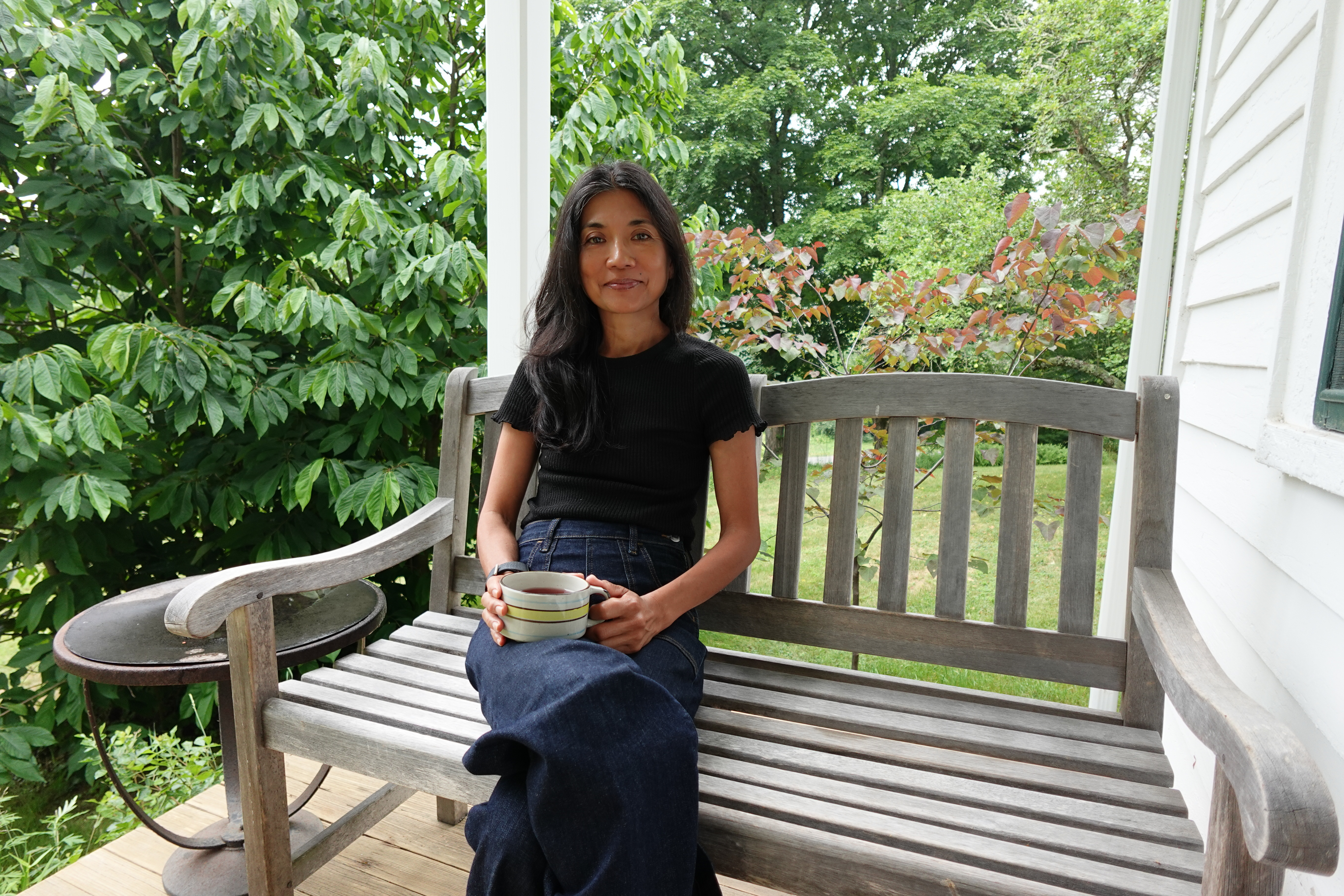
    Artist and Penn professor Michelle Lopez whose “Pandemonium” is part of the 2026 Whitney BiennialKelsey Valencia, Denniston Hill Residency

    Michelle Lopez

    “Pandemonium”

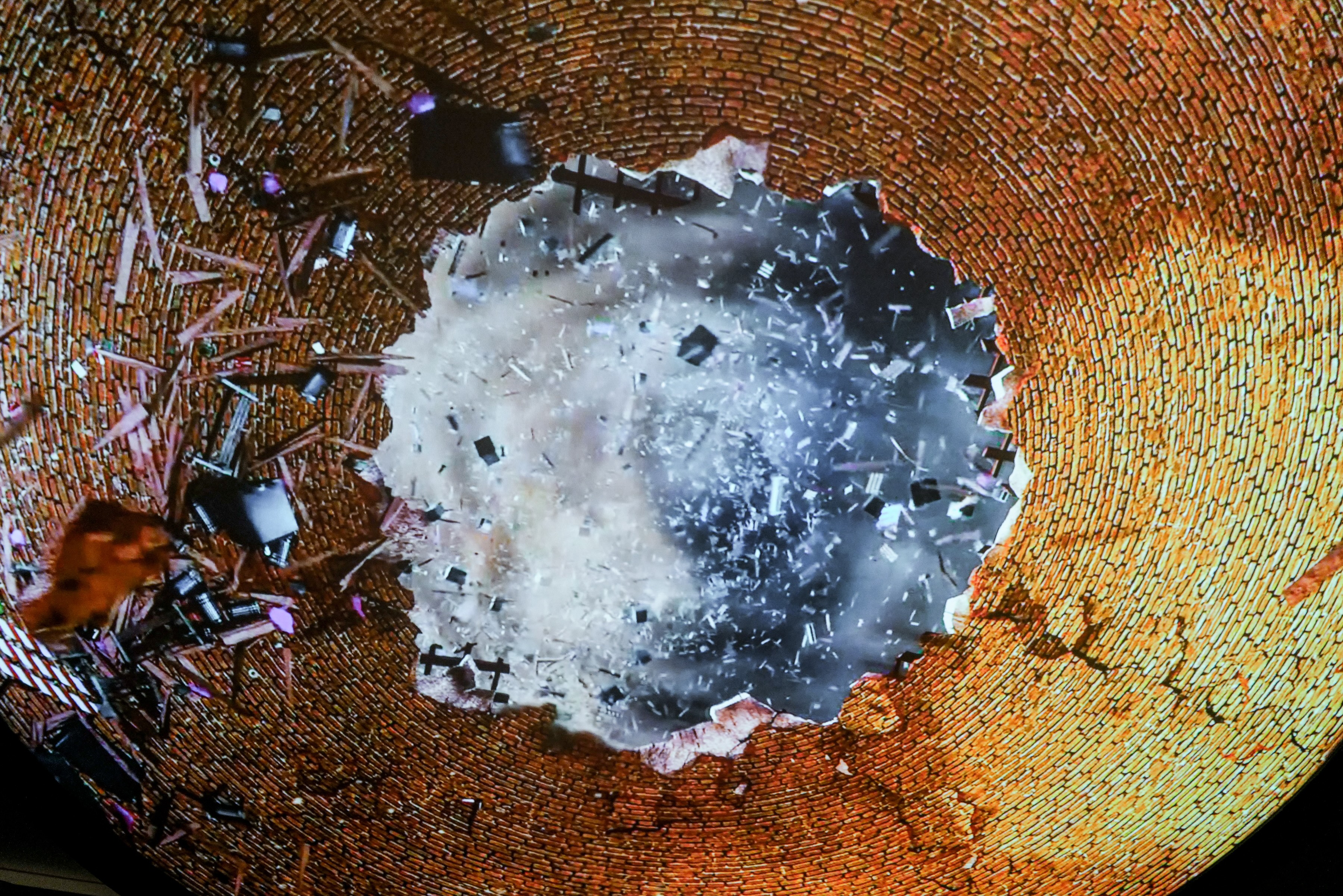
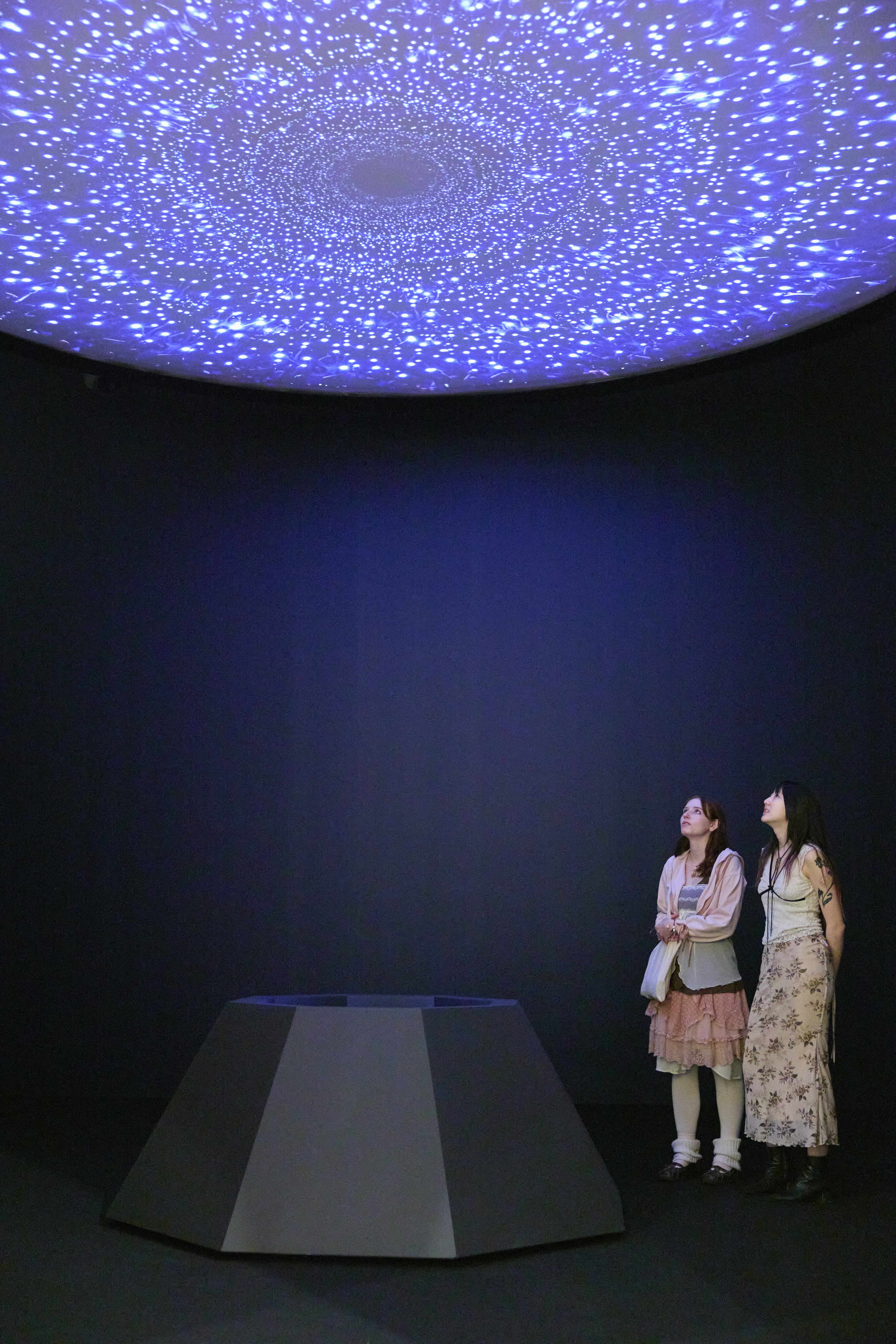
    Pandemonium is a fully Philadelphia piece of art. It was made in collaboration with the Moore College of Art and Design and the Franklin Institute, supported by the Pew Center for Arts & Heritage and the University of Pennsylvania, filmed at Northeast Philadelphia’s RAIR (Recycled Artist in Residency), premiered at the Fels Planetarium and the Galleries at Moore, and inspired by artist Michelle Lopez’s earlier work exhibited at the ICA.

    Installation view of Whitney Biennial 2026. Michelle Lopez, “Pandemonium,” 2025.Jason Lowrie/BFA.com

    “Philadelphia is just a really supportive environment for artists,” said Lopez, who is an associate professor of fine arts at Penn’s Stuart Weitzman School of Design, where she leads the sculpture program. “I could not have made that work in New York.”

    The video project, as Lopez says, came from a desire to “situate the viewer in the eye of a storm so that they could feel, on a somatic level, what it was like to have their environment really collapse around them.”

    Installation view of Whitney Biennial 2026. Michelle Lopez, “Pandemonium,” 2025.Gus Powell

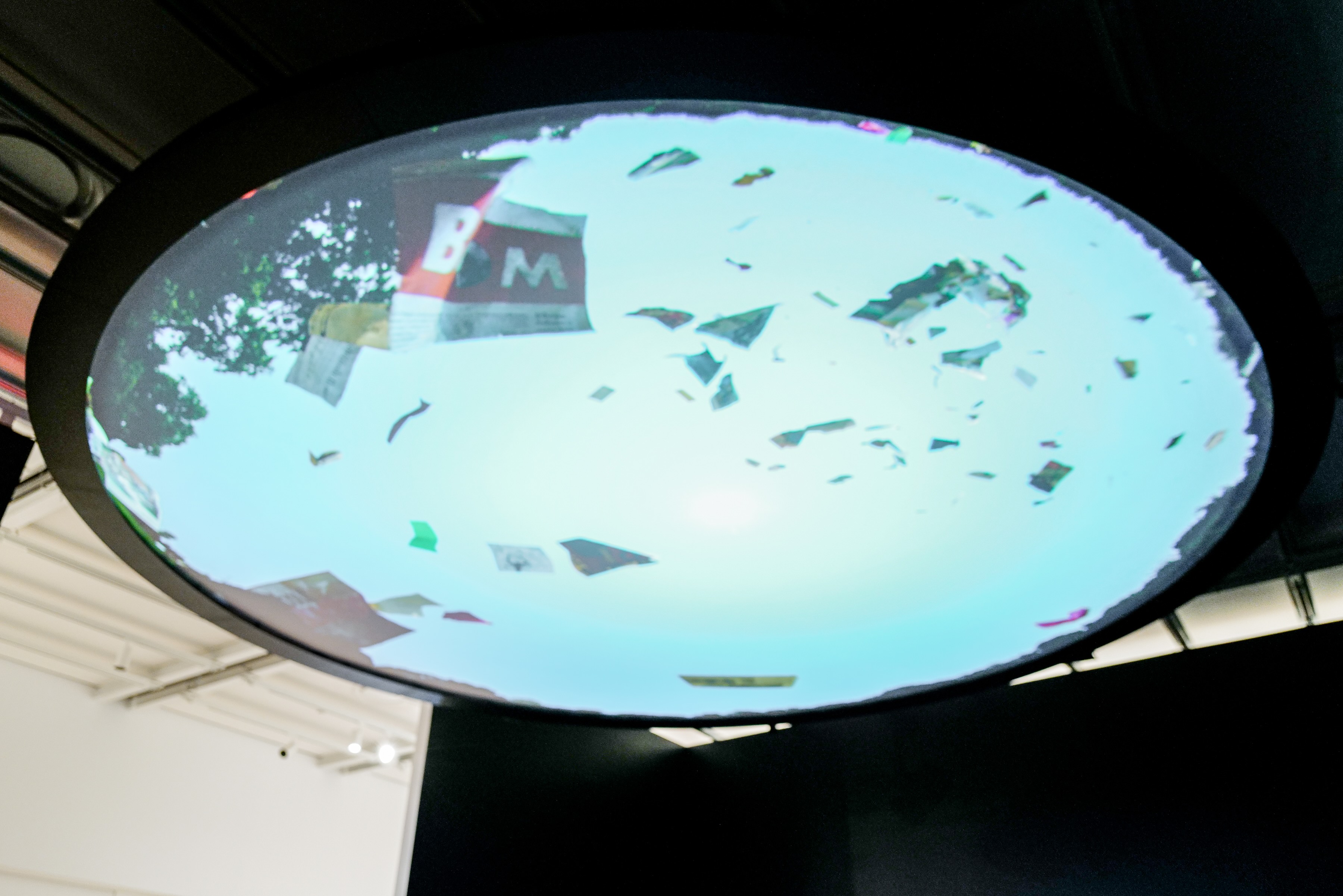
    At the Whitney Museum, Pandemonium plays on a domed screen on the ceiling of the gallery and demands that the viewer sit below it and look up. What they witness is things moving around with a violent force against the sky — debris, newspapers, packaging, clothing (including Lopez’s own and her son’s old underwear), and other markers of extreme human consumption.

    In order to make this mayhem happen, Lopez, who is trained in sculpture, built a tornado machine using a robotic contraption, industrial fans, and leaf blowers. Together they created a simulation of a tornado at RAIR which was then filmed and eventually screened in the Fels Planetarium.

    “A lot of the work imagistically, came from seeing images of tornadoes and hurricanes wiping out towns. I was really interested in the way nature could collapse culture,” said Lopez, who lives in South Philadelphia.

    Installation view of Whitney Biennial 2026 (Whitney Museum of American Art, March 8–August 2026). Michelle Lopez, “Pandemonium,” 2025.Jason Lowrie/BFA.com

    While a Whitney gallery is nowhere close to the grandeur and wonder of the Fels Planetarium, the 360-format video manages to suck in a viewer who feels almost weightless as the feeling of being thrown around by the forces of nature is simulated.

    When the curators visited Philadelphia for studio visits, “top on our list was Michelle Lopez,” said Sawyer. “We were aware that she had been working on this major moving image project that departed from what she’s most well known for, which is sculpture. So we were really excited to meet with her, especially because her work had not been a part of the biennial before.”

    Artist Emilio Martínez Poppe, whose work “Civic Views” was on display in the City Hall courtyard last year. This year, it’s a part of the Whitney Biennial.Neal Santos

    Emilio Martínez Poppe

    “Civic Views”

    Like Lopez’s Pandemonium, artist Emilio Martínez Poppe’s Civic Views is an artwork that is only possible because the city of Philadelphia exists. Several Philadelphians have already seen Martínez Poppe’s work when it was on view last year in the City Hall courtyard.

    Martínez Poppe was then studying city planning and working toward an MFA in visual art from Penn when he was mulling over the future of city planning graduate students who’d go on to join the public service workforce.

    It was in conversation with professors that he found out that the oldest surviving daguerreotype in the country, which is stored at the Historical Society of Pennsylvania, was taken by Joseph Saxon, who was a public sector employee working for the U.S. Mint.

    “That was shot out of the U.S. Mint, where the Widener Building is today. He’s following Daguerre’s technological recipe, he uses it to photograph what he sees through the window. Unlike Daguerre, who was a theater entrepreneur, Saxton was a public sector employee who was doing something he was not hired to do,” said Martínez Poppe. “He was hired to work on the newly nationalized currency and he was tinkering with this invention in his office, and that view is one of the only real entry points that we have into his position at his job there, which is interesting.”

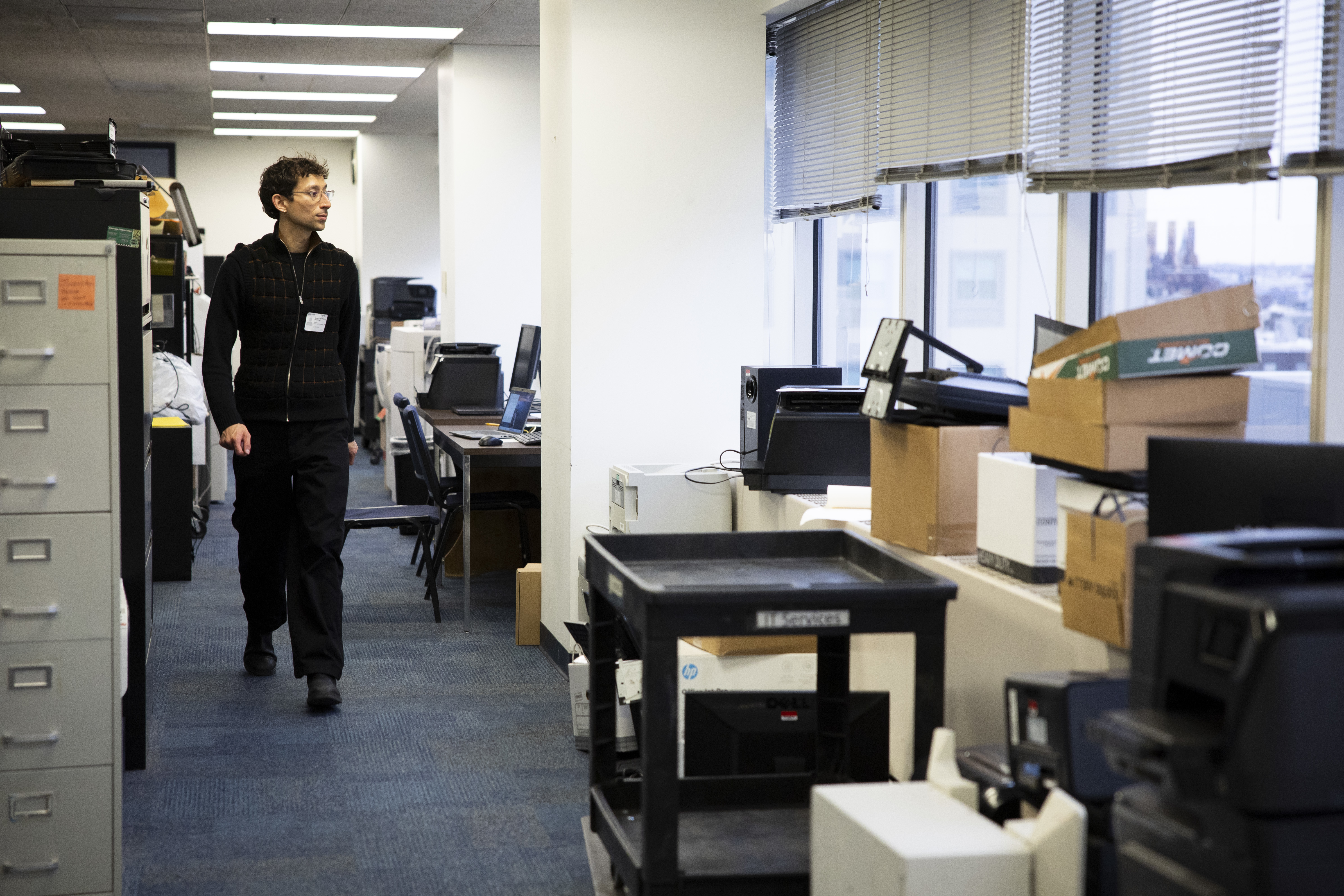
    Emilio Martínez Poppe looks out the windows at the Department of Behavioral Health and Intellectual disAbility Services office on Tuesday, Feb. 11, 2025 in Philadelphia. Emilio Martínez Poppe is working on a project curated by Jameson Paige that documents the views from municipal service buildings. The project also includes interviews with city workers.Monica Herndon / Staff Photographer

    Inspired, Martínez Poppe visited municipal buildings all across Philadelphia and photographed views from the inside out so he could document what city workers see from their windows. Alongside, he conducted “dozens of long form, anonymized interviews” with city workers from more than 20 agencies.

    “I would ask them, what was your perspective of city government before working here, who taught you about the value of public sector work? Often, so many people would tell me it was their mothers.”

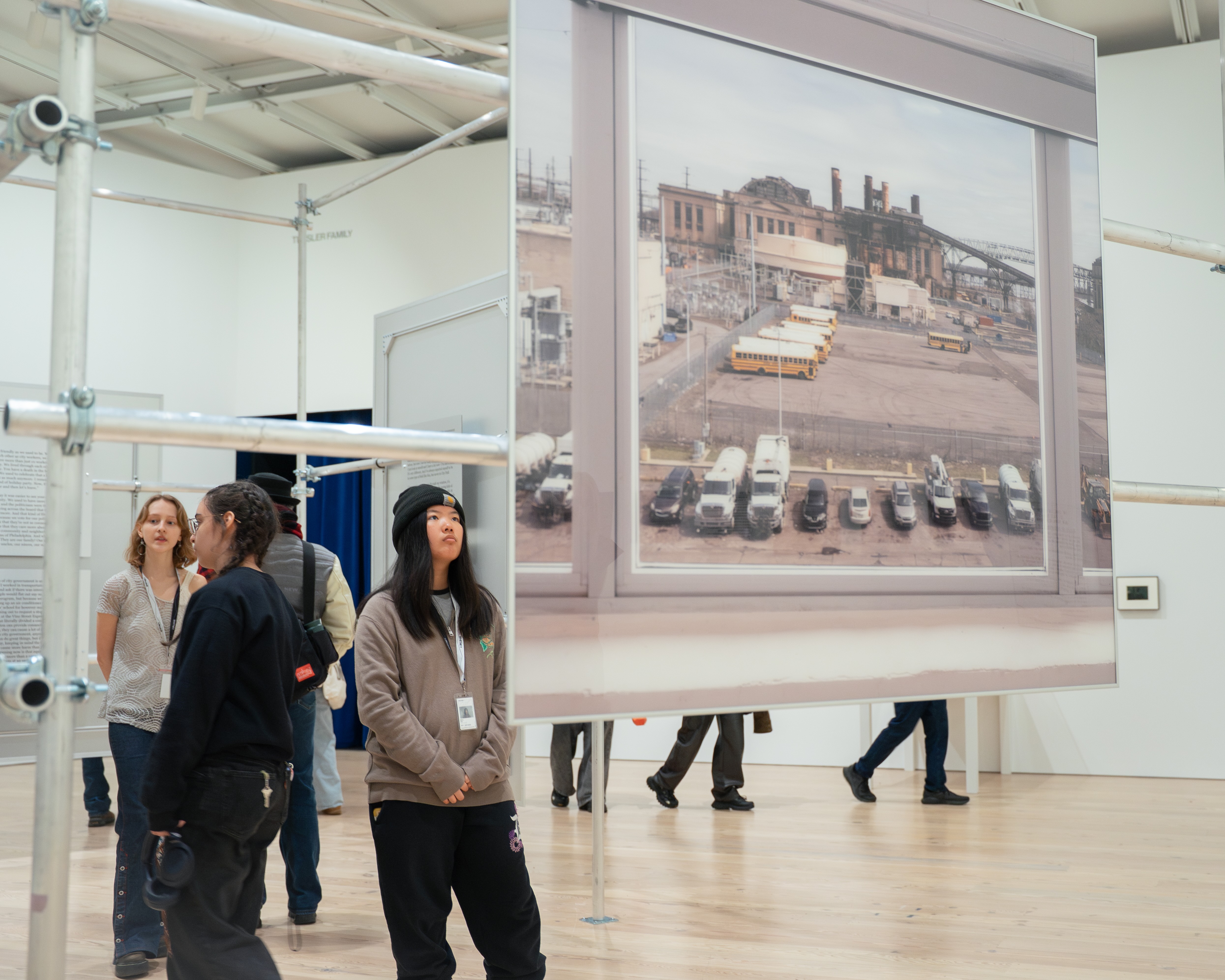
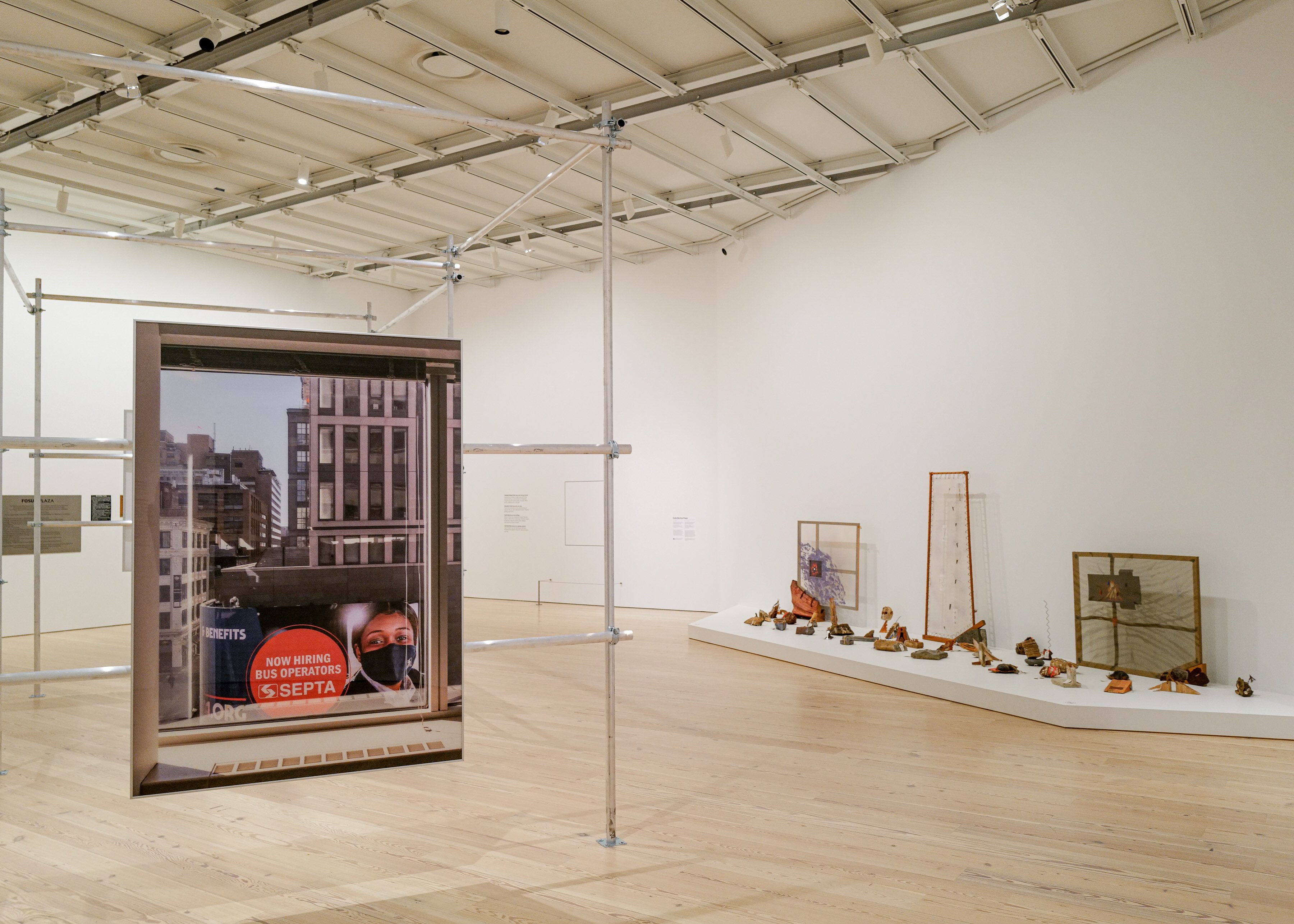
    Civic Views is a result of those conversations — a coming together of anonymized interview snippets and photographs displayed in a scaffolding-like structure in the middle of a Whitney gallery. “It’s the scaffolding that dissolves the authoritative center, even in the Whitney Biennial,” said Martínez Poppe.

    Since his exhibition in Philadelphia, there has been a municipal workers strike and threats of a SEPTA strike, and President Donald Trump’s DOGE cuts have resulted in thousands of public sector employees being laid off in the city.

    An installation view of Emilio Martínez Poppe’s “Civic Views.”Summer Surgent-Gough

    “The public sector is vulnerable to radical change, for better or worse. With my work, I want to say that it’s time to seize the means, seize our technology to create the world that belongs to us,” the artist, who now works for the New York City Mayor’s Office as a civic arts programs coordinator, said.

    “We need to assume that responsibility. That’s why the project centers the voices of workers and how their positions shape their views. But also how their views shape the structures that we are living in and living through.”

    On the curators’ Philadelphia visit, Guerrero recalled seeing Civic Views and people of the city interacting with it. “It was very touching,” she said. Her favorite part about the work is that it uses “the tropes of the camera, of the interview, of bureaucracy, but then upends it completely.”

    Installation view of Whitney Biennial 2026 (Whitney Museum of American Art, March 8–August 2026). “Civic Views” (2024) by Emilio Martínez Poppe, “Philadelphia Housing Authority, South,” 2024; Emilio Martínez Poppe, “Philadelphia Department of Sanitation, North,” 2024; Emilio Martínez Poppe along with works of Kainoa GruspeJason Lowrie/BFA.com

    “You see how important the job of a public servant is,” she said, “and how you know they’re in kind of a double bind because they’re the face of the government and also they receive the same services they provide … their kids are in the public school system, they depend on the Department of Sanitation.”

    She finds this complexity “beautifully translated” in Civic Views. “You can really put yourself in the shoes of the person who’s speaking and feel the care that really goes into this type of work that should not be overlooked.”

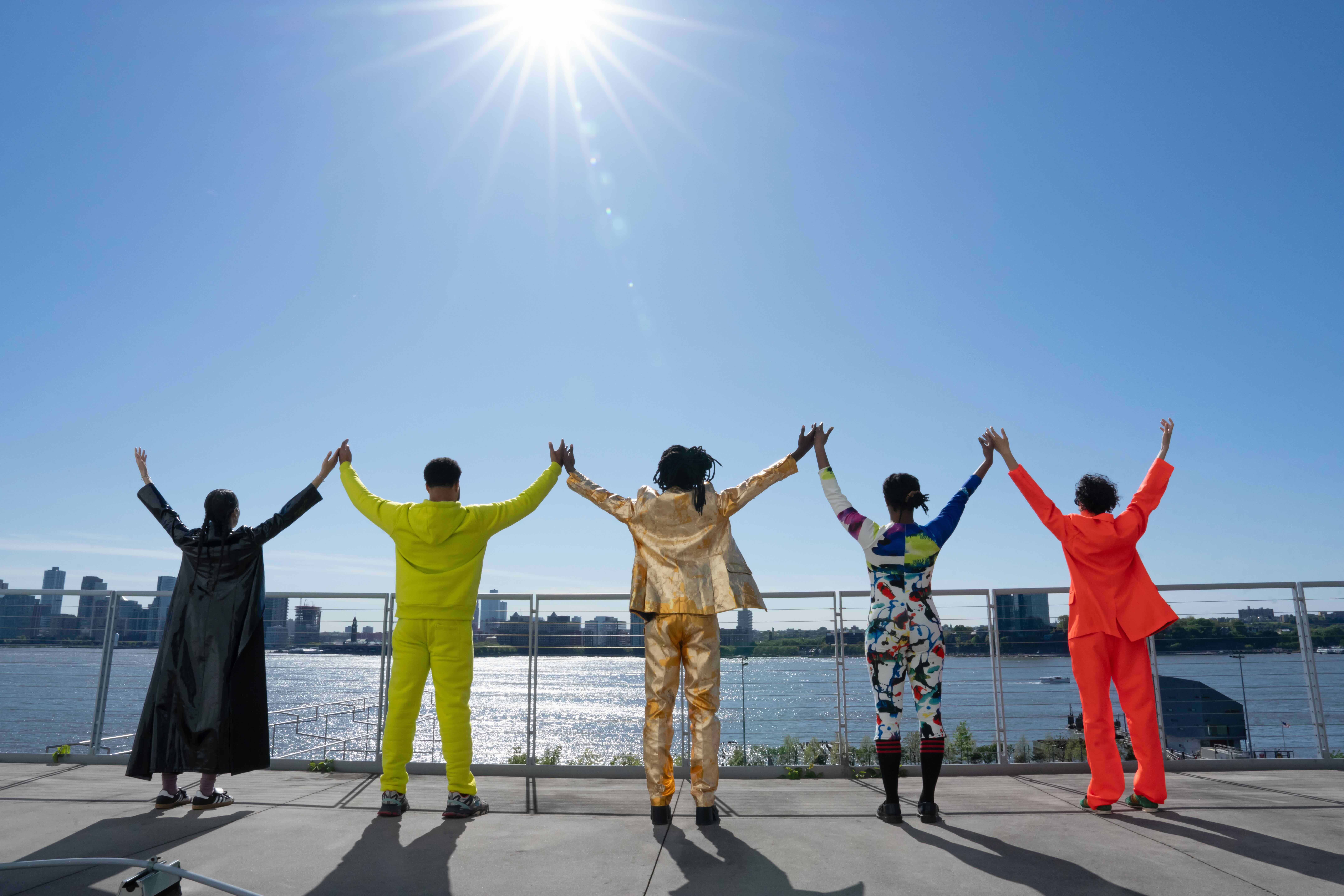
    Artist Jonathan González whose performance piece ‘magic hour — golden time’ is part of the 2026 Whitney BienialRudy Gerson

    Jonathan González

    “magic hour — golden time”

    Like Chao, Jonathan González’s work also sees a two-pronged approach with performance and photography. Three Super 8 photographs, A, B, and C, mark the locations, across the museum, of the three-hour long performance piece presented by González and their co-artists.

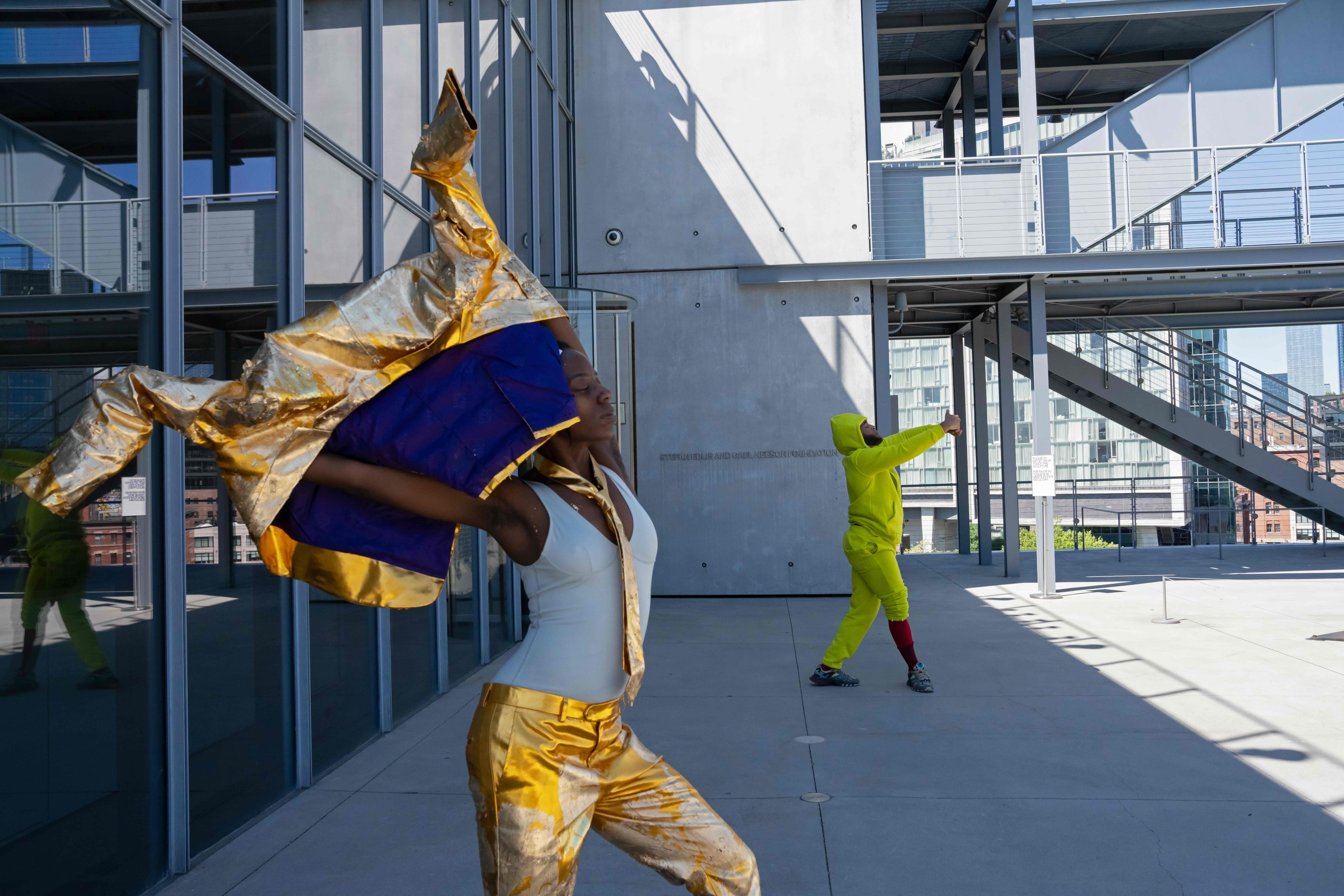
    “Each photograph shares with the performers how to perform the work,” said González, who also lives in West Philadelphia. Magic hour-golden time, they said, “is a double leaning. Magic hour comes from the usage in broadcast television when you have the highest viewership. And golden hour is that moment of the sunset. And so the piece is merging this experience of looking out and also being seen over three hours.”

    Jonathan González, “magic hour–golden time,” 2026. Rehearsal performance, Whitney Museum of American Art, New York, May 12, 2026. Commissioned by the Whitney Museum of American Art.Julieta Cervantes

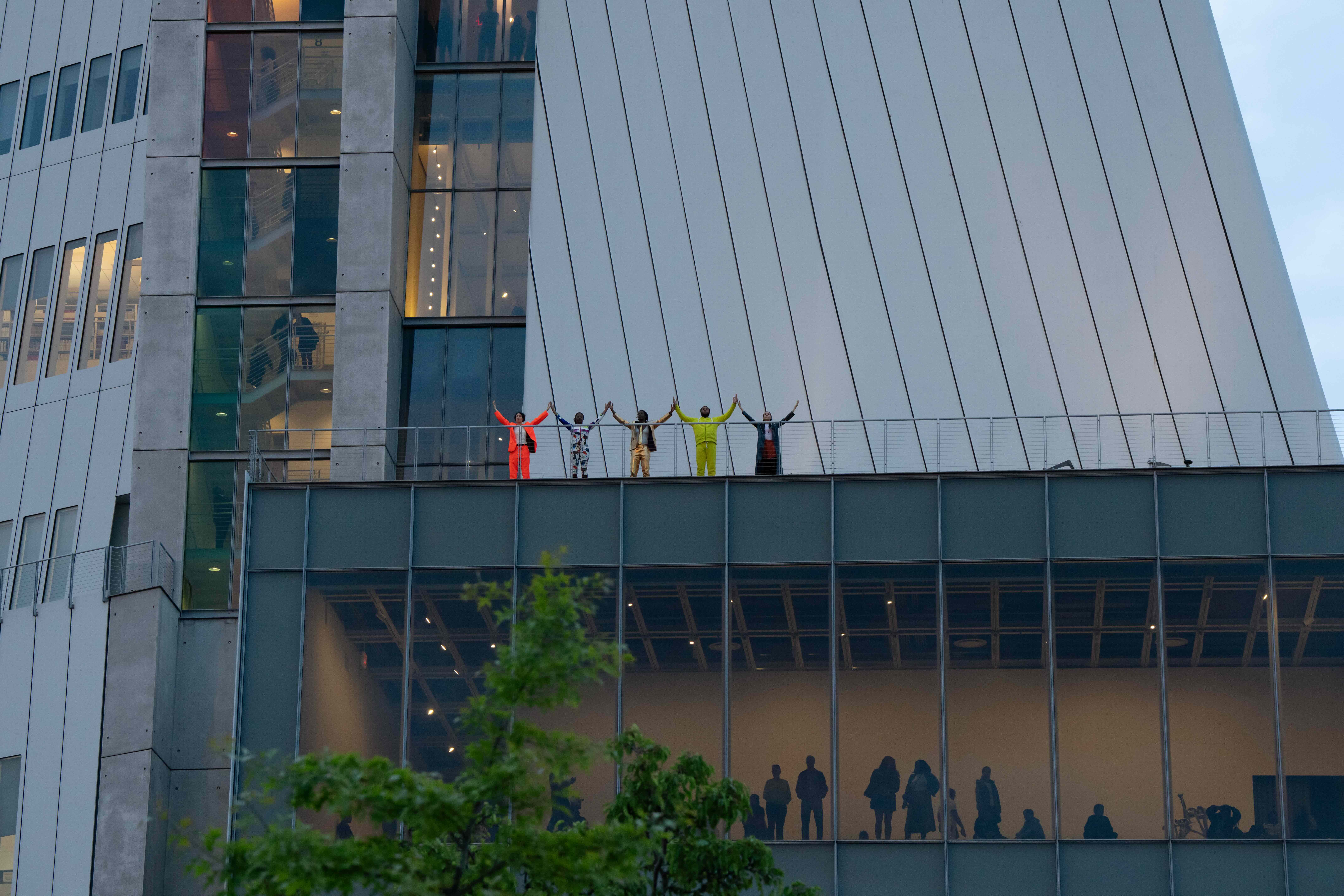
    From three terraces around the museum, the performers follow the sun’s movement for three hours. In the first hour, the performers “embody the architecture that surrounds the museum” and makes up the city’s skyline. The second hour, they said, “is a procedure of call and response … the dancers dance with every dance you’ve ever danced, and take information from one another as dancers, as well as from the pedestrians.”

    The final hour, González said, is performed on an inaccessible terrace. “It can only be viewed from across the street, you cannot see it from the museum. It’s called the ‘Endless Bow,’ and it’s 60 minutes of bowing to the sun and bowing to the world and bowing to the performance.”

    Philadelphia, the former University of the Arts professor said, gives them “the capacity to slow down to hear these voices, and have dreams, visions come to you.” The city allows them the time to spend time in the studio with friends like Chao and inspires them to “collaborating not toward a particular product or aim, but much of the time experimentation.”

    Jonathan González, “magic hour–golden time,” 2026. Performance, Whitney Museum of American Art, New York, May 12, 2026. Commissioned by the Whitney Museum of American Art.Julieta Cervantes

    “Just the fertile nature of Philly as a historical Black geography has been really important for me to really situate the questions of time and what happens to a city at the late stage of industrialization, and to really think critically about what a group can do, what mutuality is,” they said.

    “Certain artists just stay in your mind, and you want to come back and see what they are working on,” said Guerrero recalling her first tryst with González’s work. “The work felt so mature. There’s this notion of how, through improvisation, you can be attuned to your surroundings. In the case of their performance, they make these other effective strategies [for attunement] that don’t always rely on the senses, and that is something that is very present in the show.”


    The Whitney Biennial 2026 is on view through Aug. 23 and on partial view, which will include all of the Philadelphia artists’ static works, through Oct. 12. The Whitney Museum of American Art, 99 Gansevoort St., New York. whitney.org

  • How the Marquis de Lafayette became a surprising selfie favorite with visitors at the French National Archives

    How the Marquis de Lafayette became a surprising selfie favorite with visitors at the French National Archives

    PARIS, FRANCE — On a recent sunny May morning, Parisian middle schoolers had found a curious selfie point. Not a tourist landmark, not a kitschy backdrop, and not a mirror booth.

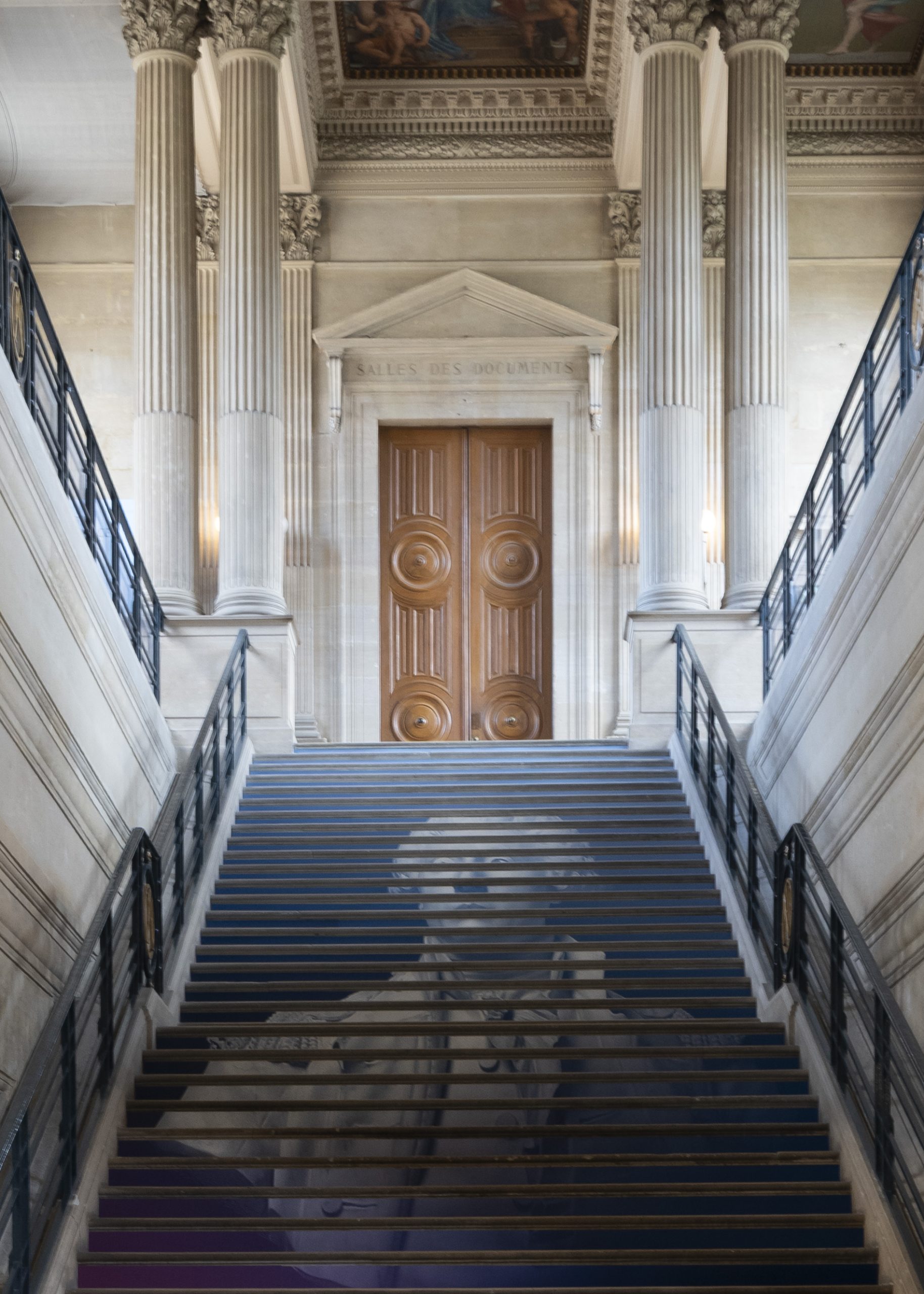
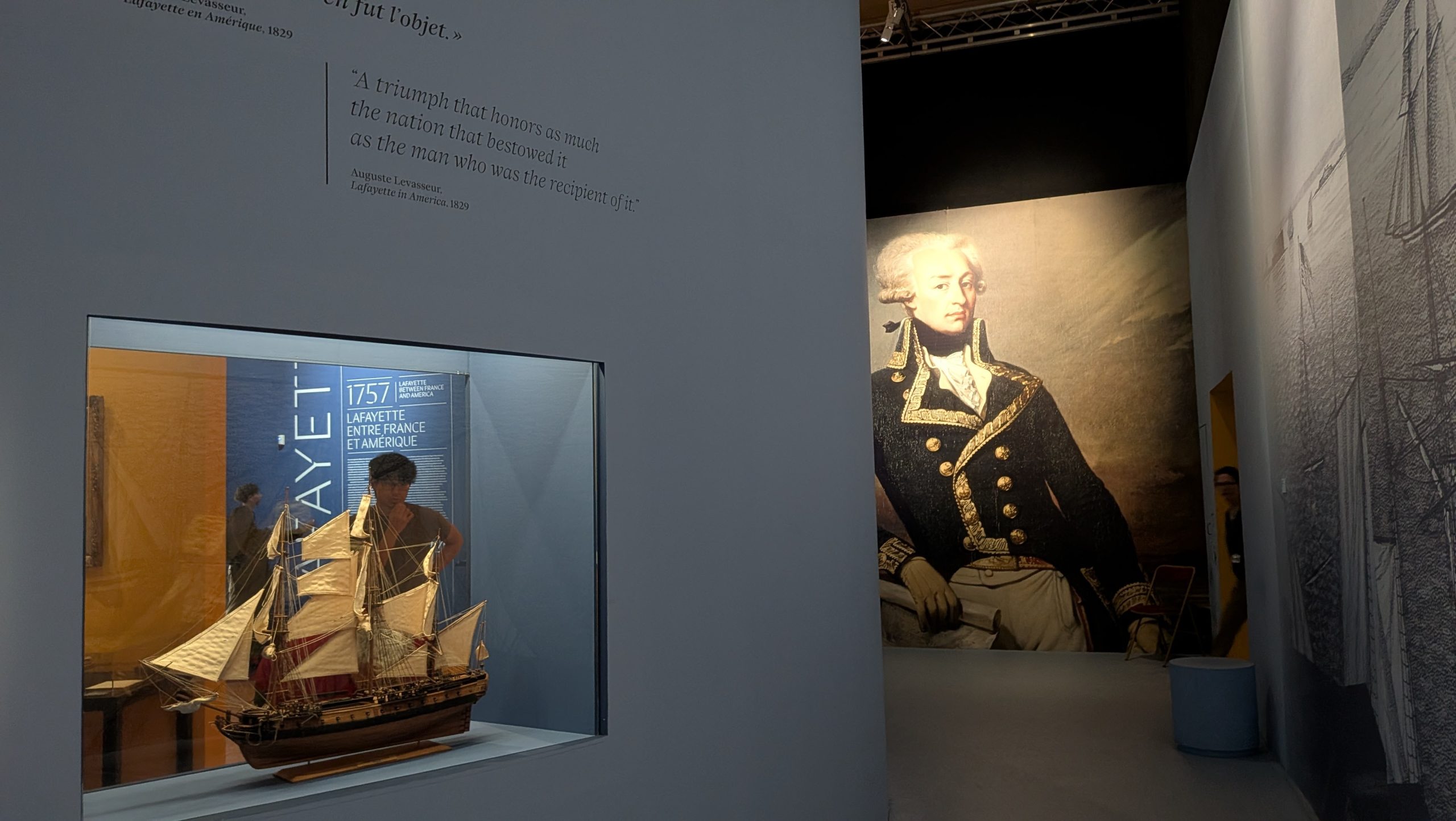
    It was the long rococo staircase of the 14th-century Hôtel de Soubise, which houses the Museum of the National Archives of France, plastered with the face of Marquis de Lafayette, the French military officer who died in 1834.

    “This has become a selfie hot spot somehow,” said Alexandra Hauchecorne, the museum’s technical director of the “Lafayette, between France and America: History and Legend” show.

    The Hôtel de Soubise’s rococo staircase, with likeness of the Marquis de Lafayette, has become a selfie hot spot at the Musée des Archives Nationales in Paris.Carole Bauer, Archives Nationales de France

    Lafayette — both before and after Lin-Manuel Miranda’s Hamilton — is a celebrated hero in America. Textbooks record that he was only 19 when he came to America in 1777 to join the Continental Army under George Washington. He fought for American independence, participated in the Battle of Brandywine and the Siege of Yorktown, faced the harsh winter of Valley Forge, convinced the French King Louis XVI to send more troops, and developed a deep relationship with Washington — so much so that Lafayette named his only son, George Washington.

    And of course, Lafayette has also become the de-facto author of the catchphrase “Immigrants… We get the job done” by way of Daveed Diggs playing him in Miranda’s immensely popular musical, a phrase splashed on countless tote bags and in hashtags.

    In France, however, “Lafayette was not regarded the same way as he is here,” said Olga Anna Duhl, professor of French and comparative literature at Easton, Pa.’s Lafayette College and one of the exhibition’s curators.

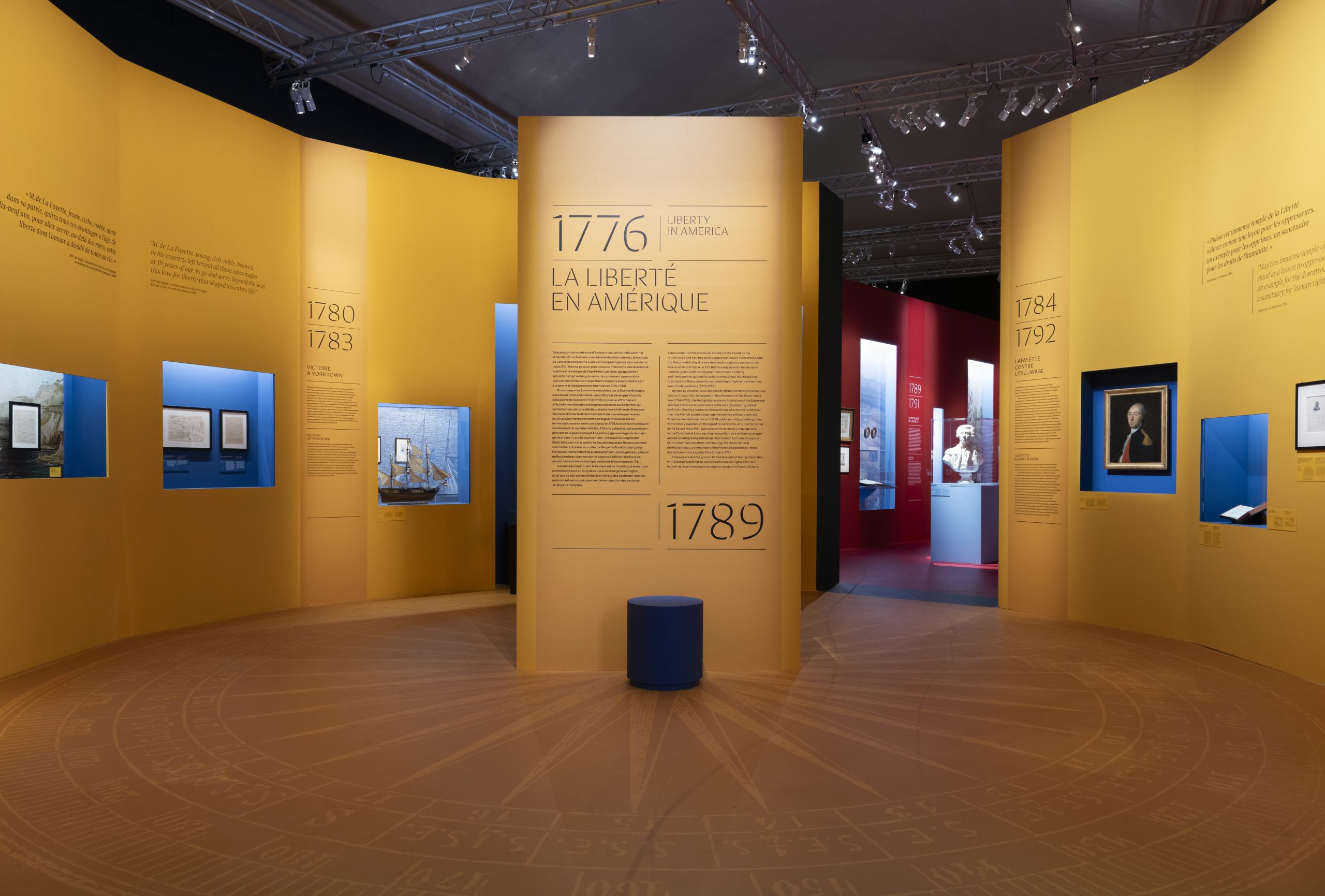
    The yellow room of the ongoing “Lafayette, between France and America: History and Legend” at the Musée des Archives Nationales in Paris. The exhibit focuses on Lafayette’s participation in the American Continental Army.Carole Bauer, Archives Nationales de France

    His involvement in the French Revolution and desire to have France be a constitutional monarchy, as opposed to a republic like America, made him a target of criticism from both the left and right of the French political system. He was perceived as a traitor and eventually forced to flee the country. Lafayette was imprisoned first by the Austrians and then by the Prussians, who (ironically) considered him a rebel.

    With it being the American Semiquincentennial, Duhl “thought that it would be wonderful” to have an exhibition in Paris and “educate the French people, and any person who comes to visit” about Lafayette.

    In France, she said, “you study history, then you go into his life, and especially his American side. But you know very little about his French contribution, which is very paradoxical.”

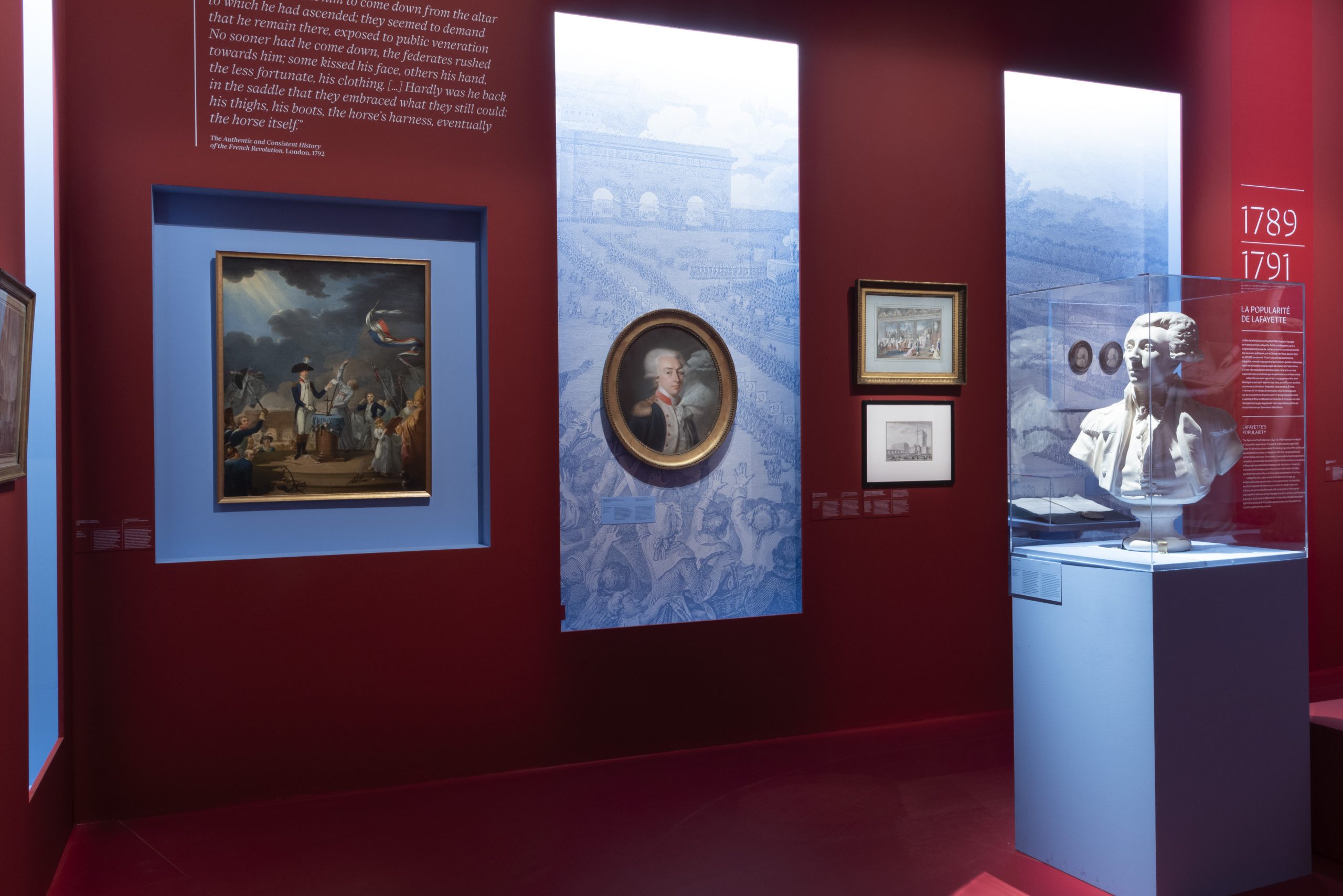
    The red room of the ongoing “Lafayette, between France and America: History and Legend” at Paris’ Musée des Archives Nationales focuses on Lafayette’s participation in the American and French revolutions.Carole Bauer, Archives Nationales de France

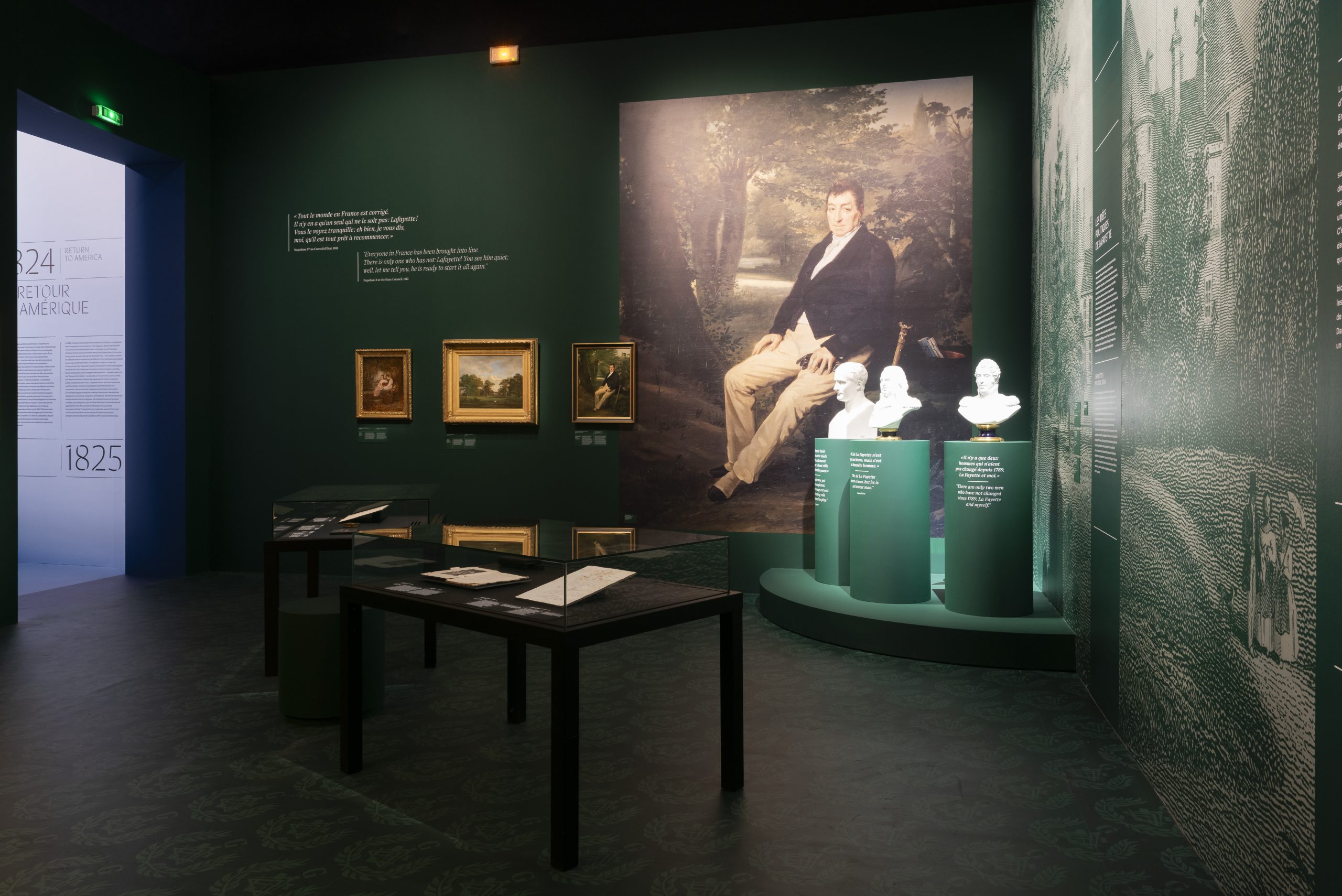
    The exhibition encompasses five rooms color coded to fit the years of Lafayette’s life — yellow, the color of the Continental Army uniform, to tell the story of Lafayette’s years in America; red denoting the American Revolution; green to denote Lafayette’s years in semiretirement in France, gardening and practicing agriculture and often experimenting with seeds from America; a light blue to mark Lafayette’s triumphant return to America in 1824; and a darker blue to denote monarchy and Lafayette’s last years, which he spent backing King Louis Philippe I and supporting other revolutions.

    The red room — the most interesting one — builds up Lafayette as the American hero he became. Among other artifacts, it includes a letter Ben Franklin wrote to him on behalf of the Philadelphia Philanthropic Society in 1788.

    The green room of the ongoing “Lafayette, between France and America: History and Legend” at Paris’ Musée des Archives Nationales focuses on Lafayette’s years of semi-retirement spent gardening in Château de Chavaniac.Carole Bauer, Archives Nationales de France

    “Most of our Legislators have already abolished the Slave Trade,” it reads, “…But from the influence of narrow prejudices and jealousies there is too much reason to apprehend that nothing effectual will be done in this business until France concurs in it, of which we cannot but entertain the most pleasing expectation.”

    Franklin enclosed copies of the U.S. Constitution for Lafayette’s perusal, only six months after Franklin, whose health was failing, had James Wilson read aloud his closing speech at the Constitutional Convention.

    A letter Lafayette wrote to George Washington on March 17, 1790, is on display, too. Along with the letter, Lafayette sent his mentor the key to “that fortress of despotism” that was the Bastille. Thomas Paine, who carried this extraordinary gift, said, “That the principles of America opened the Bastille is not to be doubted, and therefore the Key comes to the right place.”

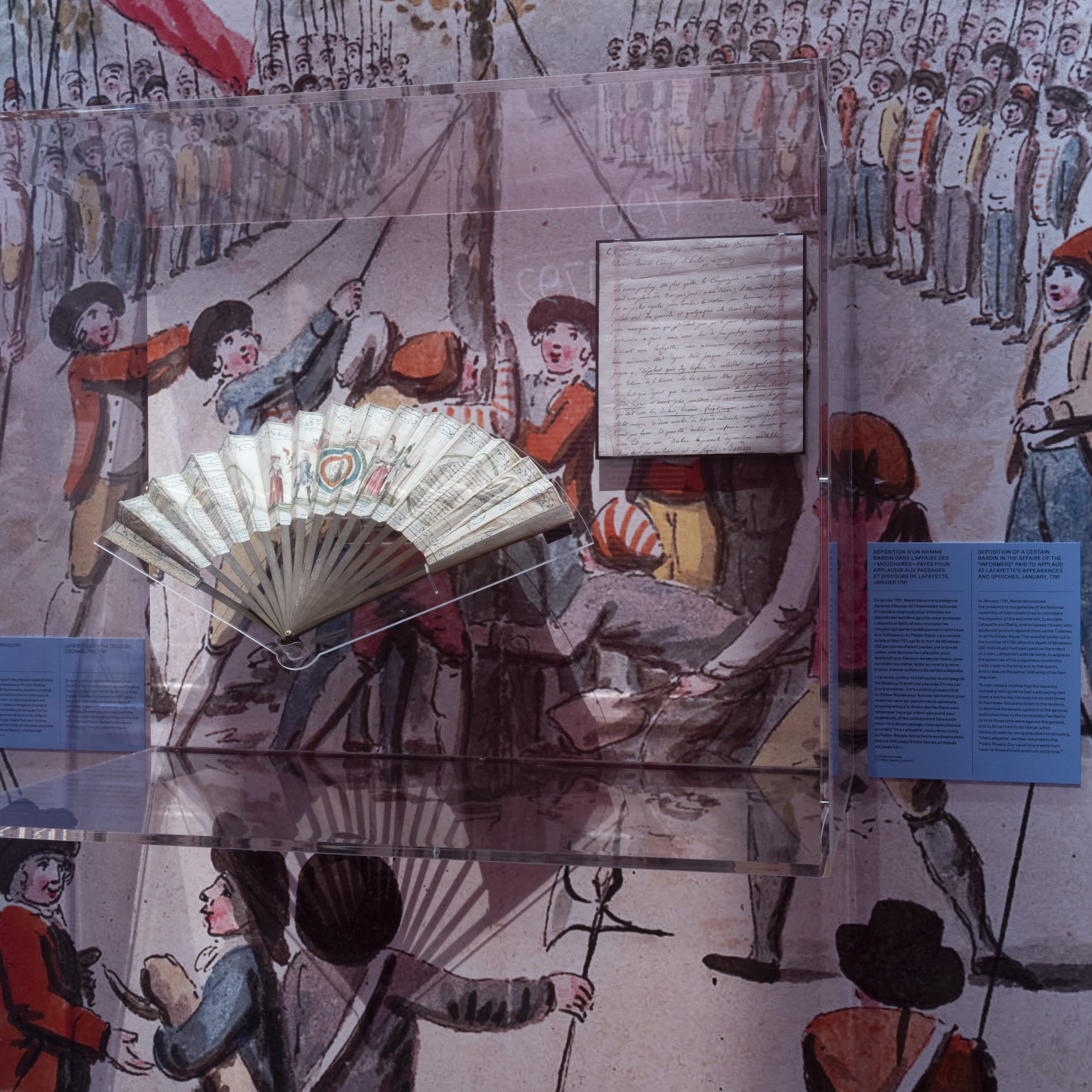
    Paper fans carrying Lafayette’s name were popular among his followers. Lafayette was a canny self-promoter who hired publicists to defend his image.Carole Bauer, Archives Nationales de France

    Also on display are lampoons and letters that speak to the immense distrust both the aristocrats and democrats had of Lafayette.

    “If this is the eldest child of Liberty, he is murdering his mother,” a letter reads. “Lafayette treated as he deserves by democrats and aristocrats,” reads a lampoon showing the French lieutenant général being hung by a noose by two men on his either side.

    Lafayette, on his part, was a canny self-promoter. He hired several publicists to defend his public image and recruited people to clap at his speeches. In what would be classified as merch today, his face adorned fans, buttons, and commemorative plates.

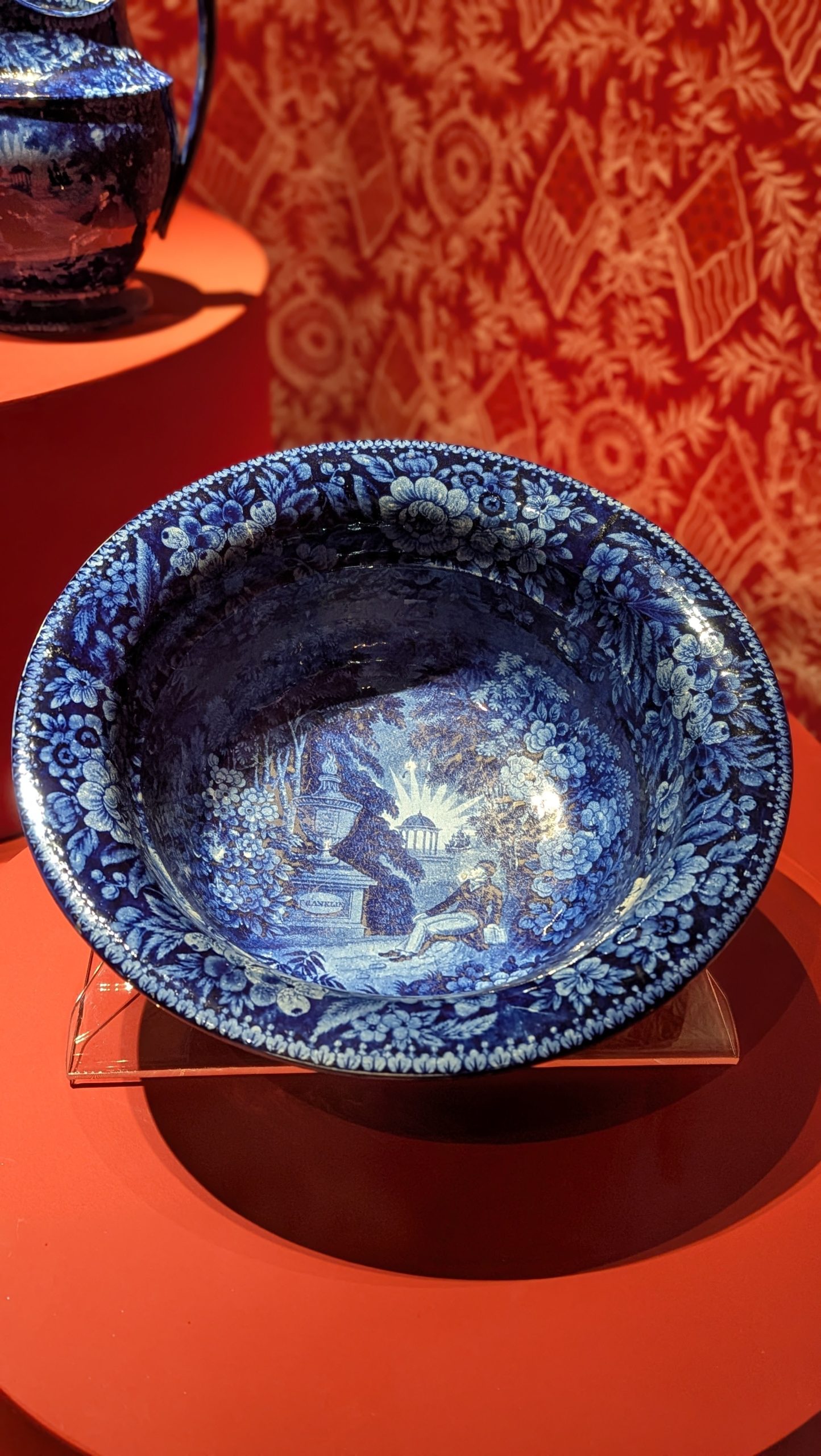
    On display in the light blue room, marking his triumphant return to America in 1824, are several objects — pitchers, tea sets, baby shoes, shoeshine brushes — all emblazoned with his face and name.

    Produced in a factory in Burslem, Staffordshire, a tea service set in blue and white earthenware shows the Marquis de Lafayette sitting by Benjamin Franklin’s grave. This imaginary scene appeared on plates and other items manufactured to commemorate Lafayette’s return to the U.S. in 1824. From the “Lafayette, between France and America: History and Legend” at the Musée des Archives Nationales, Paris.Bedatri D. Choudhury

    As Lafayette’s reputation in France remained checkered at best, many of these branded memorabilia were found in homes in Philadelphia, a prominent stop in Lafayette’s “Farewell Tour” of the Union’s 24 states. An invitation to the Lafayette Ball held in Philadelphia in 1824 hangs on the wall.

    Much of the artifacts come from the collection of Lafayette College, the only college in the U.S. named after him. More streets and public places in the U.S. are named after Lafayette than any other foreigner. In Paris, about six hours away from Chateau Lafayette where he lived, only Rue La Fayette, one of the city’s longest streets, bears his name.

    That and a glitzy shopping mall with 10 floors, best known for its rooftop views of the city.

    “Lafayette is very well known [in France] but not as a historical figure,” said Duhl. “And one of the educational aims of this exhibition is to educate people about this compelling figure … so that the new generation can really develop an idea about who Lafayette really was, because he has disappeared basically from manuals.”

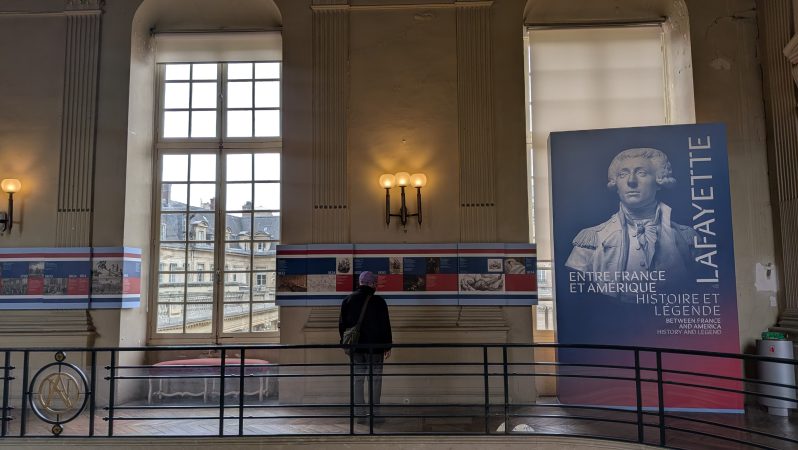
    The “Lafayette, between France and America: History and Legend” exhibit at Paris’ Musée des Archives Nationales seeks to educate French visitors about the historical importance of Marquis de Lafayette.Bedatri D. Choudhury

    On a weekday morning, there was a mix of visitors to the exhibition that, Hauchecorne said, was a rare bilingual event at the Archives. Parisians and school children have been visiting, as have Americans on vacation, to know more about the man who has been shown rapping lines that are becoming of his high self-esteem: “No one has more resilience or matches my practical, tactical brilliance!”

    Even though previous exhibitions have not had much materials translated into English, the Archives, which houses records dating back to the 1st millennium, has had Americans dropping in before.

    Most notably: Tom Cruise performing a motorcycle stunt as Ethan Hunt in Mission: Impossible — Fallout (2018).


    “Lafayette, between France and America: History and Legend” runs through July 14 at Musée des Archives Nationales, 60, rue des Francs-Bourgeois, 75003 Paris. archives-nationales.culture.gouv.fr