Author: Luis F. Carrasco

  • On immigration reform, Republicans and Democrats agree more than they realize

    On immigration reform, Republicans and Democrats agree more than they realize

    As the Trump administration’s misguided immigration enforcement efforts continue apace, ensnaring more and more people in a system that seems to be tuned for minimal accountability and maximum callousness, the hope of immigration reform has never felt more out of reach.

    Yet, if you look at the data, most Americans are united in their desire for change, and Congress — for all its faults and lack of follow-through — reliably puts forward bipartisan proposals.

    That was the message at a recent discussion sponsored by the Garden State Immigration Policy Institute, which offered a glimmer of optimism amid the gloom.

    But first, the challenges.

    Even if Donald Trump were not in the White House, there are real obstacles to overcome, said Jennie Murray, president and CEO of the National Immigration Forum, a nonprofit immigration advocacy group.

    “The reason why we haven’t been able to have bipartisan solutions at a grand scale yet is because I think we’re in a policy, a political, and a cultural disagreement,” she said.

    On policy, finding the solution and building legislation to effect change is not an easy task, especially if, politically, the parties have used the issue to their advantage or to the detriment of their opponents. Culturally, Murray noted, for the last decade or so “we’ve had some really strong conversations about what it means to be American; who gets to come, who doesn’t get to come and join us.”

    I’ll be much less diplomatic and say that the rise of Trump as a political figure, which infamously began with him accusing Mexican immigrants of bringing drugs and crime, has seen the president’s virulently anti-immigrant positions spread to some of his followers, making it hard to even discuss the positive impact of immigration.

    But even under the current climate, polling consistently finds that fair, firm, and compassionate immigration solutions appeal to a majority of Americans, regardless of their political affiliation, Murray said.

    This mirrors recent results by Commonsense American, a nonpartisan group dedicated to practical policy solutions, which found that cross-partisan supermajorities of survey respondents rejected blanket mass deportation and supported many individual immigration reform proposals.

    These include legal status for immigrants who came to the U.S. as children, mandatory employer verification of immigration status, more worker visas, increased border security measures, and a pathway to legal status for long-term undocumented immigrants.

    The group also asked participants to weigh in on how likely it would be for someone from the opposite political party to support a package of proposals that included lasting border security and enforcement, a modernized legal immigration system, and a path for undocumented immigrants to earn legal status.

    “Republicans guessed it would be about 50% of Democrats, but it’s actually 86%,” said Keith Allred, founder and president of Commonsense American. “We similarly asked Democrats to guess what percentage of Republicans would support this proposal, and they guessed 45% when it’s actually 74%.”

    That underlines that Americans are more divided in their perception of each other than in actual fact.

    Another misperception is that Congress has given up on bipartisan immigration reform, said Theresa Cardinal Brown, who spent more than a decade working at the nonprofit Bipartisan Policy Center and is a distinguished immigration scholar at Cornell Law School.

    Looking at the period of 2015 to 2024, across five Congresses, 309 bipartisan bills — defined as those having at least one Democratic and one Republican cosponsor — were introduced. Out of that total, 78% would have eased restrictions on legal immigration.

    “Most bipartisan legislation runs toward legal expansion of legal pathways for immigration into the United States, and it’s worth noting again that workforce is the biggest area of bipartisan agreement,” she said.

    So, if most Americans support immigration reform, and at least some in Congress believe in doing the work of legislating, why has meaningful change eluded the nation?

    Immigration reform is not too big to fail, Cardinal Brown said. In many ways, it’s too big to succeed.

    “Every part of the immigration system has proponents who really care about it, or it’s their one thing, and it has to be exactly right for them to support a bigger package if it’s in it,” she said. “But you can’t really govern if you have an ‘I win, you lose’ mentality. That’s not going to succeed in any way, and we’ve seen it from both parties.”

    The Trump administration’s immigration policies are hurting the country. The full extent of that damage is yet to be seen, but repair efforts will have to go through Congress, and the perfect cannot be the enemy of the good.

    Fortunately, the American people also have thoughts on what legislators should do when they eventually consider reform.

    Democrats were asked by Commonsense American if their representatives should hold out to give more undocumented immigrants status; Republicans were asked if lawmakers should keep pushing for more enforcement and border security.

    In both cases, the answer was clear: Don’t wait, take the deal.

  • ICE cannot survive past the Trump administration

    ICE cannot survive past the Trump administration

    Another day, another video on social media featuring U.S. Immigration and Customs Enforcement agents behaving badly.

    Sometimes they act like bullies, intimidating goons trampling the Constitution. Other times they show they’ve learned nothing from their deadly encounters in Minnesota and Texas, using excessive force and putting people in harm’s way.

    And every time, my blood boils at the rampant thuggery on display.

    I abhor facile slogans, but as more and more incidents pile up, this one’s an easy call: Abolish ICE.

    Smash it up. Close it down. Dismantle it. It shouldn’t be too hard, since it’s already been broken by President Donald Trump and his GOP allies in Congress, who have flooded the agency with billions of dollars and a mission directive that rewards lawlessness and recklessness.

    Under Stephen Miller, the architect of the administration’s anti-immigrant policies, the goal is mass arrests and deportations, no matter the cost. A June 2025 post by the president on Truth Social made it explicit: “ICE Officers are herewith ordered, by notice of this TRUTH, to do all in their power to achieve the very important goal of delivering the single largest Mass Deportation Program in History.”

    This has led to the foreseeable consequences that are playing out on America’s streets and inside immigration detention centers. The stories of abuse are so common, their number so overwhelming, that I don’t see how the agency survives.

    This should not be interpreted as a call for nonexistent borders or unfettered immigration. Having spent much of my life in and around southwest Texas, I count myself among those who have a particular appreciation for the importance of humane, rational, and consistent immigration policies — but, by almost any measure, we’re getting none of the above from ICE as it’s currently formulated.

    And it’s not just me or the usual left-leaning advocates who are questioning the national framework on immigration. Nearly three-quarters of Americans believe immigration is a good thing for our country, and most people prefer widening paths to citizenship rather than increasing enforcement efforts.

    The prospect of doing away with ICE does not garner nearly as much support from undecided midterm voters, with just 21% of them saying in a recent poll that they favored eliminating the agency.

    As I’ve written about how the administration is demonizing immigrants, I’ve heard from conservative readers who say the media is doing the same to ICE, casting it as the worst of the worst and inevitably forcing a critical look at its future.

    To answer the question of what the agency might look like in the years to come — or if it should even continue to exist at all — I reached out to a few people who may know ICE better than nearly anyone else: those who’ve worked inside it.

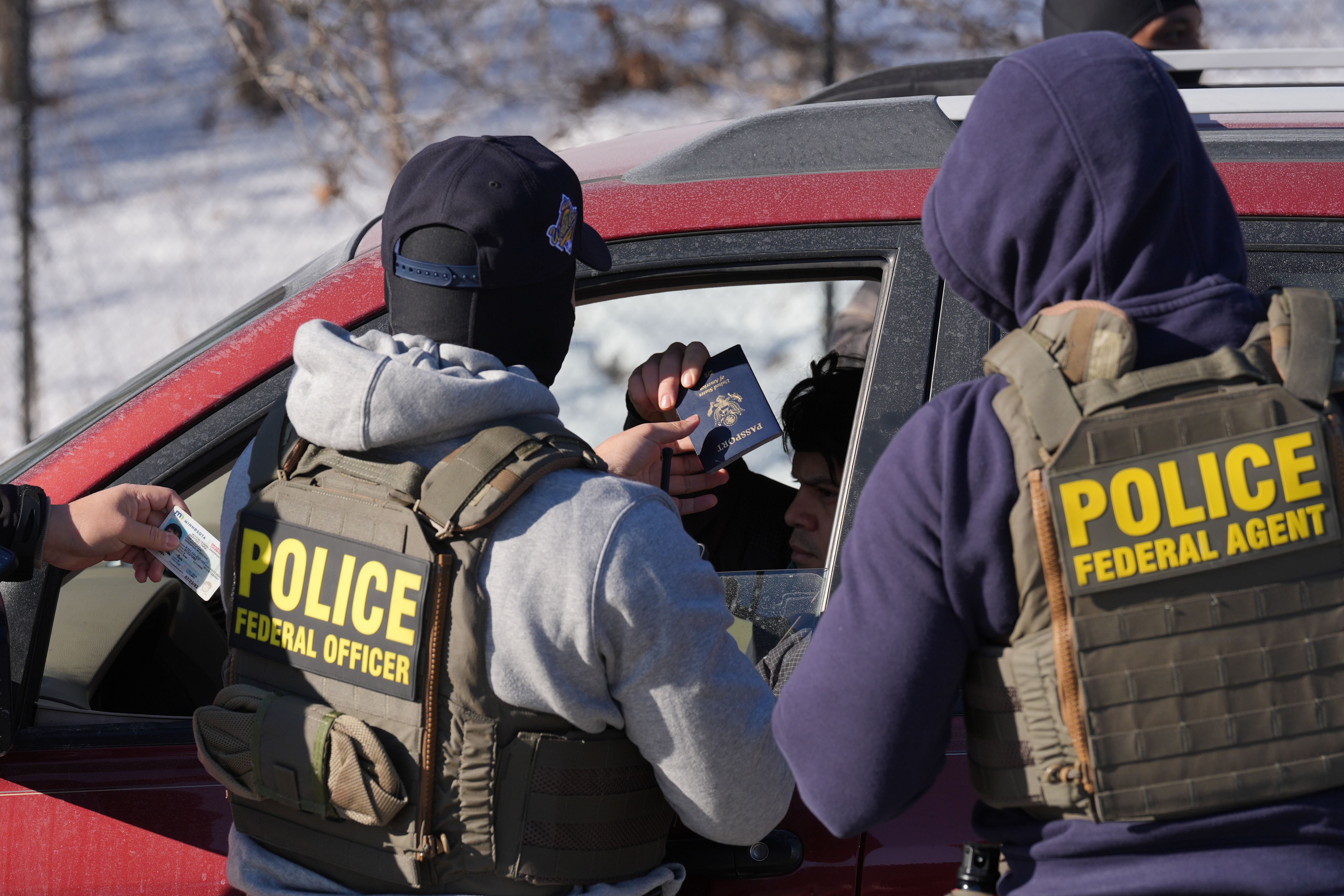
    Federal agents make a traffic stop on a U.S. citizen in Minneapolis in January.Adam Gray

    Changing tactics

    I put the question of ICE’s future and how its agents are regarded to Jason Houser, who spent his government career at the U.S. Department of Homeland Security and is a former ICE chief of staff. The Afghanistan combat veteran told me it starts and ends with leadership.

    “The tactical and operational guidance and directives from the administration are putting ICE officers in a place to be demonized,” he said. “There’s a lot of authority and power in law enforcement, and the way that power is being used by this administration for the first 18 months has been disjointed, punitive, shortsighted, and targeted at the most vulnerable communities.”

    While the behavior of some agents is inexcusable, and they should be held accountable, the agency is ultimately an instrument wielded by those in power.

    For example, some of the same agents who are being maligned today were redeployed to Del Rio, Texas, in 2021 to help humanely and safely process almost 16,000 mostly Haitian immigrants who were living in substandard conditions in a makeshift border camp, Houser noted.

    How ICE is operating today cannot be separated from the administration’s demands.

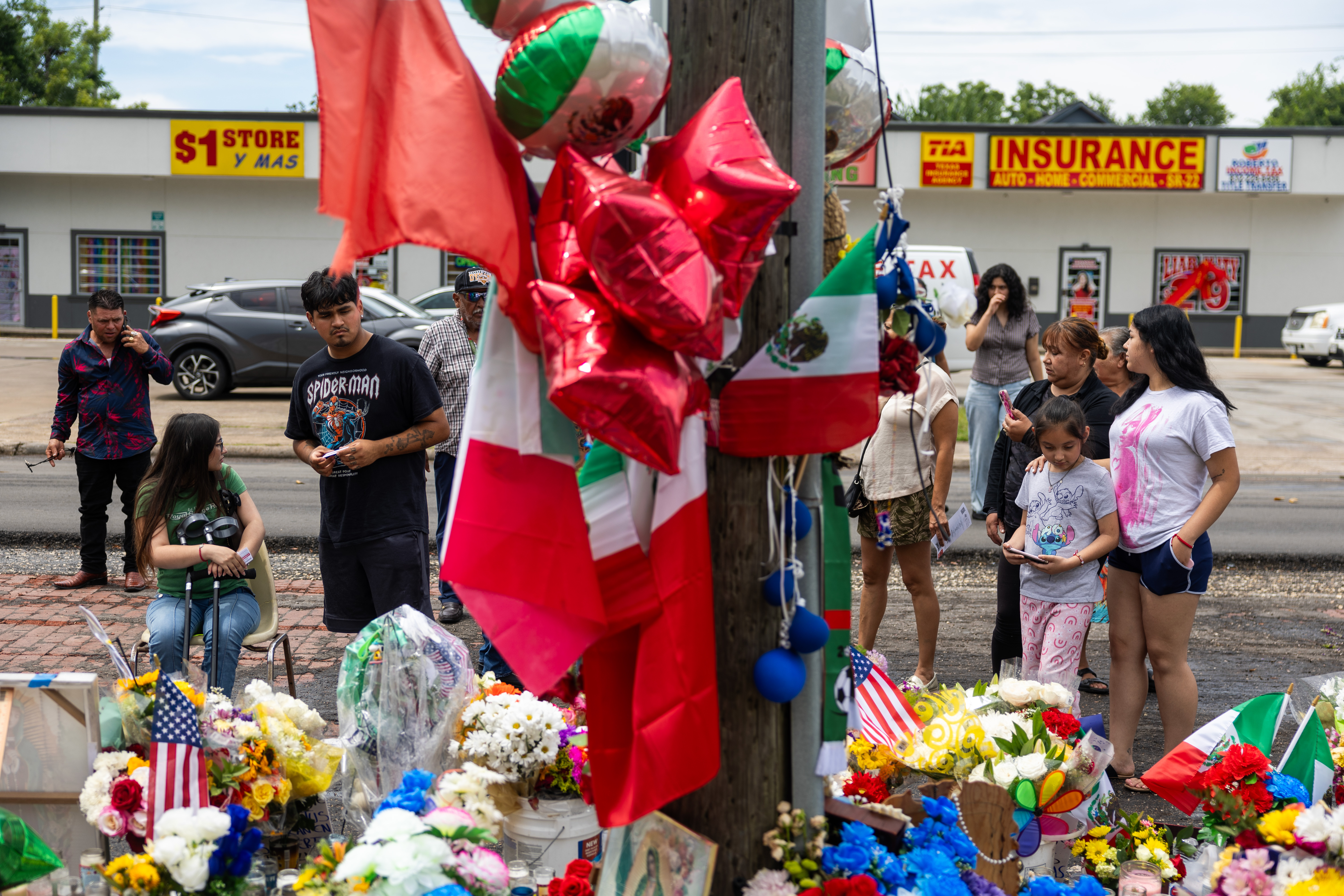
    Some of the worst examples of abuse by ICE agents have come during vehicle stops, including the July killing of Lorenzo Salgado Araujo in Houston. Agents have been captured on video in high-speed pursuits, cutting off cars, and smashing windows.

    Before Trump returned to office, the agency rarely engaged in these kinds of tactics, let alone used them to target noncriminal immigrants, said Joe Sifuentez, who worked for ICE until he retired in 2020.

    “If it’s a bad guy in that vehicle, we have a judicial warrant, we stop them. Then we can break that window and drag that person out of the vehicle,” he said. “But that’s not what’s happening now.”

    While the president campaigned on mass deportations, many voters believed the government would focus on immigrants with serious criminal records. Increasingly, that is not the case, with most people being detained only charged with violating civil immigration laws.

    And in trying to fill a reported White House quota of 2,000 arrests a day, federal agents are engaged in random sweeps and racial profiling that put people at risk.

    “I’m concerned that one of my loved ones could get pulled over tomorrow,” Sifuentez said. “God only knows what can happen.”

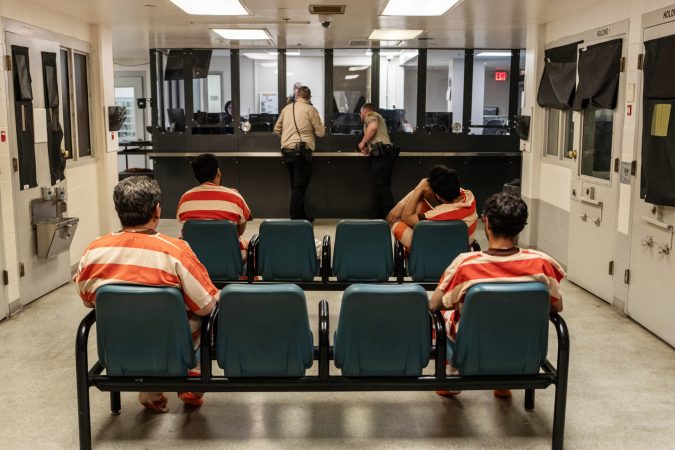
    Detainees stand at windows at the Delaney Hall immigration detention center in Newark, N.J., in May, as demonstrators gather outside.TODD HEISLER

    Bad math

    The Republican-controlled Congress has given the administration more than $150 billion for immigration enforcement. The question is what taxpayers are getting in return. It isn’t increasing public safety, the former officials I spoke with said.

    Houser pointed to a recent report by the DHS Office of Inspector General that found that as ICE shifted priorities toward immigration enforcement, its efforts to combat fentanyl trafficking declined. From fiscal years 2024 to 2025, the report said, fentanyl investigations decreased by 24%, investigative hours spent countering fentanyl decreased by approximately 30%, and fentanyl seizures decreased by almost 40%.

    It’s not just drug trafficking investigations that are falling by the wayside over Trump’s misplaced priorities. ICE agents descending on a Home Depot or a Walmart to fulfill their arrest quotas fail to target the kinds of criminals the agency should be focused on.

    “Real sex predators, convicted rapists, murderers, aren’t just hanging out at a Starbucks on a Tuesday, right? They’re not at the corner, walking their kids to school,” Houser said.

    Mass arrests also put people in detention who do not have a final order of removal. These are immigrants who are going through the system and would generally be allowed to walk free until they had exhausted their legal options. Instead, the administration is deciding to hold them without bond for what can be an indeterminate amount of time.

    Sifuentez, who oversaw ICE’s national fugitive operations program and detention facilities, told me that even under regular circumstances, detention is extremely challenging. As the government works to not only increase the number of such facilities in the country, but also how many people these places hold, the situation is bound to get worse.

    “When I was in Atlanta, I oversaw a facility with 2,000 detainees. That in itself was very difficult to oversee and keep your staffing levels intact,” he said. “What do you think it’s going to be like when you ramp it up to 10,000?”

    Already, there have been more than 50 deaths in detention since the start of Trump’s second term, with the detention fatality rate hitting a two-decade high.

    “You’re going to see more suicides. You’re going to see more people die of health conditions. You’re going to see more both mental and physical stress that leads to horrific outcomes,” Houser added. “It’s just math.”

    Lorenzo Salgado Araujo, a 52-year-old Mexican immigrant, was fatally shot by ICE agents in Houston in July. A makeshift memorial took shape at the site where he was killed.ANTRANIK TAVITIAN

    Abolish ICE

    If ICE is being used to indiscriminately terrorize communities, and ignore constitutional protections while disregarding its public safety charge, what is the point of its continued existence? Even if you see it as a tool, if it can be abused so readily and so thoroughly by an out-of-control executive, wouldn’t the cause of sensible and coherent immigration policy be better served by replacing it?

    Neither of the former officials I spoke with would endorse the call to abolish ICE, and perhaps their experiential knowledge of the agency’s complexity would keep them from ever embracing what can feel more like a facile bit of political sloganeering than anything else. After all, activists have long called to eliminate the agency, rightly underscoring the need for accountability over the lives that have been destroyed by detention and deportation — but they hardly ever offer realistic or politically viable alternatives.

    Indeed, as long as we are a nation of laws, there will be the need for enforcement. In humanitarian terms, whatever agency takes ICE’s place will be judged harshly under those same standards, but exist it must.

    Still, Sifuentez, until recently a lifelong registered Republican, said that at the very least ICE should be renamed and its functions divided among other agencies.

    “Everybody in America should be very concerned about what’s going on,” he said. “This isn’t about politics. This is about what’s right and what’s wrong, and what’s going on is wrong.”

    For his part, Houser stressed that we need migrants in this country, and we need public safety. Immigration enforcement is difficult, nuanced work and should be entrusted to those who have the highest level of training and expertise.

    “No matter what the structure and organization of the bureaucracy is, there’s going to be immigration enforcement, and it needs to be handled with professionalism,” he said. “Remembering that 95% of individuals who are coming to this country want the American way of life, and that’s something to be embraced.”

  • The problem is not that we disagree; it’s how we disagree

    The problem is not that we disagree; it’s how we disagree

    I love hearing from readers. From those who agree and those who disagree. Unless I mess up, I try to respond to everyone who invested their time in what I had to say and then cared enough to write in. The only kind of feedback I abhor is the one that accuses me of bias, because duh.

    Whether you’re reading this in print (bless you) or online (thank you), it should be clear we are in the Opinion section, and bias, in the sense of a bent or an outlook, is how we do. However, I do not consider my side of the story to be the end of it. Regardless of whether someone is moved to drop me a line or not, I am here for the conversation.

    This is what happens in real life, at least ideally. I say something, and you say something back, and if we disagree, we at least respect each other’s right to do so.

    Unfortunately, the hardening of political positions seems to be doing away with even that. I know liberals who feel it’s a waste of time to try and talk to someone who thinks differently on trans rights, for example, just like I know conservatives who believe there’s nothing they care to learn from some socialist “Dumocrat.”

    Perhaps that’s why — even with the decade or two (or three) age gap between the participants and me — there was a feeling of kinship for me at the 2026 BridgeUSA National Summit held recently in Philadelphia. The group, which has 130 chapters on college campuses across the country, wants to ensure we don’t stop talking (and listening) to each other — especially if we disagree.

    And no, this isn’t some equivocating, middle-of-the-road, fine-people-on-both-sides kind of thing, Manu Meel, BridgeUSA cofounder and CEO, said. The organization’s goal isn’t to find common ground or change the way people think, but to urge and teach students to use their strong opinions to engage respectfully and constructively with those who have different beliefs.

    To hear the 27-year-old Meel tell it, Americans have always had differing opinions, and that disagreement is the engine of democracy. What our young nation would look like, in fact, was forged in disagreement. The problem today isn’t that there are disparate points of view, he said.

    “The real divide is between the open-minded MAGA people, the open-minded liberals, the curious conservatives, and the close-minded ideologues,” Meel noted. “The real divide is between the builders and the breakers.”

    Manu Meel, cofounder and CEO of BridgeUSA, speaks during his keynote speech at the group’s annual summit in Philadelphia on Aug. 8.Courtesy Clay Goswick/BridgeUSA

    The breakers in this case are the extremists on both sides of the political spectrum, those who make up for what they lack in numbers with the volume of their voices and rigidity of their views. The ones who stoke the outrage machine and scare the majority into silence.

    Sahar Toshtzar, a 21-year-old political science student at Drexel, told me she feels that fear often keeps people from engaging.

    “Sometimes it can be a little bit isolating having a mission of wanting to bridge the political divide,” she said. “Nobody really wants to talk about politics; nobody feels safe enough to talk.”

    For Toshtzar, her first BridgeUSA events on campus about a year ago proved revelatory.

    “I went to the discussions that we had, and it was, ‘Wow, people are talking like normal,’” she said. “I’m laughing with a conservative and relating to something completely outside of politics with them.”

    The experience didn’t alter her beliefs, but it changed her opinion about those she disagreed with politically, she said, and she hoped that perhaps they shifted their opinion, as well.

    I think that’s the biggest lesson to learn from engaging with people we disagree with. Our differences aren’t the issue. Deciding we can’t talk about them is — and that decision is just a choice we dress up as a fact. If we can start to acknowledge that, it will become much harder for those who fearmonger and demonize to control the public discourse, to degrade our politics until it is all a zero-sum game meant to humiliate the losing side.

    Of course, there are a few people who you absolutely cannot reach, and some you may not even want to be in the same room with, but, again, they are in the minority. Speaking from experience, even someone who may seem initially hostile can turn out to be willing to engage in conversation. So, to paraphrase Hillary Clinton, don’t put all your deplorables in one basket.

    Better still, we can learn from young people like Meel and Toshtzar.

    “At the end of the day, it’s a basic social skill to be able to sit down and talk to somebody. To stay calm, hear them out, and have them hear you out. Maybe even change your opinion on something,” Toshtzar said. “If you can’t do that, the basics of politics don’t exist.”

    We could certainly do far worse than sticking to the basics.

  • No, immigrants aren’t making America more dangerous. But the truth is messier than that.

    No, immigrants aren’t making America more dangerous. But the truth is messier than that.

    I like to consider myself a reasonable person open to all reasonable points of view. Politically, my favorite people are those who will fight for what they think is right but can understand and respect those they disagree with because they’re standing up for their own beliefs.

    Of course, beliefs can be mistaken.

    Take my belief that the rules were being followed regarding people presenting themselves at the southern border during the Biden administration. My left-leaning bias led me to assume that officials were following the law for those seeking asylum to be allowed into the country while their case was being processed.

    Doing some reporting last year, it turns out the administration was — at least during the early days — processing people regardless of any legal claims, under the assumption they would be seeking asylum.

    As a reasonable person, my objection to this is twofold. One, you may be acting humanely in allowing someone who risked their life to come to the U.S. to enter the country, but you are not following the law. Two, you are giving all these immigrants false hope they can stay, when asylum, even under the best of times, is not widely granted — especially if an immigrant has no legal representation.

    What happened under Biden wasn’t illegal, per se; the White House has huge discretion regarding immigration policy. But much like what President Donald Trump is doing on immigration today, it’s just not right.

    I was thinking of how things are never black and white when reader Mark Fenstermaker asked that I write about “the growing number of U.S. citizens who have been killed by illegal immigrants” along with U.S. Immigration and Customs Enforcement efforts to “remove thousands of known criminals who had the potential to add to that number.”

    Data wise it’s difficult to offer a conclusive answer to that specific allegation, since law enforcement agencies rarely collect immigration or citizenship status (for victims or offenders). Fortunately, the great state of Texas once again comes through.

    Analyses of Texas data, which include immigration status, find that the crime rate of undocumented immigrants in general is lower than that of the U.S.-born population, which is generally understood to be the case.

    Regarding homicide, from 2013 to 2022 the conviction rate in Texas for illegal immigrants was 2.2 per 100,000 people, compared with 3.0 per 100,000 for native-born Americans, according to the libertarian Cato Institute. There are a couple of caveats that may push the conviction rate for illegal immigrants higher, but regardless, the rate is hardly zero.

    Some immigrants in the country illegally kill, that is a fact. Another fact is that in the U.S., random killings are statistically rare. Yet the right-wing fearmongers will not tell you that broadly speaking, you are more likely to be hit by lightning than you are to be killed by a stranger, let alone a stranger who’s in the country illegally.

    Even then, whether that immigrant came here under Biden or under Trump, the ultimate responsibility falls on the person who committed the crime.

    Now, the impression that there is a “growing number” of people killed by immigrants is not helped by the Trump administration’s propaganda efforts. I do not begrudge the Department of Homeland Security regularly trumpeting that ICE has detained some of the “worst of the worst” — as immigration enforcement should. But claiming that crime rates have “plummeted” under Trump’s leadership because they’ve removed “criminal illegal aliens” is overblown to say the least.

    Crime rates spiked during the pandemic, at a time when Trump closed the border to asylum seekers using the threat of COVID-19 as an excuse. The number of violent crimes committed has been steadily dropping since 2023. Using the administration’s logic, if anything, those six million or so immigrants who Biden let in are making America safer.

    None of what I’m saying should be understood as minimizing the death of anyone at the hands of an immigrant who’s in the country illegally. As I’ve said before, there is no comfort for a victim’s loved ones to hear that immigrants commit fewer crimes than the U.S.-born. It would be ridiculous and heartless to answer someone’s pain with such a meaningless fact.

    The best we can do is to demand that our media and our leaders do better. That they tell the real story and not whatever fits into their ideological narrative.

    To the concerns of my conservative readers like Mr. Fenstermaker, there is often a knee-jerk reaction from many in the mainstream media to downplay crime by undocumented immigrants. Even when telling stories related to immigration, there is a penchant to focus on the unimpeachable “perfect immigrant” when the truth is that people are complicated and reality is messy. But there is also an undeniable push on the right to demonize and scare that should be unacceptable.

    What’s much worse is that this is how too many of our leaders operate. You have Democrats who will romanticize immigrants and their experience to the point that people become a symbol and bad policy decisions are made. Then you have Republicans under Trump who push hate and division, and whose policies lead to suffering and harm.

    I will choose the Democrats’ mistakes on this over the Trump administration’s anti-immigrant rampage any day of the week, but one cannot exist without the other. If we keep casting things in black and white, we will never be able to reasonably move forward.

  • How the White House turned a Pennsylvania trooper’s death into an immigration scare story

    How the White House turned a Pennsylvania trooper’s death into an immigration scare story

    Pennsylvania State Trooper Michael E. Pahira Jr., 44, would still be alive if Michael Bon had not come here from Haiti. That is what the Trump administration wants people to focus on.

    It was devastating enough that the veteran of nearly two decades with the state police was fatally struck on July 1 by a tractor-trailer the authorities say was driven by Bon.

    But the administration, which since last year has consistently targeted immigrants with both bullets and blame, didn’t stop there.

    Playing out the string on the White House’s misguided way of thinking would lead us to believe that this calamity would not have occurred if the law didn’t allow Bon to work while his immigration application made its way through the system.

    Or if the Massachusetts Registry of Motor Vehicles had taken away Bon’s commercial driver’s license once his application for Temporary Protected Status was denied.

    Or if the situation in Haiti, one of the poorest nations in the world thanks to colonialism and rampant exploitation by Spain, France, and the U.S., had not forced Bon and his family to look for a better life elsewhere.

    Or if Christopher Columbus hadn’t stumbled upon what he dubbed “The Spanish Island” back in 1492 in the first place.

    If you want, you can even throw in the logistics industry, or our consumer culture that sees commercial trucks travel roughly more than 300 billion miles every year, resulting in 5,832 fatal crashes in 2022, according to the latest numbers from the U.S. Department of Transportation.

    The question becomes: At which point in this list do we stop when assigning blame?

    For the U.S. Department of Homeland Security, you send out a news release that stops at, “This illegal alien was granted a commercial driver’s license by the sanctuary state of Massachusetts.”

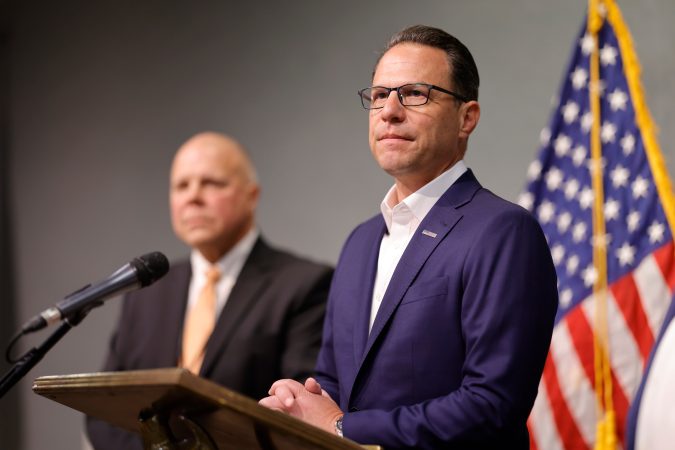
    This thought exercise is hardly meant to diminish the passing of Pahira, who was, by all accounts, as Gov. Josh Shapiro noted, “one of our very finest.”

    On the contrary: Pahira’s life and work would seem to deserve a richer memorial than being turned into one more talking point on the political right for how immigrants are dangerous. How the stand-up guy who had, as Fox News accurately described, “moved home to care for mom with cancer” must also play political pawn to the first half of that headline: “Illegal immigrant truck driver charged in death of trooper.”

    No one disputes that Bon, 33, was in the country without authorization at the time of the incident, but that fact has nothing to do with the crash that killed Pahira.

    Bon had applied for immigration relief and was denied, so by the time he applied for renewal of his Massachusetts commercial driver’s license, the Systematic Alien Verification for Entitlements, or SAVE, system should have flagged him as ineligible — but it didn’t, according to officials with the Massachusetts Department of Transportation. (That this same federal database is the one the Trump administration wants to use to check if people can vote is another problem for another time.)

    Do immigrants commit crime? Of course, they are human beings who can make bad decisions. That they are less likely to do so than the U.S.-born is statistically proven.

    It’s also cold comfort to victims when it does happen. However, our lives often progress in unpredictable — and, yes, painful — ways.

    Whether you believe in a higher power or an indifferent universe, fate or random chance, Bon and Pahira fatally crossed paths along a stretch of Interstate 81 in Schuylkill County regardless of immigration status.

    There is nothing wrong with calling for tighter commercial driver’s license laws — as a bipartisan group of Pennsylvania legislators in the U.S. House did last week — or implementing additional safety measures for those driving a fully loaded 40-ton vehicle. It is even fair to ask for restrictions on people who may only be in the country temporarily.

    But fearmongering and casting all immigrants as threats is reckless.

    Bon is being held on a $700,000 bond. Among other charges, he is accused of homicide by vehicle. He will be held accountable, evidence will be presented, and hopefully justice will be served. Whatever consequences come his way, he will face them as an individual.

    Using Pahira’s death to further demonize immigrants debases a brave trooper’s memory — and is an insult to everyone else’s intelligence.

  • Getting ‘legal status’ in America is harder than most people think. Lorenzo Salgado Araujo was killed by ICE before he could.

    Getting ‘legal status’ in America is harder than most people think. Lorenzo Salgado Araujo was killed by ICE before he could.

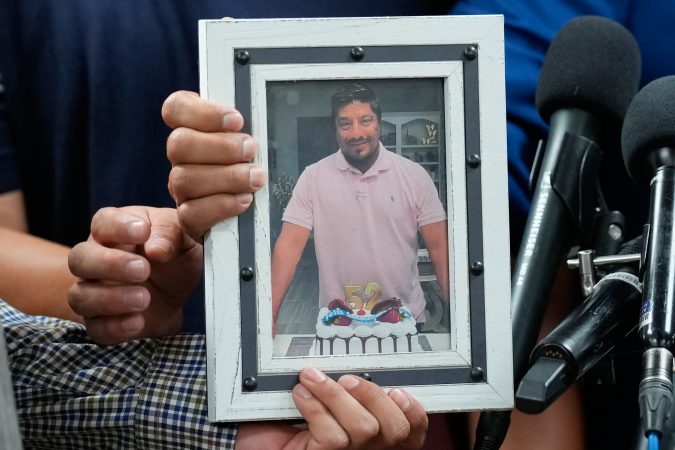
    Lorenzo Salgado Araujo was killed by U.S. Immigration and Customs Enforcement agents Tuesday in Houston. He arrived in the U.S. from Mexico 35 years ago, built a construction business, and became one of five people killed by federal agents carrying out President Donald Trump’s plan of mass deportation.

    As I read and listened to commentary from sources outraged by the killing, I kept bumping into their description of Salgado Araujo. Not that he was a hardworking father and loving husband who had sent his three U.S. citizen children to college, but that he was “on his way to obtaining legal status,” or was “applying for proper authorization.”

    I know enough about immigration law to ask: What did that even mean? How could a man who had been in the U.S. for more than three decades as an undocumented immigrant be working to adjust his legal status?

    During a news conference Wednesday, Ronaldo Salgado spoke eloquently about his father, heartbroken that the man who “wanted nothing else in life but to provide for his wife and see his sons become great people” did not deserve to be reduced to a headline. But Salgado also said this:

    “After nearly 35 years of working to give us the American dream, he made the choice to begin the process of obtaining his American dream through a work permit. We dotted every ‘i,’ crossed every ‘t,’ filled every document, attended every appointment. He was close to obtaining his legal status.”

    You may think this matters little. Salgado Araujo is dead, killed by a government that, in its misguided zeal for immigration enforcement, has already taken the lives of three U.S. citizens — Ruben Ray Martinez, Renee Nicole Good, and Alex Pretti — so clearly, legal status is meaningless.

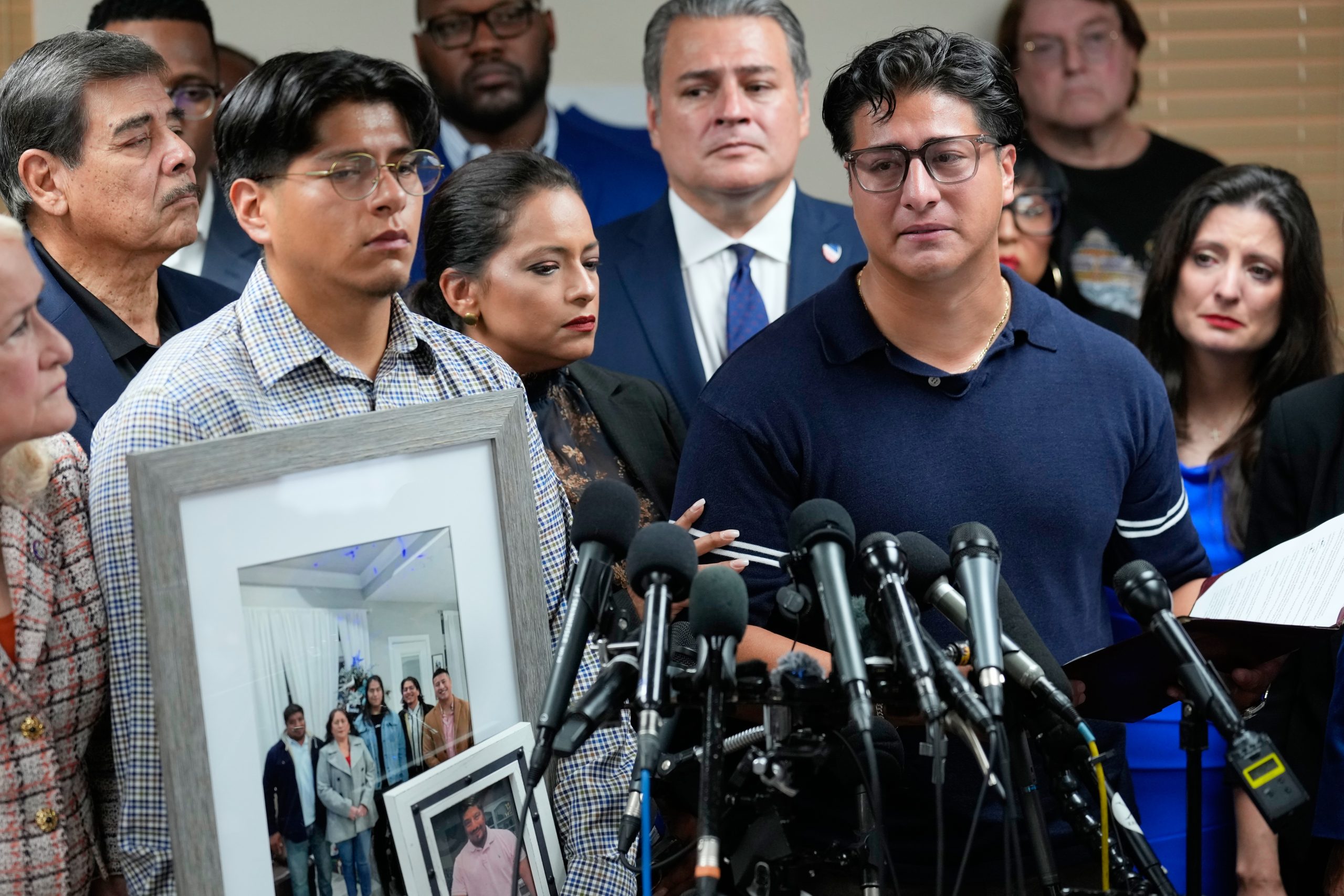
    Ronaldo Salgado (right), son of Lorenzo Salgado Araujo, speaks as his brother, Lorenzo Jr., holds family photographs during a news conference Wednesday in Houston.David J. Phillip

    Yet, in the fight to rein in the government’s abuse of power and fix America’s broken immigration system, public opinion is important. Confusion around immigration is already rampant; muddling the debate further only makes things harder.

    Even a cursory look at the social media chatter around what happened in Houston finds people debating with incomplete or just plain wrong information. There are comments about how Salgado Araujo should have come here “the right way,” or how he should have tried to “become legal” sooner, or even how, until an immigrant is a citizen, they’re “considered illegal.”

    Of course, there are people who will reflexively blame the Trump administration for everything, just as there are those who will unquestionably toe the MAGA line. But too many Americans are simply uninformed about how the system works, and may be skeptical of the media painting the portrait of another saintly immigrant dying at the hands of ICE.

    These people may reasonably ask: If Salgado Araujo was close to obtaining legal status, why hadn’t he done so before? The answer is that he most likely couldn’t.

    For someone like Salgado Araujo, with blue-collar roots in Mexico and no connection to the United States other than the drive to look for the American dream, it is virtually impossible to come here permanently.

    Follow me into the weeds a bit.

    Yes, the U.S. has a Diversity Visa program, in which a potential immigrant could apply and, through a lottery system, be given permanent legal residence, but Mexico does not qualify since the program is designed for countries with low rates of migration to the U.S.

    If Salgado Araujo had an immediate family member (spouse or parent) who was either a legal permanent resident or a U.S. citizen, they could petition for him to immigrate. If he had a sibling, they could also petition for him to come, but there is a wait time of at least 10 years because of annual visa caps. Perhaps when people refer to immigrants getting “in line,” they mean that decade-plus-long queue.

    Regardless, once Salgado Araujo was in the U.S., that “line” disappeared completely.

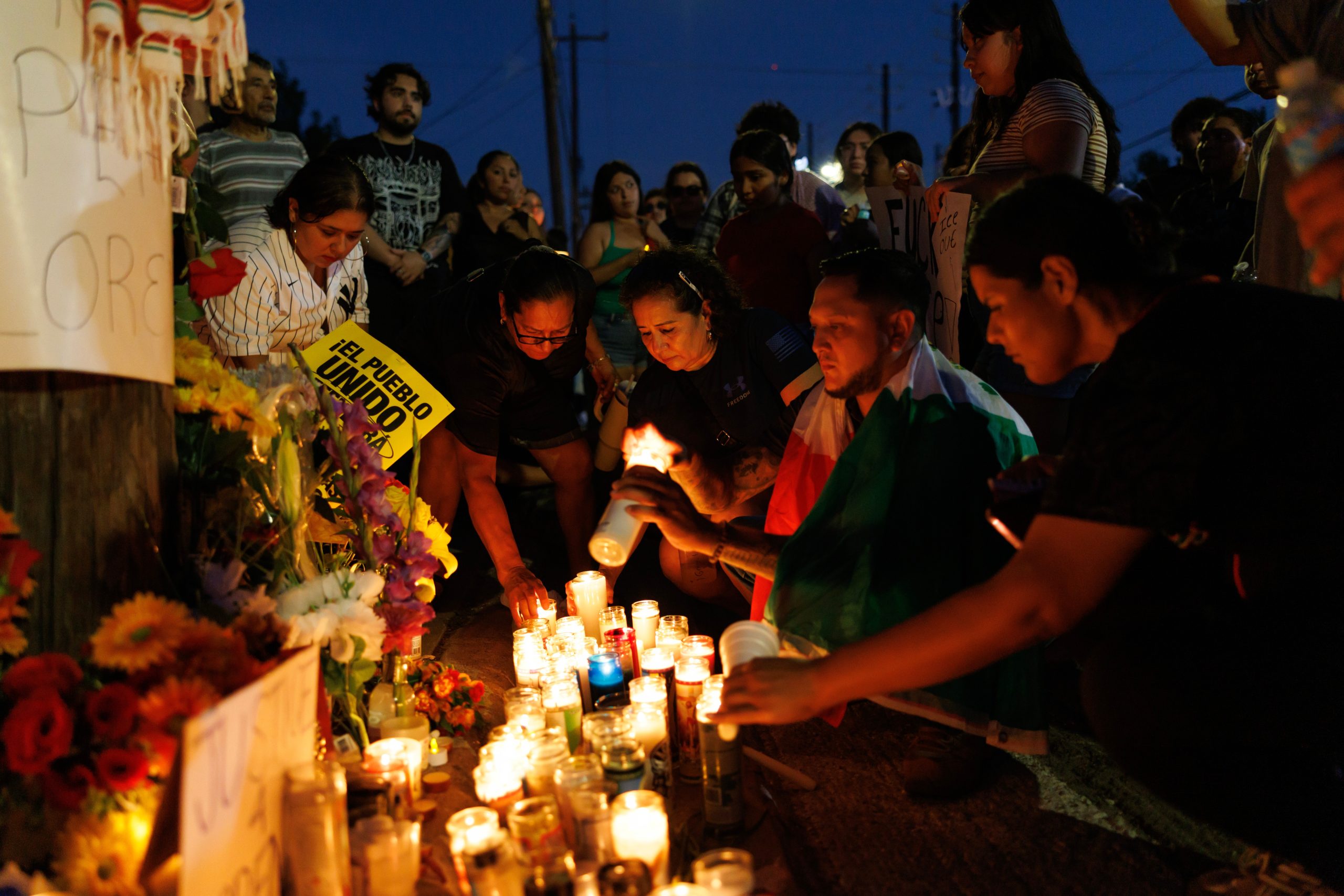
    Attendees light candles during a vigil for Lorenzo Salgado Araujo, a Mexican national fatally shot by a federal immigration agent in Houston.Mark Felix

    Let’s say Salgado Araujo had married a U.S. citizen. Since he entered illegally, he could not adjust his status inside the country. He would have to leave the U.S. and effectively risk being banned from reentry for up to 10 years. You can petition for what’s known as a hardship waiver, but they are difficult to obtain.

    He could have also waited for one of his children to reach adulthood and petition for him to immigrate, but the potential to be barred for a decade remains.

    Salgado Araujo’s son said his father was going to obtain a work permit, which is far from legal status. I spoke with immigration law experts who said one possibility could be to apply for asylum, which would grant a work permit while the case is adjudicated, or there are work permits available for someone who receives humanitarian parole.

    To be clear, I do not know what happened in Salgado Araujo’s case. I was unable to reach the family before this column went to press. But it’s clear they were going through a fraught immigration process — one that, given the existing state of the law, would likely have been unsuccessful.

    That is why it’s important that people understand the immigration system better.

    People like Salgado Araujo — who have built their lives here and just want to go about their business and contribute to their communities — are exactly the kind of immigrants most Americans want to allow to stay.

    It was the government under Trump that killed Salgado Araujo. But it’s America’s immigration system that made sure he never had a chance.

  • DACA and TPS recipients pump billions into the U.S. economy. Trump wants them gone anyway.

    DACA and TPS recipients pump billions into the U.S. economy. Trump wants them gone anyway.

    Immigration is complicated. That makes polling on the topic difficult, as the same Americans who will tell you they support mass deportation one day will turn around and say they back a path to citizenship the next. So, which is it? Well, it depends.

    As crowded scenes of immigrants clustering at the southern border were endlessly repeated on TV, many Americans felt the Biden administration was not taking national security seriously and had flung open the golden door to anyone with a pulse and a sob story.

    Then, as U.S. Immigration and Customs Enforcement agents descended on Minneapolis, masked, heavily armed, and dangerously encouraged to ignore people’s constitutional rights — ultimately killing two U.S. citizens because they dared to question authority — even many Donald Trump supporters rose up to say this is not what they voted for.

    Unsurprisingly, most Americans fall somewhere in the middle — where balancing immigration control with humanitarian values looks at what makes the most sense for the country and for the people who are looking for a better life here.

    But that’s illegal immigration. On legal immigration, most Americans are all in, with only one in five opposing it. Why, then, is the Trump administration hell-bent on making life miserable for legal immigrants?

    Earlier this month, a court ruled against an administration decision that froze processing of immigration benefits like work permits and green-card applications for nationals of 39 countries targeted by a travel ban. These are people already in the United States legally who found themselves in limbo for months — many losing their jobs and risking deportation — after U.S. Citizenship and Immigration Services determined in January it would keep the $1 billion in fees these immigrants paid and give them nothing in return.

    Meanwhile, renewals under the Deferred Action for Childhood Arrivals (DACA) program for immigrants brought here as children have been hit with delays, and approvals of legal permanent residency applications, known as green cards, have fallen by around 16% — all part of the administration’s strategy of bureaucratic sabotage in the guise of “enhanced security.”

    The administration has also banned permanent legal residents from qualifying for government-backed small-business loans, while some immigrants, including DACA recipients, can no longer hold commercial driver’s licenses, regardless of possessing a legal work permit.

    Two U.S. Supreme Court decisions released last week will only continue to embolden the administration’s anti-legal immigrant push.

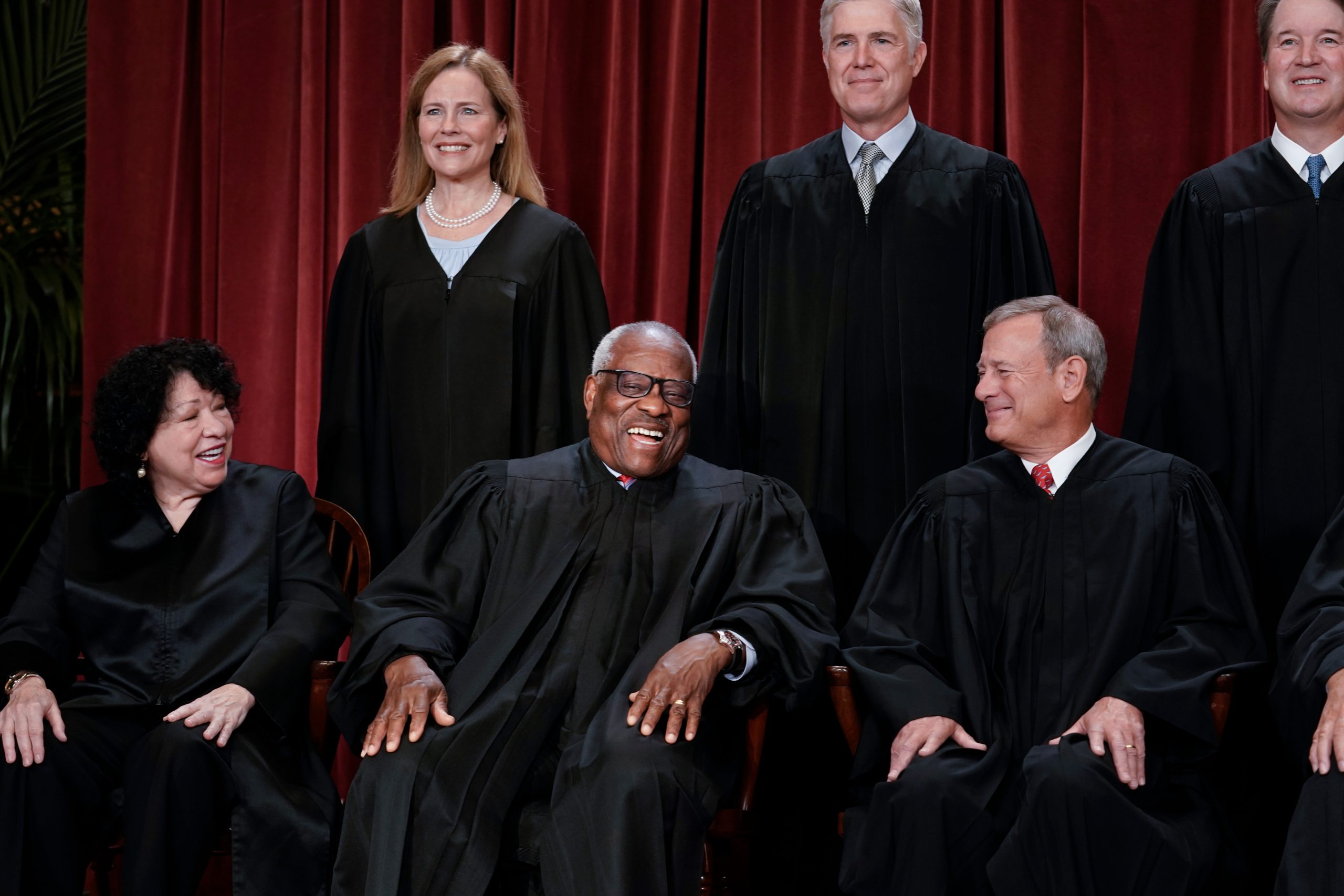
    Members of the Supreme Court sit for a group portrait in 2022. Bottom row, from left, Associate Justice Sonia Sotomayor, Associate Justice Clarence Thomas, and Chief Justice of the United States John Roberts. Top row, from left, Associate Justice Amy Coney Barrett, Associate Justice Neil Gorsuch, and Associate Justice Brett Kavanaugh.J. Scott Applewhite

    On Tuesday, the court’s conservative justices affirmed that border officers do not need “clear and convincing evidence” that a green-card holder seeking to reenter the U.S. has committed a crime to deny them entry. While I hope that one day the Clarence Thomas “border vibe check” joins the “Kavanaugh stop” in the annals of legal ignominy surrounding immigration enforcement, the court’s 6-3 decision makes a mockery of the idea that someone is innocent until proven guilty.

    Perhaps even more immediately concerning is the high court’s ruling Thursday allowing the president to end Temporary Protected Status, or TPS, for roughly 350,000 Haitians and 6,000 Syrians.

    The TPS program, a bipartisan congressional creation under President George H.W. Bush, gives immigrants work permits and protection from deportation if they come from countries determined to be too dangerous to go back to. While the word temporary is right there in the name, some program participants have been in the country for decades and have built lives here. For others, the nations they fled are still unsafe to return to, including Haiti, which is in the grip of gang violence and widespread hunger.

    That the conservative justices also found that Trump’s comments against Haitians were not “overtly racial” is absurd. Trump infamously referred to Haiti and African nations as “shithole countries” in the same 2018 meeting in which he wondered aloud why America couldn’t have more immigrants from places like Norway. For context, this is the same administration that considers white South Africans the only persecuted minority worthy of asylum in the U.S.

    For the moment, the court’s decision applies only to Haitian and Syrian immigrants with TPS, but it has opened the door for the president to do what he has wanted to do since his first term, which is to end the program wholesale. That would impact the 1.3 million TPS holders from around 17 nations and their families, many of whom are U.S. citizens.

    While the human impact on communities of this mass de-legalization effort is immeasurable, the economic damage of Trump’s anti-immigrant policies is not.

    The 500,000 or so DACA recipients, for example, contribute nearly $17 billion to the U.S. economy annually, also paying into federal social safety net programs they are not legally able to access themselves, according to the immigration rights group FWD.us. TPS recipients contribute about $29 billion a year to the economy and pay $7.8 billion in combined federal, payroll, state, and local taxes.

    An immigration policy calculator produced by the Manhattan Institute finds that the kind of policies favored by the administration would add $618 billion to the national debt over 10 years, and leave every American poorer.

    Reasonable people can disagree on immigration, but at the very least, Trump’s exclusionary ideas are an economic dead end.