Years before police launched an investigation into the missing women connected to Raymond “R.C.” Horsch, the late pornographer stood inside a Kensington art gallery and presented what appeared to be the autopsy photos of a dead, unidentified woman.
His exhibition at the 2014 show ended with a video of the woman’s body being loaded into an incinerator — footage that he said was filmed at “a Kensington warehouse where the city morgue would send unidentified remains,” according to a review published on an art blog at the time.
“The Medical Examiner totally botched the autopsy and didn’t even bother to sew her up properly. My horrible photograph is all that is left of her, the only trace of her short, sad existence,” Horsch wrote in a release promoting the exhibition. “She has nothing else, not even a name.”
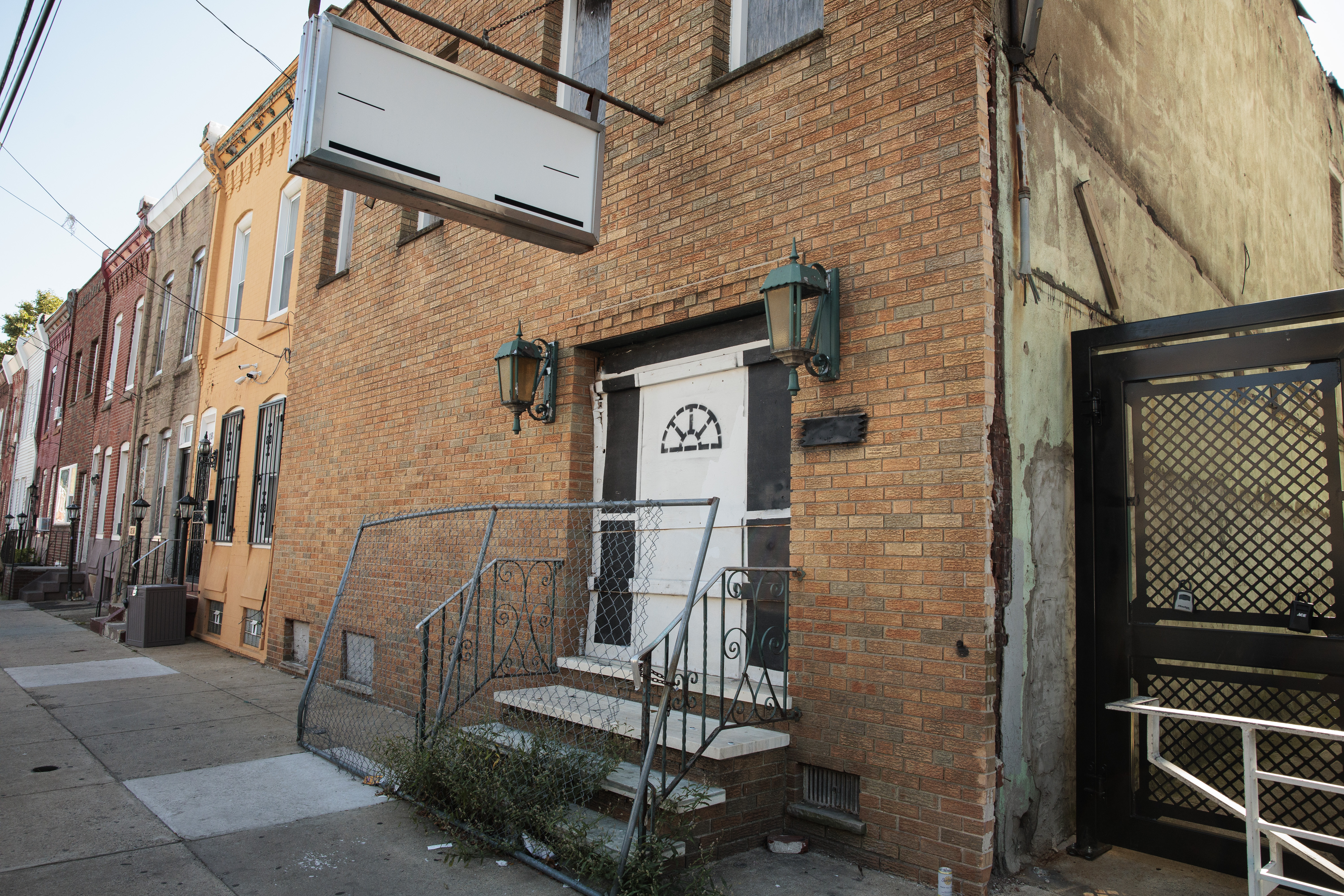
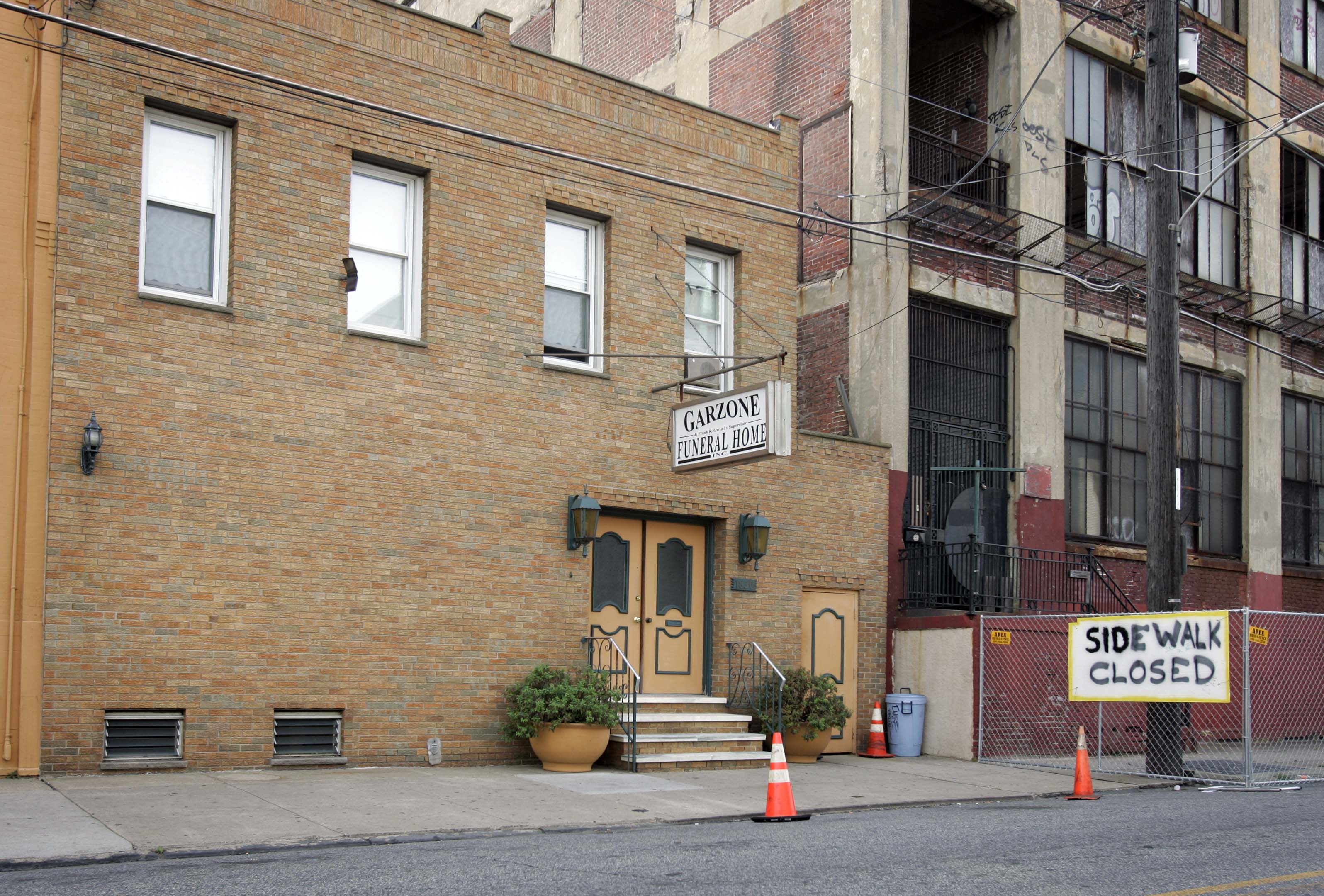
While Horsch was known to distort, embellish, or completely fabricate events, a law enforcement source and people familiar with this period of his life said this much is true: The pornographer had access to a Kensington crematorium connected to the notorious Garzone Funeral Home, which was shuttered over illegal body parts sales.
There, sources said, Horsch gave an employee drugs and cash in exchange for access to the crematorium so he could photograph and film the remains of the dead.
The funeral home and crematorium operated until 2007, when state authorities brought charges against the family-run business alleging the owners were selling body parts on the black market, according to court records and news reports.
Horsch, who died in May 2025 of a lung condition, was not named or charged in that scandal.
But police are looking into Horsch’s relationship to the crematorium as part of a sprawling local and federal investigation into at least seven missing women, according to a law enforcement source who spoke on the condition of anonymity to discuss an ongoing probe.
No bodies have been found, and five women police have identified as likely deceased went missing from 2016 to 2023, years after the crematorium connected to the Garzone Funeral Home had closed. Police are still investigating the women’s whereabouts, including ongoing searches for evidence in Horsch’s Olney home and basement.
The case has been complicated by Horsch’s tendency to blur fact and fiction, and many of his pornographic works featured staged death scenes and fake blood. But police have also recovered numerous videos and photos from Horsch’s home they have said seem to show real violence and actual killings.
At least as far back as the early 2000s, Horsch was known to prowl the streets of Kensington, offering drugs and cash to women in exchange for starring in his violent pornographic films.
He was public about his obsession with taking degrading photographs of women in addiction. Years after Horsch staged his 2014 art show in Kensington, he uploaded a photo series to his website featuring women “imagining and acting their own deaths” interspersed with images of fatal overdose victims. In a description of the gallery, Horsch wrote he took the photos in “unknowing collaboration with the Philadelphia Medical Examiner,” as well as local paramedics.
The Philadelphia Medical Examiner’s Office declined to confirm whether the city sent unclaimed corpses from the morgue to the Garzones’ crematorium.
Louis and Gerald Garzone, who together operated the crematorium connected to the funeral home under the name Liberty Cremations, pleaded guilty to selling over 240 corpses to a New York-based biomedical tissue company in 2008. The tissue cutters illegally stripped the bodies for bones, tendons, and organs, then sold them to hospitals.
Some of the tissue was infected with disease, officials said at the time, and was transplanted into patients without their knowledge. Law enforcement seized the crematorium and funeral home as part of the criminal case, court records show.
Horsch once bragged that he had access to the crematorium through an employee named “George,” whom he paid with drugs, and had filmed a scene for a movie there, according to a woman who worked with Horsch on several films beginning in 2003. She spoke on condition of anonymity to avoid being publicly linked to the pornographer.
Gerald Garzone said in a phone interview that he had never heard of Horsch and had no knowledge of corpses being photographed in his former business. He acknowledged knowing a man named George from the neighborhood but declined to say whether he had ever employed him.
“I don’t know anything about that,” he said.
A 2007 file photo of the Garzone Funeral Home at 1830 E Somerset St., in Philadelphia.Laurence Kesterson / Staff Photographer
Four people familiar with Horsch and Garzone’s business operation identified the man as George Newsome, a Kensington resident who lived a block away from the crematorium at a house on Ruth Street that Horsch was known to frequent.
Newsome was arrested for heroin possession in 2011, court records show, and again for cocaine possession in 2013. He died a year later, according to an obituary.
Investigators continue to sort through more than a million photos and videos on hard drives recovered from Horsch’s home on West Chew Avenue. Local and federal investigators said they have reviewed about 30% of the materials so far and have identified 58 different people in the footage.
Among them, police said, are images of four women who appear to be dead: Maribel Fresses; Gabrielle Amarando; a 25-year-old whose identity relatives asked to remain private; and a woman in her mid-20s whom investigators are still working to identify. Police said they also recovered footage of Horsch filming himself choking 27-year-old Nicole Fusaro with a zip tie until she was dead.
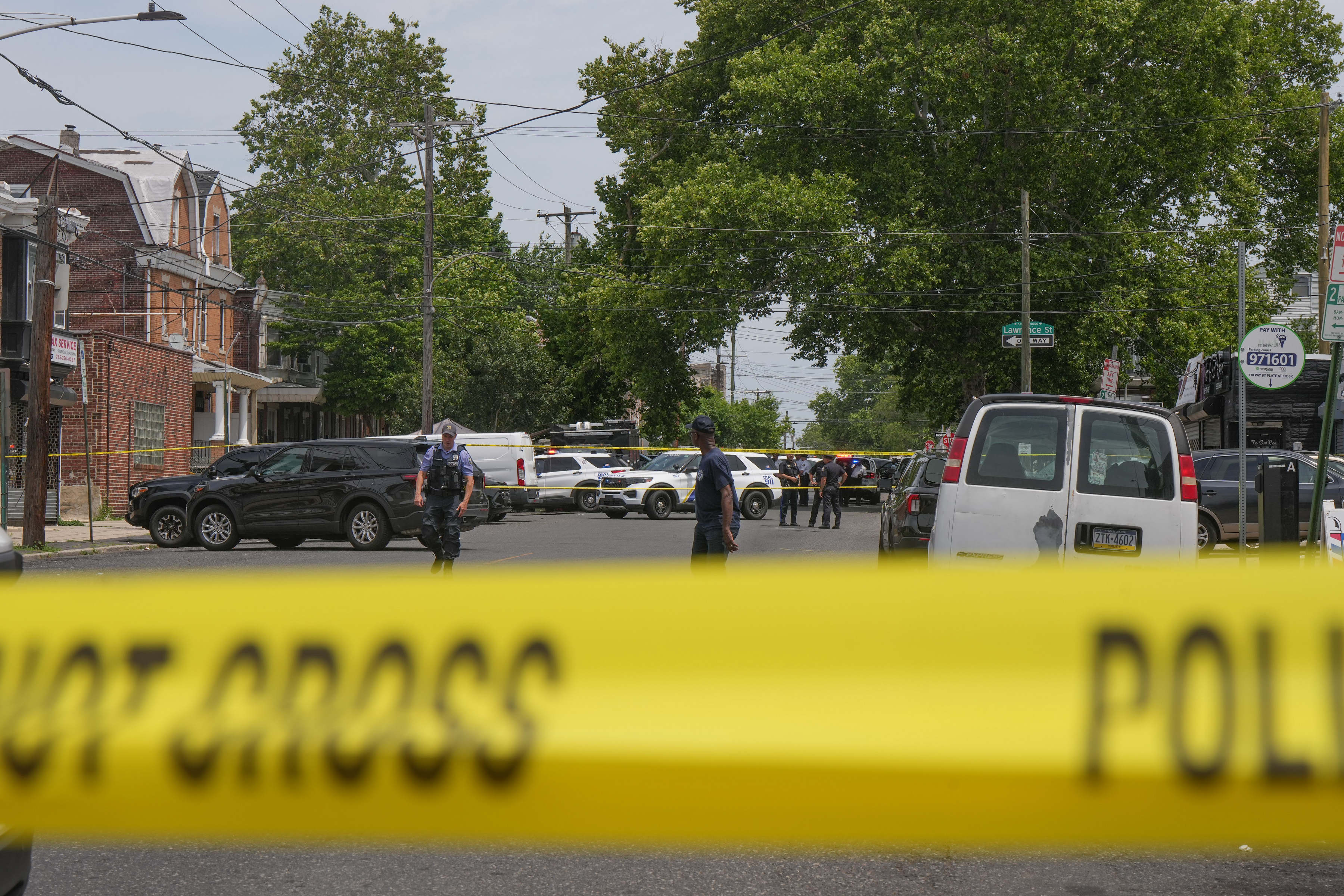
Police began searching Horsch’s Chew Avenue property shortly after a chance car stop on June 19 involving his son, Eugene, uncovered an ID in the name of Blair Tonzelli, who was reported missing in 2023.
Investigators then began reexamining the disappearance of Amy McHale, Raymond Horsch’s ex-wife, who was last seen at the Olney home in 2016.
Inside the property, police found five urns full of cremains, two of which police are still working to identify. The basement contained vats of unknown chemicals and a 55-gallon drum with connections to a sewer drain. There were also pages of writings that referenced serial killer Ted Bundy and described how someone enjoyed hurting a woman with a zip-tie.
Raymond Horsch had previously written in self-published novels about dissolving a woman’s body in chemicals. Police have sent the chemicals and liquids recovered from the basement to a specialized lab in Chicago for testing.
Eugene Horsch remains incarcerated on federal gun and drug charges. He has not been accused of any violent crimes involving the missing women.
A Philadelphia judge on Wednesday took the rare step of imposing six months of outside supervision of sheriff sales after years of dysfunction in processing deeds and distributing money from the auctions.
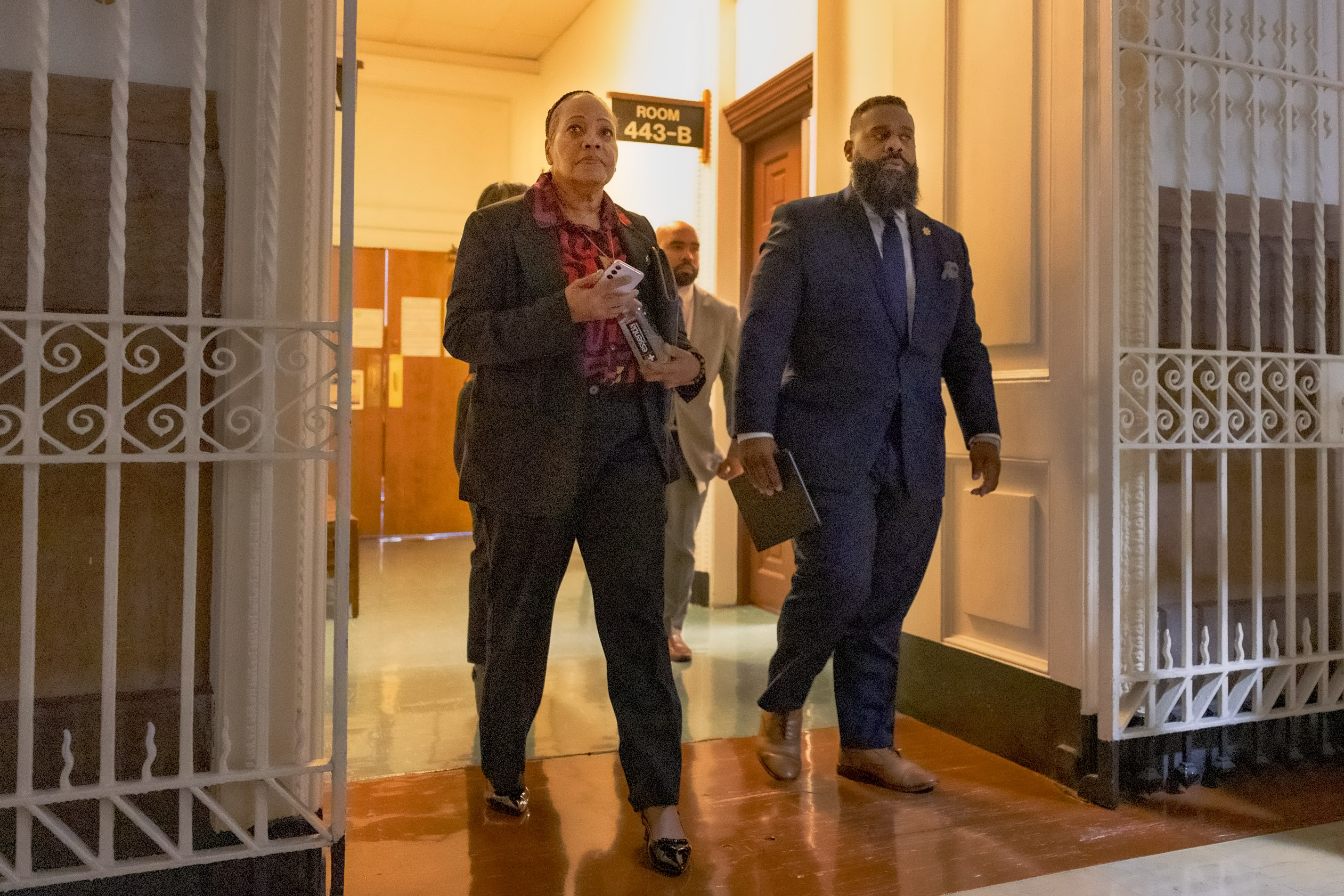
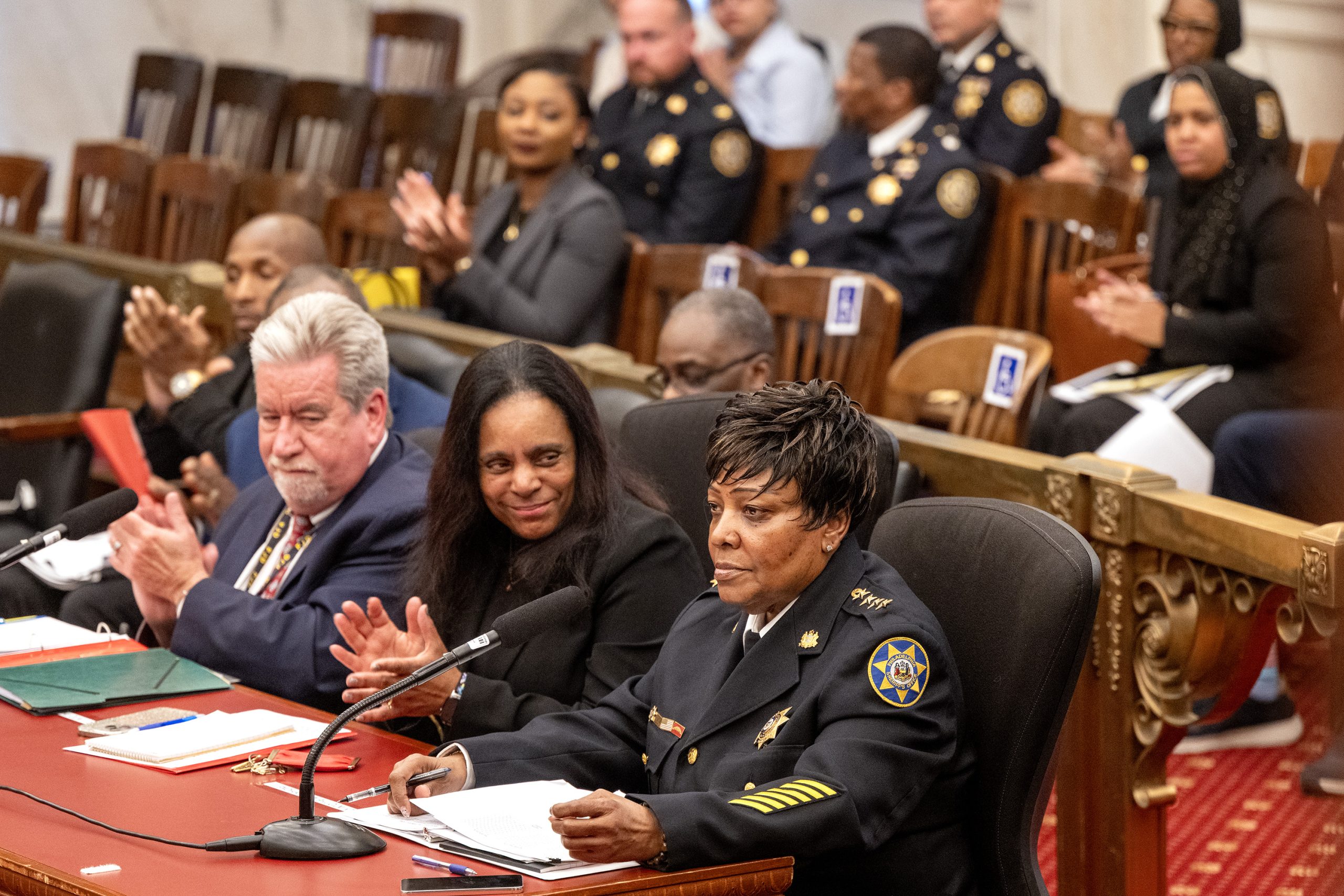
The decision came after a hearing in City Hall in which a top aide to Sheriff Rochelle Bilal acknowledged withholding thousands of pages of documents the judge had previously requested.
Common Pleas Court Judge Paula Patrick grilled representatives of Bilal’s office over the surprise revelation, which followed a Monday Inquirer report noting that many of the requested records were missing.
“My order,” the judge said, “was very specific.”
Patrick, supervisor of the court’s commerce division, had requested the documents in May and scheduled Wednesday’s hearing following years of complaints about chronic delays in processing deeds and distributing funds from sheriff sales.
Since at least mid-2024, winning bidders at property auctions have been paying the sheriff, then waiting a year or more for the office to process deeds of sale.
The courts have been bombarded with petitions for those deeds, which prompted Patrick to take action. She required Bilal to produce, among other things, “a detailed accounting of all sales proceeds received and disbursed” since she took office in January 2020.
In July, the office submitted thousands of pages of records to an official court docket along with a statement indicating it had resolved many of the deed delays and complied with all terms of the order.
When The Inquirer asked Friday why none of the submitted records detailed sale revenues distributed after 2023, Bilal and her staff declined to comment.
Bilal’s representatives admitted in the hearing Wednesday that the records were not submitted.
On Tuesday afternoon, following the publication of The Inquirer’s report, an attorney for Bilal dropped in excess of 5,000 pages of sales records into the court docket.
Steven Wakefield, a former city tax attorney appointed in June as deputy undersheriff to clean up the troubled sheriff sale process, said in the hearing that his initial representation to the court, based on assurances from staff that all sales had been pulled, “was not accurate.”
Wakefield said that after the news organization’s inquiry Friday morning, he immediately followed up with staffers about the missing post-2023 sales records.
“They said, ‘Oh, yeah, we didn’t do that,’” Wakefield recounted.
It was unclear Wednesday whether all the records from that time period would ever be turned over.
“Some of the information the court asked for did not exist,” said Jonathan Rardin, an attorney appointed by the city to represent Bilal.
Later Wednesday afternoon, Bilal’s staff agreed to allow an outside person or group to monitor how auctions are conducted, then report back to the court in six months. The judge did not name the overseer or say when the outside supervision would begin.
“This is in essence exactly what we were asking for,” said Daniel Bernheim, a lawyer for JSB Property Group, a real estate investment company that filed a lawsuit in March alleging that Bilal had breached the terms of a 2003 consent order requiring the office to issue deeds within 40 days of settlement.
Bernheim said Patrick’s order will “have somebody independently come in, take a hard look at what’s going on, ask a lot of the questions that still need to be asked, and make recommendations.”
Bilal, in civilian dress, sat before the judge silently during the hearing and did not respond when asked by an Inquirer reporter for comment.
After the hearing, Bilal told a group of reporters that she supported the court supervision.
“It’s better that we come together and make an agreement so we can continue working together and moving forward,” she said. “That’s all it is.”
Bilal’s attorney had filed a last-minute motion on Friday seeking to protect the sheriff from having to testify at the hearing, writing that it involved “matters outside her unique personal knowledge.” Patrick denied the motion. But, in the end, Bilal was not called to testify.
The hearing offered other insights into the sheriff’s office, which has struggled in recent years to perform many of its core functions under Bilal.
Wakefield blamed the deed delays on a single person: Melissa Simpson, Bilal’s former director of real estate. He said Simpson had been manually filing documents and became overwhelmed when auctions picked up in the aftermath of the pandemic.
In a certification filed last month, Wakefield claimed Bilal was not even aware of the deed backlog.
“Simpson was telling everyone it was fine,” Wakefield said Wednesday. “One person can’t do the whole job.”
Simpson could not be reached for comment. But three current sheriff’s office employees, who were not authorized to speak publicly, disputed that Simpson was solely to blame for the problem.
Even when more staffers were hired, Wakefield said, the office could process only 40 or 50 deeds a day at most.
Wakefield also said the slow pace of deed filings was eclipsed by even more serious problems with the issuance of legally mandated distribution sheets, which detail how money from each auction is divided.
“The distribution backlog is worse than the deed backlog,” he said. “There was a period of time where distribution sheets were not being uploaded.”
Even so, Wakefield presented a picture of an office that has now been reformed. He said it was moving to automate large parts of the deed process.
However, he acknowledged that despite his July statement to the court that the outstanding backlog had been cleared, there are still some that must be processed.
In September 2023, seven months after Blair Tonzelli was reported missing, a nude photograph of her appeared prominently on a local pornographer’s website.
She is staring at the camera, with what appears to be a black eye and blood running down her lower lip.
While it is unclear when it was taken, Raymond “R.C.” Horsch first uploaded the picture to his website’s homepage around 2020, sometime after he had met Tonzelli in Kensington, and he used it as one of several lead images on the site for years, according to archived website data reviewed by The Inquirer.
Horsch’s website is now inactive. But it was up and running when Tonzelli’s friends reported her missing in February 2023, telling officers she was last seen at Horsch’s home the previous summer.
Police have not said whether officers ever visited the home or interviewed Horsch about her disappearance — or if they were aware Tonzelli’s nude photo was featured on his public website. Officers raided the home as part of a drug investigation in May 2025, but investigators in that case did not appear to link the property to any missing women at that time.
A Philadelphia Police Department spokesperson declined to comment, citing an ongoing investigation.
Tonzelli’s disappearance did not appear to gain attention from law enforcement until June of this year, when police arrested Horsch’s son, Eugene, who was with a woman carrying a fake ID in Tonzelli’s name.
The discovery ignited a two-month search of Horsch’s home, where police unearthed an array of disturbing evidence — including “graphic and dark” photos, videos, and writings on hard drives. Police on Aug. 12 said the footage reviewed so far suggests two other missing women had died inside the property: Maribel Fresses, reported missing in 2018, and Gabrielle Amarando, who went missing in 2012.
Police have found no human remains, and have not said whether Tonzelli was featured in any of the materials on the hard drives. She remains missing.
Tonzelli was 35 when she was reported missing. Her Facebook page states she went to Archbishop Ryan High School. Her family could not be reached for comment.
She is among at least three dozen women, many still unidentified, featured in Horsch’s works. Website data showed his online pages once displayed at least 2,100 unique images spanning decades, though The Inquirer was able to recover only a fraction of them.
Blair Tonzelli, in one of her Facebook posts. Tonzelli was last seen at the Horsch property on West Chew Avenue in 2016.Facebook account of Blair Tonzelli
The elder Horsch died in May 2025 at the age of 82 from lung issues. He was well-known in pornographic and erotic art circles for publishing more than a dozen photo books, films, and novels. Some of Horsch’s writings describe a nearly autobiographical character who is an “empathetic” serial killer, murdering addicts to end their suffering. He built a small following, in part, by leaving viewers wondering what was real or fake.
Vulnerable women, desperate to stay off the streets and out of withdrawal, were often used as props for his violent fantasies as he profited off footage or images of them appearing to be strangled, drowned, hanged, or crucified.
Beneath the rotating photos of gaunt and dazed models, Horsch’s homepage also contained a chilling quote, attributed to him.
“I fear what I love,” he wrote. “And destroy what I fear.”
While Horsch claimed all his scenes were staged and consensual, he openly acknowledged that he recruited women in addiction with cash and drugs to enact his “psychosexual” fantasies.
“Without exception, their singular interest is their drug,” Horsch said in a 2006 interview. “Provide that — or the means — and they will do anything.”
Tonzelli had battled addiction for years, according to her friends. Horsch was in his late 70s when met her in Kensington, while she was living at a known drug house. He later claimed she worked as a “home health aide” before she went missing in August 2022.
The recent search for Tonzelli also led police to reexamine the disappearance of Amy McHale, Horsch’s ex-wife and onetime film collaborator, who was last seen at the family home in 2016.
McHale is also among the women Horsch featured on his website, in films and music videos.
So is Krista Killen, Horsch’s longtime companion, who died of an overdose last year. Killen lived at the Olney house, where she acted in several of Horsch’s publicly released films, on and off for years.
Several other women who cycled through the Olney house died of overdoses. Another woman who appeared in Horsch’s films and photographs overdosed in 2016 and a man was charged after leaving her dead body on the side of the road.
While some photos he took were more conventional erotic portraits, Horsch also published galleries of work on his website that portrayed women as dead or covered in blood. One series — titled “Thanatopsis,” a Greek term for the contemplation of death — shows a woman hanging from a noose. Horsch noted that the series also contained photographs of the real corpses of fatal overdose victims.
In a 2007 interview, Horsch said he focused on people addicted to opioids because he saw their need as a mirror of his own desires for increasingly “extreme” forms of sexual gratification.
“My motivation goes beyond desire and well into the realm of obsession,” Horsch said. “I am very much addicted to sex. And the more I do and the more I experience, the more jaded I become and the greater the stimulation, and extreme, I require. This is an obvious parallel to heroin addiction.”
But Horsch also sought to profit.
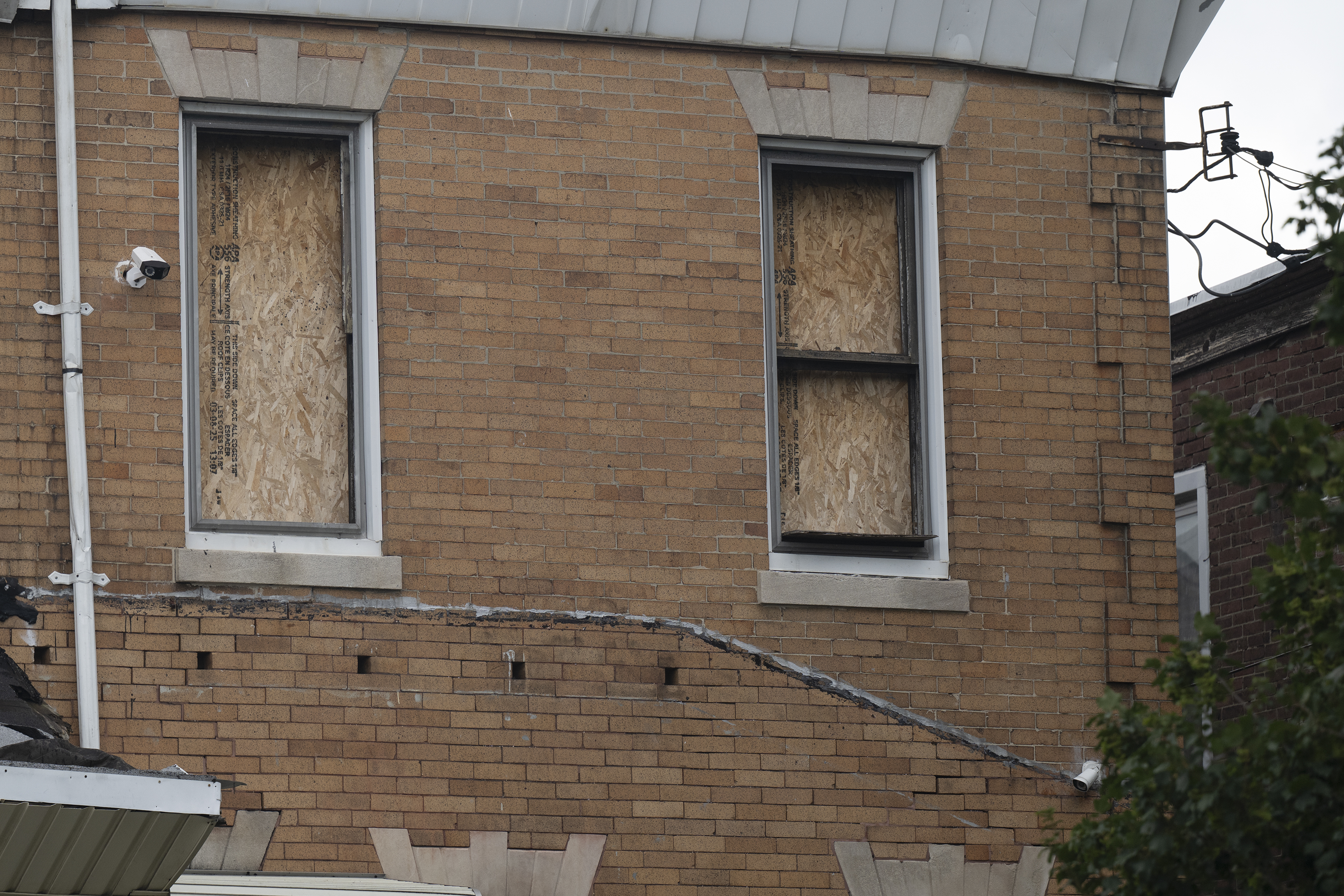
A surveillance camera is mounted near a boarded-up second-floor window at the home of Eugene Albert Horsch on West Chew Avenue in the Olney section of Philadelphia as investigators dig for possible evidence on Tuesday, July 21, 2026.Jose F. Moreno / Staff Photographer
Through at least 2019, Horsch ran a membership program on his website, with subscription tiers ranging from $3 a day to $20 a year that offered paying customers “unrestricted access” to his photographs and videos.
Other archived images and video reviewed by The Inquirer show that Horsch used his personal website to solicit an escort service from 2017 through 2021, and reviews suggest that clients may have visited the Olney house.
Philadelphia police are in the process of sorting through the trove of digital materials recovered inside the home, and have said they may return to the property to continue searching the premises for evidence connected to the women.
Eugene Horsch, 44, remains in federal custody, charged with illegal gun possession. He has not been charged with any crimes connected to the women’s deaths or disappearances. His lawyer has declined to comment.
Police have declined to say whether they believe the younger Horsch played a role in his father’s business. Still, Inspector Raymond Evers said earlier this month, he resided in the house now linked to at least four missing women and a cache of disturbing documents.
“Eugene lived there,” he said. “He lived there for a long time.”
Police in Darby Township, Delaware County, have identified a suspect in a shooting at a Walmart in which an employee was injured.
An arrest warrant has been issued for Armani Tyrell Waite, who is wanted on attempted murder, aggravated assault, reckless endangerment, and other weapons charges.
The incident unfolded on Friday evening, after an argument broke out between two customers inside a Walmart on MacDade Boulevard in Glenolden.
Police believe Waite opened fire inside the store, discharging more than five rounds and striking an employee in the calf.
Officers later recovered the weapon at the scene. The employee was hospitalized and listed in stable condition.
Public records list addresses for Waite in Southwest Philadelphia and Clifton Heights. An online resume states that he worked as a package handler for FedEx.
Police believe Waite is armed and dangerous, and cautioned members of the public not to approach him. Individuals with information regarding his whereabouts were asked to call 911.
Councilmember Curtis Jones Jr. and City Representative Jazelle Jones, who are married, are poised to collect up to $752,000 in combined payouts from Philadelphia’s widely criticized Deferred Retirement Option Plan, an early retirement incentive that two decades ago sparked a major scandal in City Hall.
But neither of the city officials is actually retiring.
DROP is available to all city workers. But both of the Joneses are using the program in a way that is not available to a vast majority of municipal employees:temporarily retiring and immediately returning to their jobs, allowing them to receive their DROP payouts before the end of their city government careers.
Curtis Jones, 68, who has represented the 4th District for 18 years, is able to access that perk because he is a long-serving lawmaker. Jazelle Jones, 70, a high-ranking appointee of Mayor Cherelle L. Parker, received an exception from the mayor to be rehired after her DROP retirement.
Following her one-day retirement, Jazelle Jones also received a $97,000 payout for unused sick and vacation time, a benefit normally reserved for employees permanently departing from city government.
FILE – Curtis Jones, Jr. declares victory with his wife Jazelle and his family in the Council race in his home in West Philadelphia on Tuesday, May 15, 2007.Gina Gayle / Staff Photographer
Lauren Cristella, president of the government watchdog group Committee of Seventy, said the administration’s handling of the situation further undermines public confidence in the DROP program.
“Rehiring an employee to the same position the day after she collects a DROP payout defeats the purpose of the program,” Cristella said. “DROP exists to manage workforce transitions, not to serve as a bonus for employees with no intention of actually leaving.”
Established in the late 1990s during Mayor Ed Rendell’s administration, DROP was originally pitched as a cost-neutral way to give the city predictability over retirements and entice high-earning employees to step down early.
But the program ended up costing the city far more than expected, andvoter frustration withelected officials’ enrollment in DROP was credited with ending the political careers of several Council members.
At the height of that controversy in 2010, Curtis Jones voted to enact a law banning future elected officials from accessing DROP. But he and others already serving at that time were “grandfathered” in, Curtis Jones said.
He would be eligible to collect a $432,000 lump-sum DROP payment in August 2028. However, Curtis Jones said he plans to run for a sixth Council term in 2027, using the loophole to briefly retire to collect the payout before resuming his post.
In interviews, the Council member, who earns $165,000 annually, said he instead plans to retire in December 2027, collecting a reduced DROP payment closer to $350,000. If he is reelected, the maneuver would allow him to hang on to his Council seat for another four years by being sworn back into office the following month.
He justified his enrollment in DROP by saying that times have changed since the 2010 vote — both for the city’s finances, which have dramatically improved, and for his health. He said he is suffering from glaucoma, an incurable disease that causes vision loss.
“Over the years, I’ve had four surgeries on my eyes,” said Curtis Jones, who represents the Northwest and West Philadelphia-based Council district. “I’ve actually lost 40% of my vision.”
Curtis Jones said he enrolled in DROP “so that if I was blind, I wouldn’t have been without resources.”
A centrist Democrat, he endorsed Parker’s 2023 campaign for mayor and is viewed as her most reliable ally on Council.
His wife, Jazelle Jones — who receives a $199,000 annual salary for serving as an ambassador for the city and planning special events — temporarily retiredfor one day last year and was then immediately rehired by the city with a $4,000 raise.
The Philadelphia Administrative Board, which oversees personnel matters, granted her an exception to return to her job. That board is led byParker, a staunch defender of DROP, and other top officials in her administration.
The mayor said she personally asked Jazelle Jones to return to work, and defended the decision.
Parker cited Jazelle Jones’ “lived experience” and the potential disruption her departure could cause for major events this year, like the city hosting World Cup games.
“The essential nature of her role is why I asked” Jazelle Jones to continue working, Parker said Tuesday in a phone interview. “And I’m unapologetic about asking. It’s one of the most important decisions I’ve made as mayor.”
Jazelle Jones was originally scheduled to retire in September 2024. Instead, in a departure from typical DROP procedures, she continued to work as the city representative through that date and took her one-day retirement a year later, in September 2025.
None of those changes appear to have been approved at the time they occurred by the city’s administrative board. It was not until March 2026 when the board retroactively approved exceptions allowing Jazelle Jones to receive an extra year of DROP — resulting in the 2025 retirement date — and her rehiring, according to board minutes.
Parker declared an emergency in order to approve the extra year of DROP for Jazelle Jones, the mayor’s office said. The move effectively increased her retirement payout by almost 20%, to nearly $320,000.
Parker’s office did not respond to questions about the deviation in the approval timeline.
Jazelle Jones did not respond to a request for comment through the mayor’s office.
‘Tools in the toolbox’
When city employees enroll in DROP, they select a mandatory retirement date no more than four years in the future. Between the time they sign up for the program and their selected retirement date, the city pays their regular salaries and makes pension payments as if they had already retired.
The deferred pension payments are deposited into an interest-bearing account that each city worker collects in a lump-sum payout four years after enrolling. The departing employee then begins to receive standard monthly pension checks, which are calculated based on when they entered DROP.
City workers make contributions from their salaries to the municipal pension fund. But their contributions do not cover all of the pension fund’s liabilities, let alonethe added costs associated with DROP, which ultimately come out of taxpayer coffers.
Philadelphia’s original DROP law created a loophole in which elected officials, who generally serve four-year terms, can enter into the program, retire a day before their terms end, and rejoin the city workforce when they are sworn in again the following day.
The revelation that many members of Council had enrolled in DROP rocked City Hall in the early 2000s. The scandal was credited for several members’ decisions to not run for new terms in 2011 and was widely seen as the reason former Councilmember Frank Rizzo Jr. lost reelection that year.
A 2017 city controller report found that, cumulatively, the program had cost the city in excess of $277 million despite initially being projected as budget-neutral.
While DROP programs were once common in cities across the country, the Government Finance Officers Association — a national organization that Philadelphia officials regularly cite for best practices when shaping the city budget — in 2020 warned they led to unpredictable costs and detrimental impacts on municipal pension funds.
“Government defined benefit plans should not include deferred retirement option programs for a variety of reasons,” the GFOA said a statement.
Parker, however, has defended the program as a valuable recruitment and retention tool.
“Government doesn’t pay you as much as the private sector, so we offer a great benefits package,” Parker told reporters in March. “DROP, the defined-benefit pension — I’m never going to be for taking away any of the tools in the toolbox that would allow the city of Philadelphia to compete.”
‘Semi-hypocritical’
In 2008, when Council was in the early stages of considering a ban on elected officials enrolling in DROP, some wanted the prohibition to apply not just to future officeholders, but current ones as well.
Curtis Jones, a freshman legislator at the time, agreed.
“It would be semi-hypocritical if I say [end it] for only future elected officials,” he said then.
The bill that Council eventually passed did not prohibit current members from enrolling in DROP. Now, Curtis Jones is set to become the first lawmaker to benefit from the program in years.
“At the time, when I was 20/20 vision, [banning lawmakers from using DROP] was my decision. And now that I’ve had some surgeries, I’ve changed that position,” Jones said Monday. “It’s an earned benefit that I contributed to that I would like to receive.”
Cristella, of the Committee of Seventy, accused Jones of hypocrisy.
“Being grandfathered in is not the same as acting with integrity,” she said.
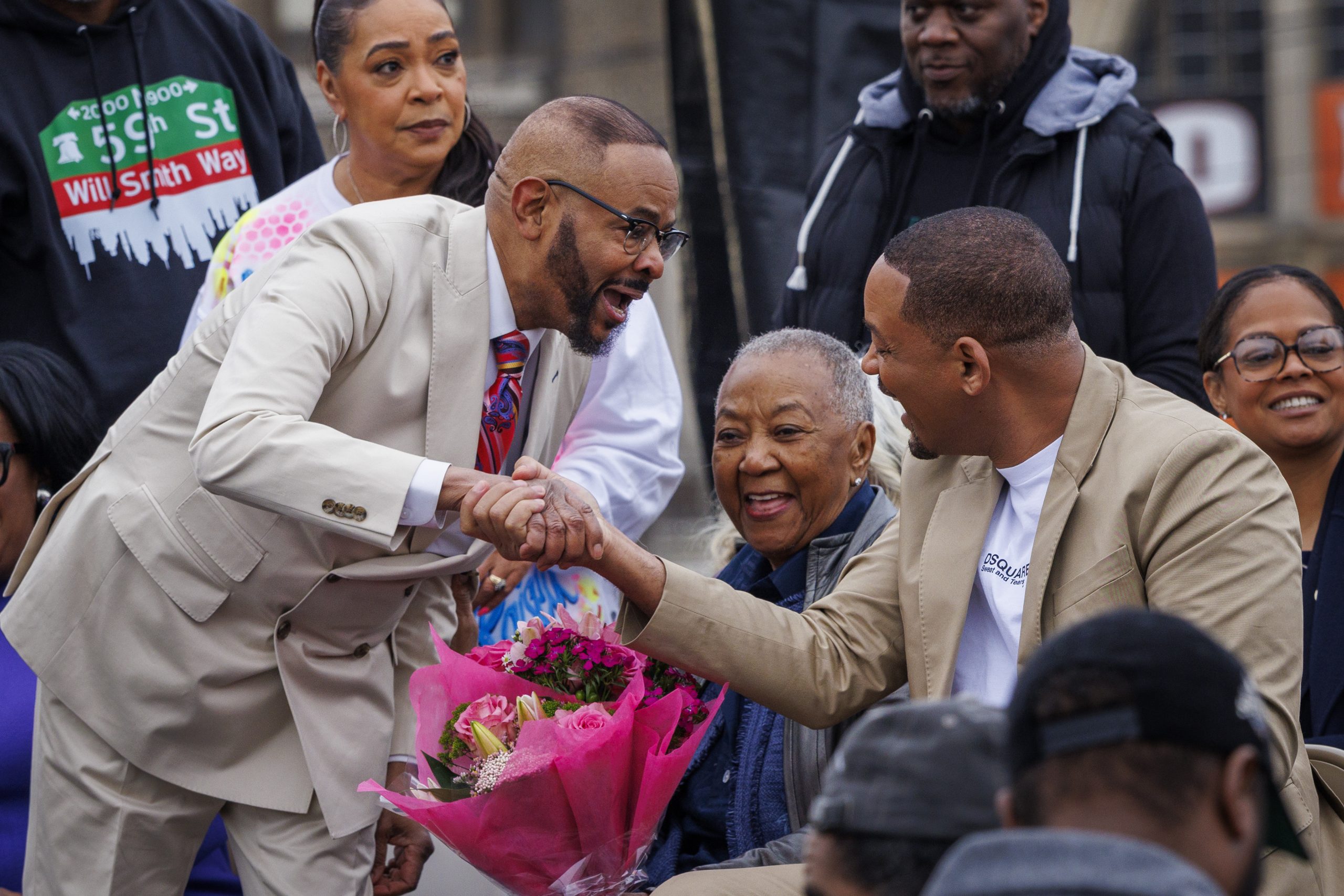
At left is Councilmember Curtis J. Jones Jr. shaking the hand of actor and rapper Will Smith who was honored with a street naming, Will Smith Way, at N. 59th and Lancaster, across from Overbrook High School, Wednesday, March 26, 2025.Alejandro A. Alvarez / Staff Photographer
Curtis Jones enrolled in DROP in August 2024, meaning he is required to retire no later than August 2028. He has made no secret of his intent to run for a sixth term next year, even publicly musing about delaying bridge repairs in his district so as not to subject potential voters to traffic jams.
Were he to win reelection and collect his maximum $432,221 DROP payout, Curtis Jones’ scheduled retirement date would fall within the first year of his next four-year term.
However, the lawmaker said in an interview that he intends to complete his next Council term. To achieve that, he said he would instead resign in December 2027, after the November election but just before he would be sworn into a new term in January 2028.
“I am going to resign, then be sworn in [if], God willing, I’m reelected,” he said.
In this scenario, Curtis Jones said, he would receive a reduced DROP payout by forgoing the final nine months of payments into his interest-bearing account by taking his brief retirement early. He would be effectively rehired to his city job by being sworn back into office.
He added that he hopes State Rep. Morgan Cephas, a West Philadelphia Democrat, will succeed him in the 4th Council District after the 2031 elections.
Cephas declined to comment.
In 2023, Curtis Jones ran for Council president, but lost to Kenyatta Johnson. He said he is now relieved he did not win.
“I am functional. My staff kind of helps to keep that good,” Jones said. ”I am thankful to God that I did not get elected [Council] president. Do you know how much reading they do? I could have not kept up with all of the numbers and stuff like that, so I know my limitations.”
‘I had heard whispers’
During Jazelle Jones’ one-day retirement in 2025, the 25-year city employee earned a $319,757 DROP payout and cashed out nearly 1,000 hours of unused sick and vacation time, worth $97,000, as all city workers are entitled to do upon their last day of service.
The very next day, she was back on the job, with a small raise that brought her salary to about $199,000.
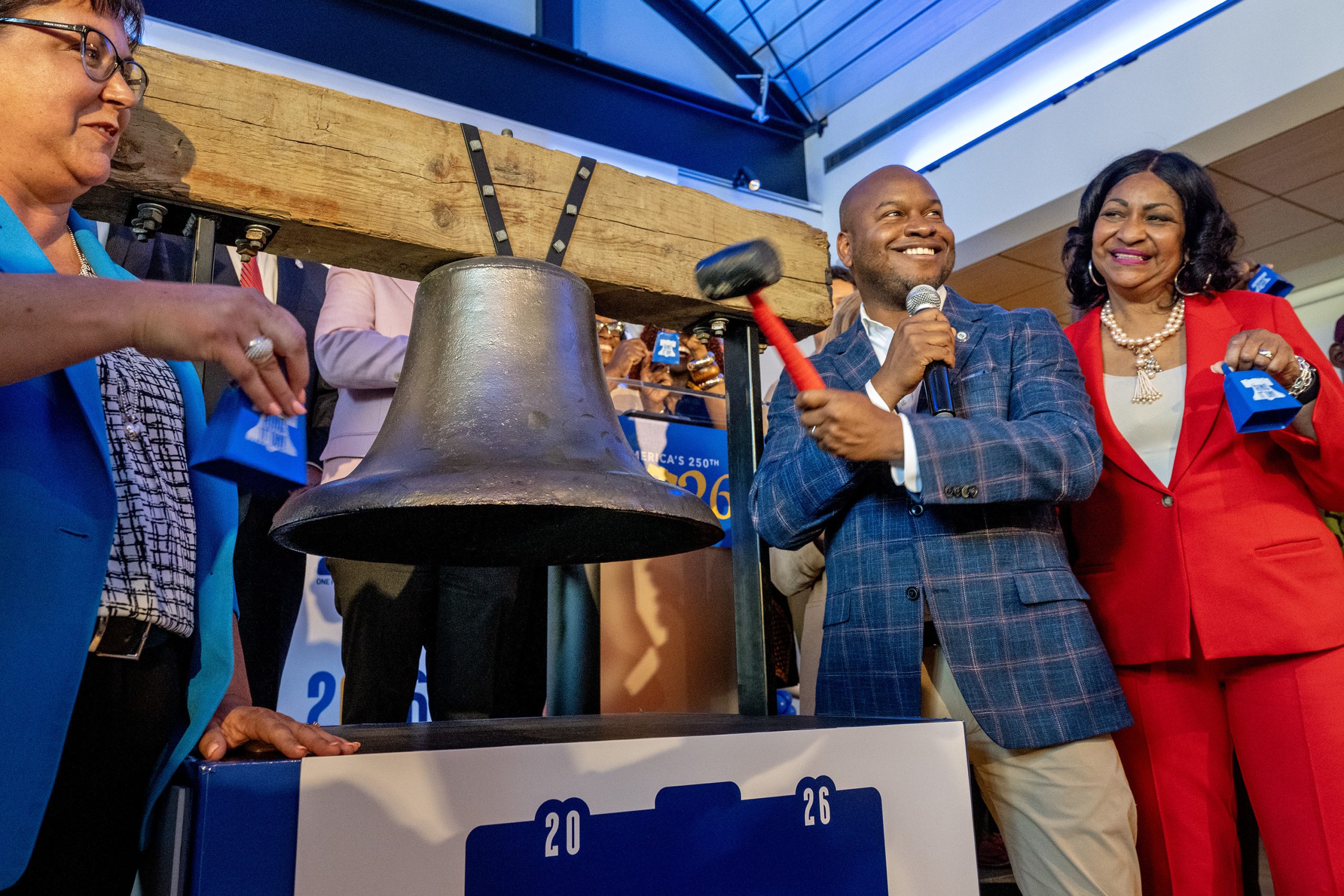
Michael Newmuis (center), the city’s 2026 Director Philadelphia, rings the bell to kick off the city’s “Ring It On! One Philly, A United Celebration” at Independence Visitor Center Wednesday, Sept. 3, 2025. Mayor Cherelle L. Parker announced the new initiative that puts city neighborhoods at the forefront of the city celebrations of America’s 250th birthday in 2026. At right is Jazelle Jones, City Representative and Director of Special Events.Tom Gralish / Staff Photographer
Despite saying Jazelle Jones was needed to coordinate the city’s 2026 festivities, Parker has also appointed a separate 2026 director, Michael Newmuis, to a $175,000 position to also oversee this year’s major events.
The mayor said Jazelle Jones was irreplaceable given her experience managing large events like the 2015 papal visit, the 2016 Democratic National Convention, the 2017 NFL Draft, and the Eagles’ Super Bowl wins.
“Could we have hired five to 10 people to try to do the job Jazelle does?” Parker asked. “We could have tried, but there would be no reason for me to do that when I had the best person.”
Parker indicated she was aware of the steep price tag required to keep Jazelle Jones working through 2026 when the mayor first appointed her as city representative shortly after taking office in 2024.
“I had heard whispers,” Parker said. “They said, ‘You’re going to lose Jazelle.’”
City personnel records show Jazelle Jones enrolled in DROP in September 2020, meaning her first planned retirement date was September 2024, just nine months after Parker appointed her to the role.
Jazelle Jones’ $97,000 payout for unused paid time off was deposited into her account this month, four days after The Inquirer contacted the mayor’s office about her rehiring. The mayor’s office did not respond to a question about the delay in her payment.
Unlike most newly hired city employees, who are entered into a hybrid 401(k)-style pension plan, she was granted an exception allowing her to continue paying into an older, more generous pension plan.
Cristella, from the Committee of Seventy, said the decision to hire Jazelle Jones into a vital role months prior to her mandatory retirement date was irresponsible.
“It is also deeply troubling that the city would retain a high-salaried senior official with full knowledge that a large DROP payout was imminent,” Cristella said. “If city leadership knew and proceeded anyway, that is a failure of fiscal stewardship that demands explanation.”
Staff writer Max Marin contributed to this article.
Philadelphia Sheriff Rochelle Bilal announced last week that she has appointed new top officials to fix a series of financial issues, including the dysfunctional sheriff’s sale process. She just won’t say who the people are.
The Inquirer has learned that two individuals she has tapped for those roles have each lost their own properties in a sheriff’s sale and faced other serious financial issues.
George Gossett Jr., a Roxborough-based lawyer and former assistant district attorney with close ties to State Sen. Sharif Street (D., Philadelphia), confirmed this week that he will be Bilal’s next undersheriff, charged with overseeing sheriff’s sales.
Gossett replaces Tariq El-Shabazz, who retired from his $200,000-a-year position as undersheriff in May on the same day Bilal was hit with a court order demanding she fix a sheriff’s sale system that has left winning bidders waiting a year or more to get their deeds.
As undersheriff, Gossett will serve as Bilal’s top legal adviser and second in command of the 380-person office as it seeks to shore up the sheriff’s sale process, personally signing off on deeds.
Yet at a foreclosure sale just two months ago, Bilal’s office auctioned off a North Philadelphia rowhouse that Gossett owned. The sale followed years of missed mortgage payments, liens over unpaid utility bills and other costs, and building citations from the city, court and propertyrecords show.
Gossett, who previously worked in the Philadelphia Register of Wills Office, said in a statement Tuesday that the foreclosure on his Nicetown rental property “gives me firsthand knowledge of the sheriff’s office’s operations, which I will bring to bear in my new role.”
“As a lifelong Philadelphian, I’m honored to serve as undersheriff,” Gossett said. “I believe that my experience in law enforcement, as a small businessman and as an attorney in private practice will be an asset to the sheriff as we seek to improve public safety and ensure an orderly sheriff’s sale process.”
Bilal’s news release last week said that her unnamed undersheriff would “oversee daily operations, strategic planning initiatives, personnel management, and operational coordination across the agency.”
The sheriff has also hired William Brownlee Sr., a West Philadelphia pastor whose recently updated website describes him as “Deputy Chief Financial Officer and Project Manager for the Philadelphia Sheriff’s Office.”
Besides being a pastor, Brownlee has been a motivational speaker, real estate investor, and serial entrepreneur who has dabbled in everything from childcare to credit repair.
He also has a 15-year paper trail of serious financial troubles.
The money was meant to fund part of a multimillion-dollar renovation project of the building, but ended withlenders selling off the boarded-up church earlier this year to satisfy millions in unpaid debts.
Brownlee is also behind several failed business ventures that resulted in the pastor declaring personal bankruptcy three times.
In 2023, hefiled a petition to legally change his name for what he said were “spiritual reasons,” according to a court filing, only to have the request denied after a lender he owed more than $600,000 opposed the change.
“It is believed,” an attorney for the lender wrote, “that petitioner seeks a name change for the purpose of evading creditors.”
He has lost two properties at sheriff’s sale to private lenders, most recently in 2024. And in a November 2025 bankruptcy filing, Brownlee disclosed liabilities totaling $5.3 million, including nearly $1.5 million owed to the IRS.
A Philadelphia judge also held him in contempt of court last year for not responding to a Wisconsin bank’s attempts to collect $89,000 following an out-of-state judgment against him.
Brownlee, in an email Wednesday, disputed the amount of back taxes he owed and said he had sought to change his name because his father’s debts and other records were being confused with his due to the similarity of their names.
“I do not deny that I have experienced serious financial hardship,” he wrote. “However, the story of that hardship is not simply a story of irresponsibility or evasion. Much of it occurred during and after two major marital breakdowns, including divorce proceedings around 2015 and a later separation and divorce process between 2022 and 2024. Those seasons caused significant personal, financial, and organizational disruption.”
In November 2021, Bilal’s spokesperson and former campaign manager Teresa Lundy promoted Brownlee’s network of businesses, known as Divine Services, in a Metro Philadelphia column.
She wrote that Brownlee’s companies offered “childcare, beauty supplies, hair styling, estheticians and related services, financial services, credit repair, interior design, event planning, real estate development and management, photography, and entertainment.”
Neither Bilal nor Lundy would comment this week on Gossett’s or Brownlee’s hiring dates, why they were selected, their salaries, or why the office has yet to officially release their names.
Lundy said in an email that the office’s “reorganization plan extends beyond personnel; it is a holistic approach for better delivery of services to the residents of Philadelphia.”
Still holding the deed
In the early 2000s, Gossett beganpurchasing several dilapidated properties across Philadelphia, including one at sheriff’s sale.
He later sold most of these properties. However, in 2007, Gossett took out a $50,000 mortgage on a three-story rowhouse on North 18th Street in the city’s Nicetown section that he purchased for $8,500 in 2004.
Inspectors cited it as an unlicensed rental in 2012. In 2020, the city again cited Gossett because residents were living in the house despite its lack of a heating system, a permanent kitchen, or a certificate of occupancy, according to city records.
That same year, Deutsche Bank went to court to file the first of three suits to foreclose on the property, listing a $45,000 default. Gossett was able to come up with enough money to stave off foreclosure, but the property was declared vacant by inspectors in 2024, according to city records.
“Unfortunately, after many years of ownership, my company was unable to make that rental property work financially,” Gossett said of the rowhouse. “After I walked away from it, squatters began living there. My efforts to remove the squatters were hindered by the COVID pandemic.”
In March 2025, Deutsche Bank filed suit against Gossett again, securing a $78,000 judgment against him. In April 2026, Bilal’s office sold the property to the bank for about $58,000, according to court records.
Gossett still maintains technical possession of the building today because the deed has not yet been processed by Bilal’s office. A city lien for the costs of sealing the vacant propertyis still marked as active.
Gossett also runs acompany called Urban Owl Construction Group, which does home repair and other services. He has faced three small-claims suits by Urban Owl clients who said the company did sloppy work or skipped out on promised repairs completely. Gossett noted that he won two of the cases and a third was settled.
He said he will continue running Urban Owl while serving as undersheriff. He is also currently doing criminal defense work in Philadelphia, but said he would transfer those cases to other attorneys to avoid potential conflicts.
El-Shabazz, Bilal’s previous undersheriff, was fined $16,000 by the city’s ethics board in 2023 after he acknowledged operating a private legal practice representing criminal defendants who were being prosecuted by the Philadelphia District Attorney’s Office, in violation of city ethics rules.
Lundy and El-Shabazz initially denied he was doing criminal defense work in the city, but weeks later he agreed to pay the fine.
Sheriff Rochelle Bilal (right) is applauded as she testifies in City Council during a budget hearing April 28, 2026. She’s brought in new top officials to overhaul the office, but won’t say who they are or how much they’re paid.Tom Gralish / Staff Photographer
Gossett, who attended Central High School with Street, was previously hired for a job in Orphans Court under Register of Wills Tracey Gordon.
He left Orphans Courtin 2024 after Gordon was defeated by John Sabatina Jr., whose office indicated in internal records that Gossett had been hired on Street’s recommendation. (Gordon also now works for Bilal as a sheriff’s sales service representative, according to city payroll records.)
Street later hired Gossett for a state job as a legislative aide from February 2024 to September 2024, and the lawyer later served as campaign treasurer during Street’s unsuccessful congressional run this year.
Although Bilal declined to confirm Gossett’s ascension to undersheriff, Street sent The Inquirer a statement praising his hiring.
“George, a former assistant district attorney, is an experienced and highly qualified attorney who I’ve known since high school,” he wrote. “I’m proud of his return to public service with another law enforcement agency and believe he will serve the people of Philadelphia well in his new role.”
Under water
Brownlee’s first experience with sheriff sales came after he defaulted on a loan linked to a business called Divine Styles Salon, which was auctioned off in 2017.
Later, as Brownlee’s failed redevelopment of Emmanuel Christian Center was unfolding, Brownlee was also underwater on a $600,000 mortgage he had taken out from lender Univest to finance the construction of a business called Divine Daycare at a property he owned on 52nd Street.
Univest sought a judgment against him in 2023, and the property was sold off at a foreclosure sale in 2024.
In April of this year, about a month after the conclusion of his most recent bankruptcy case, Brownlee appeared with both Street and Bilal at her office’s Autism Awareness and Neurodiversity Resource Fair.
At that time, he was described as the chair of the “Honorary Deputy Sheriff Coalition.” But he told The Inquirer this week he had since been formally hired as a project manager “based on my professional experience in banking, real estate, leadership, ministry administration, and project coordination.” He describes himself on Instagram as “deputy CFO.”
Bilal’s new hires will have to move fast to comply with the judicial order.
By mid-July, Bilal’s staff must file a list of all sheriff’s sales since she took office in January 2020, along with detailed financial records, and names of all staffers or contractors who worked on sheriff’s sales during that time. She also will be required to show a plan for streamlining the process.
Two weeks later, Bilal or a representative must appear at a public hearing before a judge to explain why a special master, a title agent, or someone with similar expertise in real estate should not be brought in to oversee the auctions.
ATLANTIC CITY — When the nation’s largest smoke shop expo descended on the convention center here earlier this spring, sales reps scrambled to offload pallets of a controversial synthetic kratom product known as “7-OH” before lawmakers in Pennsylvania and New Jersey ban their products.
The addictive drug 7-Hydroxymitragynine, a highly concentrated lab-made compound derived from the kratom plant, flooded the bustling floor of the CHAMPS trade show.
Yet some vendors said they weren’t worried about bills working their way through Harrisburg and Trenton.
Their suppliers had already cooked up new recipes.
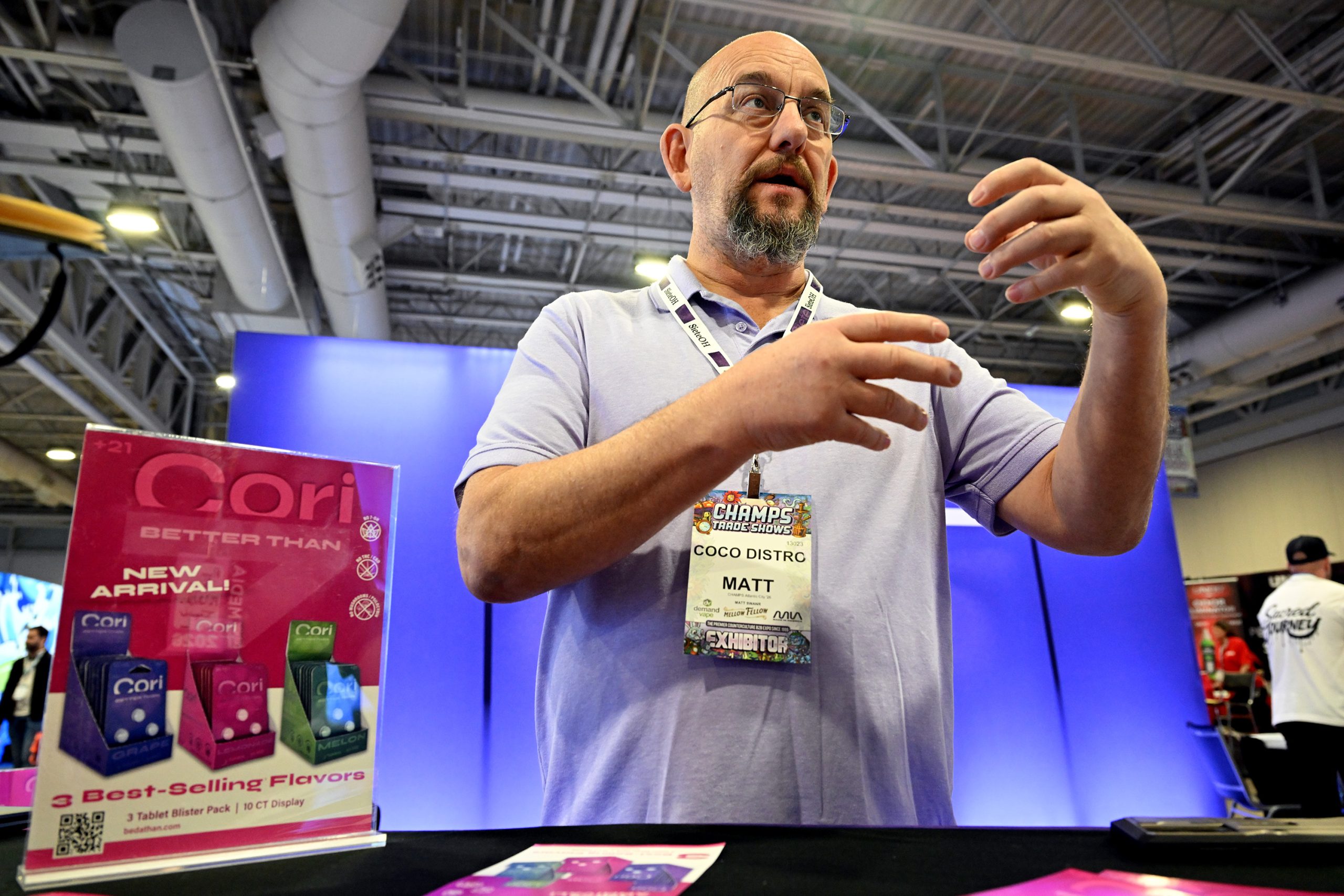
Matt Swann, a real estate investor turned 7-OH distributor from Salt Lake City, promoted a new product called “Cori,” a four-pack of tablets wrapped in a sleek green package. Swann’s offering draws from corydalis, yet another plant from East Asia that produces similar pain-killing alkaloids to kratom — but is not the target of any proposed bans.
“Legislation is what shuts me down,” Swann said, at his one-man expo booth in March. “This is how we stay ahead.”
Half a dozen 7-OH sales reps told The Inquirer that companies are changing their formulas to preemptively sidestep legislation prompted by concerns over the drug widely dubbed “gas station heroin” for its promised high and addictive potential.
Federal authorities began taking steps last summer to classify 7-OH as a controlled substance due to its widespread availability and reports of abuse. At least a dozen states have moved to outlaw the substance, and bills in Pennsylvania and New Jersey are being considered.
But in the booming gray market for synthetic drugs — from kratom to lab-made THC to psychedelics — the difference between legal and illegal can be as small as a molecule.
Perks’ booth at the CHAMPS B2B trade show at the Atlantic City Convention Center on March 19.Tom Gralish / Staff Photographer
To dodge the crackdown, some companies are swapping their active ingredient from 7-OH to a related compound called mitragynine pseudoindoxyl, or “pseudo.” Others are pivoting to 13-Hydroxy Mitragynine, or “13-OH.” Both function in similar ways, binding to opioid receptors in the brain.
And vendors promised the variants are just as powerful.
Some kratom advocates welcome restrictions on 7-OH and other chemically concentrated alkaloids. But they also worry that lower potency, natural kratom products will get caught up in sweeping bans.
Swann criticized the panic around 7-OH. He described both it and his new corydalis product as safer alternatives to opioids that can help people living with chronic pain.
Swann said he is clear with buyers about the risk of dependency. Kratom-derived pain relievers are far less fatal than opioids, whose pharmaceutical producers, he argued, are threatened by the drug’s popularity.
“It’s the safest alternative,” he said. “Kratom is 10-fold the product.”
Matt Swann at his Siete 7 / Coco Distro booth At the CHAMPS B2B trade show at the Atlantic City Convention Center.Tom Gralish / Staff Photographer
A game of molecules
Last summer, Florida passed an emergency ban specifically targeting 7-OH. Other states, like Vermont, have banned kratom altogether, as well as any related alkaloids, preemptively cutting out alternative compounds like 13-OH or pseudo.
New Jersey lawmakers are advancing legislation that would similarly classify 7-OH as a controlled substance, although it makes no mention of these related alkaloids.
Another bill under consideration in Harrisburg mimics Vermont’s strategy by outlawing all products that contain over 2% 7-Hydroxymitragynine, as well as any other “synthetic, semi-synthetic, or chemically manipulated alkaloid” derived from the kratom plant.
“They can call it whatever they want,” said Sen. Tracy Pennycuick (R., Montgomery County), the bill’s lead sponsor. “If it comes up 2%, it’s still banned.”
Still, as written, the ban might cover new variants like “pseudo” and 13-OH but not the latest extracts from the corydalis plant.
Meanwhile, pro-kratom lobbying groups have pushed lawmakers to create clear legal definitions between naturally sourced, low-potency kratom products and those ultra-concentrated, synthetic forms like 7-OH.
Dallas Vasquez, CEO of Mitra9, a Florida-based company that distributes kratom and kava-infused beverages across the country, said the two products are “not equivalent from a chemistry or pharmacological standpoint.”
He said Mitra9 does not use concentrated 7-OH to make the drinks more potent. His products contain less than 2% total kratom alkaloids, with low levels of 7-OH that occur naturally in extracts from the plant leaves, according to lab tests reported on Mitra9’s website.
“My business is built on the bet that the responsible segment of the market will survive,” Vasquez said. “If it doesn’t, I lose too. So I have every incentive to be honest about what the products are.”
Kratom booth at the CHAMPS B2B trade show at the Atlantic City Convention Center on March 19.Tom Gralish / Staff Photographer
Booming profits, clandestine makers
The CHAMPS trade show traditionally serves as a meetup for recreational drugmakers and retailers of cannabis. That the kiosks were dominated by 7-OH vendors is a sign of kratom’s growing popularity and profitability.
Large kratom companies pushing products with opioid-inspired names like “Opia” and “Perks” can bring in millions in revenue per month, according to Swann, the vendor from Salt Lake City.
Many companies are supplied by a small network of kratom manufacturers that synthesize products, often on condition that the makers’ names be kept secret, according to Swann and company owners who spoke with The Inquirer. So long as the compounds remain legal at the federal level, there are labs willing to make them en masse, which sellers like Swann can distribute in states without total bans.
For everyone involved, profits are high.
“[Manufacturer] profit margins are in the 5 to 10% range, but they’re doing millions and millions of dollars,” Swann said. “My profit margin is closer to 200% to 300%. If I invest a quarter-million dollars, I can usually come out with a million.”
Swann said he started his own business with $250,000 in capital and a phone call to a lab in Utah. His brand, Siete, launched within months. He estimated that his new “Cori” product had a life span of three years before it, too, would be banned.
Camille Winans, a sales representative for a company selling new 13-OH products, argued that kratom had been demonized by lawmakers and that keeping the products on shelves amounted to “harm reduction.”
However, medical experts say there has been an uptick in admissions to rehabs from people who got hooked on kratom, including in Pennsylvania.
Jason Kirby, chief medical officer of Recovery Centers of America, worries that states would ban 7-OH without the necessary medical resources for people who are dependent on it. He said hospitals struggle with an influx of kratom users in states that passed sweeping bans.
“One day it’s legal, and the next day it’s not,” he said. “So I’m going into the vape shop to refill my need, and it’s not there anymore, and I’m going to the emergency room in withdrawal.”
Bans would also not prevent manufacturers from finding new loopholes, he said.
“We’re gonna be dealing with a brand new synthetic substance that we’re gonna have to figure out all over again, and figure out pathways and management for,” he said. “We always have to stay ahead of them.”