Author: William Bender

  • Philly sheriff’s office reneges on court-supervision deal, tells judge it found $20 million in city money

    Philly sheriff’s office reneges on court-supervision deal, tells judge it found $20 million in city money

    A top aide to Philadelphia Sheriff Rochelle Bilal revealed in court that an internal audit had recently uncovered $20 million in undisbursed money — including tax revenue and utility payments that should have gone into city coffers.

    The stunning disclosure of misplaced sheriff-sale proceeds — which amount to more than half the office’s annual budget — came during a two-day hearing as Bilal and her staff sought to back out of a judge’s plan to appoint an independent supervisor to monitor the office’s troubled process.

    That tentative deal, struck after an August hearing before Common Pleas Court Judge Paula Patrick, was meant to resolve years of delays in issuing deeds and distributing sale proceeds.

    But Patrick, supervisor of the court’s commerce division, ordered Bilal and her deputies back into her courtroom on Wednesday after the sheriff’s office reneged on the agreement.

    The judge insisted that Bilal be in the room before the hearing began.

    “You need to have your client here,” the judge told Jonathan Rardin, a lawyer the city retained to represent Bilal. “She needs to be here to get started.”

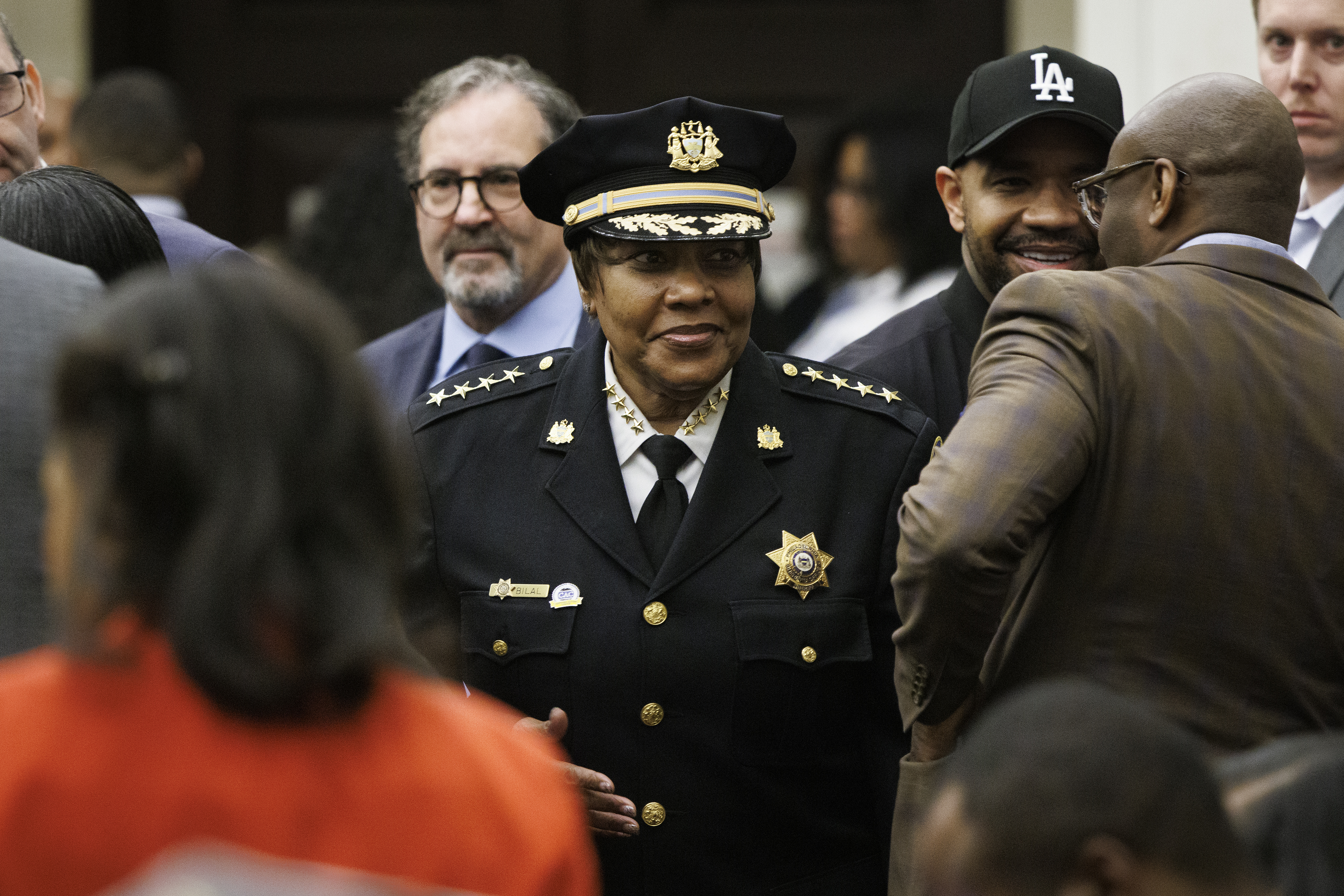
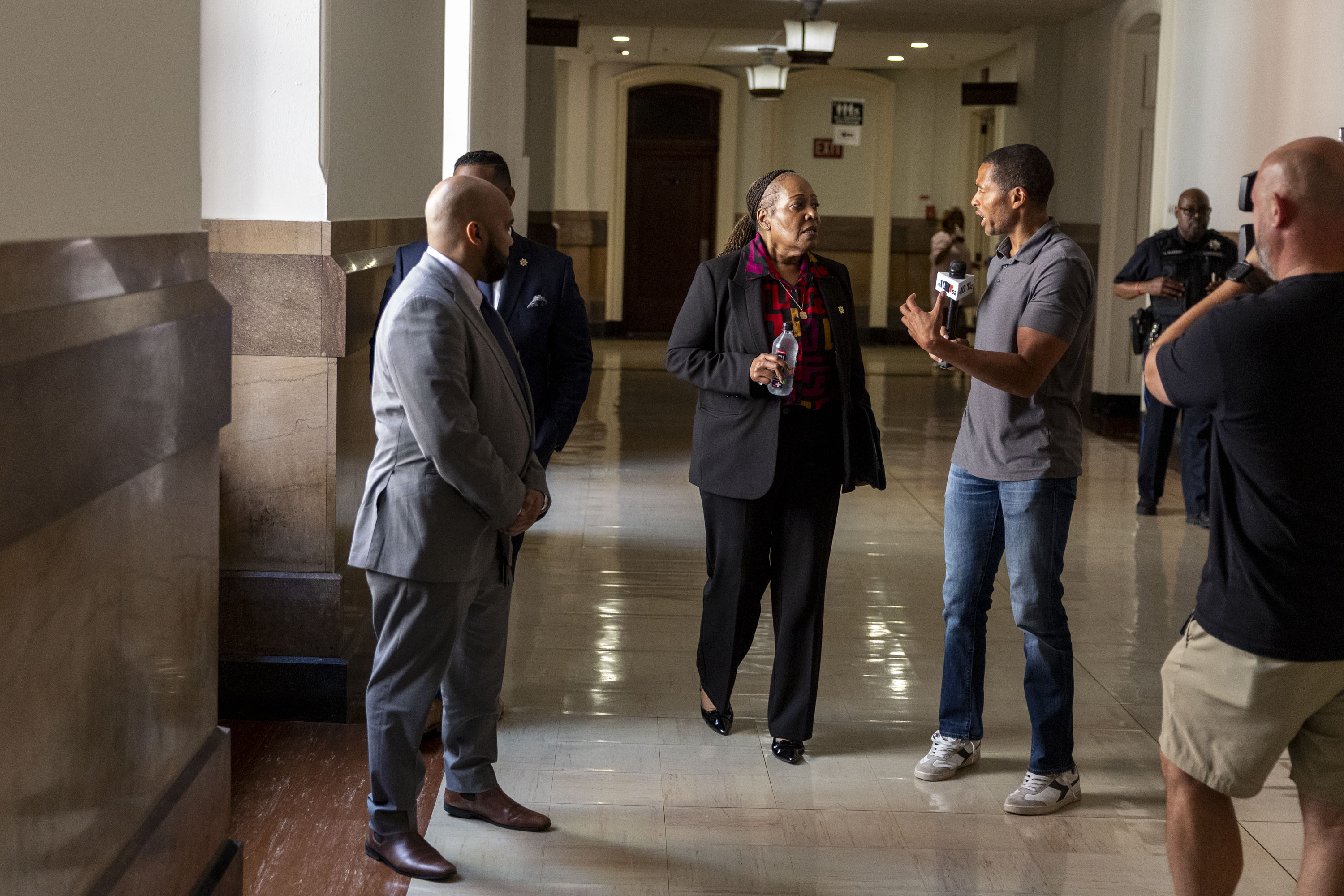
    Bilal then walked in and took a seat behind the defense table without speaking.

    Steven Wakefield, a new deputy undersheriff hired in June to streamline the office’s property auctions, testified Wednesday morning that he had already fixed many of the operational issues that had caused the backlog.

    Under questioning from the judge, Wakefield also detailed the discovery that “checks had not been written” for some $20 million in sales proceeds, including uncollected property taxes and water bills that are meant to be recouped through sheriff sales.

    “A lot of that was money that was supposed to go to the city,” Wakefield said.

    The money was found during an audit that so far has gone only as far back as August 2025. Wakefield did not provide an explanation for why the money had remained in the sheriff’s office, but said it was recently transferred to the city.

    New procedures in the office allow executive staff to track when checks are written, he said.

    “We have much more robust information,” Wakefield said.

    Patrick appeared stunned by the revelation.

    “Twenty million dollars is a lot of money,” the judge said. Wakefield agreed.

    Patrick also questioned why Wakefield had not included that information in the records she had ordered the sheriff’s office to produce over the summer, including a list of every sheriff sale since Bilal took office in 2020 and how the money was distributed.

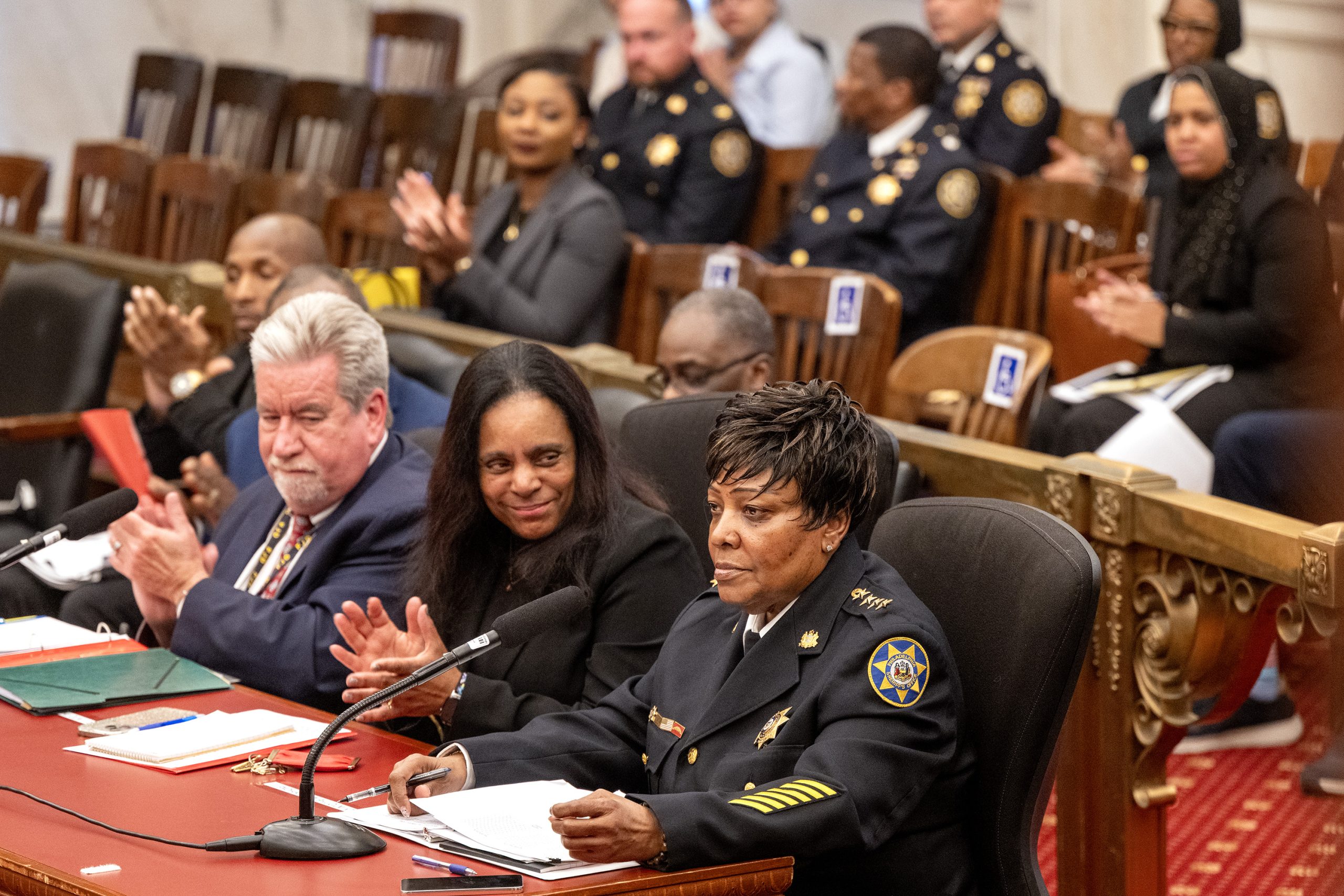
    On Wednesday afternoon, Bilal took the stand for the first time, testifying that she had not known about the backlog of unprocessed deeds until “2024 or 2025,” when she started receiving emails from real estate agents and City Council members about deeds not being recorded.

    “It was like Spidey senses. I’m getting more than one,” Bilal said of the emails. “Then every week.”

    The Inquirer first reported on the problem in July 2024, based on an analysis of city property records. Bilal’s staff initially denied there was a deed backlog, then weeks later said they would take corrective action. Yet the delays continued, and in some cases got worse, with banks, real estate agents, and investors saying as recently as May 2026 they have waited more than a year after auctions to receive their deeds.

    Bilal has repeatedly provided inaccurate information about sheriff sales and her office’s finances, including telling City Council in April that post-auction delays had been resolved.

    But under oath in court, Bilal said she agreed with Rardin’s assessment that the sheriff’s office had not been fulfilling its obligations until recently.

    “That’s what I’m starting to find out, yes,” Bilal said.

    While Bilal campaigned as a reformer in 2019, she testified she had only a rudimentary understanding of what the job entailed when she took office. She said she spent an extended amount of time interviewing staff to “figure out what the sheriff’s office actually does.”

    Now more than halfway into her second term, Bilal blamed the ongoing problems on chronic underfunding from City Hall, poor decisions by managers under her, antiquated technology, and staffers who struggled to handle the new office software that went live in 2024.

    Bilal’s testimony continued Thursday morning. Asked whether she would permit an outside compliance examiner to come into the office, she refused to answer the question.

    “We are in compliance,” Bilal said. “We got control of this.”

    A deal collapses

    This week’s hearing was not supposed to happen.

    Judge Patrick, frustrated with an onslaught of litigation over sheriff sales, ordered the August hearing at which Bilal’s staff was required to demonstrate why a “special master” or someone with similar expertise in real estate should not be brought in to temporarily oversee the auctions.

    That hearing was cut short after Bilal’s staff said it would allow the monitoring and report back to the court in six months. “It’s better that we come together, and make an agreement,” Bilal told reporters at the time.

    But Daniel Bernheim, the lawyer representing plaintiff JSB Property Group, whose March lawsuit over deed delays triggered the legal showdown, said in an interview Tuesday that Bilal’s legal team went silent after Patrick submitted a draft of a stipulated order that called for appointing a team to evaluate the office’s practices.

    Bernheim said Rardin then told him he could not reach “the key decision makers” in the office.

    “The ‘key decision maker,’” Bernheim said, “is the sheriff.”

    Then, Bernheim said, the sheriff’s office submitted what he described as “ludicrous” changes to Patrick’s proposal, including, according to Bernheim: requiring 48 hours’ notice for the independent supervisor to interview any sheriff’s office employee; removing the word comprehensive before review; and automatically terminating the supervision after six months regardless of the results.

    What happened?

    It is unclear why the sheriff’s office changed direction.

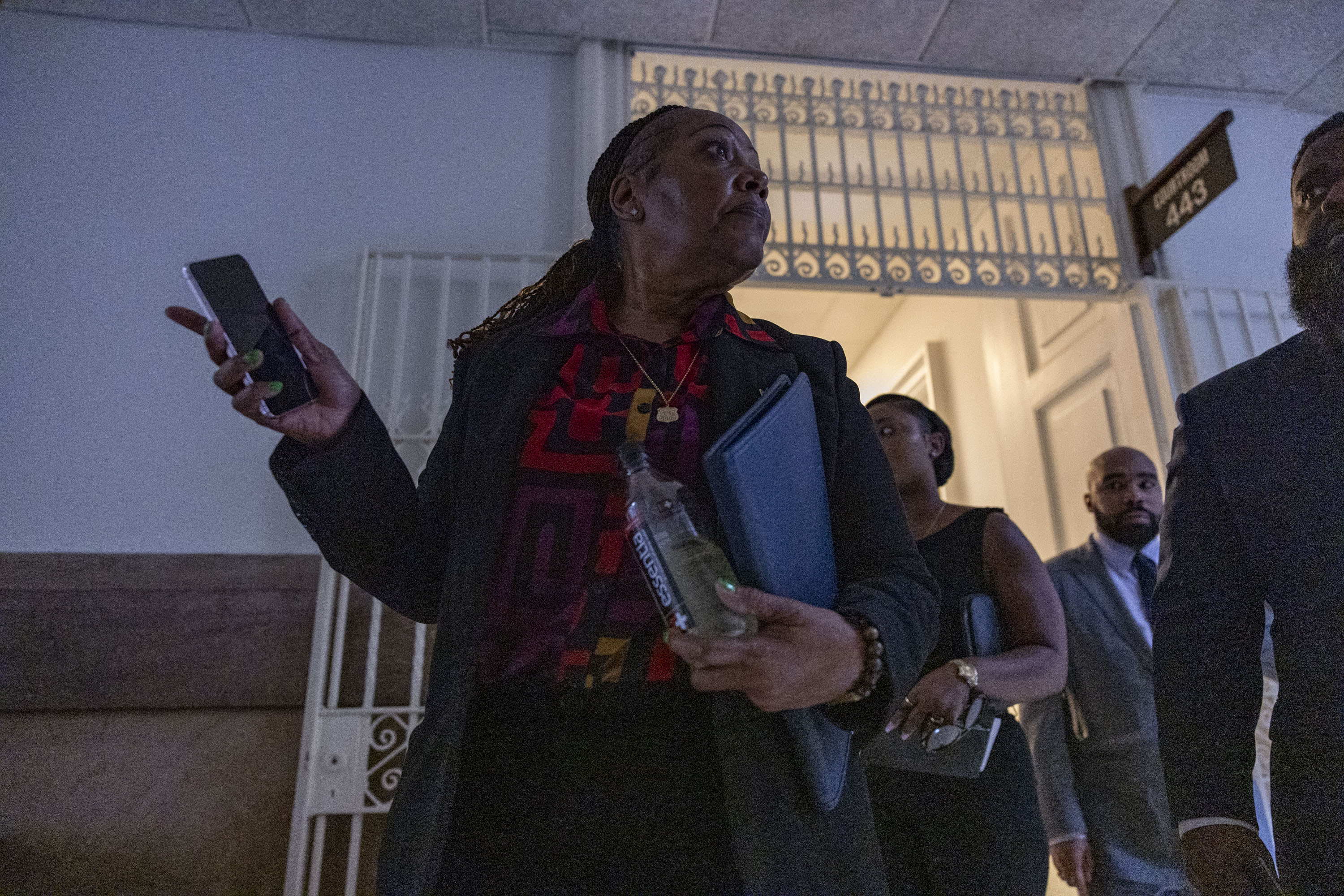
    Bilal did not respond to questions Wednesday during a break in the court proceedings. Standing near the defense table, she pointed her phone at an Inquirer reporter’s face and appeared to take a photograph. Her staff then formed a barricade around her.

    On Tuesday, Rardin submitted a memo arguing that Patrick had overstepped her authority. He wrote that the 2003 consent order at the center of the case — which requires the sheriff to issue deeds within 40 days from settlement — does not apply to Bilal because it had been brought against a previous sheriff, John Green, who was later imprisoned on federal bribery charges.

    Even if the order did apply to Bilal, Rardin wrote, the court’s legal authority was limited to holding her in contempt, not “open-ended structural oversight.”

    On the stand Wednesday, Wakefield told Patrick that sheriff-sale proceeds are now being distributed and deeds issued within weeks of settlement. He said the office has reorganized its workforce and is crafting new regulations for auctioning properties that will remain in place for future sheriffs.

    “I have personally signed hundreds and hundreds of deeds,” Wakefield said.

    Much of Wakefield’s and Bilal’s testimony over two days involved past practices in the sheriff’s office, as they guided attorneys through reams of financial and personnel records.

    At one point, Bernheim questioned why a sworn deputy sergeant was needed to, in Wakefield’s term, “babysit” staffers in the real estate division to make sure they were doing their jobs.

    “If we could trust everyone to do their job 100%,” Wakefield said, “we wouldn’t be here today.”

    “Amen to that,” Patrick responded.

    At the conclusion of the hearing Thursday, the judge said would take the new testimony under advisement and issue a ruling shortly.

  • Sheriff Rochelle Bilal’s new undersheriff has resigned just three months into the job

    Sheriff Rochelle Bilal’s new undersheriff has resigned just three months into the job

    Philadelphia Sheriff Rochelle Bilal’s new second-in-command has left the job — three months after he arrived.

    Undersheriff George Gossett Jr., whom Bilal hired in June as part of what she had described as a major “reorganization and modernization” initiative, confirmed Monday that he had resigned from the job effective last Friday.

    Gossett said through a spokesperson that he is “excited to pursue opportunities in the private sector” but provided no other explanation for his short tenure.

    Bilal’s office has been hit with three court orders since 2024 seeking to correct alleged mismanagement, most recently in May over delays in processing deeds of properties won at auction.

    Gossett, a Roxborough-based lawyer and former assistant district attorney, was tapped in June at an annual salary of $185,000, weeks after a Common Pleas Court judge ordered Bilal to fix the sheriff sale process or face consequences.

    According to a news release Bilal issued that month, Gossett was to “oversee daily operations, strategic planning initiatives, personnel management, and operational coordination across the agency.”

    “This reorganization is about building a stronger organization for the future,” Bilal said at the time.

    It is unclear where that plan now stands, with the new undersheriff having already departed.

    Gossett is the fourth undersheriff to serve Bilal since she took office in 2020. Bilal and her spokesperson, Teresa Lundy, declined to provide any details about why her top deputy would leave so soon after taking the job.

    Sources in the office said that the pair did not see eye-to-eye, and that Gossett was said to have made a remark about Bilal’s “anger management” issues, which may have escalated the situation.

    Separately, Bilal last week fired Mark Wilson, the office’s codirector of real estate. Wilson declined to comment.

    Gossett’s predecessors also had rocky terms in the sheriff’s office.

    In August 2020, seven months into the job, Undersheriff Sommer Miller resigned after she said she faced retaliation for reporting alleged theft in the advertising department, unauthorized spending of public funds, and instances of extreme sexual harassment. She later claimed in a whistleblower lawsuit that Bilal had been “reading and monitoring her emails in real time.”

    Miller’s replacement, Undersheriff Curtis Douglas, left in May 2021, about a week after reports that Bilal’s office had botched a contract meant to move sheriff sales to an online platform. A spokesperson at the time described Douglas’ departure as a planned retirement.

    In May 2026, Undersheriff Tariq El-Shabazz, a criminal defense attorney who came to personally oversee the handling of deeds related to sheriff sales, also retired. He left one day after the most recent court order dropped.

    Under Bilal, who was elected as a reformer in 2019, sales of foreclosed and tax-delinquent properties have been mired in post-auction delays, with winning bidders waiting a year or more to get their deeds.

    Many auctions were halted altogether between 2021 and 2024. Court security and inmate transportation, two other key functions of the office, have also been recurring problems, with judges saying they have felt unsafe.

    In addition to Gossett, Bilal recently hired William A. Brownlee Sr. as part of the office restructuring earlier this year.

    Brownlee, a West Philadelphia pastor, a motivational speaker, a real estate investor, and an entrepreneur with a checkered financial history, has previously described himself on his website and social media as the office’s “Deputy Chief Financial Officer.” His website has since gone dark, and Bilal’s office said Brownlee currently serves as project manager. Payroll records show he is being paid $95,000 a year.

    Another new hire, Steven A. Wakefield, is a former Philadelphia Law Department attorney serving as Bilal’s deputy undersheriff in charge of deed compliance. He is being paid $120,000 a year.

    Wakefield took the stand last month and told Common Pleas Court Judge Paula Patrick, supervisor of the court’s commerce division, that the office had previously misplaced records and lost track of the distribution of some auction proceeds. Wakefield blamed the situation on a since-terminated employee who allegedly concealed the problem from Bilal.

    Bilal did not testify at the hearing. Her city-appointed lawyer had filed a motion seeking to keep her off the stand, saying the sheriff had “limited personal knowledge” of how sheriff sales work.

    Wakefield said he had enacted operational reforms, speeding the deed issuance process while largely clearing out a backlog of deeds from earlier sales.

    Even so, Patrick took the rare step of imposing six months of outside supervision of sheriff sales.

    That independent monitor has yet to be appointed.

  • Contractor charged with fraud in Delco, Montco, and Bucks is a former South Philly cop with a history of citizen complaints and lawsuits

    Contractor charged with fraud in Delco, Montco, and Bucks is a former South Philly cop with a history of citizen complaints and lawsuits

    As a young cop patrolling the streets of South Philadelphia, Shawn Hagan kept the Internal Affairs Division busy.

    Between 2008 and 2010, Hagan, then in his late 20s, racked up a half dozen citizen complaints with allegations of physical abuse, harassment, and making racial slurs.

    The city’s Law Department handled the fallout, as Hagan was named as a defendant in six excessive-force and civil-rights lawsuits between 2009 and 2015 that would later cost taxpayers more than $400,000 in settlements.

    In 2024, records show, Hagan retired from the police force and decided to try his hand as a home-improvement contractor.

    Now, complaints and lawsuits are rolling in again — this time accompanied by criminal charges involving the former officer’s company, Hagan Home Concepts.

    Hagan, 46, is at the center of a sprawling, multijurisdictional fraud investigation that started in Bucks County and quickly spread to Delaware and Montgomery Counties.

    Police in Bensalem, Upper Moreland, and Aston Townships have accused him over the last month of defrauding at least five families out of a combined $255,291 for doing a fraction of the work he had promised.

    In some cases, according to court filings, he allegedly failed to use money given to him to pay for inspections, permits, and building materials.

    Hagan, who lives in Northeast Philadelphia, is facing felony counts of theft, deceptive business practices, receiving stolen property, and related offenses in those cases. Police believe there may be more victims who have not yet been identified.

    Neither Hagan nor his criminal defense attorney, Jeremy-Evan Alva, responded to requests for comment last week.

    In January, Christopher Bilbao, who hired Hagan last year, moved out of the Levittown home he shares with his wife and three children as Hagan allegedly botched a major renovation for which they’d paid him $107,566.

    Rainwater began pouring into the house. The electrical system was destroyed. Floor joists were left unsupported. The framing didn’t follow the architect’s specs. A township inspector found that Hagan used incorrect materials, didn’t follow measurements in the plans, and left the home uninhabitable.

    “We’re still renting an apartment,” Bilbao said last week. “The whole house has been gutted. The way he left it, there was no roof on half the house. We’re hoping to get back home by Thanksgiving.”

    Separate from the criminal cases, a Port Richmond man is suing Hagan in Philadelphia Common Pleas Court to recover $94,800 he said he’d paid him for a home renovation and addition that was never completed.

    A similar pattern is alleged in the lawsuit: rotting wood studs, crooked foundation, tilted third floor.

    Nadia Silk, the lawyer for that homeowner, said Hagan had initially told her client he’d refund his money.

    “Then he just went radio silent,” Silk said. “He’s getting all this money, then not doing the work. Where’s it going?”

    Silk said Hagan did not respond to the lawsuit.

    Trail of destruction

    The criminal investigation into Hagan Home Concepts began in May, when the Bilbaos reported to police that Hagan had essentially abandoned their project, which was estimated to cost $172,700 when completed.

    Bensalem police began investigating a similar complaint, in which Hagan allegedly received $46,725 from a family for an addition to their house. He poured the foundation and never returned to complete more work, according to a police report.

    In an interview with a Bensalem detective in May, Hagan said “he got in over his head and never intended to defraud” that family, the criminal complaint states.

    A few days later, Hagan told an Upper Moreland Township detective nearly the same thing, according to the police report. The department was investigating a complaint from Kevin and Angela Duffy, who said he had abandoned a project at their home.

    They had hired him in May 2025 to build an addition to their first floor and renovate their second floor and basement, according to the affidavit for his arrest. In five and half weeks of work, police say, Hagan and his employees were at the Duffys’ home only 29 hours, and concrete footers they had installed for the addition failed inspection.

    Hagan told police he tried to return the $55,200 he collected from the family, but that it had been “absorbed into the business,” according to the affidavit.

    The Duffys declined to comment for this article. They are trying to recoup their losses, plus damages, through a default judgment awarded to them in May by a Montgomery County judge.

    A person familiar with the case said Hagan had been hired to build wheelchair-accessible bedrooms for the Duffys’ two children, who have an inherited neurodegenerative disorder. The family had to hire another contractor to complete the project.

    Hagan was also charged with fraud last month in Delaware County. An Aston Police detective wrote in the criminal complaint that Hagan accepted $21,800 from Kate Mckenna-Delagol’s family “while knowing his business was failing.” Hagan was also aware that a criminal investigation was underway because he had been interviewed by detectives in Bucks County, according to Aston Police.

    “He tells everybody he’s a Philly cop. That’s how he earns your trust,” Mckenna-Delagol said on Friday. She’d hired Hagan to build a deck, but “he never did anything.”

    Hagan filed for bankruptcy in federal court in June, identifying three of the victims mentioned in the criminal filings as creditors, including the Duffy and Bilbao families.

    All told, Hagan wrote that he owes $865,059, and that Hagan Home Concepts is no longer operating. His bankruptcy attorney, Michael Cibik, did not return a request for comment.

    The Bilbaos’ Levittown home was left uninhabitable after they hired Hagan Home Concepts for a major renovation. They’ve been renting an apartment since January 2026.Christopher Bilbao

    Bilbao said he had hired Hagan to work on his Levittown home after another family in the neighborhood was satisfied with a recent addition he’d built for their house.

    But even that job, Bilbao said, was later determined to be faulty.

    “Since then, the people that recommended him realized he did all this work incorrectly,” he said. “They’re having to redo it.”

    History of police complaints

    Sgt. Eric Gripp, a Philadelphia police spokesman, declined to provide details about Hagan’s disciplinary history as an officer, other than to say he was hired in November 2003 and retired in February 2024.

    Citizen complaints show that Hagan was repeatedly accused of assaulting and harassing people while on patrol in South Philadelphia’s 17th District.

    In an April 2008 incident, for example, a man said Hagan grabbed him by the throat and dragged him to his police cruiser. Two months later, another man said Hagan used racial slurs while stopping him.

    In January 2009, a complaint was filed against Hagan and his then-partner Kevin Corcoran for harassment and verbal abuse, then another that October for physical abuse. In 2010, a complainant said Hagan allegedly pushed him to the ground and called him a racial slur.

    Hagan and Corcoran “received training and counseling” from two police captains in February 2009 “regarding their Internal Affairs record and professional responsibilities,” according to a note on one complaint.

    Nonetheless, Internal Affairs investigators said the allegations in those cases were unfounded or not sustained, or they exonerated the officers altogether.

    (Corcoran was fired in 2014 after he detained an Iraq War veteran, drove him to a dark side street near North Broad Street, then brought him back to Center City and released him. Corcoran was later acquitted of false imprisonment and official oppression, but convicted of a misdemeanor charge of obstruction of justice).

    Between 2010 and 2015, Hagan was named as a defendant in three lawsuits filed in Philadelphia Common Pleas Court and three filed in federal court, including for using excessive force that caused serious injuries, illegal searches, and false imprisonment.

    In one case, Raheem Holman alleged that Hagan repeatedly punched him in the face during an unlawful stop and frisk in March 2010 before Capt. Anthony Washington beat him with an expandable baton. Holman, who was later found not guilty of disarming a police officer, resisting arrest and all other related charges, required 11 staples at Methodist Hospital to close a head wound.

    The city settled Holman’s case for $95,000 and the five other cases in which Hagan was a defendant for a combined $335,000.

    Inquirer staff writers Ellie Rushing and Ryan W. Briggs contributed to this article.

  • Judge rejects Philly Sheriff Rochelle Bilal’s last-minute attempt to avoid court testimony

    Judge rejects Philly Sheriff Rochelle Bilal’s last-minute attempt to avoid court testimony

    Philadelphia Sheriff Rochelle Bilal made an unsuccessful, last-ditch attempt to avoid facing a city judge about major problems in her office, arguing through an attorney that she has “limited personal knowledge” of the real estate transactions she oversees.

    Jonathan Rardin, a lawyer the city retained to represent Bilal, wrote in a motion filed Friday afternoon that the embattled sheriff should not have to testify before Common Pleas Court Judge Paula Patrick at Wednesday’s hearing on sheriff sales because it would involve “matters outside her unique personal knowledge.”

    On Tuesday morning, Patrick rejected Bilal’s request for a protective order to shield her from testifying, writing that “Bilal and any other relevant parties shall appear” on Wednesday morning and “be expected to testify if necessary.”

    Patrick, supervisor of the court’s commerce division, scheduled the hearing in May, as winning bidders at sheriff sales continued to flood the courts with petitions seeking their deeds. As The Inquirer first reported in July 2024, Bilal’s office had not been issuing the deeds for a year or more after the auctions, leaving neglected homes unable to be renovated, rented, or resold.

    An attorney who represents real estate investors recently filed a lawsuit arguing that Bilal had breached the terms of a 2003 consent order requiring the office to issue deeds within 40 days of settlement. Patrick responded by ordering Bilal’s office to demonstrate at a public hearing that it was not in violation of the decree.

    Wednesday’s hearing will help decide whether Patrick will appoint a “special master,” a title agent, or some other third-party expert in real estate to administer sheriff sales in Philadelphia — arguably the most important function of Bilal’s office.

    Bilal’s lawyer had already successfully pushed back the hearing, which originally had been set for July 27, by arguing the sheriff had an unavoidable scheduling conflict due to “a previously scheduled vacation.” That request to delay the hearing did not mention that Bilal hoped to completely avoid testifying, and at the time, Rardin wrote that her “presence in this matter is necessary.”

    Yet last week’s motion argued instead that the sheriff’s knowledge is “limited to the information provided to her by her staff” and that she should not have to personally testify at all.

    “Requiring Sheriff Bilal to appear and testify regarding events and administrative practices that are not within her unique personal knowledge would impose an unreasonable burden and oppression” under the state’s rules of civil procedure “and would divert a high public official from the discharge of her official duties …,” Rardin wrote.

    Daniel Bernheim, the lawyer for a property group whose March lawsuit triggered Patrick’s court order, said Monday evening that Bilal’s attempt to avoid testimony was a “disappointing response by an elected official.” On Tuesday, Bernheim — himself an elected commissioner in Lower Merion Township — filed a response to her motion that sought to force Bilal to testify in court.

    “[T]he sheriff seeks to avoid answering questions based upon a series of cases which have no relevance whatsoever with the present proceedings and a claim of immunity from testifying which does not exist,” Bernheim wrote.

    In April, Bilal claimed at a City Council budget hearing that most post-auction delays had been resolved. She blamed any ongoing delays in issuing deeds on buyers who did not submit required forms or fees.

    But after Patrick filed her court order in May, Bilal’s office within 48 hours processed 277 deeds, some attached to auctions that had taken place more than a year ago. The office filed more paperwork in two days than it had in the prior three months.

  • After six years of chaos in Philly Sheriff’s Office, Rochelle Bilal must answer to judges

    After six years of chaos in Philly Sheriff’s Office, Rochelle Bilal must answer to judges

    Since being sworn-in as Philadelphia’s sheriff in January 2020, Rochelle Bilal has brought new levels of dysfunction to an office with a history of corruption and scandal going back to the mid-19th century.

    Tax revenue plummeted, court security incidents soared, and millions of dollars in public money have been diverted into an office slush fund.

    City Hall has ignored the mounting problems for the last six years. But this week Bilal must face a judge who could limit her ability to auction off foreclosed properties — arguably the office’s most important function.

    Bilal, a former police officer and self-described reformer, is due to appear Wednesday before Common Pleas Court Judge Paula Patrick to explain why the judge should not appoint a “special master” or some other expert to fix major delays in processing deeds after sheriff sales.

    Buyers have been waiting a year or longer after auction to receive their deeds, leaving the properties in a state of limbo that can invite squatters and contribute to blight. Without a deed, the foreclosed homes cannot be renovated, rented, or resold.

    The Inquirer first reported on that problem in July 2024. An analysis of more recent financial records shows that the office has also earned millions of dollars in interest from property auctions. That is because the proceeds of the sales are sitting for long periods in TD Bank accounts the Philadelphia Sheriff’s Office controls, rather than being used to quickly settle old tax and utility liens.

    Bilal’s office initially claimed the deed process was working as intended, saying through a spokesperson in 2024 that there was no “widespread delay” in recording deeds. With complaints continuing, she told City Council at an April budget hearing that it was the buyers who were responsible for the delays.

    Neither statement was true.

    In May, with buyers still petitioning the courts for their deeds, Judge Patrick, who is supervisor of the court’s commerce division, filed an order demanding that Bilal address the “ongoing harm” caused by the chronic backlog and submit extensive documentation pertaining to the handling of sheriff sales and related funds since she took office.

    The court order said Bilal’s office appears not to be “timely performing its essential, nondiscretionary, ministerial duties, which are mandated by law.”

    The sheriff snapped into action.

    Within 48 hours of Patrick’s court order, Bilal’s office processed 277 deeds — filing more paperwork in two days than it had in the prior three months.

    Sheriff Rochelle Bilal (right) is applauded as she testifies in City Council during a budget hearing in April. She claimed the deed-delay problem had been resolved.Tom Gralish / Staff Photographer

    Last month, the office filed a response to the court order providing a new explanation for the delays: Bilal didn’t know about them.

    Steven Wakefield, a newly hired attorney who serves as Bilal’s deputy undersheriff, blamed the problem on a former director of deeds who was “doing the work of multiple people” after the office switched software vendors in 2023, requiring some functions to be performed manually.

    “The former director did not inform the sheriff of the backlog,” Wakefield wrote in a certification filed with the court on July 13.

    The certification does not say when Bilal first became aware of the delays or why she remained in the dark while her then-undersheriff, Tariq El-Shabazz, was signing the deeds.

    In a recent op-ed in City & State Pennsylvania, Bilal wrote that she was making “practical, measurable improvements designed to increase transparency, accountability and customer service.”

    “I have never shied away from constructive scrutiny from the media, watchdog organizations and the public,” she wrote.

    She declined to answer questions for this article.

    An expensive problem

    Cleaning up the deed mess has not been cheap.

    Among thousand of pages of records Bilal’s staff submitted to the court last month is a check log showing that the office, beginning in March, paid more than $4.5 million from the proceeds of mortgage foreclosure sales to the Corporation Service Co., or CSC, a Utah-based financial services corporation.

    Check memos describe the payments, equivalent to more than 10% of the office’s annual budget, as “deed processing fees.”

    Wakefield’s certification to the court claimed that all deeds have been issued through June. He attributed the turnaround partially to new hires and the integration of the office’s Tyler Technologies software — a system that went live two years ago — but made no mention of the money paid to CSC.

    “There is no further backlog of deeds to be issued,” he wrote.

    Real estate agents, investors, and attorneys interviewed by The Inquirer in recent weeks said deeds are, in fact, being processed more quickly after the court order.

    But the backlog has not been fully cleared.

    “That is 100% incorrect,” Edward Levin, a real estate agent, said of Wakefield’s statement to the court.

    Levin, whose firm resells homes following mortgage foreclosures, is still waiting on a handful of deeds from sheriff sales that took place in late 2024 and early 2025. They are supposed to be transferred within 40 days of settlement under state law.

    Homes have fallen into disrepair in recent years because Bilal’s staff has taken so long to transfer the deeds. Levin does not know what to tell new buyers who are under contract to purchase the properties.

    “I go to the properties once a week and I have to hear complaints from neighbors,” said Levin, who has dealt with squatters, overgrown lawns, and broken windows. “The people living next door to these properties get screwed the most.”

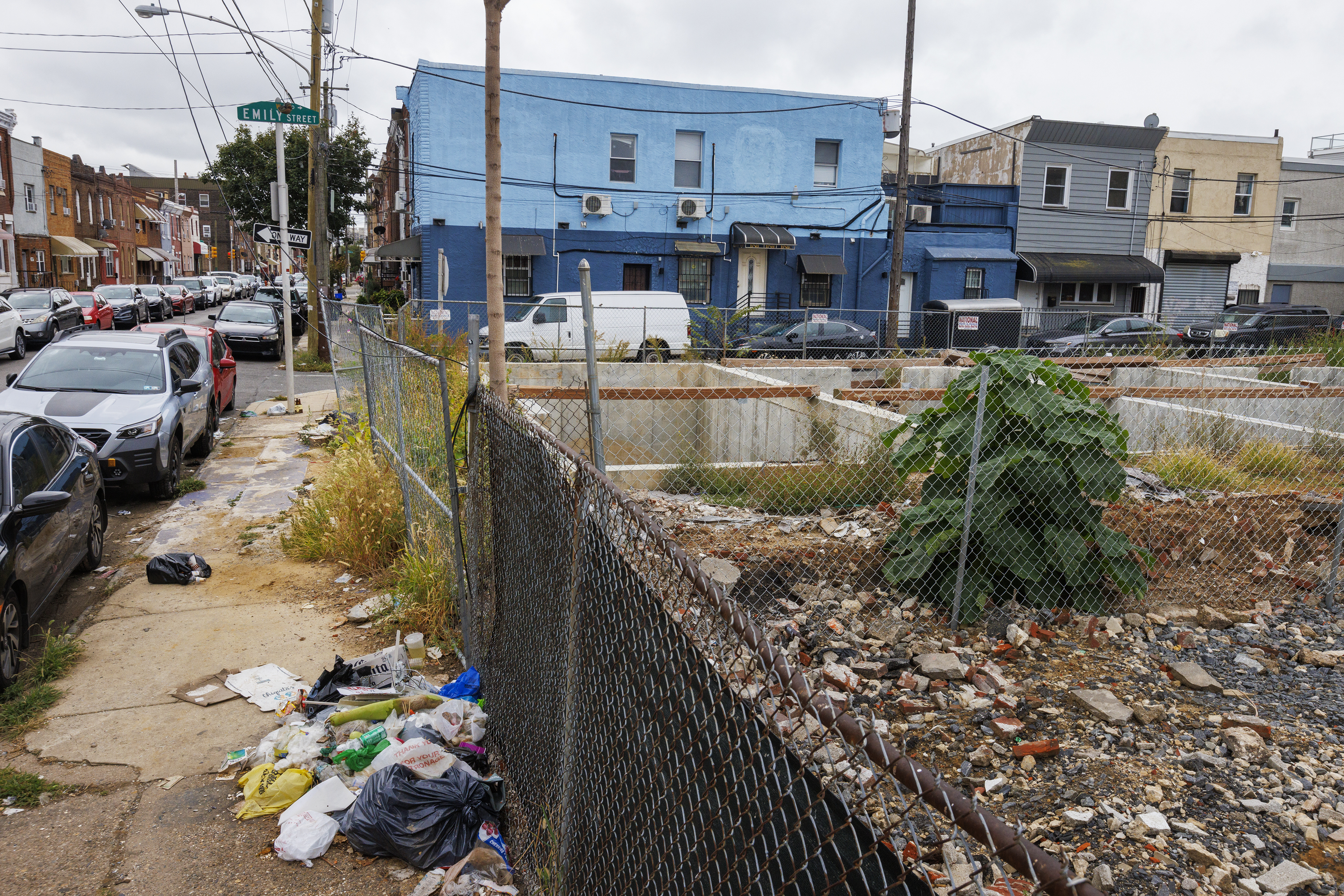
    An unfinished construction site along 900 block of Emily Street in September 2024 shows what can happen when foreclosed properties remain between owners for long periods. New owners can’t take possession of properties after auction until the sheriff’s office processes the deeds.Alejandro A. Alvarez / Staff Photographer

    Mary Jo Potts, a foreclosure specialist at Elfant Wissahickon Realtors who resells those properties, said last week that she has seen a recent influx of deeds from the sheriff’s office.

    But Potts and other real estate agents are still dealing with another problem: The sheriff’s office is taking even longer to distribute the proceeds from auctions to settle tax and utility liens on the properties.

    Even with a deed in hand, the homes still cannot be resold without a clear title.

    “To me, that’s not getting any better,” Potts said.

    Financial records obtained by The Inquirer through a Right-to-Know request show that tens of millions of dollars began flowing into the sheriff’s coffers after auctions resumed for tax-delinquent properties in July 2024.

    But the money trickled out much more slowly.

    Twenty-two TD Bank checking accounts managed by the sheriff’s office contained a combined $39 million at the end of May 2024. By last August, that sum had swollen to $130 million.

    The majority flowed into a business account earmarked for money from mortgage foreclosure sales. The combined sums are so large, statements show the office generated more than $3 million in interest between 2024 and 2025.

    After all liens have been settled, any excess funds are owed to the former homeowner.

    David Denenberg, an attorney who seeks to collect those funds, said Bilal’s system for distributing the proceeds of sales is worse than ever. He questioned the propriety of the office generating millions of dollars in interest by holding onto the funds.

    “They’re making money on other people’s money,” Denenberg said. “They should be helping you, if you’re the purchaser or the one who lost their home. You shouldn’t have to flood the courts with this litigation.”

    David Bogdan, a probate attorney in Delaware County, said he spent nearly two years trying to obtain about $26,000 in excess funds from a 2022 mortgage-foreclosure sale. The money was owed to the estate of the former homeowner, who had died.

    “They just refused to pay,” Bogdan said. “There is no defense whatsoever. You have to return that money. It’s not yours.”

    Bogdan, who filed his claim in July 2024, said he contacted the office at least a half dozen times over more than a year, getting either no response or new excuses for the delay. He ended up having to hire a second attorney, Denenberg, to take the sheriff’s office to court.

    “They’re failing to do their basic duties,” said Bogdan, who in May finally received the funds owed to his clients. “It’s just torture dealing with them.”

    Among the other records Bilal submitted to the court in July is a list of about 16,000 unique properties that had been ordered to sheriff sale since Bilal took office, worth a combined $1.2 billion, based on city tax assessments.

    Only about 6,500 of those properties were ever successfully sold, according to the records, and many were repeatedly held back from the auction block, sometimes due to repayment or court orders, and sometimes for more opaque reasons.

    While the new filings shed some light on the scale of the sheriff’s real estate operations, they do not appear to be the full disclosure requested by the court, which included “a detailed accounting of all sales proceeds received and disbursed” by the sheriff from 2020 to now.

    None of the submitted records list any money distributed for sales later than 2023, and the sheets include numerous payments or credits that are missing dates or descriptions.

    Daniel Bernheim, the lawyer for a property group whose March lawsuit triggered the court order, said he has been unable to follow the money based on the records the office has provided so far.

    “It shouldn’t be like Where’s Waldo? It should be set forward clearly,” said Bernheim, who is also a township commissioner in Lower Merion. “I don’t know how you could function internally in the sheriff’s office if that information is not readily available.”

    Lauren Cristella, president and CEO of the good-government group Committee of 70, said the court should require new oversight.

    “The court should appoint a special master who will not just execute deeds but also process lien and utility payments so Philadelphians get what they’re owed without having to sue for it,” Cristella said.

    Bilal named ‘Hometown Hero’

    Both the Committee of 70 and the Pennsylvania Intergovernmental Cooperation Authority, Philadelphia’s fiscal watchdog, have called for the sheriff’s office to be abolished.

    In addition to the operational issues, Bilal has been mired in one mini-scandal after another since she took office: the cover-up of an inspector’s “stolen” city-leased vehicle; a bungled arrest of a suspect that led to a fatal accident; fake AI-generated headlines touting her performance; a top aide violating city ethics rules; an employee in the office who shot himself in the leg before a budget hearing.

    But despite that — and years of complaints from the public — both City Council and the mayor’s office have offered nearly universal praise for Bilal.

    “Give our sheriff a huge round of applause,” Mayor Cherelle L. Parker said during her first budget address in March 2024, as Bilal’s botched sheriff-sale contract with an online auction firm was costing the city and the school district an estimated $35 million in uncollected tax revenue.

    “I just want to thank you for your hard work and your dedication and working in partnership with members of Council and the city of Philadelphia,” Council President Kenyatta Johnson told Bilal at a budget hearing for her office the following month.

    By then, Bilal had been diverting millions of dollars in service-fee revenue — public money Philly’s Home Rule Charter says should be remitted to the city’s general fund — into an internal office account that is used for “discretionary” purchases, including $40,000 in branded merchandise, a $9,000 office mascot, and a $6,600 party at Chickie’s and Pete’s.

    “The city of Philadelphia works because you all work,” Councilmember Cindy Bass told Bilal at a budget hearing this April. It was at that hearing that Bilal falsely told Council that the problems with deeds had been fixed.

    Last week, the Phillies ushered Bilal onto the field at Citizens Bank Park and honored her as a “Hometown Hero.” She swung an honorary bat.

  • Montco Intermediate Unit to tighten travel policy after probe into leaders’ trips to Africa and Asia

    Montco Intermediate Unit to tighten travel policy after probe into leaders’ trips to Africa and Asia

    The Montgomery County Intermediate Unit’s board of directors plans to tighten its professional development and travel policies after learning in March that its leaders had used their agency credit cards to purchase overseas trips — including a 14-day African safari — without the board’s knowledge.

    Mark Klein, an attorney and former schools superintendent who conducted a two-month investigation into the trips, told board members at a virtual meeting Tuesday night that, going forward, the board should require Montco IU leaders to receive board approval for travel.

    The current policy, which Klein said includes no such requirement, is “in conflict with many of the school districts that are in the area.” He noted that it is not an unusual policy for an intermediate unit.

    The outside investigation began after The Inquirer reported in March that the Montco IU’s executive director, Regina Speaker, and its assistant executive director, Sandra Edling, had used their procurement cards to book about $40,000 worth of international travel since 2023.

    Speaker has defended the 2023 trip she and Edling took to Kenya and Tanzania, which culminated a yearlong academy for education leaders run by the School Superintendents Association, known as AASA.

    The itinerary included a trip to a tribal school, as well as 11 nights in “handpicked hotels,” six sightseeing tours, and eight wildlife drives in search of zebras, monkeys, lions, baboons, cheetahs, hippos, elephants, wildebeests, and “the exceedingly rare black rhino.”

    “Everything was through the lens of leadership,” Speaker previously told The Inquirer. “It was about that process of survival of the fittest, and how are you a leader, and what do you prioritize.”

    At Tuesday night’s meeting, however, Speaker apologized for the lack of “adequate transparency” around her travel.

    “For anyone who felt disappointed, concerned or uncertain because of my decision, I sincerely apologize,” Speaker said. “I never take your confidence or trust for granted. I remain committed to serving with integrity, humility, and transparency.”

    Records obtained by The Inquirer last year through a Right-to-Know request showed that Speaker in May 2023 made about $9,000 in purchases related to the Africa trip without providing receipts. The only mention of Africa in the records appeared months later when she purchased a Tanzanian eVisa for $139.

    The Montco IU’s then-board president did not sign off on the expenses until after Speaker had returned from Nairobi.

    Klein did not directly address those issues in his presentation Tuesday. He recommended that the intermediate unit conduct an audit of how procurement cards are used.

    Speaker, whose base salary was $298,000 last year, also traveled to South Korea and Singapore for 11 days in April 2025 as part of a $13,000 leadership academy.

    The profile of Dr Regina C. Speaker on Montgomery County Intermediate Unit’s website.Courtesy of MCIU

    Gary Ledebur, a Montco IU board member who also sits on the board of the Upper Merion Area School District, said that while Speaker, according to Klein’s findings, did not violate any policies, “I think Dr. Speaker took advantage of this lack of policy.”

    “In my opinion, she exhibited an error in judgment,” Ledebur said. “I wish she had chosen not to go on these trips.”

    The intermediate unit, which provides support services to more than 200 area schools, is one of 29 state-mandated agencies in Pennsylvania. It has a $198 million budget and receives a mix of local, state, and federal funding.

    The full 21-person board, which is composed of members from each school district board in the county, will meet later this month. It is expected to accept Klein’s recommendations.

    “We have found some gaps in our policies, and now that we know that, we’re going to do better,” Margaret Wright, president of the intermediate unit’s board, said Tuesday night.

    Expense reports show that in March 2025, Edling, whose base salary last year was $215,000, used her procurement card to make about $7,000 in purchases related to what is described on the purchasing log only as a “conference.” The documents did not name a location or offer specifics.

    The Inquirer reported that the expenses were for a planned 10-day trip to Germany, Switzerland, and Austria in October 2025 sponsored by AASA, the same superintendents group that organized the African safari.

    “Ascend into the Alps for an evening of true Swiss hospitality,” reads the itinerary. “As you feast on beautiful views from your hosts’ mountain chalet, enjoy traditional food, entertainment and fun Swiss games and activities.”

    Two school visits were also planned, according to a brochure, in addition to quick-tempo Viennese waltz lessons, an underground train ride into Austria’s ancient Hallein Salt Mine, and a “journey to crazy King Ludwig’s fairy tale castle of Neuschwanstein.”

    Edling ended up not going on that trip. Speaker said the IU subsequently froze all travel amid Pennsylvania’s budget impasse that had held up much of the intermediate unit’s funding. (The cancellation also came after The Inquirer had requested the records. Speaker said the IU was able to get a refund for that trip.)

    After The Inquirer’s story was published, about 50 people showed up for the Montco IU’s next board meeting, which are usually sparsely attended. At least 225 more joined by Zoom. Intermediate unit employees expressed outrage.

    “The trips felt deceptive and intentionally secretive, and I struggle to understand how they related to our mission,” Liz Forcellini, an occupational therapist at the IU, told the board, adding that some staffers were paying for supplies with their own money.

    Public finance experts said the trips raised larger questions about whether taxpayers should pay the full cost of professional-development outings that include substantial leisure time. Some school administrators who went on the Africa safari paid for it out of pocket, including the head of a New Jersey education service agency who said she also took vacation days.

    “Most of us would consider it a dream trip,” Andrew MacLeod, a personal care assistant at the IU, told the board at the March 25 meeting.

    The saga took a bizarre turn the following evening when Kimberly Wheeler, then a member of the Montco IU board, falsely stated at a public meeting of the Souderton Area School District’s board of directors that The Inquirer reporter who wrote the story “right now is under investigation with the Philadelphia police for misleading information, and reporting on inaccurate information.”

    Sgt. Eric Gripp, a Philadelphia police spokesperson, said in June that the department does not conduct criminal investigations of journalists for their reporting.

    Wheeler later walked back her remarks about a police investigation and said she had been “going by the word of Dr. Speaker.”

    Asked for comment at the time, Speaker sent a 2023 news release issued by Philadelphia Sheriff Rochelle Bilal’s office complaining about a story that had exposed financial problems in her office that year. It made no mention of a police investigation.

    Staff writer Maddie Hanna contributed to this article.

  • Former state lawmaker, now leading Delco transit agency, charged with DUI and child endangerment

    Former state lawmaker, now leading Delco transit agency, charged with DUI and child endangerment

    Former State Rep. Nick Miccarelli, who left Harrisburg in 2018 during the #MeToo reckoning and then landed a higher-paying job running a publicly funded transit agency, is facing felony charges of child endangerment after a DUI arrest on the Pennsylvania Turnpike.

    Miccarelli, 44, executive director of DELGO Community Transit, which provides subsidized transportation to Delaware County seniors and people with disabilities, was pulled over last Thanksgiving after his ex-wife called 911 as she was headed to meet him for a custody exchange of their two children.

    “As she was driving near the King of Prussia exit, she noticed a vehicle ahead almost strike the center barrier,” according to a police report filed in Lancaster County in January. “She came closer to the vehicle and recognized it as Nicholas’ vehicle and it was ‘all over the place.’”

    State Trooper John Huffstutler stopped Miccarelli — who was driving his two children, ages 4 and 5 — after watching him tailgate another vehicle on the highway and repeatedly swerve left and right out of the driving lane. The arrest has not been previously reported.

    Miccarelli said he had not been drinking or using drugs and explained an odor of mouthwash by saying, “I drink mouthwash from time to time,” according to the complaint.

    A blood sample later put his blood alcohol content at 0.198% — more than twice the legal threshold for intoxication — and also showed the presence of Lorazepam, a prescription benzodiazepine that is not supposed to be mixed with alcohol.

    Huffstutler also noted in his report that Miccarelli’s children were not in a booster seat, as required by law.

    Miccarelli was charged in January with DUI at the highest level (above 0.16%), DUI in combination with a controlled substance, two felony counts of endangering the welfare of children, reckless endangerment, and related offenses.

    The case was transferred to Lancaster County Common Pleas Court after Miccarelli waived his preliminary hearing in February. He is free on bail.

    Miccarelli declined to comment last week. The arrest report did not indicate whether he was driving his personal vehicle or a vehicle that Community Transit provided to him and insured.

    Roger Joseph, chairman of the transit agency’s board of directors, said on Friday that Miccarelli’s arrest was a “personal incident.”

    “The board is fully aware of it,” he said.

    Joseph said the agency’s “insurance carrier is aware of everything that happened” but declined to say whether Miccarelli was driving a Community Transit vehicle.

    Delaware County Council, which allocates state money to Community Transit and appoints some of its board members, “has not been formally notified about this,” county spokesperson Michael Connolly said on Friday.

    “It’s certainly something we’re going to dig into and monitor,” Connolly said.

    #MeToo troubles

    Miccarelli, an Iraq War veteran from Ridley Park, was once seen as a rising star within the Delaware County GOP. He won an election to represent the state’s 162nd House district in 2008.

    Ten years later, then-State Rep. Tarah Toohil and an unnamed political consultant filed a confidential complaint with House lawyers accusing him of a range of abuse when they had dated him.

    The complaint, which included allegations of physical and sexual assault, was first reported in February 2018 by The Inquirer and the Caucus, a news organization that covered state politics. It came as the #MeToo movement was roiling state legislatures across the country.

    Toohil, a Republican from Luzerne County, said Miccarelli assaulted and abused her in 2012, including one instance in which he brandished a gun while driving more than 100 mph and threatened to kill them both.

    The consultant, who had asked that her name not be disclosed, said that Miccarelli was mentally and physically abusive when they dated and that he forced her to have sex with him when she tried to end their relationship in late 2014.

    Miccarelli has steadfastly denied the allegations. Lawyers for the state House found the women credible and said their statements were corroborated by sources who were “contemporaneously aware” of their claims of abuse.

    Toohil was assigned a bodyguard when in the Capitol and obtained a protection-from-abuse order against Miccarelli. She now serves as a Common Pleas Court judge in Luzerne County.

    Tarah Toohil, then a state representative from Luzerne County, obtained a protection-from abuse-order against Miccarelli, a fellow Republican in the state House. Toohil went on to become a Common Pleas Court judge in Luzerne County, while Miccarelli took over a paratransit agency in Delaware County.Fred Adams / For The Inquirer

    Miccarelli rejected calls for his resignation from House Republican leaders and then-Gov. Tom Wolf, a Democrat, but declined to run for a sixth term and left office at the end of the legislative session in November 2018.

    That allowed him to retire with free lifetime health benefits offered to lawmakers who serve for 10 or more years. He also received a state pension.

    In December 2018, Dauphin County prosecutors said they would not pursue sexual assault charges against Miccarelli, at the request of the consultant. She stood by her allegations but said in a statement at the time that “the prospect of a long and drawn-out criminal proceeding promises even more trauma for me in the future. I simply must move on.”

    A new job

    Four months later, Miccarelli was appointed as executive director of Community Transit, a nonprofit organization incorporated in 1983 as the Delaware County Transportation Consortium. It employs more than 100 people and provides about 2,167 trips every weekday for county residents.

    Democrats at the time questioned whether he got the job due to his political connections. Republicans still had a majority on the county council.

    But Community Transit’s director of business development, Wendy Petkus-Mazeika, said in a news release at the time that Miccarelli was the best person for the job: “Nick brings not only a fresh perspective, but a wealth of knowledge of human services issues in the commonwealth.”

    DELGO Community Transit receives millions of dollars a year in public funds. Its medical assistance program, for example, is funded by the Pennsylvania Department of Public Welfare, while its program for people with disabilities gets financial support from the Pennsylvania Department of Transportation.

    In 2024, the agency received $8.9 million in government funding, tax filings show. Some of that was allocated through Delaware County Council.

    Over the last seven years, Miccarelli has kept a relatively low profile. He sits on the board of the Pennsylvania Veterans Museum and posts frequently on Facebook.

    He mostly stayed out of the news until June, when a flurry of new content starting to appear online praising Miccarelli’s work in the paratransit field.

    Miccarelli recently put out a news release calling for more accessible transportation for seniors and veterans, and has created two websites — nickmiccarellitransit.com and nick-miccarelli.com — where he writes about “strengthening community impact and building effective, mission-driven systems.”

    As a result of the PR blitz, Googling his name and agency leads to positive headlines in publications as varied as the Aspen Daily News in Colorado, WBOC news in Maryland, and a magazine called Business Matters in Sutton (England, not Massachusetts).

    “For Nick Miccarelli, the most important ideas have never been about headlines or attention. They have been about creating systems that work, helping communities function better, and finding practical solutions to real problems,” reads a glowing profile, sans byline, that appeared June 28 in Brainz Magazine.

    The headline: “Nick Miccarelli and the Power of Turning Service Into Action.”

    Brainz says in a FAQ that it offers “guaranteed, consistent, search-engine-optimized publicity … at a very low fee.” The magazine did not respond to a question about whether the profile was paid content.

    Meanwhile, Miccarelli’s salary has increased significantly in recent years.

    When hired at Community Transit in 2019 Miccarelli declined to reveal how much he was being paid, telling the Delaware County Daily Times it was “probably not as much as anybody thinks.” He told the Pennsylvania Capital-Star that “people are saying it’s a six figure job and it’s not.”

    Tax filings show that Miccarelli’s compensation at Community Transit in 2019 was $105,360.

    As a state representative, he earned $87,180 in 2018.

    By last year, records show, Miccarelli’s compensation at the transit agency had grown to $159,840.

  • Bryce Harper responds to controversy over his personal video message to a FanDuel customer with a gambling addiction

    Bryce Harper responds to controversy over his personal video message to a FanDuel customer with a gambling addiction

    Bryce Harper, the Phillies’ All-Star first baseman, said on Monday that he was unknowingly working on behalf of FanDuel when he recorded a personalized video for a man with a gambling addiction who had placed millions of dollars in bets on the site.

    Harper, in a story on his verified Instagram account, wrote that he thought he was just doing a message on the site Cameo — in which celebrities are paid to record videos for fans — but “what happened here went beyond anything I knew about or approved.”

    “I did not know this video would be used for commercial purposes,” Harper wrote. “The request included a short script. I read it in good faith. FanDuel then put its own logo on the video and used it as a gambling promotion. I did not know FanDuel would do this, I did not consent to it, and FanDuel had no right to do it.”

    The Inquirer obtained a copy of the 21-second video from November 2024, which is marked with a blue FanDuel logo and shows Harper offering a greeting to the bettor, Terry Thompson, and Thompson’s son, by name.

    Harper’s statement also said he has no affiliation with FanDuel and that “Contrary to the Inquirer’s suggestion, I did not know that the Cameo video would be used for a FanDuel VIP promotion.”

    However, in the video Harper states that he’s reaching out at the request of Thompson’s VIP manager — “your host Bryttanni at FanDuel.” Harper also posted the Cameo script, which included the same language about FanDuel.

    The Inquirer reported on the video on Thursday. Harper had declined to comment until Monday. His statement came ahead of his planned appearance at Monday night’s 2026 MLB Home Run Derby at Citizens Bank Park.

    Beginning in 2020, Thompson wagered $18.5 million with FanDuel and lost $1.5 million, according to a lawsuit that the Public Health Advocacy Institute filed in March in Common Pleas Court in Philadelphia on behalf of Thompson and against FanDuel and DraftKings, to which Thompson also lost money.

    Harper says he did not know anything about Thompson.

    “Had I known FanDuel’s true intent, I would not have made the video,” Harper wrote on Instagram. “The same is true had I known anything about Terry or his situation, or about any alleged ‘partnership’ between Cameo and FanDuel.”

    On the advice of counsel, Harper wrote, he would not comment further. Harper did not discuss the matter further during a media availability Monday.

    Cameo notes in its terms of service that celebrities are not required to follow a purchaser’s instructions exactly. Harper, however, mostly stuck to a short script that made clear to Thompson that the Thanksgiving message was arranged by the FanDuel host.

    Cameo has not responded to requests for comment.

    FanDuel did not respond Monday to Harper’s Instagram post. Last week the company released a statement:

    “FanDuel is committed to fostering a culture of responsible gaming and protecting our customers. Unlike illegal offshore sportsbooks, FanDuel employees are trained to recognize and flag signs of problem gambling and offer resources and tools, and we continue to review and strengthen our policies to ensure we have the industry’s strongest consumer protection initiatives.”

    The Phillies and Major League Baseball have so far declined to comment on the video.

    The Pennsylvania Gaming Control Board, which regulates casinos, online gambling and sports wagering, said on Friday that it is examining the video, but a spokesman for the board declined to provide details.

    The Inquirer will continue to report on issues related to the growth of gambling addiction — among teens and adults — across Pennsylvania. If you, or someone you know, wants to speak with a reporter, please contact David Gambacorta or William Bender at dgambacorta@inquirer.com and wbender@inquirer.com

  • Sheriff Rochelle Bilal reverses course, announces office shake-up amid mounting criticism of auctions

    Sheriff Rochelle Bilal reverses course, announces office shake-up amid mounting criticism of auctions

    Sheriff Rochelle Bilal on Monday announced a major restructuring of her office to reduce chronic deed-processing delays following property auctions — a problem she previously claimed she’d fixed.

    Among several leadership changes, Bilal said she has hired an undersheriff, although her spokesperson would not confirm the identity of the new second-in-command.

    A news release about the shake-up also outlined other planned improvements, such as the creation of a public-facing “deed tracker” that would allow winning bidders at sheriff sales to follow the status of their deeds.

    Philadelphia’s independently elected sheriff is charged with auctioning off thousands of tax delinquent and foreclosed properties every year, but many bidders have complained about waiting a year or more after paying to get a deed of sale.

    Last month, Bilal was hit with a court order demanding she speed up this process, or face consequences.

    The “comprehensive operational reorganization plan” the sheriff unveiled Monday includes the hiring of sales technicians to improve customer service around sheriff sales, which have been plagued by complications since Bilal took office in 2020.

    In addition to the post-sale delays, for example, almost all tax-delinquency sales were halted between 2021 and 2024 after Bilal attempted to award a no-bid contract to an online auction house without the approval of city contract lawyers.

    Now, more than halfway into her second term, Bilal pledged to do better.

    “The Philadelphia Sheriff’s Office continues to evolve to meet the needs of the public we serve,” Bilal said in the news release. “This reorganization represents our commitment to operational excellence, accountability, and ensuring residents have greater access to information and services.”

    The announcement comes just six weeks after Bilal told City Council, during a pitch to increase her office’s budget by more than 50%, that sheriff sales were going “full blast.” She said processing delays after auctions have been resolved and that any ongoing delays were the buyers’ fault.

    “If you believe them that run to the newspaper — ‘Oh I ain’t got my deed’ — well they never tell them they didn’t pay the invoice,” Bilal told Councilmember Cindy Bass at the April hearing.

    But interviews with real estate agents, investors, and attorneys, as well as court documents and city records, showed that is not true. Some even said the problems had gotten worse since The Inquirer first started tracking the delays in mid-2024.

    At April’s budget hearing, City Council members praised Bilal and declined to press her on the deed problems.

    City judges have proven less deferential.

    Last month, in response to a lawsuit over the delays, the judges filed a court order threatening to appoint a “special master” to oversee auctions if Bilal doesn’t get a handle on the situation.

    The May 13 order, signed by Common Pleas Court Judge Paula Patrick, supervisor of the court’s commerce division, requires Bilal to come up with a plan for “promptly” delivering deeds and distributing post-sale funds, which must occur before a property can be resold.

    The same day the order became public, the sheriff announced the retirement of Undersheriff Tariq El-Shabazz, a lawyer who oversaw deed filing and was previously the office’s highest paid staffer, earning $200,000 a year.

    While the sheriff’s office said in Monday’s news release that it is “pleased to announce the appointment of a new Undersheriff,” Bilal’s spokesperson, Teresa Lundy, did not give the person’s name.

    “As of now, I have not confirmed the hiring of the new undersheriff or any other specific positions,” Lundy said in an email.

    Lauren Cristella, president and CEO of the good-government group Committee of 70, which has called for abolishing the sheriff’s office, noted that Bilal “spent years resisting accountability” and appears to have taken action only in response to lawsuits and a court order.

    “Philadelphians shouldn’t need to sue their own government to get basic services fulfilled,“ Cristella said. ”Reorganization plans are only as meaningful as their implementation.”